

Finding the right dry food for a poodle matters more than you might think. Poodles have specific needs for coat health, dental care, and digestion, and the wrong kibble size or protein balance can make daily feeding harder. This guide shortlists the top dry foods for poodles, chosen for nutrient profile, kibble geometry, and digestibility. Below we explain the criteria used and what to watch for in ingredient lists, then present the seven top-rated dry foods that fit those guidelines. Use this overview to match a food to your poodle's life stage, activity level, and sensitivity profile.
Top Picks at a Glance
| Best Overall Dry Food for Poodles A balanced, widely suitable dry food that fits most poodle needs | ROYAL CANIN Poodle Adult Dry Dog Food 10 lb |  |
| Best Budget Dry Food for Poodles A low-cost dry formula that still meets basic nutritional needs | Pedigree Adult Dry Dog Food 3.5 lb |  |
| Best Premium Dry Food Higher-end formulas focused on superior ingredients and formulation | ORIJEN Small Breed Dry Dog Food 10 lb |  |
| Best High-Protein Dry Food Formulas with elevated protein levels to support muscle and activity | Purina ONE Plus Small Breed Lamb 7.4 lb |  |
| Best Grain-Free Dry Food A grain-free kibble for dogs with grain sensitivities or owner preference | Nulo FreeStyle Small Breed Salmon & Lentils |  |
| Best Limited-Ingredient Dry Food Simpler recipes with fewer ingredients for sensitive stomachs | Purina ONE Lamb & Rice Dog Food 8 lb |  |
| Best Senior-Formulated Dry Food Recipes tuned for older dogs with joint and weight concerns | Hill's Science Diet Senior 7+ Small Bites |  |
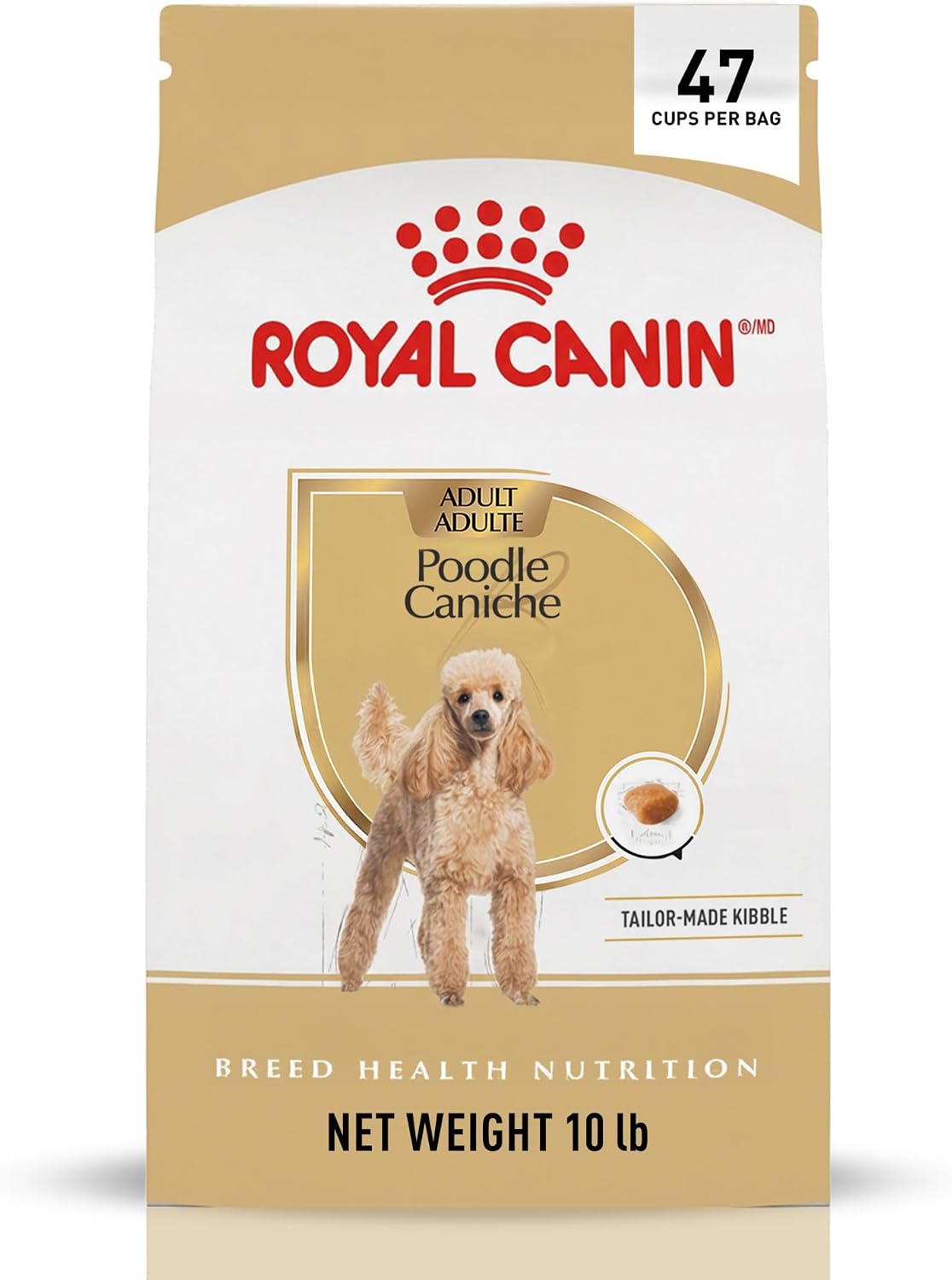
ROYAL CANIN Poodle Adult Dry Dog Food 10 lb
Best Overall Dry Food for Poodles
| Flavor | Chicken |
|---|---|
| Age Range Description | Adult |
| Item Form | Pellet |
| Unit Count | 160 Ounce |
| Specific Uses For Product | Muscle Care, Skin and Coat Health |
Royal Canin Poodle Adult Dry Dog Food is a breed-targeted kibble designed for adult Poodles that combines a specialized kibble shape with nutrients aimed at skin, coat, muscle and aging support. In daily use you feed it as the primary dry ration for Poodles 10 months and older, introducing it gradually over a week and keeping fresh water available. Notable features include EPA and DHA from fish oil for coat and skin support, a controlled protein level for muscle maintenance, added glucosamine and chondroitin for joint support, and an antioxidant blend for healthy aging. The kibble shape and texture are intended to match a Poodle's muzzle and biting pattern, which can make picking up and chewing easier for the breed. Practical benefits are targeted nutrition that addresses common Poodle needs like coat condition and dental brushing effect from dry food. Limitations are that the ingredient list contains common grains and by-product meal, so owners seeking grain-free or limited-ingredient diets will need a different formula, and this is formulated specifically for Poodles rather than for all breeds or dietary restrictions.
Best for: Owners of adult Standard Poodles who want a ready-made, breed-targeted dry food that supports coat condition, muscle maintenance and healthy aging without custom meal planning.
Less Ideal for: Pet owners looking for grain-free, limited-ingredient, or novel-protein formulas, or those feeding dogs with diagnosed food sensitivities should consider alternative diets.
- Breed-specific kibble shape and texture designed for Poodle muzzle and biting patterns
- Includes EPA and DHA from fish oil to support skin and coat health
- Precise protein level plus added glucosamine and chondroitin to support muscle and joint health
- Antioxidant blend formulated to help healthy aging
- Contains grains and chicken by-product meal, so not suitable for owners seeking grain-free or single-protein diets
- Formulation is breed-specific and may not suit other breeds or dogs with strict dietary restrictions
Verdict: The best overall dry food for poodles combines complete nutrition, palatability, appropriate kibble size, and proven ingredient quality for everyday feeding.
Pedigree Adult Dry Dog Food 3.5 lb
Best Budget Dry Food for Poodles

| Flavor | Chicken & Vegetable |
|---|---|
| Age Range Description | Adult |
| Item Form | Dry Kibble |
| Specific Uses For Product | Digestive Health |
| Unit Count | 56 Ounce |
Pedigree Adult Complete Nutrition is an everyday dry kibble designed to deliver complete adult nutrition with a focus on six health areas like digestion, immunity, skin and coat, heart, bones, and dental care. It is typically served as a staple meal or mixed with wet food and includes prebiotic fiber for digestion plus Vitamin Goodbites pieces for added vitamins. The formula lists high-quality protein sources and calcium to support muscles and bones, and the crunchy kibble helps reduce plaque. Practical benefits include easy feeding with a standard daily feeding guide and wide breed suitability, so it works for small-breed dogs when portioned correctly. Limitations for a Shih Tzu buyer to note are the kibble size and ingredient list, which contains grain and some color additives that some owners avoid for sensitive dogs, and the bag is a small 3.5 lb pack that will require frequent repurchase for multi-dog households. For budget-conscious buyers who want a complete, widely available adult formula that supports general health essentials, Pedigree is a straightforward, no-frills choice.
Best for: Shih Tzu owners looking for an affordable, complete adult dry food that covers core nutrition needs and digestive support while keeping monthly costs low.
Less Ideal for: Owners who need a grain-free, limited-ingredient, or small-breed–specific kibble formulation for very sensitive or toy-breed mouths should consider alternatives tailored for those needs.
- Formulated to support six everyday health essentials including digestion and skin and coat
- Includes prebiotic fiber to aid digestion
- Crunchy kibble helps reduce plaque through mechanical cleaning
- Contains Vitamin Goodbites pieces for added vitamin boost
- Widely suitable for all breed sizes with an easy feeding guide
- Contains grains and artificial color additives that may not suit sensitive dogs
- Kibble size is not specifically labeled for small breeds and may require monitoring with tiny mouths
- 3.5 lb bag size means more frequent purchases for single-dog owners feeding daily
Verdict: The best budget dry food for poodles offers dependable daily nutrition and decent ingredient quality at a lower price for cost-conscious households.
ORIJEN Small Breed Dry Dog Food 10 lb
Best Premium Dry Food

| Flavor | Grain Free Small Breed Dog Recipe |
|---|---|
| Age Range Description | All Life Stages |
| Item Form | Dry Kibble |
| Unit Count | 160 Ounce |
ORIJEN Small Breed is a protein-forward dry kibble designed for small dogs and formulated to mirror ancestral diets by using fresh and raw animal ingredients. It is typically fed twice daily and comes in a small-bite kibble that is easier for small mouths to pick up, with the first ingredients listing multiple fresh or dehydrated poultry and fish sources plus organ meats for nutrient density. The formula emphasizes WholePrey components and reports about 85% animal ingredients from the unprocessed state, which supports muscle maintenance and higher energy needs for active small breeds. The freeze-dried coating boosts palatability, and the recipe excludes common fillers like corn, wheat, soy, and tapioca. Buyers should note this is a grain-free, high-protein diet so portioning should be monitored to maintain weight, and the rich ingredient mix may be more expensive than standard formulas. Transition gradually over 10 to 14 days to reduce digestive upset when switching to this richer diet.
Best for: Boston Terriers or other small, active dogs that need a protein-dense diet to support muscle and energy should consider this food, especially if you prioritize whole-animal ingredients and palatability.
Less Ideal for: Dogs that require a lower-protein or limited-ingredient diet for medical reasons or owners seeking a budget-focused everyday kibble should consider alternatives.
- Very high proportion of animal-based ingredients including fresh and dehydrated meats and organs
- Small-bite kibble shaped for easier eating by small breeds
- Grain-free formula with no corn, wheat, soy or tapioca
- Freeze-dried coating improves palatability and flavor acceptance
- Formulated to support digestive, immune, and skin and coat health
- Rich, high-protein formula may require careful portion control to avoid excess calorie intake
- Grain-free specialty ingredients typically come at a higher price point
Verdict: The best premium dry food is aimed at owners who want top-tier ingredients, advanced nutrient profiles, and tighter quality control regardless of price.
Purina ONE Plus Small Breed Lamb 7.4 lb
Best High-Protein Dry Food

| Flavor | Lamb & Rice |
|---|---|
| Age Range Description | Adult |
| Breed Recommendation | Small Breeds |
| Package Size Name | 7.4 lb. Bag |
Purina ONE +Plus Small Breed Lamb & Rice is a dry kibble formulated for adult small dogs with real lamb as the first ingredient and a nutrient-dense profile aimed at supporting muscle, coat, and immune health. In everyday use you feed measured portions based on the included feeding guide and can transition over 7 to 10 days to avoid digestive upset. The recipe pairs crunchy kibble with tender morsels to entice picky eaters and provides added vitamins, minerals, omega-6 fatty acids, and antioxidants for skin, coat, and immune support. Its higher-protein focus and inclusion of chicken meal and other concentrated protein sources help maintain muscle mass and energy in active or lean small dogs. Practical benefits include factory-quality manufacturing in Purina-owned U.S. facilities and a formulation that avoids poultry by-product meal and artificial flavors or preservatives. Limitations are that the ingredient list includes grains and common plant proteins such as corn and soybean meal, which some owners may want to avoid, and it is a standard kibble form so dogs with specific dental or swallowing issues might require alternative textures.
Best for: Active, lean, or athletic small-breed owners seeking a higher-protein, nutrient-dense dry food to help maintain muscle and energy across daily activity.
Less Ideal for: Owners who need a grain-free, limited-ingredient, or veterinary-prescribed elimination diet for suspected food sensitivities should consider alternatives.
- Real lamb is the first ingredient to support meat-forward protein intake
- Formulated for small breeds with nutrient-dense kibble and added vitamins and minerals
- Contains omega-6 fatty acids and antioxidants for skin, coat, and immune support
- Crunchy kibble plus meaty morsels improves palatability for picky small dogs
- Made in Purina-owned U.S. facilities with no artificial flavors or preservatives
- Includes grains and plant-based protein meals that some owners avoid
- Not formulated as a grain-free or novel-protein diet for dogs with specific allergies
Verdict: The best high-protein dry food suits active or athletic dogs needing extra protein for muscle maintenance and higher energy demands.
Nulo FreeStyle Small Breed Salmon & Lentils
Best Grain-Free Dry Food

| Flavor | Salmon & Lentils |
|---|---|
| Item Form | Dry |
| Breed Recommendation | Small Breeds |
| Package Size | 6 lb Bag |
| Special Ingredients | Probiotic |
Nulo FreeStyle Small Breed Salmon & Lentils is a grain-free kibble designed for toy and small-breed puppies and adults. It uses deboned salmon and other animal meals to deliver a high proportion of animal-sourced protein and smaller kibble sized for little mouths. The formula includes omega fatty acids for skin and coat health, taurine and essential amino acids for heart support, and BC30 probiotics plus prebiotic fibers aimed at improving digestion and nutrient absorption. It excludes common fillers and several potential allergens such as grains, chicken, eggs, and artificial colors or preservatives, which can help dogs with grain sensitivities. Feeding follows standard daily portion guidance for small dogs, and the product emphasizes steady energy and lean-muscle support for active little dogs. Limitations are that it is grain-free and higher in animal protein, which may not be necessary or ideal for every Havanese depending on individual medical advice, and owners should confirm portions with their veterinarian for weight management and specific health needs.
Best for: Owners of Havanese who want a grain-free recipe tailored to small mouths and who prioritize animal-based protein, coat support, and digestive-friendly probiotics.
Less Ideal for: Owners whose dogs are on veterinary-prescribed grain-inclusive or low-protein diets, or those who prefer formulas with whole grains for long-term weight management.
- High ratio of animal-based protein with deboned salmon first for lean muscle support
- Smaller kibble size suited to small and toy breed mouths
- Includes omega-3 and omega-6 fatty acids to support skin and coat condition
- Contains BC30 probiotics and prebiotic fibers to help digestive health and nutrient absorption
- Grain-free formulation may not be appropriate for dogs that do better on whole grains or specific veterinary diets
- Higher protein, calorie content requires careful portion control to avoid weight gain
Verdict: The best grain-free dry food fits owners seeking formulas without grains while still delivering balanced vitamins, minerals, and protein sources.
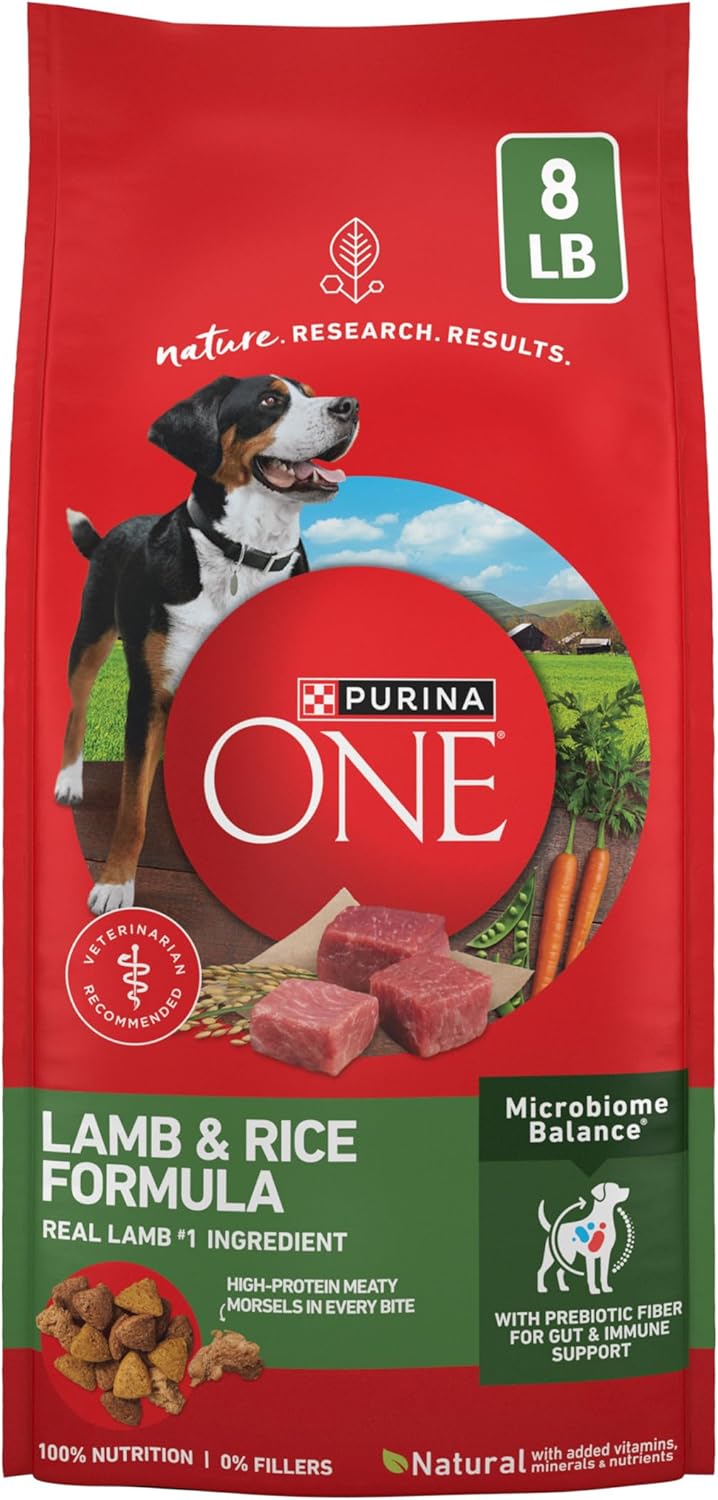
Purina ONE Lamb & Rice Dog Food 8 lb
Best Limited-Ingredient Dry Food
| Flavor | Lamb & Rice |
|---|---|
| Age Range Description | Adult |
| Unit Count | 128 Ounce |
| Item Form | Kibble |
Purina ONE Lamb & Rice is a conventional dry adult dog food that uses real lamb as its primary ingredient and a SmartBlend of nutrients aimed at supporting muscle, heart, gut and coat health. It is fed as a complete daily diet in measured portions using the feeding chart on the bag, providing crunchy kibble plus occasional softer morsels that many dogs find palatable. Notable features include prebiotic fiber for microbiome balance, sources of glucosamine from lamb and chicken by-product meal for joint support, and added vitamins and minerals for eye and immune support. For budget-minded owners this formula delivers a high protein profile and broad targeted benefits without specialty ingredients or premium novel proteins, so it covers routine nutrition needs reliably. Limitations are typical of mainstream formulas: it contains common grains and by-product meal rather than single-source novel protein, so dogs with specific allergies or those needing a limited-ingredient or grain-free diet should look elsewhere.
Best for: Owners seeking an affordable, everyday adult dog food that provides complete nutrition and multiple targeted health supports without premium specialty ingredients.
Less Ideal for: Owners who need a limited-ingredient, novel-protein, or grain-free diet for diagnosed food sensitivities should choose a specialized formula instead.
- Real lamb listed as the first ingredient for a recognizable protein source
- Includes prebiotic fiber to support gut microbiome and digestion
- Added vitamins and minerals for eye, immune and overall maintenance
- Contains sources of glucosamine to help support joint health
- Widely available standard kibble that many dogs accept readily
- Contains common grains and chicken by-product meal which may not suit dogs with ingredient sensitivities
- Not a limited-ingredient or grain-free formula for elimination-diet needs
Verdict: The best limited-ingredient dry food is for poodles with food sensitivities or allergies, offering a short, transparent ingredient list to simplify elimination and digestion.
Hill's Science Diet Senior 7+ Small Bites
Best Senior-Formulated Dry Food

| Flavor | Chicken, Brown Rice, & Barley |
|---|---|
| Age Range Description | Senior Adult 7+ |
| Item Form | Pellet |
| Animal Food Diet Type | Veterinary Diet |
| Unit Count | 80 Ounce |
Hill's Science Diet Senior Adult 7+ Small Bites is a veterinary-formulated dry food made for aging small-breed dogs that need controlled nutrition and easier-to-chew kibble. The recipe centers on chicken meal with barley and rice and includes a small kibble size for mouth comfort and portion control for lower-activity seniors. Notable features are balanced minerals for heart and kidney health, omega-6 and vitamin E for skin and coat, L-carnitine and digestible proteins for lean muscle maintenance, and a prebiotic fiber blend (ActivBiome+) to support digestion and immune function. In practice this food works well as an everyday maintenance diet for older poodles that benefit from smaller bites and nutrient support for organs and coat condition. Limitations include its narrow focus on small-breed seniors only and that it is a standard dry formula without added joint-specific supplements like high-dose glucosamine or chondroitin, so dogs with advanced arthritis may need a targeted joint supplement or prescription product alongside it.
Best for: Poodle owners seeking a veterinarian-developed everyday dry food for older, lower-activity dogs that prefer small kibble and need broad organ, coat, and digestive support.
Less Ideal for: Owners looking for a dedicated joint therapy diet, prescription renal formulas, or a food for large-breed senior poodles should consider alternatives tailored to those specific needs.
- Small kibble size designed for senior small-breed mouths and easier chewing
- Formulated to support heart, kidney, digestion, and immune health with balanced minerals and antioxidants
- Includes digestible proteins and L-carnitine to help maintain lean muscle in less active seniors
- Contains prebiotic fibers (ActivBiome+) to promote digestive balance
- Does not explicitly include high-dose joint supplements like glucosamine or chondroitin
- Formulated for small-breed seniors and may not suit larger poodle varieties
Verdict: The best senior-formulated dry food targets aging dogs by providing controlled calories, joint-support nutrients, and digestible proteins appropriate for reduced activity levels.
Choosing the Right Dry Dog Food Poodle: Key Factors to Consider
Protein Source and Digestibility
High-quality animal proteins are central to maintaining muscle tone and overall health in poodles. Digestibility matters because a protein that is easy to break down reduces gastrointestinal workload and supports nutrient absorption, which is especially important for smaller or older poodles.
Check whether the primary ingredient is a named meat rather than a byproduct. Also look for complementary ingredients like fermented fibers or probiotics that help the gut make better use of protein. If your poodle has a history of food sensitivity, consider single-protein or limited-ingredient options to help isolate triggers.
Kibble Size and Shape
Kibble geometry directly affects how comfortably a poodle can pick up and chew its food. Pieces that are too large can cause frustration and hurried swallowing, while pieces that are too small may encourage gulping and increase the risk of choking for certain dogs.
Select kibble sized for your poodle's jaw and chewing habits. Some kibble textures also provide mild abrasion that helps reduce plaque buildup. If you rotate between wet and dry, choose a kibble shape that holds up when mixed without becoming a soggy paste.
Fatty Acids for Skin and Coat
Poodles are known for their distinctive coats, and essential fatty acids like omega-3 and omega-6 support skin resilience and a glossy coat. Adequate levels help reduce flaking, itching, and seasonal dullness.
Look for explicit sources of omega-3s such as fish oil or algae and omega-6s from quality vegetable oils. The balance between these fats matters; formulas should list amounts or guaranteed analysis so you can compare. For dogs with skin allergies, formulations with boosted omega-3s often reduce reliance on topical therapies.
Calorie Density and Portion Control
Poodles vary from toy to standard sizes, and calorie needs differ widely across that range. A food's calorie density determines portion sizes and how easy it is to maintain ideal body weight. Overfeeding high-calorie kibble leads to rapid weight gain, while low-calorie formulas may not meet the energy needs of active poodles.
Review the kcal per cup on the feeding guidelines and adjust portions to your dog's activity level. If you plan to use kibble for training, choose a formula with moderate calorie density or reduce meal portions accordingly to avoid excess calories from treats.
Allergen and Sensitivity Considerations
Poodles can be prone to food sensitivities that show up as itchy skin or loose stools. Common triggers include certain grains or novel protein cross-reactions. Identifying potential allergens in the ingredient list can prevent chronic symptoms and support long-term comfort.
If you suspect a sensitivity, choose limited-ingredient diets or single-protein options and introduce them in a controlled elimination trial. Also check for added digestive aids and fiber blends that can ease transitions and reduce incidence of loose stools during diet changes.
Life-stage and Special-formula Suitability
Nutritional needs change with age, pregnancy, and activity. Puppy formulas tend to have higher protein and calorie levels to support growth, while senior formulas may prioritize joint support and lower calorie density. Reproductive or high-performance dogs need adjusted nutrient profiles.
Match the formula to your poodle's current life stage and adjust when major lifestyle changes occur. Some formulas include joint-support nutrients like glucosamine and chondroitin which can be helpful for active or aging poodles, but these should be considered alongside your vet's recommendations.
How Do I Change My Poodle's Food Without Upsetting Digestion?
Switch gradually over 7 to 10 days, starting with mostly the current food and slowly increasing the percentage of the new food each day. A typical schedule is 75/25 for two days, then 50/50, then 25/75, and finally all new food, while monitoring stool quality.
If your poodle has sensitive digestion, extend the transition to two weeks and add a probiotic support or a small amount of plain, cooked pumpkin to stabilize stools. Cut back if you see recurring diarrhea or vomiting and consult your veterinarian.
- Monitor stool firmness and frequency daily during the transition
- Introduce any limited-ingredient or novel-protein formula more slowly
- Avoid abrupt switches after vaccinations or illness
Which Ingredients Commonly Indicate Lower-quality Dry Food?
Vague ingredient terms such as unspecified meat byproducts, unnamed animal meals, or broad grains listed without qualifiers can signal lower-quality formulas. High levels of unnecessary fillers like excess corn gluten or unnamed preservatives also reduce the nutrient-to-calorie ratio.
That said, a single ingredient on the list does not condemn a formula. Evaluate the overall ingredient panel and guaranteed analysis, not just one line item.
- Watch for unnamed animal or meat derivatives
- Check for artificial colors and unnecessary flavorings
- Consider the balance of protein to carbohydrate by guaranteed analysis
How to Pick the Right Formula for Coat and Skin Health?
Prioritize formulas that list specific omega-3 sources and include antioxidants and zinc for skin repair. A readily digestible protein and adequate fat content support a glossy coat. If your poodle has flaky skin or dull hair, choose a food higher in long-chain omega-3s and check for vitamin E and biotin.
If topical treatments are already in use, the dietary approach can be complementary. Expect dietary changes to take several weeks to show visible coat improvement.
- Look for named fish oils, vitamin E, and biotin in the ingredient or supplement panel
- Allow 6 to 12 weeks to evaluate coat response after switching diets
- Consult your vet if skin issues persist despite dietary changes
Can Dry Food Help with Dental Hygiene for Poodles?
Some dry kibbles are formulated with textures designed to provide mild abrasive action that helps reduce plaque. While no kibble replaces toothbrushing, choosing a kibble with a texture and size suited to your poodle can assist daily oral care.
Supplement dry feeding with regular toothbrushing, dental chews appropriate for your dog's size, and periodic professional dental checks to maintain oral health.
- Prefer kibble with a texture that encourages chewing rather than gulping
- Combine dry feeding with regular toothbrushing for best results
- Schedule dental exams if tartar or bad breath persists
Should I Choose a Single-protein or Multi-protein Formula?
Single-protein diets simplify identifying food sensitivities and are useful during elimination trials. They reduce the number of potential triggers while still meeting nutritional requirements when properly formulated.
Multi-protein diets can provide a broader amino acid profile and are often fine for dogs without sensitivities. Choose based on your poodle's health history and, when in doubt, follow veterinary guidance.
- Use single-protein formulas for suspected food allergies
- Multi-protein options are acceptable for dogs without sensitivities
- Always transition slowly when changing protein sources
How We Chose the Best Dry Dog Food Poodle
We chose products by focusing on nutrition, kibble design, digestibility, protein quality, safety record, and life-stage suitability. First, ingredient quality was assessed by checking primary protein sources and the presence of essential fatty acids that support skin and coat health. Second, kibble size and texture were evaluated to ensure the pieces are manageable for poodle bite size and help with tartar control. Third, formulation balance was examined for vitamins, minerals, and appropriate caloric density relative to small- and medium-poodle metabolisms. We also considered digestibility markers such as the presence of prebiotics, fiber types, and limited fillers that commonly cause gastric upset. Manufacturing safety and consistency indicators were reviewed; products with frequent formulation volatility or major recall histories were excluded. Finally, life-stage options and sensitivity formulas were included so owners can find suitable choices for puppy, adult, or sensitive-stomach poodles. Exclusions: treats, wet foods, and multi-species formulas were not considered. The end result is a focused list reflecting real-world feeding needs for poodles.
Our full evaluation process is outlined in our review methodology.
FAQ
How much dry food should I feed my poodle each day?
Daily amounts depend on your poodle's size, age, and activity level. Check the kcal per cup on the bag and use the feeding chart as a starting point, then adjust portions to maintain a healthy body condition score. Frequent small meals can help regulate metabolism for smaller poodles.
Is grain-free dry dog food better for poodles?
Grain-free diets are not inherently better and often address specific grain sensitivities. Unless your poodle shows signs of grain intolerance, a balanced formula that includes whole grains can provide fiber and nutrients. Discuss persistent skin or digestive issues with your veterinarian before switching.
Can I feed puppy formula to a small adult poodle for more calories?
Puppy formulas have higher calories and nutrient ratios designed for growth and can lead to excess weight if fed long-term to adults. If your adult poodle needs more calories due to high activity, choose an adult maintenance formula with higher calorie density or consult your vet for a controlled plan.
How long after switching foods will I see coat improvements?
Visible changes in coat quality usually take six to twelve weeks after switching to a food richer in essential fatty acids and quality protein. Improve expectations: underlying skin conditions may require longer or adjunctive treatments.
Are small-breed formulas better for toy poodles?
Small-breed formulas are designed with smaller kibble and higher calorie density, which can suit toy poodles. However, match the formula to your dog's actual weight and activity level rather than breed labels alone, and monitor body condition to avoid overfeeding.
Final Verdict
Prioritize protein quality, appropriate kibble size, and omega-fatty acid levels when selecting dry food for a poodle. Balance calorie density with your dog's activity level and life stage to maintain ideal body weight and preserve coat condition. If sensitivities are suspected, start with a limited-ingredient or single-protein formula and transition slowly while consulting your veterinarian. Focusing on these tradeoffs will help you choose a dry food that supports digestion, dental health, and a healthy coat, allowing you to make a confident selection for your poodle.

