

If your dog struggles with recurring yeast infections or chronic skin irritation, the right dry food can make a meaningful difference in daily comfort and long-term skin health. You want a formula that limits ingredients that feed yeast, supports a balanced microbiome, and delivers complete nutrition without unnecessary fillers. This guide shortlists the top dry foods for dogs with yeast issues and explains the criteria used to evaluate them, including ingredient profiles and digestibility. Use the picks and guidance here to narrow choices and find an option that fits your dog's size, age, and tolerance. Read on to see what matters most when selecting a dry diet for yeast-prone dogs.
Top Picks at a Glance
| Best Overall Dry Food for Dogs with Yeast Issues A balanced, vet-friendly dry formula tuned for yeast-prone dogs | Hill's Science Diet Sensitive Stomach & Skin Chicken |  |
| Best Budget Dry Food for Dogs with Yeast Issues A low-cost option that still avoids common yeast triggers | IAMS Proactive Health Sensitive Skin & Stomach 4.5 lb |  |
| Best Limited-Ingredient Dry Food Simpler formulas with fewer ingredients to reduce allergen risk | Zignature Zssential Dry Dog Food 4lb |  |
| Best Grain-Free Dry Food Formulas without grains to limit fermentable carbs and irritants | Nature's Recipe Grain Free Salmon 4 lb |  |
| Best Novel-Protein Dry Food Uses uncommon protein sources to reduce sensitivity-driven flares | Purina ONE Lamb & Rice Dog Food 8 lb |  |
| Best Premium Dry Food Higher-end formulas with specialized ingredients and sourcing quality | Fromm Four-Star Beef Frittata Veg 4 lb |  |
Hill's Science Diet Sensitive Stomach & Skin Chicken
Best Overall Dry Food for Dogs with Yeast Issues

| Flavor | Chicken |
|---|---|
| Age Range Description | Adult 1-6 |
| Unit Count | 64 Ounce |
| Specific Uses For Product | Stomach & Skin Sensitivity support |
Hill's Science Diet Adult Sensitive Stomach & Skin Chicken is a dry formula aimed at dogs that experience occasional digestive upsets and skin issues. It uses highly digestible proteins and prebiotic fiber to support a balanced gut microbiome and better nutrient absorption, while added vitamin E and omega fatty acids help maintain skin and coat health. Typical use is as an everyday complete diet for adult dogs, with feeding instructions and a 7-day transition recommendation printed on the bag. Notable features include chicken as the first ingredient, prebiotic fiber, and clinically proven antioxidants like vitamins C and E to support the immune system. In practice this food is easy to portion, palatable for many dogs, and designed to reduce the frequency of digestive disturbances compared with standard recipes. Limitations to consider are that it remains a grain-containing formula (barley and rice are present) and the ingredient list includes several legumes and grains that some owners avoid for specific elimination diets, so dogs with strict ingredient sensitivities may still require veterinary guidance or a prescription rotation.
Best for: Buyers seeking an everyday, veterinarian-recommended dry food that reduces occasional digestive upset while supporting skin health and immunity in adult dogs.
Less Ideal for: Owners who need a strict elimination or prescription-only formula for confirmed food allergies or serious chronic gastrointestinal disorders should consider alternative veterinary options.
- Formulated for sensitive stomachs with highly digestible proteins and prebiotic fiber
- Includes vitamin E and omega fatty acids to support skin and coat health
- Clinically proven antioxidants (vitamins C and E) to support immune health
- Chicken is the first ingredient and uses natural ingredients with added vitamins and minerals
- Contains grains and peas so it is not suitable for dogs on strict grain-free or limited-ingredient protocols
- Not a veterinary prescription diet; dogs with severe chronic digestive disease may need a vet-prescribed formula
Verdict: The best overall dry food for dogs with yeast issues, offering an evidence-based balance of ingredients, low-yeast-friendly nutrient profile, and consistent stool and skin support for most affected pets.
IAMS Proactive Health Sensitive Skin & Stomach 4.5 lb
Best Budget Dry Food for Dogs with Yeast Issues

| Flavor | Salmon |
|---|---|
| Age Range Description | Adult |
| Item Form | Dry Kibble |
| Specific Uses For Product | Digestive Health, Sensitive Skin, Sensitive Stomach |
| Unit Count | 72 Ounce |
IAMS Proactive Health Sensitive Skin & Stomach is a salmon-forward dry kibble aimed at adult dogs with sensitive skin or stomachs. You feed it like any everyday dry food and the bag is designed for standard portioning using the package feeding guidelines; the label also recommends a gradual four-day transition. Notable features include real salmon as the number one ingredient, a chicken-free formulation to reduce common protein triggers, added prebiotic fiber and highly digestible components for digestive support, and a clinically balanced omega-6 to omega-3 ratio to help skin and coat. The recipe is complete and balanced for adults and includes vitamins, minerals, and antioxidants for overall vitality. On the practical side this is an affordable, vet-recommended brand offering a straightforward sensitive-care formula without specialty proteins or prescription-only claims. Limitations are that the formula still lists barley and egg as allergens, and trace cross-contact with chicken is possible, so it is not suitable for dogs with strict single-protein elimination needs or confirmed allergies to listed ingredients.
Best for: Owners looking for an affordable, everyday dry formula that improves digestive comfort and skin condition for adult dogs with mild food sensitivities and no need for single-protein prescriptions.
Less Ideal for: Families whose dogs require strict single-protein elimination, have confirmed allergies to listed ingredients, or need veterinary-prescribed therapeutic diets should choose alternatives.
- Real salmon listed as the first ingredient for animal protein focus
- Chicken-free primary recipe to reduce common sensitivity triggers
- Formulated with prebiotic fiber and highly digestible ingredients to support digestion
- Balanced omega-6 and omega-3 ratio to help skin and coat condition
- Complete and balanced for adult dogs with added antioxidants for immune support
- Contains barley, egg, and other potential allergens that may affect some sensitive dogs
- Manufacturer notes possible trace cross-contact with chicken, so not suitable for strict elimination diets
Verdict: The best budget dry food for dogs with yeast issues that minimizes common carbohydrate and ingredient triggers while delivering acceptable nutrition and value for owners on a tighter budget.
Zignature Zssential Dry Dog Food 4lb
Best Limited-Ingredient Dry Food

| Flavor | Zssential |
|---|---|
| Age Range Description | All Life Stages |
| Item Form | Dry |
| Animal Food Diet Type | Limited Ingredient |
| Unit Count | 64 Ounce |
Zignature Zssential is a limited-ingredient, grain-free dry kibble that centers on high-quality fish and animal proteins and is fortified with probiotics. It is typically used as an everyday meal or part of a rotational diet for dogs with ingredient sensitivities or households with multiple dogs; the small bites option suits medium and smaller breeds. Notable features include a single-animal protein focus, grain-free formulation, and added omega-3s from fish sources, which together make the recipe easier to digest for dogs with picky tastes or mild sensitivities. Practical benefits include support for gut health from probiotics, higher protein content to help maintain lean mass, and a flavor profile that tends to appeal to dogs that favor fish-based foods. Limitations to consider are that it remains a dry kibble so very sensitive dogs may still need a prescribed novel-protein veterinary diet, and the 4 lb bag size may be small for large dogs or multi-dog homes that consume food quickly. Overall, it works well as a simple, tasty option for dogs that do best on reduced-ingredient, grain-free diets.
Best for: Buyers seeking a simpler, easy-to-digest dry food that still appeals to picky eaters and supports gut health with fewer ingredients.
Less Ideal for: Owners who need veterinary prescription novel-protein formulas for strict food allergies or those who require very large bulk bags for multiple large dogs.
- Grain-free limited-ingredient formula focused on fish and animal proteins
- Fortified with probiotics to support gut health
- High protein and omega-3 rich ingredients for nutritional support
- Available in small-bite kibble suitable for medium and smaller breeds
- Not a prescription novel-protein diet for dogs with severe allergies
- 4 lb bag may be too small for large dogs or multiple-dog households
Verdict: The best limited-ingredient dry food for owners who want a short, transparent ingredient list to help identify and avoid potential yeast-promoting components.
Nature's Recipe Grain Free Salmon 4 lb
Best Grain-Free Dry Food

| Flavor | Salmon |
|---|---|
| Life stage | Adult |
| Unit Count | 64 Ounce |
| Special Ingredients | grain-free |
| Breed Recommendation | All Breed Sizes |
Nature's Recipe Grain Free Salmon, Sweet Potato & Pumpkin is a 4 lb dry dog food built around real salmon as the top ingredient and carbohydrate sources chosen for digestibility. It is typically fed as a regular adult diet and can be used as the sole kibble or mixed with wet food; the package is resealable for everyday use. Key features include salmon and salmon meal for animal protein, grain-free carbohydrate sources like sweet potato and pumpkin to supply fiber, and added vitamins and minerals intended to support immune and digestive health. In practice this formula offers an accessible grain-free option for dogs with suspected grain sensitivities and for owners prioritizing skin and coat support from omega-rich fish ingredients. Limits to consider are that grain-free does not guarantee relief for all gastrointestinal or skin issues and ingredient-sensitive dogs may still react to novel proteins or peas, and the 4 lb bag may require frequent repurchasing for larger dogs or multi-dog households.
Best for: Owners who prefer grain-free formulas to address suspected grain-related sensitivities and want a salmon-based recipe aimed at supporting digestion and skin and coat health.
Less Ideal for: Owners seeking large-bag, economy feeding solutions or those whose dogs have known sensitivities to fish, peas, or other included ingredients should consider alternatives.
- Real salmon is listed as the number one ingredient for animal-based protein
- Grain-free carbohydrate sources like sweet potato and pumpkin provide digestible fiber
- Includes added vitamins and minerals aimed at digestive and immune support
- Resealable 4 lb bag is convenient for daily feeding and freshness
- Grain-free formulation still contains legumes and novel ingredients that can trigger sensitivities in some dogs
- Small 4 lb bag may be inconvenient or less economical for large dogs or households with multiple dogs
Verdict: The best grain-free dry food for pet owners seeking to reduce fermentable grain carbohydrates and potential skin-irritating ingredients that can worsen yeast conditions.
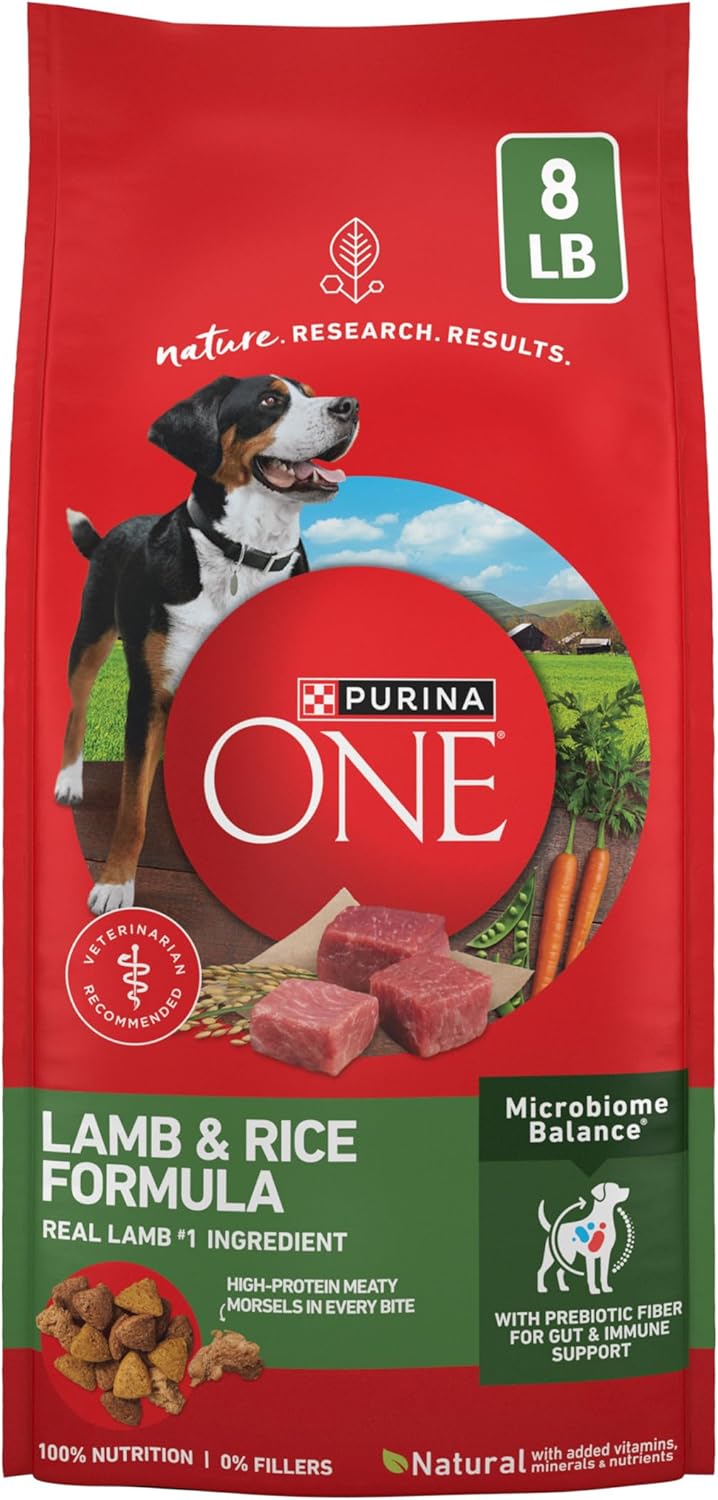
Purina ONE Lamb & Rice Dog Food 8 lb
Best Novel-Protein Dry Food
| Flavor | Lamb & Rice |
|---|---|
| Age Range Description | Adult |
| Unit Count | 128 Ounce |
| Item Form | Kibble |
Purina ONE Lamb & Rice is a conventional dry adult dog food that uses real lamb as its primary ingredient and a SmartBlend of nutrients aimed at supporting muscle, heart, gut and coat health. It is fed as a complete daily diet in measured portions using the feeding chart on the bag, providing crunchy kibble plus occasional softer morsels that many dogs find palatable. Notable features include prebiotic fiber for microbiome balance, sources of glucosamine from lamb and chicken by-product meal for joint support, and added vitamins and minerals for eye and immune support. For budget-minded owners this formula delivers a high protein profile and broad targeted benefits without specialty ingredients or premium novel proteins, so it covers routine nutrition needs reliably. Limitations are typical of mainstream formulas: it contains common grains and by-product meal rather than single-source novel protein, so dogs with specific allergies or those needing a limited-ingredient or grain-free diet should look elsewhere.
Best for: Owners seeking an affordable, everyday adult dog food that provides complete nutrition and multiple targeted health supports without premium specialty ingredients.
Less Ideal for: Owners who need a limited-ingredient, novel-protein, or grain-free diet for diagnosed food sensitivities should choose a specialized formula instead.
- Real lamb listed as the first ingredient for a recognizable protein source
- Includes prebiotic fiber to support gut microbiome and digestion
- Added vitamins and minerals for eye, immune and overall maintenance
- Contains sources of glucosamine to help support joint health
- Widely available standard kibble that many dogs accept readily
- Contains common grains and chicken by-product meal which may not suit dogs with ingredient sensitivities
- Not a limited-ingredient or grain-free formula for elimination-diet needs
Verdict: The best novel-protein dry food for dogs whose yeast problems may be tied to protein sensitivities, offering alternative proteins to help break cycles of irritation.
Fromm Four-Star Beef Frittata Veg 4 lb
Best Premium Dry Food

| Flavor | Beef Frittata Veg |
|---|---|
| Item Form | Pellet |
| Age Range Description | All Life Stages |
| Unit Count | 64 Ounce |
| Special Ingredients | Probiotics, Taurine, Salmon oil |
Fromm Four-Star Beef Frittata Veg is a grain-free dry kibble built around beef and complementary proteins with added fruits, vegetables, and probiotic cultures. It is fed as a complete diet and is typically portioned by weight per feeding to support maintenance, growth, or activity—Fromm lists guidance by body weight that you should adjust for your Havanese's energy level. Notable features include high-quality animal proteins (beef and pork meat meal), whole-egg and salmon oil for omega fats, a variety of fruit and vegetable inclusions for micronutrients, and added probiotics and taurine aimed at digestive and heart support. In practice the formula is palatable and easy to digest for small dogs, and the nutrient profile is intended for all life stages so you can feed puppies through seniors without switching. Limitations to consider: it is grain-free and uses several legumes and potato as carbohydrate sources which may not suit dogs with specific sensitivities, and the 4 lb bag size is convenient but may be costly per pound compared with larger bulk options.
Best for: Owners seeking a premium, nutrient-dense diet for a small-breed companion who prioritize ingredient quality and digestive and cardiac support for daily feeding.
Less Ideal for: Owners whose dogs require grain-inclusive diets or who have known sensitivities to legumes or potato should consider alternate formulations.
- High-quality animal proteins as primary ingredients for muscle maintenance
- Formulated for all life stages so one diet can serve puppies to seniors
- Includes probiotics and taurine to support digestion and heart health
- Contains fruits and vegetables for added micronutrients and fiber
- Grain-free formulation relies on peas/legumes and potatoes which can be problematic for dogs with legume sensitivities
- Smaller 4 lb bag increases cost per pound compared with larger sizes
Verdict: The best premium dry food for owners willing to invest in higher-quality ingredients, targeted supplements, and stricter sourcing standards to support long-term skin and microbiome health.
Choosing the Right Dry Dog Food Yeast Issues: Key Factors to Consider
Carbohydrate Type and Amount
Carbohydrates are a primary fuel source for yeast, so the type and quantity of carbs in a dry food directly influence risk of flare-ups. Look for formulas that use low-glycemic ingredients such as whole grains with a low starch load, or those that rely on certain vegetables and controlled fiber blends rather than high amounts of simple starches.
A lower total carbohydrate percentage helps reduce the substrates yeast can ferment. Also watch for concentrated sources of sugar, like sweet potato or fruit in large quantities, which may still promote yeast growth despite being "natural." Understanding the guaranteed analysis and ingredient order gives insight into how carbohydrate-heavy a formula is and whether it aligns with yeast-management goals.
Protein Source and Digestibility
Protein quality matters for repair and immune function and can affect digestion and skin health. Single, named animal proteins are easier to track for sensitivities and often digest more predictably, which helps maintain gut balance. Highly processed or anonymous meat meals can be harder to evaluate for quality and may carry more allergens.
Easily digestible proteins reduce undigested residues that could alter gut microbiota. For dogs with yeast issues, choose formulas that emphasize digestible, well-sourced protein and limit multiple novel proteins unless you are targeting a specific intolerance.
Fiber Type and Fermentability
Fiber influences gut microbial activity. Soluble, fermentable fibers can feed both beneficial bacteria and opportunistic yeasts, so the type and amount matter. Insoluble fibers promote healthy transit without providing fermentable substrates, which can be preferable when managing yeast.
Look for balanced fiber blends that support steady digestion and avoid excessive amounts of highly fermentable fibers like certain legumes or inulin. The goal is to support regular stool quality and gut function while not supplying excess fermentable material that could encourage yeast overgrowth.
Essential Fatty Acids and Skin Support
Omega-3 and omega-6 fatty acids help maintain the skin barrier, reduce inflammation, and support immune responses that keep yeast in check. A formula with appropriate levels of EPA, DHA, and linoleic acid can improve coat condition and reduce itchiness over time.
Because fatty acid content varies, check the guaranteed analysis and ingredient sources such as fish oil or specific seed oils. Proper balance between omega-3 and omega-6 is important; too much omega-6 without omega-3 may not deliver the desired anti-inflammatory effect.
Additives, Probiotics, and Prebiotics
Some dry foods include probiotics or prebiotic fibers intended to support a healthy gut microbiome. While these can benefit digestion and competitive microbial balance, not all prebiotics are appropriate for yeast-prone dogs because highly fermentable prebiotics may feed yeast.
Prefer formulas that use targeted probiotic strains known for gastrointestinal benefits and moderate, low-fermenting prebiotics. Also consider whether the probiotic delivery method supports viability through processing and storage, and whether the inclusion level is adequate for daily support.
Ingredient Transparency and Label Clarity
Clear, specific ingredient listings make it easier to evaluate whether a formula fits a yeast-management approach. Named proteins, specified carbohydrate sources, and visible inclusion of key skin-support nutrients help you assess suitability without hidden surprises. Vague terms like "meat meal" or unspecified "flavors" make it hard to know what you are feeding.
Label clarity also aids in testing an elimination trial. If you need to switch foods to identify triggers, a transparent ingredient list lets you compare formulas and recognize repeated components that might be the true cause of flare-ups.
How Long Before I Can Expect Food-related Improvement in Yeast Symptoms?
Changes in skin condition from a dietary shift usually take time because the skin and microbiome need to rebalance. Many dog owners see initial shifts in scratching or odor within two to six weeks, but clearer improvements in skin texture and coat quality often require eight to twelve weeks of consistent feeding.
If you start a new dry food aimed at reducing yeast stimuli, give a full elimination window before concluding it is ineffective. During that period, avoid introducing treats or table scraps that could reintroduce problematic ingredients and confound results.
- Initial changes: 2 to 6 weeks
- Meaningful skin improvement: 8 to 12 weeks
- Use an elimination window without other diet changes for reliable assessment
Can Treats and Toppers Undo the Benefits of a Yeast-friendly Dry Food?
Yes. Treats, toppers, and table scraps can contain high-glycemic carbs, dairy, or fermentable ingredients that fuel yeast. Even occasional exposure can sustain yeast populations and blunt the benefits of a carefully chosen dry food.
If your dog needs training rewards, choose low-carb, single-ingredient treats or use portions of the new kibble as training rewards. For meal toppers, prioritize plain proteins or low-fermentable vegetable purees and confirm any supplements do not include added sugars or yeast-promoting ingredients.
- Limit treats during an elimination or trial period
- Use kibble as rewards when possible
- Check topper ingredient lists for hidden sugars or fermentable fibers
Should I Expect Different Formulations for Puppies, Adults, and Seniors?
Nutritional needs vary across life stages, so look for life-stage appropriate formulations that also meet yeast-management goals. Puppies need diets formulated for growth with higher calorie density and specific nutrient ratios, while seniors may need adjustments for lower activity and joint support.
When managing yeast issues, select the correct life-stage formula that still follows the low-fermentable carbohydrate and skin-support principles. If a specialized life-stage formula conflicts with yeast-focused ingredient guidelines, prioritize managing yeast triggers and consult your veterinarian about supplementation for life-stage needs.
- Choose life-stage specific formulas that also fit yeast-management criteria
- Consult a veterinarian if tradeoffs are necessary
- Consider supplemental nutrients if a life-stage formula lacks targeted skin support
How to Transition Your Dog to a New Dry Food with Minimal Digestive Upset
Introduce a new dry food gradually over 7 to 10 days to reduce risk of diarrhea or other digestive upset. Start with mostly the old food and gradually increase the proportion of the new formula each day. Watch for stool consistency, appetite, and any increase in itchiness or odor during the transition.
If your dog has a very sensitive stomach, extend the transition to two weeks and consider mixing in a small amount of a bland, low-fermentable enhancer like plain cooked white fish or steamed chicken if recommended by your veterinarian. Always keep hydration consistent during a switch to support digestion.
- 7 to 10 day gradual transition for most dogs
- Extend to 14 days for sensitive dogs
- Monitor stool and skin response during the change
Reading the Label: Red Flags to Watch For
Certain ingredients are commonly associated with feeding yeast or worsening skin symptoms. High proportions of simple carbohydrates, unnamed meat derivatives, excessive sugar-containing ingredients, and large amounts of fermentable fibers are examples of components that deserve scrutiny.
Also be cautious with formulas that lack guaranteed analysis details for key nutrients like essential fatty acids. If a label does not clearly specify primary protein sources or carbohydrate types, it will be difficult to know whether the food aligns with a yeast-management approach.
- Watch for high placement of starches or sweet ingredients near the top of the ingredient list
- Avoid foods with vague meat or carbohydrate descriptors
- Check for listed sources of omega-3s and clear macronutrient breakdowns
How We Chose the Best Dry Dog Food Yeast Issues
We evaluated formulas that specifically support skin and microbial balance while providing complete canine nutrition. Our selection prioritized ingredient quality, focusing on carbohydrate sources, sugar content, and the presence of fermentable ingredients that can encourage yeast growth. Digestibility and protein sources were assessed to ensure formulas deliver amino acids without excessive allergenic potential. We also considered the inclusion of targeted nutrients that support skin barrier function, such as essential fatty acids and zinc, while giving weight to antioxidant and vitamin support that helps overall immune resilience. Evaluation criteria included ingredient lists and carbohydrate type, guaranteed analysis for macronutrient balance, fiber sources and fermentability, presence of beneficial nutrients for skin health, and reported digestibility for dogs with sensitive GI tracts. We excluded any formulas primarily marketed for unrelated conditions, such as weight loss or senior-specific mobility, unless they also matched the yeast-management ingredient profile. Products relying on vague "natural" labeling or with nontransparent ingredient sourcing were deprioritized. The final list reflects formulas that meet the practical needs of dogs prone to yeast issues while still providing balanced daily nutrition.
Our full evaluation process is outlined in our review methodology.
FAQ
Can a dry food alone cure chronic yeast infections?
A dry food can reduce dietary contributors and help control symptoms but it is rarely a standalone cure for chronic yeast infections. Underlying medical issues, skin environment, and hygiene also influence yeast overgrowth, so diet is one important part of a broader management plan.
Are grain-free diets better for dogs with yeast issues?
Grain-free does not automatically mean better for yeast problems because some grain-free formulas replace grains with other high-glycemic ingredients or fermentable starches. Evaluate the actual carbohydrate sources and total carbohydrate load rather than relying on grain-free labeling alone.
Should I use probiotic supplements with a dry food for yeast-prone dogs?
Some probiotic supplements can support gut balance, but effectiveness depends on strain, dose, and whether the supplement uses strains suited to canine GI health. Choose products with documented strains and moderate prebiotics, and discuss use with your veterinarian to ensure they complement the chosen diet.
What role do baths and topical care play alongside dietary changes?
Topical care and appropriate bathing help remove surface yeast and reduce skin irritation while dietary changes work more slowly. Use gentle, yeast-friendly shampoos and avoid overbathing, which can damage the skin barrier. Combine topical and dietary strategies for best results.
How do I know if my dog needs a veterinary-prescribed diet instead of an over-the-counter option?
If your dog has persistent or severe symptoms, secondary infections, or concurrent medical conditions, a veterinary evaluation is warranted. A veterinarian can recommend diagnostic testing and determine whether a prescription diet or targeted medical therapy is necessary in addition to dietary management.
Final Verdict
When managing yeast issues with dry food, prioritize ingredient transparency, low-glycemic carbohydrate choices, and balanced nutrients that support skin and immune health. Expect gradual improvement and be prepared to limit treats and topper use during a trial to accurately assess effectiveness. Balance the tradeoffs between life-stage needs and yeast-management priorities, and consult your veterinarian when symptoms persist or if you need help designing an elimination trial. With a thoughtful choice and a consistent feeding plan, you can reduce flare-ups and improve your dog's comfort over time.

