

Picking the right dry puppy food for a sensitive stomach matters because digestive upset can slow growth, affect energy, and make training harder. You want formulas that support steady weight gain, calm digestion, and deliver essential nutrients without common triggers. This guide shortlists seven top dry puppy foods selected for digestive tolerance and growth support. We focus on ingredient safety, protein and carbohydrate choices, and how formulas address common puppy sensitivities. Read on to see the criteria used and what matters when choosing a sensitive-stomach formula.
Top Picks at a Glance
| Best Overall Dry Puppy Food for Sensitive Stomach Balanced nutrition with gentle ingredients for sensitive tummies | Hill's Science Diet Puppy Sensitive Stomach & Skin |  |
| Best Budget Dry Puppy Food for Sensitive Stomach Lower-cost formulas that still prioritize gentle digestion | Pedigree Puppy Dry Dog Food 3.5 lb |  |
| Best Limited-Ingredient Dry Puppy Food Short, simple ingredient lists to reduce allergy triggers | Natural Balance Limited Ingredient Puppy Duck 22 lb |  |
| Best High-Protein Dry Puppy Food Higher protein levels to support growing muscles and activity | Bully Max Puppy Food 24/14 |  |
| Best Grain-Free Dry Puppy Food Grain-free recipes for puppies with grain sensitivities | Merrick Grain Free Puppy Food 10 lb |  |
| Best Small-Bite Dry Puppy Food Smaller kibble shapes designed for tiny mouths and teeth | Royal Canin X-Small Puppy Dry Food 3 lb |  |
| Best Premium Dry Puppy Food Higher-end formulas with superior ingredients and sourcing | ROYAL CANIN Gastrointestinal Puppy 22 lb |  |
Hill's Science Diet Puppy Sensitive Stomach & Skin
Best Overall Dry Puppy Food for Sensitive Stomach

| Flavor | Salmon & Brown Rice |
|---|---|
| Age Range Description | Puppy |
| Item Form | Dry Food |
| Unit Count | 64 Ounce |
| Animal Food Diet Type | Limited Ingredient |
Hill's Science Diet Puppy Sensitive Stomach & Skin is a dry puppy formula designed to reduce digestive upsets while supporting skin and coat during growth. It is used as an everyday puppy food or as a transitional diet when pups have mild stomach sensitivity; feeding instructions on the bag guide gradual switching. The recipe lists salmon as the first ingredient and includes prebiotic fiber to support a balanced gut microbiome, plus DHA from fish oil for brain and eye development and vitamin E and omega fatty acids for skin health. Practical benefits include easier digestion for sensitive puppies, nutrients targeted at immune and cognitive development, and a single-source fish protein focus that can simplify ingredient tracking. Limitations are that it is a dry kibble so dogs that require wet food or very limited-ingredient veterinary prescriptions may need other options, and the formula still contains multiple grains and added ingredients that some owners avoiding certain grains or novel-protein approaches might not prefer.
Best for: Buyers who prioritize a vet-recommended, digestive-friendly everyday puppy food that also supports skin and coat health for growing dogs.
Less Ideal for: Owners seeking a strict novel-protein, grain-free, or veterinary-prescription elimination diet should consider specialized formulas instead.
- Prebiotic fiber to support gut microbiome and help reduce occasional digestive upset
- Salmon is the first ingredient, providing a high-quality fish protein and DHA for development
- Added vitamin E and omega fatty acids to nourish skin and promote a healthy coat
- Clinically proven antioxidants including vitamins C and E to support immune health
- Contains multiple grains and shared protein sources, so not a novel-protein or grain-free prescription option
- Dry kibble format may not suit puppies needing canned diets or strict veterinary therapeutic feeds
Verdict: The best overall dry puppy food for sensitive stomachs, offering a balanced formula that soothes digestion while supporting growth, immune health, and energy needs.
Pedigree Puppy Dry Dog Food 3.5 lb
Best Budget Dry Puppy Food for Sensitive Stomach

| Flavor | Steak & Vegetable |
|---|---|
| Age Range Description | Puppy |
| Item Form | Dry Kibble |
| Unit Count | 56 Ounce |
| Target Species | Dog |
Pedigree Puppy Dry Dog Food is a traditional, affordable puppy kibble formulated to support growth and basic developmental needs. It is designed for daily feeding and includes high protein sources, DHA, calcium and phosphorus to support muscle, brain and bone development, plus a mix of vitamins and minerals to support immune health. The bag works well for routine feeding at home and can be served dry or softened with water for younger puppies. Ingredients include animal meals, chicken by-product meal and grains, so digestibility and ingredient quality are typical for value-focused formulas rather than premium grain-free or limited-ingredient diets. Practical benefits are straightforward: widely available, familiar feeding guidelines for different puppy weights, and added micronutrients like DHA. Important limitations are that the formula contains multiple common allergens and colored additives, and it is not aimed at owners seeking grain-free, single-protein, or specialty ingredient lists for sensitive pups.
Best for: Buyers prioritizing low-cost, complete puppy nutrition who want a straightforward, easy-to-feed formula for routine daily meals.
Less Ideal for: Owners of puppies with food sensitivities, those who need grain-free or single-protein diets, or buyers seeking premium ingredient lists and novel proteins.
- Formulated with DHA and minerals to support brain and bone development
- Complete and balanced for daily puppy feeding with established feeding guidelines
- Includes high-protein sources to support muscle growth
- Versatile serving—can be fed dry or softened with water for younger puppies
- Contains multiple common allergens and artificial color additives
- Uses by-product meals and grains rather than premium single-source proteins
Verdict: The best budget dry puppy food for sensitive stomachs that delivers digestible ingredients and essential nutrients at a wallet-friendly price without sacrificing core digestive support.
Natural Balance Limited Ingredient Puppy Duck 22 lb
Best Limited-Ingredient Dry Puppy Food
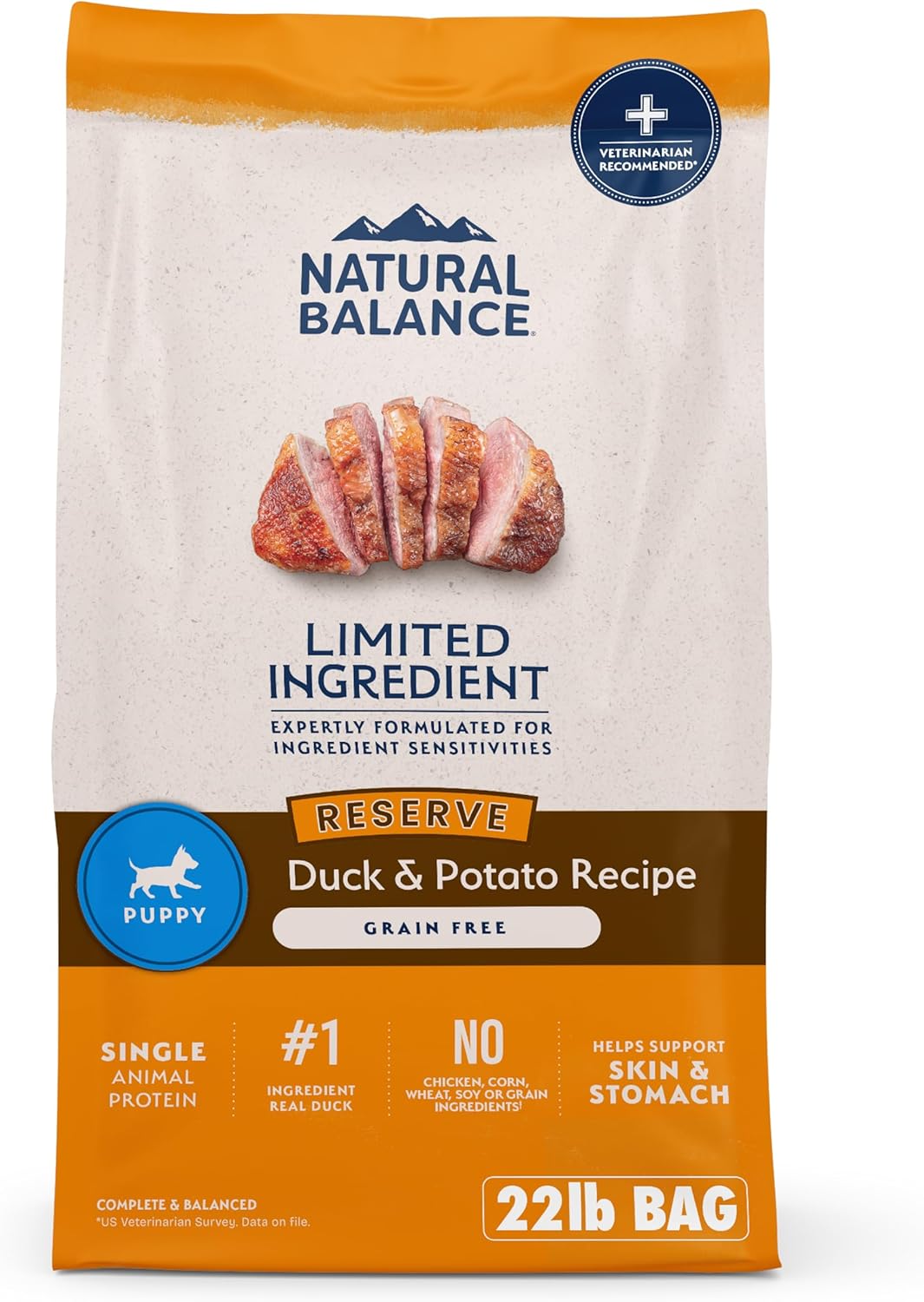
| Flavor | Duck |
|---|---|
| Age Range Description | Puppy |
| Item Form | Pellet |
| Animal Food Diet Type | Limited Ingredient |
| Allergen Information | Corn-Free, Grain-Free, Soy Free |
Natural Balance Limited Ingredient Puppy (Duck and Potato) is a dry kibble built around a single animal protein to simplify the ingredient profile for puppies with sensitivities. It is used as an everyday puppy diet or transitional food for pups with digestive or skin issues, with smaller kibble bites and DHA to support brain development. The recipe lists duck and duck meal first, uses potato and sweet potato as carbohydrate sources, and avoids corn, wheat, and soy which can help reduce common triggers. Practical benefits include added omega fatty acids for skin and coat, vitamins and minerals for growth and immune support, and feeding guidelines for weaning and different growth stages. Limitations are that it is still a complete commercial kibble so it may not identify specific allergens if a pup reacts to one of the included ingredients like potato or canola oil, and some puppies may prefer different protein or grain choices. The 22 pound bag size suits multi‑puppy households or long stretches between purchases but requires proper storage to keep freshness.
Best for: Puppy owners who prioritize a simplified ingredient list to reduce exposure to common dietary triggers while still wanting a nutritionally complete growth formula.
Less Ideal for: Owners seeking a novel-protein elimination diet that avoids all common carbohydrate sources or homemade/limited-ingredient single-ingredient diets should consider veterinary guidance or specialized formulas.
- Single animal protein (duck) first in the ingredient list to simplify the recipe for sensitive pups
- Grain-free recipe without corn, wheat, or soy which can reduce exposure to common triggers
- Includes DHA and smaller kibble bites tailored for puppy jaw development
- Added omega fatty acids and vitamins to support skin, coat, immune function, and growth
- Contains ingredients like potato, canola oil, and fish oil that can still trigger sensitivities in some dogs
- Large 22 lb bag requires careful storage to maintain freshness for small households
Verdict: The best limited-ingredient dry puppy food for owners wanting a minimal-ingredient recipe to help identify or avoid common dietary triggers while still meeting puppy nutritional needs.
Bully Max Puppy Food 24/14
Best High-Protein Dry Puppy Food

| Crude Protein | 24% |
|---|---|
| Crude Fat | 14% |
| Calories | 419 cal/cup |
| Primary Flavor | Lamb |
Bully Max Puppy Food is a meat-forward dry kibble designed to support healthy muscle growth, energy needs, and digestive health in growing puppies. It supplies 24% protein and 14% fat with 419 calories per cup, so it is typically used as a primary daily diet for puppies that need extra calories and protein during growth phases. Notable features include lamb meal as the first ingredient, added pork and fish meal for concentrated animal protein, and a TruMune postbiotic blend alongside prebiotics and probiotics to support gut health and immune development. Practical benefits include concentrated nutrition for steady weight gain and muscle development, formula gentleness for sensitive stomachs, and omega fatty acids for skin and coat support. Important limitations are that the formula is calorie-dense so portioning must be monitored to avoid excessive weight gain in less active puppies, and some owners may prefer a chicken-inclusive protein if lamb/pork is not suitable for their dog. It is best used with a feeding plan adjusted for breed, activity, and growth rate.
Best for: Puppy owners seeking a high-protein, calorically rich formula to support muscle development and growth, especially for puppies that benefit from digestive support.
Less Ideal for: Owners who need a lower-calorie or lower-protein puppy food for less active or quickly maturing breeds should consider gentler formulations instead.
- High protein (24%) and calorie density (419 cal/cup) to support muscle growth and energy
- Lamb meal listed as the first ingredient for concentrated animal protein
- Includes TruMune postbiotics plus prebiotics and probiotics for digestive and immune support
- Formulated without corn, wheat, soy, or artificial colors and suitable for sensitive stomachs
- High calorie density requires careful portion control to prevent overfeeding
- Chicken-free formulation may not suit puppies that tolerate or need chicken-based diets
Verdict: The best high-protein dry puppy food for active or larger-breed puppies that need extra amino acids for healthy growth and lean muscle development without upsetting sensitive digestion.
Merrick Grain Free Puppy Food 10 lb
Best Grain-Free Dry Puppy Food

| Flavor | Beef |
|---|---|
| Unit Count | 10 Pounds |
| Age Range Description | Puppy |
| Allergen Information | Gluten Free |
| Animal Food Nutrient Content Claim | High Protein |
Merrick Premium Grain Free Dry Puppy Food is a kibble-based puppy formula built around deboned beef as the first ingredient and smaller-sized pieces for young mouths. It is designed for daily feeding to support growth with high protein and fat content from animal sources, DHA for brain development, and added glucosamine and chondroitin for joint support. The recipe emphasizes whole-food ingredients with about half the formula composed of produce, fiber, vitamins and minerals, and contains omega fatty acids to help skin and coat. Practical benefits include a grain-free, gluten-free profile for puppies with grain sensitivities and a texture sized for puppies, plus nutrient levels aimed at active growth. Limitations to note are that the formula is relatively high in protein and fat compared with some puppy diets, which may not suit every puppy or household feeding strategy, and owners should follow the feeding chart closely to avoid overfeeding. Also, any diet change for a puppy with skin issues should be made under veterinary guidance to confirm grains are the cause.
Best for: Puppy owners seeking a balanced grain-free puppy diet to try when grains are suspected contributors to skin sensitivity and who prioritize real meat and growth-focused nutrition.
Less Ideal for: Owners whose puppies require a prescription or hypoallergenic veterinary diet for confirmed food allergies or whose vets recommend lower fat/protein intake should consider veterinarian-recommended alternatives.
- Real deboned beef as the first ingredient for high-quality animal protein.
- Grain-free and gluten-free formulation suitable for puppies with grain sensitivities.
- Includes DHA to support brain development and smaller kibble for puppy mouths.
- Added glucosamine and chondroitin to help developing hips and joints.
- Relatively high protein and fat levels may be more than some puppies require.
- Not a veterinary therapeutic formula for diagnosed skin conditions; vet oversight may be needed.
Verdict: The best grain-free dry puppy food for owners seeking recipes without grains to address grain-related sensitivities while still providing complete nutrition for growth.
Royal Canin X-Small Puppy Dry Food 3 lb
Best Small-Bite Dry Puppy Food

| Age Range | Puppy 2 to 10 months |
|---|---|
| Breed Size Recommendation | X-Small / Small breeds |
| Item Form | Kibble |
| Flavor | Chicken & Vegetable |
| Unit Count | 48 Ounce |
Royal Canin X-Small Puppy is a dry kibble made specifically for extra-small breed puppies, with a crunchy, tiny kibble designed to be easy for very small mouths to pick up and chew. It is intended for puppies 2 to 10 months with an expected adult weight under about 8 pounds and is used as a daily complete diet or mixed with Royal Canin wet puppy formulas for texture variety. The formula highlights DHA and omega-3s for brain development, antioxidants for immune support, and a blend of prebiotics and digestible proteins to promote gut health. Practical benefits include portion-sized nutrition tailored to high energy needs during growth and a kibble texture that can help dental health by encouraging chewing. Limitations are that it is sized and balanced for extra-small breeds only, so growing puppies expected to exceed the target adult weight will need a different formula, and the ingredient list includes grains and by-product meal which some buyers may avoid. The 3 lb bag is convenient for trialing a Westie puppy but may require more frequent repurchase than larger bags for multi-puppy households.
Best for: Owners of West Highland Terrier puppies and other very small-mouthed breeds who prioritize kibble size and targeted growth-stage nutrition to make feeding and chewing comfortable.
Less Ideal for: Owners whose puppies are expected to exceed the formula's target adult weight or buyers seeking grain-free or novel-protein ingredient lists should consider alternative formulations.
- Kibble sized and shaped for very small mouths to make eating easier for Westie puppies
- Contains DHA and omega-3 fatty acids to support brain development
- Includes prebiotics and highly digestible proteins to promote healthy digestion
- Antioxidants like vitamins E and C to support immune system development
- Available in a 3 lb bag that is practical for testing or small-breed households
- Formulation uses poultry by-product meal and grains, which some owners prefer to avoid
- Sized specifically for extra-small breeds so not suitable if the puppy will grow beyond the target adult weight
Verdict: The best small-bite dry puppy food for puppies with small mouths or developing teeth, offering easily chewed kibble that supports comfortable eating and digestion.
ROYAL CANIN Gastrointestinal Puppy 22 lb
Best Premium Dry Puppy Food

| Flavor | Chicken |
|---|---|
| Age Range Description | Puppy |
| Item Form | Dry Kibble |
| Specific Uses For Product | Digestive Health |
| Unit Count | 352 Ounce |
Royal Canin Gastrointestinal Puppy is a veterinary-exclusive dry kibble formulated for puppies that have digestive upsets or sensitive stomachs. The recipe uses highly digestible proteins, a tailored fiber blend including fermentable prebiotics, and added EPA and DHA to help support digestion, stool quality, and early growth needs. The kibble is designed to rehydrate easily, which can encourage puppies with low appetites to eat and ease the transition from milk to solids. In practice this food works as a short- or long-term therapeutic diet under veterinary guidance and pairs well with the brand's complementary wet diets if extra moisture or palatability is needed. Buyers should expect a product focused on digestive management rather than everyday mass-market marketing features, and because it is a veterinary diet it is best introduced under vet direction and via the recommended transition schedule to avoid upsetting the gut further.
Best for: Owners who prioritize medically guided, premium nutrition to manage a puppy's sensitive stomach and are willing to follow veterinary recommendations when switching diets.
Less Ideal for: Owners seeking a general everyday puppy kibble without veterinary oversight or those who want a budget grocery-store option.
- Formulated for digestive sensitivities with highly digestible proteins and a specific fiber blend
- Includes EPA and DHA to support growth and gastrointestinal health
- Rehydratable kibble helps encourage eating in puppies with low appetites
- Contains selected prebiotics to support the gastrointestinal microbiome
- Veterinary-exclusive formula intended to be used under vet supervision rather than as an unrestricted everyday food
- Large bag size may be more than needed for small litters or short-term trials
Verdict: The best premium dry puppy food for owners willing to invest in top-tier ingredient quality, specialized nutrients, and rigorous sourcing to support optimal growth and digestive health.
Choosing the Right Dry Puppy Food Sensitive Stomach: Key Factors to Consider
Protein Source and Digestibility
Protein is the foundation of puppy growth, but not all proteins are equally easy to digest. Digestible animal proteins and hydrolyzed proteins reduce the work the puppy's gut needs to do and can lower the chance of allergic reactions.
Look for formulas that name the primary protein (chicken, turkey, lamb, fish) rather than vague “meat” listings. For particularly sensitive puppies, limited-ingredient formulas that rely on a single, novel, or hydrolyzed protein can reduce antigen exposure and improve stool quality. Higher-quality proteins often provide more bioavailable amino acids, which helps with muscle and brain development while minimizing gastrointestinal upset.
Carbohydrate Type and Fiber Balance
Carbohydrates supply energy but can influence digestion and stool consistency. Easily digestible carbs like rice, oats, or sweet potato are gentler on immature digestive systems than high quantities of indigestible fillers.
Fiber matters for stool form and transit time. Soluble fibers and fermentable fibers act as prebiotics and support healthy gut bacteria, which can improve digestion and reduce gas. Insoluble fibers can help firm stools when used in moderate amounts. A balanced carbohydrate and fiber profile helps maintain steady energy and bowel regularity without overstimulating the gut.
Calorie Density and Growth-stage Nutrition
Puppies need more calories and different nutrient ratios than adult dogs to support rapid growth. Calorie density affects portion sizes and how quickly a sensitive stomach receives nutrients; overly rich foods can trigger loose stool while too-dilute formulas may not supply needed calories.
Choose a formula designed for puppies with clear feeding guidelines. The right balance of calories, protein, fat, calcium, and phosphorus supports bone and muscle development without overwhelming a sensitive digestive system. Monitoring weight gain and stool quality will indicate if the energy density is appropriate.
Prebiotics, Probiotics, and Digestive Enzymes
Ingredients that support the gut microbiome can make a big difference for puppies with sensitive stomachs. Prebiotics feed beneficial bacteria, probiotics introduce helpful strains, and digestive enzymes assist in breaking down food components.
Together these components can reduce gas, normalize stool frequency, and improve nutrient absorption. Look for clearly listed probiotic strains and appropriate colony-forming unit counts, or at least inclusion of fermentable fibers like fructooligosaccharides. While not a cure-all, these ingredients often help puppies transition between diets and reduce acute digestive upsets.
Ingredient Transparency and Known Allergens
Full ingredient transparency lets you identify potential triggers and avoid common allergens. Puppies may react to dairy, beef, soy, or certain grains, so being able to spot and exclude these is critical when testing a new formula.
Limited-ingredient diets simplify elimination trials and make it easier to determine the cause of reactions. Avoid products that use vague descriptors or proprietary blends that hide significant components. Clear labeling also helps you check for additives, preservatives, or flavorings that might irritate a sensitive pup.
Kibble Size and Texture
Kibble size matters for puppies because too-large pieces can be difficult to chew, and texture affects salivation and digestion. Small, bite-sized kibbles designed for puppies encourage proper chewing and reduce the risk of gulping, which can exacerbate digestive upset.
Softened kibble or formulas that rehydrate easily are useful for pups with tender mouths or those that need gentler textures. Also consider how kibble hardness affects dental development and whether the shape promotes slower eating to reduce the chance of regurgitation or swallowing large, indigestible chunks.
How Soon Should I Expect Digestive Improvements After Switching Foods?
Digestive response timing varies, but many owners see changes within a few days to two weeks after switching to a gentler dry puppy food. Stools often firm up and frequency normalizes as the gut adjusts to new ingredients and any supportive fibers or probiotics begin to take effect.
Make diet changes gradually over 7 to 10 days to reduce the risk of transient upset. If symptoms persist beyond two weeks or worsen, consult a veterinarian to rule out infections, parasites, or underlying medical conditions.
- Slow transition: increase new food by 10 to 25 percent every 2–3 days.
- Track stools, energy, and appetite daily during the switch.
- Stop the trial and contact a vet if vomiting, blood in stool, or severe lethargy occur.
What Feeding Routines Help Puppies with Sensitive Stomachs?
Consistent meal timing and controlled portions reduce stress on a puppy's digestive system. Instead of free-feeding, offer measured meals two to four times a day depending on age and calorie needs. Smaller, more frequent meals can be easier to digest and help prevent overeating-related diarrhea.
Mixing dry kibble with a small amount of warm water for short periods can soften the food and make it gentler on the stomach, especially for very young puppies or those with teething discomfort.
- Use a measured scoop and follow feeding guidelines adjusted for your puppy's weight and activity level.
- Avoid sudden treats or table scraps that introduce new ingredients.
- Keep feeding and water stations clean to prevent bacterial contamination that can trigger GI upset.
How to Conduct an Ingredient Elimination Trial
An elimination trial isolates potential food allergens or triggers by feeding a single-source, limited-ingredient diet for a set period, usually 6 to 12 weeks. Start by choosing a formula with one protein and minimal extras, then avoid all other food sources including chews and flavored treats.
Record any changes in skin condition, itching, stool quality, and behavior. If symptoms improve during the trial and return when the original food is reintroduced, that points to a dietary sensitivity. Work with a veterinarian to plan the trial and ensure nutritional adequacy.
- Commit to at least 6 weeks for meaningful results.
- Avoid switching proteins or adding supplements mid-trial.
- Consult a vet before starting the trial for guidance and to rule out non-dietary causes.
When Should I Call the Veterinarian About Stomach Issues?
Contact your veterinarian if your puppy shows persistent vomiting, bloody stools, severe dehydration, or dramatic behavioral changes. Also seek help if the puppy fails to gain weight or loses weight over several days despite eating.
A vet can run tests to identify infections, parasites, metabolic problems, or more serious gastrointestinal disorders. Early intervention prevents complications and helps guide safe dietary strategies for sensitive puppies.
- Emergency visit for repeated vomiting or signs of severe dehydration.
- Routine vet visit for ongoing loose stools, weight changes, or persistent appetite loss.
Is Grain-free Necessary for Puppies with Sensitive Stomachs?
Grain-free is not automatically better for a sensitive puppy. Many sensitive stomachs respond well to easily digestible grains like rice or oats, which can improve stool consistency and provide steady energy. Eliminating grains without identifying the true trigger may remove useful carbohydrate sources and complicate nutrition.
Instead of defaulting to grain-free, focus on ingredient quality, digestibility, and whether the puppy actually reacts to specific grains. If a veterinarian suspects a grain-related intolerance, a targeted elimination trial is a more reliable approach.
- Do not assume grain-free equals hypoallergenic.
- Discuss suspected grain sensitivities with your veterinarian before making a permanent switch.
How to Transition a Puppy From One Formula to Another
Transition gradually over 7 to 10 days by mixing increasing proportions of the new food with the old. Start with 10 to 25 percent new food and increase every 2–3 days while monitoring stool quality and appetite. A gradual swap reduces the risk of sudden digestive upset.
If your puppy has a history of severe sensitivity, extend the transition to 2 to 3 weeks and consider adding digestive-supporting ingredients like probiotics under veterinary guidance.
- Keep a feeding log to track changes during transition.
- Pause increasing new food if loose stools appear and maintain the current ratio until stools normalize.
- Avoid adding human foods that introduce unknown triggers during the transition.
How We Chose the Best Dry Puppy Food Sensitive Stomach
We used a practical, health-first editorial filter to narrow the field to dry puppy foods suited for sensitive stomachs. Selection began with formulas specifically marketed for digestive sensitivity or formulated with limited, gentle ingredients. From there we focused on measurable attributes that matter for growing puppies: protein source and digestibility, carbohydrate type and fiber balance, guaranteed nutrient profile for growth, inclusion of prebiotics or probiotics, and manufacturing quality controls. Each candidate needed to have appropriate calorie and nutrient levels for puppies rather than adult formulas, clear ingredient labeling, and evidence of digestive-supporting components such as soluble fiber or probiotic strains. We excluded adult maintenance foods, prescription-only diets, and formulas lacking full ingredient transparency. We also filtered out products with a history of frequent formulation changes that can confuse owners managing a sensitive pup. Final selections balance digestive tolerance with the nutritional requirements puppies need to grow and develop.
Our full evaluation process is outlined in our review methodology.
FAQ
Can a sensitive stomach in puppies resolve on its own?
Often mild digestive upset from diet changes, stress, or minor infections resolves in a few days. However, persistent symptoms over one to two weeks should be evaluated because chronic issues can affect growth and require dietary or medical management.
Are probiotics safe for all puppies with sensitive stomachs?
Probiotics are usually safe and can help normalize digestion, but effectiveness varies by strain and dose. Check with your veterinarian before starting a probiotic, especially for very young or medically fragile puppies.
How long should I try a new puppy food before deciding it helps?
Give a new formula at least two weeks to evaluate basic digestive response, and up to six to eight weeks for full assessment of skin and chronic stool issues. Keep portions and feeding schedule consistent during the trial.
What role does hydration play in puppy digestion?
Proper hydration supports intestinal function and helps prevent constipation. Offer fresh water at all times and consider moistening kibble if a puppy is reluctant to drink or has a tender mouth.
Will switching to a single-protein formula solve food allergies?
A single-protein formula can make it easier to identify the offending ingredient, but it does not guarantee a cure. True food allergies may require an elimination trial supervised by a veterinarian to determine the specific trigger.
Final Verdict
For puppies with sensitive stomachs, prioritize digestible proteins, gentle carbohydrate sources, and formulas designed for growth-stage nutrition. Supportive ingredients like prebiotics, probiotics, and moderate fiber often improve stool quality and nutrient absorption, but adjustments should be gradual and monitored closely. Balance digestive tolerance against the puppy's calorie and nutrient needs. Start with a limited trial, keep feeding routines consistent, and consult your veterinarian if problems persist or worsen. That approach helps you choose a formula that supports healthy growth while minimizing gastrointestinal stress.

