

Picking the right puppy food for a small-breed dog matters more than you might think. Small-breed puppies have faster metabolisms, smaller mouths, and different calorie needs than larger pups, so the wrong kibble can leave them undernourished or struggling with digestion. This guide spotlights seven top dry puppy foods for small breeds shortlisted for their nutrient balance, appropriate kibble size, and digestive support. Below you will find the principal evaluation criteria we used and clear guidance to help you match a formula to your puppy's growth stage, appetite, and any sensitivities. Read on to see the top options and what to look for when choosing the right food.
Top Picks at a Glance
| Best Overall Dry Puppy Food for Small Breeds The top all-around pick balancing nutrition, kibble size, and puppy needs | Hill's Science Diet Puppy Small & Mini |  |
| Best Small-Bite Dry Puppy Food Formulated with tiny kibble shapes for small mouths and easier chewing | Royal Canin X-Small Puppy Dry Food 14 lb |  |
| Best Grain-Free Dry Puppy Food A grain-free formulation for owners avoiding common cereal ingredients | ORIJEN Small Breed Puppy 4 lb |  |
| Best High-Protein Dry Puppy Food Higher protein content to support muscle development and active pups | Nutro Ultra High Protein Puppy Food 3.5 lb |  |
| Best Premium Dry Puppy Food A higher-end formula focused on superior ingredients and formulation | Blue Buffalo Wilderness Puppy Food 4.5 lb |  |
Hill's Science Diet Puppy Small & Mini
Best Overall Dry Puppy Food for Small Breeds
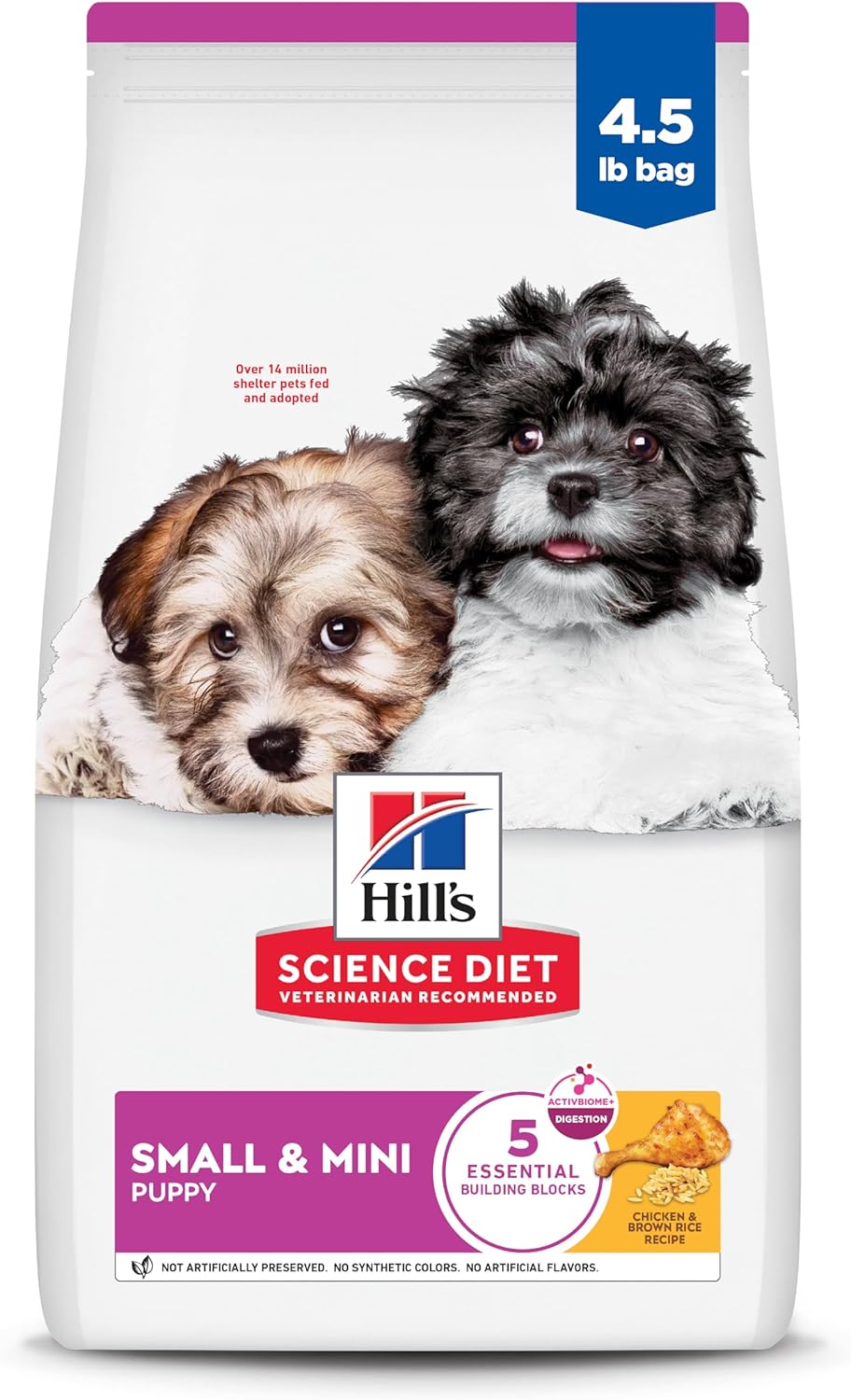
| Flavor | Chicken & Brown Rice |
|---|---|
| Age Range Description | Puppy |
| Specific Uses For Product | Small & Mini Breeds Puppy Premium Nutrition |
| Unit Count | 72 Ounce |
Hill's Science Diet Puppy Small & Mini is a dry kibble formulated specifically for toy and small-breed puppies, combining concentrated calories, high-quality proteins, and nutrients aimed at early development. The small nibble size and calorie density make it convenient for frequent small meals and help meet the higher metabolic needs of little puppies. Notable features include DHA and fish oil for brain and eye development, balanced minerals to support growing bones and teeth, a special antioxidant blend for immune support, and prebiotic fibers to aid digestion. In practice the food is used as a complete diet from weaning through the puppy stage with feeding amounts adjusted to body condition; the bag includes feeding guidelines and the manufacturer recommends transitioning over seven days. Limitations are that the ingredient list includes grains and several plant proteins, so owners preferring grain-free or novel-protein formulas for allergy management may need alternatives, and the 4.5 lb bag size may require frequent repurchasing for multi-puppy households. For most small-breed puppies this provides a vet-focused, nutrient-dense base for growth.
Best for: Buyers seeking a veterinary-recommended, nutrient-dense puppy formula tailored to toy and small breeds who prioritize brain, bone, and immune development in early life.
Less Ideal for: Owners who need a grain-free, limited-ingredient, or novel-protein diet for food sensitivities should look at specialized alternatives.
- Kibble sized for small and toy breed mouths
- Contains DHA and fish oil to support brain and eye development
- Antioxidant blend and vitamins to support immune health
- Prebiotic fibers to support digestion and gut microbiome
- Formulated with concentrated calories and high quality proteins for growth
- Contains grains and common plant proteins that may not suit dogs with specific food sensitivities
- Smaller 4.5 lb bag may require frequent repurchase for multiple puppies
Verdict: The best overall dry puppy food for small breeds that balances appropriate kibble size, complete nutrition for growth, digestibility, and broad appeal for most small-breed puppies.
Royal Canin X-Small Puppy Dry Food 14 lb
Best Small-Bite Dry Puppy Food

| Target age | Puppy (2 to 10 months) |
|---|---|
| Breed size | X-Small breeds (expected adult ≤ 8 lb) |
| Item form | Pellet (small kibble) |
| Primary benefits | Brain development, Immune support, Digestive health |
Royal Canin X-Small Puppy Dry Food is a veterinary-style formula designed specifically for extra-small breed puppies (expected adult weight under 8 lb) and intended for puppies roughly 2 to 10 months old. The kibble is intentionally tiny and crunchy to suit small jaws, making it easier for toy-breed puppies to pick up and chew. The recipe includes DHA and omega-3s to support brain development, antioxidants like vitamins E and C for immune support, and a blend of prebiotics and highly digestible proteins to help digestive health. In practice this works well as a primary dry diet or mixed with Royal Canin wet options to add moisture and variety. Because it targets very small breeds, portioning and feeding amounts are straightforward for high-metabolism puppies, but the formula is specifically sized and balanced for X-small puppies rather than larger littermates. Ingredients include common protein and grain sources and added functional nutrients, so owners seeking grain-free or novel-protein recipes will need alternatives. Packaging is a standard bag format and the product is widely available in the 14 lb size commonly used by small-breed owners.
Best for: Buyers with toy and extra-small breed puppies who prioritize bite-sized kibble and a nutritionally targeted growth formula to support early development.
Less Ideal for: Owners seeking grain-free, limited-ingredient, or novel-protein puppy diets or those feeding medium and large breed puppies should consider other formulas.
- Kibble sized for very small jaws to encourage comfortable chewing
- DHA and omega-3s included to support brain development
- Antioxidant blend for immune support
- Prebiotics and highly digestible proteins to promote digestive health
- Contains common grains and chicken by-product meal, so not suitable for grain-free or novel-protein needs
- Formula is specific to extra-small puppies and not appropriate for larger-breed growth stages
Verdict: The best small-bite dry puppy food for small breeds whose smaller jaws need appropriately sized kibble to encourage comfortable chewing and reduce choking risk.
ORIJEN Small Breed Puppy 4 lb
Best Grain-Free Dry Puppy Food

| Weight | 4 Pound |
|---|---|
| Flavor | Grain Free Small Breed Puppy Recipe |
| Item Form | Dry Kibble |
| Unit Count | 64 Ounce |
| Target Species | Dog |
ORIJEN Small Breed Puppy is a 4 lb bag of grain-free dry kibble designed to meet the nutritional needs of small breed puppies using a WholePrey approach. The formula delivers a high proportion of animal ingredients including fresh chicken, turkey, wild-caught fish and organs, which provide concentrated protein, natural vitamins and minerals to support muscle and bone development. Kibble is small and nutrient-dense for easy chewing by tiny mouths, and the recipe includes EPA and DHA from fish to support brain development. Added fiber, prebiotics and probiotics target digestive health, while a mix of fruits and vegetables supplies antioxidants and micronutrients. Because it is grain free and high in animal content, this food is well suited for owners prioritizing premium sourcing and nutrient density, but it may be richer than needed for less active puppies or those requiring a grain-inclusive diet for specific sensitivities. Expect to follow the transition guidelines on the package to avoid stomach upset when switching foods.
Best for: Owners seeking a top-tier, nutrient-dense puppy diet with carefully sourced animal ingredients and a focus on long-term development for small-breed puppies.
Less Ideal for: Owners who prefer grain-inclusive diets, have puppies with specific carbohydrate tolerances, or want the lowest-calorie option for very sedentary pups should consider alternatives.
- High ratio of fresh and raw animal ingredients for concentrated protein and natural nutrients
- Small, nutrient-dense kibble sized for small breed puppy mouths
- Includes EPA and DHA from multiple fish sources to support brain development
- Formulated with prebiotics, probiotics and fiber to aid digestive health
- Made with a variety of whole fruits, vegetables and functional botanicals for antioxidant support
- Grain-free, very high animal-protein formula may be excessive for lower-activity puppies or those needing grain-inclusive diets
- Higher nutrient density can require careful portion control to avoid overfeeding
Verdict: The best grain-free dry puppy food for small breeds when owners prefer formulas without grains while still delivering complete growth nutrition and balanced protein and fat levels.
Nutro Ultra High Protein Puppy Food 3.5 lb
Best High-Protein Dry Puppy Food

| Flavor | Chicken, Lamb & Salmon |
|---|---|
| Age Range Description | Puppy |
| Item Form | Dry Kibble |
| Unit Count | 56 Ounce |
| Special Ingredients | Chicken, Lamb, Salmon |
Nutro Ultra High Protein Puppy Food is a kibble-style puppy diet built around chicken as the first ingredient plus lamb and salmon meals to boost protein and flavor. It is intended for daily feeding of growing puppies and includes DHA for brain and eye development, omega fatty acids for skin and coat support, and a 14-superfood medley of whole grains, seeds, and fruits. Typical use is straightforward: follow the provided feeding chart for age and weight, offer measured meals to support growth, and monitor body condition as activity levels change. The higher protein and trio of animal proteins deliver calorie density and amino acids useful for active breeds, while added antioxidants and vitamins support immune and developmental needs. Limitations include a relatively small 3.5 lb bag size that may require frequent repurchasing for medium or large litters, and the formula contains grains which some owners avoid on elimination diets. Ingredient transparency and an emphasis on real proteins make this a sensible choice for owners prioritizing protein-rich, nutritionally-complete puppy food.
Best for: Owners of active, fast-growing puppies who want a protein-forward, nutritionally complete kibble to support lean mass and developmental needs.
Less Ideal for: Owners who require grain-free or strict limited-ingredient diets, or those who need larger bulk bag sizes to feed multiple puppies without frequent repurchasing.
- Real animal proteins listed first with a protein trio (chicken, lamb, salmon) for amino acid variety
- Formulated with DHA to support brain and eye development in puppies
- Includes omega 3 and 6 sources to help skin and coat condition
- Contains a blend of 14 superfoods and added antioxidants for immune and overall health
- Small 3.5 lb bag may not be practical for larger or multi-dog households
- Contains grains, so it is not suitable for owners seeking grain-free or limited-ingredient diets
Verdict: The best high-protein dry puppy food for small breeds that benefit from elevated protein to support lean muscle growth and higher activity levels during the growth phase.
Blue Buffalo Wilderness Puppy Food 4.5 lb
Best Premium Dry Puppy Food

| Flavor | Chicken, With Wholesome Grains |
|---|---|
| Age Range Description | Puppy |
| Item Form | Kibble |
| Special Ingredients | Antioxidant, Barley |
| Unit Count | 72 Ounce |
Blue Buffalo Wilderness High-Protein Puppy Food is a kibble-style formula built around real chicken and concentrated animal proteins to support muscle development and sustained energy. It is typically fed as a complete daily diet for puppies and includes DHA and other nutrients aimed at brain and eye development. Notable features include LifeSource Bits for antioxidants, a high proportion of animal-sourced protein, and a recipe free of corn, wheat, soy, artificial flavors, and poultry by-product meals. For practical use this means it can help active or growing puppies meet elevated protein needs while providing formulated feeding guidelines to adjust portions by age and weight. The grain-inclusive recipe uses oatmeal, barley, and brown rice, which can be gentler on digestion than some grain-free carbohydrate replacements, though puppies with diagnosed grain sensitivities should avoid it. The formula lists probiotics and omega sources like fish oil and flaxseed to support gut health and cognitive development, but buyers seeking limited-ingredient or single-protein elimination diets will need a different option. Packaging in a 4.5 lb bag makes it convenient for trying smaller dogs or rotating diets before committing to larger bags.
Best for: Puppy owners who prioritize higher animal-sourced protein and nutrient support for growth and cognitive development and who want a formula that leans toward digestibility without being grain-free.
Less Ideal for: Owners searching for a single-protein, limited-ingredient, or grain-free elimination diet for suspected food intolerances should choose a specialized veterinary or single-protein formula instead.
- Real deboned chicken listed as first ingredient for high-quality animal protein
- Formulated with added DHA and LifeSource Bits to support brain development and immune health
- No corn, wheat, soy, artificial flavors, or poultry by-product meals
- Includes probiotic fermentation ingredients and omega sources to support digestion and coat health
- Not a limited-ingredient or single-protein formula for elimination diets
- Small 4.5 lb bag may require frequent repurchasing for larger litters or fast-growing breeds
Verdict: The best premium dry puppy food for small breeds for owners willing to invest in top-tier ingredient quality, targeted nutrition, and formulation features that support optimal development.
Choosing the Right Dry Puppy Food Small Breed: Key Factors to Consider
Kibble Size and Texture
Kibble size matters for small-breed puppies because tiny mouths and developing teeth handle smaller pieces more safely and comfortably. Properly sized kibble encourages chewing rather than gulping, which can reduce choking risk and improve digestion.
Texture affects how easily a puppy picks up and chews each piece; slightly softer or thinner kibbles often work better for very young puppies and those with emerging teeth. Consider also whether the formula becomes softer when moistened, which can help transition from milk or wet food to dry food.
Calorie Density and Portion Control
Small-breed puppies burn calories quickly and need energy-dense food to meet growth demands in smaller portion sizes. A high calorie-per-cup formula lets you provide enough energy without overfeeding volume, which is important for small stomachs.
Accurate feeding guidelines are essential so you can measure portions by weight or cup and adjust for activity level. Watch weight trends closely; steady, proportional weight gain is the goal rather than rapid spikes that stress developing organs.
Protein Quality and Amino Acid Balance
Growing puppies require high-quality protein for muscle and organ development. Look for named animal protein sources high in essential amino acids rather than unspecified meat meals alone.
Adequate levels of indispensable amino acids like lysine help support healthy growth, and protein should be paired with appropriate fat and carbohydrate to supply balanced energy. Poor protein quality can lead to slower growth or lean tissue loss during weaning and training phases.
Digestive Support and Ingredient Digestibility
Small puppies commonly experience digestive upset during early dietary transitions, so formulas that emphasize digestibility can make feeding easier. Ingredients that are easier to digest reduce loose stools and help maintain nutrient absorption.
Look for soluble and insoluble fiber in balanced amounts to support stool quality and regularity. Prebiotics and probiotics can be helpful in stabilizing gut flora during the first months, but ingredient transparency matters so you know which strains or fibers are included.
Essential Fatty Acids and Cognitive Support
Omega-3 fatty acids, especially DHA, play a role in brain and vision development in puppies. Small-breed formulas should include sources of DHA or its precursors to support cognitive development during critical early weeks.
Balanced omega-6 to omega-3 ratios also affect skin and coat health. Since small breeds can show coat issues early, adequate essential fatty acids support both internal development and visible health markers.
Mineral Balance and Safe Bone Growth
Mineral ratios, particularly calcium and phosphorus, strongly influence skeletal development. Small-breed puppies need properly balanced mineral levels to avoid growth abnormalities or joint problems later in life.
Excess mineral supplementation or poorly balanced formulas can cause developmental issues, so select foods formulated specifically for puppies with clear mineral specifications and feeding instructions tuned to small-breed growth curves.
How Do I Transition My Small-breed Puppy to Dry Food Safely?
Transition gradually over a week to ten days to reduce digestive upset. Start by mixing a small ratio of the new dry food—moistened with warm water if needed—into the current diet and increase the new food proportion by about 10 to 20 percent each day until the switch is complete.
Monitor stool consistency and appetite during the transition. If your puppy shows persistent loose stools, slow the transition and consult a veterinarian if problems continue. For picky eaters, briefly warming moistened kibble can improve aroma and acceptance.
- Begin with 75% old food and 25% new on day one
- Increase new food by about 10–20% every 1–2 days
- Moisten kibble for very young puppies or those with sensitive teeth
- Slow down the change if diarrhea or reduced appetite appears
What Feeding Schedule Suits Small-breed Puppies?
Small-breed puppies benefit from frequent, small meals because of their high metabolic rate and small stomach capacity. Feedings spread over three to four meals a day help maintain steady energy and prevent hypoglycemia in particularly tiny breeds.
As the puppy grows, you can reduce the number of daily meals while proportionally increasing portion size. Check weight and body condition rather than strictly following charts; adjust meals if your puppy gains weight too quickly or shows low energy.
- 3 to 4 meals daily for puppies under 4 months
- 2 to 3 meals daily for 4 to 6 month-old puppies
- Assess body condition and adjust portions rather than following a fixed schedule
How to Read the Label: What to Prioritize on Puppy Food Packaging?
Look for a clear statement that the formula is nutritionally complete for puppies and check the guaranteed analysis for protein, fat, fiber, and moisture content. Pay attention to the first few ingredient listings to understand primary protein and carbohydrate sources.
Review feeding guidelines by weight and age, and check for nutrient guarantees such as minimum protein and fat percentages. Also note any added functional ingredients like probiotics or DHA and whether specific allergens or fillers are disclosed.
- Confirm an AAFCO-style complete and balanced statement for growth or all life stages
- Check named animal protein sources near the top of the ingredient list
- Note guaranteed minimums for crude protein and fat and maximums for fiber
How to Manage Common Feeding Issues in Small-breed Puppies
If your puppy is a picky eater, try changing feeding times, offering smaller portions more often, or warming moistened food to enhance aroma. Persistent pickiness can indicate underlying illness, so consult your veterinarian if appetite loss continues for more than a few days.
For loose stools, temporarily reduce new food portions, slow the transition, and consider a highly digestible formula with moderate fat. If constipation or chronic stool changes occur, seek veterinary advice to rule out parasites or dietary sensitivities.
- Try feeding in a quiet, consistent area to reduce stress-related refusals
- Avoid frequent snacks that reduce willingness to eat balanced meals
- Monitor fecal consistency and seek veterinary input for persistent changes
When Should You Switch From a Puppy Formula to Adult Food?
Timing depends on breed size and individual maturity. Small-breed dogs typically reach maturity earlier than large breeds, so many can transition to adult maintenance formulas between 9 and 12 months of age if growth has stabilized.
Watch for slowed growth and a steady body condition; those signs indicate the puppy is ready for a maintenance diet. Consult a veterinarian before switching if your puppy had growth concerns or a history of nutritional sensitivities.
- Consider transition around 9–12 months for many small breeds
- Ensure growth rate has slowed and body condition is steady before switching
- Consult your vet for pets with health or growth history concerns
How We Chose the Best Dry Puppy Food Small Breed
We prioritized products that deliver the specific nutritional profile small-breed puppies need during rapid growth. Key evaluation criteria included complete puppy-formula nutrient balance, appropriate calorie density for small dogs, and kibble size designed for tiny mouths. Digestive tolerability and ingredient transparency were assessed to favor formulas that support stool quality and reduce common upset. Protein quality and the inclusion of essential fatty acids for brain and coat development were key, along with adequate calcium-to-phosphorus ratios for safe skeletal growth. We also considered practical factors like palatability for often picky puppies and packaging that helps maintain freshness. Exclusions removed adult-only formulas, foods designed only for large breeds, and products lacking clear feeding guidelines for small-breed puppies. The final shortlist reflects products that met multiple performance and safety dimensions rather than single standout features.
Our full evaluation process is outlined in our review methodology.
FAQ
Is dry puppy food adequate as the only food for small-breed puppies?
Usually yes. High-quality dry puppy formulas are formulated to provide complete nutrition for growth. Ensure the chosen product is specifically for puppies and meets feeding guidelines to supply enough calories and nutrients in appropriately sized portions.
How much should I feed my small-breed puppy each day?
Feed according to the manufacturer feeding chart as a starting point, then adjust based on your puppy's body condition and activity level. Small-breed puppies often require energy-dense portions divided over several meals to meet calorie needs without overfilling the stomach.
Are grain-free diets better for small-breed puppies?
Not necessarily. Grain-free diets can be appropriate for puppies with diagnosed grain sensitivities, but they are not inherently superior. Focus first on complete nutrition, digestibility, and protein quality rather than simply excluding grains.
Can I moisten dry kibble for a very young puppy?
Yes. Moistening kibble with warm water can make pieces easier to chew and more aromatic, which helps with acceptance during weaning. Make only the portion to be eaten at one meal and discard leftovers to avoid bacterial growth.
What signs indicate a food is not agreeing with my puppy?
Watch for persistent diarrhea, vomiting, sudden changes in appetite, dull coat, or lack of weight gain. Short-term minor digestive changes are common during transitions, but persistent symptoms warrant slowing the transition or consulting a veterinarian.
Final Verdict
Choose a dry puppy food that matches your small-breed puppy's mouth size, energy needs, and digestive tolerance. Prioritize appropriate kibble size, balanced calorie density, high-quality protein, and safe mineral ratios to support healthy growth. Tradeoffs typically involve palatability versus digestibility and calorie density versus portion control; focus first on formulas designed specifically for small-breed puppies and adjust feeding patterns based on weight and stool quality. With attention to the factors above and regular weight checks, you can confidently select a dry puppy food that supports steady development and a healthy start to adulthood.

