

After neutering, your dog needs a reliable barrier that prevents licking and chewing while remaining comfortable enough for daily wear. The right e-collar helps protect surgical sites, reduces the risk of infection, and makes post-op care less stressful for both you and your pet. This guide shortlists the top picks for after neutering care and evaluates each option for comfort, fit, and protective coverage. Below you will find quick guidance on what matters most and how these choices were evaluated to help you pick a collar that supports a smooth recovery.
Top Picks at a Glance
| Best Overall E-Collar The top all-around choice for most post-neuter dogs | Supet Dog Recovery Collar Large |  |
| Best Budget E-Collar A low-cost option that still provides basic protection | Andiker Pet Recovery Cone Medium |  |
| Best Premium E-Collar Higher-end materials, comfort features, and refined fit options | Joypig Dog Recovery Cone Large |  |
| Best Adjustable E-Collar Easy, precise fit adjustments for a secure comfortable seal | ZuxZuce Soft Adjustable Dog Cone L |  |
| Best Lightweight E-Collar Minimal weight and low bulk for easier mobility | BONTHEE Clear Dog Cone Collar M |  |
| Best Heavy-Duty E-Collar Stronger build for persistent chewers or active dogs | Didopet Donut Recovery Collar M+ |  |
| Best Long-Range E-Collar Extended coverage or reach for larger yards and training | BLACKDOG Military Dog Shock Collar OT9 |  |
Supet Dog Recovery Collar Large
Best Overall E-Collar

| Material Type | Polyvinyl Chloride (PVC) |
|---|---|
| Closure Type | Hook & Loop |
| Fit Type | Custom Fit |
| Water Resistance Level | Water Resistant |
| Neck Size | 19 inches |
The Supet Dog Recovery Collar is a soft, PVC Elizabethan collar intended to keep dogs from reaching surgical sites or wounds during recovery. It fastens with a wide hook-and-loop closure that makes it easy to size and secure around the neck, and a fabric-trimmed edge reduces chafing compared with rigid plastic cones. Typical use is post-surgical recovery or short-term wound protection where you want effective coverage without a hard cone restricting vision or mobility. The collar is water resistant and light enough for most dogs to wear without obvious fatigue, and the flexible construction makes cleanup simple. Size options and adjustable fit let you pick a depth and neck girth appropriate for the dog, but the softer PVC will not provide the same rigid barrier as hard plastic cones for dogs that paw aggressively. Also, dogs that chew the collar or try to burrow may eventually displace it despite the hook-and-loop closure. For typical post-op cases where comfort and compliance matter, this model balances protection and wearability well.
Best for: Buyers who prioritize a balance of comfort and practical protection for routine post-op recovery and want an easy-to-fit, low-stress cone their dog will tolerate.
Less Ideal for: Owners whose dogs aggressively paw, chew, or need a fully rigid barrier should consider a stiffer, hard-shell cone instead.
- Soft PVC body with fabric-trimmed edge improves comfort over rigid cones
- Hook-and-loop closure allows quick, customizable fit and easy removal
- Lightweight and water resistant for everyday wear and simple cleaning
- Multiple sizes/depths available to fit a range of neck girths
- Flexible PVC is less rigid than hard cones and can be pushed or chewed by determined dogs
- Not ideal for pets that need a completely immobile barrier to prevent access to wounds
Verdict: The best overall e-collar for most dogs after neutering, balancing fit, comfort, reliable containment, and ease of use for everyday healing and training.
Andiker Pet Recovery Cone Medium
Best Budget E-Collar
| Material Type | Polyvinyl Chloride (PVC) |
|---|---|
| Closure Type | Buckle |
| Fit Type | Adjustable |
| Recommended Uses For Product | Post-surgery recovery for dogs and cats |
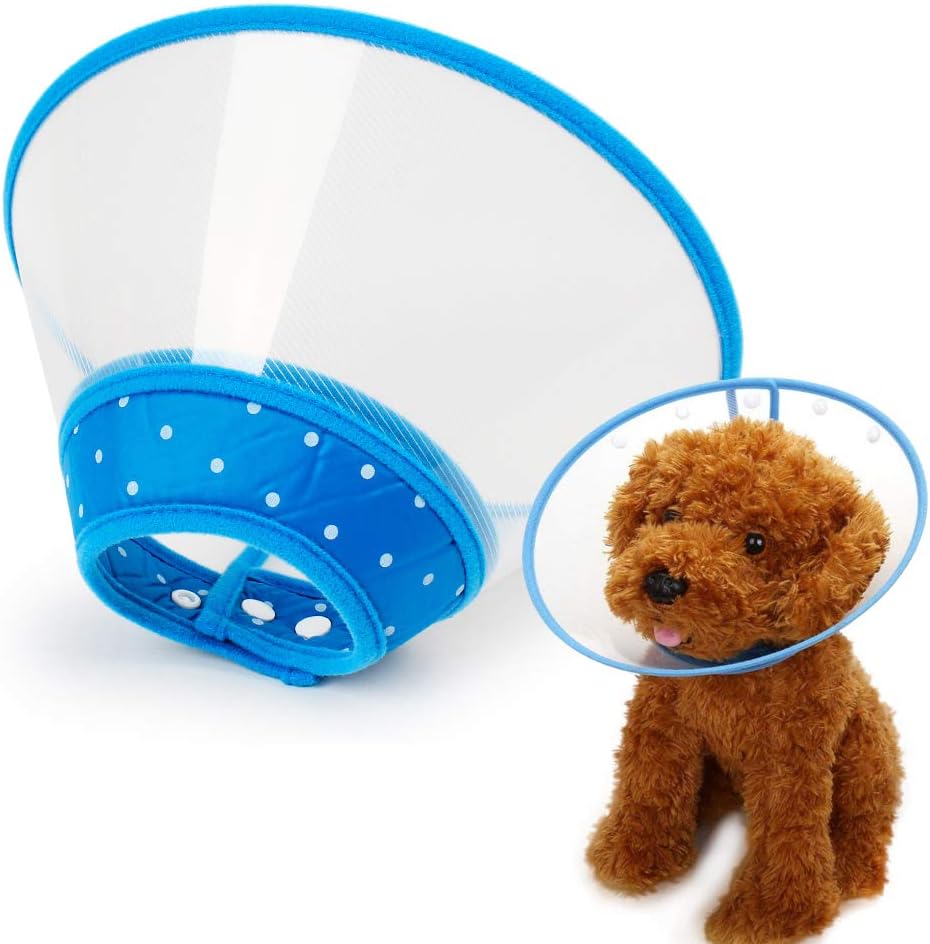
This clear Andiker recovery cone is a rigid yet lightweight PVC collar intended to keep dogs and cats from reaching surgical sites. It fastens with a buckle and an adjustable fit system, and the transparent body preserves peripheral visibility so pets can still see while wearing it. The inner flannelette padding around the rim softens contact with the neck and reduces chafing compared with bare plastic cones, and the cone folds for compact storage when not in use. In practice it works well for steady supervision periods and everyday recovery tasks like preventing licking or chewing of stitches, but its PVC body is not water resistant and can be less durable against heavy scratching or determined pets that paw strongly at the cone. Sizing is by neck circumference and requires choosing the correct medium or larger option for larger breeds, and the simple buckle closure is quick to fit but not as secure as some rigid molded collars with reinforced fasteners.
Best for: Buyers who need a straightforward, physical barrier to stop licking during recovery and prefer a lightweight, visible cone that is easy to fit and store.
Less Ideal for: Pets that aggressively chew or paw at collars, or owners who need a fully water resistant or heavy‑duty, reinforced protective collar.
- Transparent PVC body preserves pet visibility while restricting access to wounds
- Padded flannelette edge reduces neck irritation compared with raw plastic rims
- Adjustable buckle fit allows quick sizing to typical neck circumferences
- Lightweight and foldable design is easy to store and carry
- Not water resistant which can make cleaning after soiling harder
- PVC construction can be less durable for strong chewers or very active pets
Verdict: The best budget e-collar for owners who need an affordable, effective barrier to prevent licking or chewing without extra premium features.
Joypig Dog Recovery Cone Large
Best Premium E-Collar

| Target Species | Dog |
|---|---|
| Dog Breed Size | Large |
| Closure Type | Hook & Loop |
| Fit Type | Custom Fit |
The Joypig mesh recovery cone is made for post-surgery and wound-care use, combining a conical shape and tight breathable mesh to keep dogs from reaching irritated areas while allowing airflow and visibility. It includes a soft liner around the neck and adjustable hook-and-loop straps so you can fine-tune the fit and reduce chafing during extended wear. Because the mesh is light and flexible, most dogs carry less head weight than with rigid plastic cones, which helps lower anxiety and makes it easier for pets to eat and rest. The material is also quick-drying and relatively easy to wipe clean after soiling. On the downside, the soft mesh will not offer the same rigid barrier as hard plastic cones for determined chewers or very active dogs, and the breathable fabric may show wear faster under heavy chewing. For owners prioritizing comfort and long-term wear for large dogs, this model balances protection with cushioning and visibility.
Best for: Owners of large dogs who expect their pet to wear a recovery collar for long periods and want a cushioned, breathable option that reduces neck irritation and stress.
Less Ideal for: Pet owners whose dogs are aggressive chewers or constantly rubbing the cone should choose a more rigid, chew-resistant option instead.
- Soft padded liner reduces neck chafing during extended wear
- Breathable mesh keeps air flowing and improves visibility to lower anxiety
- Lightweight construction places less strain on the head compared with rigid cones
- Adjustable hook-and-loop closure for a customizable, snug fit
- Mesh cleans and dries quickly after soiling
- Not as structurally rigid as hard plastic cones so less effective against heavy chewing
- Mesh material can wear or tear faster if the dog is abrasive or persistent
Verdict: The best premium e-collar for owners willing to pay more for superior padding, durable construction, and advanced comfort features during recovery.
ZuxZuce Soft Adjustable Dog Cone L
Best Adjustable E-Collar

| Size | L (Neck: 14.17-16.54") |
|---|---|
| Total Depth | 11.6" |
| Material | Inner Mesh; Outer PVC |
| Closure | Wide hook-and-loop with drawstring stopper |
| Included Components | Dog Cone |
This soft recovery cone is designed to keep dogs from licking or scratching wounds while offering more comfort than a rigid plastic e-collar. It uses a double-layer construction — an inner soft mesh layer against the neck and an outer waterproof PVC shell — so the cone keeps shape while remaining wipe-clean. The detachable zipper extension lets you add or remove length for better coverage of specific wounds or for easier mealtimes, and a wide hook-and-loop strap plus an adjustable drawstring stopper provide a broad circumference range and a snug fit. A soft fabric edge protects the cervical area and an elastic band lets you thread the dog's collar through for extra security. Practical benefits include light weight for less neck strain, reflective trim for low-light visibility, and simple surface cleaning. Limitations are that depth and neck-size suitability must be checked carefully before ordering, and very determined chewers may still damage the zipper or outer PVC layer if left unsupervised.
Best for: Owners who need a cone with flexible sizing and fastening options to get a snug, secure fit across different breeds or as a pet’s recovery needs change.
Less Ideal for: Pets that are heavy chewers or destructive with soft hardware should use a more rugged, chew-resistant cone or a rigid protective option instead.
- Detachable zipper extension for customizable length and easier mealtimes
- Double-layer design with soft inner mesh for comfort and PVC outer shell for durability
- Wide-range hook-and-loop plus drawstring stopper for a secure, adjustable fit
- Soft padded edge protects the neck and reduces rubbing
- Waterproof outer surface wipes clean quickly
- Zipper and PVC outer layer can be chewed through by determined dogs
- Requires careful measurement of neck girth and nose-to-neck length to ensure proper coverage
Verdict: The best adjustable e-collar for pets that need a customizable fit to stay comfortable and prevent gaps that allow licking after surgery.
BONTHEE Clear Dog Cone Collar M
Best Lightweight E-Collar

| Material Type | Polyvinyl Chloride (PVC) |
|---|---|
| Closure Type | Hook & Loop |
| Fit Type | Custom Fit |
| Recommended Uses For Product | Post-Operative Care, Wound Care |
This clear recovery cone is a lightweight PVC e-collar meant to keep dogs from licking or scratching surgical sites during post-operative recovery. It fastens with hook-and-loop straps and includes an extra buckle for a more secure fit, and the extended shape is intended to block access to the neck and snout without overly restricting movement. The transparent material gives pets better sightlines than opaque cones, which can reduce anxiety and help dogs adapt faster, and the rounded edges are finished to minimize chafing. It is simple to wipe clean and the package includes a measuring guide so you can pick the closest size and adjust length if needed. Limitations are that PVC can feel stiffer than padded fabric collars, so very sensitive dogs might still resist wearing it, and exact fit matters—if a dog is near a size cutoff you may need the next size up for full coverage. This collar is most useful for routine post-surgical and wound care when owners want a low-profile, unobtrusive option that still protects healing areas.
Best for: Owners who prioritize a lightweight, low-visibility recovery option that lets their dog move and see comfortably during healing from neutering or minor procedures.
Less Ideal for: Owners seeking a soft, heavily padded collar for dogs that chew or strongly resist collars should consider a fabric or inflatable alternative instead.
- Transparent material preserves the dog’s field of vision to reduce stress and disorientation
- Lightweight PVC construction is easier for dogs to carry compared with rigid plastic cones
- Adjustable hook-and-loop closure plus a secondary buckle provides a secure, customizable fit
- Rounded, smooth edges help prevent chafing around the neck
- Easy to clean with a damp cloth for low-maintenance care
- PVC is less flexible and less cushioned than padded fabric collars so very sensitive dogs may still resist
- Fit is size-dependent and dogs near size limits may require ordering the next size for proper coverage
Verdict: The best lightweight e-collar for dogs who need freedom of movement and less stress while healing without sacrificing protective coverage.
Didopet Donut Recovery Collar M+
Best Heavy-Duty E-Collar

| Fit Type | Custom Fit |
|---|---|
| Closure Type | Buckle, Hook & Loop, Zipper |
| Water Resistance Level | Not Water Resistant |
| Target Species | Dog |
The Didopet Donut Recovery Collar is a pre-filled sponge donut-style e-collar that provides soft, cushioned protection after surgery without any inflation required. It fits by sliding the dog's collar through sewn loops, securing the donut with hook-and-loop pads, and can be reinforced with an adjustable nylon strap and quick-release buckle. A transparent detachable shield adds wider coverage to the front and sides when a tougher barrier is needed while preserving the dog's line of sight. In practice the donut core keeps its shape and offers a gentler, more comfortable alternative to rigid plastic cones, letting dogs eat, drink, and move with less stress, and the removable cover and sponge core allow spot cleaning per the care directions. Limitations are that it is not water resistant and the soft sponge construction is less puncture- and chew-proof than heavy rigid collars, so especially determined chewers may be able to damage it over time. Sizes and breed guidance are approximate so checking fit before leaving a dog unsupervised is important.
Best for: Buyers who need a more comfortable recovery option but still want an e-collar that can be reinforced for extra coverage during healing; good for active dogs that dislike rigid cones and owners prioritizing reduced stress during recovery.
Less Ideal for: Pets that are aggressive, determined chewers or escape artists who require a fully rigid, chew-proof barrier should choose a heavy-duty plastic or metal-style cone instead.
- Ready to use out of the box with pre-filled sponge core so no inflation or valves are needed
- Optional clear plastic shield provides expanded coverage without blocking vision
- Multiple closure points including hook-and-loop pads and quick-release buckle for a secure, adjustable fit
- Cushioned design improves comfort for eating, drinking, and resting compared with rigid cones
- Not water resistant so it can soak and take longer to dry after cleaning or exposure to moisture
- Sponge outer core and soft materials are less resistant to chewing and sharp damage than hard plastic alternatives
Verdict: The best heavy-duty e-collar for pets that are more determined to chew or very active and need a tougher barrier during recovery.
BLACKDOG Military Dog Shock Collar OT9
Best Long-Range E-Collar

| Range | 4200 ft |
|---|---|
| Waterproof rating | IP67 |
| Dog size fit | 5-150 lbs |
| Battery life | 90-day (based on 1 hr/day) |
The BLACKDOG Military Dog Shock Collar OT9 is built for heavy outdoor training and multi-dog households, pairing a dual-channel remote with two removable receivers so you can control two dogs separately up to 4,200 feet away. In practice you get beep, vibration, and adjustable shock levels plus a strobe light mode, all shown on an LCD so you can pick precise intensity settings and monitor battery life. The units are engineered for rugged use with an IP67 rating and reinforced casing that resists crushing and biting, and the collar includes a removable-prong option so you can switch to no-shock use for sensitive or double-coated dogs. Battery life is a standout feature with an advertised 90-day runtime based on limited daily use and fast USB-C charging for quick top-ups. Trade-offs are that the system relies on shock-based training for some functions and proper fit and gradual level adjustment remain important for thicker-coated breeds where contact and response can be inconsistent. The extra flashlight and collar strobe are useful for nighttime visibility during off-leash work or search tasks.
Best for: Owners who prioritize rugged, feature-rich training gear with precise stimulation control, long battery life, and the ability to train two dogs in outdoor environments and low-light conditions.
Less Ideal for: People seeking purely reward-based or non-stimulation training tools or owners of very small toy-breed dogs where a bulky, heavy-duty collar is unnecessary.
- Very long 4,200 ft remote range suitable for parks and open areas
- Dual-channel remote supports training two dogs independently
- Rugged, IP67-rated casing and reinforced design for outdoor durability
- Adjustable LCD-controlled modes (beep, vibration, adjustable shock) and battery level readout
- Removable metal prongs and option to use no-shock mode for sensitive dogs plus integrated lighting for night visibility
- Shock stimulation can be less effective on very thick double coats without close contact
- Stimulation still requires careful gradual adjustment and responsible use for welfare
Verdict: The best long-range e-collar for owners who need reliable containment or remote management over greater distances during post-operative care and supervised outdoor time.
Choosing the Right E Collar Dog Neutering: Key Factors to Consider
Protective Coverage
After neutering the primary goal is to prevent licking or chewing at the incision site. Coverage should extend far enough to block a dog's ability to reach the groin and abdomen while still allowing the animal to eat, drink, and rest. Consider both the collar height and shape; full-cone designs typically provide a wide barrier, while short collars or inflatable types rely on limited reach rather than full obstruction.
Insufficient coverage increases the chance of wound contamination and delayed healing. When gauging coverage, imagine the range of motion a dog has when twisting its head and forelimbs. A collar that looks protective but lets the snout slip under at an angle will not reliably prevent licking during the first critical week after surgery.
Comfort and Material
Dogs will wear a postoperative collar for days to weeks, so materials that minimize chafing and pressure points are essential. Soft-edged panels, padded neckbands, and breathable fabrics reduce skin irritation and make rest more comfortable. Consider collars with smooth seams and no exposed fasteners that could rub the skin.
Material choice also affects hygiene and odor buildup. Waterproof or wipe-clean surfaces are easier to maintain after outdoor walks and help prevent bacterial growth. For particularly sensitive dogs, look for collars with hypoallergenic liners or removable padding that can be washed separately.
Fit and Adjustability
A proper fit keeps the collar secure without being constrictive. Adjustable straps, multiple sizing points, and clear sizing guides make it easier to achieve a snug but comfortable fit. A collar that shifts or slides can reduce protective coverage and lead to repeated adjustments, which stresses both dog and owner.
Check how the collar fastens and whether the attachment points allow quick on-off without jostling the incision area. For growing puppies or dogs with nonstandard neck-to-head proportions, more granular adjustability helps maintain coverage as swelling changes during recovery.
Weight and Balance
The collar's weight affects how readily a dog tolerates wearing it. Heavy, front-loaded cones can cause neck strain, interfere with lying down, and increase stress behaviors. Lightweight materials and designs that balance the load around the neck reduce fatigue and help the dog move normally.
Balance also matters for activities like eating and going up stairs. A well-balanced collar lets the dog lower its head to drink and navigate the home without tipping forward or catching on furniture. For dogs with limited mobility, even small reductions in weight can make a big difference in compliance.
Ease of Use and Owner Access
Owners need to inspect the incision, change dressings, and offer water without constantly removing the collar. Features that simplify these tasks—quick-release closures, removable panels, or built-in inspection windows—save time and reduce the risk of contamination from repeated handling.
Also consider how easy it is to put the collar on and take it off safely. Collars that require extensive adjustment tools or two people to fit increase the chance of improper use. Practical fastenings and clear labeling make postoperative care smoother for busy owners.
Cleanability and Durability
Postoperative collars must withstand repeated cleaning and normal wear. Durable materials and simple construction resist tearing, while surfaces that can be wiped or machine washed help maintain hygiene. Look for rust-resistant hardware and fabrics that do not trap odors.
Durability also affects safety. Weak seams or fastenings can fail while the dog is wearing the collar, potentially exposing the incision. Collars built for repeated use during a healing period are generally a better choice than disposable or flimsy designs.
How Long Should My Dog Wear an E-collar After Neutering?
Most dogs need continuous protection for the first 7 to 14 days after neutering while the incision closes and the risk of infection is highest. The exact period depends on the veterinarian's instructions and how quickly the incision heals. Even after the skin appears closed, dogs can still pick at the area, so use clinical guidance rather than visual cues alone.
If your veterinarian clears the dog earlier, transition off the e-collar gradually and monitor for any licking or irritation. Keep a lightweight alternative on hand for nighttime or unsupervised periods until the risk is minimal.
- Follow your veterinarian's recommended wear time as the primary guide.
- Check the incision daily for redness, swelling, or discharge.
- Only remove the collar under direct supervision if healing is well advanced.
Can an Inflatable Collar Protect the Incision After Neutering?
Inflatable collars can be comfortable and less intrusive than rigid cones, but their protective ability depends on your dog's flexibility and the incision location. For many dogs, an inflated donut keeps the head from turning far enough to reach the groin, but highly flexible or long-necked dogs may still be able to reach the area.
Use an inflatable option only if it provides clear obstruction for your dog when tested at home. If there is any doubt about access, choose a design with full-cone coverage for a more reliable barrier.
- Test an inflatable collar by observing whether your dog can reach the incision when fully inflated.
- Ensure the valve is secure and check inflation daily; loss of air reduces protection.
How to Check Fit Without Disturbing the Incision
You should be able to slide two fingers between the collar and your dog's neck for a secure but comfortable fit. Inspect fasteners and padding for signs of rubbing and reposition straps rather than tightening excessively. For access to the wound, use inspection-friendly features like removable panels or reach around the collar carefully, supporting the dog's head so it stays calm.
Avoid removing the collar for routine checks unless you can keep the dog distracted and prevent immediate licking. Brief supervised removals are acceptable for cleaning when necessary, but always replace the collar promptly afterwards.
- Check for hot spots or hair loss under the collar each day.
- Adjust fit incrementally; rapid tightening can cause pressure sores.
What to Do if My Dog Keeps Trying to Remove the Collar
Persistent attempts to remove an e-collar are often a sign of discomfort, frustration, or improper fit. Reassess fit and padding first, then try short supervised acclimation sessions where you offer treats and calm reassurance. Distraction with low-key activity can reduce obsessive licking behavior.
If repeated adjustments and comfort measures fail, consult the veterinarian for alternative protective strategies. Do not leave a dog unsupervised without a reliable barrier in place.
- Reevaluate the size and padding for chafing or snag points.
- Use positive reinforcement to reward calm behavior while wearing the collar.
Are There Special Considerations for Short-nosed or Long-necked Breeds?
Breed anatomy affects reach and tolerance for different collar styles. Short-nosed or brachycephalic dogs may struggle with breathability in full cones and can experience more stress when their vision or airflow is restricted. Long-necked or highly flexible breeds may be able to reach the incision with collars that look protective on inspection.
Choose a collar design that accounts for the breed's specific proportions and monitor recovery closely. Sometimes a hybrid approach that combines moderate cone coverage with additional belly protection can offer better results for unusual body types.
- Measure neck and head dimensions carefully for breeds outside average proportions.
- Discuss breathing concerns with your veterinarian if a cone seems to restrict airflow.
Tips for Making Wearing the Collar Easier at Home
Create a comfortable recovery area with soft bedding and unobstructed space so the collar does not catch on furniture. Remove items that might snag the collar and place water and food bowls at a height that the dog can access without straining. Keep the environment calm and limit rough play until healing is complete.
Offer frequent short breaks only when supervised, and use treats or gentle praise to build positive associations. If the collar interferes with sleep, try slightly adjusting bedding height so the dog can rest without pressure on the chin or neck.
- Use shallow, sturdy bowls to make eating and drinking easier while wearing a collar.
- Keep the dog on a leash when outdoors to prevent sudden movements that could catch the collar.
How We Chose the Best E Collar Dog Neutering
We focused on practical recovery needs specific to dogs after neutering and applied editorial filters that prioritize safety, comfort, and usable design. Our evaluation emphasized six concrete criteria: protective coverage to block access to the incision area, collar comfort and materials to reduce chafing and stress, adjustability and sizing range to ensure a secure fit for different dog body types, durability and easy cleaning for repeated use during recovery, visibility and handling features that help owners check the wound without removing the collar, and overall weight and balance so the collar does not interfere with walking or resting. Products were excluded if they lacked clear information on sizing, were made from rigid materials likely to cause discomfort for long wear, or did not offer enough coverage for the torso and groin area typical after neutering. We also filtered out options that required complex assembly or had poor customer guidance on fit. The final list prioritizes options that balance protection with low-stress wearability and practical owner features.
Our full evaluation process is outlined in our review methodology.
FAQ
Will an e-collar stress my dog out during recovery?
Many dogs resist an e-collar at first, but stress usually decreases within a day or two as they acclimate. Comfort-focused designs and gradual positive reinforcement help reduce anxiety. Persistent distress should prompt a fit reassessment and a vet consultation.
Can I let my dog outside to potty with the collar on?
Yes. Most collars are designed for safe short outdoor trips. Use a leash to prevent snagging and check the collar after each outside visit for debris or displacement that could expose the incision.
Is it safe to give my dog a bath while wearing an e-collar?
Bathing is generally not recommended until the incision is healed and the veterinarian approves. If a collar is water-resistant, spot cleaning around the neck is fine, but avoid submerging the incision or using harsh cleaners that could irritate the wound.
How do I stop my dog from pawing at the collar?
Pawing is often a reaction to discomfort or curiosity. Ensure the collar fits correctly and add padding if needed. Distract with gentle play or chew-safe enrichment and reinforce calm behavior with treats. If pawing persists, check for pressure points or consult your veterinarian.
Can I use a recovery suit instead of an e-collar after neutering?
Recovery suits can be effective for some dogs but may not prevent head access to the incision in all cases. Suits are useful when the incision is on the torso and the dog tolerates wearing clothing. Consider the incision location and your dog's behavior before choosing a suit as the sole protection.
Final Verdict
Choose an e-collar that prioritizes reliable coverage and comfortable wear for the recovery period after neutering. Balance coverage, weight, and fit to prevent access to the incision while keeping the dog calm and able to eat, drink, and rest. Pay attention to adjustability and cleanability since these affect daily care. Ultimately, follow your veterinarian's timeline and monitor the incision closely. Favor options that reduce stress and require minimal readjustment so you can focus on recovery rather than constant supervision.

