

Installing or upgrading an underground dog fence depends as much on the wire you bury as on the transmitter or collar. The right gauge wire preserves the fence signal, resists moisture and abrasion, and reduces maintenance headaches over time. This guide covers the top shortlisted gauge wires suitable for buried pet containment systems and explains the practical tradeoffs that affect performance, longevity, and ease of installation. Read on to see the features we prioritized and which wire types fit common installation situations.
Top Picks at a Glance
| Best Overall Gauge Wire A reliable, all-purpose pick that fits most underground fence installs | eXtreme Dog Fence 16 Gauge Wire 1000 ft |  |
| Best Budget Gauge Wire A low-cost option that still meets basic underground fence needs | Extreme Dog Fence 20 Gauge Wire 500 ft |  |
| Best Premium Gauge Wire Higher-end construction and materials for longer service life | eXtreme Dog Fence Max 14 Gauge 2000 ft |  |
| Best Heavy-Duty Gauge Wire Thicker conductor and tougher jacket for rugged environments | eXtreme Dog Fence 14 Gauge 1500 ft | |
| Best Direct-Burial Gauge Wire Specifically rated for burial without additional conduit protection | Extreme Dog Fence 16 Gauge Wire 1000ft |  |
| Best Low-Resistance Gauge Wire Optimized for minimal signal loss across long runs | 12.5 Gauge 82ft Electric Fence Wire |  |
| Best Flexible Gauge Wire Easier to route around corners and landscape features | Extreme Dog Fence 16 Gauge Twisted Wire 100ft |  |
eXtreme Dog Fence 16 Gauge Wire 1000 ft
Best Overall Gauge Wire

| Gauge | 16 Gauge |
|---|---|
| Length | 1000 ft |
| Jacket | 30-mil polyethylene |
| Coverage | Up to 1 acre |
This 16 gauge, 1000 ft spool from eXtreme Dog Fence is a straightforward heavy-duty boundary cable for underground pet fence systems. The thicker 16 gauge conductor with a 30-mil polyethylene jacket is intended to resist UV and moisture, which helps the line last longer when buried or run along foundations. It is sold as a continuous spool sized to cover roughly one acre, and the product description states universal compatibility with wired electric dog fence transmitters and receivers, so it can be used to replace or extend existing buried loops. In practice the gauge and jacket make the wire easier to handle during installation and less likely to break when pulling around corners or through conduit, though it is heavier than thin hobby wire. There are no special connectors included in the listing, so plan to use standard splices or waterproof crimps for joins. If you want a durable, factory-quality replacement cable that reduces the chance of future repairs, this spool is a sensible choice for most yards and DIY installations.
Best for: Buyers who want a long, durable replacement or primary boundary cable that balances robustness and ease of installation for typical residential yards.
Less Ideal for: People needing ultra-flexible, lightweight wire for very intricate or temporary installations should consider thinner gauge options or specialty low-profile cable.
- 16 gauge conductor offers better durability and conductivity than thinner hobby wire
- 30-mil polyethylene jacket resists UV and moisture for longer buried lifespan
- 1000 ft continuous spool covers about one acre without joins
- Made in the USA components and marketed as universally compatible with wired systems
- Sturdier cable is easier to pull around corners and through conduit during installation
- Heavier, stiffer cable can be less convenient for very tight or complex layouts
- Listing does not specify included connectors or splice hardware
Verdict: The best overall gauge wire offers the right balance of conductivity, durability, and ease of installation for most underground dog-fence systems.
Extreme Dog Fence 20 Gauge Wire 500 ft
Best Budget Gauge Wire
| Gauge | 20 |
|---|---|
| Strands | 1 |
| Material Type | Polyethylene jacket |
| Unit Count | 1 Count |
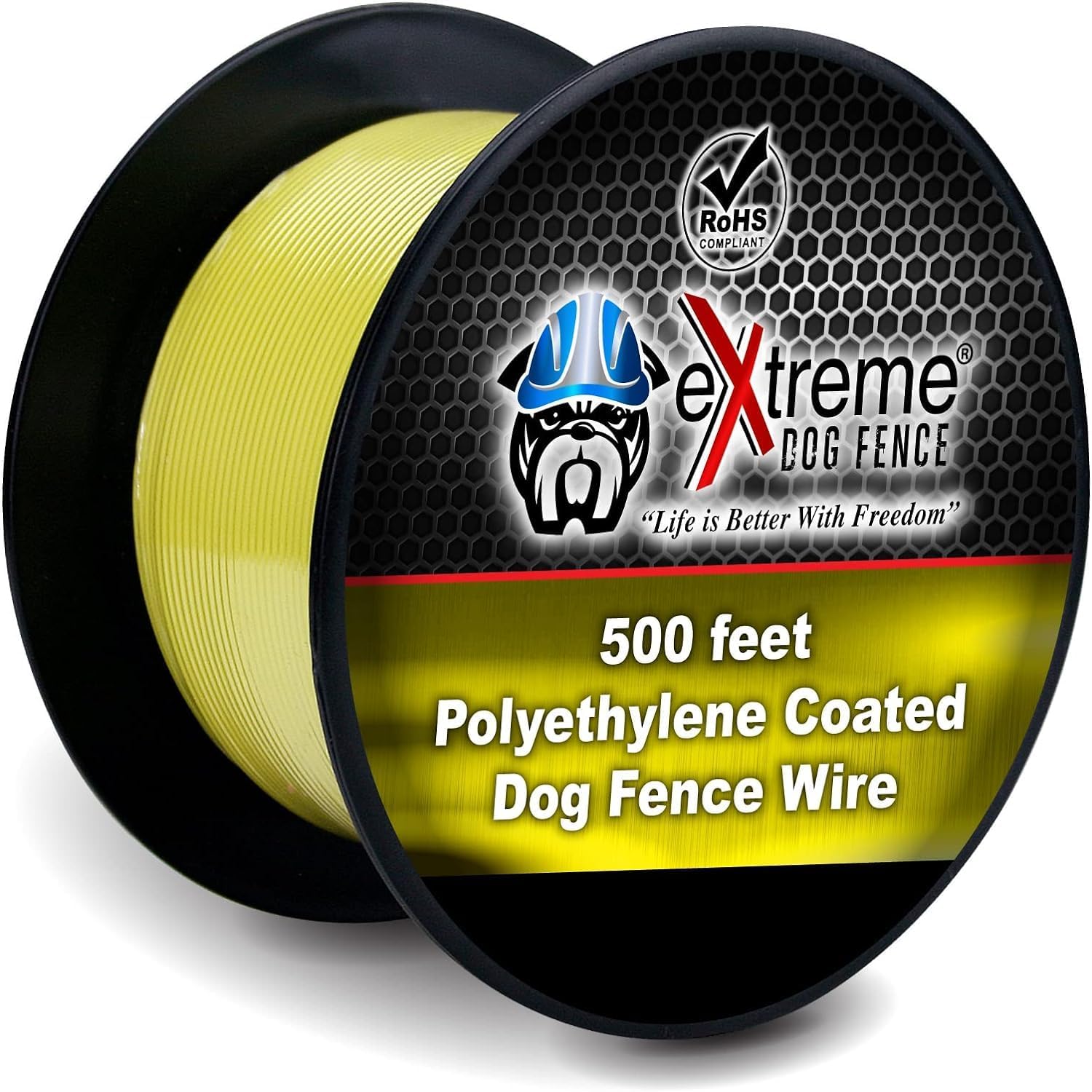
This 500-foot spool of 20 gauge underground dog-fence wire is a straightforward option for homeowners wiring or repairing a simple in-ground containment system. The solid-core copper conductor is covered with a polyethylene jacket rated for direct burial and UV exposure, so it withstands routine outdoor conditions and can be buried a few inches or stapled above ground for temporary runs. It is sold as a single continuous strand, which makes planning a one-acre or smaller layout easy without splices; the listing notes the spool will cover roughly one third of an acre. The wire is described as compatible with major brands of in-ground fences, so it will work with most transmitters and collars. Buyers should expect a basic, no-frills product: heavier duty 16 AWG options exist for extremely rocky or high-wear installations, and professional installers sometimes prefer thicker wire for long-term durability. For typical residential yards where cost matters, this wire offers acceptable conductivity and weather resistance for everyday containment use.
Best for: Buyers who prioritize low cost and a simple DIY installation for a typical residential yard and want a ready-to-install spool that works with common in-ground systems.
Less Ideal for: Users planning installations in extremely abrasive, rocky, or high-traffic areas or those seeking the most heavy-duty, long-term wire should choose a thicker gauge or professional-grade cable.
- 500-foot continuous spool suitable for covering a standard residential containment area
- Polyethylene insulation rated for direct burial and UV resistance
- Solid single-strand construction simplifies layout and reduces connection points
- Listed compatibility with major in-ground fence brands
- 20 AWG is thinner than some heavy-duty 16 AWG options and may wear faster in very rocky or high-traffic trenches
- Sold as a single strand so extensions require splicing or additional wire purchases
Verdict: The best budget gauge wire gives pet owners a dependable, low-cost conductor that maintains adequate signal and durability for standard installations.
eXtreme Dog Fence Max 14 Gauge 2000 ft
Best Premium Gauge Wire

| Gauge | 14 AWG |
|---|---|
| Jacket thickness | 60 mil polyethylene |
| Length | 2000 ft |
| Intended use | Underground or above-ground low-voltage runs |
This 14 gauge eXtreme Dog Fence Max wire is a heavy-duty roll intended for underground pet containment and other low-voltage outdoor runs. The solid core conductor and very thick 60 mil polyethylene jacket make it suited to burial, stapling to existing fences, or routing above ground with staples, which helps protect the conductor from moisture and abrasion over time. A 2,000 foot spool covers up to about 4 acres and simplifies planning for large yards so you can avoid seams or splicing multiple shorter rolls. The product is marketed as compatible with all in-ground dog fence systems, so it will plug into most transmitters and receivers without brand-specific fitment. Expect longer lifespan and better physical protection compared with thinner, lightly insulated wire, though the heavier jacket and solid core add stiffness that can make handling and tight turns more work during installation. For demanding outdoor conditions where durability matters, this wire prioritizes longevity and protection over ease of handling.
Best for: Buyers who need a long, rugged in-ground boundary wire built to hold up in harsh outdoor conditions and minimize future repairs.
Less Ideal for: If you want the easiest-to-handle, highly flexible wire for frequent reconfiguration or very tight routing, a lighter gauge or stranded conductor would be a better choice.
- Very thick 60 mil polyethylene jacket for improved abrasion and moisture resistance
- 14 AWG solid core for robust conductivity and durability
- 2,000 ft spool sufficient to cover up to roughly 4 acres without splices
- Suitable for burial or above-ground fastening with staples
- Advertised compatibility with all underground dog fence systems and other low-voltage outdoor uses
- Heavier, stiffer cable can be harder to route around tight corners during installation
- Solid core is less flexible than stranded alternatives
Verdict: The best premium gauge wire is for owners who want superior build quality, thicker insulation, and longer expected lifespan in demanding outdoor conditions.
eXtreme Dog Fence 14 Gauge 1500 ft
Best Heavy-Duty Gauge Wire
| Gauge | 14 AWG |
|---|---|
| Jacket Thickness | 60 mil polyethylene |
| Length | 1500 ft |
| Core | Solid core |
| Manufactured | United States |
This is a heavy-duty 14 AWG solid-core wire with a 60 mil polyethylene jacket intended for buried or surface-run underground dog fence installations. It comes as a 1500 foot roll, long enough to cover roughly up to two acres depending on layout, and is built for durability in tough terrain and outdoor exposure. In practice the thick jacket makes the wire resistant to abrasion, moisture, and lawn equipment damage, which is important when you need a long-lasting boundary for strong or determined dogs. Because it is solid core and rated for burial it can also be stapled to existing fences or used for other low-voltage outdoor runs like robotic mower or landscape lighting circuits. The product is made in the United States and is presented as compatible with all common in-ground systems, which simplifies replacement and upgrades. The main limitations are that it is a raw roll of wire only, so buyers need to plan layout, connectors, and installation hardware themselves, and heavier gauge and thicker jacketing add stiffness that can make handling and splicing slightly more work on long runs.
Best for: Homeowners with large, strong, or highly motivated dogs who want a durable, long-lasting buried boundary and are prepared to handle a DIY installation and layout planning.
Less Ideal for: Buyers who prefer an all-in-one kit with transmitter, collars, and installation hardware included or those who need very flexible, lightweight wire for frequent reconfiguration.
- 60 mil high-density polyethylene jacket for strong abrasion and moisture resistance
- 14 gauge solid core provides robust conductivity and durability for heavy-duty containment
- 1500 ft roll covers up to about two acres, reducing the need for multiple spools
- Made in the United States and compatible with all common in-ground dog fence systems
- Can be used for other low-voltage outdoor applications such as robotic mowers or landscape lighting
- Sold as raw wire only so installation requires separate connectors, terminals, and planning
- Thicker jacket and solid core increase stiffness, making handling and splicing more work
Verdict: The best heavy-duty gauge wire is designed for high-stress or exposed runs, offering a thicker conductor and robust jacket to resist damage and maintain signal integrity.
Extreme Dog Fence 16 Gauge Wire 1000ft
Best Direct-Burial Gauge Wire

| Gauge | 16 gauge |
|---|---|
| Length | 1000 feet |
| Manufacturer | Extreme Dog Fence |
This is a heavy-duty 16-gauge perimeter wire sold as a 1000-foot roll and intended for direct burial with buried dog fence systems. The insulation and construction are designed to stand up to outdoor exposure and common ground conditions, so you can run continuous loops around a yard and expect consistent signal transmission. In practice it is used by unspooling and staking or burying the wire around the property and connecting it to the fence transmitter; the single-gauge construction simplifies installation and makes splices straightforward. The practical benefits are long run length per roll, gauge thickness that balances conductivity and durability, and insulation that resists normal abrasion and moisture when installed underground. Important limits to note are that this product is a single conductor roll so you will need connectors or splices for joins and repairs, and performance depends on correct burial depth and good connections at the transmitter and splice points. For most home installations the wire offers a reliable, long-length solution for a buried dog fence loop when paired with a compatible transmitter.
Best for: Buyers installing or repairing an underground dog fence who prioritize a long, durable roll of direct-burial-rated wire for reliable signal transmission around residential yards.
Less Ideal for: People who want a complete plug-and-play kit with connectors, splice accessories, or printed installation guidance included should consider a full system or accessory pack instead.
- 1000-foot length reduces the need for multiple rolls on typical yards
- 16-gauge conductor offers a balance of signal integrity and toughness
- Designed for direct burial with insulation resistant to outdoor conditions
- Single continuous roll simplifies laying the loop around a property
- Sold as plain wire without connectors or splice kits included
- No manufacturer-supplied burying depth or installation instructions in the listing
Verdict: The best direct-burial gauge wire is formulated with moisture- and abrasion-resistant insulation so it can be buried directly and still protect the signal long-term.
12.5 Gauge 82ft Electric Fence Wire
Best Low-Resistance Gauge Wire

| Gauge | 12.5 |
|---|---|
| Length | 82 ft |
| Core | Aluminum |
| Insulation | Double PE |
| Voltage rating | 20 kV |
This 12.5 gauge, 82-foot electric fence cable is designed as an underground lead-out or under-gate conductor for high-voltage perimeter systems. It uses a high-grade oxygen-free aluminum core that the manufacturer says is about four times more conductive than steel, and the single-core cable is rated for up to 20 kV transmission. The double PE insulation makes the cable waterproof, flexible, and resistant to aging, so it can be buried directly without additional conduit for gate runs or short distribution runs from an energizer. Included split-bolt connectors and gloves make initial hookup easier. Expect practical benefits in reduced voltage drop compared with thinner wire and a durable buried connection that limits exposure to moisture and abrasion. The main limitation is length: at 82 feet this spool is intended for short runs or under-gate use rather than wiring long perimeters, so larger properties will need multiple spools or thicker continuous conductors for best long-run performance.
Best for: Buyers who prioritize low electrical resistance for short buried runs or under-gate connections and want a durable insulated conductor to minimize voltage loss between an energizer and the fence line.
Less Ideal for: Owners planning to wire long perimeter runs without splices or those who need a single continuous reel for very large properties should consider longer or heavier-gauge conductor options.
- Aluminum core with higher conductivity than steel reduces electrical resistance
- Double PE insulation rated for direct burial provides waterproof and wear-resistant protection
- Specified for high-voltage use up to 20 kV suitable for transmitting energizer pulses
- Includes split bolt connectors and gloves to simplify installation of short runs
- At 82 feet per roll, the length is short for full perimeter runs on larger properties
Verdict: The best low-resistance gauge wire minimizes electrical loss over long perimeter runs, ensuring a strong, consistent signal for larger yards and properties.
Extreme Dog Fence 16 Gauge Twisted Wire 100ft
Best Flexible Gauge Wire

| Gauge | 16 |
|---|---|
| Length | 100 ft |
| Voltage | 600 volts |
| Strands | Multi Strand |
| Material Type | Polyethylene |
This 100 ft spool of pre-twisted 16 AWG wire is designed for in-ground dog fence systems and simplifies loop and crossover wiring. Because the pair is twisted, sections that run from the transmitter to the main loop remain neutral so a dog can cross those runs without receiving a correction, and installers can use twisted runs to connect smaller no-go areas back to the main loop. The 16 gauge conductor is thicker than lighter hobby wire and uses a durable polyethylene coating that resists wear when buried, making it suitable for long-lasting, professional-style installations. Pre-twisting saves installation time and effort compared with twisting two separate conductors on site, and the wire is listed as compatible with most buried fence brands. Limitations are few but include the single 100 ft spool length, which may not suit larger properties, and a heavier gauge that is less flexible than thinner wire options, so very tight bends in constrained landscaping could require more care when routing.
Best for: Installers and DIYers who prioritize easier routing and a robust, professional buried wire for yards where reliable, long-term performance matters.
Less Ideal for: Buyers who need long continuous runs for large properties or who require the most highly flexible, ultra-thin wire for extremely tight bends should consider other lengths or gauges.
- Pre-twisted pair saves time by eliminating manual twisting during installation
- 16 AWG conductor offers professional-grade durability for buried use
- Thick polyethylene coating resists abrasion and soil moisture for long service life
- Universally compatible with major in-ground dog fence systems
- Only a single 100 ft spool is provided which may be short for larger yards
- Heavier 16 gauge wire is less pliable than thinner gauges for extremely tight routing
Verdict: The best flexible gauge wire is ideal for complex layouts because its pliable construction makes routing around corners, trees, and obstacles much simpler.
Choosing the Right Gauge Wire Underground Dog Fence: Key Factors to Consider
Conductor Gauge and Electrical Resistance
Conductor size directly affects how well the signal travels along the fence loop. Lower gauge numbers mean thicker conductors, which have less resistance per foot and maintain stronger signal strength over long runs. If you plan extended perimeter lengths, choose a thicker gauge to prevent signal drop and reduce the likelihood of weak zones.
Resistance also impacts battery life and collar performance because higher resistance can force the transmitter to work harder to maintain a reliable pulse. For most residential installs, balancing gauge with ease of handling matters: very thick wire is durable but harder to pull through conduit or around tight corners.
Insulation Type and Durability
Insulation is the first line of defense against moisture, chemicals in soil, and abrasion from rocks or digging. Materials formulated for direct burial resist water absorption and resist tearing during installation. Look for insulation rated for ground contact rather than just sleeve or conduit use.
The thickness of the polymer jacket influences puncture resistance and longevity. Softer, highly flexible jackets ease installation but can wear faster if dragged across rough surfaces. Stiffer jackets are tougher but less forgiving around bends. Balance flexibility and abrasion resistance based on your terrain and installation method.
Direct-burial Rating and Environmental Resistance
Wires intended for direct burial are tested for long-term exposure to soil conditions, moisture cycles, and biological activity. A direct-burial rating signals that the product can be laid in trenches without additional conduit and should withstand seasonal freeze/thaw and root movement.
Also consider resistance to ultraviolet light for sections that might sit above ground temporarily during installation or at access points. Corrosion resistance of any exposed metal fittings and compatibility with landscape treatments are additional environmental factors that influence longevity.
Flexibility and Ease of Installation
The wire you choose should be manageable for the planned routing. More flexible wires are easier to pull through conduit, curve around corners, and snake through tight spaces. That reduces installation time and the chance of damaging insulation while handling.
Rigid, thicker conductors are tougher but can require extra labor and larger conduit or trench profiles. Consider the tools and method you will use—hand trenching, trencher, or plowing—because each method interacts differently with wire flexibility and tensile strength.
Splicing, Connectors, and Repairability
Underground runs sometimes need mid-line repairs after landscaping work or accidental cuts. Choose a wire that works with straightforward, durable splice methods and commonly available waterproof connectors. Conductor strand count influences which splicing kits are compatible: some kits expect a stranded conductor, others work with solid core.
Assess how easily you can access junctions and whether the wire tolerates multiple splice events without significant signal loss. Planning splices at accessible locations reduces future maintenance hassle.
Visibility and Color Coding
Using distinct jacket colors or markers makes future identification easier and helps avoid accidental cuts when digging. Many installers run a tracer or a brightly colored warning tape above the buried wire; selecting a wire with a contrasting color reduces the chance of confusion with other buried utilities.
Color coding can also indicate loop polarity or different zones when multiple circuits run near each other, simplifying troubleshooting without needing specialized test gear.
How Thick Should the Wire Be for Long Perimeter Runs?
For long perimeter loops, prioritize lower gauge (thicker) conductors to reduce voltage drop. A thicker conductor lowers resistance per foot, which keeps the transmitter from overworking to maintain a consistent pulse along the entire loop.
If your property has runs with many feet of cable, choose a gauge that balances durability and manageable handling. Very thick wire is more durable but harder to route, so evaluate installation method and distance before committing to the maximum thickness available.
- Lower gauge equals lower resistance and better long-run performance
- Balance thickness with ease of handling and conduit size
- Consider thicker wire when the loop length approaches the transmitter's recommended limits
Should I Use Conduit, or Is Direct Burial Okay?
Direct-burial-rated wires are designed to go straight into the trench without conduit and are often the most cost-effective choice. They are formulated to resist moisture and soil abrasion. Use direct-burial wire where the trench depth and soil conditions are stable and the run is unlikely to be disturbed.
Conduit adds mechanical protection where runs may be exposed to future digging or where you need to pull multiple wires through the same route. Conduit also makes later replacements or upgrades easier because you can pull new cable without re-excavating the whole trench.
- Use direct-burial wire for standard trenches with stable soil
- Install conduit where future digging, heavy equipment, or multiple wires are expected
- Conduit simplifies future upgrades but increases initial labor
What Splice Methods Hold Up Best Underground?
Waterproof crimp sleeves and sealed gel-filled connectors are common because they protect the conductor joint from moisture and corrosion. Properly crimped sleeves with a quality moisture-blocking sleeve over the joint create robust, long-lasting repairs.
Heat-shrink butt connectors with internal adhesive also perform well if installed correctly and allowed to cool. Avoid exposed mechanical twists without waterproofing, as those are prone to corrosion and signal loss over time.
- Choose waterproof, rated connectors specifically for direct burial
- Ensure crimps are sized for the conductor strand count and gauge
- Record splice locations and mark them aboveground for easier future access
How to Plan Wire Routing to Minimize Damage Risk
Plan routes away from high-traffic digging zones such as garden beds, irrigation lines, and fence posts. Where crossing irrigation or utility lines, keep a clear, documented map and cross at right angles where possible to reduce accidental cuts during future work.
Use protective measures like warning tape above the buried wire and concrete or protective conduit where the cable passes through areas likely to be disturbed. Marking connection points above ground at regular intervals helps locate and diagnose issues faster.
- Avoid running cable directly under areas where heavy landscaping will occur
- Use warning tape or marker stakes to indicate buried runs
- Cross utilities at right angles and maintain good records of routing
Does Strand Count Matter for Splice Strength and Flexibility?
Stranded conductors are more flexible and easier to handle around bends, which is helpful when pulling cable through conduit or making tight turns. Solid conductors may be sturdier in some mechanical contexts but are less forgiving when bending and more likely to fatigue if flexed repeatedly.
Splice kits and connectors are often rated for a range of strand counts; check compatibility. A higher strand count generally improves flexibility and can make crimps more reliable, but it may require a slightly different connector style.
- Choose stranded wire for flexibility and easier routing
- Confirm splice kit compatibility with conductor strand count
- Higher strand counts typically improve bend fatigue resistance
Preparing for Winter and Freeze/thaw Cycles
In climates with seasonal freezing, select wire and insulation rated to tolerate expansion and contraction. Freeze/thaw cycles can shift soil and stress joint areas, so durable insulation and well-sealed splices reduce the chance of water ingress and subsequent damage.
Lay runs below the frost line where practical, and ensure that splice points are well-protected. Where deep burial is not possible, extra mechanical protection around splices and transitions can prevent seasonal movement from causing failures.
- Use insulation rated for freeze/thaw conditions
- Place runs below the local frost line when possible
- Reinforce splice protection in areas subject to soil movement
How We Chose the Best Gauge Wire Underground Dog Fence
We evaluated candidate wires using criteria that matter for long-term buried pet containment systems. Primary considerations included conductor size and electrical resistance, because thicker conductors carry signal farther and lose less voltage; insulation material and thickness, since durable insulation prevents water ingress and chafing from soil and rocks; jacket formulation and UV/moisture resistance for sections exposed at joins; and flexibility to make installation around corners and through conduit straightforward. We also checked recommended burial depth compatibility and connectoring methods so the chosen wires work with standard splice kits and terminals. Ease of repair and availability of replacement sections were considered because buried runs are sometimes damaged by landscaping work. We excluded any wire types that lack specifications for direct burial or that rely on fragile insulation prone to cracking. The final selection focused on wires with clear conductor gauge ratings, rated for direct burial or conduit use, and backed by straightforward installation guidance.
Our full evaluation process is outlined in our review methodology.
FAQ
What gauge wire is best for a typical suburban yard?
Often a mid-range gauge balances performance and handling for most suburban yards. It provides acceptable signal integrity for typical perimeter lengths while remaining flexible enough to install without heavy conduit. Exact choice depends on loop length and soil conditions.
Can I run the buried wire under driveways or patios?
Yes, but use conduit or bury the wire deeper in those sections to protect it from vehicle loads and settlement. Conduit makes future replacement easier and adds mechanical protection where surface loads could damage the cable.
How do I test for signal loss after installation?
Use a loop tester or the transmitter's diagnostic features to measure current and continuity along the loop. Walk the perimeter with the collar receiver to confirm even signal strength and check splice points if the signal drops in specific areas.
Is it okay to bury the wire with just a light layer of soil?
No. Burying wire too shallow increases the risk of accidental cuts from gardening and exposes it to temperature extremes and UV if near the surface. Follow recommended burial depth for the chosen wire and add warning tape above the cable when practical.
How should I protect wire where it passes through a wall or post?
Use short sections of conduit or protective sleeves at penetration points and seal minor gaps to prevent moisture from tracking into the run. Mechanical protection prevents abrasion where the cable contacts rough edges.
Will thicker wire change how the transmitter functions?
Thicker wire reduces loop resistance, which can improve signal consistency and reduce the transmitter's load. It does not change the transmitter's pulse design, but it can extend effective loop length before encountering voltage drop issues.
Final Verdict
Prioritize conductor gauge, insulation durability, and splice protection when choosing wire for an underground dog fence. Gauge affects signal strength and how far a loop can run without added transmitters, while insulation and burial method determine how long the system will last with minimal maintenance. Balance thicker conductors for long runs with manageable flexibility for installation, and plan splices and routing with future access in mind. Ultimately, pick the wire that meets your loop length, soil conditions, and installation method to minimize repairs and maintain a reliable containment signal over time.

