

When you let a dog off leash or roam in an unfenced yard, a reliable GPS tracking collar dog can be the difference between quick recovery and a stressful search. Choosing the right collar matters because performance, battery life, and ease of use all affect how quickly you can locate a missing pet and how practical the system is day to day. This guide presents six shortlisted GPS tracking collars that represent the strongest options for typical dog owners. We evaluated accuracy, runtime, durability, and user experience to focus on collars that make tracking simple and dependable. Read on for what to look for and practical tips to match a tracking collar to your dog and lifestyle before you pick one of the top picks below.
Top Picks at a Glance
| Best Overall GPS Tracking Collar The top all-around tracker balancing features, reliability, and usability | Tractive Smart Dog GPS Tracker TG6 | 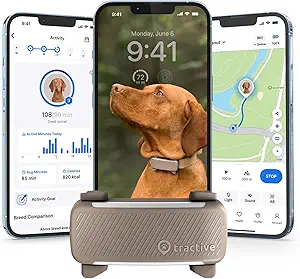 |
| Best Budget GPS Tracking Collar An affordable tracker that covers core location features without extras | galawelly GPS Dog Tracker |  |
| Best Premium GPS Tracking Collar Higher-end model with advanced features and superior build quality | Garmin Alpha TT 25 Collar |  |
| Best Long-Battery GPS Tracking Collar Extended runtime between charges for long outings and travel | BONSO Dog GPS Tracker Collar |  |
| Best Lightweight GPS Tracking Collar A low-profile, comfortable tracker suited for smaller dogs | Fi Mini GPS Tracker |  |
| Best Accurate GPS Tracking Collar Superior location precision and faster position updates for confidence | Dogtra Pathfinder 2 GPS Tracker |  |
Tractive Smart Dog GPS Tracker TG6
Best Overall GPS Tracking Collar

| Connectivity Technology | Cellular, GPS |
|---|---|
| Additional Features | Activity Tracking, Bark Detection, Location History, Real Time Tracking, Waterproof |
| Battery Average Life | 14 days |
| Compatible Devices | Smartphone |
The Tractive Smart Dog GPS Tracker is a collar-mounted tracker that provides continuous location updates, activity logs, and basic health monitoring for pet owners. It uses GPS plus cellular connectivity to deliver live location updates every 2–3 seconds, supports virtual fences with escape alerts, and stores location history for retracing routes. The device also tracks activity, barking, and changes in heart and respiratory rates, sending alerts when behavior or vital signs deviate from learned baselines. In daily use the tracker is lightweight and waterproof, attaches to a collar via included clips, and relies on a smartphone app for mapping and alerts. Practical benefits include very frequent live updates for close-follow tracking, multi-feature wellness monitoring, and a battery that can last up to two weeks between charges. Limitations to consider are the need for a cellular subscription for real-time tracking, occasional variance in precision in dense urban or heavily wooded areas, and the small plastic enclosure which may be less rugged than heavier-duty housings for extremely active working dogs.
Best for: Owners who want a reliable everyday tracker that balances frequent, accurate location updates with useful health and activity insights and long battery life.
Less Ideal for: People needing a tracker that works without any cellular service or those who require an ultra-rugged, industrial-grade device for extreme working environments.
- Real-time tracking with updates every 2–3 seconds for close monitoring
- Virtual fence and escape alerts with location history to retrace routes
- Activity, bark detection, and vital-sign monitoring for early health cues
- Lightweight, waterproof design suitable for daily wear
- Up to 14 days battery life between charges in typical use
- Requires a cellular subscription for live tracking and alerts
- Plastic enclosure may be less rugged than heavier industrial housings
Verdict: The best overall GPS tracking collar for most dog owners, offering a balanced combination of location accuracy, battery life, comfort, and dependable connectivity for everyday use.
galawelly GPS Dog Tracker
Best Budget GPS Tracking Collar

| Compatibility | Android and iPhone |
|---|---|
| Waterproof rating | IP68 |
| App | DEONETAG |
| Historical playback | 7 days |
This compact galawelly tracker clips into a dedicated holder and delivers real-time location updates to Android and iPhone via the DEONETAG app without requiring a SIM card or monthly subscription. It records up to seven days of route history, so you can review where your dog has been, and the app supports encrypted QR sharing to let others view location data quickly. The tracker is rated IP68 for waterproofing, so it tolerates rain, splashes, and brief submersion and is built light and slim to minimize pull on a collar. Setup is simple with one-click pairing and the included holder keeps the unit secure during running and rough play. Limitations to note are that advanced cellular backup features are not available since it is designed to work via the app ecosystem rather than a paid cellular network, and battery life details are not specified so heavy continuous live-tracking may require more frequent charging. For owners who prioritize easy setup, no subscriptions, and strong water protection, this unit is practical and straightforward.
Best for: Owners who need a rugged, waterproof tracker for dogs that swim or play in wet outdoor conditions and who prefer a subscription-free, app-based solution.
Less Ideal for: Users who require nationwide cellular fallback tracking or long unattended runtime between charges should consider trackers with paid cellular plans and published battery endurance.
- No monthly fee or SIM card required for core tracking functions
- IP68 waterproof rating suitable for rain, splashes, and brief submersion
- Real-time tracking with 7-day historical route playback in the DEONETAG app
- Compact, lightweight design with a dedicated holder for secure collar attachment
- Encrypted QR path sharing for easy, controlled location sharing
- No built-in cellular subscription or SIM-based fallback for coverage gaps
- Battery life and charging interval are not specified in the listing
Verdict: The best budget GPS tracking collar for owners who need basic, reliable pet location tracking and safety features at a lower price point without premium bells and whistles.
Garmin Alpha TT 25 Collar
Best Premium GPS Tracking Collar

| Included components | Collar with rechargeable Li-ion battery pack, 1" strap, charging clip, USB-C cable, contact points |
|---|---|
| Range | Up to 9 miles (with compatible handheld) |
| Tracking update rate | As frequent as 2.5 seconds |
| Training levels | 18 levels plus tone and vibration |
| Battery life | Up to 68 hours (standard) or 136 hours (expanded) with dynamic tracking |
The Garmin Alpha TT 25 is a compact GPS tracking and training collar designed to work with Garmin dog handhelds to monitor and manage dogs at distance. It transmits location updates as frequent as every 2.5 seconds and supports tracking and training commands up to about 9 miles when used with a compatible handheld, making it suitable for hunting packs and working dogs. The unit includes 18 levels of momentary and continuous stimulation plus tone and vibration, and a bright multicolor LED makes identifying dogs in low light straightforward. Battery life is strong for this class, with up to 68 hours on the standard pack and up to 136 hours with the expanded pack when using dynamic tracking. The housing is rugged but slim and uses a user-replaceable flex band and rechargeable Li-ion battery, and it receives automatic firmware updates over Wi-Fi when charging. Buyers should note the collar requires a compatible Garmin handheld to access full tracking and training features and that the training functions are delivered via the paired device rather than standalone.
Best for: Owners who prioritize top-tier tracking accuracy, extended battery life, and a durable collar system for working, hunting, or off-leash dogs and who already plan to use a Garmin handheld.
Less Ideal for: Casual pet owners who want a standalone collar with phone-based tracking or those who do not want to invest in a separate Garmin handheld.
- Long-range tracking and fast update rates when paired with a compatible Garmin handheld
- Multiple training outputs including 18 stimulation levels, tone, and vibration
- Excellent battery options with dynamic tracking for extended runtime
- Bright multicolor LED for easy identification in low light
- Rugged yet slim design with user-replaceable flex band and rechargeable battery
- Requires a compatible Garmin handheld to access full tracking and training capabilities
- Training features are not standalone and depend on the paired device
Verdict: The best premium GPS tracking collar for owners willing to invest in top-tier accuracy, advanced safety features, and more durable materials for long-term performance.
BONSO Dog GPS Tracker Collar
Best Long-Battery GPS Tracking Collar
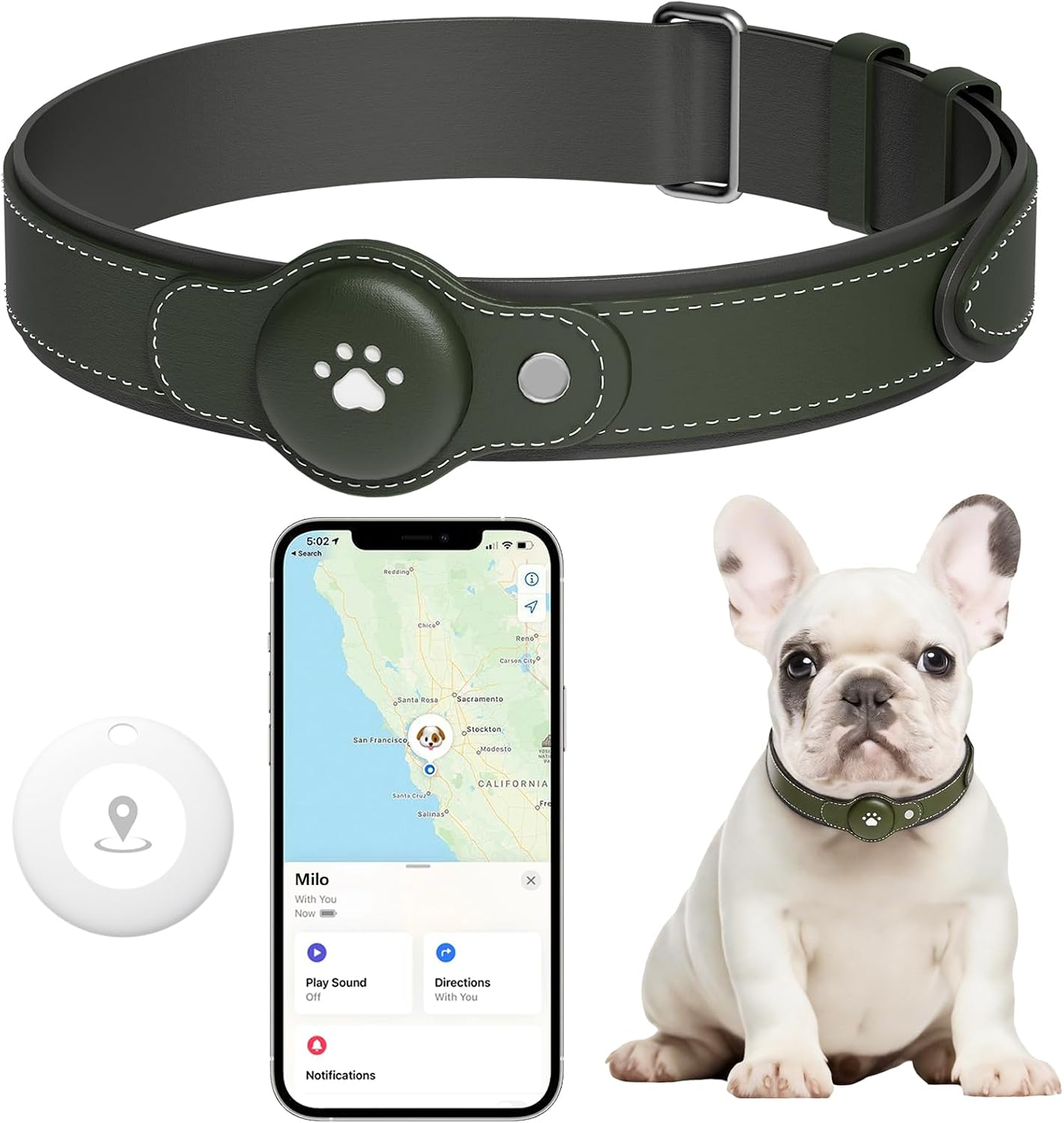
| Battery Average Life | 365 days |
|---|---|
| Connectivity Technology | Bluetooth |
| Battery Type | 1 C battery required (included) |
| Waterproof Rating | IP67 |
| Supported Application | Find My Phone |
The BONSO Dog GPS Tracker Collar combines a lightweight nylon collar and an integrated tracking tag to provide real-time location and activity monitoring via a smartphone app without monthly fees. Typical use is straightforward: attach the collar, pair the tracker with the iOS or Android app, set a safe zone, and check live location or route history when your dog wanders. Notable features include an IP67 waterproof rating for outdoor use, an app-controlled audible alert to help locate pets nearby, and claimed 365-day battery life with low-battery notifications in the app. Practical benefits are long unattended runtime for multi-day tracking, no subscription or SIM management, and a compact, resilient design suited to regular walks, camping, or off-leash adventures. Important limitations are that connectivity appears tied to Bluetooth and the supported Find My Phone integration rather than cellular networks, which can reduce long-range GPS accuracy in areas without paired devices, and the product description lists a single C battery format which may require replacement rather than simple USB charging.
Best for: Buyers who need long-term, low-maintenance tracking for dogs and want a simple setup without ongoing subscription costs or frequent recharging.
Less Ideal for: Owners who need guaranteed long-range, cellular-based tracking or continual cloud-based location updates when out of Bluetooth range should consider cellular GPS alternatives.
- Extremely long claimed battery life up to 365 days reducing recharge frequency
- No subscription or monthly fees required for tracking
- IP67 waterproof rating for use in rain or wet conditions
- App integration with real-time tracking and route history
- Built-in audible alert to help find pets nearby
- Primary connectivity appears to rely on Bluetooth/Find My Phone which limits long-range independent GPS accuracy
- Uses a replaceable C battery format rather than rechargeable power
Verdict: The best long-battery GPS tracking collar for pet owners who prioritize multi-day or extended-use tracking without frequent recharging.
Fi Mini GPS Tracker
Best Lightweight GPS Tracking Collar

| Connectivity Technology | Bluetooth, Wi-Fi |
|---|---|
| Supported Application | Fi app |
| Specific Uses For Product | Dog Walking, Hiking |
| Battery Capacity | 285 milliamp_hours |
The Fi Mini is a very small, lightweight GPS tracker designed to clip to a collar or harness and provide real-time location through the Fi app. It uses Bluetooth and Wi-Fi alongside GPS to deliver live tracking and Escape Alerts, and you can create virtual safe zones to receive instant notifications if a dog leaves them. The device also logs activity and health metrics such as steps, sleep, barking and licking so owners can monitor daily habits and share data with a veterinarian. Charging is via USB-C and the listed battery capacity supports up to about two months between charges for typical use, making it low-maintenance for short to medium outings. The tracker requires a Fi membership for LTE/GPS coverage, which enables nationwide tracking and Lost Mode live updates, so ongoing service is necessary to use the core GPS features. Its tiny form factor and included silicone cases make it comfortable for small dogs, but buyers should plan for the recurring subscription and check waterproof ratings if they expect heavy water exposure.
Best for: Owners of small or lightweight dogs who prioritize a comfortable, low-profile tracker that provides live location and basic health monitoring without adding noticeable weight.
Less Ideal for: People who want a fully offline tracker with no subscription or those who need ruggedized heavy-duty waterproofing for frequent swimming or extreme outdoor work.
- Extremely lightweight and compact for minimal collar bulk on small dogs
- Real-time GPS location with virtual fence and Escape Alerts for fast notifications
- Health and activity tracking (steps, sleep, barking, licking) that can be shared with vets
- Long battery life between charges for typical use and USB-C charging
- Requires a paid Fi membership for nationwide GPS/LTE tracking and Lost Mode
- Limited onboard connectivity relies on subscription and external networks for full functionality
Verdict: The best lightweight GPS tracking collar for dogs and owners who need a comfortable, minimally obtrusive tracker that won’t weigh down smaller pets.
Dogtra Pathfinder 2 GPS Tracker
Best Accurate GPS Tracking Collar

| Range | Up to 9-Miles |
|---|---|
| Waterproof | IPX9K |
| Dog Weight | For Dogs 35-100 lbs+ |
| App Compatibility | Smartphone, Smartwatch |
| Map Features | Offline, Satellite, Terrain |
The Dogtra Pathfinder 2 combines real-time GPS tracking with e-collar training functions aimed at handlers who work in large, rural, or off-grid areas. It pairs a GPS receiver collar with the Pathfinder2 app (and an optional GPS Connector accessory) to deliver 2-second refresh rates, offline maps, compass guidance, and smartwatch compatibility so you can monitor dogs across long distances. The system includes tone, vibration, nick and constant stimulation modes plus an LED locate light and pager vibration for locating dogs at night or in thick cover. It is waterproof to IPX9K and supports tracking up to 9 miles, with no monthly subscription required. Practical limitations include the need for the GPS Connector and a compatible smartphone or smartwatch to access certain functions, and the e-collar corrections require careful setup and training to use humanely and effectively. Battery life varies with update rate and features like the LED light and frequent polling will drain power faster than conservative settings.
Best for: Owners who need dependable, long-range location updates and integrated training controls for dogs that work or roam far from home, especially in rural or off-grid environments.
Less Ideal for: People who want a simple passive tracker without app dependence or those who are uncomfortable using remote correction features should consider simpler GPS-only collars.
- Real-time tracking with fast 2-second refresh for accurate location updates.
- Long range capability up to 9 miles for large properties and rural use.
- No subscription or monthly fees and free offline maps via the app.
- Integrated e-collar functions (tone, vibration, nick, constant) and LED locate light for training and locating.
- Smartwatch compatibility and compass view add convenient remote monitoring on the trail.
- Requires Pathfinder2 GPS Connector and a compatible smartphone or smartwatch for full functionality.
- E-collar corrections need proper training and may be inappropriate for inexperienced users.
Verdict: The best accurate GPS tracking collar for owners who need the most precise, reliable location updates and minimal lag when locating a missing or roaming dog.
Choosing the Right GPS Tracking Collar Dog: Key Factors to Consider
Location Accuracy and Update Frequency
How precisely and how often a collar reports position directly affects how quickly you can recover a lost dog. Higher update frequency helps narrow search areas faster but typically drains battery more quickly.
Accuracy varies with GPS reception, obstacles, and whether the device supplements GPS with cellular or satellite networks. Think about your typical use: dense woods and urban canyons require stronger positioning performance than open fields. Also consider whether the collar offers on-demand manual location pings versus continuous tracking and how that tradeoff affects both response time and runtime.
Battery Life and Charging Options
Battery life determines how long the collar will protect your dog between charges. Longer runtimes reduce the chance of the collar being dead when you need it most, but larger batteries can add weight and bulk.
Check realistic runtime figures for the tracking modes you expect to use; advertised battery life often assumes infrequent pings. Fast charging, replaceable batteries, and power-saving modes can make a big practical difference. Consider whether you need continuous 24/7 tracking for a working dog or intermittent tracking for weekend adventures, and choose a power profile that matches that use.
Fit, Weight, and Durability
A collar needs to fit securely and sit comfortably so the dog will tolerate it during daily wear. Weight is especially important for small breeds and puppies because heavy units can strain the neck and reduce compliance.
Durability against water, mud, and impact is essential if your dog swims, digs, or plays roughly. Look for waterproof ratings, robust housings, and secure mounting that resists snags. Adjustable straps and multiple size options help achieve a proper fit that keeps the GPS antenna oriented for better reception.
Connectivity and Dependency on Cellular Networks
Many GPS collars rely on cellular networks to relay location data to your phone. Where cellular coverage is sparse, a collar that caches locations or offers alternative positioning methods will be more dependable.
Confirm which cellular bands or network types the collar uses and whether a subscription is required for full functionality. Offline features such as local Bluetooth range finding or stored tracks can help in low-signal areas, while multi-network support improves coverage in marginal regions.
App Usability and Alerting Features
The smartphone app is the primary interface for most owners, so clarity of maps, responsiveness, and meaningful alerts are crucial. Useful apps let you set geofences, receive instant escape notifications, and share live locations with family or dog walkers.
Consider whether the app supports multiple profiles, quick live-tracking modes for active searches, and reliable push notifications. Battery-saving app features and permission settings that minimize false alarms are also important for daily convenience.
Mounting Method and Compatibility with Collars
How the GPS unit attaches to a collar affects comfort, stability, and whether you can continue using your preferred collar. Some trackers integrate with a dedicated strap while others clip onto existing collars or harnesses.
A low-profile mounting reduces snag risk, and secure fasteners prevent the unit from being lost in a brief struggle. If you use a specific type of collar or harness, confirm the tracker mounts safely without interfering with fit or function.
How Accurate Will the Location Be in Woods and Near Buildings?
GPS performance drops when trees, cliffs, or buildings block sky view. In heavy tree cover the collar may show a position several meters to tens of meters off, and urban areas with tall structures can create reflected signals that confuse the fix. Expect best accuracy in open areas and degraded precision in obstructed environments.
Many collars mitigate this with assisted positioning using cellular towers or cached fixes. If you frequently walk in dense terrain or downtown, prioritize a collar with stronger positioning algorithms and options for higher-frequency updates during searches.
- Open fields typically yield the best GPS accuracy.
- Dense canopy and urban canyons can introduce location errors.
- Assisted positioning and frequent pings improve practical searchability.
Can I Share Live Location with Family or a Dog Walker?
Most modern tracking collars let you grant temporary or ongoing access to other users through the app. This is helpful when someone else is taking the dog out or if you want a friend to help locate the pet during an escape.
Look for multi-user support, adjustable permission levels, and the ability to send a live-tracking link without exposing your full account credentials.
- Check if the app allows multiple simultaneous viewers.
- Temporary access options reduce security risks.
What Are Realistic Expectations for Battery Runtime in Active Use?
Battery life varies widely depending on how often the device reports location. Continuous live-tracking modes can run a collar down in hours, while lower-frequency background tracking can last days to weeks. Real-world runtime depends on update interval, cellular transmission, temperature, and antenna efficiency.
If your priority is weekend hikes and occasional off-leash play, a collar with moderate battery life and a fast-charge option may be ideal. For professional use or near-constant monitoring, prioritize longer runtimes and consider charging logistics before each outing.
- High-frequency updates shorten battery life.
- Cold weather can reduce effective battery capacity.
- Fast charging or spare batteries improve uptime.
How to Set Effective Geofences and Escape Alerts
Geofencing gives you an automatic alert when your dog leaves a safe area. Draw a fence around yards, parks, or common routes and tune the alert sensitivity to avoid false alarms caused by temporary signal drift. Smaller, tighter fences generate more immediate alerts but may trigger when accuracy fluctuates.
Combine geofences with activity-based rules so you can disable alerts during planned off-leash play and re-enable them afterward. Test geofence behavior in your usual locations to confirm alert timing and accuracy before relying on it for security.
- Start with a slightly larger fence, then tighten as you learn typical signal behavior.
- Use temporary disable options during supervised outings.
Will the Collar Stay on During Rough Play or Swimming?
A secure mounting and appropriate strap selection help prevent loss during rough activity. Look for water resistance ratings that match your dog's habits; higher ratings protect against swimming and heavy rain. Check how the unit seals and whether buttons or ports are vulnerable to water or dirt ingress.
Test the fit and mounting method before relying on the collar in high-risk situations. If your dog is a frequent swimmer or often rousts through brush, choose a robust housing and fastening system to minimize detachment risk.
- Confirm the IP rating for water exposure.
- Prefer low-profile mounts to reduce snagging.
How to Balance Weight and Comfort for Small Dogs
Smaller breeds require lighter units with compact profiles to avoid neck strain. Consider collar width, weight distribution, and whether the device can be mounted on a harness rather than the collar if the dog is particularly small or sensitive.
A trial wear period helps verify that your dog tolerates the unit during regular activity. If a tracker feels bulky, look for models with minimal footprints and soft, adjustable straps to improve comfort.
- Aim for the lightest appropriate unit for dogs under 20 pounds.
- Harness mounting can reduce neck pressure for tiny breeds.
How We Chose the Best GPS Tracking Collar Dog
We focused on criteria that determine real-world usefulness for dog owners who need reliable location tracking. Primary evaluation factors were location accuracy under varied conditions, battery life on normal usage patterns, and the range and responsiveness of location updates. We also weighed device durability against water and impact exposure typical of walking, hiking, and play. Ease of setup and daily use mattered because an intuitive app and simple pairing help owners act quickly in a lost-pet scenario. Safety features such as geofencing alerts, sharing and multi-user access, and unobtrusive fit were included to ensure the collar supports both prevention and recovery. We excluded devices intended solely for livestock or vehicle tracking and any unit lacking continuous GPS capability or mobile app support. Our short list reflects products that balanced technical performance with practical features owners actually use, rather than niche or experimental options. Models with persistent connectivity problems, poor battery management, or limited durability were not considered.
Our full evaluation process is outlined in our review methodology.
FAQ
Do GPS collars work without a mobile subscription?
It depends. Some collars offer limited local tracking via Bluetooth without a subscription, but full remote tracking and live map updates typically require a mobile data connection. Check whether the collar stores locations for later download or offers offline features if you need coverage without a subscription.
How often should the collar report location while I am hiking?
For active hikes, a 10 to 60 second update interval balances real-time tracking with battery use. Shorter intervals provide finer movement detail during a search but will shorten runtime. Choose an interval based on how quickly you need to react and how long you plan to be out.
Will the tracker bother my dog while wearing it all day?
Most dogs acclimate quickly to a low-profile tracking collar, especially if it is lightweight and properly fitted. Introduce the collar gradually and check for rubbing or chafing. Heavier units or awkward mounts can cause discomfort, so prioritize fit and weight for daily wear.
Can I use a GPS collar on a harness instead of a collar?
Many trackers are compatible with harness mounting, which can be a safer option for small dogs or breeds sensitive to neck pressure. Ensure the mount keeps the antenna exposed and the unit stable; some trackers work better mounted on a collar because of orientation needs.
How accurate are escape notifications?
Escape notifications are only as reliable as the collar's location fixes and your geofence setup. Expect occasional false alerts from temporary signal drift. Tuning geofence size and sensitivity and testing them in your common locations helps reduce unnecessary alarms.
Final Verdict
Choose a GPS tracking collar dog by balancing accuracy, battery life, and physical fit against how and where you let your dog roam. If you spend time in dense woods or urban areas, prioritize stronger positioning and frequent update options. For everyday use, favor a lightweight, durable unit with reliable app alerts and a battery life that matches your routines. Accept that tradeoffs are unavoidable: higher update rates improve searchability but reduce runtime, and heavier units often last longer. Decide which features matter most for your lifestyle and dog size, then pick the collar that aligns with those priorities to improve safety and peace of mind.

