

Picking the right grain-free dog food for a labrador matters because this breed can have high energy needs and a tendency to gain weight. You want a formula that delivers steady energy, supports joint health, and offers complete nutrition without grains. This guide shortlists the top grain-free foods designed for labradors, focusing on protein quality, calorie density, and essential vitamins and minerals. Below you'll find our top picks and clear reasons why each type of formula might suit different labrador lifestyles and health priorities.
Top Picks at a Glance
| Best Overall Grain-Free Food for Labradors A well-balanced, widely suitable grain-free formula for most labs | Taste of the Wild Pacific Stream 5 lb |  |
| Best Budget Grain-Free Food for Labradors A lower-cost grain-free option that meets basic nutritional needs | Jinx Grain Free Lamb Dry Dog Food 4 lb |  |
| Best Premium Grain-Free Food Higher-end grain-free formulas with superior ingredients and sourcing | ORIJEN Large Breed Dry Dog Food 23.5 lb |  |
| Best High-Protein Grain-Free Food Formulas focused on higher animal-protein percentages for active dogs | Merrick Backcountry Great Plains 20 lb |  |
| Best Large-Breed Grain-Free Food Recipes formulated for bigger dogs' joint health and controlled calories | Wellness CORE Large Breed Dry Dog Food 26 lb |  |
| Best Limited-Ingredient Grain-Free Food Simpler recipes with fewer ingredients for easier allergy testing | Zignature Salmon Formula 25-lb |  |
| Best Sensitive-Stomach Grain-Free Food Gentler grain-free formulas aimed at improving digestion and stool quality | Hill's Science Diet Sensitive Stomach & Skin |  |
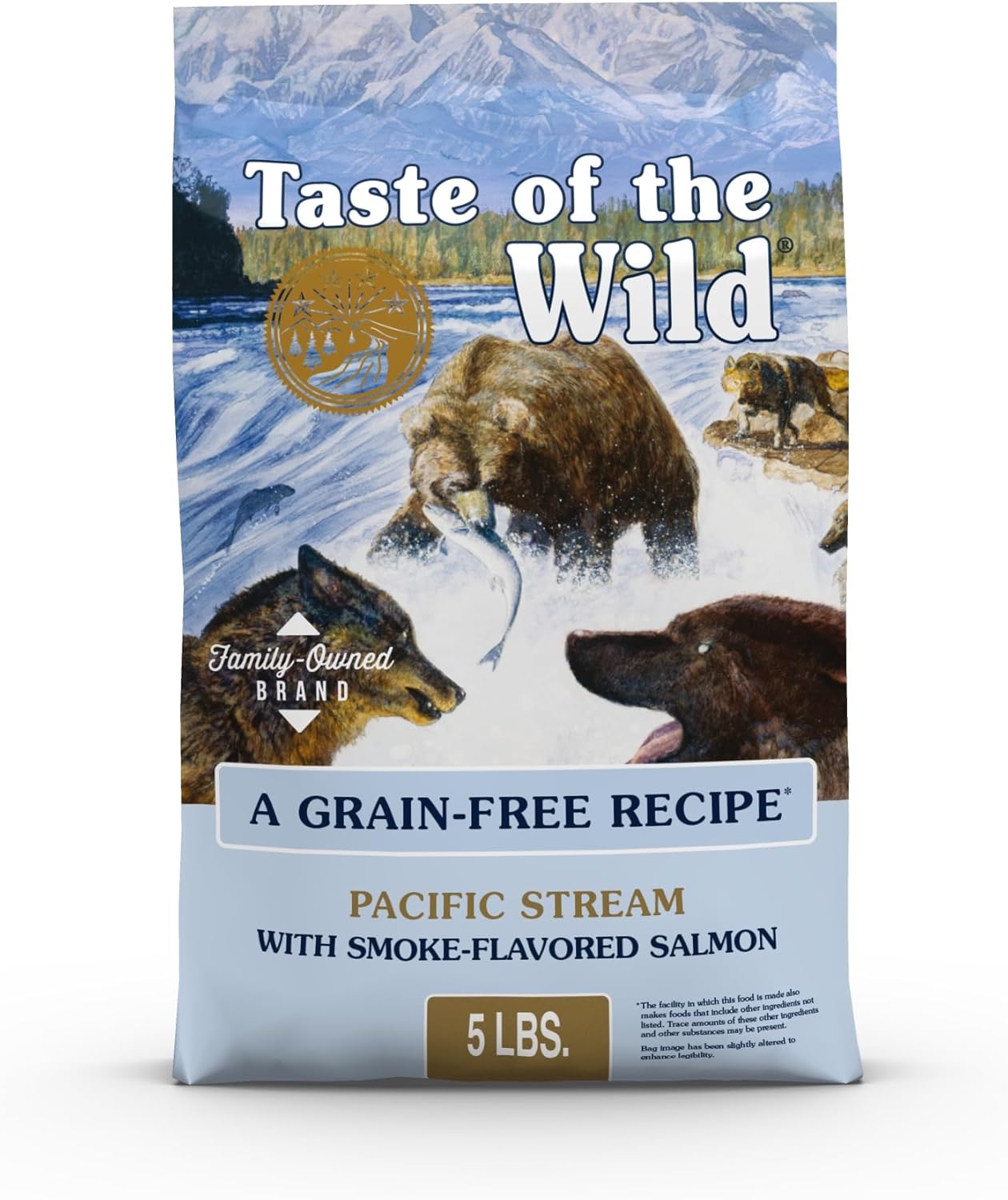
Taste of the Wild Pacific Stream 5 lb
Best Overall Grain-Free Food for Labradors
| Unit Count | 80 Ounce |
|---|---|
| Item Form | Dry Kibble |
| Age Range Description | Adult |
| Specific Uses For Product | heart |
| Special Ingredients | grain-free |
Taste of the Wild Pacific Stream is a grain-free kibble built around real fish ingredients and complex carbs like sweet potatoes, formulated for adult dogs of all breeds. It is typically fed as a complete daily diet and includes species-specific K9 Strain probiotics added after cooking to deliver live cultures for digestive and immune support, plus a marine-sourced omega blend to help skin and coat. The recipe lists salmon and salmon meal high in protein and includes fruits, vegetables, and chelated minerals to aid nutrient absorption. In practice the food is palatable to most dogs and suits pets with sensitivities to grain, but owners should monitor calorie intake because the formula is protein- and fat-rich. The bagged 5-pound size is convenient for trialing a new diet or for smaller households, though multi-dog or large-dog households may prefer larger bags for better value. Ingredients are transparent and made in U.S. facilities, but dogs with specific fish allergies will need an alternative protein source.
Best for: Owners seeking a widely accepted grain-free adult diet that emphasizes real fish protein, digestive probiotics, and nutrient-rich whole foods for everyday feeding.
Less Ideal for: Families needing a budget bulk bag for large dogs, or dogs with confirmed fish or legume sensitivities should choose a different formula.
- Real smoke-flavored salmon is listed as the first ingredient for a fish-forward protein source
- Grain-free formula with sweet potatoes and legumes for digestible complex carbohydrates
- Species-specific K9 Strain probiotics added after cooking to deliver live, active cultures
- Includes marine-sourced omega fatty acids and antioxidants to support skin, coat, and overall health
- Higher protein and fat content may require portion control to avoid excess calories
- Smaller 5 lb bag size is less economical for large or multi-dog households
- Contains multiple legumes which some dogs may not tolerate
Verdict: The best overall grain-free food for Labradors balances protein, fat, and essential nutrients while offering palatability and digestibility suited to the breed's energy needs.
Jinx Grain Free Lamb Dry Dog Food 4 lb
Best Budget Grain-Free Food for Labradors

| Flavor | Lamb |
|---|---|
| Age Range Description | All Life Stages |
| Item Form | Flake |
| Unit Count | 64 Ounce |
Jinx Grain Free Lamb is a 4 lb dry kibble that uses grass-fed lamb as the top ingredient and is formulated for all life stages, including puppies. It is typically fed as a daily complete diet and comes in medium-size kibbles intended to suit small to large breeds. Notable features include grain-free formulation, added probiotics for digestive support, fiber-rich sweet potato and carrots, and fish oil for omega-3 and omega-6 to support skin and coat. Because lamb and beef meal appear high on the ingredient panel, the recipe delivers usable protein for growth and muscle development while including a blend of vitamins, minerals, and superfoods for immune support. The package is modest at 4 lb, which makes it convenient for trialing new formulas or for small households, but means more frequent repurchasing for growing puppies. The product meets AAFCO nutritional levels and is free of corn, wheat, and soy, though it does list fish as an allergen and includes legumes that some puppies may find sensitive. Overall, this formula balances quality ingredients and targeted puppy nutrition in a small, budget-friendly pack but may require transitioning to larger bags for long-term feeding of fast-growing breeds.
Best for: Puppy owners seeking an affordable lamb-first kibble to cover essential growth nutrition while testing a new formula or feeding small households.
Less Ideal for: Owners who need large bulk bags for rapid-growth or multi-puppy households or those avoiding legumes or fish allergens should consider other options.
- Real grass-fed lamb listed first for high-quality animal protein
- Formulated for all life stages with AAFCO-compliant nutrients suitable for puppies
- Includes probiotics and fiber sources for digestive support
- Added fish oil provides omega fatty acids for skin and coat health
- Small 4 lb bag requires frequent repurchase for growing puppies
- Contains legumes and fish which can trigger sensitivities in some dogs
Verdict: The best budget grain-free food for Labradors delivers complete nutrition at a lower price point, making it a practical choice for owners prioritizing cost without sacrificing core dietary requirements.
ORIJEN Large Breed Dry Dog Food 23.5 lb
Best Premium Grain-Free Food

| Item Form | Dry Kibble |
|---|---|
| Breed Recommendation | Large |
| Specific Uses For Product | Digestive Health, Hip and Joint Support, Skin and Coat Health |
| Animal Food Diet Type | Veterinary Diet |
| Allergen Information | Grain-Free, Corn-Free, Potato-Free, Soy Free, Wheat Free |
ORIJEN Large Breed Adult is a high-protein, WholePrey dry dog food designed to meet the nutritional needs of large-breed dogs. It is typically fed twice daily as a complete maintenance diet and is built around fresh and raw meat inclusions such as chicken, turkey, herring and salmon, plus organs and whole prey components to provide dense, naturally sourced nutrients. Notable features include a high proportion of animal ingredients, added probiotics and fiber for digestive support, and omega fatty acids from wild-caught fish to support skin, coat, and joint health. In practice the kibble suits owners who prioritize biologically appropriate, protein-rich formulas and want functional benefits like hip and joint support and digestive health woven into the ingredient list. Limitations to consider are that protein-rich, calorie-dense diets require careful portioning for less active dogs and dogs with specific metabolic sensitivities, and switching should follow a gradual transition to avoid digestive upset.
Best for: Owners seeking a top-tier, ingredient-forward diet that mirrors ancestral nutrition and provides targeted functional support for large-breed dogs focused on long-term health and performance.
Less Ideal for: Owners looking for a lower‑calorie, limited-ingredient, or grain-inclusive diet for dogs with specific food sensitivities or who need strict weight management.
- High proportion of fresh and raw animal ingredients for dense, whole-food nutrition
- Formulated with WholePrey components including organs to deliver a broader nutrient profile
- Includes probiotics and fiber blend to support digestive health
- Omega-3 and omega-6 sources from wild-caught fish and poultry to help skin, coat, and joint support
- Grain-free and free from common fillers and artificial flavors
- Calorie- and protein-dense formula requires careful portion control for less active dogs
- May be richer than needed for dogs with certain metabolic or digestive sensitivities
Verdict: The best premium grain-free food offers elevated ingredient quality, specialized formulations, and tighter quality control for owners willing to pay more for enhanced nutrition and sourcing transparency.
Merrick Backcountry Great Plains 20 lb
Best High-Protein Grain-Free Food

| Flavor | Great Plains Red Meat |
|---|---|
| Item Form | Dry Kibble |
| Animal Food Diet Type | Raw |
| Unit Count | 320 Ounce |
Merrick Backcountry Great Plains Red is a grain-free dry kibble blended with freeze-dried raw pieces and real deboned beef as the first ingredient, designed to support lean muscle and active dogs. It is typically used as a primary adult diet for dogs that need higher animal-based protein; meals are portioned using the feeding chart on the bag and can be combined with wet food by reducing dry portions. Notable features include freeze-dried raw bites mixed into the kibble for added palatability, high levels of omega fatty acids for skin and coat support, and glucosamine and chondroitin for hip and joint health. In practice the formula delivers dense protein and calories that help maintain muscle mass and energy for more active breeds, and the beef-and-lamb profile is poultry free for dogs with sensitivities. The main limitation is that it is a grain-free, higher-protein recipe which may not be appropriate for dogs that require grain-inclusive diets or lower calorie feeds, and buyers should transition slowly to avoid digestive upset.
Best for: Active adult Golden Retrievers and other high-energy adult dogs that need extra animal-based protein to maintain lean muscle and sustained energy during regular exercise.
Less Ideal for: Dogs that require grain-inclusive diets, those prone to pancreatitis or weight gain, or households looking for a low-calorie maintenance formula.
- Real deboned beef as the first ingredient for strong animal-based protein
- Freeze-dried raw pieces mixed with kibble to boost flavor and palatability
- High omega-3 and omega-6 levels to support skin and coat health
- Includes glucosamine and chondroitin to help maintain hip and joint support
- Grain-free, calorie-dense formula may not suit dogs that need lower-calorie or grain-inclusive diets
Verdict: The best high-protein grain-free food is tailored for Labradors with higher activity levels, emphasizing larger portions of animal-based protein to support muscle maintenance and recovery.
Wellness CORE Large Breed Dry Dog Food 26 lb
Best Large-Breed Grain-Free Food

| Life stage | Adult |
|---|---|
| Breed size | Large |
| Special ingredients | Grain-free |
| Primary protein | Chicken, Chicken Meal, Turkey Meal |
| Calorie content | 3,540 kcal/kg (346 kcal/cup) |
Wellness CORE Large Breed is a grain-free, high-protein dry formula designed for adult large-breed dogs and formulated to support joint health and digestion. The recipe lists deboned chicken and chicken meal first, with added turkey meal as sources of protein plus glucosamine and chondroitin to help maintain cartilage and joint function. It also includes probiotics and higher fiber for digestive support, omega-rich ingredients for skin and coat, and a larger kibble profile intended for big mouths. In practice this is fed as a daily maintenance diet for active or aging large dogs that need extra joint support; feeding guidelines are provided by weight and the calorie density is specified for portion control. Limitations are that it is grain-free and uses pea/lentil ingredients, which some dogs tolerate poorly, and the formula is relatively calorie dense so portions must be adjusted to prevent weight gain. Packaging is a standard bag with no built-in reseal features, so storage in an airtight container is recommended.
Best for: Owners of Alaskan Malamutes looking for a daily maintenance food that combines higher meat-based protein with added joint-care ingredients to help preserve mobility and muscle tone.
Less Ideal for: Dogs with known sensitivities to legume-based ingredients or owners who prefer grain-inclusive formulas for weight management or specific dietary needs.
- High meat-first protein profile to support lean mass and muscle tone
- Contains guaranteed glucosamine and chondroitin for joint support in large breeds
- Added probiotics and fiber to support digestion and nutrient absorption
- Omega sources and antioxidants to support skin, coat, and overall health
- Grain-free recipe relies on peas and lentils which can cause sensitivity in some dogs
- No built-in reseal on the bag so freshness requires external storage
Verdict: The best large-breed grain-free food targets the needs of bigger dogs like Labradors by balancing calories, joint-support nutrients, and kibble size to support healthy growth and mobility.
Zignature Salmon Formula 25-lb
Best Limited-Ingredient Grain-Free Food

| Flavor | Salmon |
|---|---|
| Age Range Description | All Life Stages |
| Item Form | Dry |
| Animal Food Diet Type | Limited Ingredient |
| Unit Count | 400 Ounce |
Zignature Salmon Formula is a grain-free, limited-ingredient kibble built around salmon and salmon meal as primary protein sources and fortified with vitamins, minerals, and probiotics. It is typically fed as a complete diet for dogs of all life stages or rotated into elimination and sensitivity-focused feeding plans; the kibble includes peas, chickpeas, flaxseed, and sunflower oil to supply fiber and omega fatty acids for skin and coat health. The formula emphasizes a single animal protein to reduce exposure to common allergens and its high protein and omega-3 content make it useful for dogs that need support for coat, skin, or inflammation issues. Practical limitations are its grain-free composition and reliance on legumes, which some dogs may not tolerate and which owners concerned about dietary variety or certain veterinary guidelines might want to discuss with their veterinarian. The 25-lb bag size suits multi-dog households or longer-term feeding but means fresher rotation or smaller bags may be preferable for very small dogs.
Best for: Owners prioritizing premium single-animal-protein diets and tighter ingredient control who want a high-protein, limited-ingredient kibble for elimination diets or skin and coat support.
Less Ideal for: Owners who prefer grain-inclusive diets, need small-bag portions for very small dogs, or who are avoiding legume-heavy formulas for specific health concerns should consider alternatives.
- Salmon is the first ingredient providing a lean, omega-3 rich protein source.
- Limited-ingredient formulation reduces exposure to multiple protein sources.
- Fortified with probiotics to support digestive health.
- Includes omega-rich ingredients like flaxseed and sunflower oil to support skin and coat.
- Available in a 25-lb bag suitable for frequent feeding or multi-dog homes.
- Grain-free recipe uses legumes as carbohydrate sources which some dogs may not tolerate.
- Large 25-lb bag may not be ideal for very small dogs or single-pet households concerned about freshness.
Verdict: The best limited-ingredient grain-free food uses a short, focused ingredient list to help owners pinpoint sensitivities and reduce exposure to common triggers while still providing complete nutrition.
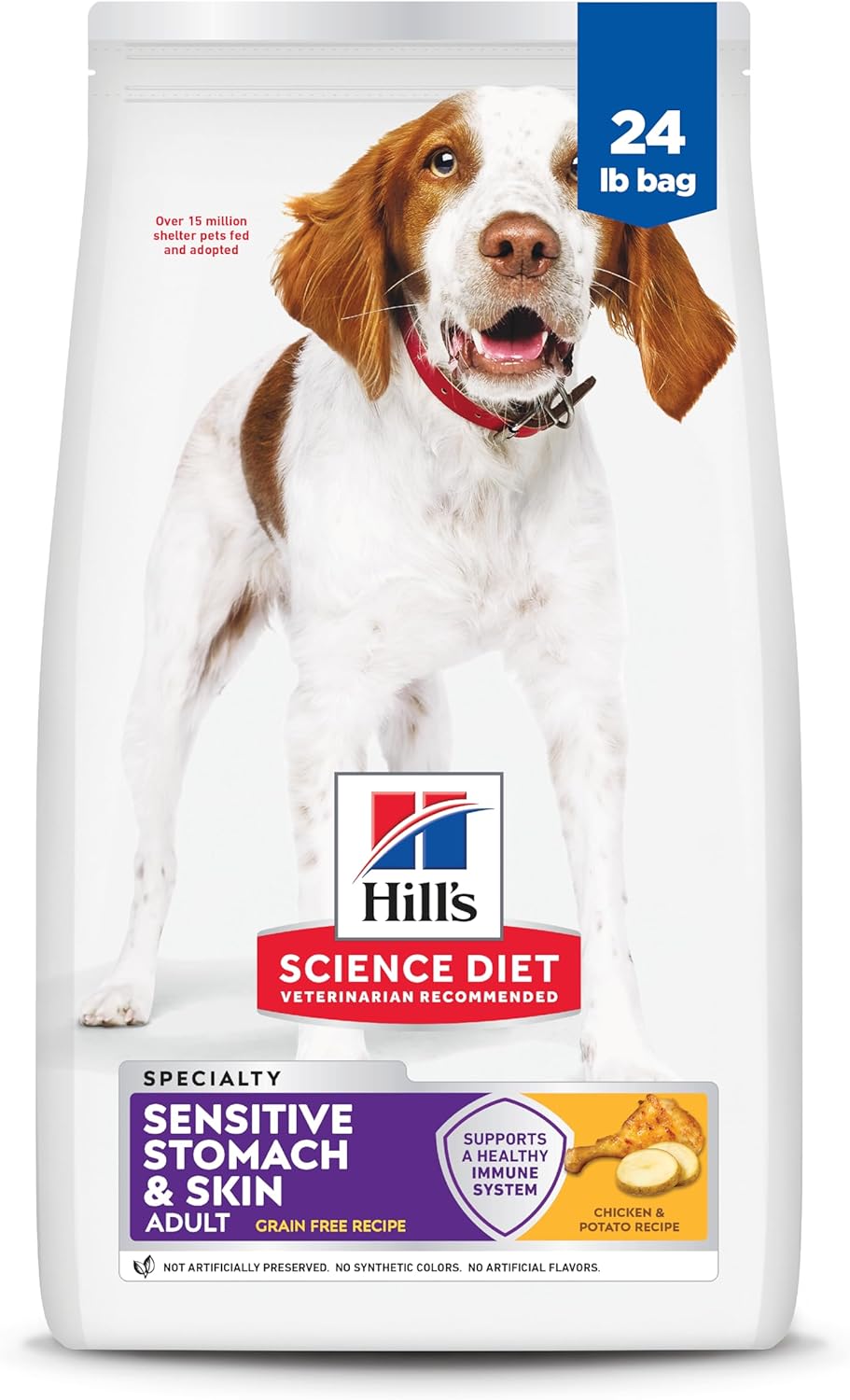
Hill's Science Diet Sensitive Stomach & Skin
Best Sensitive-Stomach Grain-Free Food
| Flavor | Grain Free Chicken & Potato |
|---|---|
| Age Range Description | Adult 1-6 |
| Item Form | Pellet |
| Specific Uses For Product | Stomach & Skin Sensitivity Support |
| Unit Count | 384 Ounce |
Hill's Science Diet Sensitive Stomach & Skin Grain Free Chicken & Potato is a daily dry dog food aimed at adult dogs with occasional digestive upset and skin sensitivities. It uses chicken as the first ingredient with potatoes and peas as grain-free carbohydrate sources and includes prebiotic fiber to support a balanced gut microbiome. The formula adds vitamin E and omega fatty acids to help nourish skin and coat, plus clinically proven antioxidants such as vitamins C and E to support immune health. In practice this is fed like any kibble with a gradual transition over a week recommended and fresh water available; the pellet form makes portioning straightforward. Strengths include a veterinarian-backed formulation and ingredients chosen for digestibility and skin support. Limitations are that it is a premium, single-recipe bag that may not suit dogs with specific protein intolerances and that grain-free diets are not necessary for every dog, so veterinary guidance is wise for chronic issues. The product is made for everyday feeding to adult dogs with sensitivity concerns rather than short-term elimination trials.
Best for: Buyers seeking an everyday grain-free kibble that prioritizes digestive gentleness and skin support for adult dogs and who value a veterinarian-developed formula.
Less Ideal for: Owners looking to identify a specific elimination-diet protein or those who prefer grain-inclusive prescriptions for chronic gastrointestinal disorders should consider alternatives or veterinary guidance.
- Formulated with highly digestible ingredients and added prebiotic fiber to support gut health
- Includes vitamin E and omega fatty acids to promote skin and coat nourishment
- Clinically proven antioxidants (vitamins C and E) to support immune health
- Chicken as the first ingredient for familiar animal protein source
- Made in the USA and developed by a veterinarian-recommended brand
- Single protein focus may limit options for dogs with chicken-specific allergies
- Grain-free formulation may not be necessary for all dogs and should be chosen with veterinary input
Verdict: The best sensitive-stomach grain-free food emphasizes easily digestible proteins, added digestive aids, and gentle carbohydrate sources to reduce GI upset and support consistent digestion in sensitive Labradors.
Choosing the Right Grain Free Dog Food Labrador: Key Factors to Consider
Protein Source and Quality
Protein is central to a labrador's diet because it supports muscle maintenance and activity. Look for named animal proteins listed high in the ingredient panel; these are generally more digestible and provide complete amino acid profiles important for lean mass.
Higher-quality proteins can be more bioavailable, meaning your dog needs less total food to meet protein needs, which helps with weight control. Also consider single-source or limited animal-protein formulas if your labrador has food sensitivities.
Calorie Density and Feeding Guidelines
Labradors are prone to weight gain if calorie intake exceeds expenditure. Check the calories per cup and compare feeding guidelines against your dog's current weight and activity level. A formula with higher calorie density may suit very active labs and working dogs, while lower calorie-density formulas are better for less active pets or dogs on a weight-management plan.
Adjust feeding portions based on body condition rather than relying only on package recommendations, and consult your veterinarian when moving to a grain-free formula to ensure caloric needs are met without overfeeding.
Fatty Acids and Coat Health
Omega-3 and omega-6 fatty acids support a healthy coat and skin, which is especially relevant for labs that spend time outdoors and can have seasonal skin changes. Look for named sources such as fish oil or flaxseed and guaranteed minimums of essential fatty acids on the nutritional panel.
Proper fatty acid balance also contributes to joint and cognitive health; formulas that combine these fats with antioxidants can offer broader health benefits.
Joint-support Ingredients
Labradors are predisposed to joint issues as they age, so formulas that include glucosamine, chondroitin, or other joint-support nutrients can be helpful as a preventive measure. These compounds support cartilage maintenance and can reduce wear over time.
Consider your dog's life stage and activity level when weighing the importance of added joint supplements. For young, highly active labs, preventive inclusion can be beneficial; for older dogs, more concentrated therapeutic approaches may be necessary under veterinary guidance.
Digestibility and Gastrointestinal Tolerance
Some labs react poorly to certain ingredients even in grain-free diets, so digestibility matters. Ingredients like prebiotics, probiotics, and easily digestible protein and carbohydrate sources can reduce stool volume and improve nutrient absorption.
Monitor your dog for changes in stool consistency, appetite, and gas when transitioning foods. A gradual switch over several days helps gut flora adapt, and formulas with added digestive support are often easier on sensitive stomachs.
Kibble Size and Texture
Kibble size affects chewing behavior and dental wear. Labradors have strong jaws and prefer medium-to-large kibble that encourages chewing rather than gulping. Textured or coated kibbles can increase palatability but may also contribute to rapid consumption for some dogs.
Choose a kibble size and texture that matches your labrador's chewing style; consider feeding tools like slow-feeding bowls for dogs that inhale food.
How Do I Transition My Labrador to a Grain-free Diet Safely?
Switch gradually over 7 to 10 days by mixing increasing proportions of the new grain-free food with the old food. Start with about 20 percent new food and increase the new proportion every two to three days while watching appetite and stool quality.
If your dog shows signs of digestive upset such as diarrhea, vomiting, or a marked change in appetite, slow the transition further and consult your veterinarian. Keep fresh water available at all times because some grain-free formulas are more calorically dense and may increase thirst.
- Monitor stool quality and energy levels during the transition.
- Adjust portion sizes to maintain a stable body condition score.
- Introduce any supplements or joint-support nutrients incrementally.
Which Protein Sources Work Best for Labradors with Sensitivities?
If your labrador shows food sensitivity signs like chronic ear infections, itchy skin, or loose stool, consider limited-ingredient grain-free formulas with a single named protein such as turkey, salmon, or lamb. Novel proteins can reduce the chance of triggering an immune response in dogs that have been exposed repeatedly to common proteins.
A clinical elimination trial under veterinary supervision is the most reliable way to confirm a food sensitivity. Temporarily switching to a single-protein formula can help identify intolerances, but long-term management should follow veterinary guidance.
- Look for single-source animal proteins and minimal accessory ingredients.
- Avoid anonymous ingredients described as broad categories like 'meat' or 'animal by-product'.
How Should I Adjust Portions for Different Activity Levels?
Active working or sporting labradors require more calories and may need a higher-protein, higher-fat grain-free formula to sustain long exercise sessions. For recreational or household pets, choose a balanced formula with moderate calories to prevent gradual weight gain.
Reassess body condition monthly and reduce or increase portions in small increments. Treats and table scraps add calories quickly, so account for them in the daily total to maintain a healthy weight.
- For very active dogs, aim for higher calorie density and more frequent feeding if needed.
- For less active dogs, pick a lower-calorie formula and measure portions precisely.
What Should I Watch for on the Ingredient Label?
Prioritize named whole-protein sources near the top of the ingredient list, clear carbohydrate alternatives like sweet potato or peas, and visible sources of omega fatty acids. A guaranteed analysis box helps you compare protein, fat, fiber, and calorie content across formulas.
Be cautious of long lists of unidentifiable additives. While preservatives and vitamins are necessary, excessive filler ingredients or vague sourcing can reduce overall quality and digestibility.
- Check protein and fat percentages in the guaranteed analysis.
- Note fiber content and presence of digestive aids like probiotics.
When Should I Consult My Veterinarian About Grain-free Food?
Talk to your veterinarian before switching to grain-free if your labrador has a chronic health issue, is obese, or is a very young puppy. A professional can advise whether grain-free is appropriate and help plan nutrient adjustments to avoid deficiencies or excesses.
Seek veterinary advice immediately if you observe persistent vomiting, diarrhea, loss of appetite, lethargy, or rapid weight change after a diet switch. Those signs may indicate intolerance or an unrelated medical condition requiring attention.
- Use vet guidance for life-stage transitions and chronic disease management.
- Have routine wellness checks to monitor weight, joint health, and coat condition.
How We Chose the Best Grain Free Dog Food Labrador
We evaluated formulas intended specifically for medium-to-large, active breeds or those labeled for adult labradors and similar body types. Our editorial filters prioritized nutrient profiles, ingredient clarity, and formulation features that affect labs: lean high-quality protein sources, appropriate calorie density to prevent excess weight gain, and included joint-support nutrients such as glucosamine and chondroitin. We also looked for complete and balanced guarantees that meet recognized nutritional standards, digestibility indicators such as limited fillers and probiotics, and practicality factors like kibble size suited to medium-large mouths. We excluded foods aimed only at puppies, gestating or lactating females, or therapeutic prescription diets. We did not consider products lacking clear guaranteed analysis or those with anonymous protein sources. Final selections were based on matching nutrient targets to common labrador needs: controlled calories per cup, high biological value protein, omega fatty acids for coat health, and joint-support additives when present.
Our full evaluation process is outlined in our review methodology.
FAQ
Is grain-free food healthier for all labradors?
Not necessarily. Grain-free diets remove certain carbs but are not inherently healthier for every labrador. Benefits depend on the formula's overall nutrient balance, protein quality, and the dog's specific health needs. Discuss your dog's individual situation with a veterinarian.
Will switching to grain-free help with my labrador's allergies?
Grain-free can help if your dog has a confirmed sensitivity to grains, but many food allergies are triggered by animal proteins. An elimination trial under veterinary supervision is the most reliable way to identify dietary triggers.
Are there risks with long-term grain-free feeding?
Long-term risks depend on the specific formula and whether it meets complete nutritional requirements. Ensure the food provides balanced vitamins, minerals, and appropriate amino acids. Regular veterinary checkups help catch any nutritional imbalances early.
Can I feed grain-free to a growing labrador puppy?
Puppies have different calorie and nutrient needs than adults. If choosing a grain-free option for a puppy, select a formula formulated specifically for growth with appropriate calcium, phosphorus, and calorie levels, and consult your veterinarian before switching.
How soon will I see changes after switching foods?
Some dogs show coat or energy improvements in a few weeks, while digestive changes may appear within days. Give a full transition period and monitor stool quality and overall condition for several weeks to judge the diet's effect.
Final Verdict
Choose a grain-free food for your labrador by prioritizing protein quality, appropriate calorie density, and nutrient completeness rather than assuming grain absence is the primary benefit. Pay attention to joint-support nutrients and essential fatty acids that support coat and mobility. Balance the formula to match your dog's activity level and monitor body condition regularly. When in doubt, consult your veterinarian to confirm a grain-free diet fits your labrador's life stage and health status so you can choose confidently.

