

Feeding a puppy the right food matters from the first weeks of life because early nutrition shapes growth, immune development, and lifelong health. Grain-free dry puppy food can be a sensible choice for puppies that need limited cereal ingredients or for owners seeking alternative carbohydrate sources. In this guide we shortlist the top options and focus on factors that matter to growing dogs, including protein quality, digestibility, and complete nutrient profiles. Read on for a concise overview of the criteria used to pick these seven top choices and what to check before you buy.
Top Picks at a Glance
| Best Overall Grain-Free Dry Puppy Food The top all-around grain-free puppy formula for most buyers | ORIJEN Puppy Dry Dog Food 4.5 lb |  |
| Best Budget Grain-Free Dry Puppy Food A lower-cost grain-free puppy formula that still meets basics | Whole Paws Salmon & Peas 64 oz |  |
| Best Premium Grain-Free Dry Puppy Food A higher-end formula with superior ingredients and sourcing | ACANA Grain Free Puppy 25 lb |  |
| Best High-Protein Grain-Free Dry Puppy Food Formulas with higher protein content to support active growth | Taste of the Wild High Prairie Puppy 5 lb |  |
| Best Limited-Ingredient Grain-Free Dry Puppy Food Simpler recipes with fewer ingredients to reduce triggers | Natural Balance Limited Ingredient Salmon & Sweet Potato |  |
| Best Easy-Digest Grain-Free Dry Puppy Food Formulated for gentle digestion and fewer tummy upsets | Stella & Chewy's Wild Red Puppy 3.5 lb |  |
| Best Bulk-Value Grain-Free Dry Puppy Food Larger bag options offering lower cost per serving | Amazon Basics Dry Dog Food Salmon 24 lb |  |
ORIJEN Puppy Dry Dog Food 4.5 lb
Best Overall Grain-Free Dry Puppy Food

| Flavor | Puppy Recipe |
|---|---|
| Item Form | Dry Kibble |
| Unit Count | 72 Ounce |
| Age Range Description | Puppy |
| Animal Food Diet Type | Raw |
ORIJEN Puppy is a grain-free dry dog food designed to deliver high-protein, nutrient-dense nutrition for growing puppies. It uses an 85 percent fresh-or-raw animal ingredient approach with wholeprey components such as muscle, organs, and bones so pups get a concentrated source of amino acids, vitamins, and minerals without relying on synthetic additives. Typical use is twice-daily feeding guided by the brand chart, and the kibble includes a freeze-dried coating for added palatability. Practical benefits include a protein-forward recipe to support muscle and brain development, small kibble size aimed at puppies, and added functional ingredients for digestive and immune support. Limitations to consider are the grain-free formulation itself, which may not be necessary for all puppies and can be higher in calories and protein than some owners expect, and the bag size is modest at 4.5 pounds which may require more frequent repurchasing for larger litters or bigger-breed pups.
Best for: Puppy owners who want a grain-free, biologically inspired diet that emphasizes fresh animal ingredients and nutrient density to support rapid growth and development.
Less Ideal for: Owners who prefer lower-protein or grain-inclusive recipes, those feeding adult dogs or puppies with specific caloric restrictions, or caretakers who need larger bulk bags to avoid frequent restocking.
- High inclusion of fresh or raw animal ingredients for complete amino acid profile
- WholePrey meats and organs provide naturally occurring vitamins and minerals
- Grain-free recipe for owners avoiding grains or managing suspected grain sensitivities
- Small kibble and nutrient profile formulated specifically for puppies
- Includes freeze-dried coating to boost palatability and encourage eating
- Smaller 4.5 lb bag may require frequent repurchasing for larger or multiple puppies
- Protein- and calorie-dense formula may be excessive for puppies that need lower energy diets
Verdict: The best overall grain-free dry puppy food balances complete nutrition, digestibility, appropriate calories for growth, and ingredient quality for most growing dogs.
Whole Paws Salmon & Peas 64 oz
Best Budget Grain-Free Dry Puppy Food

| Flavor | Salmon & Peas |
|---|---|
| Unit Count | 64 Ounce |
| Age Range Description | All Life Stages |
| Special Ingredients | Grain Free |
Whole Paws Salmon & Peas is a grain-free dry formula that uses real salmon as the top ingredient and includes peas, garbanzo beans, lentils and added pre- and probiotics to support digestion. It is marketed for everyday feeding and lists all life stages, so in practice owners can use it as a growth and maintenance kibble for puppies and adults who tolerate grain-free diets. The inclusion of fish meal and pea protein raises the overall protein content while flaxseed and pumpkin add fiber and omega fatty acids. Practical benefits include recognizable ingredient names, sustainable wild-caught sourcing claims, and a 64-ounce bag size that is easy to store. Limitations to consider are the grain-free recipe itself, which may not be necessary for many puppies, and the legume-rich carbohydrate profile that some dogs find less digestible or that may be a concern for owners seeking traditional grain-based calories. For budget-conscious buyers looking for a straightforward grain-free puppy option, this formula balances ingredient quality and affordability, but buyers focused on grain-inclusive diets or novel-protein prescriptions should look elsewhere.
Best for: Cost-conscious owners who want a grain-free puppy kibble with recognizable ingredients and digestive support without a complex premium ingredient list.
Less Ideal for: Owners who prefer grain-inclusive puppy formulas, need a prescription or limited-ingredient novel-protein diet, or who track precise macronutrient profiles for growth-stage feeding.
- Real salmon listed as the first ingredient
- Includes pre- and probiotics to support digestive health
- Grain-free formulation suitable for dogs with grain sensitivities
- Contains added fiber and omega sources like flaxseed and pumpkin
- Uses legumes and pea protein as primary carbohydrate sources which can be less digestible for some puppies
- Not a novel-protein limited ingredient diet for puppies with specific allergies
Verdict: The best budget grain-free dry puppy food provides adequate growth nutrients and palatability while keeping price and ingredient complexity to a minimum for cost-conscious owners.
ACANA Grain Free Puppy 25 lb
Best Premium Grain-Free Dry Puppy Food

| Flavor | Puppy Recipe |
|---|---|
| Item Form | Dry Kibble |
| Unit Count | 400 Ounce |
| Animal Food Diet Type | Veterinary Diet |
| Specific Uses For Product | Brain Health, Digestive Health, Muscle Care |
ACANA Grain Free Puppy is a high-protein dry puppy food built around free-run chicken, turkey and eggs plus fish oil for omega support, aimed at supporting growth and brain development. It is typically used as a twice-daily complete diet for puppies and can also be portioned as training rewards thanks to its small disc-shaped kibbles. Notable features include a formula that lists about 65% animal ingredients and a freeze-dried coating to increase palatability, plus whole fruits and vegetables and added probiotics and vitamins. Practical benefits are focused nutrition for developing puppies, higher protein and fat to help muscle and brain development, and a grain-free ingredient profile for owners avoiding cereals. Important limitations are that it is produced in a facility that also processes grains so strict grain avoidance may be imperfect, and the higher protein/fat profile can require monitoring portion sizes for less active pups to avoid excess weight gain.
Best for: Buyers who prioritize a grain-free, protein-forward puppy diet and want a formulation aimed at supporting growth and cognitive development in working-breed puppies.
Less Ideal for: Owners seeking a guaranteed grain-free production environment or a lower-calorie formula for puppies with low activity or weight management needs should consider alternatives.
- High proportion of animal ingredients for growth-focused protein
- Freeze-dried coating improves palatability for picky puppies
- Includes EPA and DHA from fish oil to support brain development
- Contains probiotics, fruits and vegetables for digestive and overall nutrition
- Made in a facility that also processes grains so not strictly grain-free in manufacture
- Higher protein and fat may need portion control for low-activity puppies
Verdict: The best premium grain-free dry puppy food is for owners willing to pay more for elevated ingredient quality, specialized nutrient profiles, and stricter sourcing standards.
Taste of the Wild High Prairie Puppy 5 lb
Best High-Protein Grain-Free Dry Puppy Food
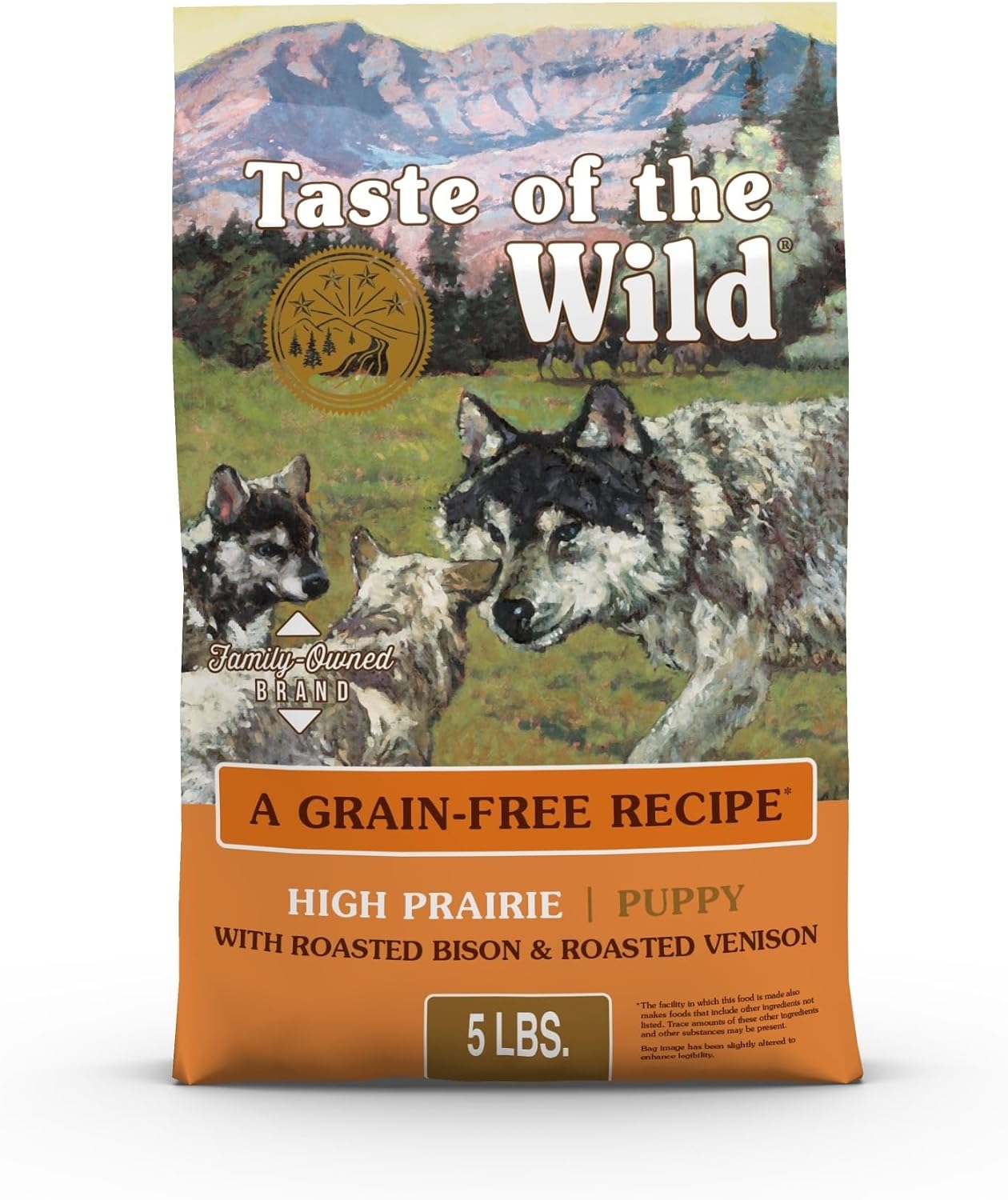
| Flavor | Roasted Bison & Roasted Venison |
|---|---|
| Crude Protein | 28.0% minimum |
| Crude Fat | 17.0% minimum |
| Unit Count | 80 Ounce |
Taste of the Wild High Prairie Puppy is a grain-free dry kibble built around real roasted meats (bison and venison) and a 28% minimum crude protein level to support muscle development in growing dogs. It is typically fed as a complete diet for puppies, pregnant or nursing mothers, and active young dogs that need concentrated calories and higher protein. The formula includes salmon oil for DHA, omega fatty acids for skin and coat, and a proprietary probiotic blend to support digestion. Practical benefits include high protein from multiple animal sources, added fatty acids for energy and development, and fruits and vegetables for antioxidant support. Because it is grain-free and relatively rich in protein and fat, it suits puppies with high energy needs but may be more calorically dense than required for sedentary or less active pups. Also, the use of multiple legumes and novel proteins may not be appropriate for dogs with specific sensitivities. Feed amounts should be adjusted by age and activity and offered with fresh water.
Best for: Puppy owners who need a nutrient-dense, high-protein kibble for active growth, performance or for nursing mothers seeking extra calories and muscle support.
Less Ideal for: Owners of low-activity puppies, dogs on restricted-calorie plans, or pups with known sensitivities to legumes or novel proteins should consider other diets.
- High protein (28% minimum) to support muscle growth
- Real roasted meats listed first for species-appropriate protein
- Proprietary probiotic blend to aid digestion and gut health
- Includes DHA and omega fatty acids for brain and coat development
- Grain-free formula with fruits and vegetables for antioxidants
- Calorie-dense formulation may be excessive for low-activity puppies
- Contains legumes and multiple novel ingredients that can trigger sensitivities in some dogs
Verdict: The best high-protein grain-free dry puppy food suits active or large-breed puppies needing extra protein for muscle development while still delivering balanced growth nutrition.
Natural Balance Limited Ingredient Salmon & Sweet Potato
Best Limited-Ingredient Grain-Free Dry Puppy Food

| Flavor | Salmon & Sweet Potato |
|---|---|
| Item Form | Pellet |
| Animal Food Diet Type | Limited Ingredient |
| Unit Count | 64 Ounce |
| Breed Recommendation | Small Breeds |
This Natural Balance Limited Ingredient Salmon & Sweet Potato recipe is a grain-free dry food designed for small-breed adult dogs and dogs with simplified dietary needs. It uses salmon and salmon meal as the primary animal proteins and a short ingredient list intended to reduce exposure to common irritants like corn, wheat, and soy. In everyday use it serves as a complete daily feed for small dogs and can also be used during an elimination trial because the formula focuses on a single animal protein and limited carbohydrate sources such as sweet potato and potato. Practical benefits include ingredients chosen to support digestion and skin and coat health, added vitamins and minerals for balanced nutrition, and convenient bagged packaging for daily feeding. Limitations to note are that this is a small-breed formula so kibble size and nutrient balance are aimed at smaller dogs, and while the ingredient list is simplified it still contains items like yeast, canola oil, and mixed tocopherols that some owners may avoid during strict elimination diets.
Best for: Owners of Miniature Schnauzers who suspect ingredient sensitivities and want a short, single-protein diet tailored to small-breed needs and easy use during an elimination trial.
Less Ideal for: Families needing a truly novel-protein or prescription hypoallergenic formula for medically diagnosed food allergies, or owners of medium and large breeds seeking a different nutrient profile.
- Single primary animal protein (salmon) which simplifies ingredient exposure during elimination trials.
- Grain-free formula with no corn, wheat, or soy listed to reduce common dietary irritants.
- Formulated for small breeds with nutrients to support skin, coat, and digestive health.
- Includes added vitamins, minerals, and salmon meal for balanced daily nutrition.
- Formulated specifically for small breeds, so nutrient profile and kibble size may not suit larger dogs.
- Contains multiple non-protein ingredients (dried yeast, canola oil, mixed tocopherols) that could still trigger sensitivities in highly reactive dogs.
Verdict: The best limited-ingredient grain-free dry puppy food is ideal for owners seeking a shorter ingredient list to help identify or avoid potential food sensitivities.
Stella & Chewy's Wild Red Puppy 3.5 lb
Best Easy-Digest Grain-Free Dry Puppy Food

| Flavor | Grain-Free Prairie Recipe |
|---|---|
| Age Range Description | Puppy |
| Item Form | Pellet |
| Allergen Information | Grain-Free, Nut Free, Pea-Free, Soy Free |
| Unit Count | 56 Ounce |
Stella & Chewy's Wild Red Raw Coated Puppy is a grain-free kibble coated with freeze-dried raw meat and built around multiple animal protein sources including chicken, turkey, quail, guineafowl, goose and duck. It is intended as a growth formula for puppies, offering higher protein, fat and calories plus salmon oil for DHA to support brain and eye development. The recipe emphasizes digestibility by avoiding grains, legumes, peas and lentils and includes probiotics, fiber and a blend of vitamins and minerals to support digestion, coat and overall development. In practice this feeds like a standard dry kibble but with an added palatability boost from the raw coating, which can help picky eaters or pups transitioning from fresh or raw diets. Expect a meat-forward ingredient list and a focus on growth needs, but note this is not an elimination diet—the formula still contains multiple protein sources rather than a single-protein limited-ingredient profile. For breeders or owners managing clear ingredient-triggered allergies, a true single-protein, minimal-ingredient formula would be a better pick, while this kibble suits puppies that need high calories and digestive support without common fillers or legumes.
Best for: Buyers who want a meat-forward, grain-free puppy kibble that boosts palatability and supports growth and digestion rather than a strict single-ingredient elimination diet.
Less Ideal for: Puppies with identified single-protein allergies or owners seeking the shortest possible ingredient list should choose a certified limited-ingredient or single-protein formula instead.
- Raw freeze-dried coating increases palatability for picky puppies
- High protein and calorie content supports growth and active pups
- Includes salmon oil for DHA to support brain and eye development
- Grain-free formula without peas, lentils, artificial colors, flavors or preservatives
- Contains probiotics and fiber to help digestive health
- Contains multiple meat proteins so not a true single-ingredient elimination diet
- Bag size is small for large-breed puppy feeding needs
Verdict: The best easy-digest grain-free dry puppy food focuses on gentle, highly digestible proteins and carbohydrates to minimize digestive upset during early growth stages.
Amazon Basics Dry Dog Food Salmon 24 lb
Best Bulk-Value Grain-Free Dry Puppy Food

| Flavor | Salmon & Sweet Potato |
|---|---|
| Age Range Description | All Life Stages |
| Item Form | Pellet |
| Package Size Name | 24 lb |
| Special Ingredients | Salmon |
This 24 lb grain-free dry food uses sustainably-raised salmon as the primary protein and is formulated to support digestion and overall health with added probiotics and sweet potato as an alternative carbohydrate. It is typically used as a daily maintenance diet for adult dogs and can be transitioned gradually over 7 to 14 days for sensitive stomachs. Notable features include salmon-first ingredient, multiple fermentation-derived probiotic strains, and veterinarian-formulated nutrient inclusion such as taurine and added vitamins and minerals. In real-world feeding that means a protein-forward kibble that can support muscle maintenance and a digestive-friendly formula for dogs that tolerate grain-free diets. On the trade-off side, this is a grain-free veterinary-style diet that may not suit owners who prefer whole-grain formulas or need a prescription therapeutic diet, and dogs with certain sensitivities could react to some ingredients handled in the facility. Packaging is a large bulk bag suitable for multi-dog households or frequent feeders, but proper storage is recommended to preserve freshness between uses.
Best for: Value-focused owners of large, active breeds seeking an affordable, protein-forward maintenance kibble that supports digestion and overall health without premium pricing.
Less Ideal for: Owners who need a prescription therapeutic diet, prefer grain-containing whole-grain recipes, or who must avoid cross-contamination from facilities handling other ingredients.
- Salmon is the first ingredient, providing a strong animal protein source
- Grain-free formula with no artificial colors, flavors, or chemical preservatives
- Includes multiple probiotic strains to support digestive health
- Formulated with added vitamins, minerals, and taurine for complete nutrition
- Grain-free formulation may not be ideal for dogs that do better on whole grains
Verdict: The best bulk-value grain-free dry puppy food gives owners a cost-effective option in larger sizes without sacrificing essential nutrients or guaranteed freshness management.
Choosing the Right Grain Free Dry Puppy Food: Key Factors to Consider
Protein Quality and Source
Protein fuels tissue growth, muscle development, and immune function in puppies. Look for named animal proteins listed high in the ingredient panel rather than vague meat meals or by-products. Multiple complete proteins can help provide a broader amino acid profile, but single high-quality sources are acceptable if the product guarantees required amino acids for growth.
Protein digestibility affects how well a puppy can absorb those amino acids. Highly digestible proteins reduce stool volume and support nutrient uptake. For grain-free recipes, alternative protein sources such as novel meats or concentrated protein meals are common, so confirming digestibility and biological value is important.
Caloric Density and Fat Content
Puppies have higher energy requirements than adult dogs, so caloric density helps determine how much food you need to feed per day. Check the calories per cup and match feeding guidelines to your puppy's activity level and growth rate. Fat provides concentrated energy and essential fatty acids important for brain development and skin and coat health.
Excessively high fat can cause digestive upset in some puppies, while too little fat can leave an active puppy undernourished. Look for named fat sources and balanced omega-3 to omega-6 ratios to support cognition and inflammatory balance.
Vitamins, Minerals, and Growth Ratios
Balanced micronutrients are essential for proper bone growth, immune development, and metabolic function. Pay attention to guaranteed analysis fields for calcium and phosphorus and whether the manufacturer states a growth-stage formula. The calcium-to-phosphorus ratio should fall within recommended ranges to help protect skeletal development.
Also confirm that the formula includes vitamins A, D, E, and essential trace minerals. Fortified diets that declare AAFCO or equivalent growth-complete statements give assurance the food covers basic vitamin and mineral needs for puppies.
Digestive Aids and Fiber Sources
Digestive health influences stool quality, nutrient absorption, and puppy comfort. Many grain-free recipes rely on alternative fibers such as pea fiber, chicory root, or pumpkin to support gut motility. Prebiotic fibers like fructooligosaccharides can promote healthy gut bacteria and improve stool consistency.
Be mindful that some fiber sources may increase stool volume or cause gas in sensitive pups. Gradual diet transitions and observing tolerance for a few weeks helps identify if the fiber blend suits your puppy.
Allergy and Sensitivity Considerations
Grain-free diets are often chosen for perceived sensitivities, but true food allergies are most commonly linked to specific proteins rather than grains. If you suspect an intolerance, a limited-ingredient grain-free option that reduces protein variety can simplify elimination trials.
Work methodically and allow time to see changes in skin, coat, and digestion. Avoid switching multiple variables at once; change only one product or ingredient at a time so you can track which component affects your puppy.
Kibble Size and Texture
Kibble size and texture matter for ease of eating, dental wear, and safe chewing, especially in small or toy-breed puppies. Look for bite-sized kibbles appropriate for your puppy's breed and jaw strength. Softer textures or rehydratable options can help weaning puppies or those who struggle with very hard kibble.
Kibble shape also affects how easily a puppy picks up pieces and how efficiently they chew. Consider a formula designed specifically for puppy mouths rather than a scaled-down adult kibble.
How Do I Transition a Puppy to a Grain-free Dry Diet Safely?
Transitioning gradually minimizes digestive upset. Start by mixing a small portion of the new grain-free dry puppy food with the current diet and increase the new food daily over seven to ten days, watching stool quality and appetite.
If the puppy shows signs of loose stool or decreased appetite, slow the transition and maintain the previous ratio for a few more days. For very young puppies or those with fragile digestion, consider rehydrating kibble with warm water or puppy-safe broth during the changeover.
- Begin with 10% new food and 90% old food.
- Increase the new food by 10–20% every 2–3 days as tolerated.
- Monitor stool consistency, energy levels, and skin condition throughout.
What Should I Expect in Stool and Digestion with Grain-free Formulas?
Stool can vary when switching to grain-free recipes because different carbohydrate and fiber sources affect fermentation in the gut. Well-formulated grain-free puppy foods should produce firm, formed stools; loose stools may indicate intolerance or a recipe that is not well suited to your puppy's digestive system.
Digestive upset is usually temporary during a diet change. Persistent diarrhea, vomiting, or weight loss warrants veterinary attention and possibly a different dietary approach.
- Temporary softer stools are common during transition.
- Persistent or worsening symptoms require veterinary evaluation.
Is Grain-free Right for My Puppy, and when Is It Necessary?
Grain-free diets are appropriate when a puppy has a documented intolerance to grains or when an alternative carbohydrate source is preferred by the owner. In many cases, puppies do well on grain-inclusive diets; grains provide digestible carbohydrates and some fiber that support energy needs.
Reserve grain-free feeding for specific health reasons or after consultation with a veterinarian. If you suspect an allergy, perform a controlled elimination trial to pinpoint the offending ingredient rather than assuming grains are the cause.
- Consider grain-free for identified grain intolerance or veterinary advice.
- Use elimination trials to identify true food allergies.
How to Read Ingredient Panels for Balanced Puppy Nutrition
Start with the first five ingredients to see the primary protein and carbohydrate sources. Named animal proteins listed first are a good sign that the product focuses on quality protein. After proteins, look for whole-food carbohydrate sources or clearly labeled alternatives rather than long lists of vague fillers.
Check the guaranteed analysis for crude protein, fat, fiber, and moisture to compare formulas on a nutrient basis. Also look for explicit statements that the food is complete for growth, which indicates added vitamins and minerals to meet puppy requirements.
- First ingredients reveal primary nutrition drivers.
- Guaranteed analysis helps compare macronutrient balance.
Feeding Schedules and Portioning for Growing Puppies
Puppies typically eat more frequently than adult dogs. A common schedule is three to four meals per day until about six months, then gradually transitioning to two meals daily. Follow the feeding guide on the packaging as a starting point, then adjust portions based on your puppy's body condition and growth rate.
Weigh your puppy regularly and use body condition scoring to avoid overfeeding. Rapid weight gain can stress growing bones, while inadequate calories can stunt development.
- Feed younger puppies 3–4 times per day; older puppies twice daily.
- Adjust portions based on body condition and activity level.
How We Chose the Best Grain Free Dry Puppy Food
Our selection process focused on practical nutrition and real-world feeding needs for puppies. We prioritized complete and balanced formulations that meet recognized nutrient profiles for growth and development, with attention to highly digestible protein sources and appropriate fat levels for energy. Digestibility and gastrointestinal tolerance were evaluated using ingredient transparency and known digestibility markers such as single-source proteins, limited ingredient approaches, and inclusion of prebiotic fiber. We also considered life-stage tailoring, meaning nutrient ratios and caloric density suitable for growth rather than maintenance. Safety and manufacturing transparency were weighted, including clear sourcing statements, feeding guidelines, and compliance with established nutrient recommendations. We excluded foods formulated only for adult dogs, treats, or products that lack a complete growth-stage nutrient profile. The final picks emphasize balanced amino acid profiles, regulated calcium-to-phosphorus ratios, and ingredient sets that support healthy digestion and steady weight gain during puppyhood.
Our full evaluation process is outlined in our review methodology.
FAQ
Will grain-free dry puppy food cause allergies?
Grain-free diets do not inherently cause allergies; most food allergies are linked to animal proteins. Grain-free formulas can help if your puppy has a confirmed grain sensitivity, but an elimination trial is the proper way to identify the true trigger.
How long does it take to see improvements after switching foods?
You may see changes in stool quality, coat condition, or energy within two to four weeks, but full benefits for growth and skin can take several weeks. If problems persist beyond a month, consult your veterinarian.
Are grain-free options nutritionally complete for growth?
Grain-free formulas can be complete and balanced for growth if they meet recognized nutrient profiles for puppies and provide appropriate calcium, phosphorus, and essential vitamins. Check that the product is labeled for growth-stage feeding.
Can I mix wet food or toppers with grain-free dry puppy food?
Yes, mixing a small amount of wet food or a nutritious topper can increase palatability and calorie density, but account for the extra calories to avoid overfeeding. Ensure mixed additions are appropriate for puppies and do not upset the overall nutrient balance.
What signs indicate a puppy is not tolerating a grain-free diet?
Signs include persistent diarrhea, vomiting, lack of appetite, lethargy, or worsening skin irritation. If these occur, pause the new diet and consult a veterinarian to rule out other causes and determine the next steps.
Final Verdict
When choosing grain-free dry puppy food, prioritize protein quality, digestibility, and a complete growth-stage nutrient profile. Balance caloric density with appropriate fat levels and verify mineral ratios that support healthy skeletal development. Remember that grain-free is one tool among many; use it for specific health reasons or clear tolerance benefits. Focus on observed outcomes such as steady weight gain, firm stools, active behavior, and a glossy coat to decide which formula best fits your puppy.

