

Picking the right hard food for a puppy matters because early nutrition sets the foundation for growth, immune development, and long-term health. Puppies have different calorie needs, narrower nutrient tolerances, and developing teeth and digestive systems that respond best to foods formulated for their life stage. This guide highlights the top shortlisted hard puppy foods that meet common nutritional priorities for growing dogs. We focus on ingredient quality, digestibility, and formulation features that support healthy growth. Below you will find the key criteria we used and practical guidance to help you pick the best option for your puppy.
Top Picks at a Glance
| Best Overall Hard Food for Puppies The best all-around puppy hard food balancing nutrition and digestibility | Blue Buffalo Life Protection Puppy 5 lb |  |
| Best Budget Hard Food for Puppies A lower-cost puppy formula that still meets basic nutritional needs | Pedigree Puppy Dry Dog Food 3.5 lb |  |
| Best Premium Hard Food Higher-end recipes with superior ingredients and formulation focus | ORIJEN Puppy Dry Dog Food 4.5 lb |  |
| Best High-Protein Hard Food Formulas with elevated protein for active growth and lean muscle | Diamond Puppy Dry Dog Food 40 lb |  |
| Best Grain-Free Hard Food Grain-free recipes for owners avoiding common cereal ingredients | Taste of the Wild High Prairie Puppy 5 lb |  |
| Best Sensitive-Stomach Hard Food Gentler recipes formulated for puppies with digestive sensitivities | Hill's Science Diet Puppy Sensitive Stomach & Skin |  |
| Best Small-Breed Hard Food Kibble and calories sized for small and toy-breed puppies | Royal Canin X-Small Puppy Dry Food 3 lb |  |
Blue Buffalo Life Protection Puppy 5 lb
Best Overall Hard Food for Puppies

| Flavor | Chicken & Brown Rice |
|---|---|
| Age Range Description | Puppy |
| Crude Protein | 27% min |
| Crude Fat | 16% min |
| DHA | 0.1% min |
Blue Buffalo Life Protection Formula Chicken & Brown Rice Puppy is a grain-inclusive dry kibble designed to support healthy growth and development in puppies. It uses real deboned chicken as the first ingredient and adds chicken meal, fish meal, and fish oil to boost protein and omega-3 content, while brown rice, oatmeal, and barley provide digestible carbs for steady energy. The formula includes DHA and ARA to support brain and eye development and LifeSource Bits, a blend of antioxidants, vitamins, and minerals processed at lower temperatures to preserve potency. Practical benefits include joint support from glucosamine and chondroitin, natural prebiotic fiber for digestion, and a recipe free of corn, wheat, soy, and artificial preservatives. As a typical everyday puppy food it balances nutrition and palatability for most breeds, though it is a grain-containing option so it is not suited to owners specifically seeking grain-free diets or limited-ingredient recipes for dogs with complex food sensitivities.
Best for: Puppy owners who want a complete, veterinarian-formulated everyday food that balances growth nutrients, digestibility, and ingredient quality for most breeds.
Less Ideal for: Owners seeking a grain-free formula, a minimal-ingredient diet for diagnosed food allergies, or therapeutic veterinary prescriptions should look elsewhere.
- Real deboned chicken listed first for high-quality animal protein
- Includes DHA and ARA plus choline to support brain and eye development
- LifeSource Bits provide a targeted mix of antioxidants, vitamins, and minerals
- Contains natural prebiotic fiber to support digestion and stool quality
- Formulated without corn, wheat, soy, or artificial flavors and preservatives
- Contains multiple grains so not appropriate for grain-free or strict elimination diets
- Includes a long ingredient list that may be unsuitable for puppies with specific single-ingredient sensitivities
Verdict: The best overall hard food for puppies, combining age-appropriate nutrients, balanced calories, good digestibility, and broad size availability for most growing dogs.
Pedigree Puppy Dry Dog Food 3.5 lb
Best Budget Hard Food for Puppies

| Flavor | Chicken & Vegetable |
|---|---|
| Age Range Description | Puppy |
| Item Form | Dry Kibble |
| Unit Count | 56 Ounce |
| Animal Food Nutrient Content Claim | High Protein, No Added Sugar |
Pedigree Puppy Dry Dog Food is a straightforward, budget-friendly puppy kibble made from chicken-based protein, grains, and added vitamins and minerals to support growth. You would typically use it as a daily staple while transitioning a young dog from weaning to adult food, following the feeding guide on the package to match your puppy's weight and age. The formula emphasizes high-quality protein sources for muscle development and includes 36 vitamins, minerals, and amino acids intended to support immune health, brain development, and bone strength. In practice this means an owner gets a complete and balanced commercial diet that is easy to portion and serve dry or softened with water for very young pups. Ingredient-wise it contains common commodity grains and by-product meals rather than premium single-source meats, so it delivers required calories and nutrients at a lower cost but not the cleanest ingredient panel. Expect good availability and consistent kibble size, but owners seeking grain-free, novel proteins, or limited-ingredient formulas will need to look elsewhere.
Best for: Value-conscious puppy owners who need an affordable, complete puppy kibble that supports growth and daily feeding routines.
Less Ideal for: Owners who require grain-free, novel-protein, or limited-ingredient veterinary diets for food sensitivities should consider specialty formulas instead.
- Formulated specifically for puppies with nutrients to support growth and immune health
- Contains high-protein sources to support muscle development
- Includes 36 vitamins, minerals, and amino acids for complete and balanced nutrition
- Easy-to-follow feeding guide for age and weight makes portioning simple
- Uses ingredient list with grains and by-product meals rather than single-source premium proteins
- Not suitable for owners seeking grain-free or limited-ingredient diets
Verdict: The best budget hard food for puppies that provides essential growth nutrients and reliable quality at a lower price for cost-conscious puppy owners.
ORIJEN Puppy Dry Dog Food 4.5 lb
Best Premium Hard Food

| Flavor | Puppy Recipe |
|---|---|
| Item Form | Dry Kibble |
| Unit Count | 72 Ounce |
| Age Range Description | Puppy |
| Animal Food Diet Type | Raw |
ORIJEN Puppy is a grain-free dry dog food designed to deliver high-protein, nutrient-dense nutrition for growing puppies. It uses an 85 percent fresh-or-raw animal ingredient approach with wholeprey components such as muscle, organs, and bones so pups get a concentrated source of amino acids, vitamins, and minerals without relying on synthetic additives. Typical use is twice-daily feeding guided by the brand chart, and the kibble includes a freeze-dried coating for added palatability. Practical benefits include a protein-forward recipe to support muscle and brain development, small kibble size aimed at puppies, and added functional ingredients for digestive and immune support. Limitations to consider are the grain-free formulation itself, which may not be necessary for all puppies and can be higher in calories and protein than some owners expect, and the bag size is modest at 4.5 pounds which may require more frequent repurchasing for larger litters or bigger-breed pups.
Best for: Puppy owners who want a grain-free, biologically inspired diet that emphasizes fresh animal ingredients and nutrient density to support rapid growth and development.
Less Ideal for: Owners who prefer lower-protein or grain-inclusive recipes, those feeding adult dogs or puppies with specific caloric restrictions, or caretakers who need larger bulk bags to avoid frequent restocking.
- High inclusion of fresh or raw animal ingredients for complete amino acid profile
- WholePrey meats and organs provide naturally occurring vitamins and minerals
- Grain-free recipe for owners avoiding grains or managing suspected grain sensitivities
- Small kibble and nutrient profile formulated specifically for puppies
- Includes freeze-dried coating to boost palatability and encourage eating
- Smaller 4.5 lb bag may require frequent repurchasing for larger or multiple puppies
- Protein- and calorie-dense formula may be excessive for puppies that need lower energy diets
Verdict: The best premium hard food for owners who want higher-quality ingredients, advanced formulations, and extra nutrient density for demanding growth needs.
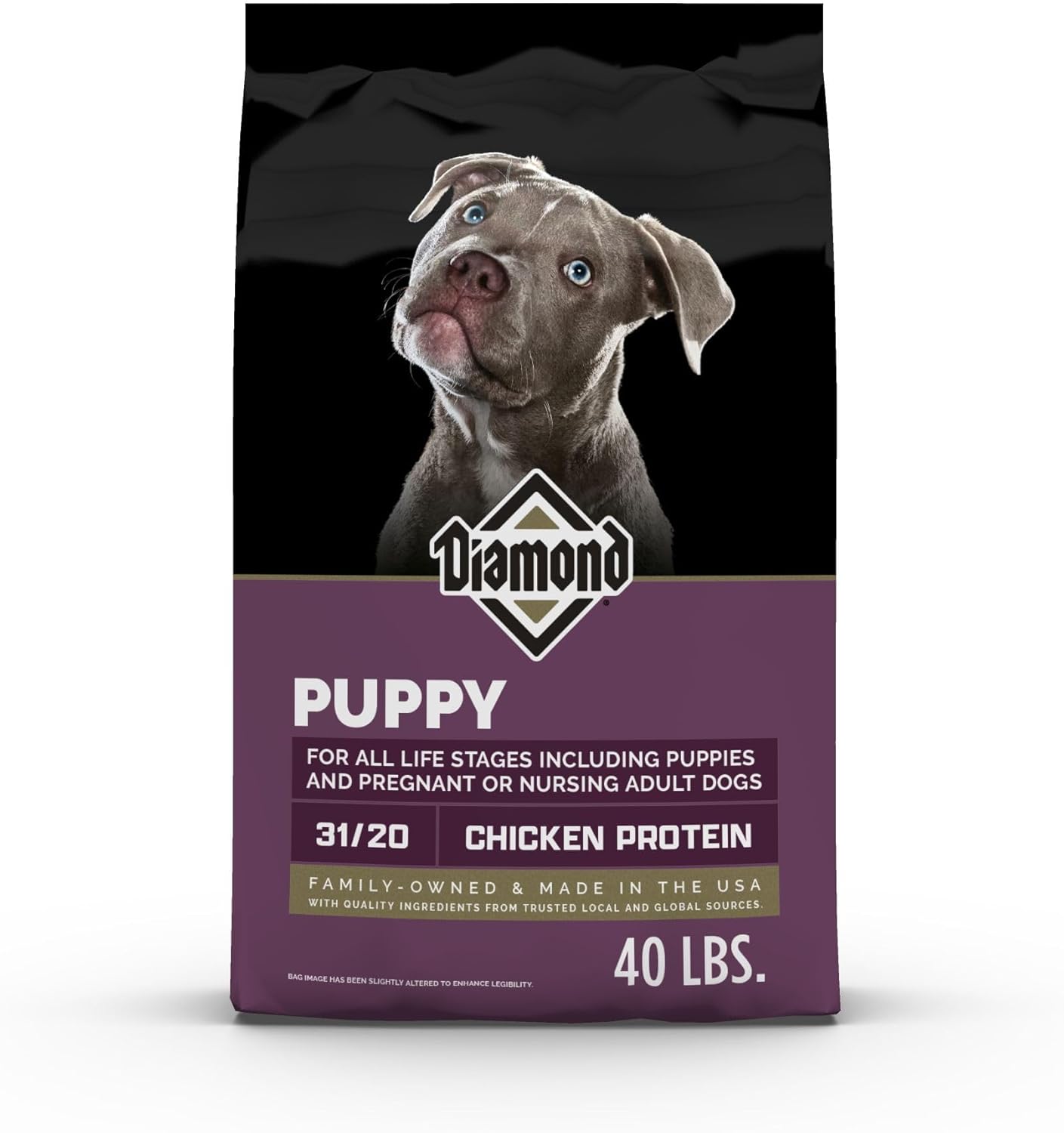
Diamond Puppy Dry Dog Food 40 lb
Best High-Protein Hard Food
| Flavor | Puppy |
|---|---|
| Item Form | Pellet |
| Breed Recommendation | Large Breeds |
| Animal Food Diet Type | Veterinary Diet |
| Unit Count | 640 Ounce |
Diamond Puppy is a 40-pound dry dog food designed for growing puppies and pregnant or nursing dogs, with chicken protein listed first and added DHA from salmon oil for brain and vision support. It is typically used as a staple daily diet during a puppy's first year and can be portioned according to the feeding guide and adjusted with a veterinarian. Notable features include high protein to support muscle development, calcium for bone and tooth growth, a probiotic blend and antioxidants for digestive and immune health, and smaller kibble that is easier for young mouths to chew. In real-world use the large bag delivers cost-per-pound value, making it attractive for owners feeding big-breed puppies that consume a lot of food, and the formula's nutrient focus suits rapid growth phases. Buyers should note the ingredient list includes chicken by-product meal and grain ingredients rather than premium single-protein or grain-free sources, so it is a budget-conscious choice rather than a boutique or limited-ingredient diet.
Best for: Buyers raising large-breed or fast-growing puppies who prioritize complete growth nutrition and need an economical, nutrient-dense bag to feed a hungry dog affordably.
Less Ideal for: Owners seeking limited-ingredient, novel-protein, or grain-free diets for allergy management or buyers who want only whole-meat first ingredients should consider alternative formulas.
- High protein with chicken as first ingredient to support muscle growth
- Includes DHA from salmon oil for brain and vision development
- Calcium and nutrient profile targeted for growth and bone support
- Added probiotics and antioxidants to support digestion and immune health
- Large 40 lb bag provides lower cost per feeding for large-breed puppies
- Contains chicken by-product meal and grain ingredients rather than single whole-muscle protein
- Not formulated as a limited-ingredient or grain-free recipe for dogs with specific sensitivities
Verdict: The best high-protein hard food for puppies that need extra protein to support active play, muscle development, and sustained growth.
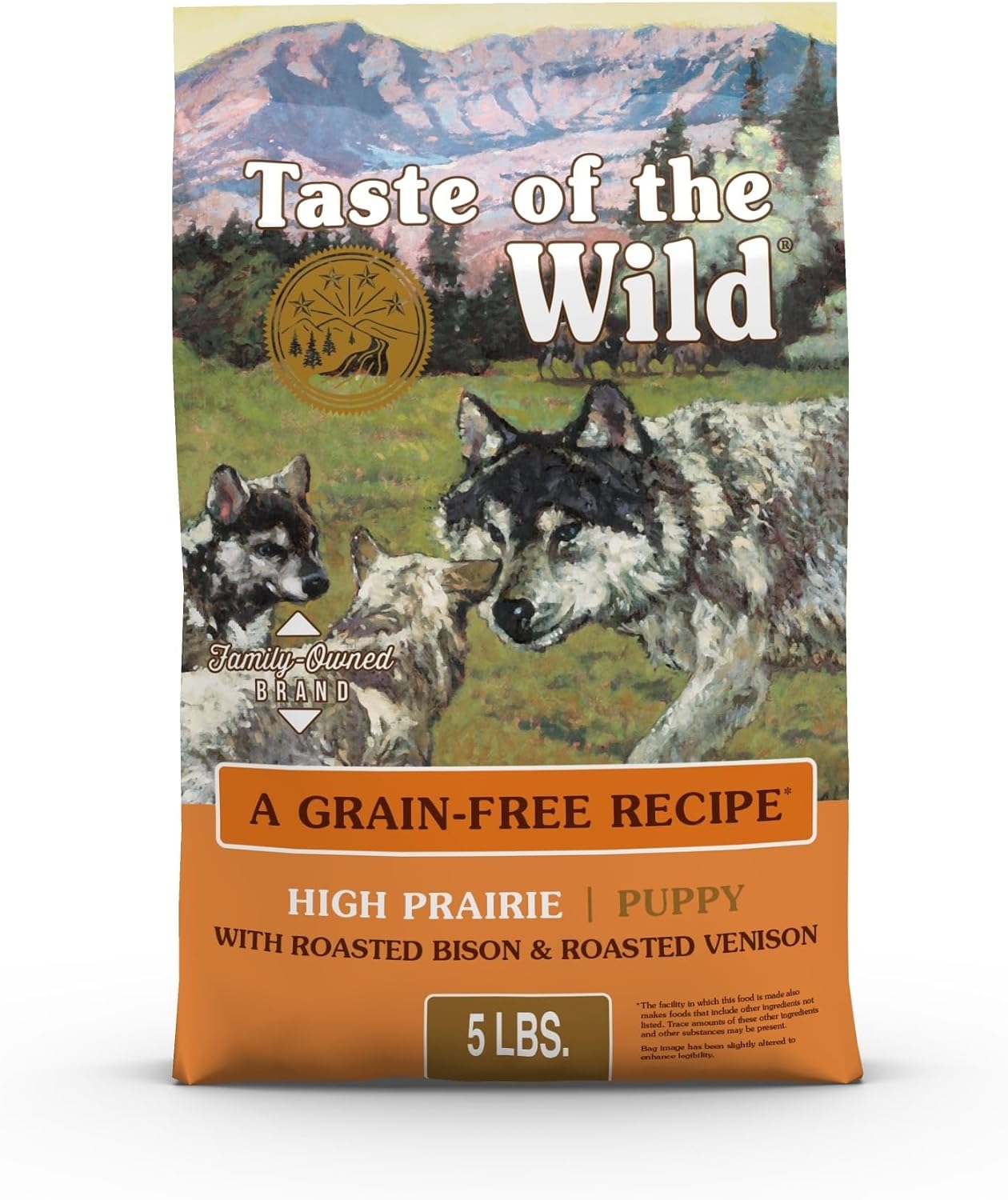
Taste of the Wild High Prairie Puppy 5 lb
Best Grain-Free Hard Food
| Flavor | Roasted Bison & Roasted Venison |
|---|---|
| Crude Protein | 28.0% minimum |
| Crude Fat | 17.0% minimum |
| Unit Count | 80 Ounce |
Taste of the Wild High Prairie Puppy is a grain-free dry kibble built around real roasted meats (bison and venison) and a 28% minimum crude protein level to support muscle development in growing dogs. It is typically fed as a complete diet for puppies, pregnant or nursing mothers, and active young dogs that need concentrated calories and higher protein. The formula includes salmon oil for DHA, omega fatty acids for skin and coat, and a proprietary probiotic blend to support digestion. Practical benefits include high protein from multiple animal sources, added fatty acids for energy and development, and fruits and vegetables for antioxidant support. Because it is grain-free and relatively rich in protein and fat, it suits puppies with high energy needs but may be more calorically dense than required for sedentary or less active pups. Also, the use of multiple legumes and novel proteins may not be appropriate for dogs with specific sensitivities. Feed amounts should be adjusted by age and activity and offered with fresh water.
Best for: Puppy owners who need a nutrient-dense, high-protein kibble for active growth, performance or for nursing mothers seeking extra calories and muscle support.
Less Ideal for: Owners of low-activity puppies, dogs on restricted-calorie plans, or pups with known sensitivities to legumes or novel proteins should consider other diets.
- High protein (28% minimum) to support muscle growth
- Real roasted meats listed first for species-appropriate protein
- Proprietary probiotic blend to aid digestion and gut health
- Includes DHA and omega fatty acids for brain and coat development
- Grain-free formula with fruits and vegetables for antioxidants
- Calorie-dense formulation may be excessive for low-activity puppies
- Contains legumes and multiple novel ingredients that can trigger sensitivities in some dogs
Verdict: The best grain-free hard food for puppies whose owners prefer diets without grains while still ensuring complete puppy nutrition.
Hill's Science Diet Puppy Sensitive Stomach & Skin
Best Sensitive-Stomach Hard Food

| Flavor | Salmon & Brown Rice |
|---|---|
| Age Range Description | Puppy |
| Item Form | Dry Food |
| Specific Uses For Product | Stomach & Skin Sensitivity support |
| Unit Count | 208 Ounce |
Hill's Science Diet Puppy Sensitive Stomach & Skin is a dry puppy formula designed to reduce occasional digestive upsets while supporting skin and coat health. It is typically fed as a complete diet for growing puppies and is intended for gradual introduction over a week to avoid further stomach upset. The recipe uses salmon as the first ingredient and includes prebiotic fiber to help nourish beneficial gut bacteria, DHA for brain and eye development, and added vitamin E plus omega fatty acids for skin and coat support. Practical benefits include a highly digestible protein source and clinically proven antioxidants for immune support, making portioning and daily feeding straightforward for owners managing a puppy with food sensitivity. Limitations are that it is a standard kibble so very picky puppies may prefer wet or mixed feeding, and specific intolerances to any listed ingredients like grains or certain proteins still require veterinary guidance before switching diets.
Best for: Buyers who need a puppy formula focused on easing occasional digestive upsets while also supporting skin and developmental needs, and who prefer a nutrition-first, vet-recommended diet.
Less Ideal for: Owners seeking a grain-free, single-protein elimination diet or those whose puppy has a diagnosed food allergy that requires veterinary-prescribed food.
- Formulated for sensitive stomachs with prebiotic fiber to support digestion
- Salmon is the first ingredient, providing a single-strong protein source
- Includes DHA for developing brain and eyes and high-quality protein for growth
- Added vitamin E and omega fatty acids help nourish skin and coat
- Clinically proven antioxidants to support the immune system
- Contains grains and multiple plant proteins so not suitable for strict grain-free or single-ingredient elimination diets
- Kibble form may need mixing or toppers for extremely picky eaters
Verdict: The best sensitive-stomach hard food for puppies prone to upset tummies, offering limited or gentle ingredients and easier digestibility.
Royal Canin X-Small Puppy Dry Food 3 lb
Best Small-Breed Hard Food

| Age Range | Puppy 2 to 10 months |
|---|---|
| Breed Size Recommendation | X-Small / Small breeds |
| Item Form | Kibble |
| Flavor | Chicken & Vegetable |
| Unit Count | 48 Ounce |
Royal Canin X-Small Puppy is a dry kibble made specifically for extra-small breed puppies, with a crunchy, tiny kibble designed to be easy for very small mouths to pick up and chew. It is intended for puppies 2 to 10 months with an expected adult weight under about 8 pounds and is used as a daily complete diet or mixed with Royal Canin wet puppy formulas for texture variety. The formula highlights DHA and omega-3s for brain development, antioxidants for immune support, and a blend of prebiotics and digestible proteins to promote gut health. Practical benefits include portion-sized nutrition tailored to high energy needs during growth and a kibble texture that can help dental health by encouraging chewing. Limitations are that it is sized and balanced for extra-small breeds only, so growing puppies expected to exceed the target adult weight will need a different formula, and the ingredient list includes grains and by-product meal which some buyers may avoid. The 3 lb bag is convenient for trialing a Westie puppy but may require more frequent repurchase than larger bags for multi-puppy households.
Best for: Owners of West Highland Terrier puppies and other very small-mouthed breeds who prioritize kibble size and targeted growth-stage nutrition to make feeding and chewing comfortable.
Less Ideal for: Owners whose puppies are expected to exceed the formula's target adult weight or buyers seeking grain-free or novel-protein ingredient lists should consider alternative formulations.
- Kibble sized and shaped for very small mouths to make eating easier for Westie puppies
- Contains DHA and omega-3 fatty acids to support brain development
- Includes prebiotics and highly digestible proteins to promote healthy digestion
- Antioxidants like vitamins E and C to support immune system development
- Available in a 3 lb bag that is practical for testing or small-breed households
- Formulation uses poultry by-product meal and grains, which some owners prefer to avoid
- Sized specifically for extra-small breeds so not suitable if the puppy will grow beyond the target adult weight
Verdict: The best small-breed hard food for toy and small-breed puppies that need appropriately sized kibble, concentrated calories, and tailored nutrient balance.
Choosing the Right Hard Dog Food Puppy: Key Factors to Consider
Protein Quality and Quantity
Protein provides essential amino acids needed for muscle growth, organ development, and immune function. Puppies generally need higher protein ratios than adult dogs, but not all proteins are equal. Named animal proteins like chicken, lamb, or fish supply complete amino acid profiles that support lean tissue formation.
Look for formulas that list a quality animal protein near the top of the ingredient panel and provide adequate percent crude protein for growth. Very high protein can be appropriate for highly active or large-breed puppies but may not be necessary for more sedentary litters. Balanced protein keeps growth steady and supports healthy body composition.
Digestibility and Stool Quality
Digestibility affects how much nutrition the puppy actually absorbs and influences stool consistency. Puppies can have sensitive digestive systems, so easily digestible ingredients reduce the chance of loose stools, gas, and nutrient loss.
Formulas that include moderate fiber, prebiotics, or gentle carbohydrate sources tend to be friendlier for young tummies. Highly processed fillers or excessive indigestible fibers can worsen stool issues. Choosing a food with demonstrated digestibility helps ensure the puppy retains calories and nutrients for steady growth.
Calorie Density and Fat Content
Puppies require more calories per pound than adult dogs because they are growing quickly. Calorie density determines portion sizes and how easily you can meet energy needs without overfeeding volume. Healthy fats are a concentrated energy source and supply essential fatty acids needed for brain and coat development.
Look for formulas with appropriate fat levels for growth phase puppies. Too little fat can leave an active puppy under-energized, while excessively high fat may cause digestive upset in some individuals. Consider how calorie density fits your puppy's appetite and growth rate.
Life-stage Formulation and Nutrient Balance
Foods labeled and balanced specifically for puppies include the right ratios of calcium, phosphorus, and other minerals crucial for bone and tooth development. These ratios are especially important for large-breed puppies where overly rapid bone growth can cause issues.
Ensure the formula is intended for growth and not adult maintenance. Appropriate vitamin and mineral balance supports immune development and metabolic needs. Life-stage formulations take into account the higher needs for certain nutrients during the growth window.
Kibble Size and Texture
Kibble shape, size, and hardness affect how comfortably a puppy can chew while teething. Very large, hard kibble can be difficult for small-breed puppies to handle and may discourage proper eating. Conversely, very small soft pieces might not encourage chewing or dental abrasion.
Choose a kibble size that fits your puppy's breed and mouth size. A texture that is easy to break with fingers or softens in saliva is often more acceptable for teething puppies. Kibble design also influences treatability for training sessions.
Ingredient Transparency and Safety
Clear labeling about primary ingredients, carbohydrate sources, and any added supplements helps you evaluate quality. Ingredients that list vague terms or proprietary blends make it hard to know what the puppy is actually eating.
Safety practices such as stable supply chains, clear manufacturing information, and avoidance of ingredients known to cause allergies in your puppy are important. Transparent labels let you avoid known triggers and make informed choices when managing food sensitivities.
How Much Hard Food Should I Feed My Puppy and How to Adjust Portions?
Feeding amounts depend on the puppy's age, weight, activity level, and the calorie density of the chosen food. Start with the manufacturer feeding guideline as a baseline, then monitor weight and body condition weekly. Puppies should have a visible waist and ribs that are palpable but not prominent. Adjust portions upward if the puppy is gaining too slowly or seems constantly hungry. Reduce portions if the puppy is gaining too rapidly or shows signs of excess body fat. For large-breed puppies, slow and steady gains are usually preferable to rapid weight increases that can stress developing bones.
- Weigh your puppy regularly and log gains against breed growth charts when available.
- Split daily food into multiple meals—three to four feeds for young puppies—then transition to two meals by adulthood.
- Use body condition rather than calorie counts alone to guide adjustments.
What to Expect During Teething and How Kibble Helps
Teething puppies often chew more and may nibble at their food differently. A kibble that is appropriately sized and not overly hard makes eating less painful and encourages adequate chewing. Some formulas have textures that soften quickly in the mouth, which is helpful for sore gums. You can temporarily offer softened kibble by adding warm water if the puppy resists hard pieces, but avoid making food persistently soggy because it can spoil more quickly. Monitor for changes in appetite during teething and keep chew-safe toys available to redirect gnawing from inappropriate items.
- Soften kibble briefly for very young or sore puppies to ease chewing.
- Provide safe chew toys to help with gum discomfort and encourage proper chewing behavior.
Switching From Puppy Formula to Adult Hard Food: when and How
Transition timing depends on breed size and individual maturity. Small-breed puppies often reach maturity around 9 to 12 months, while larger breeds may need 12 to 18 months before moving to an adult maintenance formula. Make the transition gradually over 7 to 10 days by mixing increasing amounts of the adult food with the puppy food to avoid digestive upset. Watch for changes in stool, appetite, and energy levels during the switch and adjust the pace if needed.
- Start the transition when your veterinarian confirms appropriate maturity.
- Increase adult food by about 10 to 20 percent daily, reducing puppy food simultaneously.
Managing Common Sensitivities and Picky Eating
Puppies can display sensitivities to certain proteins or carbohydrate sources, which may show up as itchy skin, ear problems, or inconsistent stools. If you suspect a sensitivity, eliminate suspect ingredients under veterinary guidance and monitor response over several weeks. For picky eaters, focus on highly digestible, palatable formulas and consistent feeding routines. Avoid repeatedly offering free-choice feeding if the puppy skips meals, as structured mealtimes encourage appetite regularity. Small, frequent positive-reinforcement training sessions using portions of the daily ration can also boost interest.
- Try limited-ingredient options if food sensitivity is suspected, but consult a veterinarian first.
- Maintain consistent mealtimes and avoid excessive table scraps that reduce interest in the regular food.
Reading an Ingredient Panel: What Really Matters
Focus on the first several listed ingredients to understand primary protein and carbohydrate sources. Named animal proteins are preferable because they indicate a specific source of amino acids. Also look for whole-food ingredients like vegetables and controlled amounts of digestible grains or grain alternatives. Avoid being distracted by marketing terms. Check guaranteed analysis for protein, fat, fiber, and moisture to compare nutritional density. If your puppy has specific health needs, also scan the additives list for beneficial supplements such as omega fatty acids or probiotics.
- Prioritize named animal proteins in the top three ingredients.
- Compare guaranteed analysis numbers to assess calorie and nutrient density.
How We Chose the Best Hard Dog Food Puppy
We focused on criteria that matter specifically for puppy hard food formulas and used them to narrow a large field down to the top contenders. Key filters included nutrition profile, ingredient transparency, digestibility, life-stage formulation, and manufacturing quality controls. We prioritized foods formulated to meet established growth nutrient levels for puppies and those with protein and fat levels appropriate for active young dogs. Ingredient transparency and the presence of named animal protein sources were important because they help you assess amino acid quality and real-food content. Digestibility tests and formulations that include prebiotics or moderate fiber were weighed heavily because loose stools and sensitive tummies are common in puppies. We also considered kibble size and texture as they affect chewing and dental comfort for teething puppies. Foods with inconsistent ingredient panels, unclear sourcing, or formulas intended for adult maintenance were excluded. The final list reflects a balance of growth-focused nutrition, digestibility, and practical feeding considerations that matter for raising healthy puppies.
Our full evaluation process is outlined in our review methodology.
FAQ
How often should I feed a young puppy hard food?
Young puppies typically eat three to four times per day. As they mature, you can reduce feedings to two meals daily. Frequency should match age, activity, and veterinary guidance.
Can I mix wet food with hard puppy food?
Occasional mixing is fine to increase palatability or moisture, but frequent additions can change calorie intake and digestive response. If you mix, do so consistently and monitor stool and weight.
Is grain-free hard food necessary for puppies?
Grain-free is not necessary for most puppies and should be chosen only for specific intolerance reasons. Many grain-containing formulas provide digestible energy and fiber that support growth.
How do I tell if my puppy's hard food is the right calorie level?
Track weight gain and body condition regularly. If the puppy maintains an appropriate, steady growth rate with a palpable but not prominent rib outline, the calorie level is likely suitable. Adjust portions if the puppy gains too quickly or too slowly.
What signs indicate a food allergy or sensitivity in a puppy?
Common signs include chronic itching, recurrent ear infections, persistent tummy upset, or abnormal stool. If these appear, consult a veterinarian and consider an elimination trial under professional supervision.
Final Verdict
Choose a puppy hard food that balances quality protein, digestibility, and life-stage nutrient ratios first. Prioritize formulas with transparent ingredient lists and appropriate calorie density so you can feed portions that support steady growth without excess weight gain. Expect to adjust portions during growth and be prepared to change formulas under veterinary guidance if sensitivities or feeding issues arise. Focusing on these priorities will help you select a practical, growth-focused hard food for your puppy.

