

If your dog eats too fast or gulps food, a hard slow feeder can reduce choking risk, improve digestion, and stretch mealtime into a calmer routine. Choosing the right hard slow feeder matters because dogs' chewing strength, bowl stability, and feeding habits vary widely. This guide shortlists the top hard slow feeder slow feeders across common needs—durability, ease of cleaning, and shape designs that slow intake. Below we cover the most practical features to consider and explain why each shortlisted option earned a place. Read on to find a feeder that fits your dog's eating style and home routine.
Top Picks at a Glance
| Best Overall Hard Slow Feeder The top all-around slow feeder that fits most dogs' needs | kactoily 304 Stainless Steel Slow Feeder Bowl 2.5 cups |  |
| Best Budget Hard Slow Feeder A low-cost slow feeder that still slows eating effectively | Novery Slow Feeder Dog Bowl 2-Cup |  |
| Best Premium Hard Slow Feeder A higher-end feeder with superior materials and finish | Sted Ceramic Slow Feeder |  |
| Best Large-Capacity Hard Slow Feeder Larger bowl design built for big breeds or multi-meal portions | Oiwliur Slow Feeder Stainless Steel Bowl 5 Cups |  |
| Best Compact Hard Slow Feeder A space-saving slow feeder ideal for small kitchens or pups | vancasso Piccolo Slow Feeder |  |
| Best Non-Slip Hard Slow Feeder Designed with grips or rubber feet to stay put during meals | Feedoo Slow Feeder Dog Bowl 2 Cups |  |
| Best Easy-Clean Hard Slow Feeder Designed for quick cleaning with smooth surfaces or dishwasher-safe parts | JULYEW 304 Stainless Slow Feeder Bowl |  |
kactoily 304 Stainless Steel Slow Feeder Bowl 2.5 cups
Best Overall Hard Slow Feeder
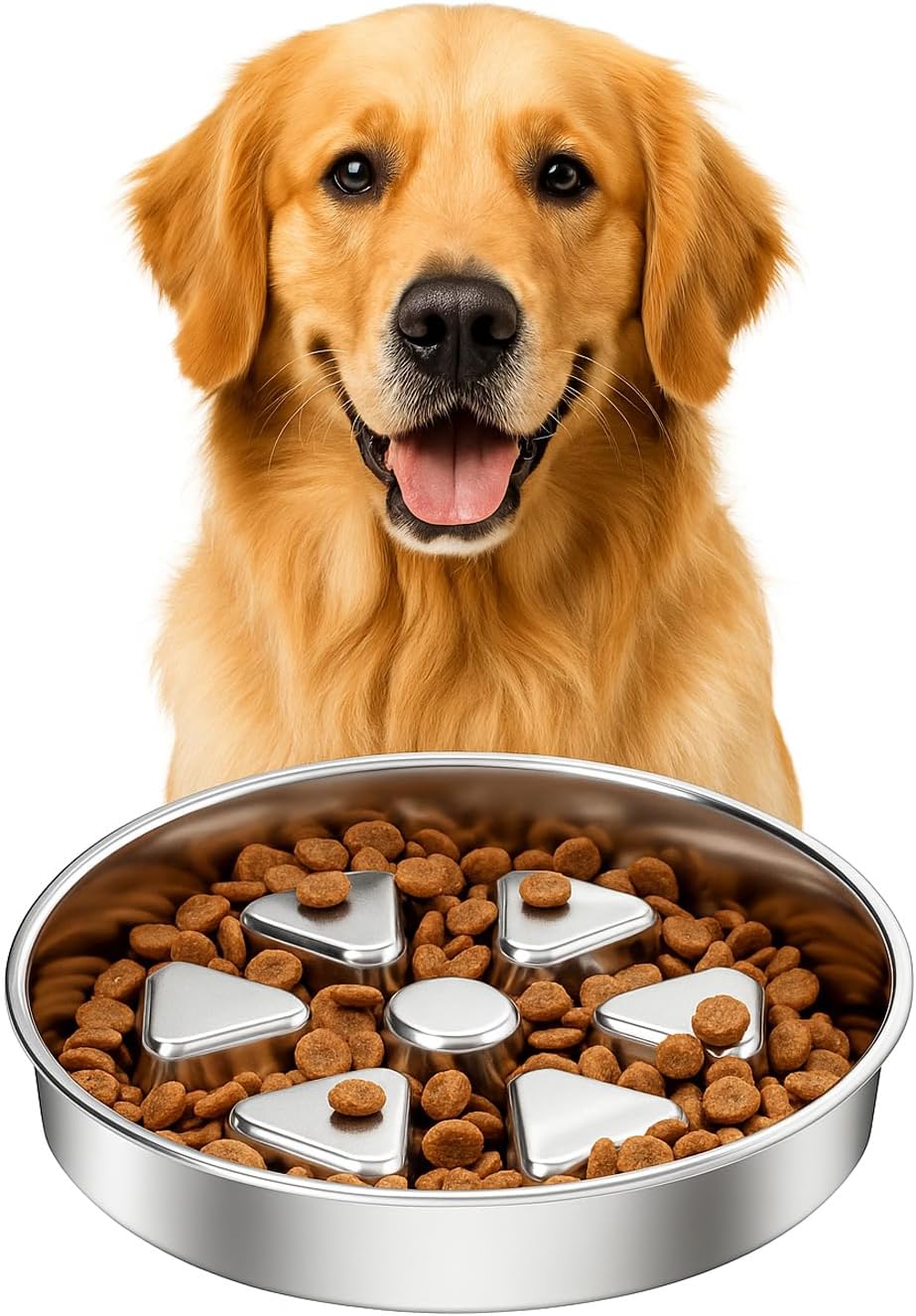
| Material Type | Stainless Steel |
|---|---|
| Capacity | 2.5 cups |
| Recommended Uses For Product | Dry Food, Indoor, Wet Food |
| Additional Features | Durable, Easy to Clean, Nonslip, Slow |
| Product Care Instructions | Dishwasher Safe |
This slow feeder bowl uses a raised 0.98-inch center to slow dogs down and encourage healthier eating, which can reduce gulping, choking, and bloating during meals. Made from food-grade 304 stainless steel, the bowl resists corrosion and is easy to rinse or run through the dishwasher for regular cleaning. The silicone anti-slip ring keeps the bowl steady on most floors so energetic eaters are less likely to tip or slide it. At about 2.5 cups capacity and a low profile, it is sized for medium to large dogs and works with dry kibble or wet food. The construction feels sturdy and the smooth stainless surface does not retain odors or residues. The main limitations are its single-size capacity, which may be small for very large dogs with high food intake, and the low rim height that could let some enthusiastic eaters reach around the obstacle rather than being forced to work the food through tighter channels. Still, for everyday home use this bowl combines durable materials, stability, and simple cleaning into a practical slow-feeding solution.
Best for: Buyers who want a durable, easy-to-clean slow feeder that performs reliably for everyday home meals and prioritizes stability and material quality.
Less Ideal for: People who need larger capacity bowls for very large breeds or multiple dogs, or those seeking an extra-challenging maze-style slow feeder.
- Raised center design slows eating to help reduce gulping and aid digestion
- Food-grade 304 stainless steel is durable, hygienic, and corrosion-resistant
- Silicone non-slip ring keeps the bowl stable during use
- Dishwasher-safe and easy to clean, resists odor and residue buildup
- Single capacity may be too small for very large or multi-dog households
- Low profile design may be less challenging for highly determined fast eaters
Verdict: The best overall hard slow feeder for most dog owners, balancing effective portion control, durable construction, and easy upkeep for everyday use.
Novery Slow Feeder Dog Bowl 2-Cup
Best Budget Hard Slow Feeder

| Capacity | 2 cups |
|---|---|
| Material Type | Stainless Steel |
| Dog Breed Size | Small |
| Operation Mode | Manual |
This Novery slow feeder is a simple, budget-friendly stainless steel bowl that uses raised ridges to slow a pet's eating and a flip-over concave side for licking treats. You use it like a normal feeding bowl for dry or wet food but fill it below the inner ridge so kibble sits in the channels; when flipped it becomes a shallow lick surface for peanut butter or yogurt. The stainless steel construction resists odors and is dishwasher-safe for easy cleanup, while the wide, rubberized base keeps the bowl from sliding or tipping during eager meals. At two cups capacity it fits small to medium portions without being bulky. Limitations are its low depth if you prefer large portioning and the fixed ridge pattern, which may not challenge very food-driven dogs as much as deeper puzzle feeders. For the price it provides durable, hygienic slow-feeding and a handy second use as a licking plate.
Best for: Buyers wanting an inexpensive, durable slow-feeding solution that is easy to clean and stable on the floor, especially for small to medium pets or owners prioritizing hygiene and simplicity.
Less Ideal for: Owners who need larger capacity bowls, deep puzzle complexity for highly food-motivated dogs, or multi-pet feeding setups should consider larger or more intricate feeders.
- Stainless steel construction resists rust, odors, and is dishwasher-safe
- Built-in ridges slow eating to reduce gulping and improve digestion
- Non-slip rubberized base prevents sliding and tipping during meals
- Reversible design doubles as a shallow licking/treat surface
- 2-cup capacity and shallow depth may be small for larger or multi-dog portions
- Fixed ridge pattern is less adjustable than multi-piece puzzle feeders
Verdict: The best budget hard slow feeder for shoppers who need an affordable, reliable option that reduces gulping without sacrificing basic durability.
Sted Ceramic Slow Feeder
Best Premium Hard Slow Feeder

| Material Type | Ceramic |
|---|---|
| Capacity | 6.5 cups |
| Washable | Dishwasher Safe |
| Dog Breed Size | Medium, Large |
The Sted Ceramic Slow Feeder is a food-grade ceramic bowl with a raised maze pattern that slows a dog's eating and a detachable silicone base to keep the bowl stable and quiet. It is typically used for daily meals of dry or wet food and treats; the maze channels and ridges make dogs work for bites, which can reduce gulping, choking risk, and overeating. The ceramic construction feels heavy and durable in use, resisting scratches and odors better than plastic, and the smooth glazed surface is dishwasher-safe for easier cleaning. The silicone base detaches for washing and helps prevent the bowl from sliding on hard floors. Limitations include the bowl's relatively heavy weight and ceramic fragility if dropped, and the internal maze may be too deep for very small kibble or picky eaters who struggle to extract food. For owners prioritizing premium materials and a robust slow-feed pattern, this bowl delivers a tidy, long-lasting option.
Best for: Buyers who want a premium, long-lasting slow feeder and prioritize hygiene and durable materials over lightweight or travel-friendly options.
Less Ideal for: People needing a lightweight, unbreakable bowl for travel or very small-pawed dogs that struggle with deep maze patterns.
- Food-grade ceramic resists odors and scratching better than plastic
- Deep maze and ridges slow eating significantly
- Detachable silicone base adds non-slip stability and quiets feeding
- Dishwasher-safe glazed surface for easier cleaning
- Heavier and can break if dropped compared with plastic or stainless options
- Maze depth may trap very small kibble or be hard for some dogs to eat from
Verdict: The best premium hard slow feeder for owners willing to pay more for premium materials, refined design, and longer-lasting performance.
Oiwliur Slow Feeder Stainless Steel Bowl 5 Cups
Best Large-Capacity Hard Slow Feeder

| Material Type | Stainless Steel |
|---|---|
| Capacity | 5 cups |
| Additional Features | Nonslip |
| Product Care Instructions | Hand Wash Only |
| Power Source | Battery Powered |
The Oiwliur slow feeder is a stainless steel bowl shaped with internal ridges to slow a dog's eating and a rubberized non-slip base to keep it steady during mealtimes. It is intended for use with dry or wet food and water and holds up to 5 cups, so it works for single-meal portions for small to medium dogs or combined feeding for multiple smaller pets. The 304 stainless steel construction resists rust and is easy to clean by hand or in the dishwasher, which helps prevent lingering odors and staining over time. The manual operation and simple shape make it durable against chewing and rough use compared with plastic slow feeders, and the low profile helps dogs reach food while slowing their pace. Limitations are the flat, compact footprint that may not suit very large breeds that need raised feeders and the fixed internal pattern that cannot be adjusted for different slowdown levels.
Best for: Buyers who prioritize a durable, hygienic metal bowl that slows eating and is simple to clean will appreciate this product for everyday feeding of small to medium dogs or multi-pet setups.
Less Ideal for: Owners seeking an elevated feeder or an adjustable slow-feed solution for very large breeds should consider other formats designed for height or variable resistance.
- 304 stainless steel resists rust and is food-safe
- Non-slip rubber base keeps bowl stable during feeding
- 5-cup capacity handles typical single meals for small to medium dogs
- Dishwasher-safe finish makes cleaning and odor control easy
- Low, compact profile may be awkward for very large or tall dogs
- Fixed slow-feeder pattern cannot be changed to alter eating resistance
Verdict: The best large-capacity hard slow feeder for bigger dogs or multi-meal portions, offering roomy bowls and stable construction to handle larger servings.
vancasso Piccolo Slow Feeder
Best Compact Hard Slow Feeder

| Material Type | Ceramic |
|---|---|
| Capacity | 390 ml |
| Recommended Uses For Product | Indoor, Slow Feeding |
| Additional Features | Nonslip |
The vancasso Piccolo is a compact ceramic slow feeder built for small breeds and tight spaces. Its floral maze interior creates multiple channels that force dogs to eat more slowly and engage in foraging-style feeding, which can help reduce gulping, vomiting, and overeating. Made of glazed ceramic, the bowl is heavy enough to resist tipping and includes adhesive non-slip pads to keep it stable on hard floors. Ceramic construction makes the surface easy to rinse or clean in the dishwasher and avoids some odor and bacteria issues associated with plastic. The 0.6 cup capacity and shallow profile make portion control straightforward for toy and small-breed dogs, but the small volume is not suitable for larger dogs or multi-meal sessions. Because it is ceramic, it is more fragile than silicone or stainless options and should be handled carefully to avoid chips or breaks. For owners needing a durable, attractive slow feeder that fits in limited space, the Piccolo performs reliably as a hard, compact option.
Best for: Owners of small or toy-breed dogs who need an effective slow feeder with a minimal footprint and prefer a hard, easy-to-clean material that stays put during meals.
Less Ideal for: Homes with large dogs, multi-dog feeding, or rough handling where a shatter-resistant silicone or metal feeder would be more appropriate.
- Compact 0.6 cup capacity fits small breeds and tight feeding spaces
- Floral maze design slows eating and encourages foraging behavior
- Heavy ceramic body plus included non-slip pads resists tipping and sliding
- Dishwasher-safe glazed surface is easy to clean and resists odors
- Ceramic is breakable and can chip if dropped
- Small capacity limits use to single small-dog meals or treats
Verdict: The best compact hard slow feeder for owners with limited space or small dogs who need a smaller footprint without losing slowing effectiveness.
Feedoo Slow Feeder Dog Bowl 2 Cups
Best Non-Slip Hard Slow Feeder

| Capacity | 480 ml |
|---|---|
| Material Type | Stainless Steel |
| Dishwasher Safe | Yes |
| Included Components | 304 Stainless Steel Slow Feeder Dog Bowl with Non-Slip Rubber Base |
The Feedoo Slow Feeder is a 2-cup double-wall stainless steel bowl with a raised flower-shaped maze that forces dogs to eat more slowly. Its heavy dual-wall construction gives the bowl weight and rigidity so it resists tipping, while the continuous silicone rubber ring around the base keeps it from sliding across hard floors during enthusiastic meals. The stainless interior is dishwasher-safe and suitable for dry or wet food, and the rounded edges reduce the chance of scratching your dog's muzzle. In practice this bowl works well for small and medium fast eaters who need portion control or to avoid regurgitation, and the textured maze reliably slows intake without trapping too much kibble. The main limitations are the fixed 2-cup capacity, which is small for larger dogs, and the permanent silicone base means you cannot remove it if you prefer a different mat system. For energetic eaters that tend to shove dishes around, the combination of heft and full-circle non-slip ring makes this an effective, low-maintenance solution.
Best for: Buyers who need a heavy, non-slip feeding bowl to stop energetic or fast-eating small to medium dogs from pushing or gulping down food.
Less Ideal for: Those feeding large or giant breeds, households that need larger capacity bowls, or owners who prefer fully removable bases or modular mat systems.
- Double-wall 304 stainless steel adds heft and durability to resist tipping
- Full-circle non-slip silicone rubber base prevents sliding on hard surfaces
- Raised maze design slows eating to reduce gulping and vomiting risk
- Dishwasher-safe stainless steel for easy cleaning and use with wet or dry food
- 2-cup capacity may be too small for large breeds or multi-dog feedings
- Silicone base is fixed and cannot be removed for use with alternate mats
Verdict: The best non-slip hard slow feeder for pets that push bowls around, featuring secure bases or rubberized edges to prevent sliding and messes.
JULYEW 304 Stainless Slow Feeder Bowl
Best Easy-Clean Hard Slow Feeder

| Material Type | Stainless Steel |
|---|---|
| Capacity | 4 cups |
| Additional Features | 304 Stainless Steel, Anti-gulping Maze Pattern, Dishwasher Safe, Nonslip |
| Recommended Uses For Product | Mealtime Enrichment, Mental Stimulation, Portion Control, Preventing Bloat, Reducing Gulping, Slow Feeding, Weight Management |
This stainless steel slow feeder bowl uses a raised maze pattern to slow fast eaters while offering a durable, easy-to-clean surface. Made from food-grade 304 stainless steel with double-wall construction, it resists rust, odors, and scratches better than plastic and stands up to wet or dry food. The bowl is dishwasher safe and ships with a small cleaning kit—brush, microfiber cloth, and towel—which helps remove trapped kibble and residue from the maze crevices. A rubber nonslip base keeps the bowl steady on hard floors so food stays contained during feeding. Practical benefits include reduced gulping and added mental stimulation during mealtime plus simpler cleanup because the metal surface and included brush make it easy to dislodge stuck food. Limitations are that the fixed maze pattern may not suit very large breeds or extremely brachycephalic dogs, and the nonremovable base could trap liquid at the rim if not fully dried after washing.
Best for: Owners who want a hard, durable slow feeder that cleans up quickly and tolerates frequent dishwasher use while providing a more hygienic alternative to plastic.
Less Ideal for: Households with very large, heavy-chewing dogs or pets that require custom slow-feed depth and spacing should consider a different design.
- 304 food-grade stainless steel resists rust, odors, and scratches
- Dishwasher-safe construction plus included brush and cloth for easier cleaning
- Nonslip rubber base keeps the bowl stable and reduces spills
- Maze pattern slows eating and adds mental stimulation during meals
- Fixed maze design may be too shallow or confined for very large or short-muzzled dogs
- Nonremovable base area can trap water or food if not fully dried after washing
Verdict: The best easy-clean hard slow feeder for owners who prioritize fast cleanup, with surfaces and parts that resist food buildup and often go in the dishwasher.
Choosing the Right Hard Slow Feeder Dog: Key Factors to Consider
Material and Durability
Hard slow feeders are built from different solid materials that determine lifespan and safety. Durable plastics resist cracking but vary in thickness and impact strength; ceramic offers weight and scratch resistance but can chip or break if dropped. Metal bowls are highly durable but can dent and may be noisy during use. Consider the material in light of your dog's chewing behavior and where the bowl will be used.
A harder, thicker material reduces the risk of damage from persistent nosing or pawing and maintains the maze structure that slows feeding. Also think about surface finish: a smooth, nonporous surface is easier to clean and less likely to harbor bacteria. For heavy chewers, pick materials that tolerate bites without deforming, because warped channels can change how effectively the feeder slows intake.
Maze Design and Effectiveness
The internal pattern—ridges, pillars, or labyrinth channels—dictates how much a feeder slows a dog's eating. Tight, complex mazes force dogs to work for small mouthfuls, which is effective for fast eaters but can frustrate timid or older dogs. Simpler, larger channels slow pace modestly while allowing easy scooping for bigger breeds. Think about your dog's snout shape and patience when choosing a pattern.
Also evaluate whether the design traps kibble in crevices or allows water flow for wet food. Balanced designs create enough resistance to slow gulping without making feeding stressful. If you vary food types, pick a maze that handles both dry kibble and moistened food without clogging.
Size, Capacity, and Portion Control
Match feeder capacity to your dog's daily ration and feeding schedule. Small bowls may be fine for tiny breeds or snack sessions but force multiple refills for larger dogs. Overly large bowls with shallow mazes may reduce the slow-feeding effect. Choose a size that leaves enough channel complexity within each meal portion to maintain pacing.
Portion control also ties into weight management. A properly sized feeder can make the same amount of food last longer, helping moderate intake. Check how the feeder's internal volume relates to your dog's typical serving—some manufacturers list separate small, medium, and large options to preserve maze effectiveness across portion sizes.
Stability and Non-slip Features
A hard slow feeder must stay in place while a dog noses and paws at food. Unstable bowls can tip, sending food everywhere and defeating the intended purpose. Look for non-slip rubber feet, a weighted base, or low-profile wide designs that lower tipping risk. Suction-ring bases are useful on hard floors but less effective on textured surfaces.
Stability matters for nervous or excited eaters that may shove the bowl aggressively. A secure bowl reduces mess, prevents injury from spills, and keeps the feeding puzzle functional. If you feed outdoors or on slick flooring, prioritize bases designed to grip your surface type.
Cleaning and Hygiene
Hard feeders often have narrow channels that can trap food and oils, so hygienic design is crucial. Dishwasher-safe materials and smooth, accessible interiors make cleaning faster and more thorough. Avoid deep, hard-to-reach recesses that require specialized brushes to sanitize properly.
Consider whether the feeder disassembles for deep cleaning or has sealed seams to prevent moisture buildup. Frequent cleaning prevents bacterial growth and lingering odors, especially when the bowl is used for wet or mixed meals. Choose finishes that resist staining and do not retain food odors over repeated wash cycles.
Comfort and Accessibility for Your Dog
The feeder should be comfortable for your dog to use. Rim height, channel depth, and overall diameter affect how easily your dog can access food without straining neck or whiskers. Brachycephalic breeds and older dogs may need shallower channels and lower rims, while deep-chested breeds might prefer a taller profile to reduce neck bending.
Also factor in the dog's feeding behavior: some dogs scoop kibble with their tongues, others use their noses. Choose a design compatible with your dog's natural feeding method to keep mealtime pleasant while still slowing intake.
How Do Different Maze Shapes Change Eating Speed?
Maze shapes vary from concentric rings to raised pillars and multi-directional channels. Concentric or spiral patterns encourage pawing or long nosing motions, which slow speed consistently for most dogs. Pillar-style mazes force the dog to pick individual pieces and are especially effective for dogs that take big mouthfuls.
Choose a shape that matches your dog's preferred feeding method. Dogs that lap or tongue-feed may do better with shallow, widely spaced channels, while nosing dogs respond well to deeper obstructions that require more focused effort.
- Spiral patterns create continuous navigation around the bowl and reduce gulping.
- Pillar mazes require precise extraction of kibble, slowing fast chewers more.
- Shallow channels are better for wet food and older dogs with limited mobility.
Can Hard Slow Feeders Be Used for Wet Food or Mixed Meals?
Many hard slow feeders accommodate wet or mixed meals, but channel depth and drainage affect performance. Shallow channels and smooth finishes let wet food slide and be accessed easily, while deep, intricate mazes may trap soft food and require more frequent cleaning.
If you feed wet food regularly, favor designs with simple contours that resist clogging and are fully accessible to a brush or dishwasher. Also confirm that the material tolerates frequent washing without degrading.
- Test a small portion to see if wet food clogs the maze before committing to daily use.
- Look for fully nonporous surfaces to avoid staining and odor retention.
Do Hard Slow Feeders Work for Aggressive Chewers?
Hard feeders are generally more resilient than soft mats, but not all hard bowls withstand persistent chewing. Heavy chewers can chip, crack, or deform lower-quality hard feeders, especially around exposed maze edges. For aggressive chewers, choose thicker materials and reinforced construction.
Even the toughest hard feeders eventually wear under repeated chewing, so monitor the bowl for damage and replace it if maze integrity is compromised. A well-built hard feeder will withstand normal nosing and pawing for a long period, but continuous biting can shorten product life.
- Inspect seams and channel edges regularly for signs of wear.
- Avoid leaving a particularly determined chewer alone with a damaged feeder.
Cleaning Tips to Keep Your Feeder Sanitary
Clean hard slow feeders after each use when feeding wet food, and at least daily for dry kibble to avoid buildup. Use a bottle brush or narrow bristle brush to reach into channels, and run through the dishwasher on a high-temperature cycle if the material permits. For stubborn residues, soak the bowl in warm, soapy water before brushing.
Rotate deep cleans with a mild vinegar solution or pet-safe disinfectant to control odors and bacteria. Always rinse thoroughly after any cleaning agent to remove residues that could bother your dog.
- Use a brush sized for the maze channels to avoid leaving trapped food.
- Air-dry fully before reuse to prevent moisture buildup inside crevices.
Best Placement and Feeding Routines
Place the feeder on a flat, stable surface away from high-traffic areas to reduce distraction and tipping. A rubber mat underneath adds grip and makes cleanup easier. Keep water available nearby so your dog can hydrate between slower mouthfuls.
If you are introducing a slow feeder for the first time, gradually transition by mixing short sessions with the old bowl. Praise calm behavior and avoid forcing longer meal times overnight. Consistent routines help your dog adapt to the new pacing without stress.
- Start with familiar foods and gradually introduce the feeder during regular meal times.
- Supervise the first several meals to ensure your dog adapts and does not become frustrated.
How We Chose the Best Hard Slow Feeder Dog
We prioritized traits that directly affect safety, longevity, and real-world meal pacing for dogs that gulp or eat too quickly. Our evaluation focused on: material durability and resistance to chewing or cracking; interior maze design and how effectively it slows intake across portion sizes; stability features such as non-slip bases or weighted construction to prevent tipping; sanitation and maintenance, including dishwasher-safe parts and accessible crevices; size and capacity options that match small to large dogs; and finish quality to avoid sharp edges or paint that can flake into food. We excluded any bowls with flimsy or thin construction, designs that trap food in impossible-to-clean recesses, or products lacking clear stability measures. We also filtered out soft-sided feeders and slow-feeding mats to keep the list strictly to hard slow feeder bowls. The resulting picks emphasize measurable factors—durability, anti-escape effectiveness, hygiene, and fit for different dog sizes—so buyers can match a feeder to their dog's chewing habits and feeding environment.
Our full evaluation process is outlined in our review methodology.
FAQ
Will a hard slow feeder stop a dog from choking?
A hard slow feeder reduces the speed of eating, which lowers the risk of gagging and choking caused by gulping. It is not a guarantee against choking, so supervise meals for dogs with a history of severe gulping and consult your veterinarian for chronic issues.
How often should I replace a hard slow feeder?
Replace the feeder when you see cracks, deep scratches, or warped channels that change how food is accessed. For most dogs using a durable material under normal conditions, feeders last many months to years, but aggressive chewing shortens that lifespan.
Can puppies use the same slow feeder as adult dogs?
Puppies can use slow feeders, but choose a size and maze complexity appropriate to their snout and patience. Very complex mazes may frustrate young puppies. Also ensure the material is safe for teething mouths and check frequently for bite damage.
Are hard slow feeders dishwasher safe?
Many hard slow feeders are dishwasher safe, but it depends on the material and manufacturer guidance. Check washing instructions and when in doubt, hand-wash with warm soapy water and a brush to reach channels.
Do slow feeders work for dogs with flat faces?
Dogs with flat faces may struggle with deep or narrow channels. Look for shallow, wider patterns and lower rims that let a brachycephalic dog access food without awkward neck or nose positioning. Supervision helps determine whether a specific design suits your pet.
Final Verdict
Prioritize a hard slow feeder that balances effective pacing with ease of cleaning and durability. Match maze complexity to your dog's feeding style and choose a material that tolerates their level of chewing while offering stable, non-slip use at mealtime. Tradeoffs are inevitable: the most restrictive mazes slow eating best but may be harder to clean or less suitable for older dogs. Focus on the features that matter most for safety and daily convenience to pick a feeder that improves mealtimes without creating new hassles.

