

Finding the right harness for a Doberman puppy matters more than you might expect. Puppies are still growing rapidly, learning to walk on leash, and developing both muscle and behavior. The wrong harness can cause chafing, restrict natural movement, or create unsafe pressure on the neck and shoulders during pulls. This guide highlights seven carefully shortlisted harnesses suited to Doberman puppies and explains the features that matter most for fit, comfort, and training. We evaluated each option against practical criteria so you can choose a harness that supports safe walks and steady progress in leash manners. Read on for the key tradeoffs and what to look for when fitting a harness to a growing Doberman puppy.
Top Picks at a Glance
| Best Overall Harness The best all-around harness for most Doberman puppy owners | rabbitgoo No Pull Dog Harness X-Large |  |
| Best Budget Harness A low-cost harness that still delivers basic safety and fit | PUPTECK Puppy Plaid Harness S |  |
| Best No-Pull Harness Designed to reduce pulling with front-clip control and leverage | Embark No Pull Dog Harness Medium |  |
| Best Reflective Harness High-visibility materials and trim for safer low-light walks | PHOEPET No Pull Dog Harness Medium |  |
| Best Adjustable Harness Multiple adjustment points for a customized fit as puppies grow | Copatchy No Pull Reflective Dog Harness Small |  |
| Best Lightweight Harness Minimal bulk for comfortable daily wear and active play | Voyager Step-In Air Harness Small |  |
| Best Heavy-Duty Harness Reinforced construction and strong hardware for extra durability | OneTigris Tactical Dog Harness Medium |  |
rabbitgoo No Pull Dog Harness X-Large
Best Overall Harness

| Size | X-Large |
|---|---|
| Dog Breed Size | Large |
| Closure Type | Buckle |
| Material Type | Polyester |
The rabbitgoo No Pull Dog Harness is a vest-style harness built to give owners control during walks while keeping large dogs comfortable. It has two metal leash clips so you can attach the leash at the front for gentle redirection when a dog lunges or at the back for everyday walking and jogging. The harness uses breathable mesh with soft padding across contact points and reinforced quick-release buckles to resist slipping during active use. Adjustable sliders and four straps let you fine-tune the fit, and a top handle gives short-range control for crowded or roadside moments. Reflective strips improve visibility on early morning or evening outings. In practice the design is easy to put on—slip over the head and snap the buckles—and the padding reduces chafing on longer walks. Limitations: it is not chew-proof and the brand advises removing it when not supervising, and very heavy pullers may still require a stronger tactical-style harness for training or vehicle restraint systems.
Best for: Buyers who need a highly adjustable harness for a large or growing dog and prioritize comfort and control during walks.
Less Ideal for: Owners looking for a chew-proof, escape-proof, or heavy-duty tactical restraint should consider specialist harnesses instead.
- Two leash attachment points for front-clip no-pull control and rear-clip casual walks
- Breathable mesh with soft padding to reduce rubbing during extended use
- Multiple adjustable straps and sliders for a customizable fit
- Top handle and reinforced buckles for quick short-range control and security
- Reflective strips for improved low-light visibility
- Not designed to be chew-proof or for unsupervised all-day wear
- May not be sufficient for very heavy, persistent pullers without additional training tools
Verdict: The best overall harness balances comfort, control, sizing options, and durable materials to suit everyday walks and training with a Doberman puppy.
PUPTECK Puppy Plaid Harness S
Best Budget Harness

| Size | S (NECK: 12", CHEST: 14"-18") |
|---|---|
| Weight Range | 6-14 lbs |
| Material Type | Cotton, Polyester |
| Closure Type | Buckle |
This PUPTECK small dog harness is a soft, lightweight vest-style harness sold with a matching leash and intended for x-small to small breeds. It uses an air-mesh polyester shell and padded edges to keep dogs comfortable during all-day wear and has a metal D-ring for leash attachment. The harness is a step-in/over-the-head style with a quick-release buckle and some webbing adjustment on the chest area so you can fine-tune fit after the head and front legs are through. Practical benefits include breathable construction for warmer weather, a low-profile feel that does not restrict movement, and an included leash so you get a complete walking setup. Important limitations are brand-specific sizing and a non-adjustable neck opening, so you must measure head and chest carefully because the neck must fit over your dog and cannot be altered; the harness is also not chew-proof. For toy dogs that need a lightweight vest and for owners willing to measure precisely, it offers good comfort and basic no-pull control, but it is not suited to dogs needing heavy-duty restraint or frequent size changes at the neck opening.
Best for: Owners of toy and very small dogs who prioritize a lightweight, breathable vest and are willing to measure precisely for a snug fit.
Less Ideal for: People who need a heavy-duty or fully adjustable harness for large pullers or dogs whose neck size changes frequently.
- Soft padded, breathable air-mesh construction for comfort
- Includes matching leash and metal D-ring for secure attachment
- Lightweight step-in design that is easy to put on and remove
- Quick-release buckle and chest adjustments let you fine-tune the fit after dressing
- Neck opening is not adjustable so head must fit through the harness
- Not designed to be chew-proof or heavy-duty for strong pullers
Verdict: The best budget harness provides reliable fit and control at a lower price for owners prioritizing value over premium features.
Embark No Pull Dog Harness Medium
Best No-Pull Harness

| Material Type | Nylon, Oxford |
|---|---|
| Closure Type | Buckle |
| Dog Breed Size | Medium |
| Product Care Instructions | Machine Wash |
The Embark No Pull Dog Harness is a padded vest-style harness designed for medium breeds that combines visibility, durability, and control. It is used as an everyday walking and training harness with both front and back leash attachments — the front D-ring helps reduce pulling while the back D-ring provides a standard leash connection for routine walks. The harness is made from reinforced rip-stop nylon and Oxford fabric with double stitching and heavy-duty buckles, which translates to high tensile strength and long lifespan in active use. Reflective trim runs around the harness to improve visibility during low-light walks, and a gel-padded handle gives a comfortable, secure spot to lift or steady a dog. Fit is adjustable via multiple straps so it can be snugged to reduce shifting, though buyers should measure chest girth carefully because sizing matters for comfort and effectiveness. The harness is machine washable, which helps keep it clean after messy outdoor use. Overall it delivers strong build quality and useful reflective safety for dawn or after-dark walks, with the usual need to size precisely for the best fit.
Best for: Owners who walk their dogs at dawn or after dark and prioritize visibility and hands-on control while using a durable no-pull training harness.
Less Ideal for: People seeking a minimalist or ultra-lightweight harness for occasional indoor use or owners of large breeds who need heavier-duty, size-specific options.
- Highly visible reflective trim for improved safety on low-light walks
- Front and back D-rings support no-pull training and regular walking options
- Reinforced rip-stop nylon and double stitching for strong, durable construction
- Built-in padded handle gives secure control when assisting or restraining a dog
- Multiple adjustment points and longer straps allow a custom, snug fit
- Sizing must be chosen carefully since an improper fit reduces effectiveness
- Designed for medium breeds only and not intended for larger dogs
Verdict: The best no-pull harness helps teach leash manners by redirecting forward motion and giving owners better control during walks.
PHOEPET No Pull Dog Harness Medium
Best Reflective Harness

| Size | Medium |
|---|---|
| Closure Type | Buckle |
| Material Type | Oxford Cloth Nylon Fabric |
| Care | Hand Wash Only |
The PHOEPET No Pull Dog Harness is a vest-style harness designed to reduce pulling by offering both a front chest clip and a back clip, plus a soft training handle for close control. It is typically put on using three quick-release buckles so you do not have to pull it over the dog's head, and the adjustable straps let you fine-tune fit for medium dogs. Reflective trim improves visibility on low-light walks and two metal leash rings give you the option to prioritize steering with the front clip or casual walks with the back clip. The harness is made from oxford cloth and nylon with POM buckles and is hand-washable, which keeps it lightweight and easy to clean but means the fabric and buckles are simpler than heavy-duty tactical gear. Practical limits include a medium sizing focus that requires checking measurements for stocky or short-neck breeds and a simpler buckle and strap system that may not suit extremely strong pullers without training. For French bulldogs, the front clip plus padded handle make managing short, powerful lunges easier while keeping control comfortable for the handler.
Best for: Owners who need stronger steering and pull reduction on daily walks and want a harness that is quick to put on, visible in low light, and easy to control at close range.
Less Ideal for: Handlers who require heavy-duty, service-grade hardware or precise custom fit for unusually shaped dogs should consider sturdier or specialty harnesses.
- Front and back metal leash attachment points for reduced pulling and steering control
- Three quick-release buckles allow easy on/off without going over the head
- Reflective material improves visibility on evening or early-morning walks
- Soft top handle gives short-distance control and helps lift or steady the dog
- Lightweight, hand-washable oxford nylon construction is easy to maintain
- Medium sizing may not accommodate very stocky or very short-necked French Bulldogs without careful measuring
- Materials and buckles are lightweight and not intended for heavy-duty or working-dog demands
Verdict: The best reflective harness improves visibility and peace of mind during early-morning or evening walks without sacrificing comfort.
Copatchy No Pull Reflective Dog Harness Small
Best Adjustable Harness

| Material Type | Mesh |
|---|---|
| Closure Type | Buckle |
| Dog Breed Size | Extra Small, Medium, Small |
| Weight Range | 19-39 lbs |
| Product Care Instructions | Machine Wash or Hand |
This Copatchy harness is designed as an all-weather, adjustable vest that reduces neck pressure by distributing force across the chest and back. You put it on by sliding it over the head, fastening two quick-release buckles, then fine-tuning the two body and neck adjustment straps for a snug fit. The harness uses sponge-filled air mesh for cushioning and breathability, reflective trim for low-light visibility, and a reinforced top handle plus a leash attachment point for extra control during training or crowded situations. For a growing puppy the multiple adjustment points let you tighten or loosen the fit as the dog gains weight and length, and the lightweight construction is easy to clean and comfortable for daily walks, jogging, or training sessions. Limitations include that sizing follows the vendor chart rather than breed labels so measurement is necessary, and the small size is aimed at lighter dogs so larger puppies will need a bigger size sooner.
Best for: Owners who need a harness that can be repeatedly adjusted to fit a growing puppy and who prioritize comfort and control during walks and training.
Less Ideal for: People who prefer harnesses sized strictly by breed or who need a heavy-duty harness for very strong pullers or large adult dogs.
- Multiple adjustment points for neck and chest allow a tailored fit as a puppy grows
- Soft, sponge-filled mesh provides cushioning and year-round breathability
- Quick-release buckles make the harness easy to put on and remove
- Reflective material improves visibility in low light and a top handle gives extra control when needed
- Sizing requires careful measurement against the size chart because breed names are not exact
- Small size targets lighter dogs and may outgrow larger-breed puppies quickly
Verdict: The best adjustable harness offers several secure adjustment points to accommodate a Doberman puppy’s changing shape and ensure long-term proper fit.
Voyager Step-In Air Harness Small
Best Lightweight Harness
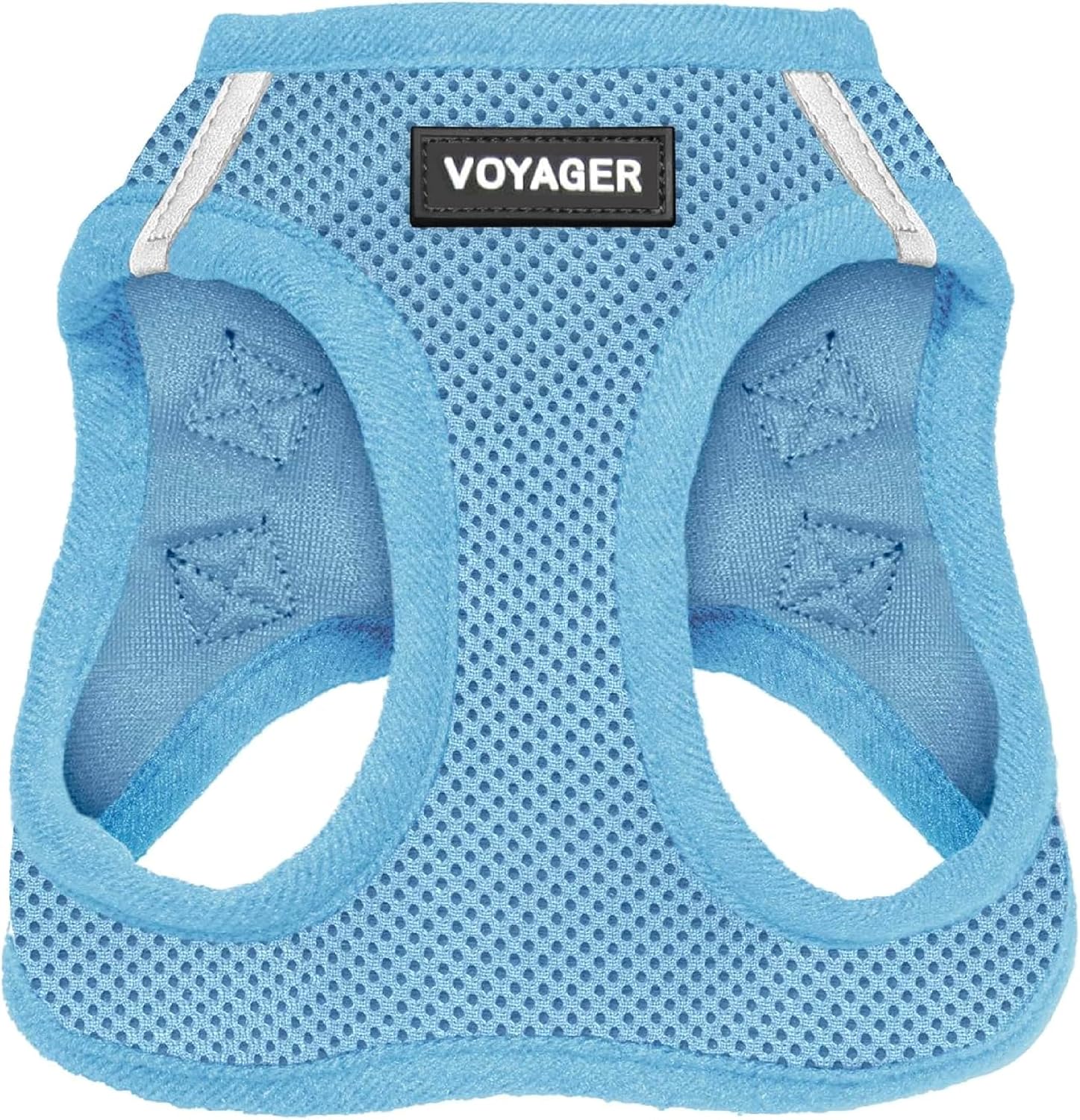
| Material Type | Air mesh |
|---|---|
| Closure Type | Buckle, Double Ring, Hook & Loop |
| Machine Washable | Yes |
| Reflective | Reflective Bands |
| Size (example) | S (Chest: 14.5 – 16") |
The Voyager Step-In Air is a minimal-feel vest harness built from breathable air mesh that aims to keep small dogs comfortable on everyday walks. It is a step-in design with a buckle, hook-and-loop fastener, and double D-rings for leash attachment, so you get a very light package without sacrificing secure connection points. The mesh construction is fast-drying and machine washable, which makes it practical after wet or muddy outings, and reflective bands improve visibility in low light. Because it is targeted at small and medium breeds and lists a narrow weight and chest range, the harness is especially easy to fit on tiny or delicate dogs when you follow the sizing guide. The limitation is that the thin, lightweight mesh and simple hardware are not meant for very strong pullers or large dogs, so expect comfort-focused performance rather than heavy-duty control. For owners who prioritize a barely-there feel with dependable attachment options, this harness is a solid everyday choice.
Best for: Owners of small or delicate dogs who want a barely-there, breathable harness for everyday walks and easy on/off use.
Less Ideal for: People who need a heavy-duty no-pull solution for strong or large dogs should choose a more robust harness with reinforced structure.
- Very lightweight air mesh construction for breathable, all-season comfort
- Step-in design and simple closures make it quick and easy to put on
- Reflective bands increase visibility during low-light walks
- Machine washable and fast-drying material for easy cleaning
- Double D-rings plus buckle and hook-and-loop provide redundant leash attachment
- Not designed for strong pullers or heavy-duty restraint
- Sizing must be measured carefully since sizes are focused on small chest ranges
Verdict: The best lightweight harness minimizes bulk and weight so an energetic Doberman puppy can play and move freely while staying secure.
OneTigris Tactical Dog Harness Medium
Best Heavy-Duty Harness

| Material Type | Nylon |
|---|---|
| Closure Type | Buckle |
| Dog Breed Size | Medium |
| Included Components | Harness |
| Features | MOLLE system, Hook & Loop panels |
The OneTigris Tactical Dog Harness is built for active, working, and outdoorsy dogs that need a durable, supportive vest rather than a simple strap harness. Constructed from 1000D nylon with soft padding across pressure points, it wraps the chest and belly to spread load during walks, hikes, or training sessions. The harness includes four quick-release buckles for secure donning and doffing, a front V-ring for no-pull leash attachment, and a top handle for close control in traffic or brief guidance. MOLLE loops and hook-and-loop panels let you add ID patches or pouches for longer outings. Practical strengths are the robust webbing and hardware designed for long-term use plus breathable mesh lining to limit chafing. Limitations are that the handle is intended for guidance only, not for lifting, and the harness is not chew- or scratch-proof, so it will show wear if heavily abused; getting the correct size requires careful measuring and strap adjustment to avoid rubbing. For owners prioritizing durability and comfort on active outings, this harness balances protection and control well.
Best for: Owners of powerful or highly active dogs who want a rugged, long-wearing harness that offers control, modular attachment options, and padded comfort for outdoor use.
Less Ideal for: Owners who need a lift-rated harness for carrying dogs, or those whose pets are frequent chewers or destructive with gear should consider alternatives designed specifically for lifting or chew resistance.
- Military-grade 1000D nylon construction for abrasion and water resistance
- Soft padded lining and full-wrap design to distribute pressure and reduce chafing
- Front V-ring plus top handle provide options for no-pull control and short-range guidance
- MOLLE webbing and hook-and-loop panels for attaching pouches or ID patches
- Multiple quick-release buckles and adjustable straps for a secure fit
- Not chew- or scratch-proof so durability will decline with heavy chewing or contact with sharp objects
- Top handle is not rated for lifting the dog and should only be used for brief control
Verdict: The best heavy-duty harness uses tougher fabrics and hardware for owners who need extra durability and control during active or rough use.
Choosing the Right Harness Doberman Puppy: Key Factors to Consider
Adjustability and Growth Range
Doberman puppies can change size noticeably week to week, so adjustability is critical. Look for harnesses with multiple adjustment points across the chest and behind the shoulders so you can fine-tune the fit as the puppy grows.
A good adjustment range minimizes the need to replace the harness frequently and helps maintain proper alignment so straps do not ride into the armpits or slip over the shoulders. Check that buckles and sliders operate smoothly and hold position under load, because loose adjustments reduce control and increase chafing risk.
Attachment Points and Control
How and where the leash attaches affects both training outcomes and safety. Front-clip attachments help discourage pulling and redirect forward momentum, while back-clip attachments are comfortable for calm walking and everyday use.
Some harnesses offer both attachment points or an additional handle for short-term close control during recalls or vet visits. Consider your training goals: early leash manners may benefit from a front-clip option, while a secure back-clip option is useful once the puppy is reliably walking without strong pulls.
Padding and Materials
Thin, abrasive straps can chafe a developing coat and sensitive skin, especially under the chest and at strap contact points. Soft but resilient padding around the chest plate and the straps reduces friction and distributes force more evenly if the puppy lunges.
Materials should also be breathable and quick-drying to prevent overheating and skin irritation. Reinforced stitching and abrasion-resistant webbing extend the harness life through rough puppy play and outdoor exposure.
Freedom of Movement and Fit Pattern
A harness should allow natural shoulder and forelimb movement so your puppy can walk, trot, and play without restriction. Harnesses that cross high on the back or pull tightly around the shoulders can impair stride and encourage compensatory gait changes.
Look for a fit that sits low enough on the chest to avoid the throat but high enough not to press into the armpits. Proper fit reduces the chance of rubbing and makes training more comfortable, which helps your puppy learn leash skills faster.
Ease of Use and Quick Adjustments
Puppy owners need fast, reliable gear. Simple on-off buckles, clear adjustment marks, and a low number of separate straps make daily use less frustrating. A harness that is easy to put on and take off reduces stress during walks and vet visits.
Quick-adjust features are especially useful when you need to tighten or loosen the fit between outings, and a convenient top handle can help manage the puppy in crowded situations.
Safety Features and Visibility
High-visibility trim or reflective accents make evening or early-morning walks safer by improving the puppy's visibility to drivers and cyclists. Some harnesses include reinforced attachment points and safety-rated hardware for added durability under sudden pulls.
Consider harnesses with secure buckles and sewn-in reinforcements where the leash connects, because weak attachment hardware can fail under stress. Visibility and reliable hardware together reduce risk during active outdoor time.
How Should a Harness Fit a Young Doberman Puppy?
A properly fitting harness should sit snug without compressing the chest or restricting limb motion. You should be able to slide two fingers under any strap comfortably; more than that means the harness is too loose and could allow slipping, while less indicates it is too tight and may chafe or restrict breathing.
Check fit in several positions: standing, sitting, and walking. Observe whether the straps move into the armpits or ride up toward the throat when the puppy turns or pulls. If you see rubbing, reposition the straps or choose a different fit pattern that keeps load-bearing components across the chest and shoulders rather than the neck.
- Two-finger rule for strap tightness
- Test while the puppy moves and sits
- Watch for strap migration into armpits or throat
When Should I Switch Sizes as My Doberman Puppy Grows?
Monitor fit weekly during rapid growth phases. If adjustments are at their maximum and you cannot tighten further without causing rubbing, it is time to move to the next size. Also replace the harness if the chest plate no longer covers the proper area or straps pass the recommended adjustment limits.
A harness that still fits but sits very loosely after growth spurts can cause instability; that instability increases the chance of the puppy escaping or developing poor leash habits. Planning for the next size and checking measurements against the harness manufacturer's sizing guidance helps you avoid sudden fit problems.
- Check weekly during growth spurts
- Replace when adjustments reach their limit
- Verify chest coverage and strap alignment
Which Attachment Setup Is Best for Training a Doberman Puppy Not to Pull?
Front-clip attachments change the direction of a pulling dog and can be effective for early training by encouraging the puppy to turn toward you when it lunges. They work best combined with consistent leash cues and positive reinforcement so the puppy learns rewarded behaviors rather than simply being redirected.
A dual-clip harness offers versatility: use the front clip for structured training sessions and the back clip for casual walks once behavior improves. For moments requiring immediate control, a top handle lets you temporarily restrain the puppy close to your body without grabbing the leash.
- Front clip for redirecting pulls
- Back clip for calm, everyday walking
- Top handle for close control when needed
How Do I Prevent Chafing and Hot-spot Formation Under the Harness?
Choose a harness with soft, wide padding across pressure points and straps that avoid concentrated edges. Groom the coat and check the skin beneath padding areas regularly, especially after long walks or high-activity play sessions. If you notice redness, trim sessions and temporary rest from harness use can help the skin recover.
Cleaning the harness regularly prevents sweat, dirt, and debris buildup that worsens rubbing. Alternate between harnesses if your puppy is prone to sensitive skin so each harness has time to dry fully between uses.
- Soft, wide padding reduces friction
- Inspect skin after activity
- Rotate and clean harnesses to prevent buildup
Is a Handle Useful on a Puppy Harness and when Should I Use It?
A short, reinforced handle on the back of the harness is useful for close control during vet visits, crossing streets, or safely lifting the puppy into a car. It gives you immediate leverage without tugging on the leash or the puppy's neck.
Use the handle sparingly so the puppy does not become reliant on being carried or restrained for short distances. Frequent lifting from the handle can encourage dependency rather than improving walking behavior.
- Useful for quick, safe restraint
- Not a replacement for leash-based training
- Use sparingly to avoid reliance
What Material Care Extends the Life of a Puppy Harness?
Follow the manufacturer's cleaning instructions, but in general hand washing with mild detergent and air drying preserves padding and webbing more than machine washing. Remove dirt and salt after walks in wet or salted conditions to avoid premature fabric breakdown.
Inspect hardware and stitching periodically. Repair or retire a harness with frayed webbing, cracked buckles, or loose stitching to maintain safety margins. Proper storage away from damp, hot environments also helps preserve the materials.
- Hand wash and air dry when possible
- Rinse off salt and dirt after wet walks
- Inspect hardware and stitching regularly
How We Chose the Best Harness Doberman Puppy
We focused on selection criteria that matter for rapidly growing, strong-boned puppies with high energy. Primary evaluation factors included adjustability range to accommodate quick growth, restraint and leash attachment options that reduce neck pressure, padding and materials that resist rubbing on the chest and armpits, and overall construction durability suitable for a powerful breed. We also prioritized harnesses with intuitive fit patterns that make daily use and training easier, plus weight and breathability considerations for hot-weather comfort. For this list, we excluded harnesses designed only for adult or giant breeds where sizing and fit cannot be reliably adapted for a puppy. We also set aside novelty or fashion-only harnesses that lack structural support for control. Final selections reflect a balance of secure fit, protection against chafing, ease of adjustment, and durable materials that endure puppy activity and growth.
Our full evaluation process is outlined in our review methodology.
FAQ
Can I use a harness from a smaller-breed puppy on a Doberman puppy?
It depends on the harness size and construction. Small-breed harnesses are often narrower and use weaker hardware that may not distribute force properly for a Doberman puppy. Choose a harness sized and rated for medium-to-large puppies to ensure safe load distribution and durable attachment points.
Is it okay to use a harness all day for a Doberman puppy?
Wearing a harness continuously is not recommended. Give the skin and coat regular breaks to prevent rubbing and allow ventilation. Use the harness for walks, training, and outings, and remove it during rest, feeding, and supervised indoor time.
How many adjustment points should a puppy harness have?
Three to five adjustment points are common and useful: at least one across the chest and one behind each shoulder. More adjustment points help achieve a customized fit as the puppy grows, but they should be easy to operate and secure under load.
Will a front-clip harness teach my Doberman puppy not to pull by itself?
No. A front-clip harness can aid training by redirecting momentum, but it works best alongside consistent leash cues, positive reinforcement, and gradual training exercises. Relying on the harness alone is unlikely to produce lasting behavior change.
What signs indicate the harness is causing discomfort?
Look for repeated scratching at the harness, visible redness or hair loss under straps, reluctance to move, or changes in gait. These signs suggest fit or material issues and should prompt immediate adjustment or a switch to a different harness design.
Final Verdict
Prioritize adjustability, a fit pattern that protects the throat and armpits, and durable, comfortable materials when choosing a harness for a Doberman puppy. Training goals and control needs will determine whether a front-clip, back-clip, or dual-clip setup is most useful, and a small handle adds short-term control options without replacing leash training. Balance growth accommodations against immediate comfort: choose a harness that lets you fine-tune fit as the puppy matures, inspect it regularly for wear, and be prepared to replace it when adjustments reach their limits. With the right priorities you can support safe walks and steady leash training through the puppy stages.

