

Finding the right harness matters more when your dog is deaf because you rely on tactile cues, leash guidance, and visual signaling rather than sound. A harness designed with secure fit, easy attachment points, and durable materials can make walks, outings, and training sessions safer and less stressful for both of you. This guide lists seven top harnesses shortlisted for deaf dogs and explains the evaluation criteria we used. Read on to learn which harness features help with control, comfort, and reliable handler communication so you can pick the best option for daily walks and training transitions.
Top Picks at a Glance
| Best Overall Harness for Deaf Dog The best all-around harness balancing control, comfort, and fit | rabbitgoo No Pull Dog Harness Large |  |
| Best Budget Harness for Deaf Dog A low-cost harness that still delivers basic function and safety | Bolux No-Pull Dog Harness Small |  |
| Best Premium Harness Higher-end materials and refined features for long-term comfort and durability | Ruffwear Flagline Dog Harness Medium |  |
| Best No-Pull Harness Designed to reduce pulling with front-attachment leash control points | PetSafe Easy Walk Harness Medium |  |
| Best Adjustable Harness Multiple adjustment points for a custom fit across body shapes | AUROTH Tactical Dog Harness Large |  |
| Best Lightweight Harness Minimal, breathable design that keeps active dogs comfortable all day | Best Pet Supplies Voyager Step-In Air Harness Small |  |
| Best Reflective Harness Built-in reflective trim for better nighttime visibility and safety | Dogline Quest No-Pull Dog Harness |  |
rabbitgoo No Pull Dog Harness Large
Best Overall Harness for Deaf Dog

| Dog Breed Size | Large |
|---|---|
| Weight Range | 15-45 kg |
| Closure Type | Buckle |
| Material Type | Polyester |
| Size | Large |
The rabbitgoo No Pull Dog Harness is a step‑over vest-style harness built for everyday walks and basic training with medium to large breeds. It uses a front chest clip to help redirect forward motion when a dog lunges and a rear D-ring for casual walking or jogging, plus two metal leash attachments for versatile control. The harness is made from polyester oxford with padded air-mesh lining to reduce chafing and keep dogs cooler during activity, and reflective strips improve visibility in low light. Four adjustable straps and quick-release buckles let you fine-tune the fit, while a top handle gives instant lift or extra control getting in and out of vehicles. Practical limits are its non-chewproof construction and that very strong pullers may need a more specialized training harness or head halter; accurate sizing is important because the vest design can shift on dogs with unusual body shapes. For most owners seeking a comfortable, durable, and easy-to-adjust no-pull option for everyday walks, this covers the essentials well.
Best for: Owners of medium to large active dogs who want a comfortable, easy-to-adjust harness that provides reliable no-pull control for daily walks and light training.
Less Ideal for: People who need a heavy-duty, chewproof restraint or handlers working with extremely strong pullers who require professional training tools.
- Front chest clip redirects forward momentum for basic no-pull control
- Padded air-mesh lining offers breathable comfort and reduces rubbing
- Two metal leash attachments (front and back) for training and everyday use
- Multiple adjustment points and quick-release buckles make fitting and removal fast
- Reflective strips and top handle add safety and short-term lift/control
- Not designed to resist chewing or heavy abrasion
- May not fully stop very strong, sustained pullers without additional training
Verdict: The best overall harness for a deaf dog, offering dependable control, comfortable fit, and features that make everyday walks and signal training easier for owners.
Bolux No-Pull Dog Harness Small
Best Budget Harness for Deaf Dog
| Closure Type | Buckle |
|---|---|
| Dog Breed Size | Small |
| Weight Range | 11-20 lbs |
| Material Type | Polyester |
| Product Care Instructions | Machine Wash |
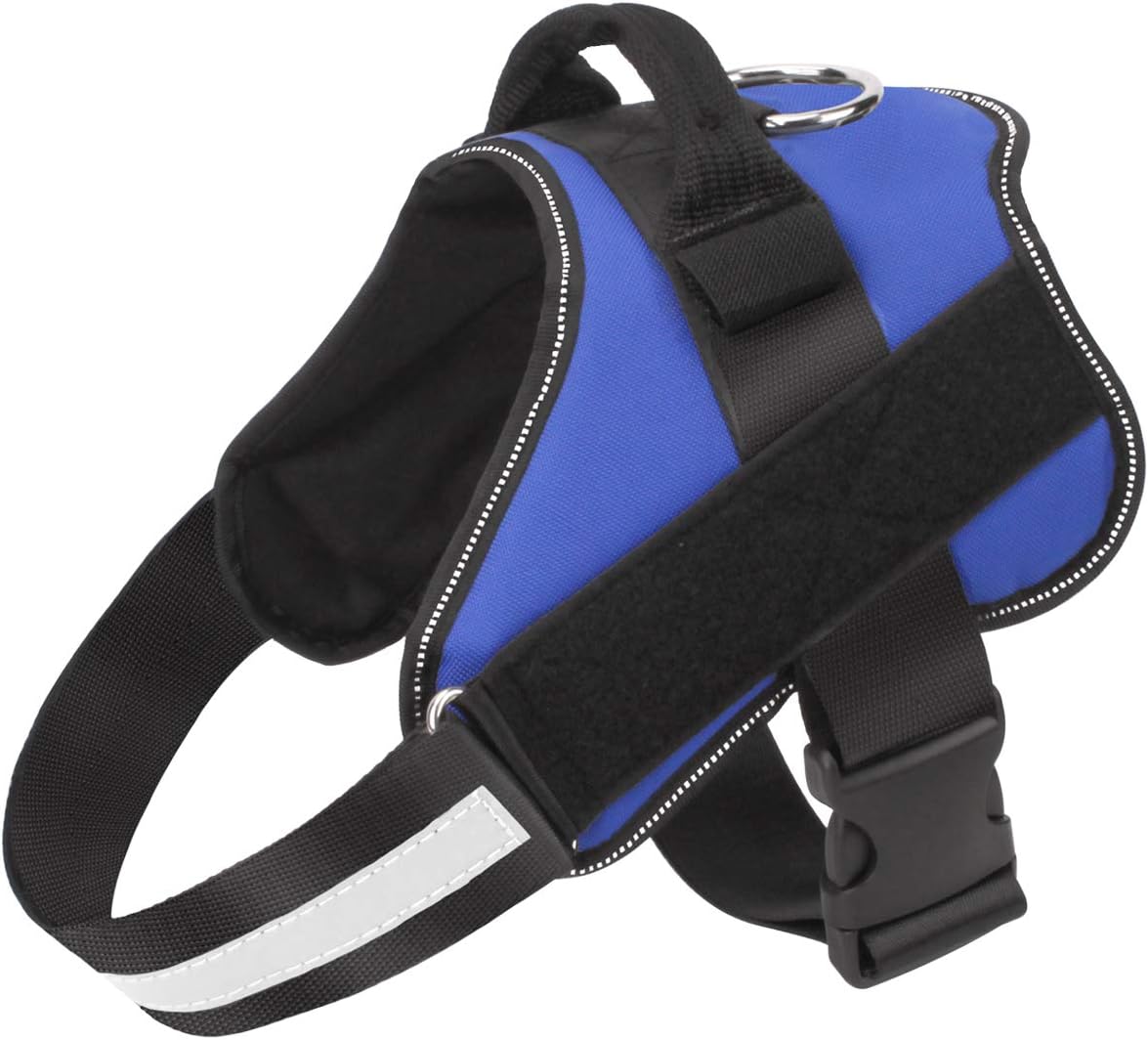
The Bolux no-pull dog harness is a vest-style harness intended to reduce pulling by distributing pressure across the dog's chest and body while providing a secure attachment point for a leash. It is typically used for daily walking, light training sessions and outdoor activities where control and visibility matter. Notable features include an adjustable chest strap with a snap-on buckle, a sturdy nylon top handle for close control, a D-ring for leash attachment and reflective trim for low-light visibility. The breathable polyester construction and machine-washable care instructions make it easy to clean after muddy walks. As a budget option it delivers the core training functions—no-pull design, handle control and reflective safety—without premium padding or heavy-duty hardware, so it works best for small dogs in the 11 to 20 pound range rather than heavy pullers. Sizing can feel fiddly on dogs near the upper or lower end of the size range, so measure carefully before buying.
Best for: Buyers who prioritize practical training features and visibility on a tight budget and need a simple, functional harness for small dogs.
Less Ideal for: Anyone with a large dog, a strong puller, or who wants heavy padding and heavy-duty hardware for rugged use should consider a sturdier, higher-end harness.
- No-pull vest design spreads pressure to reduce choking.
- Reflective trim increases visibility on early morning or evening walks.
- Top nylon handle gives quick close control for training or crowded areas.
- Machine-washable polyester makes cleanup simple.
- Adjustable chest strap with snap buckle allows basic fit customization.
- Not built for strong pullers or large dogs due to light hardware and slim construction.
- Limited padding compared with premium harnesses, which may be less comfortable on long hikes.
Verdict: The best budget harness for a deaf dog that provides reliable fit and control at a low price without unnecessary bells and whistles.
Ruffwear Flagline Dog Harness Medium
Best Premium Harness

| Material Type | Polyester |
|---|---|
| Leash Attachment Points | 3 |
| Adjustment Points | 6 |
| Item Weight | 6.88 ounces |
The Ruffwear Flagline is a low-profile, adventure-oriented harness built to keep active dogs comfortable while giving owners control. It sits close to the body with a debris-resistant liner and six adjustment points so you can fine-tune fit for walks, hikes, or runs. The harness includes a padded top handle and reinforced belly panel for lift and assist tasks like getting a dog into a car or over obstacles, and three leash attachment points (V-ring on back plus two front/rear loops) let you switch between no-pull guidance and rear‑clip walking. Construction uses durable polyester with thoughtful reinforcement at stress points, so it feels like a premium, long-lasting piece of gear rather than a lightweight fashion harness. Trade-offs are that the minimalist cut prioritizes mobility over heavy-duty load carrying, so it is not meant as a full body lift for injured dogs or very large working loads, and buyers should follow the sizing guidance carefully to avoid fit issues. For owners who want a refined, durable harness for regular outdoor activity, the Flagline balances comfort, control, and build quality well.
Best for: Owners who prioritize long-lasting materials, refined fit, and mobility for frequent outdoor activity and want a harness that performs consistently on hikes, runs, and everyday adventures.
Less Ideal for: People who need a harness primarily for heavy-duty lifting, rehabilitation support, or to restrain very large powerful dogs during vehicle transport should consider a more supportive model.
- Lightweight, low-profile design that preserves mobility during hikes and runs
- Six adjustment points for a customized, stay-put fit across different body shapes
- Padded top handle and reinforced belly panel for confident lift and assist
- Three leash attachment points for versatile control and no-pull training
- Debris-resistant liner and durable polyester construction for long-term outdoor use
- Not designed for heavy full-body lifting or sustained load bearing
- Minimalist profile means less padding and coverage compared with full-coverage support harnesses
Verdict: The best premium harness for owners who want top-quality materials, superior padding, and refined hardware for a more comfortable, long-lasting fit.
PetSafe Easy Walk Harness Medium
Best No-Pull Harness

| Material Type | Nylon |
|---|---|
| Closure Type | Buckle |
| Dog Breed Size | Medium |
| Product Care Instructions | Machine Wash |
The PetSafe Easy Walk Harness is a front-clip halter-style harness that helps stop pulling by redirecting force to the chest and shoulders rather than the neck. It uses a patented martingale loop on the front that tightens gently when a dog lunges, making it useful for training and controlled walks, while a back clip offers a conventional leash attachment for regular outings. The harness is lightweight with less coverage than fuller-coverage designs, which makes it breathable and comfortable for long walks or hikes, and quick-snap shoulder straps plus a contrasting belly strap make it fast to put on correctly. Constructed from nylon and machine washable, it is durable for daily use but lacks padding for dogs that prefer softer contact and offers only manual adjustment rather than more advanced fitting hardware. For most owners seeking a simple, reliable no-pull solution that is easy to use and durable, this harness balances function with convenience.
Best for: Buyers who prioritize a harness that is fast to put on, reliable at reducing pulling, and durable enough for daily walks and basic training.
Less Ideal for: Owners who need heavy-duty padding for very sensitive dogs or who want a harness with extensive micro-adjustment or specialty features for advanced activities.
- Front martingale loop and front leash clip that redirect pulling away from the neck
- Lightweight, low-coverage design that stays breathable on long walks
- Quick-snap shoulder straps and contrasting belly strap speed up correct fitting
- Nylon construction and machine washable for easy cleaning and everyday durability
- No padded straps so contact points can feel firm on sensitive dogs
- Fit adjustments are basic rather than highly fine-tunable
Verdict: The best no-pull harness for owners who need better leash control and gentle redirection to manage pulling without causing discomfort.
AUROTH Tactical Dog Harness Large
Best Adjustable Harness

| Material Type | Breathable Air Mesh with Soft Padded Cotton Cushion, Nylon |
|---|---|
| Weight Range | 45-80 lbs |
| Closure Type | Buckle |
| Size | L (Neck:18-29", Chest:24-37") |
This vest-style harness is built for active, strong dogs and everyday outdoor use. It combines breathable padded mesh with durable nylon oxford and reinforced stitching, giving a comfortable fit while resisting wear from pulling and rough play. The harness is secured with two quick-release buckles and four adjustment points to fine-tune neck and chest fit, and it offers both front and back metal leash attachment rings for no-pull training and regular walks. A reinforced top handle helps with short-term control in crowds or over obstacles, and reflective trim increases visibility on low-light outings. The MOLLE-style panels and Velcro area accept patches or accessories, which is handy for working dogs or longer hikes. Limitations to note are that sizing runs broad so measuring carefully is important, and the heavy-duty materials add weight compared with minimalist harnesses, which may be noticeable on smaller or low-energy dogs.
Best for: Buyers who need a rugged harness that still prioritizes dog comfort—people with powerful, active, or working large dogs who want durable materials plus padding and control features.
Less Ideal for: Owners of very small breeds, elderly dogs with low mobility, or anyone seeking a minimalist lightweight harness focused only on short neighborhood walks.
- Durable construction with reinforced stitching and strong metal leash rings for heavy use
- Padded breathable mesh and multiple adjustment points for a secure, comfortable fit
- Front and back leash attachment for training no-pull behavior and casual walking
- Sturdy top handle provides immediate control in crowded or hazardous situations
- Reflective strips and MOLLE/Velcro panel for visibility and accessory attachment
- Heavier and bulkier than simple webbing harnesses, which may not suit very small or low-activity dogs
- Sizing requires careful measurement to get the correct fit for large-breed shapes
Verdict: The best adjustable harness for dogs that need fine-tuned fitting—ideal when you want to dial in comfort and prevent rubbing or slipping.
Best Pet Supplies Voyager Step-In Air Harness Small
Best Lightweight Harness

| Material Type | Air mesh |
|---|---|
| Closure Type | Buckle, Double Ring, Hook & Loop |
| Weight Range | 10 lbs – 14 lbs |
| Pet Type | Dog |
| Product Care Instructions | Machine Wash |
The Voyager Step-In Air is a low-profile, breathable vest harness built for small dogs and warm-weather walks. It uses soft air mesh that dries quickly and keeps dogs comfortable on hot days, while the step-in design and simple buckle closure make it fast to put on and take off. The harness includes reflective bands for improved visibility during low-light walks and double D-rings plus a hook-and-loop panel and buckle for redundant security when attaching a leash. Because it is designed specifically for smaller breeds and lighter weight ranges, it feels minimally bulky and lets active pups move naturally without overheating. Expect an easy-care product too since the mesh is machine-washable. The main limitation is sizing: the fit relies on measuring chest circumference rather than breed or weight, so precise measurement is important to avoid chafing or a loose fit, and this harness is not intended for large or very strong pullers.
Best for: Buyers who want a minimal, breathable harness for small dogs or hot-weather walks and prioritize comfort and low bulk over heavy-duty control.
Less Ideal for: People needing a heavy-duty no-pull solution for large or strong dogs or those who prefer harnesses sized by weight or breed rather than chest measurement.
- Very lightweight breathable air mesh keeps dogs cool in hot weather
- Step-in design and simple buckle make it fast and easy to put on
- Reflective bands increase visibility for early morning or evening walks
- Multiple attachment and closure points (hook-and-loop, buckle, double D-rings) add security
- Machine washable for easy cleaning
- Sizing is chest-measurement dependent so requires careful measuring to get the right fit
- Not built for large dogs or heavy pullers
Verdict: The best lightweight harness for active or heat-sensitive dogs that need low bulk and breathable materials while retaining secure control.
Dogline Quest No-Pull Dog Harness
Best Reflective Harness

| Size | Girth 21 to 25" |
|---|---|
| Material Type | Neoprene |
| Closure Type | Buckle |
| Pet Type | Dog |
The Dogline Quest is a vest-style no-pull harness built for everyday walks and low-light visibility. Its patented Easy Control design spreads pressure across the chest and torso, using a centralized back leash attachment and a front O-ring to reduce pulling without choking. The neoprene outer is quick-drying and breathable, which makes the harness suitable for wet conditions and frequent outdoor use, while reflective trim and large removable "DEAF DOG" patches improve nighttime visibility and communication with passersby. Practical touches include solid D-rings, dual-retention quick-release buckles for easy on/off, and a top handle to quickly restrain or lift a dog. Fit is adjustable at chest and neck for a closer custom fit, but buyers should check girth measurements carefully since the harness is sized by chest circumference. The fabric care requires hand washing, and the neoprene style adds some bulk compared with lightweight strap harnesses. For owners who need high visibility and a stable no-pull option, this harness balances durability and safety features in real-world use.
Best for: Owners who walk in low-light or mixed-weather conditions and prioritize making their dog highly visible and easy to control during outings.
Less Ideal for: People who prefer ultra-lightweight, minimalist harnesses or who want a machine-washable fabric for frequent laundering.
- Reflective trim and large removable "DEAF DOG" patches for improved night visibility and clear communication to others
- Patented Easy Control shape and dual leash points reduce pulling while distributing pressure across the torso
- Quick-drying neoprene construction works well for wet-weather or active dogs
- Solid D-rings and dual-retention buckles offer durable hardware and easy on/off
- Top handle gives a secure grab point to restrain or assist the dog quickly
- Requires hand washing for care rather than machine-wash convenience
- Neoprene vest is bulkier than minimal strap-style harnesses
Verdict: The best reflective harness for owners who walk in low-light conditions and want improved visibility to keep their dog safer near traffic.
Choosing the Right Harness Deaf Dog: Key Factors to Consider
Secure Fit and Adjustability
A secure fit prevents a deaf dog from slipping out of the harness when startled or excited. Multiple adjustment points let you fine-tune the harness to your dog's exact proportions, which matters for breeds with deep chests or narrow necks.
Adjustability also affects comfort. A harness that rides up or rubs will make your dog resistant to wearing it, undermining training and safety. Look for straps that stay in place and buckles that hold securely without loosening from motion.
Leash Attachment Options
Having both front- and back-clip options gives you versatility for different situations. A front-clip attachment helps redirect pulling and offers better steering during training or close control, while a back-clip provides a straightforward point for calm walking.
For deaf dogs, consider how leash placement interacts with tactile cues. A front-clip can make gentle directional pressure more noticeable through the harness, and multiple D-rings let you switch quickly between styles without swapping gear.
Padding and Pressure Distribution
Padding helps distribute pressure across the chest and shoulders instead of concentrating it on a thin strap. This reduces the risk of chafing and makes tactile cues more comfortable for the dog to receive.
Well-placed padding also prevents pinching when a leash correction occurs and helps maintain a stable, consistent contact point so the dog learns to respond to handler signals without discomfort.
Durability and Hardware Quality
Durable fabrics and strong hardware are essential because repeated tugs and outdoor exposure accelerate wear. Look for solid stitching, reinforced stress points, and corrosion-resistant metal or heavy-duty plastic buckles.
Weak hardware risks failure during a sudden pull, which is especially hazardous when the dog cannot hear approaching dangers. Long-lasting materials also mean the harness will hold its fit and function over months of regular use.
Visibility and Accessory Attachment
Visibility is important when you cannot rely on vocal recalls. Reflective trim, bright colors, and places to clip LED lights or ID tags help others notice your dog and make you more visible during low-light outings.
Accessory attachment points let you add signaling tools such as lightweight flags or tactile tags so you can deliver consistent cues. Easy-to-reach points for lights and tags increase safety without interfering with handling.
Ease of Application and Handler Ergonomics
A harness that is quick to put on and take off reduces stress for both dog and handler. Simple, well-placed buckles and intuitive step-in or overhead designs are useful when you need to secure the dog quickly before a walk.
Ergonomic design also helps handlers deliver consistent tactile communication. Handles placed near the shoulder blades and smooth strap routing enable confident, controlled guidance without awkward gripping positions.
How Do I Use Tactile Cues with a Harness for a Deaf Dog?
Tactile cues rely on consistent, gentle pressure delivered through the leash or harness so the dog associates the sensation with specific behaviors. Start with low-intensity signals: a short, steady pressure for attention and a light directional pull for turning. Pair the tactile cue with a visual prompt like a hand signal or body positioning so the dog learns the association.
Practice in a quiet, familiar area and reinforce correct responses immediately with a treat, toy, or positive touch. Over time you can reduce the intensity of the tactile cue while keeping it consistent so the dog responds to minimal pressure.
- Use short, consistent leash tugs for attention, not sharp jerks
- Combine leash pressure with hand signals for clearer communication
- Start training in low-distraction spaces and gradually add complexity
Which Harness Style Is Best for Steering and Reducing Pulling?
Front-clip harnesses work well for steering because the attachment point redirects forward momentum toward the handler. This makes it easier to change the dog's direction with less force. For deaf dogs, this style can make directional cues more noticeable through the harness geometry.
If your dog does not pull much, a back-clip harness provides straightforward control and is often simpler for casual walks. Some harnesses offer convertible clips so you can switch depending on the situation.
- Front-clip for training and steering
- Back-clip for calm, everyday walks
- Convertible options for flexibility
How Should a Harness Fit a Deaf Dog Differently than a Hearing Dog?
Fit principles are similar, but with deaf dogs you may prioritize extra security to compensate for their inability to hear warning sounds. A snug but comfortable fit prevents backing out and keeps contact points consistent for tactile cues.
Avoid overly tight straps that restrict movement or breathing. Ensure the harness does not sit on the windpipe and that you can fit two fingers between the harness and your dog's body at key points. Recheck fit after a few sessions because padding can compress and straps can shift.
- Check chest and neck clearances regularly
- Ensure straps lie flat and do not rub
- Adjust after initial wear to maintain a secure fit
What Features Help when Walking in Low-light or Busy Areas?
Choose a harness with reflective panels or brightly colored fabric to improve visibility. Attachment points for LED lights or clip-on reflectors make your dog more noticeable to drivers, cyclists, and other pedestrians.
A handle on the back near the shoulders lets you gain quick control in crowded places. Consider materials that stay visible when wet or dirty to maintain safety during all-weather walks.
- Reflective trim and bright panels increase visibility
- Handle near shoulder blades for emergency control
- Dedicated loops for lights and ID tags
How Do I Measure My Dog to Ensure the Best Harness Size?
Measure the widest part of the chest behind the front legs and the base of the neck where a collar would sit. Record both measurements and compare them to the sizing guide for each harness style you consider.
If your dog is between sizes, choose the size that allows the most adjustability without being loose. Keep track of weight and body changes, especially during growth or seasonal weight fluctuation, and remeasure periodically to maintain a safe fit.
- Chest girth is the most important measurement
- Compare measurements to manufacturer sizing charts
- Allow room for growth or seasonal weight changes
How We Chose the Best Harness Deaf Dog
We focused selection on features that directly affect safety, control, and nonverbal communication for deaf dogs. Primary evaluation criteria included secure fit and adjustability to prevent slipping or backing out; leash attachment options that allow both front- and back-clip use for different control strategies; material durability and hardware quality to withstand tugging and frequent wear; padding and seam placement to protect sensitive skin and reduce chafing; and visibility and attachment points for reflective trim or signaling accessories. We also considered ease of use for handlers, including quick-on/off designs and intuitive buckles that make handling easier during walks or emergent situations. Fit range and sizing accuracy were checked so owners of different body shapes and breeds can find a stable fit. Products that lacked adequate adjustability, had weak stitching, or offered minimal attachment options were excluded. We did not include products without durable hardware or with materials known to abrade skin. Our choices prioritize harnesses that support clear tactile and visual cues while keeping the dog comfortable and secure.
Our full evaluation process is outlined in our review methodology.
FAQ
Can a harness help substitute for voice commands with a deaf dog?
Yes. A harness allows you to deliver clear tactile and directional cues via leash pressure and body positioning. When paired with consistent visual signals and training, harness-based cues become reliable alternatives to voice commands.
Is a handle on the harness necessary for deaf dogs?
A handle is not strictly necessary but is highly useful. It gives quick, secure control in busy or potentially dangerous situations and helps when you need to guide the dog at close range without relying on vocal cues.
How often should I check harness fit on a deaf dog?
Check fit before each outing and after a few wears because straps can shift and padding can compress. Reassess sizing during weight changes or seasonal coat variations to ensure the harness remains snug and secure.
Are front-clip harnesses painful for dogs when used for training?
Front-clip harnesses are not inherently painful when used correctly. The key is to use gentle, consistent pressure and avoid sharp jerks. Proper padding and fit will distribute force and reduce the risk of discomfort.
What should I do if my deaf dog tries to back out of the harness?
Ensure the harness fits correctly with all adjustment points tightened to eliminate slack. Try a design with more coverage across the chest and torso, and practice positive reinforcement so the dog remains comfortable and cooperative while wearing the harness.
Final Verdict
When choosing a harness for a deaf dog, prioritize secure fit, multiple attachment options, and comfort. Those elements make tactile communication safer and more effective, so your dog responds to directional and pressure-based cues without discomfort. Consider visibility and durable hardware as secondary priorities that improve safety during daily walks. Balance the tradeoffs between control and comfort by testing adjustability and attachment styles. With the right harness, you can reduce stress during outings and build a clear, consistent nonverbal communication system that keeps your deaf dog safe and confident.

