

If your dog freezes, tugs, or shies away when you try to put on a harness, choosing the right design makes a huge difference for daily walks and confidence-building. A harness for a scared dog should prioritize an easy, low-stress fit, soft contact points, and control features that do not escalate fear. This guide shortlists the top picks in this category and explains the practical tradeoffs you should expect. We evaluated each option for ease of use, calming features, and how well it distributes pressure. Read on to find harness styles and setup tips that help nervous dogs feel safer and let you manage walks more confidently.
Top Picks at a Glance
| Best Overall Harness The best all-around harness that suits most anxious dogs | PHOEPET No Pull Dog Harness Medium |  |
| Best Budget Harness A low-cost harness that still offers basic comfort and security | Bolux No-Pull Dog Harness Small |  |
| Best Calming Harness A design focused on gentle pressure and soothing, secure fit | Best Pet Supplies Voyager Step-in Plush Harness S |  |
| Best Escape-Proof Harness Built to prevent slipping out or backing free from restraints | ZEEMIAS Plaid Puppy Harness M |  |
| Best No-Pull Harness Features front-clip or control points to minimize pulling on walks | PetSafe Easy Walk Harness Medium |  |
| Best Lightweight Harness Minimal, soft materials for sensitive dogs who dislike bulk | matilor Step-In Dog Harness Medium |  |
| Best Premium Harness Higher-end materials and construction for long-term comfort and durability | Ruffwear Front Range Dog Harness Medium |  |
PHOEPET No Pull Dog Harness Medium
Best Overall Harness

| Size | Medium |
|---|---|
| Closure Type | Buckle |
| Material Type | Oxford Cloth Nylon Fabric |
| Care | Hand Wash Only |
The PHOEPET No Pull Dog Harness is a vest-style harness designed to reduce pulling by offering both a front chest clip and a back clip, plus a soft training handle for close control. It is typically put on using three quick-release buckles so you do not have to pull it over the dog's head, and the adjustable straps let you fine-tune fit for medium dogs. Reflective trim improves visibility on low-light walks and two metal leash rings give you the option to prioritize steering with the front clip or casual walks with the back clip. The harness is made from oxford cloth and nylon with POM buckles and is hand-washable, which keeps it lightweight and easy to clean but means the fabric and buckles are simpler than heavy-duty tactical gear. Practical limits include a medium sizing focus that requires checking measurements for stocky or short-neck breeds and a simpler buckle and strap system that may not suit extremely strong pullers without training. For French bulldogs, the front clip plus padded handle make managing short, powerful lunges easier while keeping control comfortable for the handler.
Best for: Owners who need stronger steering and pull reduction on daily walks and want a harness that is quick to put on, visible in low light, and easy to control at close range.
Less Ideal for: Handlers who require heavy-duty, service-grade hardware or precise custom fit for unusually shaped dogs should consider sturdier or specialty harnesses.
- Front and back metal leash attachment points for reduced pulling and steering control
- Three quick-release buckles allow easy on/off without going over the head
- Reflective material improves visibility on evening or early-morning walks
- Soft top handle gives short-distance control and helps lift or steady the dog
- Lightweight, hand-washable oxford nylon construction is easy to maintain
- Medium sizing may not accommodate very stocky or very short-necked French Bulldogs without careful measuring
- Materials and buckles are lightweight and not intended for heavy-duty or working-dog demands
Verdict: The best overall harness for scared dogs that balances comfort, security, fit adjustability, and ease of use for everyday walks and vet trips.
Bolux No-Pull Dog Harness Small
Best Budget Harness
| Closure Type | Buckle |
|---|---|
| Dog Breed Size | Small |
| Weight Range | 11-20 lbs |
| Material Type | Polyester |
| Product Care Instructions | Machine Wash |
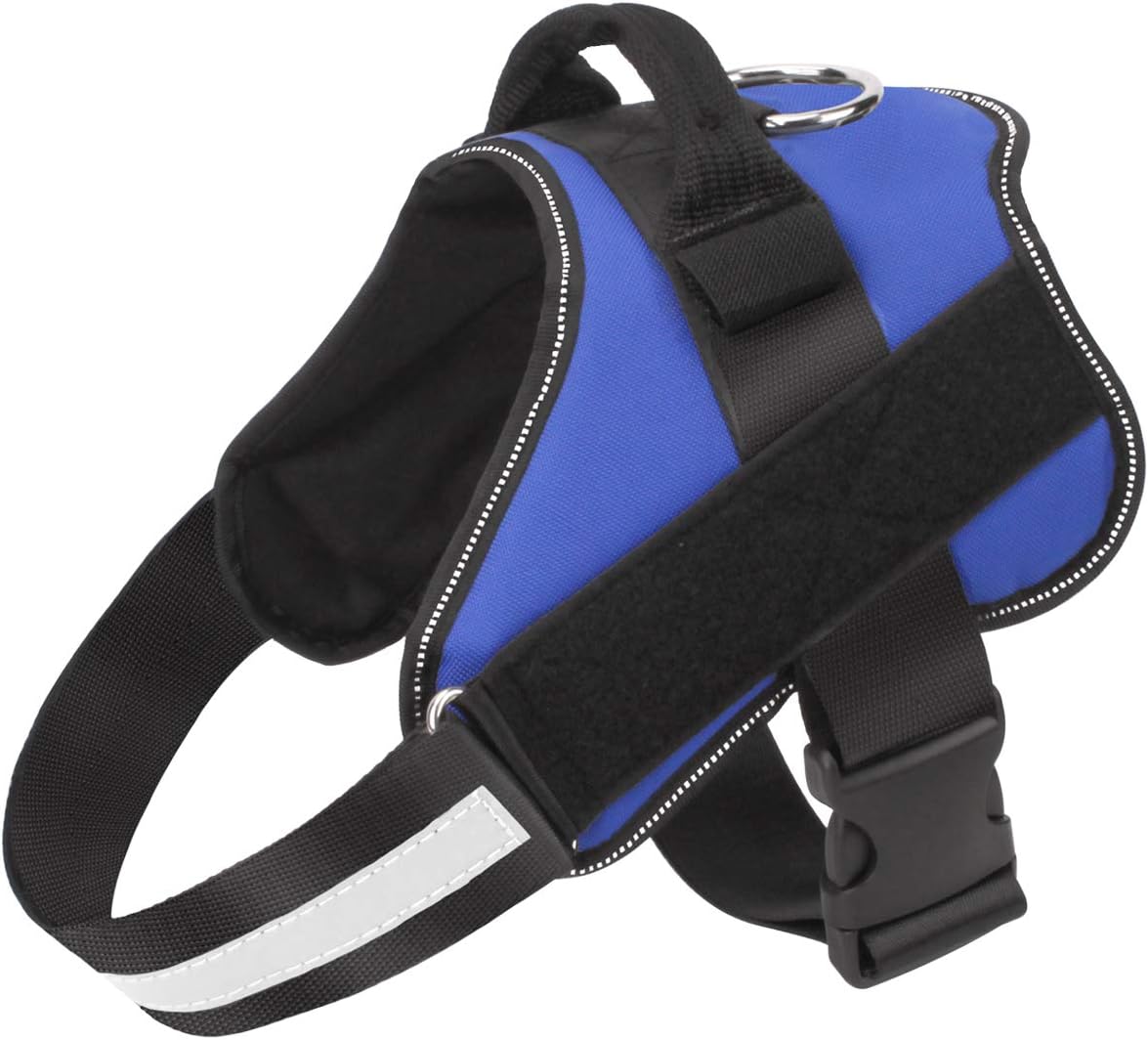
The Bolux no-pull dog harness is a vest-style harness intended to reduce pulling by distributing pressure across the dog's chest and body while providing a secure attachment point for a leash. It is typically used for daily walking, light training sessions and outdoor activities where control and visibility matter. Notable features include an adjustable chest strap with a snap-on buckle, a sturdy nylon top handle for close control, a D-ring for leash attachment and reflective trim for low-light visibility. The breathable polyester construction and machine-washable care instructions make it easy to clean after muddy walks. As a budget option it delivers the core training functions—no-pull design, handle control and reflective safety—without premium padding or heavy-duty hardware, so it works best for small dogs in the 11 to 20 pound range rather than heavy pullers. Sizing can feel fiddly on dogs near the upper or lower end of the size range, so measure carefully before buying.
Best for: Buyers who prioritize practical training features and visibility on a tight budget and need a simple, functional harness for small dogs.
Less Ideal for: Anyone with a large dog, a strong puller, or who wants heavy padding and heavy-duty hardware for rugged use should consider a sturdier, higher-end harness.
- No-pull vest design spreads pressure to reduce choking.
- Reflective trim increases visibility on early morning or evening walks.
- Top nylon handle gives quick close control for training or crowded areas.
- Machine-washable polyester makes cleanup simple.
- Adjustable chest strap with snap buckle allows basic fit customization.
- Not built for strong pullers or large dogs due to light hardware and slim construction.
- Limited padding compared with premium harnesses, which may be less comfortable on long hikes.
Verdict: The best budget harness for scared dogs that provides reliable fit and gentle control without a high price, ideal for owners on a tight budget.
Best Pet Supplies Voyager Step-in Plush Harness S
Best Calming Harness

| Material Type | Polyester |
|---|---|
| Closure Type | Buckle, Double Ring, Hook & Loop |
| Pet Type | Cat, Dog |
| Weight Range | 9 lbs-14lbs |
This Voyager Step-in Plush Harness is a soft, lined vest-style harness intended to make walks more comfortable for small dogs and cats. It is a step-in design with a buckle, hook-and-loop fastener, and double D-rings so you secure the animal quickly and with redundancy. The interior plush lining provides warmth and close contact that can feel reassuring to anxious pets, and reflective bands improve visibility on low-light outings. The harness is intended for pets in the listed weight range and size S fits chest measurements noted by the brand, so accurate measuring matters for the snug fit that helps calming. Practical benefits include easy on/off, layered closures for safety, and a soft surface that reduces rubbing during movement. Limitations are that the harness is hand-wash only and the plush material can retain moisture or dirt more than mesh options, and the small size is only for lighter pets so larger nervous dogs will need a different model.
Best for: People with small, nervous dogs or cats who want a soft, close-fitting harness that is quick to put on and provides comforting contact during short walks or travel.
Less Ideal for: Owners of larger or very strong dogs that need heavy-duty no-pull control or fully washable, quick-drying materials should consider other harness styles.
- Plush lined interior offers soft, reassuring contact for anxious pets
- Step-in design makes it quick and low-stress to put on
- Reflective bands boost visibility for early morning or evening walks
- Triple-layer closures (hook-and-loop, buckle, double D-rings) add security
- Plush polyester is hand-wash only and can hold moisture and dirt more than mesh
- Available small size and stated weight range limit use to lighter/smaller pets
Verdict: The best calming harness for scared dogs that applies reassuring contact and a snug, comfortable fit to reduce anxiety during walks or travel.
ZEEMIAS Plaid Puppy Harness M
Best Escape-Proof Harness

| Size | M |
|---|---|
| Closure Type | Pull On |
| Material Type | Polyester |
| Dog Breed Size | Extra Small, Medium, Small |
This ZEEMIAS small-dog vest harness is built around a step-in, pull-on fit that gets nervous puppies and small active breeds clipped in fast without passing anything over the head. It uses a V-logic pressure distribution to route force to the breastbone rather than the trachea, which is useful for short-nosed breeds prone to coughing. The harness is made from lightweight 3D air-mesh with soft padding to reduce chafing and promote airflow on walks and short runs. Practical safety touches include heavy-duty dual D-rings for leash attachment and high-intensity 360 degree reflective strips that increase visibility from a distance in low light. Adjustments and a safety buckle help lock in fit and deter escapes, though the pull-on closure means you need a reasonably accurate size for the best security. Machine-washable polyester is easy to clean but the harness may not offer the same rigid structure as some padded step-over designs for stronger pullers.
Best for: Buyers who prioritize nighttime visibility and a low-stress, easy-to-wear harness for a small or short-nosed puppy that needs breathable, padded comfort on daily walks.
Less Ideal for: Owners needing a heavy-duty, highly structured harness for strong pulling or for medium and large dogs should consider sturdier alternatives.
- Quick step-in pull-on design speeds up putting harness on anxious puppies
- V-logic pressure distribution reduces tracheal pressure for short-nosed breeds
- 360° high-intensity reflective strips improve nighttime visibility
- Lightweight padded 3D air-mesh offers breathability and reduced chafing
- Heavy-duty dual D-rings and safety buckle provide secure leash attachment
- Pull-on closure requires a good size fit for maximum security and may feel less structured for strong pullers
- Designed for small breeds so not suitable for medium or large dogs
Verdict: The best escape-proof harness for scared dogs that prioritizes secure closures and a trapped-fit design to keep wary dogs safely restrained.
PetSafe Easy Walk Harness Medium
Best No-Pull Harness

| Material Type | Nylon |
|---|---|
| Weight Range | 20-50 lbs (9-23 kg) |
| Closure Type | Snap |
| Size | Medium |
The PetSafe Easy Walk Harness is a straightforward front-clip harness designed to reduce pulling by redirecting force to the dog's shoulders instead of the neck. It uses a patented martingale loop on the chest strap so that when a dog lunges the loop tightens slightly and helps steer the dog toward the handler, making it useful for training walks and everyday control. The harness is lightweight with relatively low coverage, which keeps dogs cooler and improves breathability on longer outings, and the nylon construction and metal sliders make it durable for frequent use. Fit is simplified by a contrasting belly strap and quick-snap closure, though accurate measuring is important since the system relies on a snug fit to function correctly. Limitations include minimal padding for dogs sensitive to strap pressure and a design that primarily addresses leash manners rather than providing heavy-duty restraint for very strong or reactive dogs. For owners focused on consistent training and reliable no-pull performance, this harness balances simplicity and durability well.
Best for: Owners who want a durable, training-focused no-pull harness to improve leash manners and maintain everyday control during walks.
Less Ideal for: People needing a heavily padded or tactical restraint for very strong, reactive, or frequently escaping dogs should consider purpose-built control harnesses instead.
- Front-chest martingale loop redirects pulling without putting pressure on the neck
- Lightweight, low-coverage design improves breathability for active dogs
- Nylon construction with metal adjusters is durable for regular walks
- Quick-snap shoulder strap and contrasting belly strap make fitting fast and intuitive
- Minimal padding may be uncomfortable for dogs that dislike direct strap pressure
- Front-clip design reduces pulling but is not a substitute for a heavy-duty control harness for very strong dogs
Verdict: The best no-pull harness for scared dogs that gives owners better directional control and reduces lunging without causing discomfort or panic.
matilor Step-In Dog Harness Medium
Best Lightweight Harness

| Size | Medium (Chest 13.5''-16.5'', Weight 10-15 lb) |
|---|---|
| Material Type | Mesh |
| Closure Type | Buckle |
| Machine Washable | Yes |
| Includes | 1 harness + 1 leash |
This matilor step-in harness is a lightweight, breathable vest-style harness intended to make walks quick and low-stress for small dogs and puppies. The step-in design lets you put it on by guiding the dog's legs through the openings and fastening the chest buckle, which is simpler and less invasive than overhead styles for short-nosed breeds that dislike head handling. The air-mesh construction is soft, quick-dry, and machine washable, helping keep a pug comfortable in warm weather and easy to clean after outdoor play. Safety features include a double D‑ring on the back, a sturdy buckle with a safety lock, and a reflective trim for visibility on evening walks. The harness ships as a two-piece set with a leash that has a foam handle and a 360° swivel hook to reduce tangling. Limitations: the sizing runs small and is focused on smaller breeds, so careful measurement is necessary for stocky or broad-chested pugs, and the vest-style fit will not redirect heavy pulling like a front-clip no-pull harness can.
Best for: Owners of pugs and other small, short-nosed dogs who want a simple, low-stress harness that is easy to put on and comfortable for everyday walks and travel.
Less Ideal for: People with large, strong pullers or owners who need a front-clip training harness for leash-reactive behavior should consider other styles.
- Step-in layout that is quick and low-stress to put on and remove
- Breathable air-mesh fabric that is lightweight and machine washable
- Includes leash with foam handle and 360° swivel hook to reduce tangling
- Safety lock on buckle plus double D-ring for secure leash attachment
- Reflective elements for better night visibility
- Sizing targets small breeds and may not fit broader-chested pugs without careful measuring
- Vest-style design is not optimized to stop strong pulling the way a front-clip no-pull harness is
Verdict: The best lightweight harness for scared dogs who need a barely-there feel, offering comfort and freedom of movement while staying secure.
Ruffwear Front Range Dog Harness Medium
Best Premium Harness

| Material Type | Polyester |
|---|---|
| Closure Type | Pull On |
| Adjustment Points | 4 Points |
| Leash Attachment Points | Back + Chest (2) |
The Ruffwear Front Range is a well-rounded harness built for daily walks, hikes, and general outdoor use. It uses closed-cell foam padding across the chest and belly panels to reduce chafing during extended wear, and four points of adjustment plus durable side-release buckles let you dial in a secure fit for many body shapes. Two leash attachment points — an aluminum V-ring on the back and reinforced webbing at the chest — provide options for standard walking or gentle front-clip redirection for dogs that pull. The harness also includes reflective trim and a loop for a Beacon light to improve visibility during low-light outings, and an ID pocket for tags. Practical limits are that it is a pull-on closure type rather than a full body lift system, so it does not offer the extra harness support found on heavy-duty or rescue-style models, and its polyester construction and hand-wash care mean it needs attention after muddy adventures. For most owners seeking everyday control, comfort, and durability, this harness hits the sweet spot.
Best for: Buyers who want a safe, comfortable everyday harness that balances secure, adjustable fit and visible, practical features for routine walks and outdoor adventures.
Less Ideal for: Owners who need a heavy-duty support or full-body lift harness for transporting or restraining large strong pullers should consider purpose-built support models instead.
- Foam-padded chest and belly panels for all-day comfort
- Four points of adjustment and side-release buckles for a secure, customizable fit
- Two leash attachment points (back aluminum V-ring and chest webbing) for versatile control
- Reflective trim and light loop for improved low-light visibility
- ID pocket for storing tags or small items
- Pull-on closure offers less full-body support compared with rescue or lift-style harnesses
- Requires hand washing for care which can be less convenient after heavy use
Verdict: The best premium harness for scared dogs for owners willing to invest in superior fit, breathable fabrics, and robust hardware for lasting gentle control.
Choosing the Right Harness Scared Dog: Key Factors to Consider
Ease of on and Off
A harness that is quick to put on and remove reduces the number of stressful interactions you and your dog have each day. Look for single-clip or step-in designs that do not require lifting a paw or forceful maneuvering. Fast-release buckles are helpful when you need to remove the harness in low-stress sequences, but they should be positioned where you can operate them without trapping the dog.
Simple designs also make gradual desensitization easier: you can practice short sessions of donning and doffing while rewarding calm behavior. If a harness needs multiple adjustments every time, those extra minutes can escalate anxiety, so practicality matters as much as fit.
Padding and Contact Comfort
Padding at the chest, belly, and straps reduces pressure points that can startle a nervous dog when they feel an unexpected tug. Soft, wide straps spread contact over a larger area so a corrective motion feels less intense. Materials that resist abrasion and have smooth edges are less likely to rub or irritate skin, which helps a fearful dog associate handling with neutral or positive sensations.
Comfort features also matter during counterconditioning work; a comfortable harness lets the dog remain focused on rewards rather than on discomfort, speeding up confidence gains during training.
Adjustability for a Secure, Non-restrictive Fit
Adjustability matters because every dog has different proportions and posture. A harness that can be tailored at the chest, girth, and neck ensures a snug fit that prevents slipping without constraining breathing or shoulder movement. When fit is poor, a scared dog may react to shifting straps or try to back out, which can undermine training and safety.
Spend time measuring and adjusting so the harness sits where intended; a well-adjusted harness reduces the need for corrective handling and keeps interactions calm.
Control Points and Leash Attachment Options
Where and how you attach the leash changes the force direction and how the dog experiences guidance. Front-clip attachments redirect forward momentum and can provide gentle steering, which is useful for fearful dogs that lunge toward perceived threats. Back-clip positions are more natural for relaxed walking and are often more comfortable, but they offer less immediate steering.
Dual-clip harnesses give you the option to start with a gentler back-clip setup and switch to a front-clip as you work on confidence and leash manners. Handles or short attachment points provide secure places to lift or guide the dog during training without grabbing the collar.
Calming Design Features
Certain design elements can contribute to a calmer experience. Neutral colors and low-noise hardware reduce sensory triggers, and breathable fabrics help regulate body temperature to avoid discomfort-related stress. Built-in gentle pressure or wraparound panels can give some dogs a subtle sense of security, similar to a pressure wrap, but these should be used only if the individual dog finds that sensation soothing.
Avoid designs with dangling tags, noisy buckles, or strong scents in manufacturing finishes that can trigger avoidance in sensitive dogs.
Durability and Maintenance
A harness that holds up to regular wear keeps handling predictable: hardware that bends or stitching that fails can create surprising shifts that alarm a nervous dog. Durable materials and reinforced stress points reduce the chance of sudden failures during walks or training sessions.
Ease of cleaning is relevant because a soiled harness can irritate skin and smell strongly, which may affect a fearful dog's comfort and willingness to wear it. Machine-washable components or wipe-clean surfaces make routine maintenance simpler and keep the harness smelling neutral.
How Do I Introduce a Harness to a Fearful Dog Without Triggering Panic?
Introduce the harness gradually using short, low-pressure sessions and high-value rewards. Start by letting the dog sniff and investigate the harness while it is on the floor, then reward calm interest before touching the dog with the harness.
Next, practice placing the harness over the dog briefly and immediately reward calm behavior. Keep sessions to a few minutes and stop before the dog shows signs of stress. Over days, increase the time the harness stays on and add short indoor walks or guided standing with positive reinforcement.
- Use treats the dog really likes and time them with calm behavior
- Work at the dog's pace; one or two small steps per session is fine
- If the dog freezes or tries to flee, take a step back and shorten the exposure
Should I Choose a Front-clip or Back-clip Harness for a Scared Dog?
Front-clip harnesses give more steering control and can help redirect a dog's attention without strong jerks, which is useful during early confidence-building. Back-clip harnesses are more comfortable for relaxed walking and are often less likely to cause tension that a fearful dog notices.
A common approach is to start with the clip that feels least aversive to the dog and switch as training progresses. Handles or short leash attachment points let you guide the dog without relying solely on the leash clip when the dog needs extra reassurance.
- Use front clips to gently steer attention away from triggers
- Use back clips for calm, everyday walks once the dog is comfortable
- Consider a harness with both options for flexibility
What Sizing Tips Help Prevent Escape or Rubbing?
Measure the widest part of the chest and the base of the neck before buying and recheck fit after the first short walk. A harness should be snug enough to prevent backing out but loose enough to allow two fingers between strap and body in most spots.
Adjust straps so that the shoulder area remains free for natural movement; the harness should not sit high on the throat or press into the armpits. For dogs with unusual proportions, prioritize adjustability and test the harness in a calm environment before relying on it outdoors.
- Check for rubbing after 10 to 15 minutes of wear
- Re-adjust if the harness shifts toward the neck or slips off the shoulders
- Replace or pad any strap that consistently rubs
How Can Handlers Use a Harness to Build Confidence During Walks?
Use the harness as part of a predictable routine: put it on calmly, offer a short walk or standing session with rewards, and take it off before stress builds. Pair gentle guidance from a handle with verbal praise and treats when the dog looks toward you instead of the trigger.
Practice short, controlled exposures to triggers at a distance where the dog remains below threshold, using the harness for subtle steering and quick retreat if needed. Over time, gradually close the distance while reinforcing calm behavior so the dog learns to associate walks and handling with positive outcomes.
- Keep exposures brief and rewarding
- Use the harness handle to guide rather than to restrain
- Gradually increase challenge only when the dog is relaxed
Are There Fabrics or Finishes to Avoid for Sensitive Dogs?
Avoid stiff, scratchy materials and hardware that produces a lot of noise when it moves. Some dogs react strongly to metallic clinks or the rough surface of low-cost webbing. Opt for soft, flexible nylon blends or neoprene-lined straps for sensitive skin.
Also be wary of strong chemical odors from new materials; air the harness out before introducing it to the dog if you detect a manufacturing scent. Smooth finishes and breathable fabrics are generally easiest for nervous dogs to accept.
- Look for soft-edge binding and neoprene or fleece lining
- Avoid harnesses with dangling decorative elements
- Air out new gear to reduce scent-related avoidance
When Is It Appropriate to Use a Handle or Short Lead Attachment?
A handle or short attachment is helpful when you need to guide a fearful dog through a doorway, over steps, or past a difficult spot. Use the handle to support and gently guide rather than to lift or forcibly restrain.
Handlers should practice using the handle in calm settings so the dog learns the motion predicts a positive outcome. Overuse of lifting or tight gripping can increase anxiety, so reserve hands-on guiding for moments when close control is genuinely needed.
- Use the handle for guided exposure exercises
- Avoid lifting the dog by the harness unless medically necessary
- Train the dog to accept brief support from the handle with rewards
How We Chose the Best Harness Scared Dog
We selected products by focusing on features that measurably reduce stress and improve handling for fearful dogs. Key evaluation criteria included: ease of on/off, because fast, simple closures lower handling stress; padding and soft-edge construction, which reduce chafing and pressure points on sensitive dogs; adjustability, to achieve a secure but non-restrictive fit that avoids sudden shifting; control options such as front-clip placement or dual-clip setups that allow graduated leash pressure without jerking; breathable, lightweight fabrics that limit overheating and sensory overload; and training-friendly features such as attachment points for a short leash or handle for guided confidence work. We prioritized designs that allow a gradual introduction rather than ones that require a dog to be forcibly maneuvered. We excluded harnesses intended solely for heavy-duty restraint, professional tracking, or specialized sport use because those often sacrifice comfort for control. We also filtered out products with complex multi-strap routings that make fitting difficult. Our shortlist emphasizes humane handling, practical calm-focused design, and straightforward sizing so owners can implement the harness without adding stress.
Our full evaluation process is outlined in our review methodology.
FAQ
Can a harness make my dog more anxious?
A poorly fitting or awkward harness can increase anxiety by creating pressure points or surprising movements. Choosing a soft, well-adjusted design and introducing it gradually usually prevents that issue and can reduce fear over time.
How long should a scared dog wear a harness during early introductions?
Start with very short sessions of a few minutes and slowly increase duration as the dog remains calm. Frequent short exposures are more effective than long sessions that risk fatigue or stress.
Is a wrap or calming vest better than a harness for fearful dogs?
Wraps and calming vests provide gentle pressure that some dogs find soothing, but they do not offer the same control as a harness. The best choice depends on whether your primary need is calming or secure handling; sometimes combining both approaches during training is helpful.
What should I do if my dog tries to back out of the harness?
Re-evaluate fit and try a different closure style that is easier to secure without handling stress. Work on desensitization exercises so the dog tolerates donning and then practice short walks in a familiar place to rebuild confidence.
Can I use a harness on very small or toy-breed anxious dogs?
Yes, but choose designs scaled for small bodies with softer, narrow straps and minimal hardware. Small dogs often need extra care to avoid over-tightening and to prevent the harness from restricting shoulder movement.
How often should I clean a harness used by a nervous dog?
Clean the harness regularly enough to remove dirt, saliva, and odors that might irritate the dog—typically every few weeks with more frequent washing after messy outings. Use gentle detergents and rinse thoroughly to avoid residual scents that could bother sensitive dogs.
Final Verdict
When choosing a harness for a scared dog, put comfort and simplicity first. Prioritize designs that are easy to don, well padded, and adjustable so you can achieve a secure fit without restricting movement. Consider leash-attachment options and a handle to support gradual training and guided exposure work. Tradeoffs are normal: more control often means more hardware, which can be avoided by selecting a harness with thoughtful placement and quiet materials. Focus on introducing the harness slowly and using it as part of a reward-based routine to help your dog gain confidence while keeping walks calm and manageable.

