

If your dog freezes, trembles, or pulls because of anxiety, the right harness can make walks less stressful and more manageable for both of you. You want a harness that reduces pressure on the throat, discourages sudden lunges, and gives you precise, reassuring control without causing new discomfort. This guide shortlists seven top harnesses chosen for nervous dogs and explains the features that matter most for calming, secure outings. Read on to see which design choices and fit factors we evaluated so you can find a harness that helps your dog feel safer on walks.
Top Picks at a Glance
| Best Overall Harness The best all-around harness for most nervous dogs and owners | rabbitgoo No Pull Dog Harness Large |  |
| Best Budget Harness A low-cost harness that still offers decent fit and safety | Bolux No-Pull Dog Harness Small |  |
| Best No-Pull Harness Designed to reduce pulling and improve leash control during walks | PetSafe Easy Walk Harness Medium |  |
| Best Escape-Proof Harness Extra-secure design to prevent wriggling out or slipping free | WINSEE Escape Proof Dog Harness Large |  |
| Best Adjustable Fit Harness Highly adjustable sizing to dial in a secure, personalized fit | JSXD Dog Vest Harness M |  |
| Best Lightweight Travel Harness Minimal-weight design for comfort during travel and frequent outings | Gooby Comfort X Step-in Lite Harness Medium |  |
| Best Heavy-Duty Harness Durable materials and hardware built for strong or active dogs | WINGOIN Tactical Dog Harness Large |  |
rabbitgoo No Pull Dog Harness Large
Best Overall Harness

| Dog Breed Size | Large |
|---|---|
| Weight Range | 15-45 kg |
| Closure Type | Buckle |
| Material Type | Polyester |
| Size | Large |
The rabbitgoo No Pull Dog Harness is a step‑over vest-style harness built for everyday walks and basic training with medium to large breeds. It uses a front chest clip to help redirect forward motion when a dog lunges and a rear D-ring for casual walking or jogging, plus two metal leash attachments for versatile control. The harness is made from polyester oxford with padded air-mesh lining to reduce chafing and keep dogs cooler during activity, and reflective strips improve visibility in low light. Four adjustable straps and quick-release buckles let you fine-tune the fit, while a top handle gives instant lift or extra control getting in and out of vehicles. Practical limits are its non-chewproof construction and that very strong pullers may need a more specialized training harness or head halter; accurate sizing is important because the vest design can shift on dogs with unusual body shapes. For most owners seeking a comfortable, durable, and easy-to-adjust no-pull option for everyday walks, this covers the essentials well.
Best for: Owners of medium to large active dogs who want a comfortable, easy-to-adjust harness that provides reliable no-pull control for daily walks and light training.
Less Ideal for: People who need a heavy-duty, chewproof restraint or handlers working with extremely strong pullers who require professional training tools.
- Front chest clip redirects forward momentum for basic no-pull control
- Padded air-mesh lining offers breathable comfort and reduces rubbing
- Two metal leash attachments (front and back) for training and everyday use
- Multiple adjustment points and quick-release buckles make fitting and removal fast
- Reflective strips and top handle add safety and short-term lift/control
- Not designed to resist chewing or heavy abrasion
- May not fully stop very strong, sustained pullers without additional training
Verdict: The best overall harness balances comfort, secure fit, thoughtful control features, and easy on/off for most nervous dogs whose owners want a reliable daily option.
Bolux No-Pull Dog Harness Small
Best Budget Harness
| Closure Type | Buckle |
|---|---|
| Dog Breed Size | Small |
| Weight Range | 11-20 lbs |
| Material Type | Polyester |
| Product Care Instructions | Machine Wash |
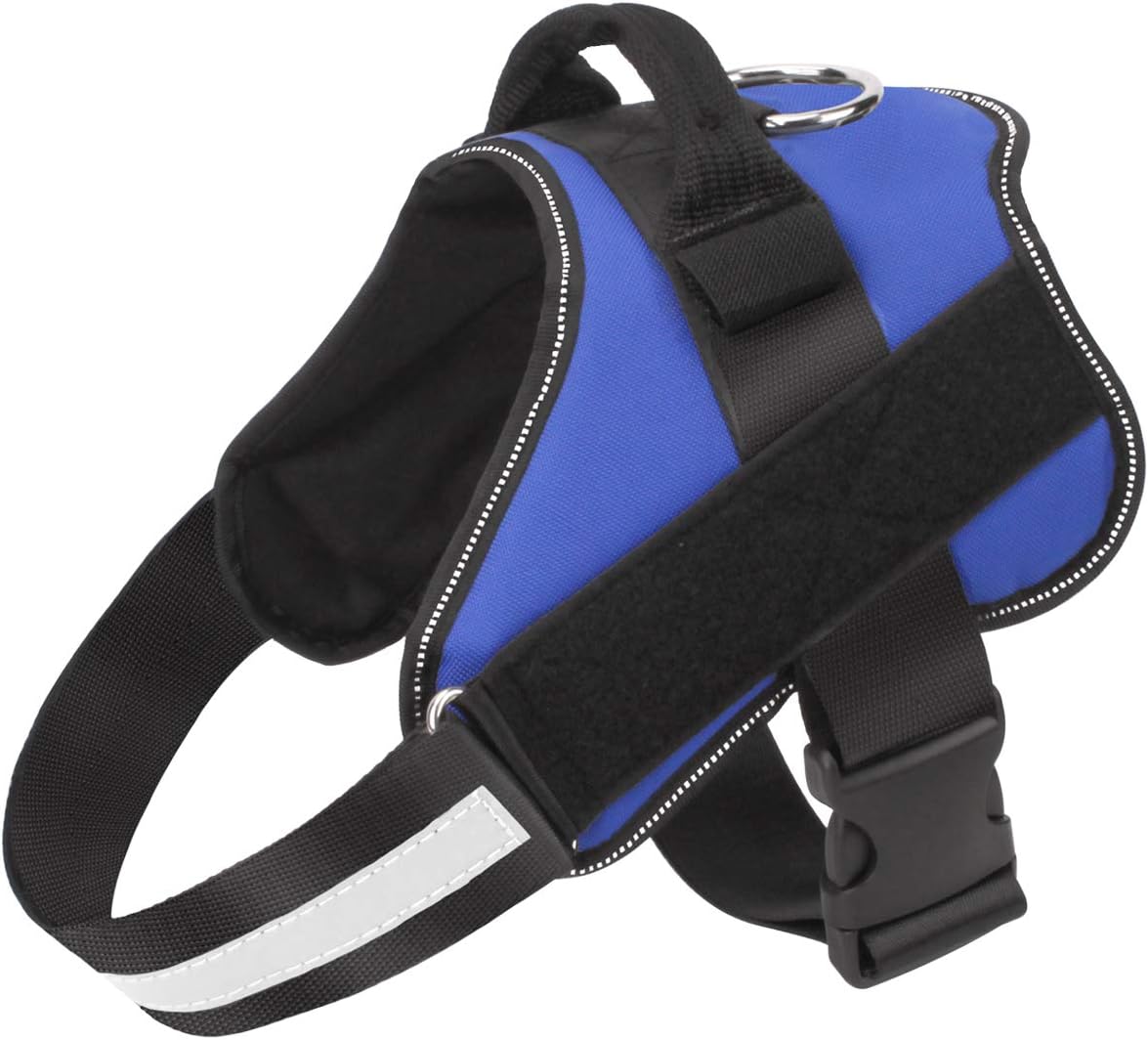
The Bolux no-pull dog harness is a vest-style harness intended to reduce pulling by distributing pressure across the dog's chest and body while providing a secure attachment point for a leash. It is typically used for daily walking, light training sessions and outdoor activities where control and visibility matter. Notable features include an adjustable chest strap with a snap-on buckle, a sturdy nylon top handle for close control, a D-ring for leash attachment and reflective trim for low-light visibility. The breathable polyester construction and machine-washable care instructions make it easy to clean after muddy walks. As a budget option it delivers the core training functions—no-pull design, handle control and reflective safety—without premium padding or heavy-duty hardware, so it works best for small dogs in the 11 to 20 pound range rather than heavy pullers. Sizing can feel fiddly on dogs near the upper or lower end of the size range, so measure carefully before buying.
Best for: Buyers who prioritize practical training features and visibility on a tight budget and need a simple, functional harness for small dogs.
Less Ideal for: Anyone with a large dog, a strong puller, or who wants heavy padding and heavy-duty hardware for rugged use should consider a sturdier, higher-end harness.
- No-pull vest design spreads pressure to reduce choking.
- Reflective trim increases visibility on early morning or evening walks.
- Top nylon handle gives quick close control for training or crowded areas.
- Machine-washable polyester makes cleanup simple.
- Adjustable chest strap with snap buckle allows basic fit customization.
- Not built for strong pullers or large dogs due to light hardware and slim construction.
- Limited padding compared with premium harnesses, which may be less comfortable on long hikes.
Verdict: The best budget harness gives owners an affordable, safe, and reasonably comfortable option for nervous dogs who need dependable everyday control without extra features.
PetSafe Easy Walk Harness Medium
Best No-Pull Harness

| Material Type | Nylon |
|---|---|
| Closure Type | Buckle |
| Dog Breed Size | Medium |
| Product Care Instructions | Machine Wash |
The PetSafe Easy Walk Harness is a front-clip halter-style harness that helps stop pulling by redirecting force to the chest and shoulders rather than the neck. It uses a patented martingale loop on the front that tightens gently when a dog lunges, making it useful for training and controlled walks, while a back clip offers a conventional leash attachment for regular outings. The harness is lightweight with less coverage than fuller-coverage designs, which makes it breathable and comfortable for long walks or hikes, and quick-snap shoulder straps plus a contrasting belly strap make it fast to put on correctly. Constructed from nylon and machine washable, it is durable for daily use but lacks padding for dogs that prefer softer contact and offers only manual adjustment rather than more advanced fitting hardware. For most owners seeking a simple, reliable no-pull solution that is easy to use and durable, this harness balances function with convenience.
Best for: Buyers who prioritize a harness that is fast to put on, reliable at reducing pulling, and durable enough for daily walks and basic training.
Less Ideal for: Owners who need heavy-duty padding for very sensitive dogs or who want a harness with extensive micro-adjustment or specialty features for advanced activities.
- Front martingale loop and front leash clip that redirect pulling away from the neck
- Lightweight, low-coverage design that stays breathable on long walks
- Quick-snap shoulder straps and contrasting belly strap speed up correct fitting
- Nylon construction and machine washable for easy cleaning and everyday durability
- No padded straps so contact points can feel firm on sensitive dogs
- Fit adjustments are basic rather than highly fine-tunable
Verdict: The best no-pull harness is built to gently discourage lunging and pulling while keeping nervous dogs comfortable and safely guided on walks.
WINSEE Escape Proof Dog Harness Large
Best Escape-Proof Harness

| Material Type | Polyester |
|---|---|
| Size | Large |
| Closure Type | Clip |
| Dog Breed Size | Large |
| Product Care Instructions | Hand Wash Only |
This WINSEE harness is built to keep active, larger dogs secure while giving the handler strong control points for walking, training, or assisting a dog into a vehicle. It uses seven adjustable straps and quick-release clips so you can tighten neck and chest areas for a snug fit that resists wriggling, and the padded top handle plus a sealed metal back D-ring provide reliable lifting and leash attachment. The 1050D nylon body, MOLLE side panels and reinforced stitching make it rugged enough for hiking or service work, and reflective strips improve visibility on evening walks. Breathable padded air mesh and soft sponge edging make longer wear more comfortable, though the harness is relatively heavy compared with minimalist designs and requires careful measuring and adjustment to avoid chafing. Patches are removable, and the multiple attachment points translate into useful anti-pull control without forcing the dog into an uncomfortable posture.
Best for: Buyers who prioritize a truly secure, hard‑wearing vest for active or escape‑minded large dogs and want multiple control points for training, hiking, or assistance tasks.
Less Ideal for: Owners seeking a minimal, lightweight harness for short city walks or toy/small-breed dogs should consider slimmer alternatives.
- Multiple adjustment points (7 straps) for a secure, customized fit
- Padded top handle and sealed metal back D-ring for confident lifting and leash control
- Heavy-duty 1050D nylon construction with reinforced stitching for durability in outdoor use
- MOLLE side panels and removable patches add utility for service or working dogs
- Reflective strips and breathable padded mesh increase safety and comfort on walks
- Bulkier and heavier than lightweight harnesses, which may be noticeable on some dogs
- Requires careful fitting and periodic strap adjustment to prevent chafing or improper fit
Verdict: The best escape-proof harness is for nervous dogs that try to back out of gear, offering secure closures and a snug, escape-resistant fit for peace of mind.
JSXD Dog Vest Harness M
Best Adjustable Fit Harness

| Material Type | Nylon+Sponge |
|---|---|
| Closure Type | Buckle |
| Dog Breed Size | Medium |
| Product Care Instructions | Machine Wash |
This JSXD vest harness is built for control and daily outdoor use. It slips over the head, secures with a quick-release buckle and offers slide adjusters at both neck and chest so you can tighten the fit to reduce slipping on a strong, short-backed breed like a Staffy. A reinforced metal D-ring provides a secure leash anchor and a padded back handle gives an extra point of control for close handling or lifting. The nylon shell with sponge padding and breathable mesh lining balances durability with comfort, and 3M reflective straps improve visibility on evening walks. The harness is machine washable and comes in multiple sizes so you can size up if your dog is between measurements. Limitations: the design concentrates control at the back D-ring rather than a dedicated front-clip no-pull point, so it helps distribute pressure but will not eliminate heavy forward lunging without training or a front-clip option, and fit still depends on accurate neck and chest measurements for a Staffy's stocky build.
Best for: Owners who need a harness they can fine-tune across neck and chest to keep a pulling Staffy from slipping out while retaining a comfortable, padded fit for daily walks and outdoor activities.
Less Ideal for: Owners seeking a dedicated front-clip training harness or a solution that actively redirects heavy pulling without additional training should consider a front-clip model instead.
- Adjustable neck and chest straps for a more precise fit
- Reinforced metal D-ring and sturdy back handle for secure control
- Breathable mesh lining with sponge padding for comfort on longer walks
- 3M reflective straps increase visibility in low light
- Machine washable nylon construction for easy cleaning
- No dedicated front-clip attachment for maximum no-pull correction
Verdict: The best adjustable fit harness lets owners fine-tune multiple straps for a snug, comfortable fit that reduces chafing and anxiety in dogs with tricky body shapes.
Gooby Comfort X Step-in Lite Harness Medium
Best Lightweight Travel Harness

| Material Type | Nylon contest : polyester 98% spandex 2% |
|---|---|
| Closure Type | Buckle |
| Product Care Instructions | Machine Wash |
| Item Highlight | Choke-free patented X-frame; Escape-free contracting fit; Breathable quick-dry mesh; Metal D-ring; Quick-release buckle |
The Gooby Comfort X Step-in Lite is a low-profile, choke-free step-in harness built around a patented X-frame and deep V front to shift pressure onto the chest rather than the throat. It is made from quick-dry breathable mesh, so it stays light and comfortable for everyday walks and dries fast after wet weather. The harness contracts around the chest when a dog pulls to help prevent escapes, and a metal D-ring plus a quick-release buckle provide secure leash attachment and easy on/off. Practical benefits include gentle pressure distribution for dogs prone to tracheal sensitivity, straightforward fit adjustments, and machine-washable care. Limitations are that the design is aimed at small to medium breeds and the minimal padding and slim profile may feel less substantial for very strong pullers or large dogs that need heavier-duty control. Sizing and fit matter with step-in harnesses, so measure carefully to get the low V-front placement that delivers the choke-free advantage.
Best for: Buyers who want a minimal, breathable harness that keeps pressure off the throat and works for everyday walks with small to medium dogs that are sensitive around the neck.
Less Ideal for: Owners of large, powerful dogs or anyone who needs heavy-duty no-pull control should consider a sturdier, more heavily padded harness or a harness marketed specifically for strong pullers.
- Patented X-frame and deep V design reduces neck pressure by distributing force to the chest
- Lightweight breathable mesh that dries quickly for all-weather use
- Metal D-ring and quick-release buckle provide secure attachment and fast on/off
- Escape-resistant contracting fit helps keep dogs from backing out
- Slim, lightweight construction may not be robust enough for large strong pullers
- Limited to size range suitable for small and medium dogs so larger breeds may need a different model
Verdict: The best lightweight travel harness is for owners who need a thin, breathable harness that minimizes bulk and stress for nervous dogs on trips or daily errands.
WINGOIN Tactical Dog Harness Large
Best Heavy-Duty Harness

| Size | Large: 45-80 lbs |
|---|---|
| Chest fit | 27-37" |
| Neck fit | 19-25" |
| Material Type | Nylon, Oxford, Plastic, Metal |
| Closure Type | Buckle |
The WINGOIN Tactical Dog Harness is a vest-style, no-pull harness built for active large dogs and outdoor use. It uses a two-layer construction with 1000D nylon on the outside and a breathable inner mesh to resist abrasion while keeping the dog cooler during hikes or long walks. The harness fastens with four quick-release buckles so you can put it on from the side rather than over the head, and adjustable straps let you tune the fit across chest and neck. A reinforced top handle and two stainless steel D-rings give solid control points for lifting or short emergency holds and for attaching a leash. Reflective strips increase visibility on evening outings. Because it is heavy-duty military-style material with metal hardware, it is durable and good for strong pullers, but the rugged build and added padding can feel stiff compared with minimalist soft harnesses and it should be hand-washed to preserve materials. Proper measurement is important to avoid rubbing around the neck and chest during movement.
Best for: Owners of strong, active large-breed dogs who need a durable, supportive harness that reduces abrasion during hiking, training, or heavy outdoor use.
Less Ideal for: Owners seeking an ultralight or minimalist harness for short neighborhood walks or for dogs sensitive to rigid gear should consider softer, lower-profile options instead.
- Rugged 1000D nylon outer layer for abrasion resistance and long-term durability
- Breathable inner mesh and two-layer construction to reduce chafing on active dogs
- Four quick-release buckles allow side-on dressing to reduce resistance when putting the harness on
- Reinforced top handle plus two stainless steel D-rings provide reliable control points
- Reflective striping improves low-light visibility for evening walks
- Heavier, stiffer build than lightweight soft harnesses which may require a break-in period
- Requires hand washing rather than machine laundering to protect materials
Verdict: The best heavy-duty harness is aimed at nervous dogs that require tougher construction and stronger hardware to withstand pulling, outdoor activity, or regular heavy use.
Choosing the Right Harness Nervous Dog: Key Factors to Consider
Fit and Adjustability
A nervous dog often needs a harness that fits snugly without restricting natural movement. Multiple adjustment points permit a closer, customized fit so the harness sits securely across the chest and behind the front legs rather than shifting when the dog moves.
Poor fit leads to rubbing, escape risk, and increased anxiety. Check for wide adjustability ranges on the neck and chest straps and clear sizing guidance so you can get a consistent first fit and minor tweaks on the next walk.
Padding and Material Comfort
Comfortable materials reduce the chance of irritation that can make a nervous dog more reactive. Soft, breathable fabrics with padding at key contact areas protect skin and fur while dispersing pressure over a wider surface.
Seams and hardware should be positioned to avoid chafing. Lightweight, quick-dry materials help if your dog pants or gets wet, and natural motion-friendly constructions let the dog move without feeling constrained.
Control and Leash Attachment Options
How you attach the leash affects how much control you have without triggering panic. Front-clip attachments help steer and reduce pulling by redirecting the dog, while rear clips are better for calm walks and long-term comfort. Some designs include both options and a top handle for quick guidance during stressful moments.
Evaluate whether the attachment points distribute force in a calming way rather than causing sharp jerks. A good control layout lets you gently correct direction with minimal strain on the dog.
Ease of Use and Quick On/off
A harness that is simple to put on and remove reduces stress for a nervous dog and for you. Step-in designs or one-clip closures minimize fidgeting during fitting, while poorly designed buckles or multiple fiddly straps can escalate anxiety before a walk even begins.
Look for intuitive closures that you can operate with one hand, clearly labeled left/right straps, and a predictable fastening sequence so handling is fast and calm.
Security and Escape Prevention
Nervous dogs may try to wriggle free, so the harness must resist escapes without over-constraining the dog. Wide chest pieces, well-placed girth straps, and secondary safety buckles help keep the harness in place even if the dog twists or backs out.
Secure hardware and reinforced stitching are important because a flimsy connection can fail at a critical moment, increasing the dog's anxiety and the handler's risk.
Visibility and Practical Features
Features such as reflective trim, a top handle, or attachment points for ID and small accessories can make walks safer and more convenient. Reflective elements improve visibility in low light, while a sturdy handle gives you a quick way to steady or lift the dog if necessary.
Practicality also includes machine-washable materials and removable liners so the harness stays clean without complicated care routines that add effort to daily life.
How Can a Harness Help a Dog That Gets Scared on Walks?
A well-chosen harness reduces pressure on the throat and disperses force across the chest and back, which helps prevent the panic that comes from choking or sudden jerks. For many nervous dogs, steady, gentle guidance feels more reassuring than abrupt corrections.
Using a harness that fits and has appropriate leash attachment points lets you control direction gently and predictably, so the dog learns that walks are manageable. Over time, consistent, calm handling combined with positive reinforcement can reduce reactive responses.
- Front-clip options redirect rather than resist pulling.
- A top handle provides a quick way to steady the dog during a sudden scare.
- Even pressure distribution avoids triggering throat-sensitive dogs.
What Style of Harness Is Best for a Dog That Tries to Bolt?
For dogs prone to bolting, choose a harness with multiple secure points and a wider chest piece that limits rotation. Escape-prevention features like a second locking buckle or a snug belly strap make it harder for the dog to back out when frightened.
Also consider harnesses with a padded control handle set close to the body. This position lets you gain immediate control without lifting the dog by the collar or applying uncomfortable force.
- Look for reinforced buckles and solid attachment points.
- Chest straps that sit low and broad reduce slipping.
- Step-in versus overhead designs: pick whichever the dog tolerates better for secure dressing.
How Do I Size a Harness for a Nervous Dog That Hates Being Measured?
If your dog resists traditional measuring, take easy, calm steps at home: measure belly girth and neck while the dog is relaxed, or fit an adjustable harness on a low-stress day and leave it loose at first. Choose a harness with wide adjustment ranges so you can dial in the fit gradually across a few short sessions.
When trying a new harness, keep initial outings short and rewarding so the dog associates the harness with positive experiences. Adjustments should allow for a snug fit without pinching, and you should always be able to slide two fingers under the straps at the chest.
- Measure girth with the dog standing to get the most accurate chest size.
- Prefer harnesses that allow both neck and chest adjustment.
- Test fit with the dog doing a short walk in the yard before a longer outing.
Can Training and Harness Choice Work Together to Reduce Anxiety?
Yes. A calming harness is a tool that supports training strategies like counterconditioning and gradual desensitization. The harness should make handling predictable so you can focus on rewarding relaxed behavior rather than managing escapes or discomfort.
Combine short, positive walks in low-stress settings with treats and praise while your dog wears the harness. Gradually introduce more challenging environments only after the dog shows calm responses when leashed and guided.
- Use the harness to control distance from triggers while rewarding calm behavior.
- Start with low-intensity exposure and increase as the dog remains relaxed.
- Pair harness use with consistent verbal cues and reward timing for best results.
What Maintenance Tips Keep a Harness Comfy and Safe?
Regularly inspect straps, buckles, and stitching for wear, especially after an anxious episode where the dog may have tugged hard. Wash the harness according to manufacturer guidance; many designs benefit from gentle machine washing or hand-soaking to remove odors and dirt that can irritate the dog.
Replace padding or switch out harnesses if foam compresses or seams fray. Keeping the harness clean and in good repair prevents discomfort that can worsen anxiety and ensures hardware performs when you need it.
- Air-dry padded harnesses to preserve shape.
- Check metal rings for corrosion and plastic clips for cracking.
- Rotate between two harnesses if one needs frequent washing.
How We Chose the Best Harness Nervous Dog
We focused on practical features that directly affect how well a harness helps a nervous dog feel secure and behave calmly. We evaluated fit and adjustability to ensure a snug, non-restrictive feel across common body shapes. Comfort was judged by padding placement, seam smoothness, and materials that minimize chafing during both short and longer walks. Control features included leash attachment placement, handle accessibility, and whether the design reduces forward lunging without forcing neck torque. Safety and durability covered hardware strength, secure stitch patterns, and dependable closure systems. Usability factors included how easy the harness is to put on and take off, care and cleaning instructions, and visibility features for low-light walks. We excluded products lacking clear sizing options or that prioritised fashion over functional fit. The final list reflects these filters and emphasizes designs that help reduce anxiety-related behaviors while keeping movement comfortable and safe.
Our full evaluation process is outlined in our review methodology.
FAQ
Will a harness stop my dog from pulling if they are nervous?
A harness can reduce pulling by offering better control and redirecting forward momentum, but it does not eliminate the behavior on its own. Pair a suitable harness with training techniques that reward loose-leash walking for the best results.
Is a front-clip harness better for anxious dogs than a back-clip?
Front-clip harnesses help steer and can be useful for reducing immediate lunging, while back-clip harnesses are often more comfortable for calm walks. The better choice depends on how the dog reacts and which attachment lets you guide with the least stress.
How soon can I expect a nervous dog to accept a new harness?
Acceptance varies widely; some dogs adjust in a few short sessions while others need several weeks. Use gradual introductions, keep sessions positive, and allow the dog to explore the harness off-leash before wearing it on walks.
Are soft-padded harnesses safe for dogs with thin coats or sensitive skin?
Soft padding is usually gentler on thin coats and sensitive skin, but you should check for seams or edges that might rub. Choose breathable fabrics and monitor for any signs of irritation during the first few outings.
Should I use a harness all the time for a nervous dog?
Using a harness for walks and outings is often advisable, but you do not need to leave it on all the time. Remove the harness at home to allow the dog to relax and to prevent chafing from extended wear.
Final Verdict
Choosing a harness for a nervous dog means balancing secure, escape-resistant design with gentle, comfortable materials and easy handling. Prioritize fit, proper attachment options, and a construction that spreads pressure evenly to avoid triggering throat sensitivity or panic. Expect to pair the harness with gradual, reward-based training so your dog learns that walks are safe. Focus on how the harness affects day-to-day control and comfort rather than chasing a single ideal feature. With a purposeful fit and consistent, calm handling, you can reduce stress on walks and make outings more predictable for both you and your dog.

