

If you own a Blue Heeler, the right herding ball can make training sessions more productive and safer for both you and your dog. Blue Heelers are agile, strong, and driven, so a ball that stands up to rough play while offering predictable roll and manageable weight matters. This guide shortlists the top herding balls that suit the breed's drive and build, with attention to durability, size, and handling. We evaluated options that match the typical activity level and mouth size of Blue Heelers and considered materials, bounce, and grip. Below you will find the top picks and the evaluation criteria used to select them, so you can choose the best herding ball for your training goals and play style.
Top Picks at a Glance
| Best Overall Herding Ball The best all-around herding ball for most Blue Heeler handlers | Race&Herd 25" Herding Ball Set |  |
| Best Budget Herding Ball A low-cost option that still withstands regular herding practice | QDAN Dog Soccer Ball 6 Inch |  |
| Best Heavy-Duty Herding Ball Built for rough play and long-lasting performance under heavy use | Aleena Herding Ball 22-Inch |  |
| Best Large Herding Ball A bigger ball designed for larger dogs and wide-open fields | Furdo HB 30 inch Herding Ball |  |
| Best Small Herding Ball Compact size for smaller dogs or more confined training areas | YECRAFT Herding Ball Small 10" |  |
| Best Weatherproof Herding Ball Materials and finish that resist rain, mud, and sun exposure | Stcohyz Herding Ball 18 inches |  |
| Best Portable Herding Ball Lightweight and easy to carry between jobs or training sessions | Acaine 22-Inch Herding Ball |  |
Race&Herd 25" Herding Ball Set
Best Overall Herding Ball

| Size | 25" |
|---|---|
| Included components | Cover, inner tube, pump, repair patches, training guide |
| Indoor Outdoor Usage | Outdoor |
| Water Resistance Level | Waterproof |
This Race&Herd 25" herding ball set is built to reproduce livestock movement for herding breeds rather than fetch, and it ships as a complete kit with a zip cover, inflatable inner tube, hand pump, repair patches, and an IACP-approved training guide. You inflate the inner tube until the cover sits smooth and crease-free (recommended 2 to 3 PSI) so the weighted ball rolls, stops, and responds to shoulder and nose pushes during short supervised sessions. The replaceable inner ball plus included patch kit make punctures repairable without replacing the whole unit, and the washable outer sleeve protects seams from wear. It is waterproof, floats, and designed for outdoor exercise and herding practice, but it is not chew-proof and should not be left unsupervised or exposed to direct heat. Assembly can require a strong pump or compressor to reach the right firmness, and overinflation risks zipper or seam damage, so follow the inflation tips provided. For owners wanting a durable, trainer-approved tool to channel herding drive, this set offers practical durability and predictable movement.
Best for: Owners training or exercising herding breeds who want a durable, trainer-approved tool that channels natural herding instincts into controlled outdoor sessions.
Less Ideal for: People seeking a fetch toy or a chew-resistant plaything for heavy chewers should choose a different product.
- Complete kit includes cover, inner ball, pump, repair patches, and training guide
- Replaceable inner tube and patch kit extend useful life after punctures
- Designed to reproduce livestock-like rolling behavior for herding exercises
- Washable outer cover protects the ball and is repairable
- Waterproof and floats for versatile outdoor use
- Not intended as a chew toy and can be punctured by strong chewers
- Requires a powerful pump or compressor to properly inflate to recommended firmness
Verdict: The best overall herding ball balances size, durability, and predictability to suit most Blue Heelers and everyday training or farm work.
QDAN Dog Soccer Ball 6 Inch
Best Budget Herding Ball
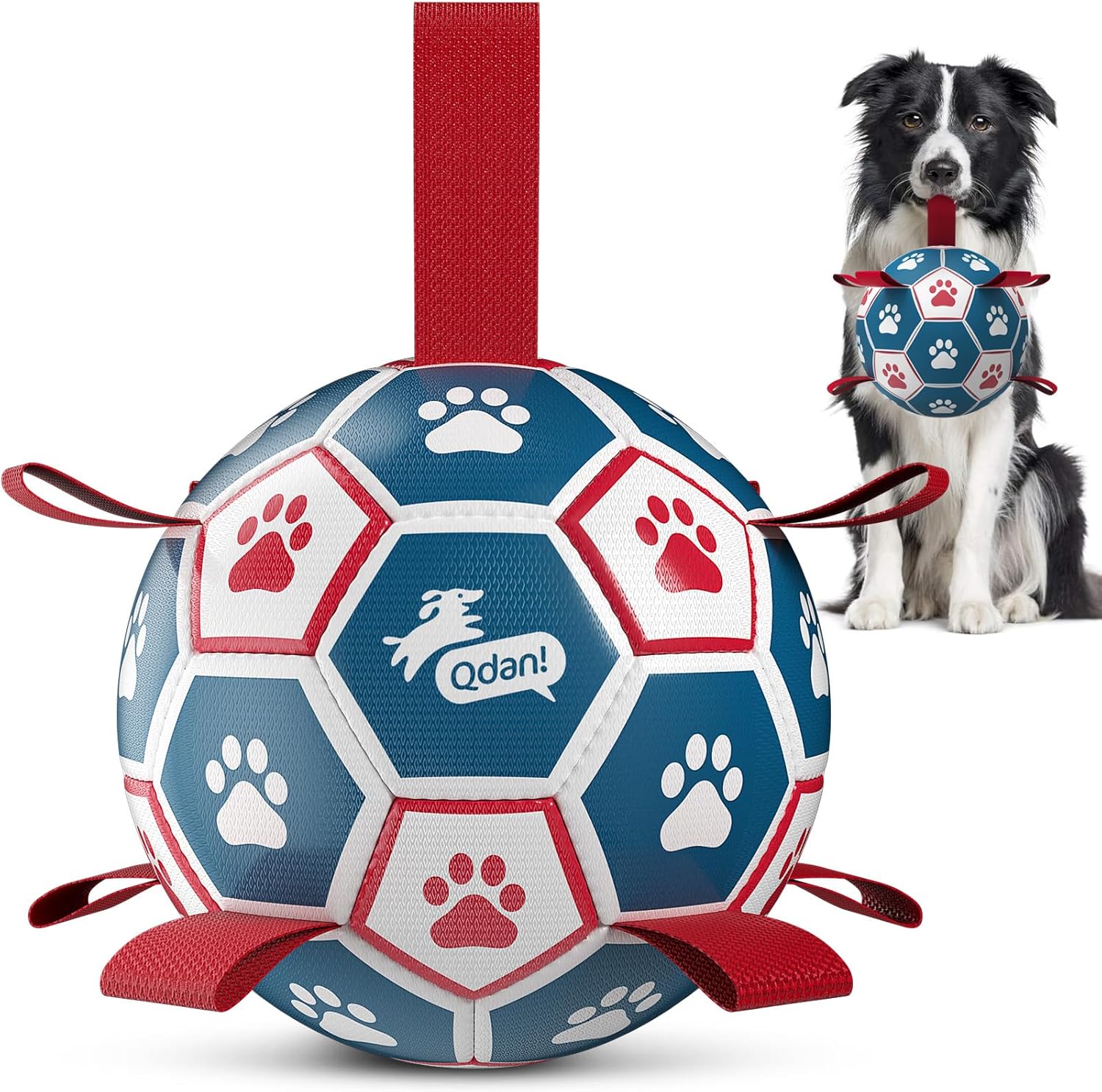
| Size | Medium Size 2 (6 Inch) |
|---|---|
| Material Type | PU |
| Indoor Outdoor Usage | Indoor, Outdoor |
| Water Resistance Level | Water Resistant |
| Pet Toy Type | Ball |
The QDAN 6-inch dog soccer ball is an interactive outdoor toy built from PU with multiple nylon tabs sewn into the seams and a longer hand strap for human handling. It is intended for supervised play like chasing, fetching, tossing and tugging rather than heavy chewing, and ships deflated with a pump and needle adapter for easy inflation. In use the nylon tabs create an erratic bounce that keeps active dogs engaged and make it easier for medium-size mouths to grip and retrieve, while the textured surface and paw prints help attract attention. Practical benefits include portability, water resistance for wet play, and a design that supports two-player play between owner and dog. Important limitations are that the 6-inch size is recommended for medium breeds around 20–40 lbs and is not suitable for aggressive chewers or large breeds that might shred the material or try to swallow larger pieces.
Best for: Buyers seeking an engaging fetch and herding-style toy for medium, active dogs who enjoy chasing and tugging, and who plan to supervise play rather than leave the toy for unsupervised chewing.
Less Ideal for: Owners looking for a durable, chew-proof toy for power chewers or those who need a larger, lab-sized toy for heavy-jawed dogs should consider sturdier large-size options.
- Multiple nylon straps improve grip and create lively, unpredictable bounces
- Includes pump and needle adapter so the ball can be inflated out of the box
- PU construction offers soccer-ball-style bounce while remaining water resistant
- Long human strap and textured surface make tossing and retrieval easier
- Not designed for aggressive chewers and can be damaged if left unsupervised
- 6-inch size targets medium dogs and is small for large breeds like adult Labradors
Verdict: The best budget herding ball gives owners an affordable, functional option that holds up to routine use without unnecessary frills.
Aleena Herding Ball 22-Inch
Best Heavy-Duty Herding Ball

| Size | 22-inch |
|---|---|
| Material Type | Oxford 16800, Oxford1680D |
| Indoor Outdoor Usage | Outdoor |
| Additional Features | Heavy Duty, Interactive |
| Included Components | Air Pump , Repair Kit |
This 22-inch herding ball is built for active outdoor play and designed to withstand pushing, nudging, and chasing by large, high-energy dogs. Constructed from 1800D Oxford cloth with triple stitching and an inner lining, it feels substantially tougher than standard fabric balls and includes an air pump and repair kit for maintenance. The large diameter creates a meaningful target for herding breeds and can be used for training exercises that encourage natural herding and movement patterns. It is water resistant and intended for outdoor use, but it is not indestructible so supervision is important with powerful chewers or during unsupervised turnout. The ball's size and robust fabric make it better suited to medium and large breeds rather than small dogs, and occasional reinflation or patching may be required after heavy seasonal use. For handlers wanting a simple, durable option to add variety to herding practice or enrichment sessions, this ball delivers a rugged, repairable choice that holds up well when used as intended.
Best for: Handlers and trainers who need a rugged, repairable ball to use in supervised herding practice and enrichment sessions with active medium to large dogs.
Less Ideal for: Owners seeking a chew-proof toy for unsupervised heavy chewers or those needing a small play ball for compact breeds.
- Heavy-duty 1800D Oxford cloth construction for greater abrasion resistance
- Triple stitching and inner lining improve structural durability
- Includes air pump and repair kit for easy maintenance
- Large 22-inch diameter provides a substantial target for herding and enrichment play
- Water resistant for outdoor use
- Not guaranteed puncture-proof against determined chewers or hooves
- Requires supervision and occasional reinflation or patching with heavy use
Verdict: The best heavy-duty herding ball is constructed from tough, puncture-resistant materials for handlers who need long-term durability with strong dogs.
Furdo HB 30 inch Herding Ball
Best Large Herding Ball

| Pet Toy Type | Ball |
|---|---|
| Recommended Uses For Product | Boredom Buster, Exercise, Mental Stimulation, Training |
| Indoor Outdoor Usage | Outdoor |
| Included Components | Air Pump, Airlock, Ball Cover, Inner Ball, Zipper Stick |
The Furdo HB 30 inch Herding Ball is an oversized outdoor ball built for herding practice and high-energy play with medium to large dogs. It ships with a pump, inner ball, cover, double zipper, and repair kit so you can inflate and maintain it for repeated sessions. The tough nylon cover and reinforced YKK double zipper help the ball take bumps, pushes, and spins during training, and the large diameter gives dogs substantial surface area for nudging and controlling movement rather than chasing a small toy. It is meant for herding and active exercise rather than chewing, so dogs that like to shred toys may damage the cover or inner bladder. The ball is not water resistant and is best used on grass or dirt; the included pump and spare airlocks make setup and reinflation straightforward. For trainers and owners who want a durable, large-format herding target that encourages natural herding behavior, this ball delivers usable performance, though aggressive chewers will need a different, chew-proof option.
Best for: Owners and trainers who need a large, movable target to practice herding cues and give active Blue Heelers purposeful outdoor exercise and mental stimulation.
Less Ideal for: People whose dogs are aggressive chewers or who need a toy for water-based play should choose a more chew-proof or water-ready product.
- Large 30-inch diameter gives significant surface area for herding practice and control
- Includes pump, inner ball, cover, repair kit and spare airlocks for easy setup and maintenance
- Durable nylon cover with double YKK zipper resists ripping during active pushing and nudging
- Designed specifically for outdoor herding and high-energy exercise for medium to giant breeds
- Not intended to withstand aggressive chewing or heavy bite damage
- Not water resistant so it is unsuitable for regular water play
Verdict: The best large herding ball is sized to give bigger Blue Heelers the right surface area and movement for effective herding practice and control.
YECRAFT Herding Ball Small 10"
Best Small Herding Ball

| Size | 10" Small |
|---|---|
| Cover Material | 1800D Oxford cloth |
| Inner Bladder | Slow-leak PVC |
| Handles | 6 handles |
| Includes | Foot pump, hose, repair tool |
The YECRAFT 10" herding ball is built to let small herding dogs push, chase, and tug in tighter spaces. It uses a heavy-duty 1800D Oxford outer cover over an upgraded slow-leak PVC bladder so a puncture releases air slowly instead of popping loudly, and the included foot pump and accessories make it straightforward to inflate. The shell is precision cut to sit tight only when the inner bladder is fully inflated, so expect some wrinkling until you pump it rock-hard; a firm ball rolls straighter and responds faster for training drills. Six handles let handlers toss, tug, and guide the ball during herding practice or instinct games, and the washable cover unzips for cleaning after outdoor use. This model is not designed for aggressive chewers and needs supervision around dogs that bite through toys. Its small size and lighter weight make it easy to move and control in compact training areas but limit its suitability for very large breeds or heavy-duty chewing sessions.
Best for: Handlers working in small training spaces or with nimble herding breeds who need a lightweight, easy-to-manage ball for exercise, herding drills, and tug-style training.
Less Ideal for: Owners of dogs that destroy toys or large, powerful breeds that need a heavier, puncture-resistant herding ball should choose a more robust alternative.
- Durable 1800D Oxford cover for abrasion resistance in active play
- Slow-leak PVC inner bladder reduces loud pops and maintains air pressure after punctures
- Six handles provide multiple grip points for tossing, tugging, and handler control
- Washable zip-off cover and included foot pump make inflation and cleaning convenient
- Not intended for aggressive chewers and can be punctured by heavy biting
- Requires full inflation to perform properly; under-inflation leaves the cover loose
Verdict: The best small herding ball fits smaller training spaces and handlers who need a lighter, easier-to-manage option for nimble Blue Heelers.
Stcohyz Herding Ball 18 inches
Best Weatherproof Herding Ball

| Size | 18 inches |
|---|---|
| Water Resistance Level | Waterproof |
| Breed Recommendation | Large |
| Indoor Outdoor Usage | Indoor, Outdoor |
This 18-inch herding ball is built for active, herding-breed dogs and outdoor use. It features a double-layer construction with tear-resistant Oxford cloth over an explosion-proof PVC liner, plus double stitching and a hidden zipper to improve durability during chasing and nudging. The ball is waterproof and intended for indoor or outdoor play, and the detachable shell makes cleaning easier after muddy sessions. It ships with spare plugs and an air pump for quick inflation in the field. In practice the ball gives energetic dogs a large, moving target to herd and chase, which helps burn energy and reinforce obedience through play. Expect a sturdy feel but not chew-proof performance against determined chewers, and some users reported mixed durability in heavy-use situations. The design suits supervised herding practice and exercise rather than unsupervised heavy chewing or tugging sessions.
Best for: Buyers who need a weatherproof herding-style ball to give active working breeds a large moving target for supervised outdoor exercise and training.
Less Ideal for: Owners looking for a chew toy to leave with aggressive chewers unsupervised or those needing a fully puncture-proof training tool.
- Large 18-inch size engages herding breeds and encourages chasing behavior
- Double-layer Oxford cloth with PVC liner for added tear resistance
- Detachable shell for easier cleaning after outdoor use
- Comes with spare plugs and an air pump for quick reinflation
- Not designed to withstand sustained chewing or punctures from aggressive chewers
- Mixed user feedback on long-term durability under heavy farm use
Verdict: The best weatherproof herding ball uses water- and UV-resistant materials so it performs reliably outdoors in varied farm and field conditions.
Acaine 22-Inch Herding Ball
Best Portable Herding Ball

| Included components | Carrying Bag, Foot Pump, Inflatable Ball, Inflation Hose, Protective Fabric Cover with Handle |
|---|---|
| Intended uses | Exercise, Interactive Play, Outdoor Play, Training |
| Inflation size | 22 inches |
| Material | Oxford fabric cover |
This portable 22-inch herding ball kit is built for outdoor training with working and herding breeds. The inflatable core tucks into a reinforced Oxford fabric cover with a handle so dogs can push and guide the ball without chewing the inner bladder, and the included foot pump and hose make setup quick on the field. Adjustable inflation lets handlers tune firmness for different dogs and training intensity, while the deflatable design and storage bag make it simple to carry between locations or pack for travel. The durable outer textile and reinforced seams are aimed at repeated rolling and pushing, though the product is meant for supervised use on open, level ground and will not withstand sharp objects or determined chewing. Practical for structured herding drills, exercise sessions, and interactive play, this kit favors handlers who need a lightweight, easy-to-transport tool rather than a chew-proof toy for unsupervised use.
Best for: Handlers who frequently move between fields or travel for training and need a quick‑setup, lightweight herding tool for active working breeds.
Less Ideal for: Owners looking for an unsupervised chew toy or a puncture‑proof ball for dogs that mouth and bite aggressively should consider a different, more chew‑resistant product.
- Complete portable kit with pump, hose, and storage bag for easy transport and setup
- Adjustable inflation lets handlers set firmness appropriate to dog size and drill intensity
- Durable Oxford fabric cover and reinforced outer textile made for repeated outdoor pushing and rolling
- Deflatable design reduces bulk for travel and storage
- Not designed to resist sustained chewing or punctures from sharp objects
- Requires manual inflation and periodic pressure checks during use
Verdict: The best portable herding ball is lightweight and easy to transport, ideal for handlers who move between fields or need quick setup for practice.
Choosing the Right Herding Ball Blue Heeler: Key Factors to Consider
Size and Weight
Size and weight determine how easily a Blue Heeler can push, grip, and maneuver the ball during herding drills. Too small a ball can be a choking hazard or tempt chewing instead of controlled pushing. Too large or heavy a ball can strain the dog's neck and shoulders or prevent the animal from getting the rhythm needed for structured work.
Match ball diameter to your dog's mouth size and strength, and consider the intended use. Lighter balls are better for agility-style play and quick turns, while a moderately heavier ball may hold position better during directional training. Think about how long sessions will be and pick a weight that allows sustained activity without fatigue.
Durability of Materials
Herding work exposes balls to repeated nose pushes, pawing, and occasional bites, so material construction matters. Look for dense, resilient materials that resist splitting, tearing, and heavy abrasion. Seam quality and the method used to join layers also influence how long the ball lasts under repeated impact.
Durable materials reduce the risk of small fragments that could be ingested and lower the need for frequent replacement. Consider whether the outer surface is reinforced and if the material tolerates outdoor debris, hard terrain, and exposure to moisture without degrading.
Surface Texture and Grip
Texture affects how a Blue Heeler controls the ball with its nose, jaws, or paws. A slightly textured surface provides enough friction for secure nudges without encouraging destructive chewing. Smooth, slick surfaces can be hard to control, especially in wet conditions, while excessively rough surfaces may wear the dog's nose or collecting debris.
Also think about how texture impacts handling when you need to pick the ball up yourself. A grip that balances dog control with human handling ease makes training transitions smoother and reduces interruptions during sessions.
Predictability of Roll and Bounce
Training and herding drills depend on predictable movement. Balls that roll in straight lines and have consistent bounce help you set up repeatable exercises and teach directional cues. Irregular bounce or erratic rolling can confuse the dog and disrupt learning, especially in complex drills that require sequential responses.
Consider the surface you'll use most often. Hard-packed fields emphasize bounce, while soft pasture reduces it. Choose a ball whose behavior matches your primary training environment so you get consistent feedback during practice.
Maintenance and Cleanability
Outdoor training exposes herding balls to dirt, mud, and moisture. Materials that resist water absorption and can be rinsed clean without damage make upkeep simple. Check whether seams trap dirt or if textured surfaces hold mud that needs scrubbing.
Easy-clean designs reduce bacterial buildup and odor over time. Also evaluate whether the ball tolerates sunlight exposure and repeated washing without losing shape or surface integrity, since long-term durability depends on routine maintenance.
Tethering and Attachment Options
Some herding exercises require securing the ball or attaching a short tether for stationary work. Built-in attachment points or reinforced areas for tying improve versatility. A secure attachment option lets you set up directional drills, boundary practice, or solo fetch without risking the ball tearing at the tie point.
Assess how attachment hardware integrates with the ball's material so that adding a tether does not create a weak spot. Removable tether systems are useful when you need to switch between free-roll and fixed-station drills quickly.
How Big Should a Herding Ball Be for a Blue Heeler?
Pick a diameter that lets the dog nudge and control the ball without forcing the animal to overreach. For medium-sized herding dogs, aim for a size that clears the mouth comfortably while still being small enough to change direction with short pushes.
If you plan longer training sessions, choose a slightly lighter model within the right diameter range so the dog can maintain momentum without tiring. If you need the ball to stay put during pauses, a slightly heavier option in the same diameter can help.
- Measure your dog's mouth width to estimate appropriate diameters.
- Consider session length: longer sessions favor lighter construction within the correct size.
- Test in a safe area before using during structured drills.
Can a Herding Ball Withstand a Blue Heeler's Bite?
Blue Heelers can bite during play, especially when excited. While herding balls are meant to be pushed with the nose, durable construction reduces the chance of tearing if the dog teethes the surface. Look for dense, tear-resistant materials and strong seams.
No ball is truly indestructible, so supervise initial sessions and replace the ball if you see significant damage. Using toys designed specifically for herding tasks lowers the risk compared with lightweight fetch balls.
- Supervise the dog during early sessions to confirm the ball tolerates bite pressure.
- Remove the ball for chewing-heavy behavior and offer appropriate chew alternatives.
Should You Choose a Tethered or Free-roll Setup?
Both setups have uses. Free-roll balls teach directional control and momentum management, while tethered setups are useful for stationary drills, directional cues, and solo practice. If you alternate drill types, a ball with a reinforced attachment point gives you flexibility.
When using a tether, ensure knots and tie points do not cut into the ball material. Periodically check the attachment area for wear to avoid sudden failures during a session.
- Free-roll for dynamic herding practice and directional teaching.
- Tethered for stationary drills, controlled pivot work, and independent practice.
- Use reinforced tie areas and inspect them regularly.
How to Introduce a Herding Ball to a High-drive Dog
Start slowly by presenting the ball as a training tool rather than a chew toy. Use short, supervised sessions and reward the dog for gentle nudges and correct directional responses. Keep early sessions brief to avoid overstimulation and to establish the desired interaction pattern.
Combine verbal cues and body positioning so the dog associates the ball with herding tasks. Gradually increase session length and complexity as the dog learns to push and guide the ball without destructive mouthing.
- Begin with 5 to 10 minute sessions and build up gradually.
- Reward proper behavior immediately to reinforce controlled pushes.
- Switch between free-roll and tether drills to build versatility.
Cleaning and Storing Your Herding Ball
Rinse off mud and debris after outdoor use and allow the ball to dry fully before storage to prevent mold and odors. Avoid soaking materials that are not water-resistant. For textured surfaces, use a brush to dislodge trapped dirt and a mild detergent when necessary.
Store the ball in a shaded, dry place away from extreme heat and sharp objects. Proper storage preserves material flexibility and seam integrity, extending working life.
- Rinse and air-dry after use; brush textured surfaces as needed.
- Use mild soap sparingly on stubborn stains and rinse thoroughly.
- Keep out of direct sunlight for long-term storage.
How We Chose the Best Herding Ball Blue Heeler
We focused on features that matter most when picking herding balls for active, medium-sized herding dogs. Primary evaluation criteria included material durability to resist repeated impact and chewing; size and weight that match Blue Heeler jaw strength and prevent overexertion; surface texture and grip for secure pushing with the nose or paws; and predictable roll and bounce to support training drills and controlled herding practice. We also considered cleaning and maintenance, since outdoor sessions often mean dirt and moisture exposure, and attachment or tether options for stationary exercises. To keep recommendations practical we excluded toys primarily intended for gentle petting or indoor fetch that are not built for herding work. Lightweight novelty balls and fragile designs were filtered out. Our shortlist emphasizes robust construction, breed-appropriate sizing, and features that support repetitive training use. Reviews focused on specifications and user-oriented function rather than marketing claims, and we prioritized items offering clear performance advantages for Blue Heelers.
Our full evaluation process is outlined in our review methodology.
FAQ
How often should I replace a herding ball used by a Blue Heeler?
Replacement depends on wear and damage. Inspect seams and the surface regularly and replace the ball if you see splitting, deep gouges, or material separating. Consistent supervised use will help you spot safety concerns early.
Is a hard or soft herding ball better for training?
Harder balls offer predictable roll and hold their shape, which is good for directional drills, while softer balls can be gentler on the nose and easier to grip. Choose based on the dog's comfort and the type of drills you run.
Can I use a herding ball on wet or muddy fields?
Yes, but expect different behavior. Wet ground reduces bounce and can make textured surfaces slippery. Pick a model that tolerates moisture and clean it after use to prevent degradation.
Are there safety tips when training with a herding ball?
Supervise sessions, check the ball for damage before use, and avoid prolonged chewing. Use appropriate body positioning and short sessions to prevent overexertion, and remove the ball if the dog becomes overly fixated or aggressive with it.
Can puppies use herding balls?
Puppies can be introduced to scaled-down, lightweight herding balls for basic training, but avoid heavy or large models until the dog's jaw and body are mature. Keep sessions shorter and focus on gentle nudging rather than full-force pushes.
Final Verdict
When choosing a herding ball for a Blue Heeler, prioritize a balance of size, weight, and durable construction so the tool supports sustained training without causing strain or safety risks. Think about how the ball behaves on the surfaces you use most and whether you need tether options for stationary drills. Accept tradeoffs between predictability and softness: a firmer ball gives consistent movement while a softer one may be gentler on the dog's nose. Focus on the factors discussed above and monitor wear closely so you can replace the ball before it becomes a safety concern.

