

Picking the right high protein dog food makes a big difference in your dog's energy, weight management, and muscle health. Whether your dog is highly active, recovering from illness, or simply needs a higher-protein diet, the composition of the food affects performance, digestion, and long-term wellbeing. This guide shortlists the top high-protein foods that meet elevated protein needs while considering digestibility, amino acid completeness, and overall nutrient balance. Below you will find carefully chosen options and clear criteria used to evaluate them to help you pick the best fit for your dog.
Top Picks at a Glance
| Best Overall High-Protein Food A versatile, balanced high-protein formula that suits most dogs | Purina Pro Plan Sport 30/20 37.5 lb |  |
| Best Budget High-Protein Food A lower-cost high-protein option that still meets basic nutritional needs | IAMS Proactive Health High Protein Dog Food 5 lb |  |
| Best Premium High-Protein Food Higher-end formulas with superior ingredients and manufacturing standards | ORIJEN Original Dry Dog Food 4.5 lb |  |
| Best Dry High-Protein Food Kibble-based high-protein recipes for convenience and long shelf life | Purina ONE True Instinct Turkey & Venison 36 lb |  |
| Best Limited-Ingredient High-Protein Food Simplified formulas focusing on a few quality ingredients to reduce sensitivities | ZIWI Peak Air-Dried Beef 16 oz |  |
| Best Bulk High-Protein Food Larger-package high-protein options for multi-dog households or stock-up buyers | Diamond Naturals Extreme Athlete 40lb |  |
Purina Pro Plan Sport 30/20 37.5 lb
Best Overall High-Protein Food
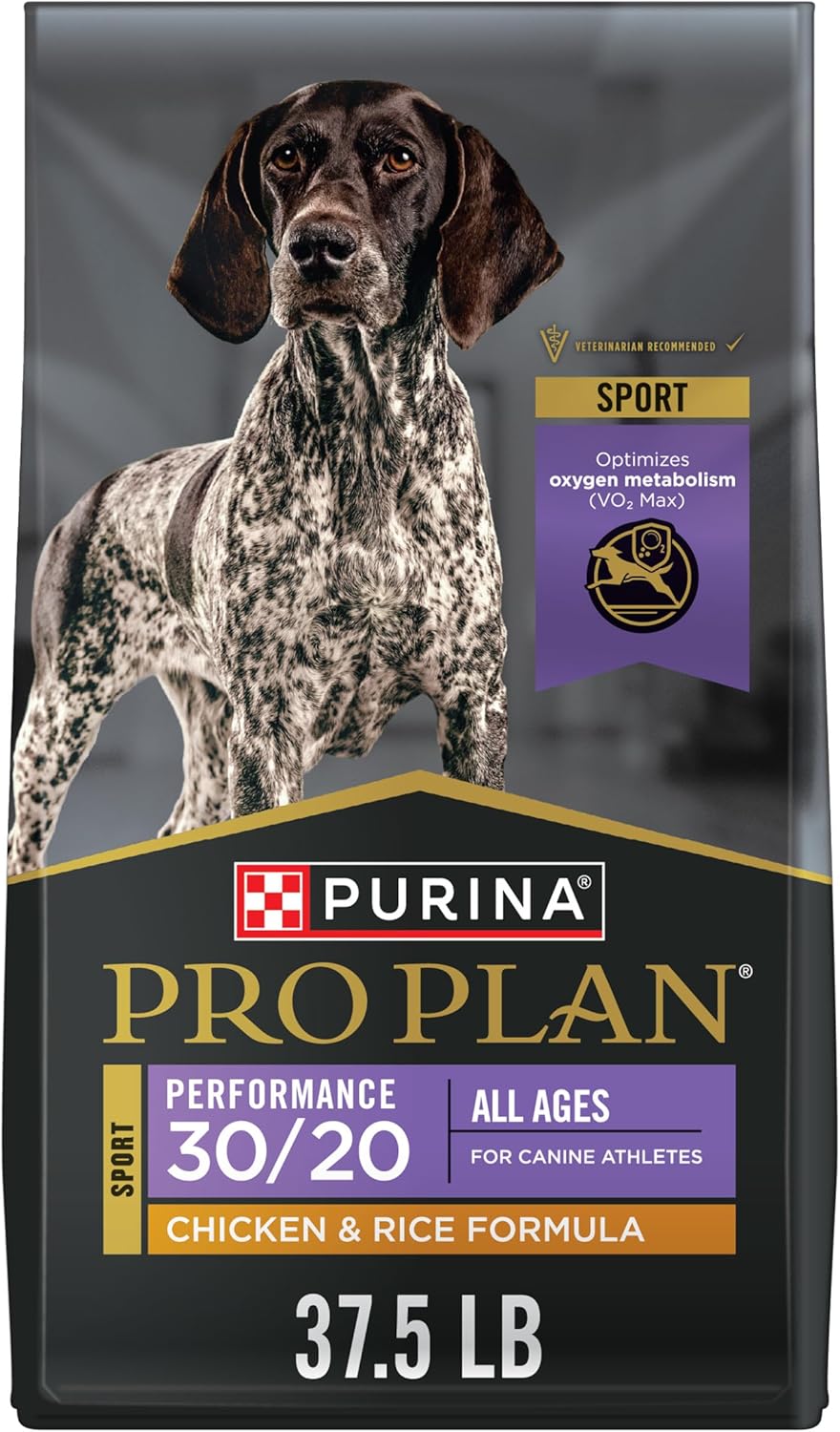
| Flavor | Chicken & Rice |
|---|---|
| Protein | 30% |
| Fat | 20% |
| Life Stage | All Life Stages |
| Package Size | 37.5 lb |
Purina Pro Plan Sport Performance 30/20 is a concentrated, high-protein dry formula that uses chicken as the first ingredient to support active dogs and canine athletes. It is typically fed as a daily staple for adult dogs with higher energy needs or dogs in heavy training, and the 30 percent protein and 20 percent fat profile supplies calories and amino acids to maintain lean muscle and help recovery after exercise. The recipe also includes EPA and glucosamine for joint support and antioxidants for immune health, and the manufacturer provides feeding guidance and a transition plan to avoid digestive upset. Practical benefits include dense nutrition in a single bag, widely available feeding recommendations, and a formula that vets often recommend for performance or working dogs. Limitations are that the ingredient list contains grains and by-product meals, which some buyers avoid, and very active or sensitive dogs may require individualized vet guidance for long-term feeding. The large 37.5 pound bag is convenient for frequent feeders but is less practical for small households or owners who prefer boutique or grain-free ingredient lists.
Best for: Buyers who want a vetted, performance-focused high-protein kibble that balances muscle support, endurance, and everyday palatability for most adult dogs.
Less Ideal for: Owners seeking grain-free, limited-ingredient, or boutique ingredient lists for dogs with known food sensitivities should consider alternatives.
- High protein and fat ratio (30% protein, 20% fat) tailored for endurance and muscle maintenance
- Chicken listed as the first ingredient for an animal-based protein source
- Contains EPA and glucosamine to support joint health and mobility
- Antioxidant blend to help immune system support
- Comes in a large 37.5 lb bag suitable for frequent feeding or multi-dog households
- Includes grain ingredients and poultry by-product meal which some buyers may prefer to avoid
- Not formulated as grain-free or limited-ingredient for dogs with specific sensitivities
Verdict: The best all-around high-protein food that balances protein density, digestibility, ingredient quality, and palatability for the widest range of adult dogs.
IAMS Proactive Health High Protein Dog Food 5 lb
Best Budget High-Protein Food

| Flavor | Chicken & Beef |
|---|---|
| Age Range Description | Adult |
| Item Form | Dry Kibble |
| Unit Count | 80 Ounce |
| Animal Food Nutrient Content Claim | High Protein |
IAMS Proactive Health High Protein is a dry adult dog food that emphasizes animal-based protein and joint support. It is typically fed as a complete daily diet and is presented in a 5 lb bag for routine home use. The formula lists chicken as the number one ingredient and claims about 80% of protein comes from animal sources, which supports muscle maintenance for active or lean dogs. The kibble also includes natural sources of glucosamine and chondroitin to help joint health and wholesome grains to provide steady energy. Practical benefits include a familiar ingredient list, no artificial flavors, and an easy transition using the provided feeding guide. On the downside, the recipe uses some common grain ingredients and chicken by-product meal rather than only whole-muscle meats, so it is not a premium novel-protein formula for dogs with sensitive digestion or strict grain-free needs. The 5 lb size is convenient for testing a new food or for small households, but larger households may prefer bigger bag sizes for value and storage efficiency.
Best for: Owners who want a higher-protein adult kibble that balances muscle support and joint health without choosing a premium specialty diet, and who prioritize value over boutique ingredients.
Less Ideal for: Owners seeking novel-protein, grain-free, or limited-ingredient formulas for allergies or digestive sensitivity should consider alternative diets.
- High animal-sourced protein profile to support muscle maintenance
- Glucosamine and chondroitin included to support healthy joints
- Formulated as a complete and balanced adult dog diet
- No artificial flavors listed and uses recognizable ingredients
- Smaller 5 lb bag convenient for trying a new formula or for small homes
- Includes grain ingredients and chicken by-product meal rather than only whole-muscle meats
- Smaller bag size may be less cost-efficient for multi-dog households
Verdict: The best budget high-protein food for owners who want higher protein without spending much, offering decent ingredients and nutrient profiles for regular feeding.
ORIJEN Original Dry Dog Food 4.5 lb
Best Premium High-Protein Food

| Flavor | Original Recipe |
|---|---|
| Age Range Description | All Life Stages |
| Item Form | Granule |
| Unit Count | 72 Ounce |
ORIJEN Original is a premium, grain-free kibble designed to deliver a meat-forward diet that mirrors ancestral feeding patterns. It is typically fed as a complete daily food for dogs of all life stages and is portioned twice daily with access to fresh water. The recipe lists fresh or raw chicken, turkey, salmon, whole herring and chicken liver among the top ingredients and emphasizes WholePrey inclusions such as organs and bone to provide naturally occurring nutrients rather than relying heavily on synthetic additives. Practical benefits include a very high animal-protein profile suitable for active or growing dogs, added omega fatty acids for skin and coat health, and a formulation intended to support digestion and immune function. Because it is protein-rich and grain-free, gradual transition and careful portion monitoring are recommended to avoid digestive upset or unwanted weight gain. The bag size is modest, so frequent repurchasing may be necessary for larger breeds or multi-dog households.
Best for: Buyers who prioritize top-tier animal proteins, clean ingredient sourcing, and are willing to pay more for a biologically appropriate, meat-forward diet for active or growing dogs.
Less Ideal for: Owners on a tight budget, those who need large bulk bags for multiple dogs, or caretakers who prefer grain-inclusive or lower-protein diets.
- Very high proportion of fresh or raw animal ingredients for strong protein content
- WholePrey approach includes organs and bone for natural micronutrients
- Formulated for all life stages so no switch needed between growth and adult diets
- Includes omega-3 and omega-6 sources to support skin and coat health
- Smaller 4.5 lb bag may not be economical for large or multiple dogs
- Protein-rich formula may require slower transition for dogs with sensitive stomachs
Verdict: The best premium high-protein food for owners willing to pay more for higher-grade proteins, cleaner ingredient lists, and stronger quality-control or sourcing practices.
Purina ONE True Instinct Turkey & Venison 36 lb
Best Dry High-Protein Food

| Flavor | Turkey & Venison |
|---|---|
| Age Range Description | Adult |
| Item Form | Pellet |
| Unit Count | 576 Ounce |
| Animal Food Diet Type | Veterinary Diet |
Purina ONE True Instinct Turkey & Venison is a high-protein kibble that uses real turkey as the first ingredient and includes venison to deliver about 30 percent protein aimed at supporting strong muscles and a healthy heart. It is fed as a complete and balanced dry adult formula with added vitamins, minerals, omega-6 fatty acids for skin and coat, and natural sources of glucosamine to help joint health. Typical use is straightforward bowl feeding with gradual transition guidance on the bag and standard measuring instructions for portion control. The formulation avoids poultry by-product meal and artificial colors, flavors, and preservatives, which simplifies ingredient concerns for many owners. Practical benefits include high protein density per serving, widely available large-bag sizing that reduces repurchase frequency, and digestibility that helps maximize usable protein. Limitations to consider are that the grain-containing recipe may not suit owners seeking grain-free options and that ingredient list includes corn and soy components some buyers avoid; also, large 36 lb bags require proper storage to maintain freshness once opened.
Best for: Pet owners who want a high-protein, meat-forward dry kibble for easy bowl feeding and reliable nutrition that supports active adult dogs and muscle maintenance.
Less Ideal for: Owners who need grain-free recipes, have dogs with specific grain allergies or intolerances, or who prefer limited-ingredient or novel-protein specialty diets.
- Real turkey listed as the first ingredient with added venison for meat-forward protein
- Approximately 30% protein to support muscle and heart health
- Includes omega-6 fatty acids and multiple antioxidants for skin, coat, and immune support
- Natural sources of glucosamine to help joint health
- Large 36 lb bag reduces shopping frequency for multi-dog or high-consumption households
- Contains grains and ingredients like corn and soy that some owners prefer to avoid
- Large bag size requires airtight storage to maintain freshness after opening
- Not a grain-free formula for buyers specifically seeking grain-free diets
Verdict: The best dry high-protein food for pet owners who prefer kibble for ease of feeding, storage stability, and typically higher calorie-per-serving protein content.
ZIWI Peak Air-Dried Beef 16 oz
Best Limited-Ingredient High-Protein Food

| Flavor | Beef |
|---|---|
| Item Form | Chunk |
| Unit Count | 16 Ounce |
| Crude Protein (min) | 38% |
| Crude Fat (min) | 30% |
ZIWI Peak Air-Dried Beef delivers a nutrient-dense, limited-ingredient option that concentrates on real New Zealand grass-fed beef and organ meats using an air-dry process. It is typically served as a complete meal, a topper to boost nutrition, or a high-value training treat; the jerky-like chunks are dense so smaller portions meet daily calorie needs. Notable features include very high meat inclusion, added green-lipped mussel for joint support, and guaranteed analysis showing high protein and fat with low carbs and moisture. The format preserves much of the raw nutrition without refrigeration and provides a crunchy yet soft texture suitable across life stages. Practical benefits are easier ingredient auditing for owners managing sensitivities, strong palatability for picky dogs, and a shelf-stable protein-forward feeding option that can reduce overall feeding volume. Important limitations are the high calorie density that requires careful portioning and the premium ingredient list that raises cost compared with standard kibble, and some natural batch variability in shape and texture that may affect picky eaters' expectations.
Best for: Buyers who need a short, recognizable ingredient list and want to maintain high protein targets to help identify or reduce food sensitivities while still feeding a complete, palatable meal.
Less Ideal for: Shoppers on a tight budget or those who prefer low-calorie, high-volume diets for weight management should consider other formats.
- High meat and organ content for strong protein profile
- Limited-ingredient formulation that simplifies allergy tracking
- Air-dried processing preserves nutrients while remaining shelf-stable
- Includes green-lipped mussel and added nutrients for joint and coat support
- Calorie dense so portion sizes must be reduced to avoid overeating
- Premium ingredients and processing make it more expensive than typical kibble
Verdict: The best limited-ingredient high-protein food for dogs that need a shorter ingredient list to help identify or reduce food sensitivities while maintaining protein targets.
Diamond Naturals Extreme Athlete 40lb
Best Bulk High-Protein Food

| Flavor | Chicken & Rice – Extreme Athlete Adult |
|---|---|
| Protein claim | 32% |
| Form | Dry Kibble |
| Special Ingredients | grain-free |
| Unit Count | 640 Ounce |
Diamond Naturals Extreme Athlete is a high-protein dry kibble aimed at highly active and sporting adult dogs and comes in a large 40-pound bag that suits bulk buyers. The formula lists 32% protein with most protein sourced from chicken and egg ingredients and includes added glucosamine, chondroitin and L-carnitine to support muscle and joint health. Superfoods like blueberries, kale and pumpkin plus multiple proprietary K9-strain probiotics provide antioxidants and digestive support, which makes it practical for dogs with heavy energy needs and for multi-dog households feeding consistently over time. The bag contains white rice and other grains rather than being fully grain-free despite a grain-free mention under special ingredients, and ingredient complexity means owners should check for individual sensitivities. Packaging in a 40-pound bag reduces purchase frequency and per-serving cost but requires proper storage to keep the kibble fresh and maintain probiotic viability. For high-activity dogs that tolerate the ingredient mix, this delivers concentrated calories and targeted joint and digestive support in bulk form.
Best for: Owners who prioritize buying large quantities of high-protein food to feed highly active or multiple dogs consistently and reduce per-serving cost.
Less Ideal for: Owners who need single-ingredient or limited-ingredient diets for food-sensitive dogs or who cannot store and rotate a large bulk bag.
- High protein level (32%) with majority from chicken and egg ingredients to support active dogs
- Includes joint and muscle support additives such as glucosamine, chondroitin and L-carnitine
- Contains proprietary K9-strain probiotics and prebiotic ingredients for digestive and immune support
- Sold in a 40-pound bulk bag, reducing purchase frequency and lowering per-serving cost
- Large 40-pound bag requires careful storage to maintain freshness and probiotic viability
- Ingredient list includes multiple grains and complex components that may not suit dogs with specific allergies
Verdict: The best bulk high-protein food for owners who buy larger quantities to save per-serving cost and ensure consistent feeding for multiple dogs or long-term use.
Choosing the Right High Protein Dog Food: Key Factors to Consider
Protein Source and Amino Acid Completeness
Not all proteins are created equal. Animal-based proteins such as meat, fish, and poultry generally provide a broader range of essential amino acids in bioavailable forms, which supports muscle repair, immune function, and hormone production. When evaluating high-protein foods, look for named protein sources and consider whether the formula lists whole meats or concentrates like meat meals; both can supply protein, but whole meats often aid palatability while processed meals can boost protein density.
A complete amino acid profile matters especially for dogs with high activity levels or those building muscle. Plant proteins can contribute but may lack one or more essential amino acids unless complemented by other protein sources. For dogs with specific sensitivities, the protein source will also affect allergy risk and digestibility, so knowing the ingredients helps you balance performance with tolerance.
Protein-to-calorie Ratio and Energy Density
High protein does not always mean appropriate calories. A food with very high crude protein but excessive fat or calories can promote unwanted weight gain if portions are not adjusted. The protein-to-calorie ratio reveals how much of a dog's energy comes from protein versus fats and carbs, which helps you scale portions to maintain body condition.
For active dogs or working breeds, higher energy density paired with high protein may be desirable. For dogs that need to build lean mass without gaining fat, choose foods with higher protein proportionate to calories. Monitoring body condition and adjusting feeding amounts based on this ratio prevents overfeeding and keeps the diet aligned with your dog's activity level.
Digestibility and Gastrointestinal Tolerance
A highly digestible formula delivers nutrients your dog can actually absorb, reducing stool volume and minimizing digestive upset. Ingredients like highly digestible proteins, moderate fiber, and beneficial additives such as probiotics or prebiotic fibers can improve tolerance, especially during transitions to a new, higher-protein diet.
Dogs with sensitive stomachs may react to sudden jumps in protein or to specific ingredient types. Look for foods that disclose digestibility-focused formulations and avoid those that rely heavily on low-quality fillers. Gradual diet changes and attention to stool quality give the best signal of tolerance when moving to a high-protein option.
Life-stage and Activity-level Suitability
Nutritional needs shift across life stages and activity levels. Puppies, adults, seniors, and working or sporting dogs require different balances of protein, fat, and micronutrients. A high-protein food formulated for adult maintenance may be too rich for a sedentary senior and too low in certain growth nutrients for a puppy.
Select a high-protein food that explicitly matches your dog's life stage and activity demands. Performance dogs and highly active pets benefit from higher calorie and protein density, while less active dogs usually require controlled calories with sufficient but not excessive protein to prevent weight gain and support metabolic health.
Essential Micronutrients and Overall Formulation Balance
Protein is a cornerstone, but it must be part of a balanced formula that includes adequate fats, vitamins, minerals, and fatty acids. Calcium and phosphorus, for example, are critical for bone health and must be balanced relative to protein levels. Omega-3 and omega-6 fatty acids support skin, coat, and inflammatory responses and often accompany higher-protein diets to aid recovery and mobility.
Review the guaranteed analysis and ingredient statement to ensure the food provides a rounded nutrient profile. Avoid foods that push protein at the expense of essential micronutrients, since long-term imbalances can create health issues even when protein needs are met.
Allergens and Special Dietary Needs
Some dogs have food sensitivities or allergies that make certain high-protein sources problematic. Common allergens include certain poultry proteins, beef, soy, and dairy. For dogs with known sensitivities, limited-ingredient high-protein formulas or single-protein options can simplify elimination and identify triggers.
Additionally, medical conditions such as kidney disease require tailored protein management, so a high-protein food would be inappropriate in those cases. Always align the protein source and total protein level with any veterinary guidance and monitor for signs of intolerance when introducing a new high-protein diet.
How Much Protein Does Your Dog Actually Need
Protein requirements vary widely by size, age, and activity. Most adult maintenance diets meet baseline needs, but athletes, working dogs, and dogs recovering from injury often need more of their daily calories from protein to support repair and sustained performance. Puppy and growth diets also require higher protein and specific amino acids for development.
To determine an appropriate target, consider your dog's typical energy expenditure and body condition. Use body condition scoring as a practical tool: if your dog is losing muscle or appears underweight despite adequate calories, a diet with a higher protein concentration may be warranted. Conversely, if your dog gains excess fat after switching to a higher-protein food, reassess portion sizes and total caloric intake.
- Working and sporting dogs generally benefit from higher protein and calorie density.
- Puppies need elevated protein plus balanced calcium and phosphorus for growth.
- Seniors may need quality protein but not necessarily higher total protein if activity is low.
Transitioning Safely to a High-protein Diet
Introduce any new high-protein food gradually over 7 to 10 days to reduce digestive upset. Start with a small proportion of the new food mixed into the current diet and increase the ratio daily while monitoring stool consistency and appetite.
Track your dog's response during the transition. Mild changes in stool are common, but persistent diarrhea, vomiting, or loss of appetite are signals to slow the transition or consult your veterinarian. Keep feeding amounts consistent based on caloric needs rather than cup-for-cup swaps, since protein-dense foods can change calorie-per-cup significantly.
- Begin with 10% new food and increase by 10% daily as tolerated.
- Monitor stool quality and energy levels for the first two weeks.
- Adjust portion sizes based on body condition, not package serving sizes alone.
Reading Labels: What the Guaranteed Analysis Tells You
The guaranteed analysis lists crude protein, fat, fiber, and moisture percentages. For high-protein foods, pay attention to crude protein in relation to fat and calories to understand the diet's macronutrient balance. Crude protein alone does not indicate protein quality, so cross-reference with the ingredient list.
Also check for statements about life-stage suitability and the presence of added nutrients like omega fatty acids or probiotics. Ingredient order matters; ingredients are listed by weight, so a named meat near the top is a good indicator of meat-forward formulations rather than heavy carbohydrate or filler reliance.
- Compare protein and fat numbers to estimate energy density.
- Look for named meat sources near the top of the ingredient list.
- Watch for added functional ingredients such as prebiotics and omega-3s.
Feeding Strategies for Maintaining Lean Mass
Meal composition and timing can help maintain or build lean mass. For dogs on higher-protein diets, divide daily calories into multiple meals to stabilize energy and reduce overeating. Post-exercise feeding that includes a protein-rich component can support muscle repair in active dogs.
In addition to choosing an appropriate high-protein food, monitor body composition rather than just weight. Regularly assess muscle tone across the shoulders and hindquarters and adjust feeding amounts or activity levels to keep muscles conditioned.
- Feed multiple meals to support steady amino acid availability.
- Offer a protein-rich portion after intense activity to aid recovery.
- Use body condition and muscle assessment to guide portion adjustments.
Addressing Common Concerns: Kidneys, Allergies, and Weight
High-protein diets sometimes raise concerns about kidney health, but in healthy dogs protein itself is not typically the cause of kidney disease. Dogs with pre-existing renal issues may require reduced protein levels and veterinary supervision, so always check with a professional if your dog has diagnosed kidney disease.
If allergies are a concern, opt for limited-ingredient or single-protein formulas and introduce them carefully. For weight management, choose a formula with an appropriate protein-to-calorie ratio and control portions to prevent excess caloric intake from fats that often accompany protein-rich foods.
- Consult a veterinarian for dogs with kidney disease before increasing dietary protein.
- Use single-protein options to simplify allergy identification.
- Manage portion sizes to control weight while preserving lean mass.
How We Chose the Best High Protein Dog Food
We focused on objective, dog-focused criteria that matter when choosing high-protein foods. Primary evaluation points included protein source and amino acid profile to ensure complete, bioavailable protein; guaranteed analysis for crude protein, fat, and fiber to judge energy density and digestive impact; and formulation balance to confirm essential vitamins, minerals, and omega fatty acids are present alongside increased protein. We also weighed digestibility indicators such as limited fillers, presence of probiotics or digestible carbohydrate sources, and the ratio of protein to calories to avoid excess caloric intake. Safety and quality factors included manufacturing quality assurances and ingredient transparency. Palatability and life-stage appropriateness were considered because highly palatable formulas that meet life-stage needs reduce feeding issues and support long-term health. Excluded from consideration were foods that relied primarily on unnamed meat meals, lacked basic nutrient analysis, or were formulated for niche medical conditions rather than general high-protein needs. The final shortlist balances protein concentration with overall nutritional completeness and practical feeding outcomes for active or protein-needing dogs.
Our full evaluation process is outlined in our review methodology.
FAQ
Will switching to high-protein dog food help my dog build muscle?
Often, yes. When paired with appropriate exercise, a higher-protein food that supplies complete amino acids can support muscle repair and growth. Results depend on total calories, activity level, and overall diet balance.
Is high-protein food safe for older dogs?
It depends. Many senior dogs can benefit from high-quality protein to preserve muscle, but inactive seniors may not need higher total protein. Dogs with kidney disease often need tailored protein levels, so consult your veterinarian.
How do I know if my dog is getting too much protein?
Signs of excessive protein intake are usually related to overall calorie surplus rather than protein itself and may include weight gain. Monitor body condition and adjust portions. Persistent digestive upset could indicate intolerance to ingredients rather than protein level alone.
Can plant-based proteins meet my dog's needs on a high-protein diet?
Plant proteins can contribute but often lack one or more essential amino acids unless combined with other protein sources. For complete nutrition, choose formulas that balance plant and animal proteins or provide complementary amino acids.
Will high-protein dog food cause kidney problems?
For healthy dogs, higher protein does not generally cause kidney disease. Dogs with existing kidney dysfunction require veterinary oversight and may need modified protein levels tailored to their condition.
Final Verdict
Prioritize protein quality, digestibility, and the right protein-to-calorie balance when choosing a high-protein food. Match the formula to your dog's life stage and activity level, and monitor body condition and digestive tolerance after switching. Ultimately, choose a nutritionally complete option that supports lean mass without excess calories. If your dog has medical conditions or special dietary needs, consult your veterinarian before changing to a high-protein diet to ensure it is appropriate and safe.