

Finding the right kibble for your cocker spaniel matters because size, protein profile, and nutrient balance directly affect energy, coat health, and digestion. Cocker spaniels have distinct needs: a compact muzzle, a tendency toward ear and skin sensitivity, and activity levels that vary across life stages. The picks in this guide are the top shortlisted kibbles for cocker spaniels and were chosen for digestibility, appropriate kibble shape and size, and nutrient content suited to the breed. Below you will find focused options and practical buying guidance that prioritize bite size, protein quality, and ingredients that support skin and coat health. Use the evaluation notes to match a kibble to your dog's age, activity level, and sensitivities.
Top Picks at a Glance
| Best Overall Kibble for Cocker Spaniel Balanced recipe tailored for Cocker Spaniel nutritional needs and palates | Royal Canin Cocker Spaniel Adult Dog Food 6 lb |  |
| Best Budget Kibble for Cocker Spaniel Affordable formula that still meets basic nutrient and quality needs | Pedigree Puppy Dry Dog Food 3.5 lb |  |
| Best Premium Kibble Higher-end recipes with superior ingredients and thoughtful formulations | ROYAL CANIN Cavalier King Charles Adult |  |
| Best High-Protein Kibble Formulas emphasizing animal proteins for active or muscle-maintenance needs | Wellness CORE+ Small Breed Dry Dog Food 4 lb |  |
| Best Grain-Free Kibble Grain-free recipes for dogs with grain sensitivities or owner preference | Wellness Complete Health Small Breed |  |
| Best Small-Bite Kibble Smaller, bite-sized pieces suited to small- and medium-mouthed breeds | Hill's Science Diet Small Bites Adult |  |
Royal Canin Cocker Spaniel Adult Dog Food 6 lb
Best Overall Kibble for Cocker Spaniel
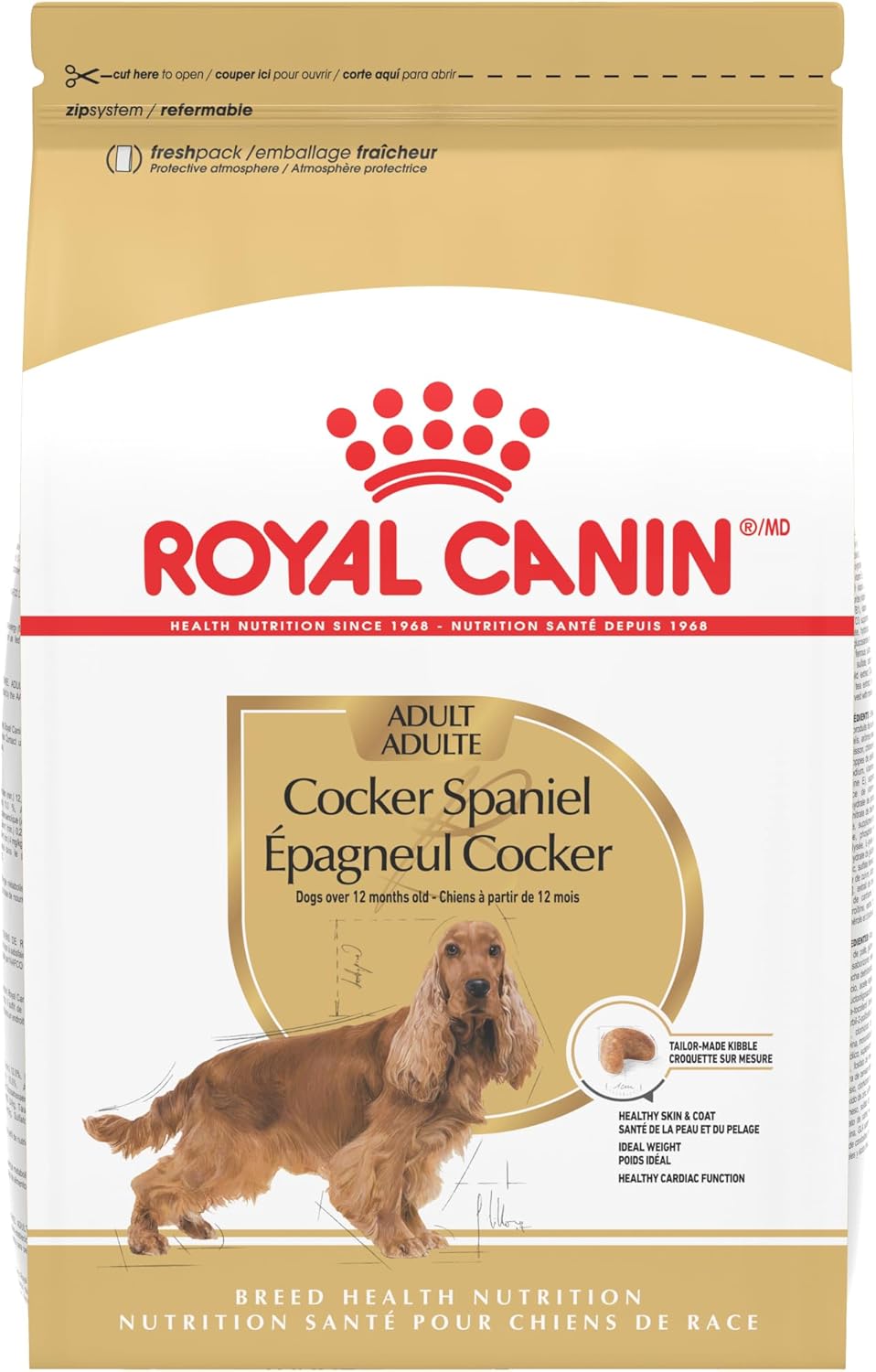
| Flavor | Chicken |
|---|---|
| Age Range | Adult (12 months+) |
| Item Form | Pellet |
| Breed Recommendation | Cocker Spaniel |
| Unit Count | 96 Ounce |
Royal Canin Cocker Spaniel Adult is a breed-targeted dry formula designed for purebred Cocker Spaniels 12 months and older. The kibble is shaped for a Cocker Spaniel's muzzle and jaw so dogs can pick up and chew more easily, and the recipe includes ingredients like fish oil for EPA and DHA, taurine, and supplemental nutrients intended to support heart health, skin barrier function, and coat condition. In practice this is fed as a daily complete diet for medium, purebred Cocker Spaniels and aims to help maintain ideal weight through a balanced nutrient profile. The product's focused formulation and specialized kibble are useful if you want a convenience solution tailored to typical breed anatomy and common health concerns. Limitations are that it is breed-specific and marketed for Cocker Spaniels, so owners of mixed-breed or different-size dogs should check suitability, and ingredients include grains and by-product meals, which some owners avoid for personal dietary preferences or specific sensitivities.
Best for: Buyers seeking a ready-to-feed, breed-tailored daily diet for adult purebred Cocker Spaniels who prioritize targeted nutrition for heart, skin, coat, and weight management.
Less Ideal for: Owners of mixed-breed dogs, dogs of a markedly different size, or caregivers preferring grain-free or limited-ingredient diets should consider other formulas.
- Kibble shape sized and textured for Cocker Spaniel muzzle and jaw to improve pickup and chewing
- Includes EPA and DHA from fish oil plus taurine to support heart and skin/coat health
- Formulation aimed to help maintain ideal weight for the breed
- Veterinary-grade, breed-specific nutrition informed by research
- Intended specifically for purebred Cocker Spaniels, reducing suitability for other breeds or sizes
- Contains grain ingredients and chicken by-product meal which some owners may avoid
Verdict: The best overall kibble for Cocker Spaniels that balances protein, fats, and carbs with appropriate kibble size and nutrients to support coat, weight, and ear-health concerns in this breed.
Pedigree Puppy Dry Dog Food 3.5 lb
Best Budget Kibble for Cocker Spaniel

| Flavor | Chicken & Vegetable |
|---|---|
| Age Range Description | Puppy |
| Item Form | Dry Kibble |
| Unit Count | 56 Ounce |
| Animal Food Nutrient Content Claim | High Protein, No Added Sugar |
Pedigree Puppy Dry Dog Food is a straightforward, budget-friendly puppy kibble made from chicken-based protein, grains, and added vitamins and minerals to support growth. You would typically use it as a daily staple while transitioning a young dog from weaning to adult food, following the feeding guide on the package to match your puppy's weight and age. The formula emphasizes high-quality protein sources for muscle development and includes 36 vitamins, minerals, and amino acids intended to support immune health, brain development, and bone strength. In practice this means an owner gets a complete and balanced commercial diet that is easy to portion and serve dry or softened with water for very young pups. Ingredient-wise it contains common commodity grains and by-product meals rather than premium single-source meats, so it delivers required calories and nutrients at a lower cost but not the cleanest ingredient panel. Expect good availability and consistent kibble size, but owners seeking grain-free, novel proteins, or limited-ingredient formulas will need to look elsewhere.
Best for: Value-conscious puppy owners who need an affordable, complete puppy kibble that supports growth and daily feeding routines.
Less Ideal for: Owners who require grain-free, novel-protein, or limited-ingredient veterinary diets for food sensitivities should consider specialty formulas instead.
- Formulated specifically for puppies with nutrients to support growth and immune health
- Contains high-protein sources to support muscle development
- Includes 36 vitamins, minerals, and amino acids for complete and balanced nutrition
- Easy-to-follow feeding guide for age and weight makes portioning simple
- Uses ingredient list with grains and by-product meals rather than single-source premium proteins
- Not suitable for owners seeking grain-free or limited-ingredient diets
Verdict: The best low-cost kibble for Cocker Spaniels that delivers complete nutrition and acceptable ingredient quality for owners prioritizing value without sacrificing essential health needs.
ROYAL CANIN Cavalier King Charles Adult
Best Premium Kibble

| Flavor | Chicken |
|---|---|
| Age Range Description | Adult |
| Breed Recommendation | Cavalier King Charles Spaniel |
| Item Form | Pellet |
| Specific Uses For Product | Heart Care, Weight Management |
This Royal Canin formula is a breed-targeted dry food created specifically for adult Cavalier King Charles Spaniels and is intended as a daily complete diet for dogs 10 months and older. The kibble is shaped and sized for the Cavalier's tapered muzzle and scissor bite, which makes it easier for small mouths to pick up and chew. The recipe highlights heart-supporting nutrients such as taurine, EPA and DHA from fish oil, and L-carnitine aimed at maintaining cardiac function, plus a calorie profile meant to help manage ideal weight in a small-breed dog. The formula also includes ingredients to support skin and coat health and lists breed-tailored benefits like custom kibble texture and targeted nutrient balance. Practical limitations are typical for specialty diets: it is tailored to one pure breed so it may be unnecessary for mixed breeds or dogs without Cavalier-specific issues, and the ingredient list contains cereal and by-product meals that some buyers avoid. For owners prioritizing breed-specific cardiac and coat support along with easy-to-eat kibble for small jaws, this is a focused option.
Best for: Owners of purebred Cavalier King Charles Spaniels who want a daily food formulated to support common breed concerns like cardiac health, coat condition, and easy kibble pickup.
Less Ideal for: Owners who prefer grain-free or limited-ingredient diets, or those feeding mixed-breed dogs without Cavalier-specific nutritional needs should consider broader or alternative formulas.
- Kibble shape and texture designed for Cavalier muzzle and scissor bite for easier pickup and chewing
- Includes heart-supporting nutrients such as taurine, EPA and DHA and L-carnitine
- Calorie profile and formulation aimed at helping maintain an ideal weight for a small-breed dog
- Contains ingredients and nutrients targeted to support skin and coat condition
- Formulation is breed-specific and may be unnecessary for mixed-breed or non-Cavalier dogs
- Contains cereal ingredients and chicken by-product meal that some owners prefer to avoid
Verdict: The best premium kibble for owners who want top-tier ingredients, advanced nutrient profiles, and higher manufacturing standards to support long-term health and coat condition.
Wellness CORE+ Small Breed Dry Dog Food 4 lb
Best High-Protein Kibble

| Flavor | Turkey and Chicken |
|---|---|
| Age Range Description | Adult |
| Special Ingredients | grain-free |
| Unit Count | 64 Ounce |
Wellness CORE+ Small Breed combines high-quality animal proteins in a hard kibble with small freeze-dried turkey pieces to boost taste and protein density for everyday feeding. It is fed as a complete dry ration for adult small dogs and is intended to support lean muscle, energy and coat health; the formula includes added probiotics, balanced fiber and guaranteed glucosamine levels for digestion and joint support. The freeze-dried inclusions add palatability and texture without wet food, and the ingredient panel lists deboned turkey, turkey meal and chicken meal up front. Practical benefits include higher protein per serving for active little dogs and built-in probiotics that can ease sensitive stomachs during diet changes. Limitations are that it is grain-free and manufactured in a facility that also processes grains, so it may not suit owners avoiding any cross-contact, and the 4 lb bag size means more frequent repurchasing for multi-dog households. For Mini Aussies needing elevated animal protein and sustained energy, this formula delivers a protein-forward kibble with extra taste appeal from freeze-dried pieces.
Best for: Buyers seeking a protein-forward small-breed formula to support lean-muscle maintenance and higher activity in compact dogs, especially those who value added palatability from freeze-dried inclusions.
Less Ideal for: Owners who require guaranteed zero cross-contact with grains or who prefer larger bag sizes for households with multiple dogs should consider alternatives.
- High animal-based protein mix with deboned turkey, turkey meal and chicken meal listed first
- Freeze-dried turkey pieces increase palatability and add concentrated protein
- Includes probiotics and fiber to support digestion during diet transitions
- Contains glucosamine and omega fatty acids to support joints and skin/coat health
- Grain-free formula is produced in a facility that also processes grains, so cross-contact is possible
- Small 4 lb bag requires frequent repurchase for active or multiple dogs
Verdict: The best high-protein kibble for dogs needing extra protein for activity, lean-muscle maintenance, or recovery, with appropriate amino acids and quality protein sources.
Wellness Complete Health Small Breed
Best Grain-Free Kibble

| Flavor | Turkey |
|---|---|
| Age Range Description | Adult |
| Item Form | Dry |
| Special Ingredients | grain-free |
| Unit Count | 64 Ounce |
Wellness Complete Health Small Breed is a grain-free dry kibble formulated for adult small dogs using deboned turkey, chicken meal and salmon meal as primary protein sources. It is intended for everyday feeding and includes probiotics, omega fatty acids, glucosamine and antioxidants to support digestion, skin and coat health, immune function and hip and joint support. Typical use is a daily maintenance diet for small adults that need grain-free carbohydrate alternatives like potatoes, peas and lentils; feeding guidelines are printed on the bag for portioning by weight. The recipe avoids artificial colors and common fillers and lists added functional ingredients such as taurine and multiple probiotic strains, which can help stool quality and nutrient absorption. Limitations are that it remains a calorie-dense adult formula so it is not suited for puppies or dogs requiring a weight-loss therapeutic plan, and the legume-and-potato carbohydrate mix can be a sensitivity trigger for a minority of dogs. The bag is a standard retail pack so buyers should plan storage for freshness after opening.
Best for: Owners who want a grain-free, nutritionally complete everyday diet tailored to adult small breeds and prioritize natural ingredients and digestive support.
Less Ideal for: Pet owners looking specifically for puppy formulas, therapeutic weight-loss diets, or dogs with known sensitivities to peas or potatoes should consider alternatives.
- Grain-free formula using high-quality proteins as first ingredients
- Includes probiotics and fiber to support digestion
- Fortified with omega fatty acids and antioxidants for skin, coat and immune health
- Contains glucosamine sources to help hip and joint support in active small dogs
- Not formulated for puppies or weight-loss management
- Uses potatoes and legumes as grain-free carbs that some dogs may be sensitive to
Verdict: The best grain-free kibble for owners avoiding grains or managing suspected grain sensitivities while still providing balanced nutrition from alternate carbohydrate and fiber sources.
Hill's Science Diet Small Bites Adult
Best Small-Bite Kibble

| Flavor | Lamb & Brown Rice |
|---|---|
| Age Range | Adult 1-6 |
| Item Form | Dry Food |
| Unit Count | 72 Ounce |
Hill's Science Diet Small Bites Adult is a dry dog food designed with smaller kibble and a lamb and brown rice recipe to suit adult small-breed appetites. It is typically fed as a main daily diet for adult dogs and works well when transitioning from another food gradually over seven days as recommended. Notable features include small kibble size for easier chewing, added omega-6 fatty acids and vitamin E for skin and coat health, high-quality protein to help maintain lean muscle, and a blend of prebiotic fibers and antioxidants (ActivBiome+) to support digestion and immune health. The formula is made with natural ingredients and avoids artificial colors, flavors, and preservatives, and the packaging lists feeding guidance so portions can be adjusted to maintain optimal weight. Limitations include that calorie density and exact feeding amounts must be matched to an individual Miniature Schnauzer's activity level and weight, and the recipe contains grains which may not suit dogs on grain-free plans or those with specific grain sensitivities.
Best for: Buyers who want a vet-recommended small-kibble formula with concentrated nutrition tailored to adult small-breed dogs and who prioritize skin, coat, and digestive support.
Less Ideal for: Owners looking for a grain-free diet or those requiring a precisely labeled calorie-per-cup formula for strict weight-control plans should consider other options.
- Small-sized kibble that is easier for small jaws to pick up and chew
- Includes omega-6 and vitamin E to support skin and coat health
- High-quality protein to help maintain lean muscle mass
- Contains prebiotic fibers and antioxidants to support digestion and immune health
- Contains grains, so not suitable for grain-free feeding protocols
- Feeding amounts need adjustment per dog since calorie density is not specified on the product page
Verdict: The best small-bite kibble for dogs that prefer or need smaller kibble pieces—helpful for easier chewing, reduced gagging, and more manageable portioning for medium and small breeds.
Choosing the Right Kibble Cocker Spaniel: Key Factors to Consider
Kibble Size and Shape
Kibble size and shape matter because cocker spaniels have shorter snouts and smaller mouths than many larger breeds. A kibble that is too large or oddly shaped can frustrate chewing and lead to gulping or incomplete mastication.
Smaller, flatter, or slightly concave kibbles are often easier for this breed to grip and chew. Properly sized kibble also encourages slower eating, which reduces the chance of choking and helps digestion. When switching formulas, observe how your dog handles the new shape and adjust if you notice difficulty picking up pieces or reluctance to chew.
Protein Source and Level
Protein supports muscle maintenance, immune function, and a healthy coat. For cocker spaniels, choose kibbles with named animal proteins as the primary sources rather than vague meat meals or unspecified by-products.
Moderate to high protein levels work well for active adult dogs, while puppies and seniors may need tailored levels. The amino acid profile matters more than crude protein percentage alone; look for complete sources that include essential amino acids. If your dog has a known food sensitivity, a limited-ingredient or single-protein formula can make it easier to identify triggers.
Digestibility and Stomach Sensitivity
Many cocker spaniels are prone to digestive upset or sensitive stomachs, so ingredient quality and fiber balance are important. Easily digestible proteins, gentle carbohydrate sources, and prebiotic fiber can reduce stool variability and gas.
Avoid formulas with excessive fillers or multiple unknown carbohydrate blends that can stress digestion. Probiotics or fermented ingredients may help some dogs, but responses vary. Gradual diet transitions over at least a week will minimize gastrointestinal reactions when changing kibble.
Skin and Coat Support
Cocker spaniels commonly face ear and skin issues that show up as dull coats, itchiness, or recurrent infections. Kibbles formulated with omega-3 and omega-6 fatty acids, along with zinc and vitamin E, provide the building blocks for healthy skin and a glossy coat.
Antioxidants and targeted micronutrients help maintain barrier function and reduce inflammation. If your dog has chronic dermatologic problems, look for formulas with ingredients and nutrient profiles aimed at skin support, and work with your veterinarian on any persistent concerns.
Life-stage Appropriateness
Nutritional needs change from puppy to adult to senior. Puppies need higher calories and specific ratios of calcium and phosphorus for proper growth, while seniors often benefit from lower calorie density and joint-support nutrients.
Choose a formula that matches your dog's current life stage and consider transitional formulas when moving between stages. Some adult formulas offer balanced nutrition suitable for many adult dogs, but individual energy levels and health conditions may require customized choices.
Palatability and Feeding Behavior
Kibble that your cocker spaniel finds palatable ensures consistent intake and makes medication or supplement administration easier. Palatability comes from flavor profiles, fats, and aroma, but highly palatable formulas can also encourage overeating in dogs prone to weight gain.
Monitor body condition and adjust portions to maintain a healthy weight. If your dog is a picky eater, consider rotating protein sources slowly to maintain interest, but avoid frequent drastic changes that can upset digestion.
How Do I Match Kibble to My Cocker Spaniel's Life Stage and Activity Level?
Start by identifying whether your dog is a puppy, adult, or senior and note daily activity levels. Active adults need calorie-dense formulas with higher protein to maintain muscle, while less active adults may require lower-calorie, nutrient-dense options to prevent weight gain.
For puppies choose growth formulas that provide balanced calcium and phosphorus for bone development. For seniors prioritize joint-support nutrients, controlled calories, and highly digestible proteins to accommodate reduced activity and changing metabolism.
- Puppy: higher calories and growth-focused nutrient ratios
- Adult active: higher protein and balanced fat for energy
- Adult less active: controlled calories, focus on nutrient density
- Senior: joint support, easier-to-digest proteins, lower calorie density
What Ingredients Commonly Cause Skin or Ear Sensitivities?
Common triggers include beef, dairy, wheat, soy, and some artificial additives. Not every dog reacts the same way, so when you suspect a sensitivity, a limited-ingredient trial can help isolate the problem.
Switching to novel or single-protein formulas can reduce exposure to common allergens. Work slowly and monitor skin, ear health, and stool quality for several weeks to judge whether an ingredient change has helped.
- Watch for changes in scratching, ear odor, and coat condition
- Use a trial period of at least 6 to 8 weeks to evaluate results
- Consult your veterinarian before starting elimination diets for persistent problems
How to Transition Your Cocker Spaniel to a New Kibble
A gradual transition prevents digestive upset. Start with roughly 75 percent current food and 25 percent new kibble, then increase the new food share over 7 to 10 days while monitoring stool consistency and appetite.
If your dog shows vomiting, diarrhea, or refusal to eat during the switch, slow the transition further and consult your veterinarian if symptoms persist. Keep portion sizes consistent to avoid accidental overfeeding during the swap.
- 7 to 10 day gradual swap: increase new food by 25 percent increments
- Observe stool and appetite; pause transition if signs of distress appear
- Maintain feeding schedule and measure portions precisely
Managing Weight and Portion Control for a Compact Breed
Cocker spaniels can gain weight if calorie intake exceeds activity expenditure. Use the feeding guidelines on the kibble as a starting point but adjust based on body condition scoring rather than relying solely on package amounts.
Measure portions with a kitchen scale or scoop and split daily portions into two or three meals to reduce begging and support steady energy levels. When reducing calories, prioritize nutrient density so your dog still receives essential vitamins and minerals.
- Feed measured portions and reassess body condition monthly
- Use multiple small meals to manage appetite and energy
- Consider lower-calorie, higher-fiber formulas for weight loss phases
Do Probiotics, Prebiotics, or Added Digestive Enzymes Help?
Probiotics and prebiotics may support gut health and stool consistency for dogs with mild digestive issues. Added enzymes can help break down nutrients for better absorption, which is useful in older dogs or those with enzyme insufficiency.
Not every dog needs these extras, and their effectiveness varies by individual. If your cocker spaniel has chronic digestive problems, discuss targeted supplementation with your veterinarian rather than relying on supplemental claims alone.
- Consider probiotic-containing kibbles for occasional digestive upset
- Enzyme supplements can be helpful under veterinary guidance
- Monitor for improvement over several weeks before judging effectiveness
How We Chose the Best Kibble Cocker Spaniel
We applied a consistent editorial framework to shortlist kibbles that suit the physical and nutritional needs of cocker spaniels. First, we prioritized appropriate kibble size and shape that a cocker spaniel can pick up and chew comfortably. We also evaluated protein source and quality to ensure adequate amino acids for muscle maintenance and coat condition. Digestibility was assessed by ingredient composition and known allergy triggers, favoring formulas with clear, minimal ingredient lists when possible. Next, we considered nutrient balance for skin and ear health, focusing on omega fatty acids and vitamins that support coat sheen and reduce irritation. Additional criteria included life-stage formulations to match puppy, adult, and senior needs, and manufacturing transparency such as clear guaranteed analysis. We excluded any formulas with unclear ingredient sourcing or inconsistent nutrient labeling. Our selection process emphasized formulas that balance palatability with measured nutrient density so owners can feed appropriate portion sizes without overloading calories.
Our full evaluation process is outlined in our review methodology.
FAQ
How much kibble should I feed my cocker spaniel each day?
Daily amounts depend on age, activity level, and kibble calorie density. Start with the manufacturer's feeding guide, then adjust portions up or down based on your dog's body condition score and activity. Splitting the daily amount into two or three meals helps maintain steady energy.
Is grain-free kibble better for cocker spaniels with skin issues?
Grain-free diets can help some dogs with suspected grain sensitivities, but they are not universally better. Often the underlying issue is a specific protein or additive rather than grains. Try a limited-ingredient trial and consult your veterinarian for persistent skin problems.
My cocker spaniel has a picky appetite. how can i encourage consistent eating?
Stick to a predictable feeding schedule and offer measured meals rather than free feeding. Warming the kibble slightly or mixing in a small amount of a wet topper can increase palatability. Avoid frequent treats or table scraps that can reduce interest in regular food.
Can I mix two different kibbles together?
Mixing kibbles is usually fine if both are nutritionally appropriate for the dog's life stage. Make gradual changes when introducing a new formula and watch for digestive upset. Avoid mixing multiple formulations that together exceed calorie needs.
What signs indicate my cocker spaniel is not tolerating a new kibble?
Common signs include diarrhea or loose stools, vomiting, increased gas, reduced appetite, excessive scratching, or changes in coat quality. If symptoms persist beyond a short transition period, revert to the previous diet and consult your veterinarian.
Final Verdict
Choose a kibble that fits your cocker spaniel's mouth size, life stage, and specific health needs while balancing protein quality, digestibility, and nutrients for skin and coat. Prioritize appropriate kibble size and a clear ingredient profile to reduce sensitivity risks, and monitor body condition to prevent unwanted weight gain. When in doubt, select a formula that addresses the most pressing concern—whether that is puppy growth, skin support, or weight control—and adjust portions or ingredients as needed. A careful match of kibble characteristics to your dog's habits and health will yield the best everyday results.

