

Picking the right kibble for a Shiba Inu matters because this breed has specific needs for protein, portion control, and kibble size that affect digestion, coat health, and long-term weight. You want food that fits their moderate-to-high energy level, suits a small-to-medium jaw, and helps prevent picky-eating or digestive upset. This guide lists seven shortlisted options that meet those priorities and explains the evaluation criteria used to select them. Below you'll find practical guidance on ingredients, portioning, and feeding strategies to help you choose confidently.
Top Picks at a Glance
| Best Overall Kibble for Shiba Inu A balanced, all-around kibble suited to most Shiba adult needs | ORIJEN Small Breed Dry Dog Food 4 lb |  |
| Best Budget Kibble for Shiba Inu A low-cost option that still meets basic nutrition and digestibility | Kibbles 'n Bits Mini Bits Bacon & Steak 3.5 lb |  |
| Best Premium Kibble Higher-end recipes with elevated ingredient quality and formulation care | ACANA Wholesome Grains Small Breed |  |
| Best High-Protein Kibble Formulated with extra protein for active or muscular dogs | Purina ONE Plus Small Breed Lamb 7.4 lb |  |
| Best Grain-Free Kibble Carries no grains for dogs with grain sensitivities or owner preference | Merrick Grain Free Salmon Dog Food 4 lb |  |
| Best Limited-Ingredient Kibble Simple recipes with few ingredients for easier digestion and testing | Natural Balance Limited Ingredient Small Breed Lamb |  |
| Best Small-Breed Kibble Smaller kibble size and nutrient balance tailored to small dogs | Hill's Science Diet Adult Small & Mini |  |
ORIJEN Small Breed Dry Dog Food 4 lb
Best Overall Kibble for Shiba Inu

| Flavor | Grain Free Small Breed Dog Recipe |
|---|---|
| Item Form | Dry Kibble |
| Age Range Description | All Life Stages |
| Unit Count | 64 Ounce |
ORIJEN Small Breed is a premium, grain-free dry dog food designed specifically for small dogs and all life stages. It delivers a very high proportion of animal ingredients, with the first five components listed as fresh or raw poultry and fish and an overall WholePrey approach that includes meats, organs, and bones to supply naturally occurring nutrients. The kibble is shaped for small mouths and is coated with freeze-dried bits for added flavor, making it suitable for picky eaters. Typical use is twice-daily feeding adjusted to activity and body condition, and the formulation emphasizes protein density to support lean muscle, skin and coat health, and digestive balance. Practical benefits include limited reliance on synthetic additives, a broad spectrum of animal-sourced nutrients, and ingredient sourcing from reputable regions. Important limitations are that it is grain-free which may not be necessary for every dog, and the richer formula can require careful portion control during transitions to avoid digestive upset or excess calories in less active pets.
Best for: Owners who prioritize premium animal proteins, carefully sourced ingredients, and advanced nutrition to support long-term health and coat condition in small-breed dogs.
Less Ideal for: Owners looking for a low-calorie, grain-inclusive diet or those whose dogs have no specific need for a high-protein, grain-free formula.
- Very high animal-ingredient content with whole meats and organs for nutrient density
- Kibble shape and size tailored for small-breed mouths
- Includes freeze-dried coating to boost palatability for picky eaters
- Formulated for all life stages supporting skin, coat, and digestive health
- Grain-free, protein-rich formula may be more than some small dogs need calorie- and digestion-wise
Verdict: The best overall kibble for a Shiba Inu, balancing appropriate protein and fat levels, kibble size, digestibility, and quality ingredients for everyday feeding.
Kibbles 'n Bits Mini Bits Bacon & Steak 3.5 lb
Best Budget Kibble for Shiba Inu

| Flavor | Bacon and Steak |
|---|---|
| Life Stage | Adult |
| Breed Size | Small |
| Unit Count | 56 Ounce |
| Item Form | Pellet |
Kibbles 'n Bits Mini Bits Bacon & Steak is a small-breed dry dog food built around bite-sized crunchy kibbles mixed with chewy meaty bits to boost palatability for picky eaters. It is intended for adult small dogs and is served straight from the bag using the provided feeding guide; the mini kibble size makes it easy for small mouths to pick up and chew. The formula emphasizes taste with bacon and steak flavors and includes a mix of grains, meat meals, and added vitamins and minerals to deliver complete and balanced nutrition for adult dogs. Practical benefits include strong taste appeal that can help coax a finicky dog to eat, small pieces that suit toy and small breeds, and easy portioning for daily feeding. Important limitations are its ingredient list, which relies heavily on corn, wheat and soy and includes coloring and preservatives, and that it is not formulated for puppies or dogs with specific ingredient sensitivities. For buyers prioritizing flavor on a budget, this bag offers an economical, convenient option to revive interest at mealtime but owners seeking grain-free or limited-additive recipes should look elsewhere.
Best for: Buyers who need an inexpensive, highly palatable dry food to encourage regular eating in adult small-breed dogs and who prioritize taste and convenience over grain-free or limited-ingredient formulations.
Less Ideal for: Owners looking for grain-free, limited-ingredient, or puppy-specific nutrition, or those managing food allergies or strict ingredient-sensitive diets should consider other formulas.
- Mini kibble size tailored for small mouths and easier chewing
- Crunchy kibble plus chewy meaty bits increases palatability for picky dogs
- Sold in a small 3.5 lb bag that is easy to store and portion
- Complete and balanced for adult small-breed nutrition with added vitamins and minerals
- Formula contains common grains and multiple additives including artificial colors and preservatives
- Not suitable for puppies under one year or dogs with grain/ingredient sensitivities
Verdict: The best budget kibble for a Shiba Inu that provides adequate nutrition and acceptable ingredient quality at a lower price for cost-conscious owners.
ACANA Wholesome Grains Small Breed
Best Premium Kibble

| Flavor | Wholesome Grains Small Breed |
|---|---|
| Item Form | Dry Kibble |
| Breed Recommendation | Small Breeds |
| Animal Food Diet Type | Limited Ingredient |
| Unit Count | 184 Ounce |
ACANA Wholesome Grains Small Breed is a high-protein dry kibble designed specifically for adult small-breed dogs. It uses fresh or raw free-run chicken and turkey plus eggs as primary animal ingredients and pairs them with a fiber-rich grain blend of oats, sorghum and millet to support digestion. The recipe includes added pre- and probiotics, vitamin E and naturally occurring omega fatty acids to help digestive health, immune support and skin and coat condition, and the kibble is sized for small mouths. In day-to-day use you would feed twice daily following the bag guide and expect a filling, protein-forward meal that can suit dogs that tolerate grains. Practical benefits include quality animal proteins, visible-skin-and-coat support from omegas, and ingredients aimed at digestive balance. Limitations are that this is formulated for adult maintenance rather than puppies, it contains grains so it is not suited to grain-free seekers, and its premium ingredient set means it is positioned at a higher price point than basic formulas.
Best for: Owners who prioritize high-quality animal ingredients and targeted digestive and skin-and-coat support for their small-breed dog and are comfortable paying for premium nutrition.
Less Ideal for: Owners who need puppy-specific growth formulas, require grain-free diets, or are shopping on a strict budget should consider other options.
- High proportion of animal protein from fresh or raw free-run chicken, turkey and eggs
- Kibble sized for small-breed mouths for easier chewing
- Includes pre- and probiotics to support digestion
- Added omega fatty acids and vitamin E for skin and coat health
- Formulated for adult maintenance, not for growing puppies
- Contains grains so not suitable for buyers seeking grain-free diets
- Premium ingredients result in higher cost compared with basic formulas
Verdict: The best premium kibble for owners willing to spend more for superior ingredient sourcing, specialized formulations, and tighter quality control.
Purina ONE Plus Small Breed Lamb 7.4 lb
Best High-Protein Kibble

| Flavor | Lamb & Rice |
|---|---|
| Age Range Description | Adult |
| Breed Recommendation | Small Breeds |
| Package Size Name | 7.4 lb. Bag |
Purina ONE +Plus Small Breed Lamb & Rice is a dry kibble formulated for adult small dogs with real lamb as the first ingredient and a nutrient-dense profile aimed at supporting muscle, coat, and immune health. In everyday use you feed measured portions based on the included feeding guide and can transition over 7 to 10 days to avoid digestive upset. The recipe pairs crunchy kibble with tender morsels to entice picky eaters and provides added vitamins, minerals, omega-6 fatty acids, and antioxidants for skin, coat, and immune support. Its higher-protein focus and inclusion of chicken meal and other concentrated protein sources help maintain muscle mass and energy in active or lean small dogs. Practical benefits include factory-quality manufacturing in Purina-owned U.S. facilities and a formulation that avoids poultry by-product meal and artificial flavors or preservatives. Limitations are that the ingredient list includes grains and common plant proteins such as corn and soybean meal, which some owners may want to avoid, and it is a standard kibble form so dogs with specific dental or swallowing issues might require alternative textures.
Best for: Active, lean, or athletic small-breed owners seeking a higher-protein, nutrient-dense dry food to help maintain muscle and energy across daily activity.
Less Ideal for: Owners who need a grain-free, limited-ingredient, or veterinary-prescribed elimination diet for suspected food sensitivities should consider alternatives.
- Real lamb is the first ingredient to support meat-forward protein intake
- Formulated for small breeds with nutrient-dense kibble and added vitamins and minerals
- Contains omega-6 fatty acids and antioxidants for skin, coat, and immune support
- Crunchy kibble plus meaty morsels improves palatability for picky small dogs
- Made in Purina-owned U.S. facilities with no artificial flavors or preservatives
- Includes grains and plant-based protein meals that some owners avoid
- Not formulated as a grain-free or novel-protein diet for dogs with specific allergies
Verdict: The best high-protein kibble for Shibas with higher activity levels or lean-muscle needs, offering increased animal‑based protein to support energy and condition.
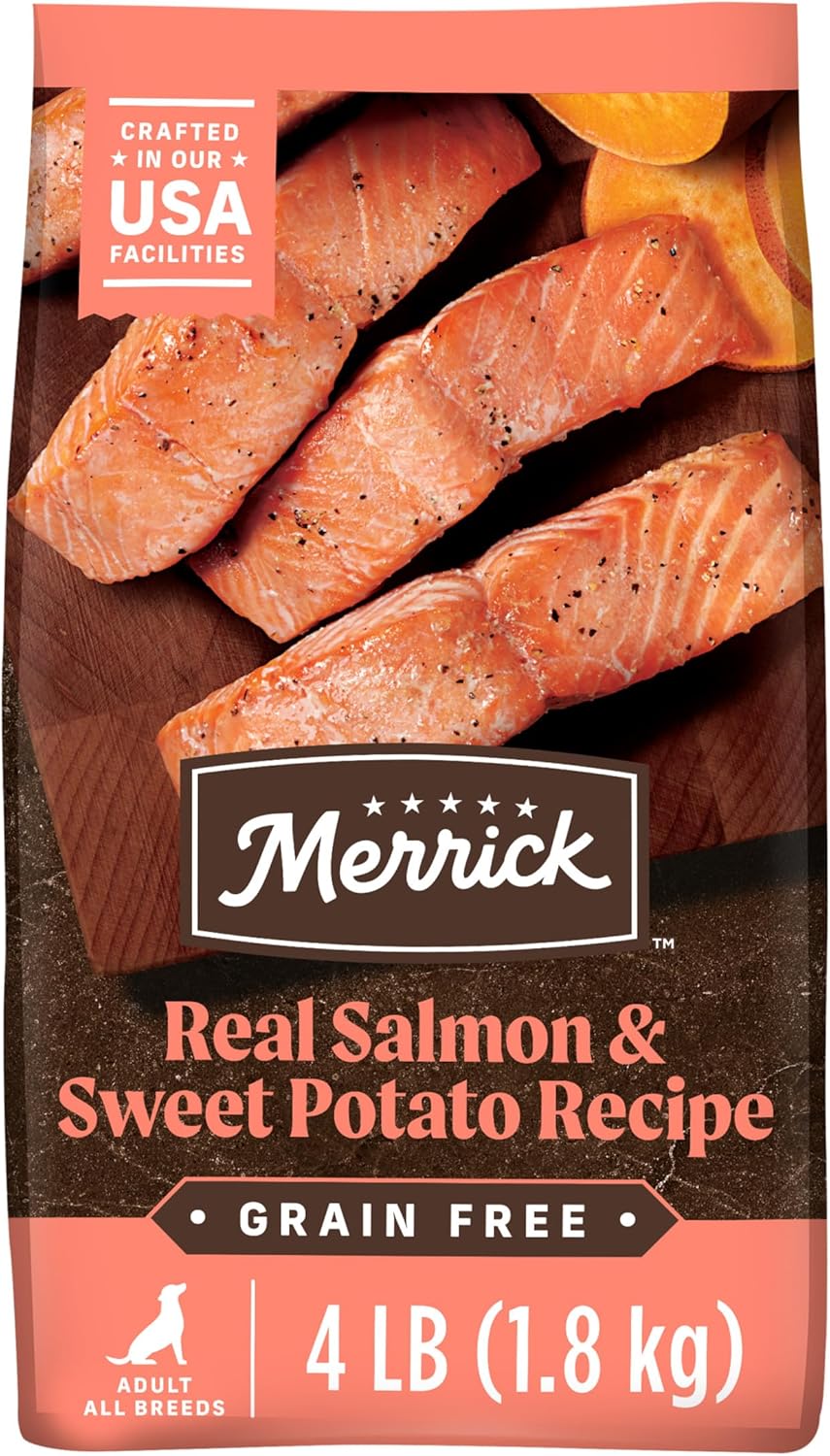
Merrick Grain Free Salmon Dog Food 4 lb
Best Grain-Free Kibble
| Flavor | Salmon |
|---|---|
| Life Stage | Adult |
| Item Form | Kibble |
| Unit Count | 4 Pounds |
| Animal Food Diet Type | Limited Ingredient |
This Merrick grain-free kibble uses deboned salmon as the top ingredient and is formulated to deliver high protein with added glucosamine, chondroitin and omega fatty acids to support muscle, joint and skin health. It is typically fed as a complete daily diet for adult dogs and is suited to owners seeking a chicken-free, grain-free option; feeding directions let you portion by weight and adjust when mixing with wet food. The recipe emphasizes animal-based protein sources and includes fruit and vegetable ingredients for fiber and micronutrients while avoiding corn, wheat, soy and artificial colors or preservatives. Practical benefits include higher protein for active breeds, nutrients aimed at hip and joint support, and fatty acids for coat condition. Limitations are that grain-free diets are not necessary for every dog and some veterinarians recommend grain-inclusive formulas for certain conditions, and this bag is a 4 pound size which may require more frequent repurchasing for larger dogs or multi-dog households.
Best for: Owners who need or prefer a grain-free, chicken-free adult formula and want higher animal-protein nutrition with added joint and skin support for active or working dogs.
Less Ideal for: Owners whose dogs do well on grain-inclusive diets or who prefer larger bag sizes to reduce shopping frequency should consider alternatives.
- Deboned salmon is first ingredient for a strong animal-protein profile
- Formulated grain-free and free of corn, wheat, soy and artificial colors or preservatives
- Contains glucosamine and chondroitin to support hip and joint health
- Includes omega-3 and omega-6 fatty acids to promote skin and coat condition
- 4 lb bag size may be small for larger or multiple dogs
- Grain-free formulation may not be necessary or recommended for every dog
Verdict: The best grain-free kibble for owners seeking formulas without grains, useful for dogs with specific grain intolerances or for following a grain-free feeding approach.
Natural Balance Limited Ingredient Small Breed Lamb
Best Limited-Ingredient Kibble

| Flavor | Lamb & Brown Rice |
|---|---|
| Age Range Description | Adult |
| Breed Recommendation | Small Breeds |
| Animal Food Diet Type | Limited Ingredient |
| Unit Count | 64 Ounce |
This Natural Balance Limited Ingredient formula is a dry kibble made for small adult dogs that need a simplified diet. It uses lamb and lamb meal as the primary animal proteins, with brown rice and oatmeal supplying digestible carbohydrates, and added omega fatty acids and vitamins to support skin, coat, and overall health. The recipe is aimed at dogs with ingredient sensitivities: it is free of corn, wheat, soy, artificial colors, and poultry, and lists a single animal protein source which makes ingredient tracking easier. For everyday feeding it offers nutrient density appropriate for small-breed metabolism and includes glucosamine-containing lamb meal to help joint support. In practice the kibble size and formulation suit small mouths and the inclusion of whole grains can help with stool quality for dogs that tolerate grains. Limitations are that it is not grain-free and uses lamb meal in addition to fresh lamb, so dogs with specific lamb allergies or owners seeking grain-free limited-ingredient options should consider alternatives. Feeding transitions and amounts should follow package guidance and your veterinarian's recommendations.
Best for: Buyers who want a straightforward limited-ingredient diet for an adult small dog that balances digestibility and everyday nutrient needs while avoiding common fillers and artificial additives.
Less Ideal for: Owners seeking a grain-free limited-ingredient formula or those whose dogs have a diagnosed allergy specifically to lamb should look at other specialized formulas.
- Single primary animal protein (lamb) simplifies ingredient profile for sensitive dogs
- Formulated for small breeds with kibble and nutrient balance suitable for higher metabolisms
- No corn, wheat, soy or artificial colors which reduces common irritants
- Includes omega fatty acids and added vitamins and minerals to support skin, coat and overall health
- Contains lamb meal as a source of glucosamine to help joint support
- Not grain-free — contains brown rice and oatmeal
- Uses lamb meal in addition to fresh lamb, which may concern buyers seeking only whole-muscle protein sources
Verdict: The best limited-ingredient kibble for dogs with suspected food sensitivities or owners doing ingredient elimination, offering a short, simple ingredient list to minimize triggers.
Hill's Science Diet Adult Small & Mini
Best Small-Breed Kibble

| Flavor | Chicken & Brown Rice |
|---|---|
| Age Range | Adult 1-6 |
| Item Form | Dry Kibble |
| Unit Count | 72 Ounce |
Hill's Science Diet Adult 1-6 Small & Mini is a dry kibble designed to provide everyday balanced nutrition for small-breed adult dogs. The formula centers on chicken and brown rice with added pumpkin and a blend of prebiotic fibers and antioxidants to support digestion and immune health, while a tailored balance of protein, fat, and carbs helps maintain ideal body weight. Kibble size and texture are intended for small and mini mouths, and the inclusion of ActivBiome+ supports stool quality and gut health in dogs prone to sensitive digestion. This bag also emphasizes natural ingredients and no artificial colors or flavors, which can matter for owners prioritizing basic ingredient quality. The product is focused on daily feeding rather than therapeutic needs, so dogs with specific medical conditions may need a prescription diet instead. Packaging guidance and feeding instructions are on the bag, and transitioning slowly over a week is recommended to avoid digestive upset.
Best for: Owners of Boston Terriers seeking a reliable everyday kibble that supports digestion and weight maintenance with a small-breed appropriate texture.
Less Ideal for: Owners whose Boston Terriers have specific medical needs or who require a therapeutic prescription diet should consult their veterinarian and consider specialized formulas.
- Kibble formulated for small and mini adult mouths and chewing preferences
- Includes pumpkin and prebiotic fibers to support digestion and stool quality
- Formulated to help maintain ideal body weight with a balanced mix of protein, fats, and carbs
- No artificial colors or flavors listed
- Not a veterinary prescription diet for treating specific medical conditions
- Limited to small and mini adult dogs rather than all life stages
Verdict: The best small-breed kibble for Shiba Inus and other smaller dogs, with appropriately sized pieces and nutrient densities suited to smaller mouths and metabolisms.
Choosing the Right Kibble Shiba Inu: Key Factors to Consider
Protein Quality and Level
Shiba inu are an active, muscular breed that benefit from high-quality protein in their kibble. Look for named meat or fish sources early in the ingredient list because the amino acid profile and digestibility affect lean muscle maintenance and energy recovery after exercise.
Excessive crude protein is not always better. Aim for moderate-to-high protein that matches your dog's life stage and activity level; puppies and working dogs need more, while less active adults may do better with a slightly lower percentage to avoid excess calories.
Kibble Size and Texture
Shiba inu have relatively small muzzles and a strong bite. Kibble that is too large can be difficult to pick up, while pieces that are too small may encourage gulping. Choose a size and shape that encourages chewing without causing frustration.
Texture affects dental health and palatability. Firmer kibble can help remove soft plaque, while softer pieces or coated kibbles may be easier for picky dogs to eat. If your dog tends to gulp, look for a shape that promotes slower eating or plan to use puzzle feeders.
Calorie Density and Fat Content
Shiba inu are prone to weight gain if their caloric intake exceeds activity levels. Check calorie density per cup and the fat percentage to match portion sizes to your dog's activity. Active dogs need richer formulas, but many adults maintain weight better on moderate-calorie kibbles.
Adjust feeding amounts rather than switching foods frequently. A stable calorie-controlled diet makes it easier to manage body condition and reduces the risk of sudden weight fluctuation that can affect joint health and mobility.
Digestibility and Gut Support
Sensitive digestion is common in many dogs and can show as loose stools, frequent gas, or inconsistent appetite. Ingredients that improve digestibility, such as probiotics, prebiotic fibers, and highly digestible protein sources, help stabilize stool quality and nutrient absorption.
Avoid formulas with excess fillers that offer little nutritional value. Instead, prioritize whole-food inclusions and fiber blends that support steady digestion and help prevent abrupt stool changes when switching foods.
Essential Fatty Acids for Skin and Coat
Shiba inu are known for a thick double coat that requires nutritional support to remain healthy. Omega-3 and omega-6 fatty acids help reduce dryness, flaking, and excessive shedding while supporting skin barrier health.
Look for identifiable sources such as fish oil or flaxseed and ensure the balance of fatty acids aligns with maintenance needs. Coat-focused formulas can improve appearance, but overall diet balance remains the priority for long-term skin health.
Ingredient Transparency and Allergen Considerations
Knowing what is in the kibble helps you manage food sensitivities and make informed choices. Clear labeling of protein sources, carbohydrate types, and added supplements reduces guesswork when investigating allergic reactions.
Common allergens are not universal, so if you suspect sensitivities, choose limited-ingredient options or rotational strategies guided by observation. Avoid formulas that hide multiple unnamed ingredients under generic terms that make it hard to identify triggers.
How Much Kibble Should I Feed My Shiba Inu Each Day?
Daily portions depend on your dog's age, activity level, and the calorie density of the chosen kibble. Start by checking the feeding guidelines on the package for your dog's weight, then adjust in small increments based on body condition score. A lean, active adult will need more than a closet couch potato, so monitor weight and energy over two to four weeks when making changes.
Use body-condition scoring rather than eyeballing. You should be able to feel ribs without excess fat covering, see a visible waist from above, and notice a tuck at the belly. If weight shifts too quickly, reduce portion size or swap to a lower-calorie formula.
- Weigh portions with a kitchen scale for accuracy, not just measuring cups.
- Split daily ration into two meals to help digestion and reduce begging.
- Adjust calories after life changes such as neutering, injury, or increased training.
What Ingredients Commonly Cause Digestive Upset?
Digestive upset often stems from abrupt formula changes, high-fat meals, or difficult-to-digest carbohydrate sources. Ingredients like certain grain blends, legumes, or highly processed byproducts can be triggers for some dogs. Introducing new food slowly over a week reduces the risk of gastrointestinal reactions.
Food sensitivity is individual. If your Shiba Inu shows persistent loose stool, chronic gas, or skin issues after a diet change, consider an elimination approach guided by ingredient simplification and veterinary advice.
- Introduce new kibble over 7 to 10 days, increasing the new food each day.
- Watch for consistent signs over several feedings before concluding a particular ingredient is the cause.
- Document ingredients and symptoms to spot patterns.
How to Transition Your Shiba Inu to a New Kibble
A gradual transition helps prevent digestive upset and reduces refusal. Start with 10 percent new kibbles mixed with 90 percent old kibble for two days, then slowly increase the new proportion every two days until you reach 100 percent. If your dog shows stool changes or reduced appetite, pause progression for a few days before continuing.
If your dog is extremely picky or has a sensitive stomach, add a small amount of warm water or low-sodium broth to make the new kibble more appealing and easier to smell. Avoid frequent switching between formulas, which can perpetuate picky behavior and digestive instability.
- Keep feeding times consistent to encourage predictable digestion.
- Monitor stool quality and energy levels during the transition.
- Consult a veterinarian promptly if severe vomiting or prolonged diarrhea occurs.
Can Kibble Help with Common Shiba Inu Skin and Coat Issues?
Nutritional support through omega fatty acids and certain vitamins can improve skin and coat condition over time. Look for formulas containing EPA and DHA along with vitamin E and biotin to support a healthy coat. Consistent feeding of an appropriately balanced diet is more effective than short-term supplements in most cases.
Diet changes can take several weeks to show visible improvement. If skin problems persist despite a nutritionally suitable kibble, rule out parasites, endocrine disorders, or environmental allergies with your veterinarian.
- Expect visible coat changes over 6 to 12 weeks with consistent diet.
- Pair fatty acid–rich kibble with good grooming to reduce shedding and tangles.
- Address environmental factors such as humidity and bathing frequency that also affect skin health.
Feeding Strategies for Picky Shiba Inu
Picky eating is common in Shiba inu. Try warming the kibble slightly to enhance aroma, rotating proteins occasionally to maintain interest, or using a measured topper that adds flavor without unbalancing nutrition. Keep feeding windows short; offer food for 15 to 20 minutes then remove, which discourages grazing and encourages routine.
Avoid over-reliance on human food or high-calorie toppers that can reduce appetite for balanced kibble. If pickiness persists, evaluate underlying medical or dental causes before repeatedly changing food.
- Use puzzle feeders to increase engagement and slow eating.
- Rotate single-ingredient toppers such as plain cooked vegetables or a spoon of plain yogurt when safe.
- Keep mealtime consistent to build predictable appetite.
Is Grain-free Kibble Necessary for a Shiba Inu?
Grain-free diets are not inherently better for Shiba inu and may not be necessary unless your dog shows confirmed grain intolerance. Many grain-inclusive formulas provide digestible carbohydrates and fiber that support healthy digestion. The choice should be driven by documented sensitivity, not trend.
If you suspect a grain issue, trial a grain-free formula under veterinary guidance and observe any changes for several weeks. Ensure any grain-free option still offers balanced nutrition and appropriate levels of essential fatty acids.
- Document symptoms before switching to grain-free.
- Confirm caloric and fat differences when changing carbohydrate sources.
- Ensure the new formula still meets life-stage nutritional profiles.
How We Chose the Best Kibble Shiba Inu
We focused on criteria that matter for Shiba Inu owners and excluded foods aimed strictly at very small breeds, giant breeds, or therapeutic prescriptions that require veterinary supervision. Primary evaluation points included protein quality and source, appropriate calorie density for an active but compact breed, kibble size and shape for comfortable chewing, and digestibility markers such as fiber balance and presence of probiotics. We also considered ingredient transparency, presence of essential fatty acids for skin and coat, and formulation features that help with picky eaters or sensitive stomachs. Filters applied: we required complete adult maintenance nutrition profiles or clearly labeled life-stage formulations for adult dogs; excluded novelty or single-batch treats and items marketed only as toppers; and deprioritized formulas with ambiguous ingredient sourcing. The result is a set of options that balance energy needs, dental and jaw fit, gastrointestinal tolerance, and skin and coat support without relying on prescription interventions.
Our full evaluation process is outlined in our review methodology.
FAQ
How often should I feed my adult Shiba Inu?
Most adult Shiba inu do well on two meals per day to stabilize energy and digestion. Puppies require more frequent feedings. Adjust portion sizes by monitoring weight and activity rather than following package amounts exactly.
What kibble size is best for a Shiba Inu puppy versus an adult?
Puppies benefit from smaller, softer pieces sized for a smaller jaw, while adults can handle slightly firmer and larger kibble that encourages chewing. Choose a size that your dog can pick up and chew comfortably.
Can I mix wet food with kibble?
Mixing a small amount of wet food or warm water can increase palatability and hydration for picky dogs. Keep additions modest to avoid unbalancing the overall nutrient profile and account for extra calories when measuring daily intake.
How quickly should I expect dietary changes to affect coat quality?
Improvements in skin and coat from a dietary change typically appear over 6 to 12 weeks. Shorter timelines are possible for minor flaking, but sustained coat health requires consistent nutrition.
What signs indicate my Shiba Inu may have a food sensitivity?
Look for persistent loose stools, chronic gas, recurrent ear infections, or itchy skin that begins after a diet change. If multiple symptoms persist despite trialing a different kibble, consult a veterinarian for guidance.
Final Verdict
When choosing kibble for a Shiba Inu, prioritize protein quality, appropriate kibble size, and a calorie density that matches your dog's activity level. Digestibility and essential fatty acids should guide your choice if your dog has a sensitive stomach or coat concerns. Balance is the key tradeoff: richer formulas support active adults, while moderate-calorie, highly digestible kibbles make weight management easier. Use gradual transitions and consistent portion control to see reliable results and choose the option that best fits your dog's energy, digestion, and coat needs.

