

Picking the right kibble for a French bulldog puppy matters because this breed has unique needs: compact jaws, rapid growth windows, and often sensitive stomachs. The right formula supports steady development, maintains healthy skin and coat, and reduces gastrointestinal upsets that can derail training and energy levels. This guide covers seven shortlisted kibbles chosen specifically for French bulldog puppies. We evaluate each option for nutrient balance, kibble size and texture, digestibility, and ingredients that support both joint and skin health. Read on to find which characteristics matter most for your puppy and which picks fit common feeding goals.
Top Picks at a Glance
| Best Overall Kibble for French Bulldog Puppy A balanced, all-round puppy formula suited to most Frenchie needs | ROYAL CANIN French Bulldog Puppy 10.5 lb |  |
| Best Budget Kibble for French Bulldog Puppy An affordable puppy formula that covers growth basics without extras | Pedigree Puppy Dry Dog Food 3.5 lb |  |
| Best Small-Breed Kibble Kibble sized and formulated specifically for small and compact mouths | Hill's Science Diet Puppy Small Bites |  |
| Best High-Protein Kibble Higher protein blend to support muscle development and active puppies | Diamond Puppy High Protein 6lb |  |
| Best Limited-Ingredient Kibble A simplified recipe with fewer ingredients to reduce allergy triggers | Natural Balance Limited Ingredient Salmon & Sweet Potato |  |
| Best Sensitive-Stomach Kibble Gentle, easily digestible formulas for pups with tummy issues | Hill's Science Diet Puppy Sensitive Stomach & Skin |  |
| Best Premium Kibble Higher-end puppy formulas with superior ingredients and manufacturing standards | ORIJEN Puppy Dry Dog Food 4.5 lb |  |
ROYAL CANIN French Bulldog Puppy 10.5 lb
Best Overall Kibble for French Bulldog Puppy

| Flavor | Chicken |
|---|---|
| Age Range Description | Puppy |
| Specific Uses For Product | Digestive Health, Immune Support |
| Animal Food Diet Type | Limited Ingredient |
| Unit Count | 168 Ounce |
Royal Canin French Bulldog Puppy is a dry kibble formulated specifically for purebred French Bulldog puppies from 8 weeks to 12 months. The food uses a curved, wide kibble shape designed to fit the breed's short muzzle and make picking up and chewing easier, while a tailored nutrient mix provides antioxidant and vitamin E support for immune development and nutrients aimed at maintaining a healthy skin barrier. The formula includes prebiotics and targeted proteins to support digestive balance and stool quality, and supplemental ingredients such as glucosamine and chondroitin are included for joint support. In practice this is fed as the puppy's complete diet during the first year and is useful for owners who want a breed-tailored option that addresses common French Bulldog sensitivities and conformation. Expect good palatability for many puppies and convenient packaging for regular feedings, but note the ingredient list contains several common grains and by-product meals, so it may not suit owners seeking grain-free or single-protein limited-ingredient formulas.
Best for: Buyers seeking a puppy food specifically tailored to French Bulldog anatomy and common developmental needs, prioritizing complete breed-focused nutrition and digestibility.
Less Ideal for: Owners who need a grain-free, single-protein, or strictly limited-ingredient diet for food-sensitive puppies should consider alternative formulas.
- Kibble shape customized for French Bulldog muzzle and jaw for easier pickup
- Contains antioxidants and vitamin E to support immune system development
- Formulated with prebiotics and targeted proteins to promote digestive health and stool quality
- Includes nutrients to support skin barrier and supplemental joint-support ingredients
- Contains grains and chicken by-product meal which may not meet limited-ingredient or grain-free preferences
- Formulation is breed-specific so it may be less flexible for mixed-breed puppies with different needs
Verdict: The best overall kibble for a French Bulldog puppy that balances growth nutrients, kibble size, digestibility, and palatability for everyday feeding.
Pedigree Puppy Dry Dog Food 3.5 lb
Best Budget Kibble for French Bulldog Puppy

| Flavor | Chicken & Vegetable |
|---|---|
| Age Range Description | Puppy |
| Item Form | Dry Kibble |
| Unit Count | 56 Ounce |
| Animal Food Nutrient Content Claim | High Protein, No Added Sugar |
Pedigree Puppy Dry Dog Food is a straightforward, budget-friendly puppy kibble made from chicken-based protein, grains, and added vitamins and minerals to support growth. You would typically use it as a daily staple while transitioning a young dog from weaning to adult food, following the feeding guide on the package to match your puppy's weight and age. The formula emphasizes high-quality protein sources for muscle development and includes 36 vitamins, minerals, and amino acids intended to support immune health, brain development, and bone strength. In practice this means an owner gets a complete and balanced commercial diet that is easy to portion and serve dry or softened with water for very young pups. Ingredient-wise it contains common commodity grains and by-product meals rather than premium single-source meats, so it delivers required calories and nutrients at a lower cost but not the cleanest ingredient panel. Expect good availability and consistent kibble size, but owners seeking grain-free, novel proteins, or limited-ingredient formulas will need to look elsewhere.
Best for: Value-conscious puppy owners who need an affordable, complete puppy kibble that supports growth and daily feeding routines.
Less Ideal for: Owners who require grain-free, novel-protein, or limited-ingredient veterinary diets for food sensitivities should consider specialty formulas instead.
- Formulated specifically for puppies with nutrients to support growth and immune health
- Contains high-protein sources to support muscle development
- Includes 36 vitamins, minerals, and amino acids for complete and balanced nutrition
- Easy-to-follow feeding guide for age and weight makes portioning simple
- Uses ingredient list with grains and by-product meals rather than single-source premium proteins
- Not suitable for owners seeking grain-free or limited-ingredient diets
Verdict: The best budget kibble for a French Bulldog puppy that provides essential nutrients and acceptable digestibility for owners prioritizing cost over premium features.
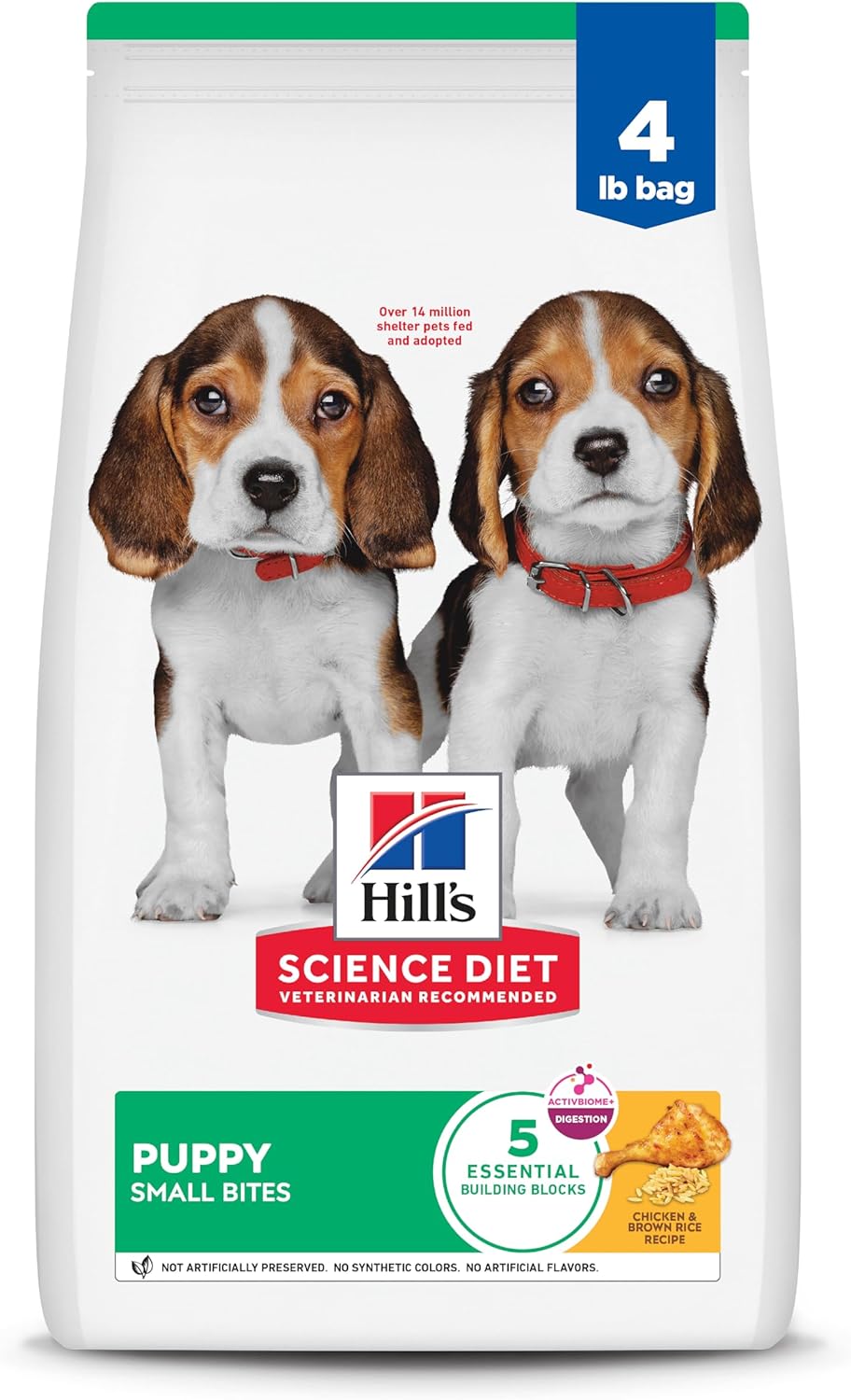
Hill's Science Diet Puppy Small Bites
Best Small-Breed Kibble
| Flavor | Chicken & Brown Rice |
|---|---|
| Age Range | Puppy |
| Dog Breed Size | Small |
| Unit Count | 72 Ounce |
Hill's Science Diet Puppy Small Bites is a dry puppy food made with small kibble sized for puppies and small-breed mouths and formulated to support growth, digestion, and developing systems. It is typically fed as a daily diet for puppies and can be introduced gradually over a week when switching foods. Notable features include chicken as the primary ingredient, brown rice and whole grains for energy, a blend of vitamins and minerals to support muscle, bone, brain and eye development, and ActivBiome+ prebiotic fibers to support gut microbiome health. Practical benefits are easy chewing for small mouths, nutrient balance targeted at growing puppies, and guidance from feeding charts on the package. Limitations are that the ingredient list includes common allergens like chicken and whole grains, so it may not suit puppies with specific protein or grain sensitivities, and the formula is a standard puppy recipe rather than a limited-ingredient or hypoallergenic prescription diet for pronounced skin sensitivities. The kibble size and nutrient focus make it a convenient everyday option for small-breed puppies that tolerate chicken and grain ingredients.
Best for: Buyers looking for an everyday growth-focused puppy kibble sized for small mouths and aimed at supporting development and digestive health.
Less Ideal for: Puppies with diagnosed food allergies, persistent skin reactions, or owners seeking a veterinary hypoallergenic or grain-free prescription diet should consider specialized alternatives.
- Small, bite-sized kibble designed for puppies and small breeds
- Formulated with DHA and fish oil to support brain and eye development
- Includes prebiotic fiber blend (ActivBiome+) to support digestion
- Balanced vitamins and minerals to support bone, muscle and immune development
- Contains common protein and grain ingredients that can trigger sensitivities in some puppies
- Not a limited-ingredient or veterinary hypoallergenic prescription formula
Verdict: The best small-breed kibble that delivers appropriately sized pieces and balanced calories for small-mouthed puppies and compact adult dogs.
Diamond Puppy High Protein 6lb
Best High-Protein Kibble

| Flavor | Puppy |
|---|---|
| Item Form | Dry Kibble |
| Special Ingredients | Chicken, Flaxseed, Fish Meal, Salmon Oil |
| Unit Count | 96 Ounce |
Diamond Puppy High Protein is a puppy kibble formulated to support growth with chicken protein listed as the first ingredient and a nutrient package targeted at brain, vision and bone development. It is used as a daily feeding for puppies and is also suitable for pregnant or nursing adults; the bag contains smaller kibble suited to young mouths. Notable features include DHA from salmon oil for neural and visual development, a probiotic blend and antioxidants to support digestion and immune health, and higher protein and fat levels to fuel growth. Ingredients list includes chicken by-product meal, whole grains, flaxseed and fish meal, so you get concentrated protein sources alongside grains and added functional fats. Practical benefits are straightforward nutrition designed by veterinarians, family-owned U.S. manufacturing, and an emphasis on value for owners who need a complete high-protein puppy diet on a budget. Limitations include the use of by-product meal and grain ingredients for some buyers who prefer single-source or grain-free recipes, and limited packaging size choices compared with larger bulk bags for heavy feeders.
Best for: Cost-conscious puppy owners who need a complete, higher-protein growth formula that supports brain and bone development without a high price tag.
Less Ideal for: Owners seeking grain-free or single-source whole-muscle protein formulas, or those who prefer novel protein recipes for allergy-prone puppies.
- Chicken protein is listed first for muscle-building support
- Includes DHA from salmon oil to support brain and vision development
- Contains a probiotic blend and antioxidants to aid digestion and immune health
- Smaller kibble size formulated for puppies and suitable for pregnant or nursing adults
- Uses chicken by-product meal and mixed grain ingredients rather than single whole-muscle protein sources
- Limited bag size may require more frequent repurchasing for fast-growing litters
Verdict: The best high-protein kibble for puppies needing extra protein for healthy growth, muscle development, and sustained energy during early life stages.
Natural Balance Limited Ingredient Salmon & Sweet Potato
Best Limited-Ingredient Kibble

| Flavor | Salmon & Sweet Potato |
|---|---|
| Item Form | Pellet |
| Animal Food Diet Type | Limited Ingredient |
| Unit Count | 64 Ounce |
| Breed Recommendation | Small Breeds |
This Natural Balance Limited Ingredient Salmon & Sweet Potato recipe is a grain-free dry food designed for small-breed adult dogs and dogs with simplified dietary needs. It uses salmon and salmon meal as the primary animal proteins and a short ingredient list intended to reduce exposure to common irritants like corn, wheat, and soy. In everyday use it serves as a complete daily feed for small dogs and can also be used during an elimination trial because the formula focuses on a single animal protein and limited carbohydrate sources such as sweet potato and potato. Practical benefits include ingredients chosen to support digestion and skin and coat health, added vitamins and minerals for balanced nutrition, and convenient bagged packaging for daily feeding. Limitations to note are that this is a small-breed formula so kibble size and nutrient balance are aimed at smaller dogs, and while the ingredient list is simplified it still contains items like yeast, canola oil, and mixed tocopherols that some owners may avoid during strict elimination diets.
Best for: Owners of Miniature Schnauzers who suspect ingredient sensitivities and want a short, single-protein diet tailored to small-breed needs and easy use during an elimination trial.
Less Ideal for: Families needing a truly novel-protein or prescription hypoallergenic formula for medically diagnosed food allergies, or owners of medium and large breeds seeking a different nutrient profile.
- Single primary animal protein (salmon) which simplifies ingredient exposure during elimination trials.
- Grain-free formula with no corn, wheat, or soy listed to reduce common dietary irritants.
- Formulated for small breeds with nutrients to support skin, coat, and digestive health.
- Includes added vitamins, minerals, and salmon meal for balanced daily nutrition.
- Formulated specifically for small breeds, so nutrient profile and kibble size may not suit larger dogs.
- Contains multiple non-protein ingredients (dried yeast, canola oil, mixed tocopherols) that could still trigger sensitivities in highly reactive dogs.
Verdict: The best limited-ingredient kibble for owners seeking a minimal-ingredient formula to help identify or avoid common food sensitivities.
Hill's Science Diet Puppy Sensitive Stomach & Skin
Best Sensitive-Stomach Kibble

| Flavor | Salmon & Brown Rice |
|---|---|
| Age Range Description | Puppy |
| Item Form | Dry Food |
| Unit Count | 64 Ounce |
| Animal Food Diet Type | Limited Ingredient |
Hill's Science Diet Puppy Sensitive Stomach & Skin is a dry puppy formula designed to reduce digestive upsets while supporting skin and coat during growth. It is used as an everyday puppy food or as a transitional diet when pups have mild stomach sensitivity; feeding instructions on the bag guide gradual switching. The recipe lists salmon as the first ingredient and includes prebiotic fiber to support a balanced gut microbiome, plus DHA from fish oil for brain and eye development and vitamin E and omega fatty acids for skin health. Practical benefits include easier digestion for sensitive puppies, nutrients targeted at immune and cognitive development, and a single-source fish protein focus that can simplify ingredient tracking. Limitations are that it is a dry kibble so dogs that require wet food or very limited-ingredient veterinary prescriptions may need other options, and the formula still contains multiple grains and added ingredients that some owners avoiding certain grains or novel-protein approaches might not prefer.
Best for: Buyers who prioritize a vet-recommended, digestive-friendly everyday puppy food that also supports skin and coat health for growing dogs.
Less Ideal for: Owners seeking a strict novel-protein, grain-free, or veterinary-prescription elimination diet should consider specialized formulas instead.
- Prebiotic fiber to support gut microbiome and help reduce occasional digestive upset
- Salmon is the first ingredient, providing a high-quality fish protein and DHA for development
- Added vitamin E and omega fatty acids to nourish skin and promote a healthy coat
- Clinically proven antioxidants including vitamins C and E to support immune health
- Contains multiple grains and shared protein sources, so not a novel-protein or grain-free prescription option
- Dry kibble format may not suit puppies needing canned diets or strict veterinary therapeutic feeds
Verdict: The best sensitive-stomach kibble formulated with gentle proteins, prebiotics, and easily digestible carbohydrates to reduce GI upset in sensitive puppies.
ORIJEN Puppy Dry Dog Food 4.5 lb
Best Premium Kibble

| Flavor | Puppy Recipe |
|---|---|
| Item Form | Dry Kibble |
| Unit Count | 72 Ounce |
| Age Range Description | Puppy |
| Animal Food Diet Type | Raw |
ORIJEN Puppy is a grain-free dry dog food designed to deliver high-protein, nutrient-dense nutrition for growing puppies. It uses an 85 percent fresh-or-raw animal ingredient approach with wholeprey components such as muscle, organs, and bones so pups get a concentrated source of amino acids, vitamins, and minerals without relying on synthetic additives. Typical use is twice-daily feeding guided by the brand chart, and the kibble includes a freeze-dried coating for added palatability. Practical benefits include a protein-forward recipe to support muscle and brain development, small kibble size aimed at puppies, and added functional ingredients for digestive and immune support. Limitations to consider are the grain-free formulation itself, which may not be necessary for all puppies and can be higher in calories and protein than some owners expect, and the bag size is modest at 4.5 pounds which may require more frequent repurchasing for larger litters or bigger-breed pups.
Best for: Puppy owners who want a grain-free, biologically inspired diet that emphasizes fresh animal ingredients and nutrient density to support rapid growth and development.
Less Ideal for: Owners who prefer lower-protein or grain-inclusive recipes, those feeding adult dogs or puppies with specific caloric restrictions, or caretakers who need larger bulk bags to avoid frequent restocking.
- High inclusion of fresh or raw animal ingredients for complete amino acid profile
- WholePrey meats and organs provide naturally occurring vitamins and minerals
- Grain-free recipe for owners avoiding grains or managing suspected grain sensitivities
- Small kibble and nutrient profile formulated specifically for puppies
- Includes freeze-dried coating to boost palatability and encourage eating
- Smaller 4.5 lb bag may require frequent repurchasing for larger or multiple puppies
- Protein- and calorie-dense formula may be excessive for puppies that need lower energy diets
Verdict: The best premium kibble for owners willing to invest in higher-quality proteins, added functional ingredients, and rigorous sourcing for optimal puppy health.
Choosing the Right Kibble French Bulldog Puppy: Key Factors to Consider
Kibble Size and Texture
Kibble that is too large or too hard can be difficult for French bulldog puppies to pick up and chew because of their short muzzles and bite structure. Look for small, rounded shapes or slightly flattened pieces that a puppy can grasp with a compact jaw without needing to break them into smaller bits.
Texture matters as much as size. Softer or lightly porous kibble reduces chewing effort and helps prevent gagging or swallowing large chunks. For training, a kibble that breaks into small crumbles can be useful as a tasty reward while still providing balanced nutrition.
Protein Quality and Level
Puppies need highly digestible animal-based protein to support muscle and organ growth. For French bulldog puppies, prioritize recognizable meat sources listed near the top of the ingredient list rather than vague byproducts or unspecified meat meals.
Protein level should be sufficient for growth but not excessive to the point of stressing immature kidneys. Balanced amino acids are more important than raw percentages; look for formulas that specify named proteins and list supportive digestibility measures like protease enzymes or guaranteed analysis data.
Digestive Tolerance and Stool Quality
French bulldog puppies often show sensitive digestion, so ingredients that promote a healthy microbiome are valuable. Prebiotic fibers like FOS, MOS, or gentle fermentable fibers can encourage consistent stool quality and better nutrient absorption.
Avoid formulas with a long list of artificial additives or multiple uncommon proteins if your puppy has a history of sensitive stomach. Consistent stool quality is also a sign of a balanced formula and helps with housetraining and daily care.
Fat Sources and Omega Balance
Healthy fats supply energy and support skin and coat development. Choose formulas that use named fat sources such as chicken fat or fish oil and that include an appropriate ratio of omega-6 to omega-3 fatty acids.
Omega-3s from marine sources help reduce inflammation and support joint development, which can be important for growing puppies. Excessive or poor-quality fats may cause loose stools, so look for easily digestible fat sources and a stated percent of crude fat in the guaranteed analysis.
Calcium, Phosphorus, and Controlled Calories
Proper bone development requires the right balance of calcium and phosphorus, especially in a rapidly growing puppy. Formulas should list calcium and phosphorus levels within recommended ranges for growth-stage diets to avoid abnormal skeletal development.
Calorie density matters because French bulldog puppies have compact bodies; over-dense formulas can lead to rapid weight gain and joint stress. Ensure feeding guidelines pair portion sizes with expected activity levels and monitor growth to adjust intake.
Allergen Awareness and Ingredient Simplicity
Some French bulldogs react to common allergens like dairy, soy, or certain grains. Choosing a formula with a shorter, transparent ingredient list can make it easier to identify and eliminate triggers if digestive or skin issues arise.
Limited-ingredient or single-protein recipes can be helpful for elimination trials, while still providing complete nutrition if formulated correctly. Avoid overly complex blends of novel proteins and fillers when trying to narrow down an intolerance.
How Much and How Often Should I Feed a French Bulldog Puppy?
Feeding frequency depends on age. Young puppies typically take three to four meals per day, transitioning to two meals by about six months. Consistent meal times help regulate digestion and make housetraining easier.
Portion size should be based on the formula's calorie density and your puppy's growth. Use the feeding chart as a starting point, then adjust portions to maintain steady, proportional growth rather than rapid weight gain. Regular weigh-ins and body condition checks let you fine-tune intake.
- Feed 3–4 times daily until roughly 4–6 months, then transition to twice daily.
- Follow calorie-based portioning rather than volume alone.
- Adjust for activity level and growth; consult your veterinarian if growth seems too fast or too slow.
What to Do if My Puppy Has Soft Stool or Gas
When you see digestive upset, first check for sudden diet changes, excessive table scraps, or treats that could disrupt gut flora. Transitioning formulas too quickly is a common cause; always move to a new kibble over 7 to 10 days by gradually increasing the new food ratio.
If soft stool or gas persists, try a formula focused on digestibility: simpler carbohydrate sources, limited novel proteins, and added prebiotics. Keep hydration steady and avoid dairy or fatty treats while symptoms resolve. Persistent or severe symptoms warrant contact with a veterinarian.
- Transition new food slowly over at least a week.
- Temporarily remove rich treats and human food until digestion stabilizes.
- Consider a short-term bland feeding plan and seek veterinary advice for ongoing issues.
Should I Choose Grain-free or Grain-inclusive Kibble?
Grain-free diets are sometimes chosen for perceived hypoallergenic benefits, but grains are not inherently problematic and can provide digestible carbohydrates and fiber. Many puppies do well on formulas that include high-quality grains like brown rice or oats.
If you suspect a grain-related intolerance, perform an elimination trial under guidance. Otherwise, prioritize ingredient quality and digestibility over blanket grain-free choices, and watch for energy, coat condition, and stool consistency as indicators.
- Do an elimination trial rather than switching to grain-free automatically.
- Look for whole-grain options that list digestible grains near the top of the ingredient list.
How to Handle Picky Eating in a French Bulldog Puppy
Picky eating can stem from texture preferences, minor illness, or improper feeding routines. Offer meals at set times and remove uneaten food after 15–20 minutes to encourage regular eating patterns. Avoid free-feeding mature kibble all day as it can reduce appetite for scheduled meals.
If your puppy refuses a new kibble, try warming it slightly or mixing a small amount of a familiar food to ease the transition. Monitor for underlying issues like dental discomfort or digestive upset if picky behavior persists.
- Maintain meal schedules and limit free-feeding.
- Use minor mixing strategies to transition flavors and textures.
Signs a Kibble Is Supporting Healthy Skin and Joints
Improvements in coat shine, reduced scratching, and consistent stool quality are practical signs a diet is working for skin health. Omega fatty acids, particularly EPA and DHA, support reduced inflammation and healthier skin, which you may notice over several weeks.
For joint support, look for steady activity levels and comfortable movement as the puppy grows. Ingredients like glucosamine can help, but proper overall weight control and balanced nutrition play the largest role in protecting developing joints.
- Track coat condition, skin irritation, and activity level over weeks.
- Avoid expecting immediate changes; nutritional benefits often appear over time.
How We Chose the Best Kibble French Bulldog Puppy
We focused on criteria that matter for French bulldog puppies and used those filters to narrow a broad field down to seven high-quality kibbles. First, we prioritized nutrient profile: adequate levels of high-quality animal protein, correct calorie density for steady weight gain, and the right balance of calcium and phosphorus to support skeletal development. Second, we evaluated kibble physical characteristics such as size, shape, and texture to ensure pieces are easy for short muzzles to pick up and chew without excessive effort. Third, we assessed digestibility factors: inclusion of prebiotics or fermentable fibers, limited ingredients that commonly trigger GI upset, and fat sources that are easy to digest. Fourth, we looked for formulations that support skin and joint health—omega fatty acids, glucosamine, and chondroitin—because these needs are common in the breed. We also considered safety-related checks like clear manufacturing information and third-party quality assurances. Exclusions: we excluded adult or all-life-stage formulas not explicitly balanced for puppies, novelty or single-batch releases without consistent ingredient lists, and highly unbalanced recipes with excessive carbohydrate fillers. The final seven options met the combination of nutrient, physical, and digestibility standards above.
Our full evaluation process is outlined in our review methodology.
FAQ
At what age should I switch from puppy to adult kibble for a French bulldog?
Most French bulldogs transition to adult formulas between 10 and 12 months, but timing depends on individual growth. Monitor body condition and consult your veterinarian; if your puppy is still growing rapidly, wait until growth plates begin to close.
How do I know if the kibble pieces are the right size for my puppy?
Right-size kibble is easy for your puppy to pick up and chew without gagging. Test a piece to see if it breaks into small crumbles with light pressure; if not, look for smaller or softer shapes designed for toy and small-breed puppies.
Can I mix wet food with kibble for added palatability?
Mixing a small amount of wet food can improve palatability and increase moisture intake. Keep additions modest to preserve balanced nutrition and adjust portions to avoid overfeeding calories.
What should I do if my puppy repeatedly refuses all kibble options?
Rule out medical causes first with a veterinary check. If healthy, try texture changes, scheduled meals, or rotating a few vetted formulas to find a consistent preference. Avoid frequent flavor hopping, which can reinforce picky habits.
Are supplements necessary with a complete puppy kibble?
A properly formulated complete puppy kibble generally provides necessary nutrients, so supplements are usually unnecessary and can unbalance the diet. Only add supplements under veterinary guidance for specific concerns like joint support or diagnosed deficiencies.
Final Verdict
Choosing the right kibble for a French bulldog puppy means balancing bite-size practicality with concentrated, digestible nutrition. Prioritize formulas with appropriately small kibble shapes, named high-quality proteins, and ingredients that promote digestive stability and healthy skin. Be ready to trade off calorie density and growth support against the risk of rapid weight gain; monitor growth and stool quality and adjust portions as needed. With the factors above in mind, you can confidently select a puppy kibble that supports steady development and comfortable daily life.

