

Finding the right kibble for a husky puppy matters because early nutrition shapes growth, bone development, and lifelong eating habits. Huskies grow quickly, have high energy needs, and often show picky or sensitive digestion, so choosing food formulated for those traits helps you avoid common issues like poor weight gain or loose stools. This guide shortlists seven top options suited to husky puppies and explains the criteria we used, including protein sources, digestibility, and nutrient density. Use the sections below to match a kibble to your pup's activity level, appetite, and any digestion or skin concerns, then refer to the product blocks for specific choices and features.
Top Picks at a Glance
| Best Overall Kibble for Husky Puppy Balanced nutrition tailored to growing husky puppies' needs | Blue Buffalo Life Protection Puppy 15 lb |  |
| Best Budget Kibble for Husky Puppy Lowest-cost option that still meets puppy nutritional basics | Nutrish Puppy Chicken & Brown Rice 5 lb |  |
| Best High-Protein Kibble Formulas with elevated protein for active, growing working breeds | Bully Max Puppy Food 24/14 |  |
| Best Grain-Free Kibble Grain-free recipes for owners avoiding common cereal ingredients | ORIJEN Puppy Dry Dog Food 4.5 lb |  |
| Best Sensitive-Stomach Kibble Gentler recipes for puppies with digestion or food sensitivities | Hill's Science Diet Puppy Sensitive Stomach & Skin |  |
| Best Large-Bag Value Kibble Big bags for frequent feeders and multi-puppy households | Diamond Naturals Large Breed Puppy Lamb & Rice 40 lb |  |
| Best Premium Kibble Higher-end recipes with specialty ingredients and superior sourcing | Royal Canin Medium Breed Puppy Dry Food 17 lb |  |
Blue Buffalo Life Protection Puppy 15 lb
Best Overall Kibble for Husky Puppy

| Flavor | Chicken & Brown Rice |
|---|---|
| Age Range Description | Puppy |
| Crude Protein | 27.0% min. |
| Crude Fat | 16.0% min. |
| Unit Count | 240 Ounce |
Blue Buffalo Life Protection Formula Chicken & Brown Rice Puppy is a grain-inclusive dry kibble built around real deboned chicken and chicken meal as primary protein sources. It is formulated for puppies and includes DHA, ARA, and choline to support brain and eye development, plus calcium and phosphorus for bone and tooth growth. The recipe also features LifeSource Bits, a lower-temperature blended mix of antioxidants, vitamins, and minerals intended to support immune health, and prebiotic fibers to aid digestion. Typical feeding is straightforward with age- and weight-based portioning printed on the bag for gradual growth stages. Practical benefits include a protein- and calorie-rich profile that helps muscle development and steady energy from whole grains like brown rice, oatmeal, and barley. Limitations to consider are that it contains grains and is not labeled as limited-ingredient or hypoallergenic, so puppies with specific grain or ingredient sensitivities may need a different formula, and the bag is standard retail packaging without measured portion control accessories. For many owners seeking balanced, vet-formulated puppy nutrition that supports growth and digestion, this is a solid everyday option.
Best for: Buyers who want a balanced, veterinarian-developed puppy kibble that supports muscle growth, brain development, and digestive health for an active breed like pit puppies.
Less Ideal for: Owners whose puppies require grain-free, single-protein, or veterinary-prescribed elimination diets should consider alternative formulas tailored to those needs.
- Real deboned chicken listed first for quality protein
- Includes DHA and ARA for brain and eye development
- LifeSource Bits provide added antioxidants, vitamins, and minerals
- Whole grains and prebiotic fiber support steady energy and digestion
- Contains grains and multiple ingredients, so not ideal for puppies with specific food sensitivities or allergies
- No specialized limited-ingredient or hypoallergenic formulation included
Verdict: The best all-around kibble for a husky puppy, offering the right calories, protein, and nutrients to support healthy growth, energy, and coat development.
Nutrish Puppy Chicken & Brown Rice 5 lb
Best Budget Kibble for Husky Puppy
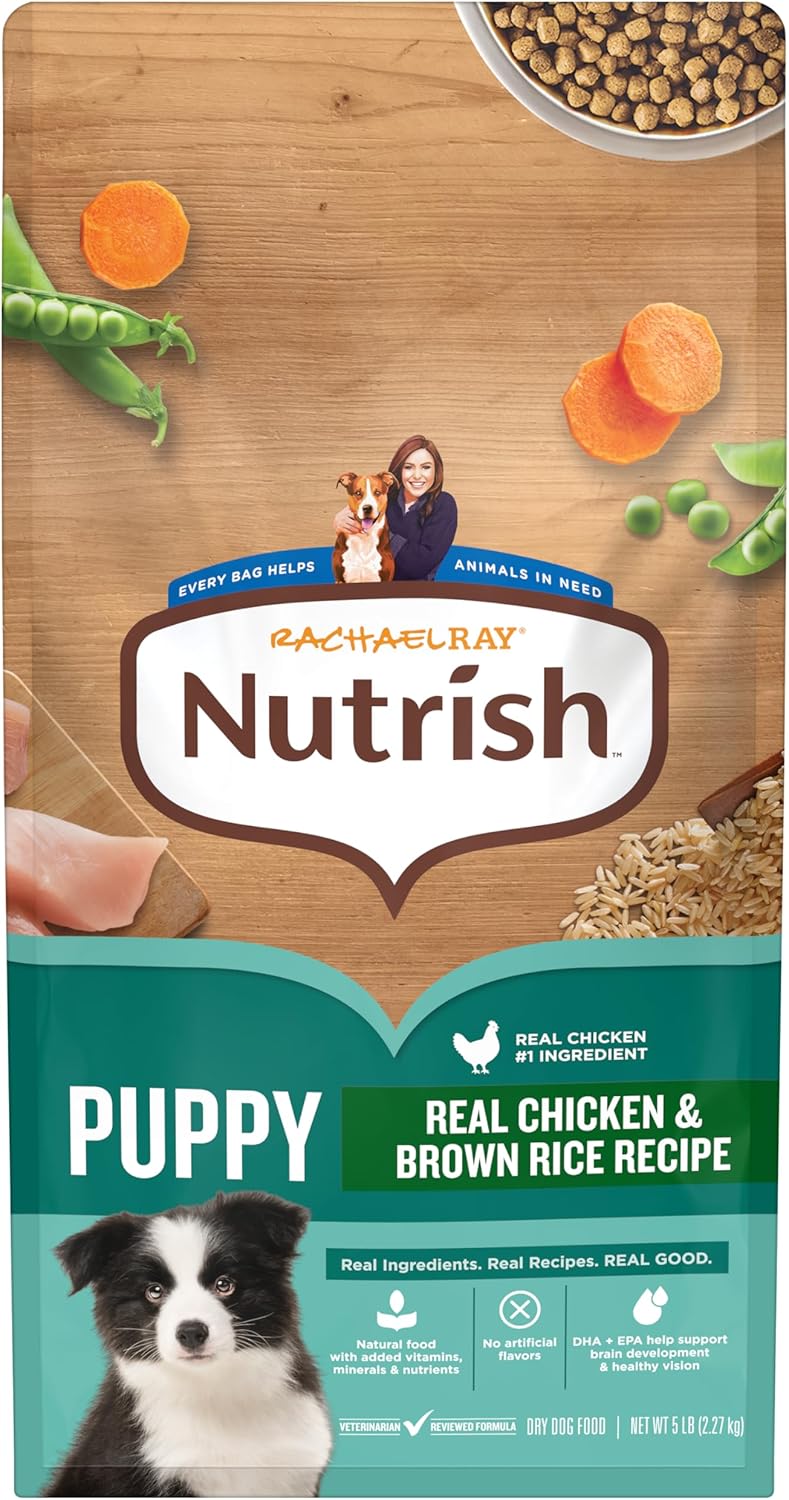
| Flavor | Chicken |
|---|---|
| Age Range Description | Puppy |
| Item Form | Chunk |
| Unit Count | 80 Ounce |
This 5 lb bag of Rachael Ray Nutrish Puppy Chicken & Brown Rice is a straightforward, budget-minded dry food formulated for growing puppies. It uses real chicken as the number one ingredient, plus chicken meal and brown rice to provide a familiar protein-and-grain base, and includes DHA and EPA from fish oil for brain and vision support. The kibble is intended for daily feeding and can be moistened for younger pups; feeding charts on the bag guide portion sizes by age and weight. The recipe is free of added artificial colors and flavors and is made in the USA with globally sourced ingredients, which helps reassure buyers focused on basic ingredient standards. On the downside the formula contains common fillers like corn and soybean meal and includes multiple grain ingredients, so it is not suited to owners seeking grain-free or hyper-premium limited-ingredient diets. For budget-conscious puppy owners who want a complete, vet-reviewed staple with developmental nutrients, this delivers reliable nutrition without specialty pricing.
Best for: Puppy owners on a tight budget who still want a complete, vet-reviewed dry food with developmental nutrients and recognizable primary ingredients.
Less Ideal for: Owners seeking grain-free, limited-ingredient, or premium boutique puppy formulas should consider alternatives with different ingredient profiles.
- Real chicken listed as the first ingredient for primary animal protein
- Includes DHA and EPA (menhaden fish oil) to support brain and vision development
- Veterinarian-reviewed formula and feeding guide tailored for growing puppies
- No added artificial colors or flavors and made in the USA
- Contains grain and common plant-based fillers such as corn and soybean meal
- Smaller 5 lb bag requires more frequent repurchasing for multi-puppy households
Verdict: The best budget kibble for a husky puppy that keeps feeding affordable while still meeting essential protein, vitamin, and calorie needs for steady development.
Bully Max Puppy Food 24/14
Best High-Protein Kibble

| Crude Protein | 24% |
|---|---|
| Crude Fat | 14% |
| Calories | 419 cal/cup |
| Primary Flavor | Lamb |
Bully Max Puppy Food is a meat-forward dry kibble designed to support healthy muscle growth, energy needs, and digestive health in growing puppies. It supplies 24% protein and 14% fat with 419 calories per cup, so it is typically used as a primary daily diet for puppies that need extra calories and protein during growth phases. Notable features include lamb meal as the first ingredient, added pork and fish meal for concentrated animal protein, and a TruMune postbiotic blend alongside prebiotics and probiotics to support gut health and immune development. Practical benefits include concentrated nutrition for steady weight gain and muscle development, formula gentleness for sensitive stomachs, and omega fatty acids for skin and coat support. Important limitations are that the formula is calorie-dense so portioning must be monitored to avoid excessive weight gain in less active puppies, and some owners may prefer a chicken-inclusive protein if lamb/pork is not suitable for their dog. It is best used with a feeding plan adjusted for breed, activity, and growth rate.
Best for: Puppy owners seeking a high-protein, calorically rich formula to support muscle development and growth, especially for puppies that benefit from digestive support.
Less Ideal for: Owners who need a lower-calorie or lower-protein puppy food for less active or quickly maturing breeds should consider gentler formulations instead.
- High protein (24%) and calorie density (419 cal/cup) to support muscle growth and energy
- Lamb meal listed as the first ingredient for concentrated animal protein
- Includes TruMune postbiotics plus prebiotics and probiotics for digestive and immune support
- Formulated without corn, wheat, soy, or artificial colors and suitable for sensitive stomachs
- High calorie density requires careful portion control to prevent overfeeding
- Chicken-free formulation may not suit puppies that tolerate or need chicken-based diets
Verdict: The best high-protein kibble for owners who need extra muscle and energy support for active husky puppies through higher-quality protein sources and appropriate calorie density.
ORIJEN Puppy Dry Dog Food 4.5 lb
Best Grain-Free Kibble

| Flavor | Puppy Recipe |
|---|---|
| Item Form | Dry Kibble |
| Unit Count | 72 Ounce |
| Age Range Description | Puppy |
| Animal Food Diet Type | Raw |
ORIJEN Puppy is a grain-free dry dog food designed to deliver high-protein, nutrient-dense nutrition for growing puppies. It uses an 85 percent fresh-or-raw animal ingredient approach with wholeprey components such as muscle, organs, and bones so pups get a concentrated source of amino acids, vitamins, and minerals without relying on synthetic additives. Typical use is twice-daily feeding guided by the brand chart, and the kibble includes a freeze-dried coating for added palatability. Practical benefits include a protein-forward recipe to support muscle and brain development, small kibble size aimed at puppies, and added functional ingredients for digestive and immune support. Limitations to consider are the grain-free formulation itself, which may not be necessary for all puppies and can be higher in calories and protein than some owners expect, and the bag size is modest at 4.5 pounds which may require more frequent repurchasing for larger litters or bigger-breed pups.
Best for: Puppy owners who want a grain-free, biologically inspired diet that emphasizes fresh animal ingredients and nutrient density to support rapid growth and development.
Less Ideal for: Owners who prefer lower-protein or grain-inclusive recipes, those feeding adult dogs or puppies with specific caloric restrictions, or caretakers who need larger bulk bags to avoid frequent restocking.
- High inclusion of fresh or raw animal ingredients for complete amino acid profile
- WholePrey meats and organs provide naturally occurring vitamins and minerals
- Grain-free recipe for owners avoiding grains or managing suspected grain sensitivities
- Small kibble and nutrient profile formulated specifically for puppies
- Includes freeze-dried coating to boost palatability and encourage eating
- Smaller 4.5 lb bag may require frequent repurchasing for larger or multiple puppies
- Protein- and calorie-dense formula may be excessive for puppies that need lower energy diets
Verdict: The best grain-free kibble for puppies when owners prefer diets without grains, focusing on alternative carbohydrate sources and balanced nutrient profiles for healthy growth.
Hill's Science Diet Puppy Sensitive Stomach & Skin
Best Sensitive-Stomach Kibble

| Flavor | Salmon & Brown Rice |
|---|---|
| Age Range Description | Puppy |
| Item Form | Dry Food |
| Unit Count | 64 Ounce |
| Animal Food Diet Type | Limited Ingredient |
Hill's Science Diet Puppy Sensitive Stomach & Skin is a dry puppy formula designed to reduce digestive upsets while supporting skin and coat during growth. It is used as an everyday puppy food or as a transitional diet when pups have mild stomach sensitivity; feeding instructions on the bag guide gradual switching. The recipe lists salmon as the first ingredient and includes prebiotic fiber to support a balanced gut microbiome, plus DHA from fish oil for brain and eye development and vitamin E and omega fatty acids for skin health. Practical benefits include easier digestion for sensitive puppies, nutrients targeted at immune and cognitive development, and a single-source fish protein focus that can simplify ingredient tracking. Limitations are that it is a dry kibble so dogs that require wet food or very limited-ingredient veterinary prescriptions may need other options, and the formula still contains multiple grains and added ingredients that some owners avoiding certain grains or novel-protein approaches might not prefer.
Best for: Buyers who prioritize a vet-recommended, digestive-friendly everyday puppy food that also supports skin and coat health for growing dogs.
Less Ideal for: Owners seeking a strict novel-protein, grain-free, or veterinary-prescription elimination diet should consider specialized formulas instead.
- Prebiotic fiber to support gut microbiome and help reduce occasional digestive upset
- Salmon is the first ingredient, providing a high-quality fish protein and DHA for development
- Added vitamin E and omega fatty acids to nourish skin and promote a healthy coat
- Clinically proven antioxidants including vitamins C and E to support immune health
- Contains multiple grains and shared protein sources, so not a novel-protein or grain-free prescription option
- Dry kibble format may not suit puppies needing canned diets or strict veterinary therapeutic feeds
Verdict: The best kibble for sensitive stomachs that minimizes common irritants and uses easily digestible proteins and limited ingredient blends to reduce gastrointestinal upset in puppies.
Diamond Naturals Large Breed Puppy Lamb & Rice 40 lb
Best Large-Bag Value Kibble

| Flavor | Lamb & Rice – Puppy |
|---|---|
| Age Range Description | Puppy |
| Breed Recommendation | Large Breeds |
| Special Ingredients | grain-free |
| Unit Count | 640 Ounce |
Diamond Naturals Large Breed Puppy Lamb & Rice is a large-bag dry kibble formulated to support growth in large-breed puppies. It uses real lamb and lamb meal as primary protein sources and includes DHA from salmon oil for brain and vision development, plus added probiotics for digestive and immune support. The formula lists a mix of whole grains, vegetables, fruits, and a suite of vitamins and minerals intended to balance puppy growth while L-carnitine helps support healthy body condition. In practical use the 40 pound bag reduces repurchase frequency for multi-puppy households or owners who prefer buying in bulk, and the inclusion of probiotics and omega fatty acids addresses common puppy digestive and skin/coat needs. Buyers should note this product is breed-size specific for large puppies and is not grain-free despite a “special ingredients” note; also ingredient lists include multiple meals and grains which some owners may avoid for specific dietary plans. The bag format is standard for dry food and will require appropriate storage to maintain freshness once opened.
Best for: Buyers who need a cost-effective, large package of nutritionally complete food for growing large-breed puppies and who prioritize fewer repurchases and digestive support.
Less Ideal for: Owners feeding small-breed puppies, dogs on grain-free or very limited-ingredient diets, or those who prefer single-protein or novel-protein recipes should look elsewhere.
- Real lamb is the first ingredient for a named animal protein source
- Contains DHA (salmon oil) to support brain and vision development
- Added probiotics to support digestive health and immune function
- Large 40 lb bag reduces repurchase frequency for multi-puppy households
- Not grain-free despite some marketing terms
- Formulated specifically for large-breed puppies so not appropriate for small-breed growth needs
Verdict: The best large-bag value kibble for owners who want economical, bulk feeding options with stable shelf formulations and consistent nutrition for growing puppies.
Royal Canin Medium Breed Puppy Dry Food 17 lb
Best Premium Kibble

| Age Range Description | Puppy |
|---|---|
| Breed Recommendation | Medium Breeds |
| Flavor | Chicken |
| Item Form | Granule |
| Unit Count | 272 Ounce |
Royal Canin Medium Breed Puppy Dry Food is a kibble formula designed for puppies that will mature to about 23–55 pounds, combining a crunchy texture with targeted nutrition for growth. It is typically used as a primary dry diet or mixed with Royal Canin wet puppy foods to add variety, and the formula highlights DHA and omega-3s for brain development, antioxidants for immune support, and prebiotics plus highly digestible proteins to support digestion. Practical benefits include a tailored nutrient profile for medium-breed growth stages and a kibble size and texture suited to puppies learning to chew dry food. The inclusion of clinically noted prebiotics and L.I.P. proteins suggests better stool quality and easier stomach tolerance for sensitive pups. Limitations are that the ingredient list includes common grains and chicken by-product meal, so owners seeking grain-free or single-protein limited-ingredient diets may prefer other formulas, and puppies with specific allergies could need veterinary guidance before switching. For buyers focused on digestive support within a premium, size-specific puppy line, this formula delivers clear, science-forward benefits in everyday feeding.
Best for: Owners of medium-breed puppies who prioritize scientifically targeted digestive and developmental nutrition and are willing to invest in a breed-size tailored formula for everyday feeding.
Less Ideal for: Buyers who require grain-free or strict single-ingredient diets for allergic or intolerant puppies should consider specialized limited-ingredient formulas instead.
- Formulated with DHA and omega-3 fatty acids to support brain development
- Contains antioxidants like vitamins E and C to support immune function
- Prebiotics and highly digestible proteins (L.I.P.) included to promote healthy digestion
- Kibble texture and size tailored for medium-breed puppies and easy mixed feeding with wet food
- Uses grains and chicken by-product meal, so not suitable for owners seeking grain-free or single-protein recipes
- Not ideal for puppies with identified poultry allergies without veterinary approval
Verdict: The best premium kibble for owners willing to invest in higher-quality ingredients, advanced formulations, and stricter sourcing standards to support optimal growth and long-term health.
Choosing the Right Kibble Husky Puppy: Key Factors to Consider
Protein Quality and Percentage
Protein is the primary building block for muscle and tissue growth in a husky puppy. Look for formulas that list a named meat source as the first ingredient and provide an appropriate crude protein percentage for growing medium-to-large breeds.
Higher protein supports lean muscle development and energy needs, but quality matters as much as quantity. Low-quality or vague protein sources can be harder to digest and provide fewer usable amino acids. Also consider the balance between animal and plant proteins; animal proteins typically supply a better amino acid profile for canine growth.
Calorie Density and Growth-stage Formulation
Husky puppies are active and burn more calories than many small-breed pups. Choose kibble with higher calorie density designed for growth so the puppy can meet energy needs without overeating volume.
A dedicated puppy formula ensures essential nutrients are provided at levels appropriate for growth. Feeding charts are helpful, but watch the puppy's body condition and adjust portions. Too few calories slows growth; too many, especially from fat or simple carbohydrates, can cause excessive weight gain or upset stomachs.
Digestibility and Gastrointestinal Support
Digestive tolerance is a common concern for husky puppies, which can manifest as loose stools or variable appetite. Ingredients that support digestibility—like moderate fermentable fiber, prebiotics, probiotics, and highly digestible protein sources—help maintain stool quality and nutrient absorption.
Avoid formulas with excessive fillers or unidentified meat meals that can increase stool volume and produce inconsistent digestion. Transitioning gradually between formulas also helps reduce GI upset.
Bone and Joint Supportive Nutrients
Correct bone growth is critical for medium-to-large breeds. Look for balanced calcium and phosphorus levels and controlled growth-phase energy to support steady skeletal development.
Excessive calories or imbalanced mineral ratios can stress developing joints. Ingredients providing vitamin D, phosphorus, and appropriate levels of calcium help optimize bone mineralization while minimizing the risk of growth-related orthopedic issues.
Fatty Acids and Skin Coat Health
Huskies have thick double coats that benefit from adequate dietary omega-3 and omega-6 fatty acids. These nutrients support skin integrity, reduce dryness or flakiness, and promote a healthy, glossy coat.
Sourcing matters: fish oil and certain marine ingredients supply EPA and DHA, which are particularly beneficial. Ratios of omega-6 to omega-3 should be considered rather than absolute amounts to ensure anti-inflammatory balance.
Kibble Size, Texture, and Palatability
Physical kibble characteristics affect chewing, acceptance, and dental interaction. Choose a kibble size and shape that fits a puppy's mouth and encourages proper chewing without being too hard or too large.
Texture influences palatability and how quickly a puppy eats. Very hard kibbles may be difficult for some pups, while overly soft or small kibbles can be eaten too quickly. Manufacturers that design puppy-appropriate shapes help control eating speed and promote oral development.
How Many Calories Should My Husky Puppy Eat Each Day?
Daily calories depend on age, weight, and activity level. Young husky puppies require more calories per pound than adult dogs because they are growing rapidly and are frequently very active. Start with the feeding guideline on a puppy formula as a baseline, then monitor weight and body condition and adjust portions upward or downward as needed.
Break meals into multiple feedings—typically three to four times daily for very young puppies, moving to two meals by mid-puppyhood. Frequent, measured feedings help maintain steady energy and reduce binge-eating or digestive upset.
- Use caloric density and the puppy's current weight to calculate portion sizes.
- Increase intake during growth spurts and reduce if the puppy gains weight too quickly.
- Consult your veterinarian for targets if the puppy is underweight, overweight, or has special needs.
What Ingredients Commonly Cause Digestive Problems?
Some puppies are sensitive to certain grains, artificial additives, or low-quality protein meals. Highly processed fillers and excessive simple carbohydrates can increase stool volume and cause inconsistent digestion. Artificial colors, flavors, and some preservatives can irritate sensitive individuals.
If your puppy shows signs of intolerance—loose stools, excessive gas, or poor appetite—try a formula with fewer novel ingredients or one that focuses on high-quality, named protein and fiber sources known to be gentle on the gut.
- Common triggers include unspecified meat byproducts, excessive corn or wheat, and artificial additives.
- Transition slowly between diets over 7 to 10 days to reduce GI upset.
- Consider a trial of formulas with added probiotics or limited-ingredient recipes if problems persist.
When Should I Switch From Puppy Kibble to Adult Kibble?
The timing depends on your puppy's growth rate and skeletal maturity. Many medium-to-large breeds transition between 12 and 18 months, but individual development varies. Switch when the puppy has reached near-adult height and your veterinarian confirms skeletal maturity is appropriate for the change.
Switch gradually over a week or more to allow the digestive system to adapt. Monitor weight and energy during and after the transition and adjust portions since adult formulas are usually less calorie dense than puppy formulas.
- Ask your veterinarian for a recommended age based on growth charts and body condition.
- Watch for changes in stool quality or energy levels during the switch.
- If your puppy is still growing rapidly, delay the switch until growth slows.
How to Manage Picky Eating in a Husky Puppy
Picky behavior can result from rapid taste development, inconsistent feeding schedules, or boredom. Keep meals consistent and avoid excessive treats between feedings. Offer meals on a schedule and remove uneaten food after a short period to establish routine.
Try rotating protein sources slowly or warming the food slightly to increase aroma and palatability. Ensure you are not overfeeding snacks that reduce appetite for complete meals, and rule out health issues with your veterinarian if poor appetite persists.
- Keep feeding and exercise routines consistent.
- Limit treats and table scraps to maintain interest in kibble.
- Test a single new formula at a time to identify preferences without upsetting digestion.
Is Feeding a Grain-free Kibble Necessary for Husky Puppies?
Grain-free is not inherently necessary for husky puppies unless a specific grain intolerance is identified. Many grain-containing formulas are well tolerated and provide useful sources of digestible carbohydrates and fiber. The key is ingredient quality rather than the presence or absence of grains.
If you suspect a sensitivity, try a limited-ingredient or novel-protein formula and work with your veterinarian to identify triggers. Do not assume grain-free automatically means better quality; evaluate overall nutrient balance and digestibility.
- Grain-free can be helpful for confirmed grain sensitivities but is not a universal need.
- Focus on overall nutrient balance and protein quality when choosing a formula.
- Monitor stool quality and coat condition after any dietary change.
How We Chose the Best Kibble Husky Puppy
We prioritized formulas and options that meet the specific needs of husky puppies by applying category-focused editorial filters. First, we required elevated protein and calorie density appropriate for medium-to-large active-breed puppies to support steady growth and high activity. Second, protein quality and source were assessed, favoring whole-meat first ingredients and limited use of unnamed meat byproducts. Third, digestibility indicators mattered: fiber balance, inclusion of prebiotics or probiotics, and ingredient simplicity where possible to reduce digestive upset. Fourth, essential micros were evaluated, including calcium-to-phosphorus ratios, vitamin D, and omega fatty acids for bone and coat development. Fifth, manufacturing controls and clear labeling were preferred, such as identifiable ingredient lists and nutritional adequacy statements for growth. We excluded products that lacked growth-stage nutrition profiles or had ingredient opacity that could hide protein sources. We also filtered out formulas that had caloric densities clearly too low for an active husky puppy or lacked basic digestive support. The final selections balanced nutrient density, ingredient quality, digestibility, and practical packaging or formula variety to suit real puppy feeding situations.
Our full evaluation process is outlined in our review methodology.
FAQ
How often should I feed my husky puppy each day?
Feed younger husky puppies three to four times daily to maintain steady energy and support digestion. By around six months you can typically move to two meals per day, but adjust based on growth, activity, and the veterinarian's guidance.
Can I mix wet food or toppers with kibble for a picky pup?
Yes, adding a small amount of wet food or a healthy topper can increase palatability and moisture, but keep the topper minimal so the puppy still eats the balanced kibble that supplies complete nutrition. Introduce toppers gradually and avoid excessive extras that replace core calories.
What signs indicate my puppy is getting the right nutrition?
Healthy indicators include steady growth along breed-appropriate curves, a shiny coat, consistent energy levels, and firm, regular stools. If you notice lethargy, poor weight gain, recurrent digestive upset, or coat problems, consult your veterinarian for dietary assessment.
Are supplements necessary when feeding commercial puppy kibble?
Most complete puppy kibbles supply required vitamins and minerals, so routine supplementation is usually unnecessary and can create imbalances. Only add supplements under veterinary advice for a diagnosed deficiency or medical condition.
How long should I wait to see improvements after changing kibble for digestion issues?
Expect to see gradual improvement in stool quality within a week or two, though full digestive adjustment can take up to a month. Always transition slowly and monitor appetite, stools, and energy while making changes.
Final Verdict
Choose a kibble for a husky puppy by prioritizing protein quality, calorie density, and digestibility to match the breed's elevated energy and growth needs. Balance bone-supporting minerals and omega fatty acids for coat and joint health, and select kibble size and texture suited to a growing mouth. Accept tradeoffs: higher-calorie growth formulas are necessary for active pups but require portion control to avoid excessive weight gain. Use the evaluation criteria above and your puppy's body condition as the final guide to pick a practical, nourishing option that supports healthy development.

