

If your large dog struggles with itchy skin, picking the right food can make a big difference for daily comfort and long-term skin health. Food choices influence inflammation, coat condition, and digestive tolerance, so selecting a formula designed for sensitive skin can reduce flare-ups and improve overall wellbeing. This guide covers the top shortlisted options specifically for large breeds with skin allergies, and explains the practical criteria we used to evaluate each choice. Below you will find our top picks followed by clear buying guidance on ingredients, nutrient balance, and transition tips to help you choose a food that supports a calmer, healthier coat.
Top Picks at a Glance
| Best Overall Large Breed Food for Skin Allergies The top all-around formula for large dogs with skin sensitivities | Hill's Science Diet Sensitive Stomach & Skin Large Breed |  |
| Best Budget Large Breed Food for Skin Allergies A low-cost formula that still addresses common allergy triggers | NutriSource Lamb Meal & Rice Large Breed |  |
| Best Premium Large Breed Food A higher-end formula with superior ingredient quality and nutrition | ORIJEN Large Breed Dry Dog Food 23.5 lb |  |
| Best Limited-Ingredient Large Breed Food A simplified recipe with fewer ingredients to reduce reactions | Natural Balance Limited Ingredient Salmon & Sweet Potato 24 lb |  |
| Best Novel-Protein Large Breed Food Formulas using uncommon proteins to avoid prior sensitization | Blue Buffalo Basics Lamb Large Breed 22 lb |  |
| Best Hydrolyzed-Protein Large Breed Food Hydrolyzed formulas designed to minimize immune reactions | DIAMOND CARE Sensitive Skin Dry Dog Food 25 lb |  |
Hill's Science Diet Sensitive Stomach & Skin Large Breed
Best Overall Large Breed Food for Skin Allergies

| Flavor | Chicken |
|---|---|
| Age Range Description | Adult 1-5 |
| Unit Count | 480 Ounce |
| Breed Recommendation | Large Breeds |
| Special Ingredients | Prebiotic |
Hill's Science Diet Sensitive Stomach & Skin Large Breed is a chicken and barley dry formula designed for adult large dogs that experience occasional digestive upsets and skin sensitivities. It uses highly digestible ingredients and added prebiotic fiber to support a balanced gut microbiome and improve nutrient absorption, while vitamin E and omega fatty acids help maintain skin and coat condition. The recipe lists chicken as the first ingredient and includes a mix of grains, vegetables, and clinically proven antioxidants such as vitamins C and E to support immune health. Typical use is daily feeding as a complete diet for large-breed adults, with gradual transition instructions on the package and a feeding guide to adjust portions for body condition. Limitations include that it is a grain-containing veterinary-style formula so owners seeking grain-free or novel-protein elimination diets will need alternatives, and dogs with specific protein allergies should review the ingredient list. For Great Danes and other large breeds that need controlled digestibility and skin support, this is a practical, vet-backed everyday option.
Best for: Owners of large-breed adult dogs seeking a reliably digestible everyday food that soothes occasional stomach upset and supports skin health.
Less Ideal for: Dogs that require grain-free formulas, novel protein elimination diets, or have specific allergies to chicken should consider alternative specialty diets.
- Formulated for sensitive stomachs with prebiotic fiber for gut support
- Includes vitamin E and omega fatty acids to promote skin and coat health
- High-quality chicken is the first ingredient for protein-focused nutrition
- Clinically proven antioxidants (vitamins C and E) to support immune health
- Taste and digestibility tailored for adult large-breed dogs
- Contains common grains and chicken so not suitable for dogs requiring grain-free or novel-protein diets
- Not a prescription-only therapeutic diet despite 'veterinary diet' label, so consult a vet for complex conditions
Verdict: The best overall Large Breed Food for skin allergies balances effective ingredient choices, digestibility, and nutrient needs for large dogs while minimizing common skin-triggering ingredients.
NutriSource Lamb Meal & Rice Large Breed
Best Budget Large Breed Food for Skin Allergies

| Flavor | Lamb & Rice |
|---|---|
| Item Form | Dry Kibble |
| Breed Recommendation | Large Breeds |
| Age Range Description | All Life Stages |
| Special Ingredients | Prebiotic, Probiotic |
This NutriSource Lamb Meal & Rice formula is a large-breed dry kibble that prioritizes lamb meal as the primary protein and includes prebiotics and probiotics targeted at digestive and skin-supporting nutrition. You would feed it as a staple adult or all-life-stages diet for big dogs, using the package feeding guidelines and adjusting for activity level. Notable features include coated probiotics on each kibble, BIO-MOS prebiotic, and added omega fatty acids and Bioplex trace minerals to support skin, coat, cognitive and heart health. The ingredient list avoids corn, wheat, soy, and by-products, which helps reduce common dietary allergens, and the recipe contains several functional additives such as taurine and L-carnitine for overall maintenance. Practical benefits are balanced nutrition tailored to large-breed needs, real lamb as the lead protein, and a gut-health system that can improve digestion and indirectly support skin condition. Limitations are that it is a grain-inclusive formula (contains barley, brown rice, oatmeal) so it is not for dogs needing grain-free diets, and individual allergy triggers vary so a veterinary elimination trial may still be required to identify specific sensitivities.
Best for: Buyers who need an affordable, nutritionally complete large-breed kibble that reduces common allergens like corn, wheat, and soy while supporting digestion and skin health.
Less Ideal for: Owners seeking a grain-free prescription diet, or dogs with confirmed lamb sensitivity or multiple ingredient-specific allergies should look elsewhere or consult a veterinarian.
- Real lamb meal as the first ingredient for high quality protein
- Coated probiotics plus BIO-MOS prebiotic to support gut health
- Contains omega-3 and omega-6 fatty acids and Bioplex minerals for skin and coat support
- Formulated for large breeds and meets AAFCO nutrient profiles for all life stages
- No corn, wheat, soy, or animal by-product meals listed
- Includes grains (brown rice, barley, oatmeal) so not suitable for grain-free protocols
- Contains multiple novel ingredients which can still trigger individual allergies
Verdict: The best budget Large Breed Food for skin allergies gives owners a wallet-friendly option that reduces obvious allergens and still meets large-breed nutritional requirements.
ORIJEN Large Breed Dry Dog Food 23.5 lb
Best Premium Large Breed Food

| Item Form | Dry Kibble |
|---|---|
| Breed Recommendation | Large |
| Specific Uses For Product | Digestive Health, Hip and Joint Support, Skin and Coat Health |
| Animal Food Diet Type | Veterinary Diet |
| Allergen Information | Grain-Free, Corn-Free, Potato-Free, Soy Free, Wheat Free |
ORIJEN Large Breed Adult is a high-protein, WholePrey dry dog food designed to meet the nutritional needs of large-breed dogs. It is typically fed twice daily as a complete maintenance diet and is built around fresh and raw meat inclusions such as chicken, turkey, herring and salmon, plus organs and whole prey components to provide dense, naturally sourced nutrients. Notable features include a high proportion of animal ingredients, added probiotics and fiber for digestive support, and omega fatty acids from wild-caught fish to support skin, coat, and joint health. In practice the kibble suits owners who prioritize biologically appropriate, protein-rich formulas and want functional benefits like hip and joint support and digestive health woven into the ingredient list. Limitations to consider are that protein-rich, calorie-dense diets require careful portioning for less active dogs and dogs with specific metabolic sensitivities, and switching should follow a gradual transition to avoid digestive upset.
Best for: Owners seeking a top-tier, ingredient-forward diet that mirrors ancestral nutrition and provides targeted functional support for large-breed dogs focused on long-term health and performance.
Less Ideal for: Owners looking for a lower‑calorie, limited-ingredient, or grain-inclusive diet for dogs with specific food sensitivities or who need strict weight management.
- High proportion of fresh and raw animal ingredients for dense, whole-food nutrition
- Formulated with WholePrey components including organs to deliver a broader nutrient profile
- Includes probiotics and fiber blend to support digestive health
- Omega-3 and omega-6 sources from wild-caught fish and poultry to help skin, coat, and joint support
- Grain-free and free from common fillers and artificial flavors
- Calorie- and protein-dense formula requires careful portion control for less active dogs
- May be richer than needed for dogs with certain metabolic or digestive sensitivities
Verdict: The best premium Large Breed Food prioritizes high-quality, vetted ingredients and advanced formulations for owners who want the strongest nutritional support for skin health.
Natural Balance Limited Ingredient Salmon & Sweet Potato 24 lb
Best Limited-Ingredient Large Breed Food

| Flavor | Salmon & Sweet Potato |
|---|---|
| Item Form | Dry |
| Age Range Description | Adult |
| Animal Food Diet Type | Limited Ingredient |
| Package Size Name | 24 lb |
This Natural Balance Limited Ingredient Salmon & Sweet Potato formula is a grain-free dry kibble built around a single animal protein to simplify meals for dogs with sensitivities. It is typically fed as a daily adult diet and is useful for owners doing elimination trials because the ingredient list is intentionally short and excludes corn, wheat, and soy. The recipe lists salmon and salmon meal first, with sweet potatoes and potatoes as digestible carbohydrate sources, plus flaxseed and added vitamins and minerals for complete nutrition. In practice the kibble supports digestion and skin and coat health for many dogs, and the absence of common fillers makes transitions and ingredient tracking easier. Limitations include its grain-free profile, which some veterinarians no longer recommend for all dogs, and that it still contains multiple carbohydrate and oil ingredients so it is not a single-ingredient diet; dogs with severe or veterinary-diagnosed allergies may still require prescription feeding. For poodle owners focused on straightforward ingredient lists and easier elimination testing, this bag is a practical, vet-recommended option to try.
Best for: Poodle owners who need a clear, short ingredient list to troubleshoot suspected food sensitivities and who want a complete adult diet suitable for elimination testing.
Less Ideal for: Owners seeking a single-ingredient or prescription hypoallergenic diet for confirmed allergies, or those preferring grain-inclusive formulas recommended by some vets.
- Single primary animal protein listed first (salmon) simplifies elimination feeding
- Grain-free formula without corn, wheat, or soy that can reduce common irritants
- Includes added vitamins, minerals, and omega-supporting ingredients for skin and coat health
- Large 24 lb bag provides value and fewer trips to restock
- Grain-free formulation may not be appropriate for every dog and should be discussed with a veterinarian
- Contains multiple non-protein carbohydrate ingredients so it is not a single-ingredient diet
Verdict: The best limited-ingredient Large Breed Food uses a short, simple ingredient list to make it easier to identify and avoid components that may cause skin allergies.
Blue Buffalo Basics Lamb Large Breed 22 lb
Best Novel-Protein Large Breed Food
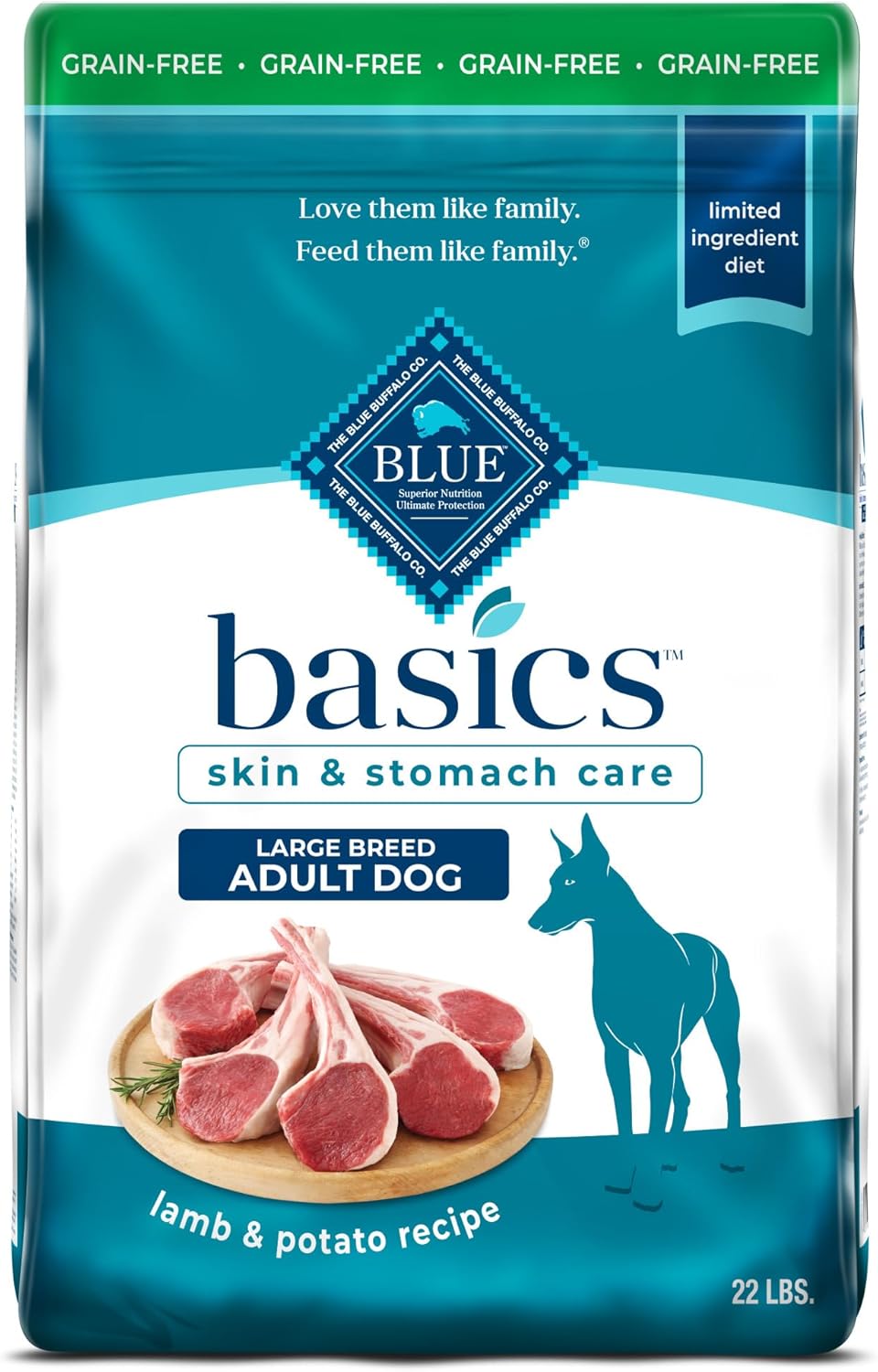
| Flavor | Lamb & Potato |
|---|---|
| Item Form | Dry |
| Breed Recommendation | Large Breeds |
| Package Size | 22-lb. Bag |
Blue Buffalo Basics Lamb Large Breed is a grain-free, limited-ingredient dry food that uses deboned lamb and lamb meal as the primary protein sources to support dogs with food sensitivities. It is intended for adult large breeds and includes LifeSource Bits for antioxidant and immune support, added glucosamine and chondroitin for joint health, and omega fatty acids from fish oil and flaxseed to help skin and coat. Typical use is as a daily maintenance diet for dogs prone to digestive upset or skin reactions from common proteins or grains; feeding guidelines are given by weight and the formula includes single-animal protein emphasis to simplify ingredient exposure. In practice this formula can reduce ingredient triggers when owners switch from multi-protein diets, and the added joint supplements suit heavier breeds. Limitations are that it is grain-free and relies on peas/pea protein and other ingredients that some dogs may still react to, and switching diets should be done gradually while monitoring response. The bag size and nutrient profile make it practical for households with large dogs, but consult your veterinarian for dogs with complex allergy histories.
Best for: Owners of adult large-breed dogs seeking a simplified, limited-ingredient diet centered on lamb to help identify or reduce dietary triggers for skin and stomach issues.
Less Ideal for: Owners whose dogs have known sensitivities to legumes or pea protein, or those specifically requiring an uncommon novel protein not including lamb.
- Single primary animal protein (deboned lamb) to reduce exposure to common proteins
- Includes LifeSource Bits for added antioxidants and vitamin/mineral support
- Contains glucosamine and chondroitin to support large-breed joint health
- Added omega-3 and omega-6 sources to help skin and coat condition
- Grain-free formulation includes peas and pea protein which can still trigger sensitivities in some dogs
- Not a novel protein for dogs already exposed to lamb-based diets
Verdict: The best novel-protein Large Breed Food relies on atypical animal or single-source proteins to help dogs with previous sensitivities tolerate their diet and reduce skin flare-ups.
DIAMOND CARE Sensitive Skin Dry Dog Food 25 lb
Best Hydrolyzed-Protein Large Breed Food

| Flavor | Sensitive Skin |
|---|---|
| Age Range Description | Adult |
| Item Form | Dry Kibble |
| Animal Food Diet Type | Limited Ingredient |
| Unit Count | 400 Ounce |
Diamond CARE Sensitive Skin formula is a limited-ingredient dry kibble built around hydrolyzed salmon as the single animal protein and boosted with omega-3 and omega-6 fatty acids and probiotics. It is used as an elimination-style diet for adult dogs with suspected food-related skin sensitivities, replacing regular food and limiting treats while you assess response. Notable features include a hydrolyzed protein source to reduce immune recognition, guaranteed antioxidant and omega levels for skin and immune support, and added probiotic strains to aid digestion and gut health. In practice the kibble lets owners run a straightforward dietary trial without introducing multiple novel proteins, and the grain-free formulation and shorter ingredient list make it easier to identify other triggers. Limitations are that it is still a dry kibble rather than an exclusive veterinary prescription therapeutic, so dogs with severe or complex allergies may need veterinary diagnostic testing or a prescription hydrolyzed diet, and feeding adjustments should be made with your veterinarian.
Best for: Owners seeking a commercially available hydrolyzed-protein option to run an elimination-style diet for large-breed adults with suspected food-related skin problems and who prefer a grain-free, limited-ingredient kibble.
Less Ideal for: Dogs with severe, life-impacting allergies that require a veterinary-prescribed therapeutic formula or dogs needing wet or novel-protein diets for diagnostic feeding trials.
- Hydrolyzed salmon is the single animal protein to reduce the chance of immune-driven reactions
- Added omega-3 and omega-6 fatty acids to support skin and coat health
- Includes multiple probiotic strains to help digestive tolerance and gut health
- Formulated as a limited-ingredient, grain-free diet to simplify elimination trials
- Not a veterinary prescription therapeutic diet, which may be required for severe allergy cases
- Ingredient list still contains multiple plant components that can be allergenic for some dogs
Verdict: The best hydrolyzed-protein Large Breed Food breaks proteins into tiny pieces to lower the chance of immune-driven skin reactions in dogs with pronounced allergies.
Choosing the Right Large Breed Dog Food Skin Allergy: Key Factors to Consider
Protein Source and Novelty Proteins
Protein is the most common dietary trigger for skin allergies, so knowing the exact protein sources matters. Single-protein or novel-protein formulas make elimination feeding and allergy trials easier because you can isolate and test one protein at a time.
Choose foods that clearly list the primary animal protein in plain language rather than ambiguous terms. If your dog is already reactive to chicken or beef, consider limited-ingredient recipes or novel proteins that your dog has not been exposed to. Consistent protein sourcing across batches reduces the chance of unexpected reactions.
Digestibility and Gut Health
Highly digestible diets reduce undigested material in the gut that can drive inflammation and secondary skin issues. Look for easily digestible carbohydrates and processed proteins that balance amino acids well.
Formulas with prebiotics or moderate levels of fermentable fiber can support a stable microbiome without causing gas or loose stools, which in turn helps reduce systemic inflammation. Avoid heavy filler's that are hard to digest and can exacerbate gastrointestinal upset, making skin symptoms worse.
Omega Fatty Acids and Targeted Nutrients
Long-chain omega-3 fatty acids from fish oil or algal sources help reduce skin inflammation and improve coat quality. Adequate zinc, vitamin E, and certain B vitamins also support skin barrier function and wound healing.
Check labels for EPA and DHA values when possible; formulas that list these explicitly make it easier to compare therapeutic levels. Antioxidants and a balanced vitamin-mineral profile support immune regulation, which is important when managing allergic responses.
Large-breed Formulation and Calorie Density
Large breeds have different energy needs and joint health considerations than small breeds. Foods formulated for large adults control calorie density to help maintain healthy weight and include appropriate calcium-to-phosphorus ratios to support skeletal health.
For a dog with skin allergies, excess calories can worsen inflammation through adipose-driven cytokine production, so choose formulas sized and balanced for large-breed maintenance rather than growth or high-activity formulas unless specifically needed.
Additives, Preservatives, and Artificial Ingredients
Artificial colors, flavors, and some preservative systems can be unnecessary irritants for sensitive dogs. While not every additive causes a reaction, limiting exposure reduces the number of potential triggers and simplifies troubleshooting when symptoms flare.
Prefer foods that use natural preservation and avoid unnecessary proprietary blends with undisclosed components. Transparent labeling helps you identify and remove potential culprits during an elimination trial.
Transition Strategy and Feeding Plan
How you switch foods can affect whether a new diet helps or harms skin issues. A slow, controlled transition reduces digestive upset and allows you to accurately assess skin response to the new formula.
Plan a multi-week trial with steady portion increases of the new food and decreases of the old. Keep treats and supplements consistent or eliminate them during a strict allergy trial to isolate the effect of the main food on skin condition.
How Long Before I See Skin Improvements After Switching Food?
Skin improvement timelines vary, but you should allow at least 8 to 12 weeks to see meaningful changes after a diet switch because skin and coat turnover is slow. Mild reductions in itching or less frequent scratching may appear in the first few weeks, but deeper repair of the skin barrier and coat can take two or more months.
If you do not see any improvement after 12 weeks on a strict dietary trial, or if the condition worsens, consult your veterinarian to explore other causes such as environmental allergies, parasites, or infections. Keep a simple diary of symptoms, stool quality, and any treats or supplements given during the trial to help identify confounding factors.
- Expect initial signs in 2–4 weeks for reduced stomach-related irritation or mild itching.
- Allow 8–12 weeks for clearer evidence of skin and coat recovery.
- Stop or change the trial earlier if severe reactions appear and seek veterinary advice.
Can Supplements Help Alongside a New Diet?
Supplements such as concentrated fish oil, zinc, or skin-targeted multivitamins can support the diet, but they should not be used to mask an otherwise reactive food. Omega-3 supplements can accelerate reductions in inflammation, but dosing matters and excessive fat supplementation can upset the stomach.
If you plan to add supplements, introduce them after you establish how your dog responds to the primary food to avoid confusing which change produced an effect. Discuss dosing with your veterinarian, especially for large breeds where effective doses may be larger than typical over-the-counter recommendations.
- Add supplements only after a baseline diet trial.
- Use veterinarian guidance for dosing and interactions.
- Watch for digestive changes when adding oils or new nutrient concentrates.
What to Do During an Elimination Diet Trial
An elimination diet trial aims to feed a single, novel protein and carbohydrate source with no other food exposures for a set period, typically 8 to 12 weeks. During the trial, give only the chosen food and plain water; stop treats, table scraps, flavored medications, and flavored supplements that could confuse results.
Record daily notes on itching, redness, stool, and any other symptoms. If symptoms improve, a controlled reintroduction of common proteins one at a time can help identify the specific trigger. If no improvement occurs, work with your veterinarian on alternate diagnoses or further testing.
- Use one protein and one carbohydrate source only during the trial.
- Keep all other food sources and flavored products out of the dog's diet.
- Document progress and be patient—skin recovery takes time.
Feeding Amounts, Body Condition, and Weight Control
Large dogs with skin allergies still need careful weight management because excess body fat increases inflammatory markers that can worsen allergic responses. Follow feeding guidelines on the chosen formula as a starting point, then adjust based on your dog's body condition score and activity level.
Weigh or measure portions consistently and reassess your dog's body condition every few weeks during a diet change. If your dog gains weight during a transition, reduce portions slightly and re-evaluate to keep calories appropriate for adult maintenance while supporting skin health.
- Use body condition scoring to guide portion adjustments.
- Recheck weight every 4–6 weeks during dietary changes.
- Avoid overfeeding treats and table scraps that add empty calories.
How to Read Labels for Skin-focused Formulas
When evaluating labels, prioritize explicit ingredient names, declared sources of omega-3s, and clear statements about restricted or removed common allergens. Look for guaranteed analysis values and any listed EPA/DHA content to compare skin-supporting fatty acid levels.
Be skeptical of vague terms like 'meat meal' without specifying the animal source. Transparency in labeling helps you plan an effective elimination trial and ensures the formula contains the nutrients you expect for skin and coat support.
- Prefer named whole proteins over ambiguous meal descriptions.
- Check for explicit omega-3 content and key vitamins.
- Confirm the formula is formulated for large-breed adult maintenance.
How We Chose the Best Large Breed Dog Food Skin Allergy
We evaluated candidate foods using criteria that matter most for large dogs with skin allergies. First, ingredient simplicity and identifiable protein sources were prioritized to limit common allergens and make elimination feeding easier. Second, digestibility and quality of protein and carbohydrate sources were considered because better digestion lowers gut inflammation that can worsen skin conditions. Third, the presence of nutrients known to support skin and coat health, such as omega-3 fatty acids, zinc, and vitamin E, was weighed heavily. Fourth, formulation for large-breed growth and joint support was checked to ensure appropriate calorie density and joint-friendly nutrient levels for adult large dogs. Fifth, manufacturing quality indicators like clear sourcing and limited artificial additives were included to reduce exposure to potential irritants. We excluded formulas that relied on vague ingredient descriptions, contained multiple common allergenic protein sources together, or lacked explicit nutrient levels for skin-supporting vitamins and fatty acids. The final list emphasizes clarity of ingredients, digestibility, and targeted nutrient support over marketing claims or packaging alone.
Our full evaluation process is outlined in our review methodology.
FAQ
How do I know if my dog's itchiness is caused by food?
Food-related itchiness often shows as chronic, recurring itching, especially around the face, paws, and groin, and may not respond well to topical treatments alone. A controlled elimination diet trial lasting 8 to 12 weeks is the most reliable way to see if food is the cause.
Is grain-free food necessary for dogs with skin allergies?
Grain-free is not inherently necessary unless your dog is specifically sensitive to a grain ingredient. Most food allergies are protein-driven, so focus first on protein sources and overall ingredient simplicity rather than removing grains by default.
Can changing food make my dog's skin worse before it gets better?
Some dogs experience temporary digestive upset or transient shedding when switching diets, but significant worsening of skin symptoms could indicate a reaction to a new ingredient. Transition slowly and stop the trial if you see severe increases in itching or signs of systemic reaction.
How should I handle treats during an allergy trial?
Use only treats made from the same single protein source as the test food or avoid treats entirely during the strict elimination phase. Even small snacks with different proteins can invalidate the trial and make results harder to interpret.
Do large-breed puppies with skin issues need different diets than adults?
Puppies have different growth and nutrient needs, so any diet change for a puppy should focus on growth-appropriate formulas and veterinary guidance. For allergy trials, consult your veterinarian before applying an adult-style elimination approach to a puppy.
Final Verdict
When selecting food for a large dog with skin allergies, prioritize clear protein sources, high digestibility, and meaningful levels of omega-3s and skin-supporting micronutrients. Match calorie density and nutrient balance to large-breed maintenance so you do not introduce weight or joint concerns while treating skin problems. Expect to invest several weeks in a controlled trial, monitor body condition and symptom changes carefully, and work with your veterinarian if improvements are slow or absent. Focusing on these tradeoffs will help you choose a diet that reduces irritation and supports long-term coat health.

