

If you manage a strong, enthusiastic Staffy that tends to pull, the right lead makes walks safer and more enjoyable for both of you. Picking a lead designed for pulling behavior reduces wrist and shoulder strain, gives better directional control, and helps you reinforce training cues without resorting to harsh measures. This guide presents six shortlisted leads suited to pulling Staffies, focusing on durability, handling ergonomics, and attachment options. Below you will find the criteria we used to evaluate each option and practical advice for choosing a lead that matches your dog and walking style.
Top Picks at a Glance
| Best Overall Lead The top all-around choice for most dog owners | Fida Durable Slip Lead 6 ft |  |
| Best Budget Lead Low-cost option that covers basic walking needs reliably | BOOEUDI 6 FT Dog Leash |  |
| Best Premium Lead Higher-end construction and premium materials for frequent use | Kensington Ballistic Nylon Training Lead 10' |  |
| Best Heavy-Duty Lead Built for stronger pullers and long-term durability | ZHOMA Steel Cable Dog Leash 5FT |  |
| Best Short Lead A compact, control-focused leash for tight spaces and training | Generic No Pull Training Lead 4FT |  |
| Best Long Lead Extended length for off-leash recall training and roaming | Lynxking Slip Lead 6ft (2-Pack) |  |
Fida Durable Slip Lead 6 ft
Best Overall Lead
| Length | 6 ft |
|---|---|
| Thickness | 1/2 inch |
| Material Type | Leather, Metal, Nylon |
| Closure Type | Pull-On |
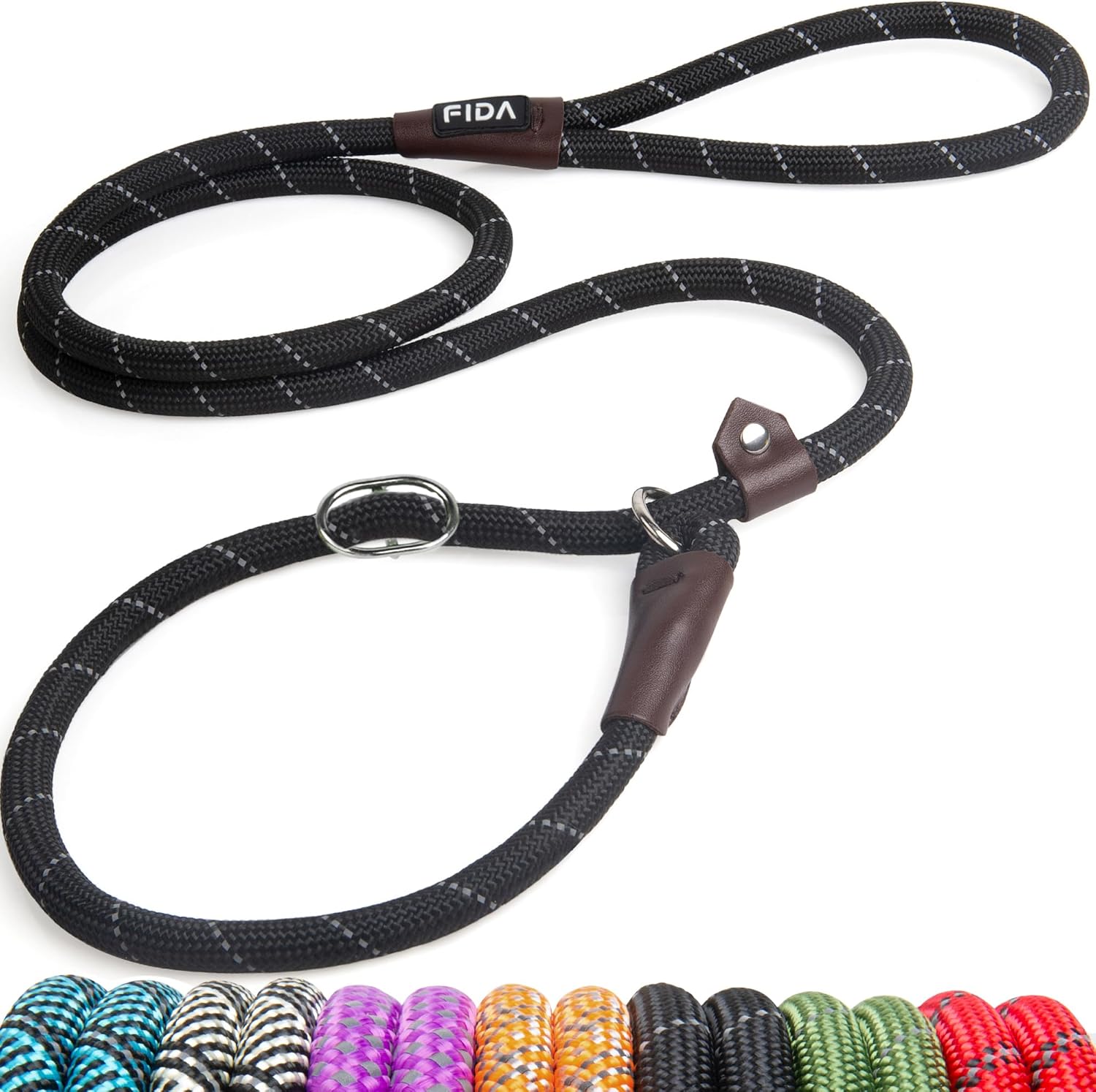
The Fida Durable Slip Lead is a simple, no-collar slip leash built for training dogs that pull. It uses a 1/2" high-strength nylon rope with a metal ring and leather-bound knots to form an adjustable loop that tightens when a dog pulls and loosens when the behavior stops, making it useful for on-leash correction and loose-leash training. The full-length reflective weave improves visibility for evening walks and the rope construction gives a secure, comfortable hand hold while remaining lightweight. An anti-choke ring is included to limit how tightly the loop can cinch, but users must still form the loop correctly and avoid wrapping the lead around hands. The 6 ft length gives enough room for exploration while keeping control during training sessions, and the thicker rope is aimed at stronger pullers. This is not a substitute for a properly fitted harness for dogs with chronic respiratory or neck issues, and it should not be used for unattended tying. For most owners teaching better leash manners on medium and large dogs, the Fida slip lead offers a durable, visible, and easy-to-use option.
Best for: Owners who need a single, strong training lead to manage pulling during walks and obedience practice and who prioritize control and visibility in low light.
Less Ideal for: People who want a hands-free solution, need to tie a dog unattended, or whose dogs require a no-pull harness for medical reasons should look elsewhere.
- Thick 1/2" nylon rope construction offers durability for strong pullers
- Reflective weave along the rope improves nighttime visibility
- Metal ring and leather-bound knots create a secure adjustable loop
- 6 ft length balances freedom for the dog with owner control
- Includes anti-choke ring to limit excessive tightening
- Slip design requires correct technique and supervision to avoid misuse
- Not suitable as a permanent tether or for dogs with neck/respiratory issues
Verdict: The best all-around lead that balances strength, comfort, control, and everyday versatility for most dogs and owners.
BOOEUDI 6 FT Dog Leash
Best Budget Lead

| Length | 6 Feet |
|---|---|
| Width | 1/2 Inch |
| Material Type | Nylon |
| Closure Type | Snap |
This BOOEUDI 6-foot nylon slip leash combines a collar-and-leash-in-one slip design with a padded handle and reflective threads for a practical, budget-friendly option for strong walkers. You slip the loop over your dog's neck to act as a collar and hold the foam-padded handle for control, which keeps things simple for quick outings, training walks, or runs. The 1/2-inch climbing-style nylon rope feels durable and resists wear while the reflective strands improve visibility on evening walks. The padded handle reduces rope burn and makes sustained control more comfortable when a dog pulls. As a low-cost leash it delivers the essentials for pull management, but because it is a slip leash it does not provide the same stopping leverage or hands-free options as a dedicated no-pull harness or traffic lead, and very strong pullers may benefit from a thicker webbing leash or a reinforced hardware clip. For owners who want an inexpensive, lightweight slip leash with decent durability and nighttime visibility, this covers the basics reliably.
Best for: Owners who need a low-cost, straightforward leash that helps manage pulling during daily walks and training without spending on specialty gear.
Less Ideal for: People seeking maximum stopping control for large, very strong pullers or those who prefer hands-free or harness-based no-pull systems should consider other options.
- Combined slip-leash and collar simplifies use for quick outings and training
- Padded foam handle reduces hand strain and rope burn during pulls
- Durable 1/2-inch nylon climbing rope construction resists abrasion
- Reflective threads sewn along the leash improve nighttime visibility
- Slip design offers limited stopping power compared with harness-based no-pull solutions
- No heavy-duty metal hardware or reinforced clip for extreme pullers
Verdict: The best budget lead for buyers who want an affordable, dependable leash that handles routine walks without extra features.
Kensington Ballistic Nylon Training Lead 10'
Best Premium Lead
| Material Type | Polycotton |
|---|---|
| Size | 10' |
| Closure Type | Snap |
| Unit Count | 1 Count |
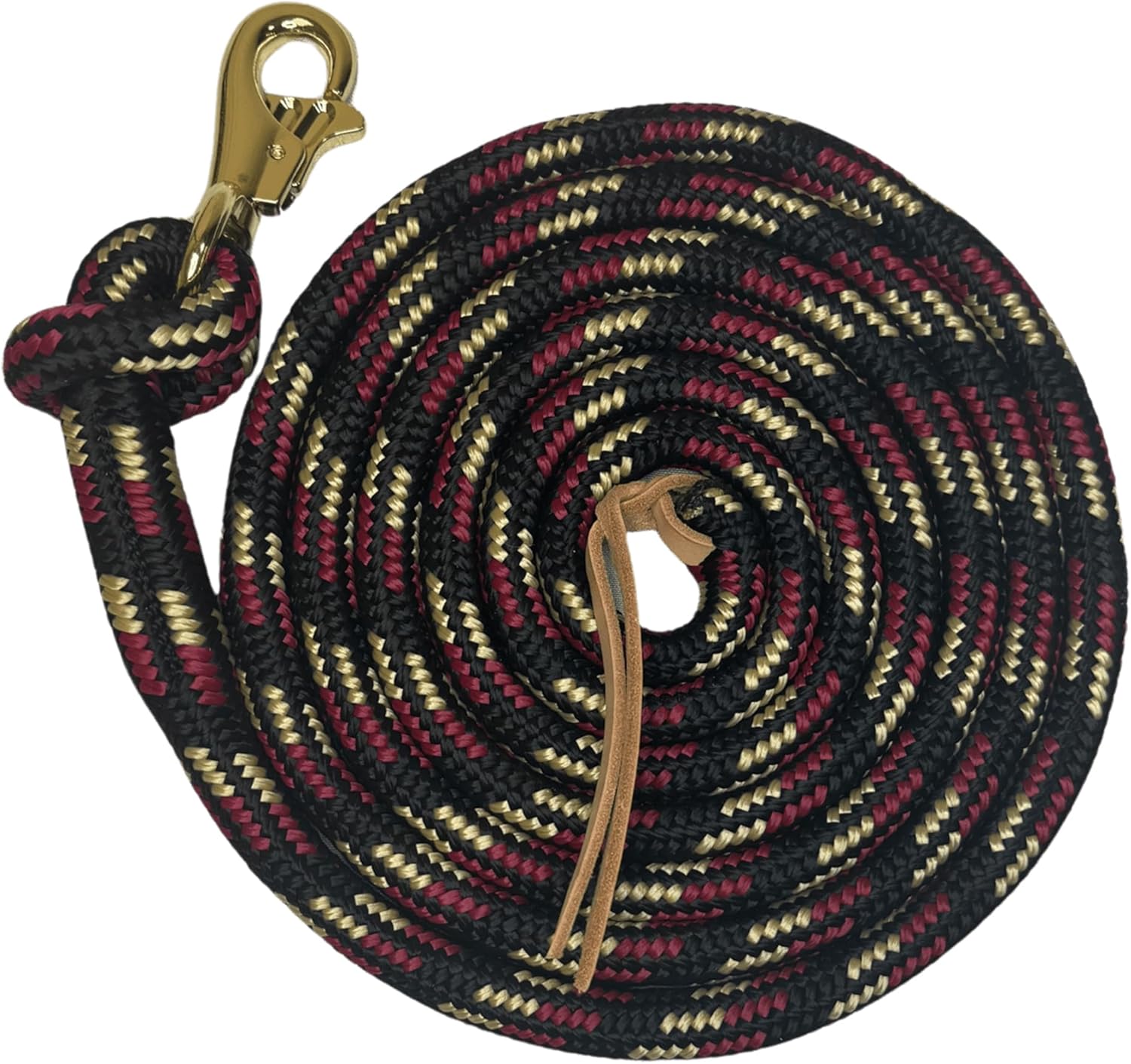
The Kensington Ballistic Nylon Clinician Training Lead is a weighted, tear-resistant rope-style lead built for training and strong dogs. It pairs a braided polycotton cord with a swivel bull snap and a removable leather popper so you can switch between long-line groundwork and direct handling; the balanced weight gives clearer feedback when lunging or working a pulling breed like a Staffy. In use it feels soft in the hand yet durable enough for regular outdoor sessions, and the quick swivel snap reduces tangling during movement. The 10 foot length provides distance for recall and controlled freedom while remaining manageable for a single handler. This lead is not a padded everyday walking leash, so handlers who prioritize wrist comfort on long casual walks may want a different style, and the leather popper or snap will need occasional inspection for wear. For trainers and owners focused on control, feedback, and rugged build quality, this lead performs well in real-world training and handling situations.
Best for: Owners and trainers who want a premium, training-focused lead that gives clear feedback and durable hardware for working with strong, active dogs.
Less Ideal for: Casual walkers who prioritize wrist padding or a short everyday leash for city use should consider softer, shorter alternatives.
- Weighted, balanced design improves feedback for groundwork and lunging
- Braided polycotton construction combines softness in hand with tear resistance
- Swivel bull snap and removable leather popper add versatility and reduce tangles
- 10 foot length gives controlled distance for recalls and training
- Not padded, so extended casual walks can be less comfortable for the handler
- Hardware and leather popper require periodic inspection and maintenance
Verdict: The best premium lead for owners willing to pay more for superior materials, hardware, and refined comfort on daily walks.
ZHOMA Steel Cable Dog Leash 5FT
Best Heavy-Duty Lead

| Length | 5FT |
|---|---|
| Material Type | Metal |
| Closure Type | Clip |
| Handle | Leather Padded |
This ZHOMA leash pairs a steel cable core with an anti-chew outer layer to give a rugged, pull-resistant lead for strong dogs. It is sold as a single 5-foot length and uses metal clips plus 360° rotating clasps at both ends to reduce twisting and help prevent tangles during training or walks. The padded, wider handle adds comfort when a dog pulls, and the sliding-style metal clip and clasp construction feel solid in hand. In real-world use this leash works well for firm control during walks and recall or heel training with powerful breeds like Staffies, and the chew-resistant cable should outlast fabric leads when dogs test it. Limitations are that the cable construction transmits more shock to your hand on very hard pulls compared with wider webbing leashes, and the metal cable is less flexible to coil for storage than fabric leads.
Best for: Buyers who need a rugged, long-lasting leash for strong, pull-prone dogs and who prioritize security and chew resistance during walks and training.
Less Ideal for: Owners who prefer a soft, low-shock leash for sensitive hands or who want a compact, highly flexible lead for easy storage should consider alternative materials.
- Steel cable core with anti-chew outer layer for high durability against biting
- 360° rotating clasps at both ends to reduce tangling during activity
- Sturdy metal clip and sliding clasp for secure attachment to collars or harnesses
- Padded, wider handle improves comfort and grip during strong pulls
- Cable leash can transmit more shock to the handler on hard, sudden pulls
- Less flexible and bulkier to store compared with nylon webbing leashes
Verdict: The best heavy-duty lead for dogs that pull or for owners who need a rugged, long-lasting leash with reinforced hardware.
Generic No Pull Training Lead 4FT
Best Short Lead

| Length | 4 feet |
|---|---|
| Size | 3/8" x 4FT (0-50 LBS) |
| Material Type | Leather, Nylon |
| Closure Type | Snap |
This 4-foot braided nylon lead is built for close-control walks and training sessions where a short tether helps manage strong, active dogs. The rope construction is heavy-duty and flexible, and the leather handle with reinforced stitching offers a comfortable grip that protects hands when a dog pulls. Metal snap hardware and leather-reinforced stress points add durability for repeated use. Typical uses include urban walks, heel and recall training, and short-session behavior correction when you want the dog close at your side. Because it is handmade and thicker than lightweight cords, it feels substantial in hand and gives confident, immediate feedback to the handler. Limitations are that it has no reflective elements for low-light safety and at 3/8 inch thickness it may be narrow for very large, extremely strong pullers without pairing with a strong harness or headcollar; handlers working in the dark will need an additional light or reflective accessory. For short-lead control in daylight, it balances strength, comfort, and tactile feedback well.
Best for: Buyers who need a short, robust lead for tight control during urban walks and focused training sessions and prioritize a comfortable, durable handhold.
Less Ideal for: Those who frequently walk in low-light conditions without additional visibility gear or handlers of extremely large, highly powerful dogs who need wider or specialized leads for heavy pulling.
- Sturdy heavy-duty braided nylon rope construction for reliable control
- Genuine leather handle with reinforced stitching for comfortable grip and hand protection
- Solid metal snap hardware and leather-reinforced stress points improve longevity
- Handmade build gives a substantial, tactile feel suited to training
- No reflective or high-visibility features for nighttime use
- 3/8" thickness may feel narrow for the largest, most powerful pullers
Verdict: The best short lead for close-control situations like urban walks and training where a short tether improves handling.
Lynxking Slip Lead 6ft (2-Pack)
Best Long Lead

| Size | 6 Feet |
|---|---|
| Material Type | Polypropylene |
| Number of Packs | 2 |
| Closure Type | Pull-On |
These braided rope slip leads are built for training use and give you a simple long lead for recall work and off-leash style freedom while remaining connected. Each 6 foot leash forms an adjustable slip loop with a built-in stopper so the loop tightens on pull and relaxes when the dog responds, which is useful for correcting behavior during recall practice. The rope is polypropylene braid with reinforced knots and a sturdy metal ring, plus a padded handle for comfort on longer sessions. Selling as a two-pack lets you keep spares or outfit multiple dogs. Expect a lightweight, low-bulk lead that is easy to slip on and off quickly, making it handy for field training or hikes. Limitations: the slip design provides no locking clip or separate collar attachment, so it is not a dedicated long-line replacement when you need absolute control or a quick-release option, and braided rope can hold moisture and dirt more than flat webbing. For handlers working with strong, persistent pullers, combine this with proper training rather than relying on the leash alone.
Best for: Handlers who want a simple, lightweight long lead for recall practice, field training, or giving a Staffy more running room while keeping a physical connection.
Less Ideal for: People who need a dedicated long line with a locking clip, quick-release attachment, or who prioritize absolute control for very strong pullers should choose a different style of lead.
- 6 foot length suitable for recall drills and giving dogs more distance while staying connected
- Adjustable slip loop with stopper allows quick on/off and basic correction during training
- Braided polypropylene rope with reinforced knots and metal ring for strength
- Padded handle improves comfort during longer sessions
- Two-pack provides a spare or a second lead for another dog
- Slip-lead design lacks a clip or fixed attachment for situations needing a secure, quick-release connection
- Braided rope can collect dirt and moisture more than flat webbing
Verdict: The best long lead for recall practice and giving dogs more freedom while still maintaining a physical connection.
Choosing the Right Lead Pulling Staffy: Key Factors to Consider
Tensile Strength and Material Quality
A pulling Staffy exerts substantial force, so the lead material must resist stretching and abrasion. Look for heavy-duty webbing or braided rope rated for high loads. Materials that fray, stretch excessively, or degrade quickly in wet conditions increase the risk of breakage and reduce control.
Reinforced stitching and bonded joint areas add redundancy where stress concentrates. Pay attention to how the lead is finished at attachment points and handles because these zones take the most wear. Higher material quality often means a longer service life and more reliable performance under repeated heavy use.
Hardware Reliability
Metal clips, rings, and buckles are the system's weak points when a dog pulls hard. Choose corrosion-resistant metals like stainless steel or high-grade alloys with secure locking mechanisms. Poorly designed clips can open under load or fail after repeated impacts.
A solid tri-glide or O-ring setup for attachments prevents slippage and keeps tension predictable. Hardware rated for working dogs or industrial use is preferable. Also consider how easy the clip is to operate with one hand while maintaining a firm grip on the handle.
Handle Design and Hand Comfort
When a Staffy lunges or pulls, forces transfer to your hand and arm. A padded, ergonomic handle reduces pressure on the palm and helps you hold on longer without pain. Textured grips or molded shapes improve traction, especially when hands get sweaty or wet.
Some leads include an additional traffic handle closer to the clip to give short, powerful corrections or to hold the dog close in crowded situations. Consider whether you need a single long handle for jogging or a dual-handle setup for tight control during training or urban walks.
Length and Control Options
Lead length directly affects how much freedom the dog has and how quickly you can regain control. Shorter leads give immediate control and are useful in urban settings, while longer leads are better for recall and off-leash-style freedom in safe areas. For pulling Staffies, many owners benefit from leads that offer multiple length settings or an integrated traffic handle.
Adjustable leads or those with quick-clip points let you shorten the lead in an instant without changing equipment. Consider the typical environments you walk in and choose a length and adjustability that lets you manage momentum but still allows comfortable movement.
Attachment Configuration
How the lead connects to the collar or harness changes leverage and safety. Single-clip leads are simple, but dual-clip designs and swivel attachments can reduce twisting and allow alternative control methods. If you use a front-clip harness for pulling reduction, check that the lead can attach securely to that point.
Quick-release or multi-attachment options let you switch between training setups without swapping gear. Ensure any swivel or additional ring is built into the lead with robust stitching or metalwork so it does not become a failure point under sudden loads.
Maintenance and Weather Resistance
Leads for active dogs get wet, muddy, and sandy. Materials that wick moisture or retain odors will need more maintenance and can degrade faster. Look for leads with rust-resistant hardware and fabrics that dry quickly and resist mildew.
Ease of cleaning matters for hygiene and longevity. Some materials can be machine washed or rinsed easily, while others require hand cleaning. Consider how often you walk in wet or salty conditions and choose a lead whose maintenance needs you can realistically meet.
What Is the Safest Way to Handle a Pulling Staffy on Walks?
The safest approach combines the right gear and consistent handling. Use a lead with strong hardware and a comfortable handle, and pair it with a suitable harness or head-collar if needed for training. Stand with a stable stance, keep the lead short enough to prevent sudden lunges, and avoid wrapping the lead around your hand.
Practice short, frequent sessions of reinforced walking cues so the dog learns to move with you rather than against you. If you anticipate high-distraction environments, shorten the lead and switch to the traffic handle to gain immediate, closer control.
- Keep the lead length moderate in crowded areas.
- Avoid wrapping the lead around fingers or wrists.
- Use brief, calm corrections rather than sudden yanks.
How to Choose the Right Lead Length for Training and Everyday Walks
Start by considering where you walk most often. For city sidewalks and busy parks, a 3- to 4-foot effective control length helps you keep the dog close and responsive. For quiet green spaces where recall is practiced, a longer lead or an adjustable option gives the dog more freedom while maintaining safety.
If your Staffy is a powerful puller, prefer leads that offer multiple length options so you can quickly shorten when necessary. Adjustable leads let you adapt to different scenarios without carrying extra equipment.
- Short lead for high-control situations.
- Adjustable or long lead for training and recall practice.
- Traffic handle can emulate a shorter lead instantly.
Can Any Lead Reduce Pulling Behavior on Its Own?
No single piece of equipment will stop pulling without concurrent training. Some lead designs make it easier to manage a pulling dog by improving leverage or giving you a closer control point, but long-term change comes from consistent reinforcement of walking behaviors.
Use the lead as an aid: reward slack-leash walking, stop movement when the dog pulls, and resume only when the lead is loose. Over time, these habits combined with the right lead reduce pulling frequency and intensity.
- Combine equipment with positive reinforcement.
- Stop-and-go walking teaches the dog slack-leash behavior.
- Consistent cues are more effective than stronger hardware alone.
How to Care for and Inspect Your Lead Regularly
Inspect leads before each use, checking for frayed webbing, worn stitching, loose rivets, or bent clips. Hardware that shows play or corrosion should be addressed immediately. Regular inspection prevents unexpected failures and extends the life of the lead.
Clean the lead according to its material: rinse off dirt and salt, air-dry completely, and treat leather with suitable conditioners. For synthetic leads, periodic washing and drying keeps fibers from becoming abrasive and removes odor.
- Check stitching and attachment points weekly under heavy use.
- Rinse and dry after exposure to salt or muck.
- Replace the lead if core fibers or hardware integrity is compromised.
When to Use a Traffic Handle and How It Helps Control
A traffic handle is a short secondary grip located near the clip that lets you pull the dog close quickly without losing leverage. It is useful in busy areas, during vet visits, or when meeting other dogs. The close grip reduces the effective lever arm and gives immediate stopping power with less arm strain.
Practice switching between the main handle and the traffic handle in calm conditions so handling transitions stay smooth when you need them in real situations. Use the traffic handle sparingly; overuse can prevent the dog from learning better leash manners at a distance.
- Use for close control in crowded environments.
- Helps reduce strain compared with pulling from a single long handle.
- Train transitions between handles to keep the dog calm.
How We Chose the Best Lead Pulling Staffy
We selected leads that address the specific challenges of walking a pulling Staffy: high tensile strength, secure attachments, comfortable handling, and training compatibility. Our editorial filters prioritized construction materials rated for heavy use, connection hardware that resists accidental opening, and handle designs that reduce hand fatigue and improve control. We also weighed adjustability and length options, because the right lead length helps manage momentum and keeps the dog at a safer distance in busy areas. Products were excluded if they relied on novelty fixes over proven mechanical reliability, used weak or untested hardware, or lacked clear technical specs about load capacity. We favored leads that pair well with positive training methods and that provide practical features such as padded grips, traffic handles, or multiple attachment points. Durability, usability for everyday walks, and straightforward safety features were the deciding dimensions.
Our full evaluation process is outlined in our review methodology.
FAQ
Is a thicker lead always stronger for a pulling Staffy?
Thicker leads often indicate heavier materials but strength depends on construction and material type as well. Reinforced stitching, bonded ends, and durable hardware are equally important for handling a strong dog.
Should I use a lead with a swivel clip to prevent tangling?
A swivel clip can reduce twisting at the attachment point, which helps prevent tangles and keeps handling smoother. Ensure the swivel is well-made and part of a robust attachment assembly so it does not become a weak point.
How often should I replace a lead used by a pulling Staffy?
Replace a lead as soon as you notice significant fraying, compromised stitching, or hardware that does not lock securely. Under heavy use, inspect monthly and expect to replace sooner if the lead shows wear that affects safety.
Can a lead alone protect my hands during strong pulls?
A well-padded handle and good technique reduce hand injury risk, but no lead entirely removes the force a strong dog can produce. Avoid wrapping the lead around your hand and consider training approaches that reduce pulling over time.
Are adjustable leads better for dogs that pull?
Adjustable leads offer versatility by letting you change length for different situations, which is helpful when managing a pulling dog. However, adjustability should not compromise the strength or integrity of the lead.
Final Verdict
When managing a pulling Staffy, prioritize lead strength, reliable hardware, and comfortable handling over novelty features. Choose a lead length and attachment style that match your usual walking environments and pair the gear with consistent, reward-based training to reduce pulling. Balance durability and control features: a robust, well-made lead and good technique will make walks safer and more enjoyable while helping you correct pulling behavior effectively.

