

When you train frequently, treat size and calorie load matter as much as flavor. Choosing low-calorie training treats helps you reinforce good behavior without undermining daily calorie goals or causing digestive upset. This guide shortlists seven well-considered low-calorie training treats that suit repeated rewarding, showing why each option could fit into regular sessions. We evaluated treats for calorie density, ingredient transparency, texture, and palatability so you can pick options that support training frequency, weight management, and overall dog health.
Top Picks at a Glance
| Best Overall Low-Calorie Training Treat The best all-around low-calorie treat for everyday training sessions | Pupford Freeze Dried Chicken Treat 4 oz |  |
| Best Budget Low-Calorie Training Treat A wallet-friendly low-calorie option that still rewards reliably | Fruitables Skinny Mini Apple & Bacon |  |
| Best Premium Low-Calorie Training Treat A higher-end low-calorie pick with superior ingredients and texture | Covetrus Nutrisential LeanTreats 3-Pack |  |
| Best High-Protein Low-Calorie Training Treat Low calories with a higher protein punch for active dogs | Vital Essentials Beef Liver Treats 2.1 oz |  |
| Best Grain-Free Low-Calorie Training Treat A grain-free recipe for dogs with sensitivities or owner preference | BIXBI Liberty Trainers Small |  |
| Best Small-Bite Low-Calorie Training Treat Tiny, low-calorie bites designed for rapid rewards during sessions | Loving Pets Houndations Chicken Training Treats |  |
| Best Soft Low-Calorie Training Treat Soft, easy-to-chew low-calorie treats for sensitive mouths | Covetrus NutriSentials Trusted Trainers Soft Treats 12 oz (3-Pack) |  |
Pupford Freeze Dried Chicken Treat 4 oz
Best Overall Low-Calorie Training Treat

| Flavor | Chicken |
|---|---|
| Item Form | Granule |
| Unit Count | 4 Ounce |
| Ingredients | Chicken, Mixed Tocopherols |
| Animal Food Diet Type | Limited Ingredient |
These Pupford treats are single-ingredient freeze-dried chicken bites designed for frequent training rewards and everyday use. Each pouch contains roughly 475 uniform, bite-sized granules with under one calorie per piece, so you can give multiple rewards during sessions without adding significant calories. The treats are dry and non-greasy, which keeps hands and pockets clean and makes them handy for clicker work, treat-dispensing toys, and on-the-go reinforcement. The simple ingredient list—chicken and mixed tocopherols—makes them suitable for dogs with sensitive stomachs or owners preferring limited-ingredient snacks. The resealable pouch maintains freshness at room temperature but the small pieces can be dusty and will not satisfy chewers who want a long-lasting chew; they are intended strictly as high-value quick rewards rather than a meal replacement or durability chew. Overall, these treats work well as a low-calorie, high-motivation option for training and frequent reinforcement.
Best for: Owners who need to reward frequently during training or behavior reinforcement but must keep daily calorie intake low and prefer simple, limited-ingredient snacks.
Less Ideal for: People looking for durable chews, long-lasting treats, or substantial meal replacements should consider other product types.
- Under 1 calorie per bite enables frequent rewards without adding significant daily calories
- Single-ingredient chicken formula with mixed tocopherols appeals to limited-ingredient diets and sensitive stomachs
- Freeze-dried texture is non-greasy and leaves no residue on hands or pockets
- Resealable pouch preserves freshness and is convenient for training sessions and travel
- Very small, fragile pieces are not suitable as long-lasting chews
- Freeze-dried dust can create minor crumbs in treat pockets or mats
Verdict: The best overall low-calorie training treat balances taste, low calories, ingredient quality, and texture to work reliably for most dogs and common training routines.
Fruitables Skinny Mini Apple & Bacon
Best Budget Low-Calorie Training Treat

| Flavor | Apple Bacon |
|---|---|
| Unit Count | 5 Ounce |
| Made in | USA |
| Calories per treat | Under 4 calories |
| Special Ingredients | gluten-free |
Fruitables Skinny Mini Apple & Bacon are bite-sized, soft training treats designed for frequent rewards without adding many calories. Each treat is under 4 calories and the recipe highlights real ingredients such as sweet potato, apple, and bacon flavoring while excluding wheat, corn, and soy, which makes them suitable for dogs with common sensitivities. They come in a resealable bag and their small, soft texture is convenient for rapid training sessions or multiple short rewards. The formulation uses chickpeas, peas, flaxseed and vegetable glycerin alongside natural flavors and mixed tocopherols for preservation, so you get a treat that leans toward wholesome, plant-forward ingredients rather than meat-first jerky. On the downside, these are not a high-protein meaty treat and they contain added glycerin and natural bacon flavor rather than whole meat pieces, so very meat-motivated dogs might prefer a different style. For owners focused on calorie control and ingredient simplicity on a budget, these deliver consistent rewards and a variety of superfood claims without premium pricing.
Best for: Buyers who prioritize calorie control and straightforward, mostly plant-based ingredients for regular training rewards without wanting to pay premium prices.
Less Ideal for: Owners seeking high-protein, meat-first treats or long-lasting chews for strong chewers should consider meat-heavy or chew-style alternatives.
- Low-calorie formula (under 4 calories per treat) suitable for frequent rewards
- Made with recognizable plant-based ingredients like sweet potato and apple
- Free of wheat, corn, and soy which can help dogs with common sensitivities
- Soft, small pieces that are easy to break up and use in rapid training
- Contains vegetable glycerin and added natural bacon flavor rather than whole meat as the primary protein source
- Small bag size may require more frequent repurchases for heavy trainers
Verdict: The best budget low-calorie training treat provides decent palatability and portion control at a lower price, ideal for owners who need many rewards without splurging.
Covetrus Nutrisential LeanTreats 3-Pack
Best Premium Low-Calorie Training Treat
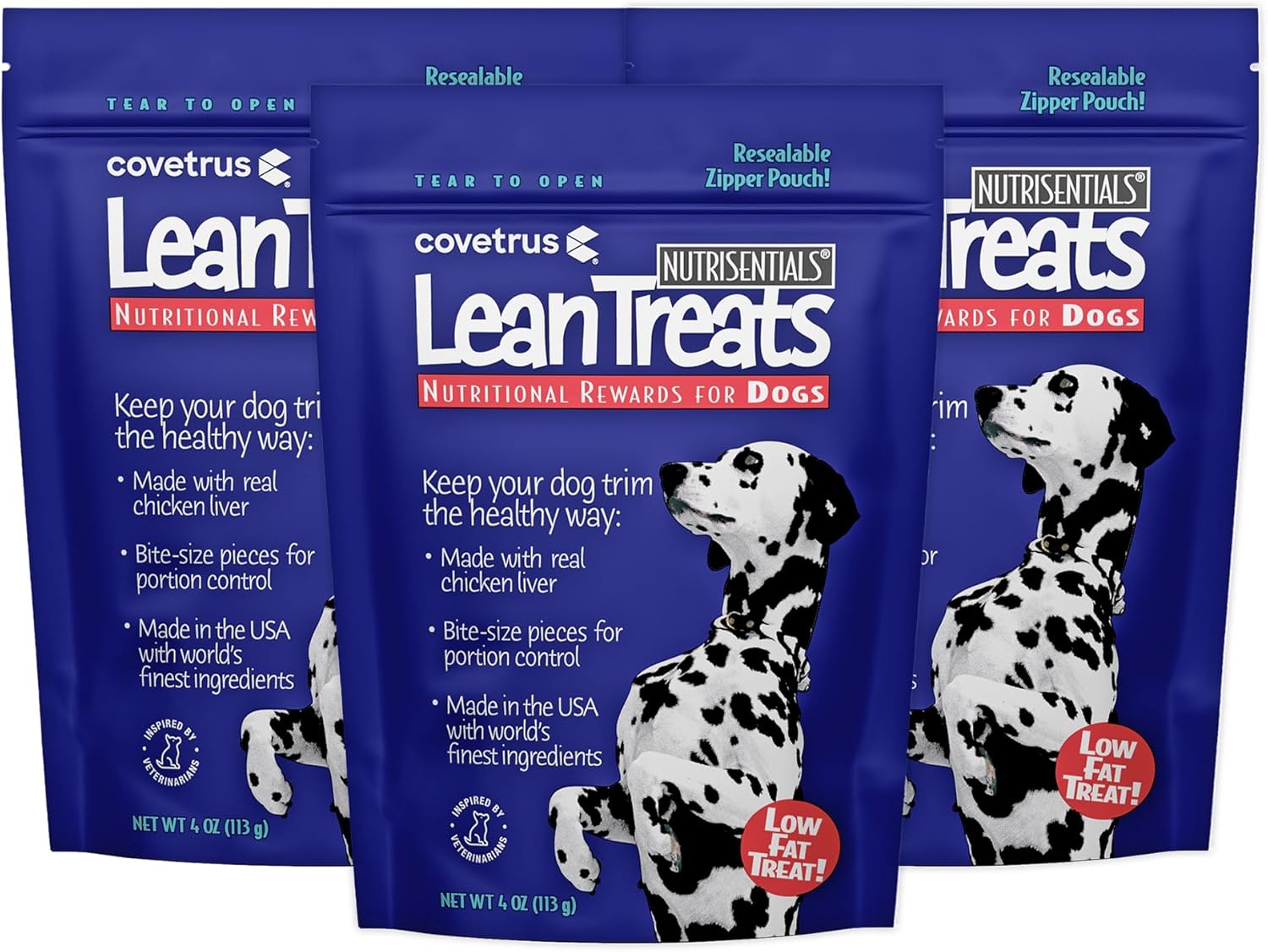
| Flavor | Chicken |
|---|---|
| Item Form | Chunk |
| Specific Uses For Product | Weight Management |
| Calorie content | 7.2 kcal/treat |
These bite-size soft treats are built around chicken liver and formulated to be low in fat and calories, which makes them useful for repetitive reward-based training or as a light snack for dogs on a weight plan. Each treat is roughly the size of a dime and contains about 7.2 kcal, so you can give multiple rewards during a session without blowing a calorie budget. The soft, moist texture is easy for dogs of different ages and dental conditions to chew and speeds up eating and reinforcements. Ingredients list includes chicken liver and chicken meal plus preservatives and extracts, so buyers seeking higher-end single-ingredient options should note they are not novel-protein limited. Packaged in a 3-pack of 4 oz bags, the treats are convenient to portion and carry, though the bag size is small for frequent long training days. Recommended feeding guidance is as a treat and the formula targets weight management, but owners should still track total daily calories when using multiple rewards.
Best for: Owners who prioritize a palatable, low-calorie treat for frequent training rewards and want a soft texture that dogs accept readily.
Less Ideal for: Owners seeking single-ingredient, grain-free, or novel-protein treats for food-sensitive dogs should consider alternatives.
- Low calorie per treat (approximately 7.2 kcal) supports frequent training rewards
- Soft, bite-size texture is easy to chew and quick to consume during sessions
- Formulated with real chicken liver for strong palatability
- Designed for weight management with a low-fat recipe
- Contains multiple preservatives and grain (wheat flour) which may not suit limited-ingredient diets
- Small 4 oz bags in the 3-pack may run out quickly for heavy trainers
Verdict: The best premium low-calorie training treat is aimed at owners willing to pay more for higher-quality ingredients, refined textures, and consistent results during training.
Vital Essentials Beef Liver Treats 2.1 oz
Best High-Protein Low-Calorie Training Treat

| Item Form | Freeze Dried |
|---|---|
| Flavor | Beef |
| Special Ingredients | 100% Raw Freeze Dried Beef |
| Unit Count | 2.1 Ounce |
| Allergen Information | Grain-Free, Corn-Free, Gluten Free, Soy Free, Wheat Free |
These bite-sized freeze-dried beef liver treats deliver strong aroma and concentrated meat flavor that keeps dogs focused during training sessions. Each piece is made from 100% beef liver with no fillers or artificial additives, making them an easy single-ingredient reward for dogs with sensitivities. The freeze-drying process preserves nutrients and creates a lightweight, shelf-stable snack that is simple to carry and portion into multiple tiny rewards during repetition-heavy sessions. Because they are dense in protein and low in calories per piece, you can reward frequently without overfeeding, and the texture provides enough interest for picky eaters. Limitations include the small 2.1 ounce bag size, which may run out fast for heavy trainers, and the strong smell that some owners may find intense when opened. These treats are best used as high-value training rewards, meal toppers for picky dogs, or short-session incentives.
Best for: Trainers and pet owners who need a reliably enticing, single-ingredient reward for repeated short training intervals or to motivate picky eaters.
Less Ideal for: People who give large-volume treats during long training sessions, those who prefer low-odor rewards, or households needing bulk quantities for multiple dogs.
- Single-ingredient formula (100% beef liver) suitable for dogs with food sensitivities
- Freeze-dried to retain aroma, flavor, and nutrients for strong training appeal
- Small, bite-sized pieces that are easy to portion for frequent reinforcement
- Shelf-stable and lightweight for easy storage and on-the-go training
- Small 2.1 oz bag may be insufficient for frequent trainers or multi-dog households
- Very strong aroma that can be off-putting to some owners
Verdict: The best high-protein low-calorie training treat suits active or working dogs that need extra protein in small, low-calorie portions to support muscle and recovery.
BIXBI Liberty Trainers Small
Best Grain-Free Low-Calorie Training Treat

| Flavor | Bacon |
|---|---|
| Unit Count | 6 Ounce |
| Item Form | Pellet |
| Recommended Uses For Product | Dog Training |
BIXBI Liberty Trainers are small, moist bacon-flavored treats made for training sessions where low calories and easy handling matter. Each pellet-sized treat is grain-free and marketed at under 4 calories apiece, so you can reward frequent repetitions without adding many extra calories. The soft, moist texture makes them easy to break or hide in a pocket and they are palatable for most dogs thanks to real pork and bacon flavor. The resealable bag keeps portions handy and the modest 6-ounce pack is convenient for short outings or trial use. Ingredients list includes chickpea flour and glycerin as binders and contains preservatives like sorbic and mixed tocopherols, which some buyers monitor. These treats are not a complete diet but work well as high-frequency rewards or kibble toppers during training. If you need larger bulk quantities for heavy daily use, the 6-ounce pack may require frequent repurchasing, but for focused training sessions they offer a low-calorie, grain-free option that most dogs accept readily.
Best for: Owners who prioritize grain-free formulas and need a low-calorie, highly palatable treat for frequent training rewards and short sessions.
Less Ideal for: People who want a large bulk supply for heavy daily training or who prefer completely preservative-free ingredient lists should consider other options.
- Grain-free recipe suitable for dogs with grain sensitivities
- Low calorie per treat enabling frequent rewards during training
- Soft, moist texture that is easy to break into smaller pieces or carry in a pocket
- Made with real pork and bacon flavoring which increases palatability
- Small 6-ounce pouch may be insufficient for heavy daily trainers
- Contains preservatives and added ingredients some buyers may want to avoid
Verdict: The best grain-free low-calorie training treat is formulated without grains for owners who prefer or require grain-free options while keeping calories low for training.
Loving Pets Houndations Chicken Training Treats
Best Small-Bite Low-Calorie Training Treat

| Flavor | Chicken |
|---|---|
| Item Form | Bite size treats |
| Container Type | Pouch |
| Unit Count | 1 Count |
| Package Size Name | Pouch |
These Houndations Chicken training treats are small, soft bites designed for frequent reward-based training. Each treat contains about 2.6 calories, so you can give multiple rewards during a session without significantly increasing your dog's daily calorie intake. The soft texture and bite-size pieces make them easy for puppies and small dogs to chew and swallow quickly, which keeps training momentum moving. Real chicken is listed first in the ingredients, and the recipe is free from grain, wheat, gluten, and corn, which helps with dogs that have sensitive stomachs. The 4 oz resealable pouch includes a carabiner for clipping to a leash or belt, making them convenient for walks, classes, or outdoor sessions. On the downside the pouch is relatively small for heavy trainers and the treats contain glycerin and preservatives for shelf stability, which some owners may prefer to avoid. For typical obedience drills, clicker work, and frequent reinforcement, these treats balance taste, convenience, and low calories effectively.
Best for: Trainers who need a low-calorie, quick-to-eat reward for frequent reinforcement during short sessions, walks, or classes and who prefer real-meat first-ingredient treats.
Less Ideal for: Owners wanting large bulk bags for extended training sessions or those seeking preservative-free, single-ingredient treats should consider other options.
- Very low calories per treat (about 2.6 kcal) suitable for frequent rewards
- Small, soft bite-size pieces that dogs can eat quickly without breaking focus
- First ingredient is real chicken for higher protein and palatability
- Grain-free recipe (no wheat, gluten, or corn) for dogs with sensitivities
- Resealable pouch with included carabiner for convenient on-the-go training
- 4 oz pouch is small for trainers who give many rewards in long sessions
- Contains glycerin and potassium sorbate as preservatives which some owners avoid
Verdict: The best small-bite low-calorie training treat is ideal for frequent-reward training because small pieces deliver low calories per reward and minimize interruption of focus.
Covetrus NutriSentials Trusted Trainers Soft Treats 12 oz (3-Pack)
Best Soft Low-Calorie Training Treat

| Unit Count | 12 Ounce |
|---|---|
| Number of Items | 3 |
| Item Form | Bits |
| Age Range Description | All Life Stages |
| Specific Uses For Product | Training |
These are bite-sized soft training treats formulated with real chicken and chicken liver and packaged as three 4-ounce resealable pouches for everyday use. They are designed to be very low in calories, roughly 2.7 kcal per treat, so you can give multiple rewards during a session without blowing your dog's daily calorie allowance. The soft texture makes them easy to break into smaller pieces or to deliver quickly for obedience, puppy socialization, or senior dogs with dental sensitivity. Made in the USA and developed with veterinary input, the recipe emphasizes simple ingredients and a higher protein content for a small-format treat. On the downside the pouches are small—three 4 oz bags total 12 ounces—so frequent trainers will go through them quickly and may prefer larger bulk options for long-term use. The treats are single-ingredient listed as chicken liver, so owners who need detailed ingredient breakdowns or have specific allergies may want to check packaging before use.
Best for: Buyers who need an easy-to-chew, low-calorie treat to reward dogs frequently during training sessions, especially for puppies, senior dogs, or dogs with dental sensitivity.
Less Ideal for: People who prefer bulk economy packs for high-volume training sessions or who need a full multi-ingredient nutrition label for allergy management should consider alternatives.
- Very low calorie at about 2.7 kcal per treat suitable for frequent reinforcement
- Soft, bite-sized texture that is easy to break and ideal for puppies, seniors, or dogs with dental issues
- Uses real chicken and chicken liver as leading ingredients for palatability
- Resealable pouches help keep treats fresh between sessions
- Small total quantity (three 4 oz pouches) may require frequent repurchasing for heavy trainers
- Limited ingredient detail on listing beyond primary ingredient
Verdict: The best soft low-calorie training treat is perfect for puppies, seniors, or dogs with dental issues because it’s tender, easy to eat, and still low in calories.
Choosing the Right Low Calorie Dog Training Treat: Key Factors to Consider
Calorie Density Per Treat
Calorie count per individual treat determines how many rewards you can give during a session without exceeding your dog's daily allowance. Low-calorie treats allow for more repetitions, which is essential when shaping behavior or practicing new commands. When calculating session totals, factor in treats given outside training, such as for enrichment or meals, to avoid unintended weight gain.
Different dogs have different energy needs; a single tiny treat can be a substantial percentage of calories for a toy breed but negligible for a large dog. Look for treats that clearly list calories per piece or per serving to make precise adjustments to feeding and training plans.
Size and Texture
Size matters for immediate consumption and minimal distraction. Small, bite-sized treats encourage the dog to eat quickly and return attention to the task, which keeps training momentum high. Soft, moist textures are easiest to break into smaller pieces and work well for senior dogs or those with dental issues.
Hard or large treats slow training because dogs spend time chewing. If you prefer crunchy textures for dental stimulation, choose options specifically designed to be split or offered in tiny portions so training flow is not interrupted.
Ingredient Transparency and Quality
Ingredients indicate nutritional value and potential allergens. Treats made from single-source proteins, vegetables, or whole-food components are easier to evaluate for quality and to incorporate into elimination diets if needed. Avoid treats with vague ingredient listings that hide fillers or excessive binders.
High-quality ingredients also tend to have fewer artificial colors, flavors, and preservatives, which can reduce the risk of digestive upset. For dogs with food sensitivities, clear labeling and simple formulations make it easier to find suitable low-calorie options.
Palatability and Variety
A treat that a dog will reliably accept is critical for training progress. Palatability depends on flavor profile, aroma, and texture. If a dog is picky, rotating flavors or formats can maintain motivation without increasing portion sizes.
Variety also helps prevent flavor fatigue during repeated practice. However, balance variety with consistency to avoid confusing scent-sensitive dogs during reinforcement; choose a small set of flavors you know work well and reserve others for occasional use.
Convenience and Portion Control
Packaging that supports on-the-go access and portion control keeps treats fresh and makes training outside the home easier. Resealable pouches, single-serve strips, or dispensable tubs are practical for short walks and classes. Clear portioning guidance helps you break servings into appropriately small rewards.
Consider whether treats crumble easily, require refrigeration, or come in pre-portioned sizes. The right packaging reduces waste and makes it simpler to stick to a planned calorie budget during multi-session training days.
Digestibility and Safety
Digestibility affects how dogs tolerate frequent rewards. Low-calorie does not automatically mean easy to digest; the ingredient mix and processing method matter. Treats high in novel proteins, dense fibers, or heavy binders can cause loose stools when given repeatedly.
Choose treats with gentle ingredient profiles if your dog has a sensitive stomach, and introduce new treats gradually. Also attend to choking risk by matching treat size and texture to your dog's chews and eating habits, and supervise when trying a new treat format.
How Many Training Treats Can I Give Per Session Without Affecting Weight
The number of treats you can give depends on the treat's calories, your dog's daily calorie requirement, and how many calories come from meals and other rewards. A practical approach is to allocate a fixed percentage of daily calories for training—often 10 to 15 percent for active dogs—and calculate how many low-calorie bites fit into that allotment.
Track treats for a few days to see total intake, then adjust treat size or session length if weight changes. For small breeds, break treats into micro-rewards to increase repetition without going over the budget.
- Estimate daily calories based on your dog's size and activity level
- Set a training calorie cap, then divide by treat calories
- Use micro-rewards for toy and small-breed dogs
Are Single-ingredient Treats Better for Training
Single-ingredient treats offer predictable nutrition and reduce the chance of hidden fillers or additives. They are often easier to digest and simpler to evaluate for allergies. For consistent reinforcement, single-ingredient bites can be reliable motivators if your dog likes the flavor.
However, texture and moisture matter for how quickly a dog consumes the treat. If a single-ingredient option is too large or hard, consider slicing or switching to a softer low-calorie format to preserve training flow.
- Good for dogs with sensitivities
- Easy to monitor ingredient reactions
- May require preparation to create training-sized pieces
What to Carry for Outdoor Training or Classes
Choose compact, resealable packaging that keeps treats fresh and accessible. Small pouches or treat dispensers that fit on a belt or clipped pouch reduce fumbling and let you deliver rapid rewards. Moist treats can be more attractive to dogs outside, but they may need sturdier containers to avoid mess.
Think about the training environment: in wet or hot conditions, moisture-rich treats can spoil faster, so pick formats designed for stability if you expect long outdoor sessions.
- Use resealable pouches or dispensers for quick access
- Consider moisture-stable options for hot or humid climates
- Bring a small container to portion out micro-rewards
How to Transition a Dog to a New Low-calorie Treat
Introduce any new treat gradually by mixing small amounts with the current reward to check acceptance and tolerance. Start with short sessions and observe stool quality and energy levels over several days. If your dog shows gastrointestinal upset or disinterest, pause and try a different formulation.
Use positive pairing when switching flavors by offering the new treat during highly rewarding exercises the dog already enjoys, which helps build immediate interest and reduces resistance to the new reward.
- Mix new treats with familiar ones for several days
- Monitor stool and appetite during the transition
- Pair with high-value cues to encourage acceptance
Training Formats That Work Best with Low-calorie Treats
Low-calorie treats are ideal for high-repetition formats like clicker work, shaping, and impulse-control drills where many small rewards are needed. The fast consumption and low calorie load let you reinforce successive approximations without long pauses.
For longer-duration exercises or as meal toppers, combine small rewards with portioned kibble to maintain calorie balance while varying reward value. Reserve slightly higher-value items for final proofing or rare criteria to keep motivation high without increasing everyday calorie intake.
- Use micro-rewards during shaping and clicker sessions
- Combine with kibble for meal-time reinforcement
- Save higher-value treats for novel or challenging tasks
How We Chose the Best Low Calorie Dog Training Treat
We focused the selection process on characteristics that directly affect training effectiveness and canine health. First, calorie density was a primary filter: we favored treats that let owners give dozens of rewards per session while keeping total daily calories reasonable. Ingredient quality was next, with preference for whole-food sources, recognizable ingredients, and minimal fillers or artificial additives. Texture and size were assessed because small, soft treats encourage quick consumption and sustained focus during short training intervals. Palatability was considered through reported acceptance rates and formulation variety to accommodate picky eaters and different life stages. Packaging convenience and portion control were also weighed to ensure treats stay fresh and are easy to carry during walks or classes. We excluded products that contain high sugar or excessive artificial additives, as well as treats that are impractically large for fast-reward training. The final picks balance calorie control, ingredient transparency, usability in training contexts, and broad suitability across adult dogs.
Our full evaluation process is outlined in our review methodology.
FAQ
Are low-calorie training treats safe for puppies
Puppies can use low-calorie treats, but you must account for their higher relative calorie needs and growth requirements. Choose age-appropriate formulations and avoid treats with inappropriate protein-to-fat ratios. Consult your veterinarian if you have concerns about growth or nutrient balance.
Can low-calorie treats help with weight loss
They can support weight-loss plans by allowing for frequent rewards while keeping total calories lower. Successful weight loss combines calorie-controlled meals, regular exercise, and careful tracking of treats given during training and daily interactions.
What if my dog refuses low-calorie treats
Try different flavors, textures, or single-ingredient options to find what motivates your dog. Warming moist treats slightly or breaking larger pieces into smaller bites can increase appeal. If refusal persists, reserve higher-value rewards for critical training moments and use low-calorie treats for routine practice.
How should I store low-calorie training treats
Follow the packaging instructions: many low-calorie treats keep best in resealable pouches at room temperature, while moisture-rich options may require refrigeration after opening. Proper storage preserves freshness and palatability so treats remain effective during training.
Are homemade low-calorie training treats a good option
Homemade treats let you control ingredients and portion sizes, which can be useful for dietary restrictions or to reduce additives. Ensure recipes are nutritionally appropriate and avoid unsafe ingredients. Test small batches for palatability and digestibility before regular use.
Final Verdict
When choosing low-calorie training treats, prioritize calorie density, size, and ingredient clarity so you can reward frequently without compromising nutrition or weight goals. Balance palatability with portion control and pick textures that allow rapid consumption to keep training pace efficient. Focus on treats that fit your dog's life stage, digestive tolerance, and training style. With the right low-calorie options and simple tracking, you can run frequent, effective sessions that reinforce behavior while protecting your dog's overall health.

