

Finding low-calorie dog treats that actually support weight control and still motivate your dog can make daily training and rewards sustainable. Whether you are managing a dog's weight, trying to reduce overall calorie intake, or simply want a healthier snack option, the right treat keeps your dog engaged without derailing diet goals. This guide covers seven shortlisted low-calorie treats chosen for clear labeling, modest calorie counts, and ingredient quality. Below we explain how we evaluated each option and walk through the factors that matter most for choosing snacks you can use every day.
Top Picks at a Glance
| Best Overall Low-Calorie Treat Our top all-around pick for most owners and pets | Fruitables Skinny Mini Apple & Bacon |  |
| Best Budget Low-Calorie Treat A low-cost option that still offers decent nutrition and flavor | Loving Pets Houndations Chicken Training Treats 4 oz |  |
| Best Premium Low-Calorie Treat Higher-end ingredients and craft for picky owners and pets | Pupford Freeze Dried Chicken Treat 4 oz |  |
| Best High-Protein Low-Calorie Treat Lean protein-forward bites that keep calories low but nutrition high | Vital Essentials Beef Liver Treats 2.1 oz |  |
| Best Grain-Free Low-Calorie Treat A grain-free formulation for dogs with sensitivities or owner preference | Zuke's Mini Naturals Beef 6 oz |  |
| Best Small-Bite Low-Calorie Treat Tiny, low-calorie pieces made for frequent rewards and training | Blue Buffalo Bits Salmon 4 oz |  |
| Best Dental Low-Calorie Treat Treats designed to support oral health while staying low in calories | Minties FreshBites Dental Chews 100ct |  |
Fruitables Skinny Mini Apple & Bacon
Best Overall Low-Calorie Treat

| Flavor | Apple Bacon |
|---|---|
| Unit Count | 5 Ounce |
| Made in | USA |
| Calories per treat | Under 4 calories |
| Special Ingredients | gluten-free |
Fruitables Skinny Mini Apple & Bacon are bite-sized, soft training treats designed for frequent rewards without adding many calories. Each treat is under 4 calories and the recipe highlights real ingredients such as sweet potato, apple, and bacon flavoring while excluding wheat, corn, and soy, which makes them suitable for dogs with common sensitivities. They come in a resealable bag and their small, soft texture is convenient for rapid training sessions or multiple short rewards. The formulation uses chickpeas, peas, flaxseed and vegetable glycerin alongside natural flavors and mixed tocopherols for preservation, so you get a treat that leans toward wholesome, plant-forward ingredients rather than meat-first jerky. On the downside, these are not a high-protein meaty treat and they contain added glycerin and natural bacon flavor rather than whole meat pieces, so very meat-motivated dogs might prefer a different style. For owners focused on calorie control and ingredient simplicity on a budget, these deliver consistent rewards and a variety of superfood claims without premium pricing.
Best for: Buyers who prioritize calorie control and straightforward, mostly plant-based ingredients for regular training rewards without wanting to pay premium prices.
Less Ideal for: Owners seeking high-protein, meat-first treats or long-lasting chews for strong chewers should consider meat-heavy or chew-style alternatives.
- Low-calorie formula (under 4 calories per treat) suitable for frequent rewards
- Made with recognizable plant-based ingredients like sweet potato and apple
- Free of wheat, corn, and soy which can help dogs with common sensitivities
- Soft, small pieces that are easy to break up and use in rapid training
- Contains vegetable glycerin and added natural bacon flavor rather than whole meat as the primary protein source
- Small bag size may require more frequent repurchases for heavy trainers
Verdict: The best overall low-calorie treat balances taste, ingredient quality, nutritional profile, and portion control to suit most dogs and everyday training or snacking needs.
Loving Pets Houndations Chicken Training Treats 4 oz
Best Budget Low-Calorie Treat

| Flavor | Chicken |
|---|---|
| Item Form | Bite size treats |
| Container Type | Pouch |
| Unit Count | 1 Count |
| Package Size Name | Pouch |
These Houndations Chicken training treats are designed for frequent rewarding during training and everyday reinforcement. Each soft, bite-size piece has real chicken as the first ingredient and about 2.6 calories per treat, which makes them useful for long sessions where you need to give many rewards without adding excess calories. The grain-free recipe excludes wheat, gluten, and corn and the pouch includes a resealable top and a carabiner for attaching to a leash or belt during walks or classes. Practical benefits include a soft texture that is easy for puppies and small dogs to chew, the ability to carry the pouch hands-free, and a low calorie count that helps avoid weight gain with frequent treats. Limitations are that the ingredient list contains potato flour and glycerin as fillers and preservatives such as potassium sorbate, so it is not a single-ingredient meat strip, and the 4 oz pouch is relatively small for heavy daily use. For owners prioritizing low calories on a budget, these deliver good value and convenience.
Best for: Owners who need an affordable, low-calorie training treat to reward frequently without adding extra weight to their dog and who value portability for leash- or class-based training.
Less Ideal for: People looking for single-ingredient or limited-ingredient treats for strict elimination diets or those who want larger bulk quantities for heavy daily use.
- Low calories at about 2.6 calories per treat suitable for frequent rewarding
- Real chicken listed as the first ingredient for protein and palatability
- Grain-free formula avoids wheat, gluten, and corn for sensitive dogs
- Resealable 4 oz pouch with included carabiner for convenient, hands-free training
- Contains fillers like potato flour and added glycerin rather than being a single-ingredient treat
- Small 4 oz pouch may require frequent repurchasing for heavy trainers
Verdict: The best budget low-calorie treat delivers acceptable taste and nutritional value at a lower price, ideal for owners who reward frequently without overspending.
Pupford Freeze Dried Chicken Treat 4 oz
Best Premium Low-Calorie Treat

| Flavor | Chicken |
|---|---|
| Item Form | Granule |
| Unit Count | 4 Ounce |
| Ingredients | Chicken, Mixed Tocopherols |
| Animal Food Diet Type | Limited Ingredient |
These Pupford treats are single-ingredient freeze-dried chicken bites designed for frequent training rewards and everyday use. Each pouch contains roughly 475 uniform, bite-sized granules with under one calorie per piece, so you can give multiple rewards during sessions without adding significant calories. The treats are dry and non-greasy, which keeps hands and pockets clean and makes them handy for clicker work, treat-dispensing toys, and on-the-go reinforcement. The simple ingredient list—chicken and mixed tocopherols—makes them suitable for dogs with sensitive stomachs or owners preferring limited-ingredient snacks. The resealable pouch maintains freshness at room temperature but the small pieces can be dusty and will not satisfy chewers who want a long-lasting chew; they are intended strictly as high-value quick rewards rather than a meal replacement or durability chew. Overall, these treats work well as a low-calorie, high-motivation option for training and frequent reinforcement.
Best for: Owners who need to reward frequently during training or behavior reinforcement but must keep daily calorie intake low and prefer simple, limited-ingredient snacks.
Less Ideal for: People looking for durable chews, long-lasting treats, or substantial meal replacements should consider other product types.
- Under 1 calorie per bite enables frequent rewards without adding significant daily calories
- Single-ingredient chicken formula with mixed tocopherols appeals to limited-ingredient diets and sensitive stomachs
- Freeze-dried texture is non-greasy and leaves no residue on hands or pockets
- Resealable pouch preserves freshness and is convenient for training sessions and travel
- Very small, fragile pieces are not suitable as long-lasting chews
- Freeze-dried dust can create minor crumbs in treat pockets or mats
Verdict: The best premium low-calorie treat is for owners willing to pay more for superior ingredients, careful sourcing, and a refined flavor or texture profile.
Vital Essentials Beef Liver Treats 2.1 oz
Best High-Protein Low-Calorie Treat

| Item Form | Freeze Dried |
|---|---|
| Flavor | Beef |
| Special Ingredients | 100% Raw Freeze Dried Beef |
| Unit Count | 2.1 Ounce |
| Allergen Information | Grain-Free, Corn-Free, Gluten Free, Soy Free, Wheat Free |
These bite-sized freeze-dried beef liver treats deliver strong aroma and concentrated meat flavor that keeps dogs focused during training sessions. Each piece is made from 100% beef liver with no fillers or artificial additives, making them an easy single-ingredient reward for dogs with sensitivities. The freeze-drying process preserves nutrients and creates a lightweight, shelf-stable snack that is simple to carry and portion into multiple tiny rewards during repetition-heavy sessions. Because they are dense in protein and low in calories per piece, you can reward frequently without overfeeding, and the texture provides enough interest for picky eaters. Limitations include the small 2.1 ounce bag size, which may run out fast for heavy trainers, and the strong smell that some owners may find intense when opened. These treats are best used as high-value training rewards, meal toppers for picky dogs, or short-session incentives.
Best for: Trainers and pet owners who need a reliably enticing, single-ingredient reward for repeated short training intervals or to motivate picky eaters.
Less Ideal for: People who give large-volume treats during long training sessions, those who prefer low-odor rewards, or households needing bulk quantities for multiple dogs.
- Single-ingredient formula (100% beef liver) suitable for dogs with food sensitivities
- Freeze-dried to retain aroma, flavor, and nutrients for strong training appeal
- Small, bite-sized pieces that are easy to portion for frequent reinforcement
- Shelf-stable and lightweight for easy storage and on-the-go training
- Small 2.1 oz bag may be insufficient for frequent trainers or multi-dog households
- Very strong aroma that can be off-putting to some owners
Verdict: The best high-protein low-calorie treat suits active dogs or those needing more protein while keeping calorie intake controlled during training or daily feeding.
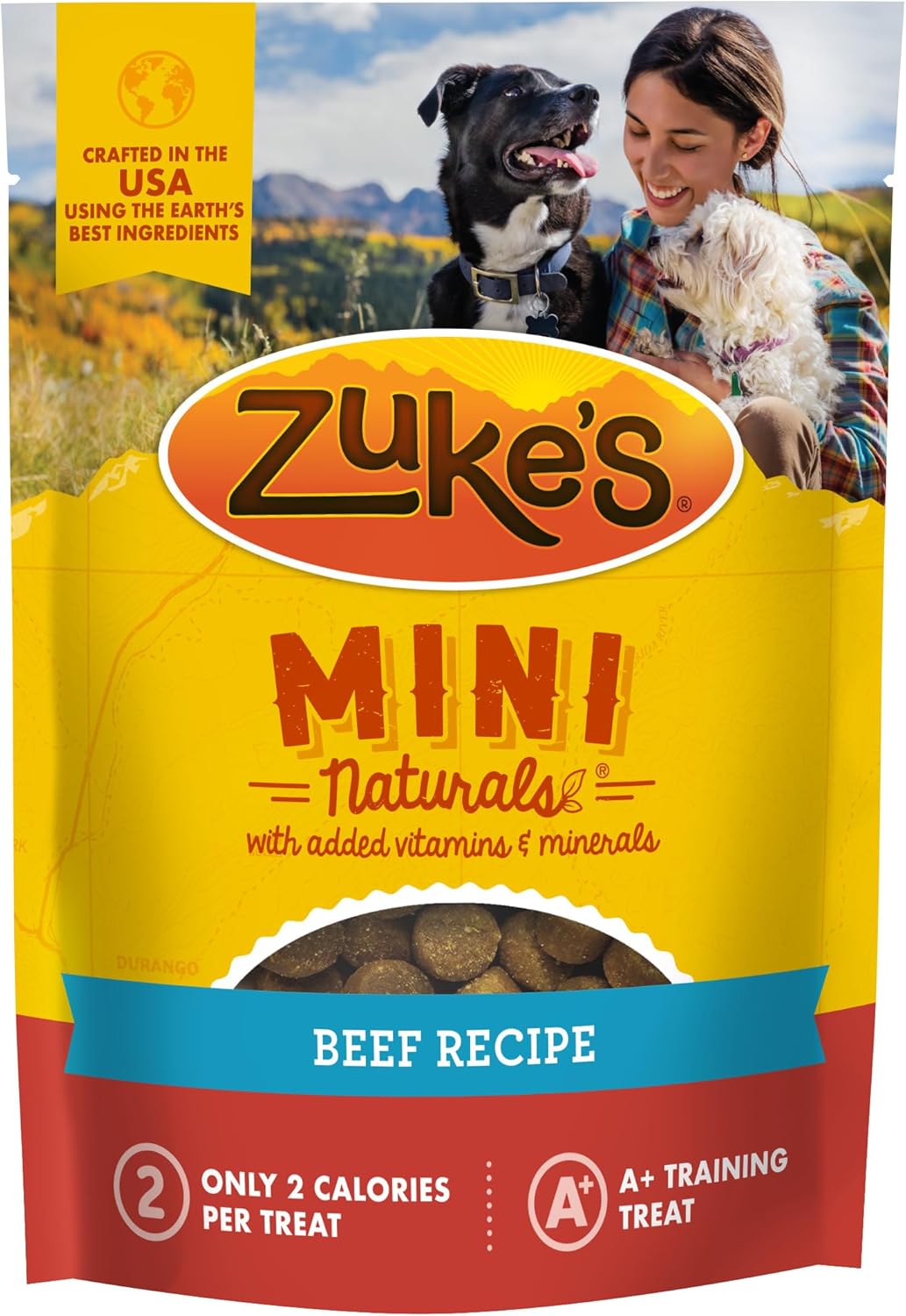
Zuke's Mini Naturals Beef 6 oz
Best Grain-Free Low-Calorie Treat
| Flavor | Beef |
|---|---|
| Unit Count | 6 Ounce |
| Item Form | Treats |
| Target Species | Dog |
Zuke's Mini Naturals Beef are bite-sized, soft training treats made with real beef as the first ingredient and a few simple additions like cherries and oats. They are designed for frequent rewards during sessions or outings: each treat has about 2 calories, a chewy texture that dogs find easy to eat quickly, and a resealable pouch for on-the-go use. The formula avoids corn, wheat, and soy and lists added vitamins and minerals, which supports using many small rewards without heavily increasing daily calories. Practical strengths are the palatable beef-forward flavor, small portion size for repetitive training, and the convenient pouch. Limitations include a simple ingredient list that contains glycerin and cane sugar, so owners aiming for ultra-low-sugar or single-ingredient options may prefer alternatives, and the 6 oz pouch is modest in volume if you train frequently and need bulk. For routine clicker work, leash training, or high-repetition reward drills these treats deliver tasty, low-calorie reinforcement in a portable package.
Best for: Owners who need many low-calorie, tasty rewards for frequent training sessions and value portability and straightforward ingredients.
Less Ideal for: People seeking single-ingredient, no-sugar treats or bulk packaging for extremely high-volume training should consider other options.
- Real beef listed as the first ingredient for strong palatability
- About 2 calories per treat, suitable for high-frequency training
- Soft, chewy texture dogs can eat quickly during sessions
- Resealable 6 oz pouch keeps treats fresh and is easy to carry
- Contains cane sugar and glycerin, so not a single-ingredient or no-sugar option
- 6 oz pouch may be small for owners who train very frequently or need bulk supplies
Verdict: The best grain-free low-calorie treat is ideal for pets with grain sensitivities or owners preferring grain-free recipes while still managing calorie intake.
Blue Buffalo Bits Salmon 4 oz
Best Small-Bite Low-Calorie Treat

| Flavor | Salmon |
|---|---|
| Item Form | Semi Moist |
| Unit Count | 4 Ounce |
| Specific Uses For Product | Behavior |
| Special Ingredients | all-natural |
Blue Buffalo BLUE Bits Salmon are bite-sized, soft-moist training treats made with real salmon as the first ingredient and formulated for intermittent or supplemental feeding. They are designed for use during training sessions or as everyday rewards and include DHA, omega fatty acids, and natural ingredients intended to support cognitive development and skin and coat health. The soft texture makes them easy to break into smaller pieces for frequent reinforcement, and the salmon-first recipe plus lack of corn, wheat, soy, and poultry by-product meals will appeal to owners seeking cleaner ingredient lists. On the downside the 4 oz bag is small for heavy trainers and the treats contain added sugars and glycerin for texture, so they are not intended to replace a balanced diet. For someone prioritizing a reasonably healthy treat on a budget these provide good ingredient quality and strong palatability in a convenient training format.
Best for: Owners who need an affordable, ingredient-focused training treat that still offers real meat first and functional nutrients for cognitive and coat support.
Less Ideal for: People who want large bulk bags for high-volume training sessions or those seeking zero-added-sugar, single-ingredient treats should look elsewhere.
- Real salmon listed as the first ingredient for a high-quality protein source
- Enhanced with DHA and omega fatty acids to support cognitive and skin/coat health
- Soft-moist, bite-sized pieces that are easy to break for frequent training rewards
- Free from corn, wheat, soy, and poultry by-product meals which simplifies ingredient concerns
- Small 4 oz bag can run out quickly during intensive training
- Contains cane sugar and vegetable glycerin, so treats include added sugars and calories
Verdict: The best small-bite low-calorie treat is tailored for frequent training rewards and repetitive reinforcement without adding many calories per session.
Minties FreshBites Dental Chews 100ct
Best Dental Low-Calorie Treat

| Flavor | Mint |
|---|---|
| Item Form | Stick |
| Unit Count | 10 Ounce |
| Target Species | Dog |
| Allergen Information | Corn-Free, Gluten Free, Soy Free, Wheat Free |
Minties FreshBites are soft, chewy dental sticks designed for frequent treating while keeping calories very low at about 7.5 calories per piece. You give them like an everyday treat after meals, walks, or during training to help freshen breath and mechanically clean teeth as the chew softens with each bite. The formula includes five natural breath fresheners—alfalfa, peppermint, fennel, dill, and parsley—plus a chicken flavor most dogs find appealing, which makes repeat giving easy without much impact on daily calories. The product is grain- and common-allergen free and marketed to aid plaque and tartar removal, though very hard chewers may not get the same abrasive cleaning as with firmer dental toys. Ingredients list includes rice flour and vegetable glycerin and contains artificial colorings, so pet owners who avoid dyes should note that. Packaged as a bagged treat, these work best as frequent low-calorie rewards or breath refresher bites rather than a replacement for regular toothbrushing.
Best for: Owners who prioritize daily breath control and plaque management but need to limit treat calories and want a palatable, frequent-use reward.
Less Ideal for: People seeking a highly abrasive dental solution for aggressive chewers or owners who strictly avoid any artificial colors in pet food.
- Very low calories at about 7.5 calories per treat, suitable for frequent rewarding
- Contains five natural breath fresheners to help neutralize mouth odors
- Soft, chewy texture that reaches crevices as it softens, aiding plaque and tartar reduction
- Free from wheat, corn, soy, and common allergens for dogs with sensitive stomachs
- Softer texture may be less effective for heavy chewers who need abrasive cleaning
- Contains artificial colorings which some owners may prefer to avoid
Verdict: The best dental low-calorie treat fits owners who want a treat that helps reduce tartar or freshen breath while keeping calorie counts low.
Choosing the Right Low Calorie Dog Treat: Key Factors to Consider
Calorie Count Per Piece and Per Serving
Calorie count is the single most important factor when choosing a low-calorie dog treat. Look for both calories per individual piece and calories per typical training session serving. A treat that lists 3 to 10 calories per piece allows more repetitions during training than a treat sized at 30 calories or more.
Also consider how many treats you typically give daily. Multiply the per-piece calories by the expected number given during training or daily rewards to estimate the true impact on your dog's daily energy intake. Treats with clear serving guidance make that calculation straightforward and reduce the risk of accidental calorie overload.
Ingredient Quality and Transparency
Low calorie does not automatically mean nutritious. Prioritize treats with simple, recognizable ingredients such as lean proteins, vegetables, or fruit. Avoid items that rely heavily on added sugars, glycerin, or ambiguous "meat by-products" because these can add empty calories while offering little nutritional benefit.
Transparent ingredient lists and explicit sourcing clues help you assess whether a treat contributes beneficial nutrients or merely fills space. For dogs with sensitive stomachs, limited-ingredient options reduce the chance of digestive upset while keeping calories low.
Portion Size and Breakability
Portion control is easier with small, uniform treats or options that break cleanly into smaller pieces. Tiny soft bites, freeze-dried chunks, or thin crunchy bites allow you to reward without committing to a large caloric hit. For training, treats that can be quickly consumed in one or two bites keep sessions moving and reduce the time a dog spends chewing rather than focusing on the lesson.
Consider how easy it is to split or crumble a treat and whether packaging supports portioning for on-the-go sessions. Very hard chews that cannot be broken will be less practical if you need micro-rewards during repetitive drills.
Macronutrient Balance
While calories matter, the macronutrient profile affects satiety and health. Treats higher in lean protein and fiber tend to keep dogs feeling fuller longer compared with treats high in simple carbohydrates. A small protein-rich bite can be more satisfying and useful during training than a larger carb-heavy piece with the same calorie count.
Check the guaranteed analysis for protein, fat, and fiber. Moderate fat is fine in low-calorie treats if portioned correctly, but excessively fatty treats are denser in calories and can undermine weight goals.
Allergen Considerations and Dietary Restrictions
Many dogs have common sensitivities to ingredients like wheat, soy, or certain proteins. For dogs on limited diets or with food allergies, select treats explicitly formulated for those restrictions. Grain-free options, single-protein recipes, or hypoallergenic formulations can help avoid flare-ups while keeping calories low.
Read labels for hidden sources of common allergens, such as brewer's rice or soy lecithin, and choose treats that clearly list alternatives if your dog needs them. When in doubt, opt for treats with fewer ingredients to simplify diagnosis in case of an adverse reaction.
Palatability and Training Effectiveness
A low-calorie treat still needs to be motivating. Some low-calorie options sacrifice taste for calorie savings, which reduces their usefulness during training. Look for treats with concentrated natural flavors, strong protein notes, or textures that your dog finds rewarding.
Consider using a mix of very low-calorie bites for routine reinforcement and slightly higher-value low-calorie treats for proofing or high-distraction situations. The goal is to balance calorie control with effective reinforcement so training outcomes remain strong.
How Many Treats Can I Give My Dog Each Day Without Gaining Weight?
There is no one-size-fits-all answer because allowance depends on your dog's size, activity level, and total daily calorie needs. Start by calculating your dog's daily maintenance calories and determine what percentage you are comfortable allocating to treats. For many owners, 5 to 15 percent of daily calories is a practical target for treats and extras.
Once you know the calorie allowance for treats, divide that by the calories per piece of the low-calorie option you plan to use. Track actual usage for a week and adjust feeding or activity if you notice gradual weight change.
- Small dogs will reach treat limits faster; use single-calorie bites where possible.
- Reserve higher-value low-calorie treats for challenging training tasks.
- Use non-food rewards like play or praise to reduce treat dependence.
Can Low-calorie Treats Help with Weight Loss and Maintenance?
Low-calorie treats can be a useful tool for weight loss when they replace higher-calorie snacks and are incorporated into a controlled feeding plan. They help maintain training and enrichment while reducing the overall energy density of extras.
Success depends on consistent portion control and often on adjusting meal portions downward to account for treat calories. Pairing treat changes with increased daily activity amplifies progress.
- Track body condition rather than relying solely on scale weight for gradual changes.
- Consult a veterinarian before starting a weight-loss regimen for dogs with medical conditions.
What Treat Formats Work Best for Training Sessions?
For repetitive training, the best formats are tiny, soft bites, freeze-dried pieces, or thin crunchy bits that a dog can eat immediately. These formats minimize downtime and let you deliver many repetitions without adding many calories.
For longer-duration rewards or enrichment, consider slightly larger low-calorie options that occupy the dog but are still portion-controlled. Vary format by context: micro-rewards for obedience drills, more substantial low-calorie snacks for trick rewards or post-walk treats.
- Soft training bites: fast to eat, good for rapid reinforcement.
- Freeze-dried bits: flavorful and often lightweight in calories.
- Crumble-able bars: convenient for precise portioning on the fly.
How to Read Labels to Confirm a Treat Is Truly Low Calorie
Check the nutritional information for calories per piece and the serving size used to calculate that number. Beware of serving sizes that represent multiple pieces; always calculate calories for what you actually give your dog. Compare calorie density by weight if needed to make accurate assessments.
Look beyond calories to the ingredient list. Ingredients listed by weight order reveal the dominant components of the treat. A thin ingredient list with a clear primary protein or vegetable is preferable to a long list of ambiguous additives and sweeteners.
- If calories are given per 100 g, convert to calories per piece using package weight to estimate real-world impact.
- Watch for added sugars or humectants that increase calories without improving nutrition.
Practical Tips for Using Low-calorie Treats Daily
Pre-portion treats into small containers or snack bags for training sessions so you do not overcount on the fly. Keep a written log for a week to understand how many calories treats are contributing to the daily total.
Use a combination of very low-calorie bites for frequent reinforcement and slightly higher-value low-calorie pieces sparingly to mark important behavior. Rotate treat locations and forms to maintain interest without increasing quantity.
- Combine food rewards with praise or short games to reduce treat count.
- Use puzzle toys with low-calorie kibbles or pieces to lengthen enrichment time per calorie spent.
How We Chose the Best Low Calorie Dog Treat
We focused on criteria that matter specifically for low-calorie dog treats and practical feeding. First, calorie density was a primary filter: we prioritized treats with low calories per piece or per common serving so owners can reward dogs frequently without adding excess energy. Second, ingredient transparency and simplicity were required, with a preference for whole-food ingredients, recognizable protein sources, and minimal fillers. Third, portion size and treat form were considered because small, bite-size pieces or easily breakable bars make it simpler to control calories during training. Fourth, allergen and sensitivity information was checked so options suitable for common dietary restrictions are represented. Fifth, nutritional balance was reviewed to ensure treats did not rely solely on sugars or empty carbs. Finally, package resealability and shelf stability were noted for practical everyday use. We excluded snacks marketed primarily as meal substitutes, high-calorie chew bones, and treats without clear nutrition labeling. We did not include novelty bakery items or multi-ingredient mixes lacking quantitative nutrition facts. The shortlist emphasizes products that meet clear calorie and ingredient criteria and that work well as training rewards or everyday low-calorie snacks.
Our full evaluation process is outlined in our review methodology.
FAQ
Are freeze-dried treats a good low-calorie option?
Freeze-dried treats are often lightweight and retain strong natural flavors, making them effective and low in calories by weight. However, calorie content can vary, so check the per-piece energy and portion accordingly.
Can I use regular kibble as low-calorie treats?
Using a small amount of your dog's regular kibble can work if the kibble is lower in calories per piece and the dog finds it rewarding. Be mindful of the daily calorie budget and reduce meal portions if necessary.
How do I transition my dog to lower-calorie treats?
Introduce new low-calorie treats in short sessions and pair them with praise or play to build value. Gradually replace higher-calorie snacks, and monitor your dog's interest; mixing old and new treats for a short period can ease transition.
What if my dog refuses low-calorie treats?
If a dog refuses a specific low-calorie option, try different textures or protein bases. You can also reserve low-calorie treats for lower-stakes training and use brief play or attention as an alternate reward.
Do low-calorie treats expire faster than regular treats?
Shelf life depends on formulation and packaging rather than calorie content. Treats with no preservatives or that are freeze-dried may be shelf-stable if packaged properly but always follow package storage guidance to maintain freshness.
Final Verdict
Prioritize treats that balance low calories with ingredient quality and portion control. Focus on calorie count per piece, simple ingredient lists, and formats that support efficient training. Expect some tradeoffs between palatability and calorie density; mixing micro-rewards with occasional higher-value low-calorie pieces helps maintain training effectiveness. With attention to labeling and consistent portioning, low-calorie treats can support weight management while keeping your dog motivated.

