

Finding the right low-fat limited-ingredient dog food matters when your dog needs leaner calories or has a sensitive stomach. You want formulas that reduce unnecessary ingredients while still delivering complete nutrition, so meals stay satisfying without triggering intolerances or adding excess fat. This guide shortlists top low-fat limited-ingredient foods that balance lean protein, essential nutrients, and gentle digestibility. We evaluated options that focus on single protein sources, minimal additive use, and nutrient completeness so you can pick a food that fits a weight-management or sensitivity-focused feeding plan. Read on for how each choice was judged and the main traits to compare.
Top Picks at a Glance
| Best Overall Low-Fat Limited-Ingredient Food The top all-around recipe balancing nutrition, digestibility, and value | Natural Balance Limited Ingredient Salmon & Sweet Potato |  |
| Best Budget Low-Fat Limited-Ingredient Food A low-cost formula that still sticks to simple, lean ingredients | Nutro Limited Ingredient Diet Lamb 4 lb |  |
| Best Premium Low-Fat Limited-Ingredient Food A higher-end recipe with superior ingredients and formulation quality | JustFoodForDogs JustFresh Sensitive Stomach Pouches |  |
| Best High-Protein Low-Fat Limited-Ingredient Food Leaner recipes that still deliver elevated protein for active dogs | Annamaet Grain-Free Lean Dry Dog Food 5 lb |  |
| Best Single-Protein Low-Fat Limited-Ingredient Food Simple recipes using one primary protein source to limit triggers | Zignature Whitefish Formula 25 lb |  |
| Best Large-Capacity Low-Fat Limited-Ingredient Food Bigger bag sizes that save per-serving costs for multi-dog homes | Natural Balance Limited Ingredient Salmon & Sweet Potato 24 lb |  |
| Best Sensitive-Stomach Low-Fat Limited-Ingredient Food Gentle, low-ingredient recipes formulated for digestive ease | Royal Canin Gastrointestinal Low Fat 6.6 lb |  |
Natural Balance Limited Ingredient Salmon & Sweet Potato
Best Overall Low-Fat Limited-Ingredient Food

| Flavor | Salmon & Sweet Potato |
|---|---|
| Item Form | Pellet |
| Animal Food Diet Type | Limited Ingredient |
| Unit Count | 64 Ounce |
| Breed Recommendation | Small Breeds |
This Natural Balance Limited Ingredient Salmon & Sweet Potato recipe is a grain-free dry food designed for small-breed adult dogs and dogs with simplified dietary needs. It uses salmon and salmon meal as the primary animal proteins and a short ingredient list intended to reduce exposure to common irritants like corn, wheat, and soy. In everyday use it serves as a complete daily feed for small dogs and can also be used during an elimination trial because the formula focuses on a single animal protein and limited carbohydrate sources such as sweet potato and potato. Practical benefits include ingredients chosen to support digestion and skin and coat health, added vitamins and minerals for balanced nutrition, and convenient bagged packaging for daily feeding. Limitations to note are that this is a small-breed formula so kibble size and nutrient balance are aimed at smaller dogs, and while the ingredient list is simplified it still contains items like yeast, canola oil, and mixed tocopherols that some owners may avoid during strict elimination diets.
Best for: Owners of Miniature Schnauzers who suspect ingredient sensitivities and want a short, single-protein diet tailored to small-breed needs and easy use during an elimination trial.
Less Ideal for: Families needing a truly novel-protein or prescription hypoallergenic formula for medically diagnosed food allergies, or owners of medium and large breeds seeking a different nutrient profile.
- Single primary animal protein (salmon) which simplifies ingredient exposure during elimination trials.
- Grain-free formula with no corn, wheat, or soy listed to reduce common dietary irritants.
- Formulated for small breeds with nutrients to support skin, coat, and digestive health.
- Includes added vitamins, minerals, and salmon meal for balanced daily nutrition.
- Formulated specifically for small breeds, so nutrient profile and kibble size may not suit larger dogs.
- Contains multiple non-protein ingredients (dried yeast, canola oil, mixed tocopherols) that could still trigger sensitivities in highly reactive dogs.
Verdict: The best overall low-fat limited-ingredient food that balances lean nutrition, digestive tolerance, ingredient simplicity, and everyday feeding value for most dogs.
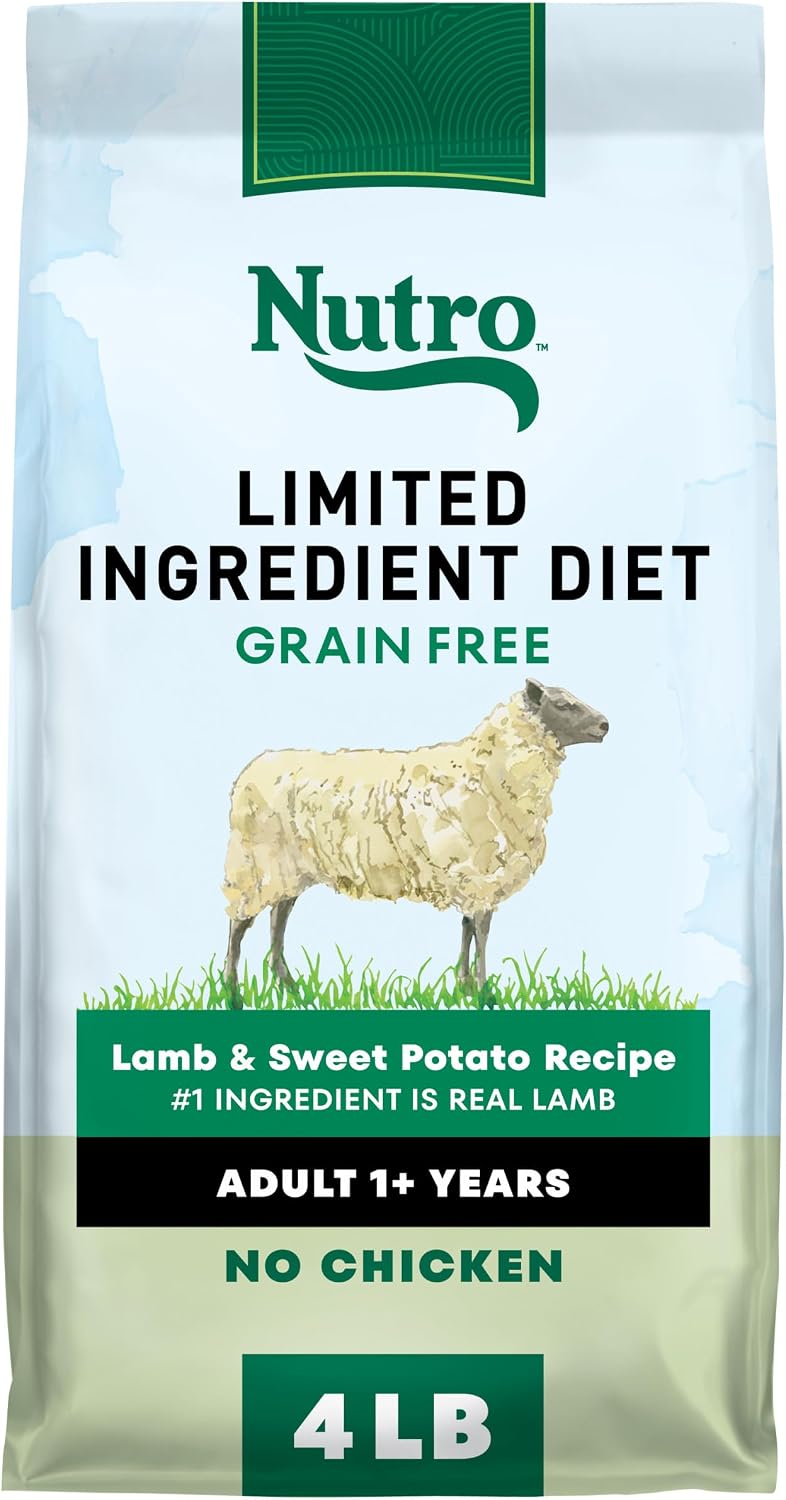
Nutro Limited Ingredient Diet Lamb 4 lb
Best Budget Low-Fat Limited-Ingredient Food
| Flavor | Lamb |
|---|---|
| Age Range Description | Adult |
| Item Form | Dry Kibble |
| Animal Food Diet Type | Limited Ingredient |
| Allergen Information | Corn-Free, Non-GMO, Soy Free, Wheat Free |
This Nutro Limited Ingredient Diet Lamb & Sweet Potato is a dry kibble designed for adult dogs with sensitivities or picky digestion. The formula lists lamb as the #1 ingredient and is built around 10 key ingredients or less, omitting common triggers like chicken, beef, corn, wheat, and soy, which makes it useful when you are narrowing down causes of digestive upset or skin issues. It includes Omega 3 and 6 fatty acids for skin and coat support and added antioxidants such as vitamin E and selenium for immune support, while natural fiber sources aim to promote healthy digestion. The bag is sized for everyday feeding and includes suggested portion guidelines by weight to simplify transitions. Limitations: this is not a veterinary elimination diet so trace cross-contact during manufacturing is possible and it may not address every type of allergy; dogs with multiple or severe protein allergies may still react to lamb or other ingredients. For owners seeking a shorter, simpler recipe to test sensitivities or soothe mild digestive issues, this provides a practical, ready-to-feed option.
Best for: Buyers who need a shorter, simpler ingredient list to identify or reduce food triggers for adult large-breed dogs and who prioritize skin, coat, and digestive support.
Less Ideal for: Owners looking for a veterinary-prescribed hypoallergenic or hydrolyzed protein diet, or those whose dogs are allergic to lamb should consider other options.
- Lamb is listed as the first ingredient, providing a single primary protein source
- Formulated with 10 key ingredients or less to simplify allergen elimination
- No chicken by-product meal, corn, wheat, or soy listed as ingredients
- Includes Omega 3 and 6 fatty acids to support skin and coat health
- Contains added antioxidants like vitamin E and selenium to support immunity
- Not certified as an elimination diet and may have trace cross-contact from manufacturing
- May still trigger dogs sensitive to lamb or other included ingredients
Verdict: The best budget low-fat limited-ingredient food for owners who need an affordable, lean formula that maintains ingredient simplicity and adequate nutrition for routine feeding.
JustFoodForDogs JustFresh Sensitive Stomach Pouches
Best Premium Low-Fat Limited-Ingredient Food

| Flavor | Sensitive Stomach |
|---|---|
| Item Form | Wet |
| Special Ingredients | Turkey |
| Unit Count | 84 Ounce |
| Number of Items | 7 |
JustFresh Sensitive Stomach pouches from JustFoodForDogs deliver a shelf-stable, limited-ingredient wet diet aimed at dogs with digestive sensitivities. Each resealable pouch uses turkey as the single protein alongside brown and white rice to provide a low-fat, low-residue meal that is easy to digest and convenient to store. The formula is human-grade and preservative-free prior to opening, and the pouches are designed to be pantry-stable until opened then refrigerated for several days. In practice this makes it a good option for owners who want fresh-style nutrition without needing freezer space; servings are ready to open and serve or mix with kibble. The product emphasizes digestive support, skin and coat benefits, and immune support through a focused ingredient list, but the pouch format means portioning for very small dogs may require extra care and it is not a complete substitute for veterinarian-directed therapeutic diets in severe GI cases. For pet parents prioritizing premium sourcing and a gentle recipe, these pouches simplify feeding while supporting sensitive stomachs.
Best for: Owners who prioritize top-quality, human-grade ingredients and a limited-ingredient, low-fat wet diet to help manage mild to moderate digestive sensitivity and support overall coat and immune health.
Less Ideal for: Caregivers seeking a prescription therapeutic solution for severe GI disease or those who need very small single-serving packets tailored to toy breed portions.
- Human-grade limited-ingredient formula with single protein source to reduce potential triggers
- Shelf-stable unopened pouches with resealable packaging for easy pantry storage and shortened prep
- Low-fat, low-residue formulation designed to be gentle on digestion
- Focus on supportive benefits like skin and coat, immune support, and weight management
- Portion sizes are fixed by pouch count and may be awkward to split for very small dogs
- Not formulated as a prescription therapeutic diet for serious gastrointestinal disorders
Verdict: The best premium low-fat limited-ingredient food for owners willing to pay more for higher-quality raw ingredients, tighter sourcing, and refined nutrient profiles.
Annamaet Grain-Free Lean Dry Dog Food 5 lb
Best High-Protein Low-Fat Limited-Ingredient Food

| Unit Count | 80 Ounce |
|---|---|
| Item Form | Dry |
| Age Range Description | All Life Stages |
| Animal Food Diet Type | Veterinary Diet |
| Special Ingredients | Chicken Meal, Duck Meal, Herring Meal, L-Carnitine, Microalgae DHA |
Annamaet Grain-Free Lean is a dry veterinary-style formula designed to support weight management by delivering high protein while cutting overall fat compared with the brand's standard grain-free recipes. It is typically fed as a main diet for adult dogs or under veterinary guidance for weight control, large-breed puppy feeding, or pancreatitis management. Key formulation points include chicken meal and duck meal as concentrated protein sources, added L-carnitine to support fat metabolism, chelated minerals for better absorption, omega‑3 from microalgae for skin and coat, and prebiotics/probiotics for gut support. The recipe is grain-free and excludes common allergens like corn, wheat, and soy, which helps limit ingredient count for dogs needing simpler diets. On the downside, it is still a multi-ingredient kibble rather than a single-protein limited-ingredient diet, so dogs with multiple food sensitivities may require a stricter formula, and the bagged kibble format means portion control and gradual transitions are important when switching diets.
Best for: Buyers who need a high-protein, lower-fat dry food to help manage a dog’s weight or support metabolic health while keeping the ingredient list simpler than many full-featured formulas.
Less Ideal for: Owners seeking a strict single-protein or single-carbohydrate elimination diet for multi-ingredient food sensitivities should consider a true limited-ingredient or novel-protein prescription option instead.
- High protein formula using chicken meal and duck meal to support lean mass
- Reduced fat content with added L-carnitine aimed at weight management
- Includes omega‑3 DHA from microalgae for skin and coat health
- Contains prebiotics and probiotics to support digestive and microbiome health
- Free of corn, wheat, and soy which narrows potential allergens
- Not a true single-protein limited-ingredient diet, contains multiple protein and carbohydrate sources
- Bagged dry kibble requires careful portioning for weight loss goals
Verdict: The best high-protein low-fat limited-ingredient food for dogs that need extra protein while keeping overall fat and ingredient count low.
Zignature Whitefish Formula 25 lb
Best Single-Protein Low-Fat Limited-Ingredient Food

| Flavor | Ocean Whitefish |
|---|---|
| Item Form | Dry |
| Age Range Description | All Life Stages |
| Special Ingredients | gluten-free, grain-free, limited-ingredients |
| Specific Uses For Product | Allergy Relief |
Zignature Whitefish Limited Ingredient Formula is a grain-free dry dog food that uses whitefish as the first ingredient and keeps the ingredient list focused to reduce common dietary triggers. It is typically fed as a staple or rotation diet for dogs with food sensitivities and is fortified with probiotics, vitamins, and minerals to support digestive health and skin and coat condition. The formula highlights whitefish for its lower saturated fat and higher omega-3 content, which can help dogs with protein allergies tolerate the diet better than common meats. Practical benefits include a single animal protein focus, added probiotics for gut support, and a formulation aimed at allergy relief and overall balanced nutrition for all life stages. Limitations are that the food is grain-free and uses pea and chickpea ingredients, which some owners may want to avoid, and the 25 pound bag is a large size that may be excessive for small households or trialing a new food.
Best for: Westie owners seeking a short, limited-ingredient diet focused on a single novel protein to help identify or reduce food triggers while keeping nutrition complete.
Less Ideal for: Owners who prefer grain-inclusive limited diets or who want to trial a new food in small quantities should consider smaller bags or alternative formulations.
- Single animal protein with whitefish as the first ingredient to reduce exposure to common proteins
- Grain-free, limited-ingredient formulation aimed at allergy relief
- Fortified with probiotics to support digestive health
- Formulated for all life stages so puppies through adults can use the same diet
- Contains peas and chickpeas which some owners avoid in limited diets
- Large 25 lb bag size may be impractical for small dogs or for testing a new food
Verdict: The best single-protein low-fat limited-ingredient food for owners seeking minimal protein variety to simplify ingredient tracking and reduce potential food sensitivities.
Natural Balance Limited Ingredient Salmon & Sweet Potato 24 lb
Best Large-Capacity Low-Fat Limited-Ingredient Food

| Flavor | Salmon & Sweet Potato |
|---|---|
| Item Form | Dry |
| Age Range Description | Adult |
| Animal Food Diet Type | Limited Ingredient |
| Package Size Name | 24 lb |
This Natural Balance Limited Ingredient Salmon & Sweet Potato formula is a grain-free dry kibble built around a single animal protein to simplify meals for dogs with sensitivities. It is typically fed as a daily adult diet and is useful for owners doing elimination trials because the ingredient list is intentionally short and excludes corn, wheat, and soy. The recipe lists salmon and salmon meal first, with sweet potatoes and potatoes as digestible carbohydrate sources, plus flaxseed and added vitamins and minerals for complete nutrition. In practice the kibble supports digestion and skin and coat health for many dogs, and the absence of common fillers makes transitions and ingredient tracking easier. Limitations include its grain-free profile, which some veterinarians no longer recommend for all dogs, and that it still contains multiple carbohydrate and oil ingredients so it is not a single-ingredient diet; dogs with severe or veterinary-diagnosed allergies may still require prescription feeding. For poodle owners focused on straightforward ingredient lists and easier elimination testing, this bag is a practical, vet-recommended option to try.
Best for: Poodle owners who need a clear, short ingredient list to troubleshoot suspected food sensitivities and who want a complete adult diet suitable for elimination testing.
Less Ideal for: Owners seeking a single-ingredient or prescription hypoallergenic diet for confirmed allergies, or those preferring grain-inclusive formulas recommended by some vets.
- Single primary animal protein listed first (salmon) simplifies elimination feeding
- Grain-free formula without corn, wheat, or soy that can reduce common irritants
- Includes added vitamins, minerals, and omega-supporting ingredients for skin and coat health
- Large 24 lb bag provides value and fewer trips to restock
- Grain-free formulation may not be appropriate for every dog and should be discussed with a veterinarian
- Contains multiple non-protein carbohydrate ingredients so it is not a single-ingredient diet
Verdict: The best large-capacity low-fat limited-ingredient food for households that want a lean, simple formula available in larger bags to lower cost per serving.
Royal Canin Gastrointestinal Low Fat 6.6 lb
Best Sensitive-Stomach Low-Fat Limited-Ingredient Food

| Flavor | Chicken |
|---|---|
| Age Range Description | Adult |
| Item Form | Dry Kibble |
| Specific Uses For Product | Digestive Health |
| Animal Food Diet Type | Veterinary Diet |
Royal Canin Gastrointestinal Low Fat is a veterinary-exclusive dry dog food designed for dogs with pancreatitis, acute or chronic gastrointestinal disease, and other digestive sensitivities. It provides a low-fat, highly digestible kibble enriched with prebiotics and a blend of dietary fibers to support intestinal microflora and stool quality, and antioxidants to support immune health. In practice you would use it as a prescription-managed diet, transitioning over about seven days and feeding as the primary daily ration or mixed with the matching wet formula for added palatability. The formula emphasizes nutrient absorption and gut mucosa integrity, which can help reduce digestive upset and support recovery during flare ups. Limitations are that it is prescription-only so you should involve your veterinarian, and its ingredient list includes common grains and barley rather than novel or hydrolyzed proteins, so it may not reduce allergic reactions for dogs with true protein-specific food allergies.
Best for: Owners seeking a vet-prescribed, low-fat kibble to manage pancreatitis or gastrointestinal disease and who prioritize digestive recovery and stool quality under veterinary guidance.
Less Ideal for: Owners whose dogs need a true hypoallergenic strategy using hydrolyzed or novel single proteins to control food allergies should consider specialist limited-ingredient or hydrolyzed-protein formulas instead.
- Formulated specifically for digestive issues with low fat and high digestibility
- Includes prebiotics and a fiber blend to support gut microflora and stool quality
- Antioxidant blend to support immune and overall health during digestive recovery
- Veterinary-exclusive formula intended for medically managed cases
- Uses common protein and grain ingredients rather than hydrolyzed or novel proteins
- Requires a veterinary prescription which limits immediate accessibility
- Not formulated specifically as a hypoallergenic or limited-ingredient diet
Verdict: The best sensitive-stomach low-fat limited-ingredient food for dogs that need a gentle, easy-to-digest formula with minimal components to reduce digestive upset.
Choosing the Right Low Fat Limited Ingredient Dog Food: Key Factors to Consider
Fat Content and Calorie Density
Lowering fat is the primary goal for dogs needing weight control or reduced-pancreatic workload. Look for guaranteed analysis that shows reduced crude fat percentage and consider calorie density per cup or per can so you can portion accurately. A food with low fat but very high calorie density can still promote weight gain, so check both metrics.
Calorie density affects how much volume your dog needs to feel full. Foods with moderate fiber and higher moisture can help dogs feel satisfied on fewer calories. For dogs with specific medical needs, consult feeding targets based on body condition rather than relying on package serving sizes alone.
Ingredient Simplicity and Protein Source
Limited-ingredient diets aim to minimize potential allergens and confusing ingredient lists. Prefer formulas that list a single named protein source and a short carbohydrate profile to make it easier to isolate triggers. Avoid foods with multiple unnamed meat meals or a long list of additives that could reintroduce allergens.
Knowing the exact protein also matters for rotation feeding or elimination trials. If you are managing sensitivities, a single, clearly labeled protein makes it simpler to test and monitor your dog's response over time.
Digestibility and Gut-friendly Components
Digestibility affects nutrient absorption and stool quality, which is especially important for sensitive dogs. Ingredients like soluble fiber, prebiotics, and easily digestible carbohydrate sources can reduce gastrointestinal upset. Look for inclusion of ingredients known to support digestion rather than heavy fillers that can increase stool volume without nutritional value.
Veterinary guidance is important if your dog has chronic digestive issues. Transition slowly to a new formula to monitor tolerance, and watch for changes in stool frequency, consistency, and appetite as indicators of acceptability.
Nutritional Completeness and Life Stage Suitability
Even when targeting low-fat and limited-ingredient goals, the food must still meet complete and balanced nutrition for your dog's life stage. Check that the label claims to satisfy AAFCO adult maintenance or appropriate life-stage standards. Special formulations for growth, reproduction, or geriatrics may have different nutrient targets that could conflict with a low-fat objective.
Ensure essential fatty acids, vitamins, and minerals are present at levels appropriate for the declared life stage. Some limited-ingredient recipes reduce fat but also need supplementation to meet micronutrient needs; clear labeling helps confirm completeness.
Palatability and Transition Tolerance
Dogs vary in taste preference, and a lean, simple formula can be less enticing than richer foods. Consider palatability factors such as protein form, moisture, and texture. Wet or mixed-format options can improve acceptance when switching to lower-fat recipes.
How you transition matters. Gradual mixing schedules reduce rejection and digestive upset. If your dog is a picky eater or has a strong preference developed on richer foods, plan for a patient transition and monitor weight and energy levels.
Feeding Logistics and Portion Control
Portion accuracy is critical when calories are being reduced to manage weight. Clear feeding charts and measured scoops make consistency easier. Consider the format that best fits your routine: dry kibble simplifies measuring, while wet foods may require portioning by weight.
Also think about how treats and table scraps will fit into the daily calorie budget. Even limited-ingredient treats add fat and calories, so integrate them into the total feeding plan to maintain target body condition.
How Quickly Should I Switch to a Low-fat Limited-ingredient Food?
Transition speed depends on your dog's sensitivity and prior diet. For most dogs, a gradual transition over 7 to 10 days—slowly increasing the new food proportion while decreasing the old—helps avoid digestive upset. Start with 10 to 25 percent new food mixed with the old and increase the ratio every two to three days as tolerated.
If your dog has a history of very sensitive digestion, extend the transition to two weeks or longer and monitor stool consistency and appetite. For dogs recovering from acute pancreatitis or with severe gastrointestinal issues, follow a veterinarian-directed reintroduction schedule rather than a general timeline.
- Watch for changes in stool firmness, frequency, and color during the transition.
- Pause or slow the transition if vomiting, diarrhea, or refusal to eat occurs.
- Offer the new formula at room temperature or slightly warmed to boost palatability if needed.
Can Low-fat Limited-ingredient Food Meet All Nutrient Needs?
Yes, many low-fat limited-ingredient foods are formulated to be complete and balanced for specific life stages. Check the label for completeness statements and life-stage suitability. Reputable formulations include necessary vitamins and minerals to offset the reduced fat content while maintaining overall nutrient adequacy.
Be mindful if you are feeding home-prepared meals or supplementing heavily with treats. Those additions can unbalance the diet unless you account for them in the total daily nutrient picture. When in doubt, consult your veterinarian to confirm that the chosen diet meets your dog's health requirements.
- Look for a completeness claim appropriate to your dog's life stage.
- Consider a nutritional assessment if switching an older dog or one with medical conditions.
What Are Signs a Dog Is Not Tolerating the New Formula?
Common signs of poor tolerance include increased vomiting, loose or watery stools, persistent gas, reduced appetite, lethargy, and skin irritation. Minor, brief changes in stool are normal during a transition, but persistent or worsening symptoms over several days indicate intolerance or an unrelated health issue.
If you observe severe symptoms such as repeated vomiting, blood in stool, or marked lethargy, stop the food and seek veterinary care. For mild intolerance, slowing the transition or trying another limited-ingredient protein may resolve the problem.
- Temporary loose stools in the first few days can be normal.
- Persistent poor appetite or weight loss is a reason to consult your veterinarian.
- Skin flare-ups or ear infections that appear after changing foods may indicate a food sensitivity.
How to Incorporate Treats and Supplements Without Undoing Weight Goals
Treats and supplements are often overlooked sources of fat and calories. Choose low-fat, limited-ingredient treats that match the main diet's philosophy, and account for treat calories in the daily allowance. For training, use tiny portion-controlled bites or use part of the dog's daily kibbles as rewards.
If you use supplements for joint, skin, or digestive support, check product fat content and serving calories. Some fatty-acid supplements add significant calories; consider powdered or capsule options that offer benefits without large added fat. Discuss supplement choices with your veterinarian to keep the overall plan lean and balanced.
- Use a separate measuring cup for treats to avoid accidental overfeeding.
- Reserve higher-calorie treats for special occasions and compensate by reducing meal portions that day.
- Consider low-calorie training aids like freeze-dried single-ingredient morsels or fresh vegetables that are dog-safe.
Should I Choose Wet, Dry, or Mixed Formats for Low-fat Feeding?
There is no one-size-fits-all answer. Dry kibble is easy to portion and store, while wet food often has higher moisture content that can help dogs feel fuller on fewer calories. Mixing wet and dry can provide the benefits of both: improved palatability and controlled portioning. Choose the format that best supports consistent feeding and your dog's preferences.
Consider the impact on calorie counts and feeding volume. Wet food servings are typically measured by weight, so be precise when incorporating mixed-format meals to avoid accidentally increasing daily calorie intake.
- Measure wet food by weight when possible for accuracy.
- Use a consistent routine to prevent free-feeding, which can undermine weight goals.
- For very picky eaters, moist toppers in small amounts can improve acceptance without drastically raising fat content.
How We Chose the Best Low Fat Limited Ingredient Dog Food
We prioritized formulas designed specifically for dogs that need leaner calories and simplified ingredient lists. Our selection process emphasized nutrient completeness, ingredient transparency, and formulation targeted to reduce fat while maintaining adequate protein and essential vitamins and minerals. Digestibility was a core filter: we looked for foods with low-irritant carbohydrate sources, limited additives, and inclusion of fiber and prebiotics where appropriate to support gut health. Protein source clarity mattered too; single-protein or single-animal-protein labels reduce the risk of cross-reactive ingredients for dogs with sensitivities. We also evaluated macronutrient balance and the presence of key micronutrients for overall health, especially for dogs on a reduced-fat plan. Manufacturing quality signals such as clear labeling, feeding guidance, and standardized nutritional completeness were used to separate serious formulations from ambiguous ones. Exclusions included foods that did not clearly state fat content or ingredient simplicity, treats, supplements, and therapeutic prescription-only diets. The final set reflects products that meet lean-nutrition goals while still offering complete daily nutrition.
Our full evaluation process is outlined in our review methodology.
FAQ
Is low-fat limited-ingredient food suitable for all dogs?
Not always. Low-fat limited-ingredient food is well suited for dogs needing weight control or with suspected food sensitivities, but puppies, highly active dogs, or dogs with certain medical needs may require higher fat or different formulations. Consult your veterinarian for life-stage or condition-specific guidance.
How do I read a label to confirm fat and ingredient simplicity?
Start with the guaranteed analysis to see crude fat percentage and compare calorie per serving values when available. Then review the ingredient list for a single named protein and a short list of carbohydrate and additive ingredients. Avoid vague terms and multiple unnamed meat sources.
Can I use low-fat limited-ingredient food long term?
Many dogs can be maintained on a thoughtfully formulated low-fat limited-ingredient diet long term if the product is labeled complete and balanced for their life stage. Monitor body condition, coat quality, and energy levels, and perform regular veterinary checkups to ensure ongoing suitability.
Will reducing fat cause my dog to be less energetic?
Energy can be affected if total calories are reduced too much or if the diet lacks adequate protein and micronutrients. When lowering fat for weight control, ensure you maintain sufficient protein and overall calorie balance so your dog retains healthy energy levels.
Are there common substitutes for high-fat treats when training?
Yes. Small pieces of lean, cooked protein, low-calorie single-ingredient freeze-dried treats, or safe vegetables can be effective low-fat training aids. Use tiny portions and account for those calories in the daily allowance to avoid undermining weight goals.
Final Verdict
When choosing a low-fat limited-ingredient food, prioritize a clear single protein source, low and clearly stated fat content, and a formula labeled complete for your dog's life stage. Balance calorie density and fiber or moisture content so your dog feels satisfied without excess calories, and transition gradually to monitor tolerance. The right choice depends on your dog's activity level, age, and sensitivity history. Focus on measurable indicators—body condition score, stool quality, and energy level—and be prepared to adjust portions or try alternative single proteins if needed. With careful selection and monitoring, you can support weight and digestive goals while keeping nutrition complete.

