

If your dog needs a lower-protein diet for medical or life-stage reasons, choosing the right treats matters for health and behavior. Treats that are too high in protein can undo a carefully managed feeding plan, while bland or unappealing options make training harder. This guide covers the top low-protein treats we shortlisted for dogs, focusing on ingredient transparency, accurate protein labeling, and palatability. Below you will find concise evaluations and practical guidance to help you pick treats that fit a low-protein feeding strategy and keep your dog motivated.
Top Picks at a Glance
| Best Overall Low-Protein Treat A well-rounded low-protein treat that suits most dogs' needs | Mattie's Treats Mini Pumpkin 10oz |  |
| Best Budget Low-Protein Treat Low-cost low-protein option that still meets basic quality standards | Mattie's Treats Low Protein Pumpkin |  |
| Best Premium Low-Protein Treat Higher-end low-protein treats with superior ingredients and sourcing | Kidney Restore Bacon Dog Treats 16 oz |  |
| Best Small-Bite Low-Protein Treat Smaller, easy-to-break treats ideal for frequent training rewards | Dave's Pet Food Kidney Treats 5 oz |  |
| Best Soft Low-Protein Treat Tender texture treats made for sensitive mouths or older dogs | PETIPET Apples + Carrots Bites |  |
Mattie's Treats Mini Pumpkin 10oz
Best Overall Low-Protein Treat

| Flavor | Pumpkin |
|---|---|
| Item Form | Biscuit |
| Specific Uses For Product | Kidney Care, Liver Care |
| Unit Count | 10 Ounce |
| Number of Items | 150 |
Mattie's Treats Mini Pumpkin are small, heart-shaped crunchy biscuits made for dogs that need reduced protein, phosphorus, and sodium. They are used as everyday reward treats or occasional snacks and come in a 10 ounce carton with roughly 150 mini pieces, which makes portioning consistent for training or regular rewarding. The recipe uses six simple ingredients including light rye flour, tapioca flour, pure pumpkin, cinnamon, and fish oil, giving a real-pumpkin flavor that dogs tend to accept while keeping guaranteed analysis numbers low (Protein 9% max., Phosphorus 0.2% max., Sodium 0.05% max.). At about 6 kcal per treat these are easy to fit into restricted diets as supplemental rewards, and the small size helps avoid overfeeding. Limitations are that they are not a complete diet and are intended only as intermittent treats, and some dogs with very strict renal prescriptions may need even lower protein or veterinary-formulated options. For owners seeking a palatable, low-protein daily treat with predictable portions, these perform well.
Best for: Dog owners who need a daily-reward treat compatible with reduced-protein, low-phosphorus diets and who prioritize predictable portion sizes and simple ingredients.
Less Ideal for: Owners seeking a veterinary-prescribed therapeutic treat or a complete low-protein food for dogs with advanced kidney disease should look for veterinary-formulated alternatives.
- Low protein, low phosphorus, and low sodium formulation suitable as renal-friendly treats
- Small, consistent mini size (about 6 kcal per treat) makes portion control easy
- Simple ingredient list featuring real pumpkin and omega-3 fish oil for flavor and nutrition
- Packaged in a 10 ounce carton with ~150 pieces for everyday rewarding and training
- Not a complete or balanced diet and intended only for intermittent supplemental feeding
- Protein is low but not veterinary-formulated for all stages of severe renal disease
Verdict: The best overall low-protein treat that balances palatability, safe low-protein formulation, ingredient quality, and consistent portioning for everyday rewards.
Mattie's Treats Low Protein Pumpkin
Best Budget Low-Protein Treat

| Unit Count | 16 Ounce |
|---|---|
| Number of Items | 72 |
| Protein | 9% max. |
| Phosphorus | 0.2% max. |
| Sodium | 0.05% max. |
Mattie's Treats Low Protein Pumpkin are crunchy, heart-shaped biscuits formulated for dogs that need reduced protein, phosphorus, and sodium intake. They are typically used as an occasional reward or supplemental snack for pets with kidney or liver concerns, or for owners looking for veterinary-style treats. The recipe lists six simple ingredients including light rye flour, tapioca flour, pumpkin, cinnamon, and fish oil, which keeps the ingredient panel straightforward and palatable for many dogs. Each treat is low in protein (9% max), phosphorus (0.2% max), and sodium (0.05% max), and the calories per treat are modest at about 19 KCAL, making portion control easy. The product is made in the USA and sold in a one-pound bag with roughly 72 treats, which helps keep cost per treat low. Limitations are that these are treats only and not a complete food or supplement, and their crunchy biscuit form may not suit dogs with dental issues or those requiring wet textures. For owners prioritizing an affordable, low-protein option with simple ingredients, these biscuits are a practical choice.
Best for: Owners who need an affordable, reliably low-protein snack that still uses simple, recognizable ingredients and will be given as occasional rewards.
Less Ideal for: Owners seeking a complete therapeutic diet, soft or wet treats for dogs with dental issues, or highly restricted prescription-only diets.
- Formulated specifically for reduced protein, phosphorus, and sodium suitable for dogs with kidney or liver dietary needs
- Short ingredient list with real pumpkin and fish oil for palatability and omega-3s
- Made in the USA and supplied in a 16 oz bag with about 72 treats for low cost per treat
- Low calorie per treat (about 19 KCAL) which helps with portion control
- Not a complete food or therapeutic supplement and intended only as an occasional treat
- Crunchy biscuit texture may be unsuitable for dogs with dental problems or those needing soft treats
Verdict: The best budget low-protein treat for owners who need an affordable, reliably low-protein snack without sacrificing basic ingredient safety or palatability.
Kidney Restore Bacon Dog Treats 16 oz
Best Premium Low-Protein Treat
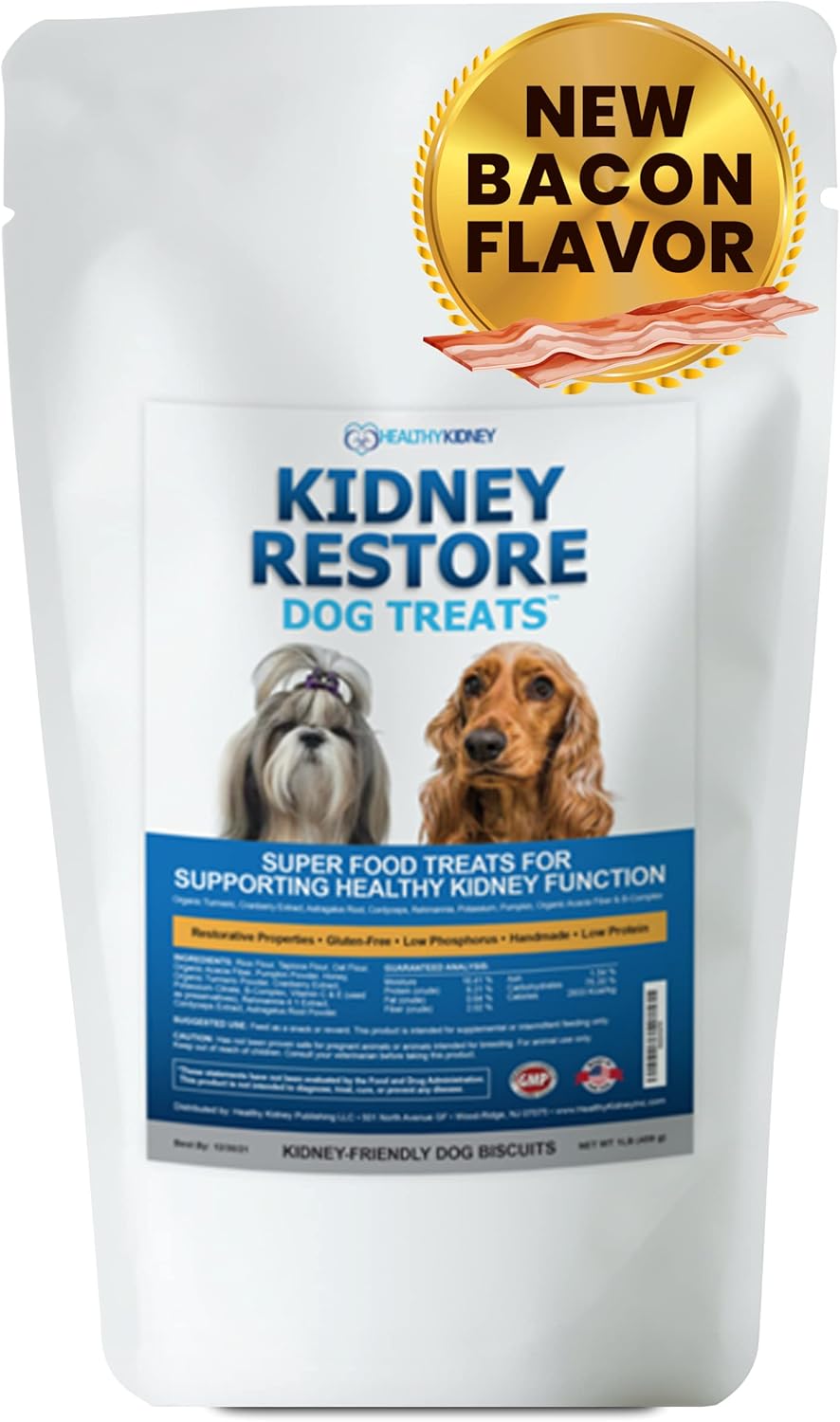
| Flavor | Bacon |
|---|---|
| Unit Count | 16 Ounce |
| Item Form | Biscuit |
| Special Ingredients | Antioxidant, Cranberry, Pumpkin |
| Animal Food Diet Type | Plant-Based |
These Kidney Restore Bacon Dog Treats are low-protein biscuits designed specifically for dogs with kidney concerns and for owners who want a kidney-supportive snack. They are typically used as an occasional reward or supplemental treat alongside a renal diet and kidney supplements. The recipe emphasizes plant-derived ingredients and added antioxidants such as cranberry, turmeric, pumpkin and vitamins C and E to help support normal kidney function while keeping protein content low. The bacon flavor is derived from plant sources so it stays suitable for renal diets, and the bag includes a free eBook and manufacturer support resources. Practical benefits include a palatable, crunchy treat that can be given across life stages and breeds and that aims to reduce renal workload compared with regular high-protein treats. Limitations are that these are treats, not a replacement for a veterinarian-prescribed renal diet, and ingredient lists and exact nutrient percentages are not shown on the package information provided here, so owners managing strict phosphorus or sodium targets should consult their vet before routine use.
Best for: Pet owners who prioritize high-quality, kidney-focused ingredients and want a palatable low-protein treat to use alongside veterinary care and supplements.
Less Ideal for: Owners seeking a full veterinary prescription renal diet or those who need precisely labeled nutrient guarantees for strict medical management should choose clinical renal food instead.
- Formulated for kidney support with low protein and antioxidant-rich ingredients
- Plant-derived bacon flavor suitable for renal-friendly snacks
- Includes ingredients like cranberry, pumpkin and turmeric that provide antioxidant and anti-inflammatory support
- Suitable for all life stages and breed sizes as an occasional treat
- Comes in a resealable bag with a free eBook and product support resources
- Not a replacement for a veterinary renal prescription diet and lacks full nutrient panel on the listing
- May not meet strict phosphorus or sodium limits required by some renal protocols
Verdict: The best premium low-protein treat for pet owners willing to pay more for higher-quality ingredients, careful sourcing, and refined recipe formulation.
Dave's Pet Food Kidney Treats 5 oz
Best Small-Bite Low-Protein Treat
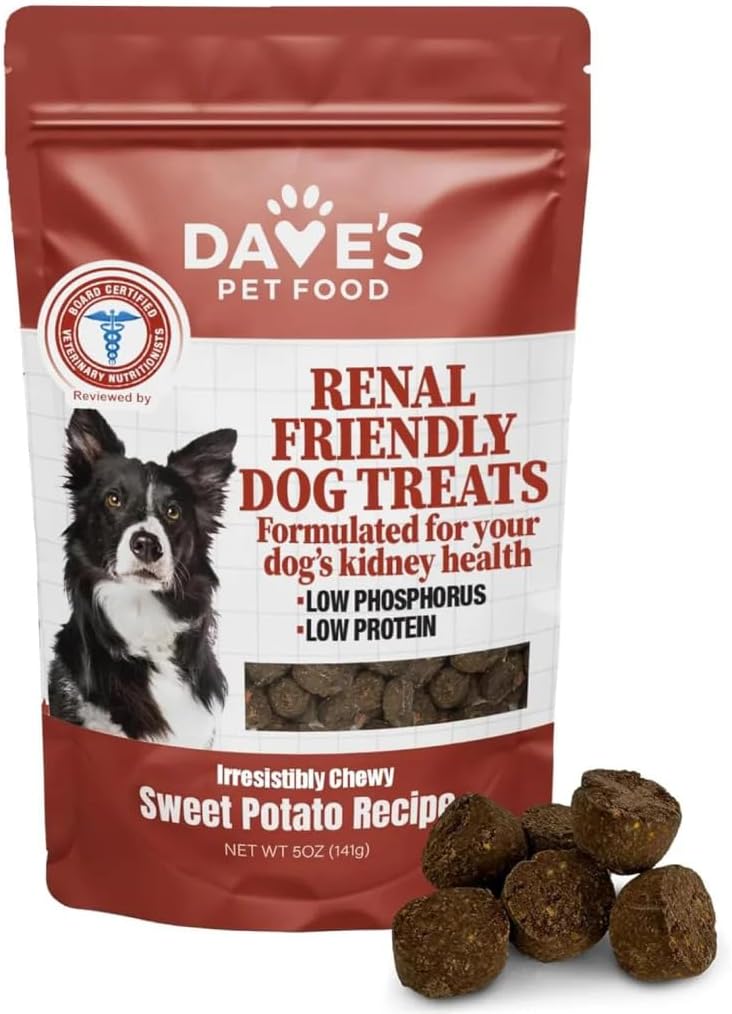
| Unit Count | 5 Ounce |
|---|---|
| Flavor | Low Phosphorus Treats |
| Item Form | Pellet |
| Specific Uses For Product | Kidney |
These chewy, semi-moist pellets are designed as low-protein, low-phosphorus treats for dogs with kidney concerns or for owners who need a gentler reward option. They come in a 5 oz bag and are made primarily from sweet potato and other gut-friendly ingredients like flaxseed, blueberries and cranberries, with added prebiotic fiber to support digestion. In practice they work well as small, soft rewards for short training sessions or to snack for seniors and dogs on renal-support diets because they are easy to portion and palatable. They are free from wheat, corn, soy, artificial preservatives and are labeled reviewed by veterinary nutritionists, which adds reassurance for medical use. Limitations are that the product is a specialty renal treat rather than a high-value training bait for all dogs, and dogs used to meaty treats may be less motivated by a vegetable-forward flavor. For owners needing bite-sized, low-calorie rewards compatible with a restricted diet these treats are a practical option, but trainers seeking very high-value protein treats for intense sessions may prefer alternatives.
Best for: Buyers who need bite-sized, low-protein rewards for frequent short sessions or dogs on renal-restricted diets and who prioritize digestive support and gentle ingredients.
Less Ideal for: Owners running long, high-intensity training sessions who need very high-value, protein-rich treats or bulk quantities for heavy use.
- Formulated low in phosphorus and protein for renal support
- Small, semi-moist pellets that are easy to portion for short training bursts
- Contains fiber and prebiotic ingredients to support digestion
- Free from wheat, corn, soy and artificial preservatives
- Made in the USA and reviewed by board-certified veterinary nutritionists
- Vegetable-forward flavor may be less enticing for meat-motivated dogs
- 5 oz bag size may require frequent repurchasing for heavy trainers
Verdict: The best small-bite low-protein treat for reward-heavy training or short sessions where low calories and quick, bite-sized portions matter.
PETIPET Apples + Carrots Bites
Best Soft Low-Protein Treat

| Flavor | Apples + Carrots |
|---|---|
| Unit Count | 5 Ounce |
| Item Form | Bites |
| Animal Food Diet Type | Vegan |
| Special Ingredients | apples, carrots |
These PETIPET Apples + Carrots bites are soft, fruit-and-vegetable treats designed for easy chewing and sensitive stomachs. They are typically given as training rewards, everyday snacks, or special-occasion treats for dogs of all life stages, and the soft texture makes them especially useful for older dogs or pets with dental issues. The ingredient list is short and recognizable — organic apple juice, organic apples, and organic carrot puree with fruit pectin and a flax coating — which supports the human-grade, hypoallergenic positioning and limits common allergens like grain, soy, and corn. Practical benefits include a moist, palatable texture that works for toothless or senior dogs and a low-protein, low-sodium formulation that suits dietary sensitivities. Limitations are the small 5 ounce bag size, which may require more frequent repurchasing for multi-dog households, and the vegan composition means they do not supply animal-based nutrients some dogs prefer in treats. For owners prioritizing gentle, easy-to-chew plant-based snacks for seniors or dogs with compromised dentition, these perform well in everyday use.
Best for: Owners seeking an easy-to-chew, palatable vegetable-based treat for senior dogs, toothless pets, or dogs with sensitive stomachs who need gentle, hypoallergenic rewards.
Less Ideal for: Owners who want treats that provide animal protein or calorie-dense rewards for highly active dogs should consider alternatives with meat-based ingredients.
- Soft, moist texture suitable for dogs with dental issues or no teeth
- Short list of organic fruit and vegetable ingredients
- Hypoallergenic, grain-, soy-, and corn-free formulation
- Low-protein, low-sodium recipe for sensitive diets
- Made in a human-grade, FDA-registered facility
- Small 5 ounce bag may not last long for multi-dog homes
- No animal protein, so not a source of meat-based nutrients
Verdict: The best soft low-protein treat for senior dogs, puppies, or pets with dental sensitivity that need an easy-to-chew, gentle texture.
Choosing the Right Low Protein Dog Treat: Key Factors to Consider
Protein Content and Labeling Clarity
Knowing the crude protein percentage and how it was measured is essential. For dogs needing restricted protein, small differences in percent protein can add up when treats are given multiple times per day.
Look for treats that provide a guaranteed analysis or explicit protein percentage on the packaging. If the label lists only vague terms like "low protein" without numbers, it is harder to integrate those treats into a controlled diet. Clear labeling helps you calculate daily protein intake across meals and snacks.
Primary Ingredients and Protein Sources
Check which ingredients supply most of the protein. Some treats use vegetables, fruits, or starches as the bulk ingredient, which typically have lower protein than meat-based treats.
Avoid treats that mask high-protein additives with flavorings. Ingredients listed in order of weight give a good sense of composition, so treats with early listings of low-protein components are better fits for restricted diets.
Digestibility and Ingredient Sensitivity
Dogs on restricted protein diets may also have sensitive digestion or concurrent dietary restrictions. Easily digestible ingredients reduce the risk of gastrointestinal upset.
Simple recipes with limited ingredients are easier to evaluate for allergens or intolerances. If your dog has known sensitivities, choose treats with minimal ingredients and avoid common triggers even if they are low in protein.
Palatability and Texture
A low-protein treat that your dog will not eat is not useful. Palatability is influenced by flavor, aroma, and texture. Soft treats are often preferred for frequent training rewards, while firmer treats may be better for occasional chewing and enrichment.
Consider your dog's preferences and dental condition. Treats that can be broken into small pieces without crumbling help control portion size and protein intake per reward.
Portion Size and Calorie Impact
Even low-protein treats contribute calories. For dogs on therapeutic diets or weight management plans, the caloric density of treats matters as much as protein percentage.
Look for treats that are easy to portion and list calories per treat or per serving. Smaller, lower-calorie bites let you reward behavior without substantially increasing daily energy or protein intake.
Storage, Shelf Life, and Batch Consistency
Treats that vary between batches can make dietary control difficult. Reliable manufacturers provide stable formulations and clear expiration or lot information.
Long shelf life and resealable packaging help keep treats fresh and prevent waste. For canine patients with strict dietary needs, consistent product formulation reduces the chance of unexpected ingredient changes that could alter protein content.
How Much Low-protein Treat Can I Safely Give Per Day?
Daily treat allowance depends on your dog's total daily protein allotment and caloric needs. Start by calculating the protein grams allowed per day from your veterinarian or diet plan, then subtract the protein provided by regular meals to find the remaining allowance for treats.
Divide that remaining protein allowance by the protein per treat to estimate the number of treats you can give. If exact protein per treat is not listed, use weight-based math: measure the gram weight of one treat and apply the package's percent crude protein to estimate protein grams per piece.
- When in doubt, use smaller reward pieces to spread treats across training sessions.
- Track treats in a daily feeding log for several days to ensure targets are met consistently.
- Consult your veterinarian if treats make up a significant fraction of daily calories or protein.
Are Homemade Low-protein Treats a Good Option?
Homemade treats let you control ingredients and avoid fillers, but they require careful calculation to ensure protein targets are met. Simple recipes using fruits, certain vegetables, and small amounts of low-protein binding agents can work, but you should test batch nutrient content when possible.
Homemade treats also vary in moisture and density, which affects protein concentration per bite. If you choose to make treats at home, weigh portions and keep consistent recipes to maintain predictable protein and calorie values.
- Favor recipes with low-protein staples like apples, sweet potato, or plain cooked grains when appropriate.
- Avoid adding concentrated protein boosters such as meat broths or powdered dairy unless approved by your vet.
How to Read Treat Labels for Low-protein Suitability
Start with the guaranteed analysis. If percent crude protein is listed, use it with the treat weight to estimate protein per serving. Next, scan the ingredient list: identify primary components and watch for high-protein items appearing near the top of the list.
Also check for added amino acids, meat meals, or concentrated dairy, which can increase protein despite an otherwise low-protein appearance. Finally, look for feeding guidelines that give calories or treat size to simplify daily tracking.
- Percent crude protein and calories per serving are the two most useful label facts.
- Ingredients are listed by weight; earlier placement indicates a larger proportion of the product.
What Textures and Formats Work Best for Training Vs Enrichment?
Training rewards should be easy to chew and portion into tiny pieces to avoid adding excess protein and calories. Soft, moist treats or treats that slice cleanly are ideal for repetitive rewards during short sessions.
For enrichment or longer-lasting chewing, choose firmer options that hold up without breaking into many small pieces. Those treats are given less frequently and should be accounted for in daily protein tallies.
- Use tiny soft bits for high-repetition training.
- Reserve firmer or extended-chew treats for occasional enrichment and longer sessions.
When Should I Consult My Veterinarian About Low-protein Treats?
If your dog has a diagnosed kidney, liver, or metabolic condition that requires protein restriction, consult your veterinarian before introducing new treats. They can confirm allowable daily protein, suggest safe ingredient categories, and help you integrate treats into the overall feeding plan.
Also check with your vet if your dog experiences digestive upset, reduced appetite, or weight changes after adding a new treat. Professional guidance ensures treats support health goals rather than undermining them.
- Bring the treat label or ingredient list to the appointment for precise guidance.
- Ask about appropriate calorie adjustments if treats become a regular part of feeding.
How We Chose the Best Low Protein Dog Treat
To assemble this list we filtered for treats that explicitly target reduced protein content and have clear ingredient lists. We prioritized products that list crude protein percentages or provide guaranteed analysis, and we favored treats formulated around low-protein ingredient sources such as certain fruits, vegetables, or controlled plant-based components. Palatability was considered via ingredient variety and common flavor carriers that appeal to dogs without relying on meat concentrated protein. Texture diversity was evaluated because soft, easily portioned treats are often needed for frequent rewards and for dogs with dental or swallowing concerns. We excluded treats that lacked transparent nutritional information, had undefined protein values, or relied primarily on high-protein concentrates. We also filtered out novelty items whose formulation varies by batch. Final selections reflect a balance of reliable protein control, digestibility, ingredient clarity, and general acceptability to most dogs under a low-protein regimen.
Our full evaluation process is outlined in our review methodology.
FAQ
Can low-protein treats be used for training puppies?
Puppies usually need higher protein for growth, so low-protein treats are not generally recommended as the primary reward during rapid growth phases. Consult your veterinarian about appropriate treat choices for puppies with specific health concerns.
Are plant-based treats a good low-protein choice?
Plant-based treats often have lower protein than meat-based options, but formulations vary. Check the guaranteed analysis and ingredient order to confirm they truly reduce protein compared with standard treats.
How do I adapt portion sizes if a treat lists protein as a percent rather than grams?
Weigh a single treat to get its gram weight, then multiply by the percent crude protein to estimate protein grams per piece. Use that number to calculate how many pieces fit within your dog's daily allowance.
Are low-protein treats suitable for dogs with food allergies?
Lower protein does not automatically mean hypoallergenic. If your dog has allergies, check ingredient sources and avoid known allergens. Limited-ingredient low-protein treats are often easier to assess for allergy risks.
Do low-protein treats help with kidney disease?
Lowering protein intake is sometimes part of managing certain kidney conditions, but treatment plans differ by case. Work with your veterinarian to determine whether low-protein treats are appropriate and how to balance them with therapeutic feeds.
Final Verdict
When choosing low-protein treats, prioritize transparent protein information, suitable ingredient sources, and an appropriate texture for the intended use. Balance treat frequency and portion size against the daily protein and calorie limits set for your dog. For dogs with medical needs, coordinate treat choices with your veterinarian so rewards support health goals without compromising nutritional management. With careful selection and portion control, low-protein treats can be a useful tool for training and enrichment while maintaining dietary restrictions.

