

When a dog develops a skin infection, the right medicated shampoo can shorten recovery, reduce discomfort, and make topical care more effective. You need a formulation that targets the likely cause of the infection while remaining safe for your dog's skin type and age. This guide shortlists the top medicated shampoos for skin infection and explains why each was chosen based on ingredient action, safety, and ease of use. Below you will find practical guidance on what to look for, how to use medicated shampoos safely, and what tradeoffs to expect when treating infected skin.
Top Picks at a Glance
| Best Overall Medicated Shampoo The top all-around medicated formula for common skin infections | Douxo S3 PYO Medicated Dog Shampoo 6.7 fl oz |  |
| Best Budget Medicated Shampoo An affordable medicated option that treats infections without breaking the bank | Veterinary Formula Antiseptic & Antifungal Shampoo 16 oz |  |
| Best Premium Medicated Shampoo A higher-end therapeutic shampoo with advanced ingredients and packaging | Dechra Miconahex + Triz Shampoo 16 oz |  |
| Best Hypoallergenic Medicated Shampoo A low-irritant formula for dogs prone to sensitivities or allergies | Douxo S3 Calm Dog Shampoo 6.7 fl oz |  |
| Best Concentrated Medicated Shampoo A potent, low-volume concentrate that dilutes to many washes | Nature's Specialties Lav-N-Derm 16 oz |  |
| Best Fast-Acting Medicated Shampoo Formulated for quicker relief and visible improvement after few washes | Vetericyn FoamCare Medicated Shampoo 16 oz |  |
| Best Fragrance-Free Medicated Shampoo No added scent for sensitive noses and lower irritation risk | Jeffers 2% Chlorhexidine Antiseptic Shampoo 16 oz |  |
Douxo S3 PYO Medicated Dog Shampoo 6.7 fl oz
Best Overall Medicated Shampoo

| Active ingredients | Chlorhexidine, Ophytrium |
|---|---|
| Liquid Volume | 6.7 fluid ounces |
| Target Species | Dog, Cat |
| Scent Name | Coconut, Vanilla |
| Item Form | Liquid |
Douxo S3 PYO is a medicated liquid shampoo centered on 3% chlorhexidine and 0.5% ophytrium to provide antiseptic cleansing for bacterial and yeast skin infections. It is used by wetting the coat, massaging the shampoo into affected areas, then repeating over the whole body and leaving it on for 5 to 10 minutes before rinsing; dosing guidance is one pump per 4 lb, doubled for long or thick fur. The formula is free from soaps, sulfates, parabens, colorants, nanoparticles, and phthalates and is presented as hypoallergenic, so it is suitable for sensitive skin while offering antiseptic action. Practical benefits include vet-backed active ingredients that can reduce infection-related symptoms within days and a small 6.7 fl oz size that is convenient for targeted treatment or travel. Limitations are the small bottle size for frequent or whole-body use on large dogs and the need to follow contact time and repeat applications to see clinical effect rather than expecting an instant cure.
Best for: Buyers seeking a veterinary-strength topical shampoo to address bacterial or yeast skin issues and who plan to follow a short treatment regimen.
Less Ideal for: Owners wanting an everyday deodorizing or conditioning shampoo for frequent full-body washes or those who need a large-volume product for multiple large dogs.
- Contains 3% chlorhexidine, an antiseptic effective against bacteria and yeast
- Includes 0.5% ophytrium to help soothe and hydrate irritated skin
- Free from soaps, sulfates, parabens, colorants, nanoparticles, and phthalates
- Clear dosing and leave-on directions for targeted treatment
- 6.7 fl oz bottle may be too small for repeated whole-body treatments on large dogs
- Requires prescribed contact time and multiple uses to achieve clinical improvement
Verdict: The best all-around medicated shampoo that balances effectiveness, skin tolerance, ease of use, and value for most dogs with skin infections.
Veterinary Formula Antiseptic & Antifungal Shampoo 16 oz
Best Budget Medicated Shampoo

| Unit Count | 16 Fluid Ounces |
|---|---|
| Target Species | Dog |
| Pet Type | Cat, Dog |
| Scent Name | Citrus |
| Item Form | Liquid |
This Veterinary Formula Clinical Care shampoo is a medicated antiseptic and antifungal formula intended to treat skin issues like scaly, greasy, red, or itchy skin in dogs and cats 12 weeks and older. You wet the coat, work the liquid into a thick lather, and leave it on for 5 to 10 minutes so active ingredients like ketoconazole and benzethonium chloride can act on fungal or bacterial causes; aloe vera and lanolin help soothe and restore moisture while the citrus fragrance masks clinical odors. It is pH-balanced for sensitive skin and free of parabens, dyes, sulfates, and soap, so it can be used twice weekly until skin improves and then weekly for maintenance. Practical benefits include targeted relief for dermatitis and easy at-home application without requiring gloves. Limitations are that it is a medicated product rather than a routine everyday cleanser for pets without skin problems, and pets sensitive to fragrance may prefer an unscented option.
Best for: Owners seeking an effective, easy-to-use medicated shampoo to relieve itching and treat common fungal or bacterial skin problems in their dogs while supporting skin recovery and maintenance.
Less Ideal for: Pet owners who want a fragrance-free cosmetic shampoo for routine grooming or those looking for a nonmedicated daily cleanser for healthy skin.
- Medicated formula (ketoconazole and antiseptic agents) targets fungal and bacterial skin issues
- pH-balanced and free of parabens, dyes, sulfates, and soap for gentler cleansing
- Soothing additives like aloe vera and lanolin help restore moisture and reduce irritation
- Clear directions allow 5–10 minute contact time for active ingredients to work
- Suitable for both dogs and cats 12 weeks and older
- Citrus fragrance may bother scent-sensitive pets or owners
- Not intended as a mild everyday shampoo for pets without skin conditions
Verdict: The best budget medicated shampoo for owners who need a cost-conscious treatment that still provides reliable antifungal or antibacterial action for infected skin.
Dechra Miconahex + Triz Shampoo 16 oz
Best Premium Medicated Shampoo
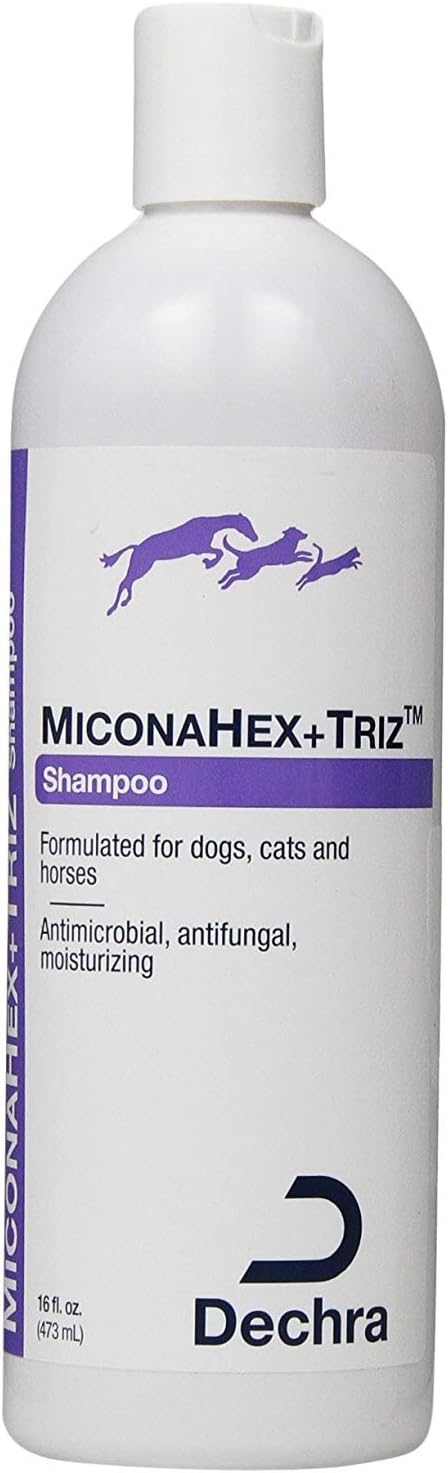
| Active ingredients | 2% Chlorhexidine Gluconate; 2% Miconazole Nitrate |
|---|---|
| Volume | 16 fluid ounces |
| Scent Name | Unscented |
| Special Ingredients | ceramides |
This is a vet-formulated medicated shampoo aimed at treating yeast and bacterial skin issues using 2% miconazole and 2% chlorhexidine plus TrizEDTA to boost antimicrobial activity. It is typically used as a topical wash for affected areas or full-body baths when recommended by a veterinarian, and the ceramides and moisturizing claims help soothe dry, damaged skin during treatment. The formulation includes surfactants for cleansing and small amounts of lavender and lemongrass oils despite the fragrance-free/material-type-free label, so it delivers a more refined sensory profile than basic medicated washes while still focusing on antimicrobial action. Directions and safety notes emphasize veterinary guidance and avoiding eye contact. Limitations are that it is a treatment product rather than an everyday maintenance shampoo and that scented inactive ingredients may bother owners seeking a completely odorless option. Bottle size and single-bottle packaging make it convenient for weekly or as-directed therapeutic use but may be less economical for long-term maintenance on large-breed dogs.
Best for: Buyers who prioritize a veterinarian-grade, clinically active shampoo and are looking for a premium, treatment-focused product to resolve yeast or bacterial skin problems under veterinary guidance.
Less Ideal for: Owners seeking a gentle everyday maintenance shampoo or a guaranteed completely scentless product should consider non-medicated or explicitly fragrance-free alternatives.
- Contains 2% miconazole and 2% chlorhexidine for proven antifungal and antibacterial activity
- Includes TrizEDTA to potentiate disinfectant efficacy against resistant strains
- Added ceramides provide moisturizing and skin barrier support during treatment
- Formulated for multiple species so it is versatile for households with more than one type of pet
- Not intended for routine daily grooming; it is a therapeutic shampoo for active skin conditions
- Label lists fragrance-free yet contains small amounts of botanical oils that may have a light scent
Verdict: The best premium medicated shampoo for owners willing to pay more for enhanced ingredient blends, superior formulation stability, and a refined user experience while treating skin infections.
Douxo S3 Calm Dog Shampoo 6.7 fl oz
Best Hypoallergenic Medicated Shampoo

| Liquid Volume | 6.7 fluid ounces |
|---|---|
| Target Species | dog, cat |
| Special Ingredients | Ophytrium |
| Item Form | Liquid |
| Product Benefits | Anti-Itch |
Douxo S3 Calm is a vet-developed shampoo aimed at dogs (and cats) with itchy, sensitive, or allergic skin. It is used like a standard therapeutic wash: wet the coat, apply one pump per 4 lbs (more for long or thick fur), massage into affected areas and the whole body, leave on 5–10 minutes, then rinse. The formula contains 0.75% Ophytrium to soothe and hydrate skin and chlorhexidine for antimicrobial support, and it is free from soaps, sulfates, parabens, colorants, nanoparticles, and phthalates. Practical benefits include a gentle cleaning action that can reduce scratching within about a week when used as directed, and compatibility with a leave-on Calm mousse for longer relief. Limitations are its small bottle size for larger dogs or frequent use and the need to follow dosing guidance for thick coats; dogs with severe dermatologic conditions may still need prescription treatments or veterinary evaluation. Fragrance is described as fresh and sweet, which some owners may notice after bathing.
Best for: Buyers who want a vet-formulated, gentle shampoo that balances itch relief and routine cleansing for dogs with mild to moderate irritated or allergic skin.
Less Ideal for: Owners seeking an economical bulk supply for frequent full-body washes on large dogs or those needing prescription-strength medical shampoo should consider other options.
- Veterinary-formulated with Ophytrium to soothe and support skin hydration
- Contains chlorhexidine for antibacterial support on irritated skin
- Free from soaps, sulfates, parabens, colorants, nanoparticles, and phthalates
- Directions and dosing tailored by weight for controlled use
- Suitable for both dogs and cats with sensitive skin
- 6.7 fl oz bottle may require frequent repurchase for medium to large dogs
- Not a replacement for prescription therapies for severe skin disease
Verdict: The best hypoallergenic medicated shampoo for pets with reactive skin who need infection treatment without common irritants or harsh additives.
Nature's Specialties Lav-N-Derm 16 oz
Best Concentrated Medicated Shampoo

| Unit Count | 16 Fluid Ounces |
|---|---|
| Scent Name | Lavender |
| Target Species | Dog |
| Special Ingredients | Lavender Oil |
| Liquid Volume | 473 ml |
Lav-N-Derm is an ultra-concentrated antiseptic shampoo intended for treating and soothing common skin issues in dogs and cats. The 16 oz bottle dilutes to multiple gallons so you can apply it neat for stubborn spots or mix with warm water for full-bath treatments; directions advise diluting only the amount you plan to use the same day and following with a conditioner. The formula contains lavender oil, aloe vera, panthenol, and vitamins A, D and E in a pH-balanced, biodegradable base, and the brand positions it for professional grooming use. In practice this means a small bottle goes a long way for repeated therapeutic washes, and the lavender offers calming fragrance alongside reported antiseptic effects. Limitations: it is not a leave-on treatment so it requires rinsing and a follow-up conditioner, and users should follow dilution guidance to avoid reduced effectiveness. For owners seeking a concentrated, professional-strength antiseptic wash, Lav-N-Derm provides an economical, groomer-grade option for managing infections, abrasions, and irritated skin when used as directed.
Best for: Owners who need a cost-effective, concentrated antiseptic wash to treat recurring skin infections or abrasions and who are willing to follow dilution and conditioning steps.
Less Ideal for: People seeking a leave-on or long-contact medicated treatment or those who prefer ready-to-use, single-use medicated products.
- Ultra-concentrated formula dilutes to multiple gallons for economical repeated use
- Contains antiseptic lavender oil plus soothing aloe vera and vitamins for skin support
- pH-balanced, biodegradable shampoo base suitable for professional grooming use
- Clear directions for direct or diluted use allowing spot treatment or full baths
- Must be rinsed and followed with conditioner rather than left on as a medicated leave-on
- Manufacturer warns not to pre-dilute and store diluted product, requiring same-day mixing
Verdict: The best concentrated medicated shampoo for owners who want a strong, economical formula that dilutes for multiple treatments while maintaining therapeutic activity against skin infections.
Vetericyn FoamCare Medicated Shampoo 16 oz
Best Fast-Acting Medicated Shampoo

| Item Form | Foam, Spray |
|---|---|
| Scent Name | Fresh |
| Target Species | Cat,Dog |
| Liquid Volume | 16 fluid ounces |
| Material Type Free | Paraben Free |
Vetericyn FoamCare Medicated Shampoo is a spray-on, instant-foaming formula designed to clean, condition, and relieve itching and dermatitis on dogs and cats. You apply it to a wet coat, work it into a lather, then rinse; the foam delivery makes it easy to target face, paws, and problem spots with minimal mess. The formula is paraben-free, sulfate-free, pH-balanced, and contains salicylic acid to help treat flaky, irritated skin and hot spots while leaving the coat conditioned rather than stripped. Its medicated action and gentle base make it suitable for pets with allergy-related itching that tolerate topical treatments, and the spray foam helps control how much product reaches sensitive areas. Limitations: it is not explicitly marketed as tearless, so extra care is still needed around eyes, and pets with severe or open wounds should see a veterinarian before topical medicated use.
Best for: Pet owners seeking a gentle, conditioning medicated shampoo for allergy- or irritation-prone dogs and cats who want a low-mess spray foam they can apply to targeted areas.
Less Ideal for: Owners who need a guaranteed tearless formula for frequent face or eye cleaning or those treating severe skin infections that require prescription-strength therapy.
- Spray-on instant foam lets you target specific areas and reduces product run-off
- Contains salicylic acid to help treat itching, dermatitis, and flaky skin
- Paraben-free and sulfate-free formula with balanced pH to avoid stripping natural oils
- Suitable for both dogs and cats as a conditioning medicated shampoo
- Not explicitly labeled tearless, so caution required near eyes
- Medicated ingredients may not be appropriate for pets with open wounds without veterinary guidance
Verdict: The best fast-acting medicated shampoo for pet owners seeking quicker reduction of infection symptoms and visible improvement over a short treatment course.
Jeffers 2% Chlorhexidine Antiseptic Shampoo 16 oz
Best Fragrance-Free Medicated Shampoo

| Active ingredient | 2% chlorhexidine gluconate |
|---|---|
| Volume | 16 oz |
| Pet type | Cat, Dog, Horse |
| Form | Shampoo |
Jeffers 2% Chlorhexidine Antiseptic Shampoo is a veterinary-strength, fragrance-minimal antiseptic wash designed to tackle surface bacteria and yeast on dogs, cats, and horses. It is typically used as a therapeutic bath: wet the coat, work the shampoo into a rich lather so it reaches the skin, leave it on for several minutes, then rinse thoroughly. The formula contains 2% chlorhexidine gluconate for antimicrobial action plus aloe vera and glycerin to help maintain skin hydration and reduce irritation during treatment. Because it is soap-free and pH balanced, it cleans without stripping natural oils, making it reasonable for pets with sensitive or irritated skin and for managing hot spots or minor abrasions when used as directed. The product is labeled for multi-species use and sized for regular or treatment baths. Limitations: it is not scented rather than strictly labeled fragrance-free so owners expecting zero odor from the bottle may notice a mild clean smell, and any medicated shampoo should be used under or following veterinary guidance for persistent infections.
Best for: Buyers who prioritize a low-fragrance, medicated topical wash to manage surface bacterial or yeast issues and who want a gentle formula suitable for sensitive skin and multi-pet households.
Less Ideal for: Owners seeking a scented shampoo for masking odors or a complete treatment for severe or systemic skin infections that require prescription medications or veterinary intervention.
- Contains 2% chlorhexidine gluconate for antimicrobial action against surface bacteria and yeast
- Includes aloe vera and glycerin to help soothe and support skin hydration during bathing
- Soap-free, pH balanced formula that cleans without overly stripping natural oils
- Suitable for dogs, cats, and horses, so useful in multi-pet or farm settings
- Not explicitly labeled 'fragrance-free' though marketed with a clean scent which may be noticeable to some users
- Intended for topical cleansing and supportive hygiene but not a standalone cure for deep or systemic infections
Verdict: The best fragrance-free medicated shampoo for dogs and owners who prefer treatments without perfumes to minimize irritation and avoid masking underlying odors during infection care.
Choosing the Right Medicated Dog Shampoo Skin Infection: Key Factors to Consider
Active Ingredients and Their Action
Different active ingredients target different causes of skin infection. Antibacterials such as chlorhexidine help reduce bacterial load, while antifungals like miconazole or ketoconazole address yeast and fungal overgrowth. Some formulations combine agents to cover multiple pathogen types.
Understand which microbe is most likely causing the problem so you can choose an ingredient with the right mode of action. For mixed or uncertain infections, combination formulas can be useful, but they may increase the risk of irritation. Always follow label guidance about required contact time; many medicated shampoos need to sit on the coat for several minutes to be effective.
Skin Sensitivity and Formulation Gentleness
Dogs with inflamed or damaged skin often need gentler formulations to avoid further irritation. Look for shampoos that balance effective actives with soothing agents such as oatmeal, aloe, or glycerin to support the skin barrier.
Harsh detergents and strong fragrances can worsen itching and delay healing. If your dog has very raw or ulcerated areas, consider shampooing only the affected regions or consulting a veterinarian before use. For frequent applications, choose formulas labeled for sensitive skin or that explicitly state suitability for repeated use.
Concentration and Contact Time
The concentration of active ingredients and the required contact time determine real-world effectiveness. Lower concentrations may be adequate for mild infections but might need more frequent applications, whereas higher concentrations can be more potent but also increase irritation risk.
Read the directions to know how long the shampoo should remain on the coat before rinsing. Proper application technique—thoroughly wetting the coat, working shampoo into a lather, and ensuring the product reaches the skin—matters more than bottle size. Some treatments recommend leaving the shampoo on for five to 10 minutes or repeating the cycle for optimal effect.
Safety for Life Stage and Concurrent Conditions
Certain actives are not recommended for young puppies, pregnant or nursing dogs, or animals with specific health conditions. Check the product guidance for age limits and any veterinary warnings about use with other topical or systemic medications.
When a dog is on oral antibiotics, steroids, or antifungals, coordinate topical treatment with your veterinarian. Some medicated shampoos can interact with other treatments or mask symptoms temporarily, so professional oversight is important when infections are severe or recurrent.
Ease of Use and Application Practicality
How easy a shampoo is to apply will affect adherence to the treatment regimen. Consider factors such as lather quality, rinseability, bottle ergonomics, and whether the product is concentrated or ready to use. Products that require dilution add a step that can lead to inconsistent dosing if not measured carefully.
Also evaluate how often the shampoo must be applied. Treatments requiring a single weekly bath are easier for many owners than daily applications that demand more time and restraint from the dog.
Residue, Skin Barrier Support, and Follow-up Care
After an infection clears, maintaining the skin barrier helps prevent recurrence. Some medicated shampoos include emollients or conditioners that leave a light residue to protect the skin, while others rinse completely to avoid buildup. Choose based on whether your dog benefits from ongoing moisturizing or from a cleaner rinse.
Follow-up care matters: antimicrobial shampoos can reduce microorganisms but do not correct underlying causes such as allergies or hormonal imbalances. Plan for aftercare that may include topical conditioners, barrier creams, or environmental changes to reduce triggers.
How Often Should I Use Medicated Shampoo for a Skin Infection?
Frequency depends on the active ingredient, the severity of the infection, and your veterinarian's guidance. Many medicated regimens recommend one to three treatments per week until clinical signs improve, then tapering to a maintenance schedule. Overwashing can strip oils and delay barrier repair, while under-treatment may allow the infection to persist.
If the instructions call for leaving the shampoo on the coat for a specified time, make sure you can complete that step; skipping contact time reduces effectiveness. Monitor the skin during treatment for signs of increased redness or irritation and consult your veterinarian if symptoms worsen.
- Follow the label or veterinary directions for frequency.
- Avoid daily washing unless specifically recommended for your dog.
- Adjust frequency for very dry or sensitive skin to avoid barrier damage.
Can Medicated Shampoo Replace Oral Medication?
Medicated shampoo can reduce surface microbes and relieve local symptoms but is not always a substitute for systemic therapy. Oral antibiotics or antifungals may be necessary when infections are deep, widespread, or recurrent. Topical treatment is often used alongside systemic drugs for a combined effect.
A veterinarian will determine whether topical therapy alone is sufficient based on the infection type and severity. Using shampoo without addressing underlying causes can lead to temporary improvement but not long-term resolution.
- Topical therapy is most effective for localized, surface-level infections.
- Systemic medications are needed for deep or extensive infections or when the dog is systemically ill.
How to Apply Medicated Shampoo Safely at Home
Start by thoroughly wetting the dog's coat with warm water. Apply enough shampoo to work a gentle lather that reaches the skin, especially in areas with lesions. Follow the product's recommended contact time; timing with a phone makes it easier to ensure adequate exposure.
Rinse completely and dry the dog gently. Avoid bathing more than the recommended frequency. Use gloves if instructed, and prevent the dog from licking treated areas until they are dry. If the dog resists bathing, try short, calm sessions and reward-based handling to reduce stress.
- Wet, lather, reach the skin, wait the full contact time, and rinse thoroughly.
- Protect yourself and avoid contact with your eyes; wash hands after application.
- Prevent licking of treated areas until dry to avoid ingestion of active ingredients.
What Signs Indicate the Shampoo Is Working or Not Working?
You should see reduced redness, less itching, and gradual shrinking or drying of pustules or scaly patches over days to a couple of weeks. Hair regrowth in affected areas is a positive longer-term sign. Improvement varies by infection type and severity.
If signs persist beyond the expected timeframe, worsen, or the dog shows systemic symptoms such as fever or lethargy, stop topical treatment and consult a veterinarian. New or increased irritation may suggest sensitivity to the product rather than treatment failure.
- Expect visible improvement within several days to two weeks for many surface infections.
- Worsening signs, systemic symptoms, or new irritation require veterinary follow-up.
Managing Recurring Infections and Prevention Tips
Recurring skin infections often point to an underlying trigger such as allergies, endocrine disease, or environmental factors. Work with your veterinarian to identify and address those root causes. Regular grooming, appropriate diet, and managing moisture in skin folds or between toes can reduce recurrence risk.
When a dog is prone to infections, having a maintenance plan that includes periodic medicated baths or barrier-supporting conditioners can help keep microbe levels in check without overusing active treatments.
- Investigate underlying causes with veterinary testing for long-term control.
- Keep skin folds, paws, and ears dry and clean to lower infection risk.
- Use maintenance products sparingly and according to a vet-approved schedule.
How We Chose the Best Medicated Dog Shampoo Skin Infection
We screened medicated shampoos for skin infection using a focused set of veterinary-relevant criteria to find options likely to help dogs with bacterial, fungal, or yeast-related skin problems. Products had to contain clinically relevant active ingredients known to treat common skin pathogens or to relieve inflammation and itching. We prioritized formulations with clear dosage guidance, appropriate contact time, and simple rinsing instructions so owners can use them correctly at home. Safety also guided selection: candidates needed supporting safety profiles for use on dogs, with notes for puppies, pregnant or nursing animals when the manufacturer provided guidance. We filtered out plain cleansing shampoos that lack active antifungal or antibacterial agents, as well as products with vague ingredient lists or unclear directions. Evaluation dimensions included ingredient efficacy, gentleness for sensitive skin, suitability for frequent use, and overall user convenience such as lather and rinse behavior. Final picks represent a balance of therapeutic action and tolerability for typical canine skin infections.
Our full evaluation process is outlined in our review methodology.
FAQ
Can I use medicated shampoo on puppies with skin infection?
It depends on the product and the puppy's age. Some medicated shampoos are formulated for use on young animals, while others specify a minimum age. Check product guidance and consult a veterinarian before treating puppies, especially those under the typical age cutoff.
Will medicated shampoo stain or discolor my dog's coat?
Most medicated shampoos rinse clean and do not permanently discolor the coat. Temporary discoloration can occur with heavy residue or if products are not rinsed thoroughly. Always rinse fully and dry to assess the coat color accurately.
How long until my dog stops itching after using a medicated shampoo?
Relief from itching can occur within hours to a few days, depending on the cause and severity. Anti-itch effects from soothing ingredients may be quick, while reduction of the underlying infection often takes several treatments over days to weeks.
Is it okay to use medicated shampoo alongside flea or tick treatments?
Often yes, but results depend on the specific topical parasite treatment and the shampoo's ingredients. Some topical parasite products advise avoiding bathing for a set period after application. Check the guidance for both products and consult your veterinarian if unsure.
Can medicated shampoo be used on dogs with allergies?
Medicated shampoos can help control secondary infections that arise from allergic skin disease, but they do not treat the allergy itself. Choose gentler formulations for allergic dogs and coordinate treatment with your veterinarian to address both inflammation and the underlying allergy.
Final Verdict
Prioritize a medicated shampoo that targets the most likely cause of the infection while matching your dog's skin sensitivity and life stage. Balance potency and tolerability by following label contact times and recommended frequencies, and involve your veterinarian when infections are severe, recurrent, or when systemic signs appear. With the right active ingredients and consistent application, topical therapy can relieve symptoms and support recovery, but long-term control often requires finding and treating underlying triggers.

