

If your dog gets bored easily or needs extra mental exercise, the right mind stimulating toy can make daily life calmer and more rewarding. These toys help dogs practice problem solving, occupy quiet time, and reduce destructive behavior by offering purposeful challenges that tap into natural foraging and play instincts. This guide shortlists seven top mind-stimulating toys, chosen for their ability to engage different skill levels and hold attention without frustration. We evaluated options for durability, safety, and ease of cleaning so you can pick a long-lasting toy that fits your dog's energy and temperament. Read on for the picks and the factors to consider when choosing the right toy.
Top Picks at a Glance
| Best Overall Mind Stimulating Toy The top all-round choice for most dogs and households | Outward Hound Nina Ottosson Dog Brick |  |
| Best Budget Mind Stimulating Toy A low-cost option that still provides reliable mental engagement | Joansan Dog Puzzle Toy Small |  |
| Best Compact Mind Stimulating Toy Small-footprint toys ideal for apartments and limited storage | WOOF Pupsicle Large |  |
| Best Puzzle Mind Stimulating Toy Complex puzzle-style toys that reward dogs for problem solving | Outward Hound Dog Tornado |  |
| Best Durable Mind Stimulating Toy Built to withstand chewing and energetic play by strong dogs | DISSKNIC Squeaky Dog Ball Large |  |
| Best Portable Mind Stimulating Toy Easy-to-carry and quick-to-set-up toys for outings and travel | AWOOF Snuffle Mat Large |  |
| Best Premium Mind Stimulating Toy Higher-end models with advanced features and superior materials | KADTC XL Dog Puzzle Toy |  |
Outward Hound Nina Ottosson Dog Brick
Best Overall Mind Stimulating Toy

| Pet Toy Type | Puzzle |
|---|---|
| Recommended Uses For Product | Indoor, Mental Health, Playing, Training |
| Additional Features | Lightweight, Portable |
| Water Resistance Level | Not Water Resistant |
| Material Type | Plastic |
The Outward Hound Nina Ottosson Dog Brick is a Level 2 interactive puzzle that challenges dogs to lift lids, slide red sliders, and remove bone covers to find hidden treats or kibble. Designed for supervised indoor play, it has multiple treat compartments and several ways to increase or decrease difficulty so you can match the puzzle to your dog's skill level. The plastic construction is lightweight and portable, and the food-safe materials are BPA, PVC, lead, and phthalate-free, making it simple to fill, clean, and reuse. It also doubles as a slow feeder for dogs that bolt their food, turning mealtime into an enrichment session. Limitations include the plastic pieces which are not chew-proof, so the toy requires supervision and is unsuitable for heavy chewers who may disassemble components. For many owners the adjustable challenge, clear learning curve for dogs, and moderate treat capacity make this one of the most versatile puzzle toys available.
Best for: Owners who want a single, versatile puzzle that provides adjustable mental stimulation and can double as a slow feeder during supervised indoor play.
Less Ideal for: Dogs that are aggressive chewers or owners who need an unsupervised, indestructible toy should consider more rugged options.
- Adjustable difficulty with lids, sliders, and removable covers to tailor challenge level
- Multiple treat compartments that also allow use as a slow feeder
- Made from food-safe materials and easy to clean
- Lightweight and portable for indoor supervised play
- Plastic construction is not chew-proof and requires supervision to prevent damage
Verdict: The best all-around mind stimulating toy that balances engagement, durability, and ease of use to keep most dogs mentally active and entertained.
Joansan Dog Puzzle Toy Small
Best Budget Mind Stimulating Toy
| Pet Toy Type | Puzzle |
|---|---|
| Breed Recommendation | Small dogs, media dogs |
| Recommended Uses For Product | Training |
| Material Type | Plastic |
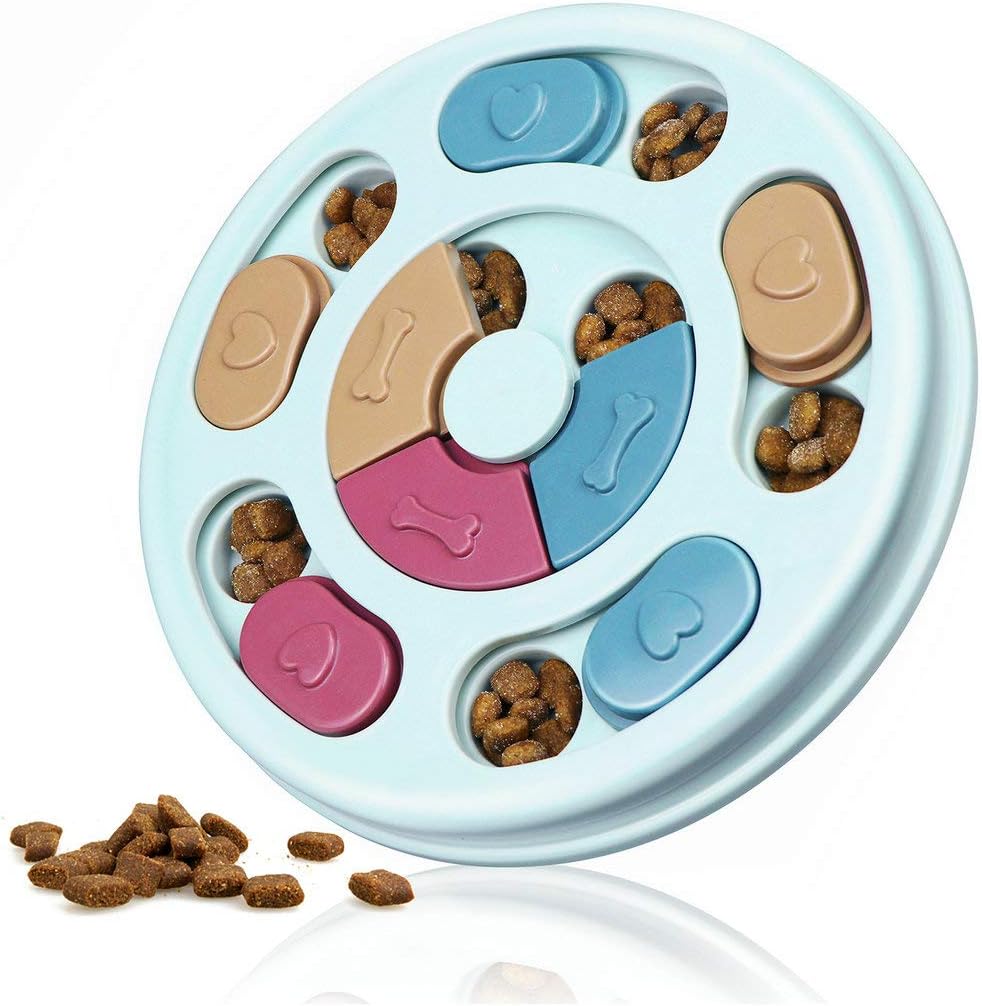
This plastic sliding-puzzle treats toy gives small dogs a nose-and-paw challenge that rewards problem solving with food. The board uses movable sliders and multiple holes where you hide kibble or small treats, so puppies learn to nudge pieces to reveal rewards and slow down fast eaters. It is lightweight, water resistant, and advertised as easy to wash, which makes it convenient for daily use and messy treat sessions. The toy is intended for supervised mental exercise and training rather than heavy chewing, and the seller warns to remove it if damaged and not allow it as a chew toy. You can adjust a screw on the back to change slider tension and raise difficulty as your puppy improves. Limitations are that it is plastic and not meant to withstand strong chewers, and very food-motivated pups may figure the puzzles out quickly, which reduces long-term novelty. For short interactive training sessions and to slow feeding while boosting problem solving, this puzzle performs well for toy breeds.
Best for: Buyers looking to give a toy poodle puppy short, focused mental workouts and slow-feed sessions using a portable treat-dispensing puzzle.
Less Ideal for: Owners who need a chew-proof or long-lasting durable toy for aggressive chewers should choose a sturdier option made for chewing.
- Provides nose-and-paw puzzle play with multiple treat compartments
- Double duty as a slow feeder to reduce gulping
- Adjustable slider tension lets you increase difficulty as puppy learns
- Lightweight, water resistant and easy to clean for everyday use
- Made of plastic and not intended for heavy chewers
- Can lose novelty for very food-savvy puppies once solved
Verdict: The best budget mind stimulating toy for owners who want effective cognitive play without spending much, offering good value and steady entertainment.
WOOF Pupsicle Large
Best Compact Mind Stimulating Toy

| Pet Toy Type | Chew Toy |
|---|---|
| Breed Recommendation | Large Breeds |
| Indoor Outdoor Usage | Indoor |
| Material Type | Rubber |
| Flavor | Peanut Butter |
The WOOF Pupsicle Large is a treat-filled enrichment ball designed to keep dogs occupied by encouraging licking and light chewing rather than hard gnawing. You open the toy by unscrewing the base, insert a treat or frozen refill, then hand it to your dog; the weighted bottom and drool-catching slots help it stay upright and reduce mess while the treat slowly dispenses for 30+ minutes of focused play. Made from non-toxic natural rubber, it is lightweight and water resistant so you can rinse it in the sink after use. Practical features include a narrow opening recommendation so the treat stays inside, and compatibility with WOOF refill pops and mold trays to extend session length. Limitations are that it is intended for licking and puzzle play rather than heavy chewers who will try to destroy rubber toys, and the large size should be chosen to match jaw width to avoid accidental swallowing or poor fit.
Best for: Puppy owners who want a low-mess, easily cleaned enrichment toy that keeps young dogs mentally engaged for everyday use.
Less Ideal for: Households with aggressive chewers or puppies that prefer hard gnawing toys should choose a more heavy-duty chew product instead.
- Opens for easy filling and cleaning, making reuse simple
- Weighted base and drool-catching slots reduce tipping and mess during play
- Made from non-toxic natural rubber that is water resistant and lightweight
- Provides extended engagement with 30+ minutes of lick-focused play when filled with treats or frozen refills
- Not designed for aggressive chewers who may damage or tear rubber
- Large size must be matched to a puppy's jaw width to ensure safe fit
Verdict: The best compact mind stimulating toy for pet owners with limited space or who want a travel-friendly option that still challenges a dog’s problem-solving skills.
Outward Hound Dog Tornado
Best Puzzle Mind Stimulating Toy

| Pet Toy Type | Puzzle |
|---|---|
| Recommended Uses For Product | Indoor, Mental Health, Playing, Training |
| Additional Features | Lightweight, Portable |
| Material Type | Plastic |
The Outward Hound Dog Tornado is a Level 2 intermediate puzzle that uses three stacked, rotatable tiers with 12 treat compartments to get dogs thinking and foraging. Dogs use their nose and paws to spin the layers and lift bone-shaped covers to reveal treats, and the included covers let owners increase difficulty as their pet improves. It doubles as a slow feeder for kibble or treats, is made from food-safe plastic, and is lightweight and portable for easy setup around the house. Practical benefits include sustained engagement for bored or energetic dogs, configurable challenge levels for training progression, and easy cleaning because the plastic parts are simple to wipe down. Important limitations are that it is not chewproof so it requires supervision during use and small dogs or determined chewers may dislodge pieces, and the intermediate difficulty may be too easy for highly trained problem solvers or too hard for novices without guided introduction.
Best for: Owners who prioritize boosting their dog’s cognitive engagement through hands-on problem solving and want a toy that can be made harder as the dog learns.
Less Ideal for: People looking for an indestructible chew toy or an unsupervised long-term play solution should consider more durable alternatives.
- Three-tier design with 12 treat compartments offers layered, progressive challenges
- Includes bone covers to adjust difficulty and increase problem-solving time
- Can be used as a slow feeder to stretch mealtime and reduce fast eating
- Made from food-safe plastic and is lightweight for easy handling and cleaning
- Not designed for aggressive chewers and requires supervision to prevent damage
- Plastic pieces and covers can be dislodged by determined dogs
Verdict: The best puzzle mind stimulating toy for owners focused on multi-step challenges and food-reward mechanics to keep dogs occupied and mentally exercised.
DISSKNIC Squeaky Dog Ball Large
Best Durable Mind Stimulating Toy

| Material Type | Natural Rubber |
|---|---|
| Pet Toy Type | Ball |
| Breed Recommendation | Large |
| Additional Features | Float, Interactive, Squeaker |
| Indoor Outdoor Usage | Outdoor |
This natural rubber squeaky ball is built for active, heavy-chewing dogs and is meant to provide long sessions of fetch, chewing, and water play. It includes a built-in squeaker and a honeycomb textured surface that can hold toothpaste or treats for added mental engagement, and the 10 mm thick construction and high-bounce design make it suitable for outdoor play and swimming since it floats. The texture also offers light dental abrasion while chewing, and the toy is described as water resistant so it can be used at pools or beaches. Important limitations are that the manufacturer states no toy is completely indestructible and recommends supervision and frequent inspection; very powerful chewers who destroy rubber toys quickly may still break it. The ball is sized for large dogs and comes as a single count, so buyers should confirm it fits their dog's mouth before leaving the pet unsupervised.
Best for: Buyers with high-energy, large-breed dogs who need a tougher interactive toy that combines chewing, fetch, and simple puzzle play to reduce boredom and destructive behavior.
Less Ideal for: Owners looking for a replaceable multi-pack or a completely indestructible chew toy for powerful, continuous chewers should consider other options or have backups on hand.
- Thicker natural rubber construction and high-bounce design for vigorous play
- Built-in squeaker and textured surface for mental stimulation and treat hiding
- Floats and is water resistant for pool or beach play
- Honeycomb texture can help remove debris from teeth and hold pastes or treats
- Not guaranteed indestructible and requires supervision for strong chewers
- Sold as a single ball so replacements or spares are not included
Verdict: The best durable mind stimulating toy for households with heavy chewers or rough play who need a longer-lasting, robust enrichment option.
AWOOF Snuffle Mat Large
Best Portable Mind Stimulating Toy
| Pet Toy Type | Treat Dispenser Toy |
|---|---|
| Indoor Outdoor Usage | Indoor, Outdoor |
| Material Type | Cloth |
| Size | Large |
| Dog Breed Size | Large |
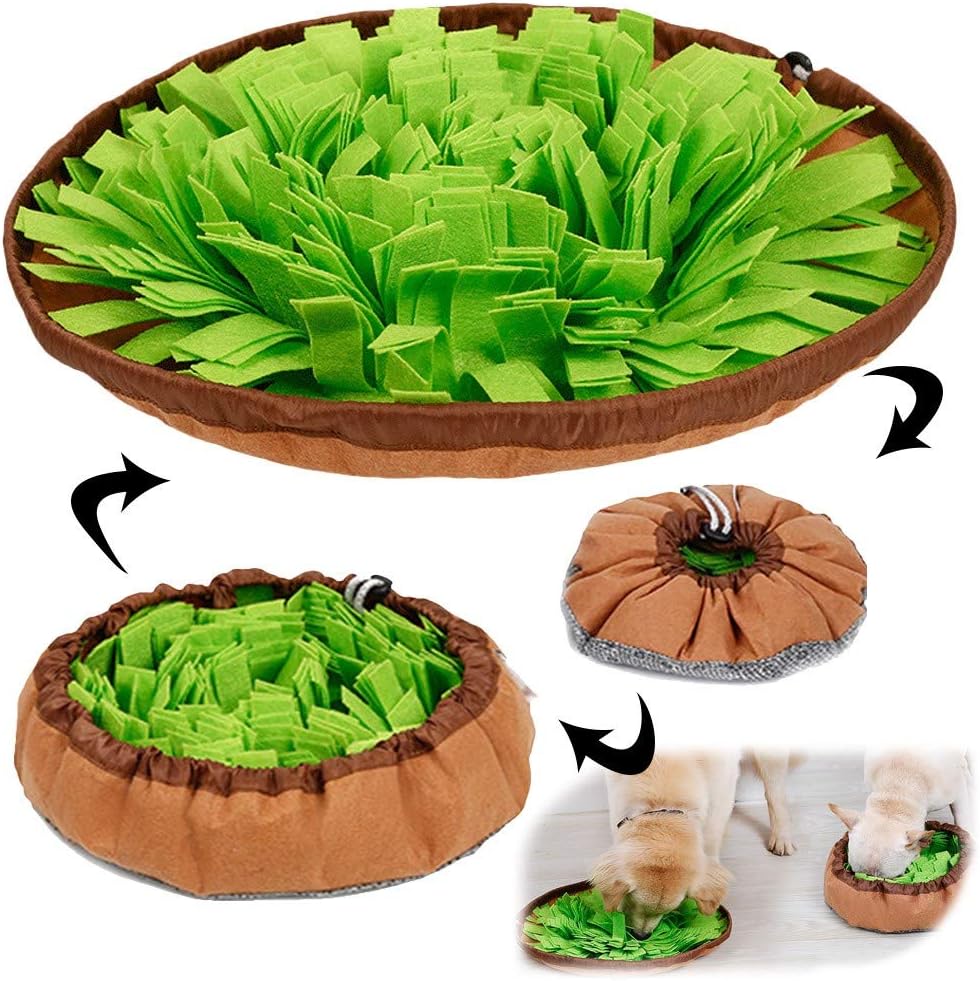
The AWOOF snuffle mat is a portable fabric feeding mat that hides treats in layered felt sections so pets forage for food instead of eating from a bowl. You use it by scattering kibble or small treats into the pockets and letting your dog or cat search through the folds, which slows fast eaters, provides mental stimulation, and helps burn off energy. The mat folds up small and can be shaped into a shallow bowl for travel, and a non‑slip bottom helps keep it in place during use. It is machine washable for easy cleaning, though felt construction means damp or overly greasy treats can require a more thorough wash and it is not water resistant. The mat is lightweight and portable for trips, training sessions, or vet visits, but larger or very determined chewers may damage the felt over time so supervision is recommended.
Best for: Buyers who want a compact, low‑mess enrichment option to keep pets occupied on the go or during short training sessions, and who supervise play.
Less Ideal for: Owners looking for a durable chew toy for strong chewers or for use with wet, messy foods should choose a different product.
- Encourages natural foraging and slows down fast eating
- Folds and packs small for travel or storage
- Machine washable for straightforward cleaning
- Non‑slip bottom helps keep mat steady during use
- Felt fabric is not water resistant and can be harder to clean if very soiled
- Not designed for heavy chewers who may tear the material
Verdict: The best portable mind stimulating toy for owners who want convenient mental enrichment on walks, trips, or visits away from home.
KADTC XL Dog Puzzle Toy
Best Premium Mind Stimulating Toy

| Material Type | Acrylonitrile Butadiene Styrene |
|---|---|
| Pet Toy Type | Puzzle |
| Indoor Outdoor Usage | Indoor, Outdoor |
| Size | Extra Large |
The KADTC XL Dog Puzzle Toy is a heavyweight plastic brain game that combines 18 treat cups, two sliding covers, and movable path blockers so you can scale difficulty from easy to very challenging. Typical use is filling the small cups with kibble or treats and arranging blockers to create new routes; dogs must sniff, paw, and slide pieces to access food which slows eating and provides sustained mental work. The board is made from food-grade ABS, dishwasher safe, and includes four non-slip pads and an almost 4 pound mass that helps it stay put during active play. Notable features are the modular "level 1 to infinite" design that keeps the puzzle fresh as a dog improves, integrated pieces that do not detach, and water resistance for easy cleanup. Limitations are that it is intended for pawing and nudging rather than chewing, so it should be put away if a dog is destructive, and the plastic construction, while durable, can still show teeth marks with heavy chewers. Also, its extra-large footprint requires floor space and may not fit tight living areas.
Best for: Buyers who prioritize a long-lasting, sophisticated enrichment toy and want a single puzzle that can be stepped up over time for sustained mental challenge.
Less Ideal for: Households where dogs are aggressive chewers or where floor space is extremely limited should consider smaller or chew-proof alternatives.
- Modular level system lets you increase difficulty as a dog learns
- Large number of treat cups (18) and sliding covers for extended play
- Food-grade ABS is dishwasher safe and free of BPA, PVC, and phthalates
- Heavy, non-slip base and pads keep the board steady during use
- All pieces remain attached to the board so nothing is lost after play
- Not designed as a chew toy and should be removed from heavy chewers
- Extra-large footprint needs dedicated floor space
Verdict: The best premium mind stimulating toy for owners willing to pay more for refined design, higher-quality materials, and sophisticated engagement features.
Choosing the Right Mind Stimulating Toy Dog: Key Factors to Consider
Puzzle Complexity and Progression
The difficulty level of the puzzle determines how long a dog stays engaged and whether the toy teaches new skills. Simple treat-dispensing toys are quick wins for beginners, while multi-step puzzles keep experienced dogs challenged. Progressive difficulty matters because a toy that is too easy will be solved in minutes and then ignored, while one that is too hard may cause frustration and avoidance.
Look for toys that let you adjust the challenge — for example, by changing the number of hidden compartments or using smaller rewards. Progressive puzzles also support training by allowing the owner to reward incremental mastery. Matching complexity to your dog's breed, age, and prior experience will yield the best results.
Material Durability and Chew Resistance
Durable materials extend a toy's lifespan and protect your dog from small broken pieces. Mind stimulating toys range from soft rubber to hard plastics and reinforced fabric. Chewers and larger dogs need tougher construction, while gentle players can use softer components that are easier on teeth.
Evaluate the construction methods — glued seams and flimsy inserts are failure points. For toys that contain small parts, verify how securely those parts are attached. Regular inspection for wear is still required, but choosing robust materials reduces how often you need to replace a toy and lowers the chance of accidental ingestion.
Safety and Non-toxic Construction
Because many mental enrichment toys are used with food and are handled frequently, the materials should be non-toxic and free of harmful finishes. Food-grade plastics, natural rubber, and tightly woven fabrics are common safe choices. Avoid toys with paint or coatings that can flake off under chewing.
Safety also means design choices that prevent choking: parts that cannot be easily separated, lids that lock in place, and openings sized to avoid trapping a paw or muzzle. Consider the dog's behavior — mouthy dogs may require toys designed specifically for chewing rather than those meant only for nosing or paw manipulation.
Cleaning and Maintenance
Toys used for food dispensing or heavy salivation need to be easy to clean to prevent bacterial growth and odors. Dishwasher-safe components or parts that come apart easily for hand washing simplify maintenance. Seams and crevices that trap food are hygiene liabilities; look for streamlined shapes and removable trays.
Frequent cleaning also keeps toys performing as intended. If a toy requires elaborate disassembly or long drying times, you may find it neglected. Practical maintenance considerations extend the usable life of the toy and protect your dog's health.
Size, Portioning, and Suitability for Muzzle Size
A toy's physical dimensions determine whether a dog can interact with it comfortably. Small interactive pieces may frustrate large dogs, while huge components can be unwieldy for small breeds. Portioning of treat compartments should match the size of kibble or training treats you plan to use.
Also consider muzzle shape and reach. Dogs with short snouts may struggle with narrow recesses, and very long-nosed breeds may prefer deeper puzzles. Choosing the right size reduces frustration and keeps sessions productive.
Adaptability and Multi-use Potential
Toys that support several modes of play deliver more value and stay interesting longer. A device that can be used as a lick mat, a puzzle, or a fetch toy lets you vary the enrichment and reuse the same item across contexts. Interchangeable inserts or adjustable difficulty settings increase versatility.
Adaptable toys are also useful for training; you can use the same object for short training bursts or longer independent play. This flexibility helps integrate mental stimulation into daily routines without buying multiple single-purpose items.
How Do I Match Toy Difficulty to My Dog's Experience Level?
Start by observing how your dog approaches new challenges. A dog that quickly pries open compartments or systematically explores surfaces likely benefits from medium to advanced puzzles. If your dog gives up or shows disinterest, step back to simpler treat-dispensing designs or supervised guided sessions.
Use progressive exposure: show the dog where the treats are, let them retrieve a few easy rewards, and then increase complexity once they demonstrate understanding. Rotate toys so novelty returns, and mix short guided sessions with unsupervised independent play to build confidence.
- Beginner: single-step dispensing, large openings, visible treats
- Intermediate: multiple compartments, sliding covers, moderate hiding
- Advanced: layered puzzles, removable pegs, multi-stage retrieval
Are Food Puzzles Safe for Dogs with Dietary Sensitivities?
Food puzzles are safe as long as you control the treats and avoid ingredients that trigger sensitivities. Use the dog's regular kibble or approved treats to prevent digestive upset, and monitor portions so puzzles do not increase total daily calorie intake.
For dogs on veterinary diets, consult your veterinarian before introducing treat-based enrichment and use only prescribed food. Hydration mats or non-food-based interactive toys can provide stimulation without altering diet.
- Use single-ingredient treats for sensitive dogs
- Reduce meal portions when using food puzzles to avoid overfeeding
- Consider non-food-based puzzles or scent work for strict diets
How Often Should I Use Mind Stimulating Toys Each Week?
Frequency depends on your dog's energy level and boredom signs. Many dogs benefit from daily short sessions of 10 to 20 minutes that fit into normal routines, such as during meal times or after walks. Older or low-energy dogs may need fewer sessions, while highly active or working breeds often require multiple shorter sessions per day.
Vary toy types and intensity to avoid overstimulation. Combine food puzzles with low-effort lick mats or supervised play so the dog stays engaged without becoming frustrated or overly fixated.
- Low activity dogs: 3–4 short sessions per week
- Moderate activity dogs: daily short sessions
- High activity dogs: 1–2 sessions daily plus occasional extra play
How Do I Maintain Hygiene and Inspect Toys for Wear?
Clean toys after messy or food-based sessions and establish a weekly inspection routine. Look for cracks, chewed edges, loose components, and frayed fabric. Remove and replace any toy that shows structural damage or parts that could detach.
If a toy is dishwasher-safe, use a hot cycle periodically; otherwise wash with warm soapy water and fully air dry before reuse. Store toys in a dry, ventilated container to keep them fresh between uses.
- Inspect toys visually before each session
- Disassemble and deep-clean parts weekly for frequent-use toys
- Retire toys with exposed stuffing, small detached pieces, or compromised seals
Can Mind Stimulating Toys Help with Separation Anxiety?
They can reduce boredom and provide a calming occupation while you are away, but they are not a cure for separation anxiety. For mild cases, a long-lasting food puzzle can distract and soothe a dog during short absences. For more serious anxiety, combine enrichment with behavior modification or consult a professional.
Introduce toys during short departures first and gradually increase the time away so the dog learns the toy is associated with a positive experience. Avoid using a new challenging toy for the first long absence to reduce the risk of frustration.
- Use durable, low-frustration puzzles for time alone
- Pair toys with a calm pre-departure routine
- Seek professional help for persistent separation behaviors
What Treats Work Best in Food-dispensing Puzzles?
Small, dry kibble works well for most dispensing toys because it flows through openings and lets you control portions. For sticky or soft treats, choose puzzles with easy-to-clean surfaces or consider pre-freezing treats to slow extraction. High-value treats are useful for training sessions but use sparingly to avoid overfeeding.
Test different shapes and sizes to find what dispenses reliably without jamming. If a toy clogs easily, switch to smaller pieces or partially collapse treats into smaller bits before loading.
- Start with regular kibble for portion control
- Use small, firm treats for consistent dispensing
- Freeze wet treats on lick surfaces to extend engagement
How We Chose the Best Mind Stimulating Toy Dog
We selected toys that reliably deliver mental engagement, safety, and practical durability for everyday use. Our editorial filters prioritized four to six measurable attributes that matter for canine enrichment: puzzle complexity, material durability, safety and non-toxicity, cleaning and maintenance, size and portion control, and adaptability to different play styles. Puzzle complexity ensures a match between the toy and the dog's learning stage, while material durability and safety reduce the risk of ingestion or rapid failure. Ease of cleaning matters because most enrichment toys contact food or saliva, and poor cleaning leads to hygiene problems. Size and portion control help avoid frustration and ensure treats fit properly. Adaptability means the toy can scale difficulty or be used in multiple ways to extend useful life. We excluded fragile novelty toys that fail under normal dog use and items with unclear material safety. We focused on designs that support repeated use, allow progressive challenge, and are straightforward to inspect for wear. Final selections reflect products that balance engagement with practical homeowner concerns rather than single-feature gimmicks.
Our full evaluation process is outlined in our review methodology.
FAQ
Will a mind stimulating toy tire my dog out physically?
Mental work often produces visible calming effects but does not replace physical exercise. Many dogs feel satisfied after focused puzzle sessions, but you should still provide regular walks or play that meet your dog's physical activity needs.
How do I stop my dog from destroying puzzle toys?
Match the toy's construction to your dog's chewing style and supervise initial sessions. If your dog consistently destroys toys, choose tougher materials and designs without detachable small parts. Rotate toys and remove any that show early damage.
Can puppies use mind stimulating toys safely?
Puppies can benefit from age-appropriate puzzles that are softer and sized for small mouths. Monitor teething behaviors and avoid toys with parts that can detach. Short supervised sessions are best until you confirm safe use.
Are homemade enrichment ideas as effective as purchased toys?
Homemade puzzles can be effective and inexpensive, especially for simple foraging tasks. However, store-designed toys often include safety features and durable materials. Use caution with DIY items to avoid loose pieces and use safe materials.
How long should a single enrichment session last?
Sessions of 10 to 20 minutes are usually sufficient for most dogs. Watch your dog for signs of boredom or frustration and end the session on a positive note. You can offer multiple short sessions throughout the day rather than one long one.
Final Verdict
Choose a mind stimulating toy by balancing challenge with safety and durability. Prioritize toys that offer adjustable difficulty, are made from safe materials, and are easy to clean so they remain useful over time. Consider your dog's size, chewing style, and dietary needs when selecting treats and puzzle formats. Ultimately pick a solution that keeps sessions positive and progressively builds your dog's confidence so enrichment becomes a regular, manageable part of daily life.

