

Training a puppy relies on consistency, timing, and the right rewards. Natural treats that prioritize simple ingredients and high palatability make it easier to capture a puppy's attention and reinforce good behavior without excess fillers or questionable additives. Whether you need small, soft bites for repetitive practice or something a bit more tempting for distractions, the right natural treats can speed learning while supporting nutrition. This guide shortlists the top natural treats for puppy training and explains how we evaluated each pick. Read on to find treats that match your training style, dietary preferences, and your puppy's developmental needs.
Top Picks at a Glance
| Best Overall Natural Treat for Puppy Training A top pick that balances palatability, nutrition, and training utility | Pupford Freeze Dried Training Treats 4 oz |  |
| Best Budget Natural Treat for Puppy Training An affordable, simple natural option that still works well for training | Blue Buffalo BLUE Bits Chicken 4 oz |  |
| Best Premium Natural Treat Higher-end ingredients and craftsmanship for owners prioritizing quality | Stewart Freeze Dried Beef Liver 21 oz |  |
| Best High-Protein Natural Treat Lean, protein-forward treats to support growth and training energy | A Better Treat Beef Liver |  |
| Best Soft Natural Treat Tender, easy-to-chew bites ideal for frequent training rewards | Buddy Softies Peanut Butter 20 oz Jar |  |
| Best Long-Lasting Natural Treat More substantial chews that hold attention during longer training or enrichment | iPaw Turkey Tendon Strip |  |
| Best Single-Ingredient Natural Treat Minimal-ingredient treats for sensitive pups or simple dietary needs | A Better Treat Freeze Dried Salmon |  |
Pupford Freeze Dried Training Treats 4 oz
Best Overall Natural Treat for Puppy Training

| Flavor | Beef |
|---|---|
| Item Form | Pellet |
| Unit Count | 4 Ounce |
| Ingredients | Beef Liver, Beef Heart, Mixed Tocopherols (Natural Antioxidant) |
These freeze-dried beef liver treats are made from just a few natural ingredients and are built for everyday training. The pellets are bite-sized and lightweight so you can give multiple rewards in a short session without overfeeding, and the dry texture keeps hands and treat pouches clean during walks, classes, or clicker work. Because they are essentially meat, they are highly motivating for most dogs and work well for shaping behaviors, recall practice, and reward-based training. The simple ingredient list and low calorie profile also make them a reasonable choice for dogs with sensitive stomachs or owners tracking intake. Limitations include the small 4 ounce pouch, which will be used up quickly with frequent sessions, and the single-flavor profile may not suit dogs that need stronger variety to stay interested long term.
Best for: Trainers who want a simple, highly motivating everyday reward that stays mess free and supports frequent, low-calorie reinforcement.
Less Ideal for: People looking for large bulk quantities or multiple flavor mixes for long-term variety should consider larger or multi-flavor packs.
- Single-ingredient, natural meat formula that boosts motivation
- Freeze-dried, low-odor pellets that do not make hands or pockets messy
- Small, bite-sized pieces suitable for rapid repetition during training
- Low calorie so you can reward frequently without large calorie load
- Small 4 oz pouch can be depleted quickly with heavy training use
- Only one flavor option in this listing limits variety for picky dogs
Verdict: The best overall natural treat for puppy training that combines high appeal, suitable calories, and wholesome ingredients to reward puppies without disrupting training or diet.
Blue Buffalo BLUE Bits Chicken 4 oz
Best Budget Natural Treat for Puppy Training
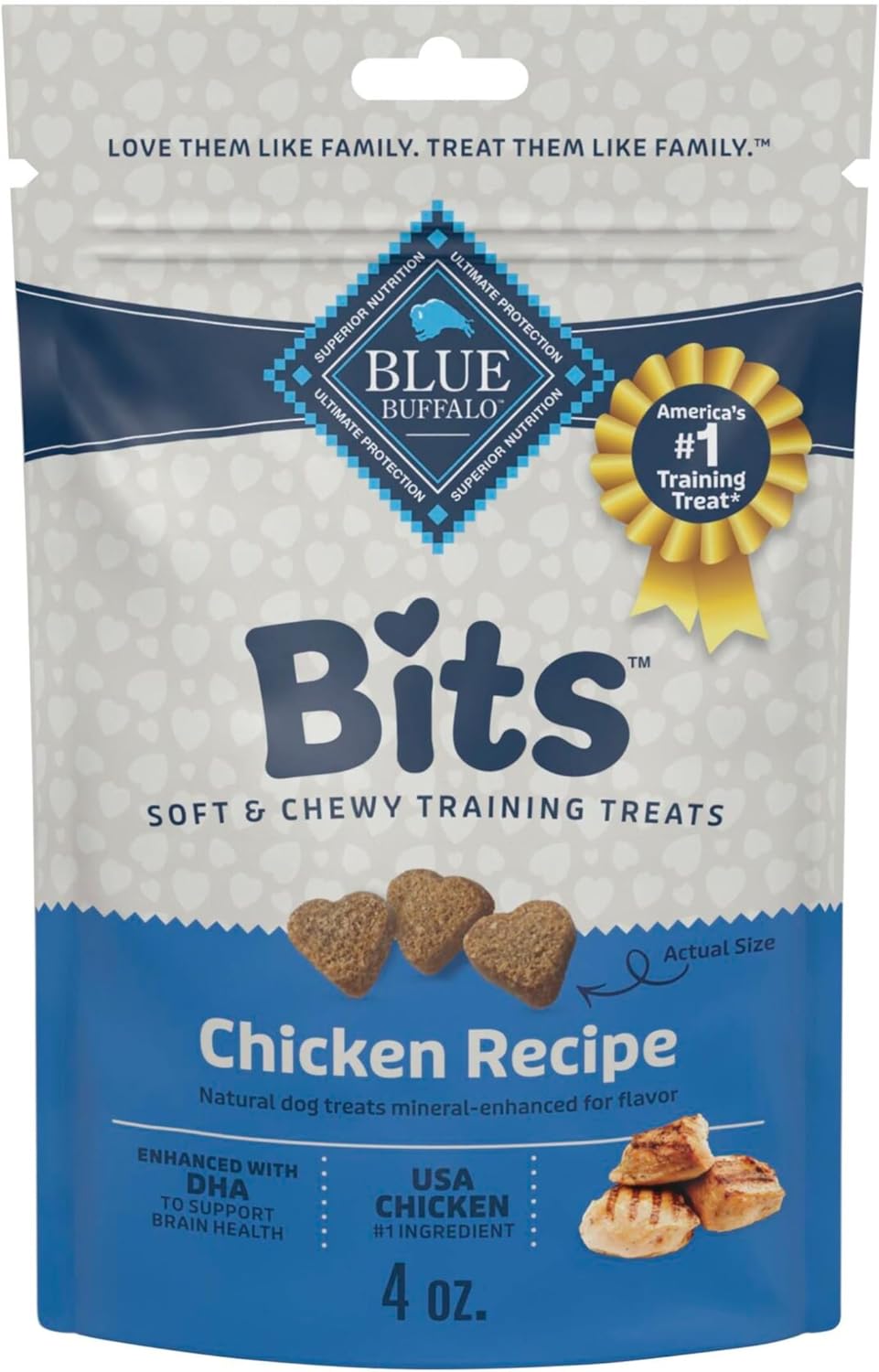
| Flavor | Chicken |
|---|---|
| Item Form | Semi Moist |
| Unit Count | 4 Ounce |
| Allergen Information | Corn-Free, Soy Free, Wheat Free |
BLUE Bits are soft, heart-shaped training treats made with real chicken as the first ingredient and sized for quick rewards during sessions. They are semi-moist and very small, which makes them easy to break into even tinier pieces for frequent reinforcement without overfeeding. The formula includes DHA and omega fatty acids aimed at cognitive and coat support, and the ingredient list avoids corn, wheat, soy, and poultry by-product meals. In practice these treats work well for short, repetitive training rounds and for puppies or small-breed dogs that need bite-sized rewards. Packaging is a simple resealable bag that keeps morsels accessible, though the 4-ounce size means heavy trainers will go through it quickly. Nutritionally they are treats intended for intermittent feeding rather than a meal replacement. If you need larger quantities for long daily sessions, consider buying multiple bags or a larger format from the same line.
Best for: Owners who train frequently on a budget and need soft, easily portioned rewards for very small dogs or Yorkies in particular.
Less Ideal for: People who run very long or high-volume daily training sessions and prefer bulk packs or fully dry treats with longer shelf life.
- Small, bite-sized morsels ideal for quick rewards
- Real chicken is the first ingredient for palatability
- Soft, semi-moist texture is easy for puppies and small mouths
- Free from corn, wheat, soy and poultry by-product meals
- Contains DHA and omega fatty acids for cognitive and skin/coat support
- Small 4-ounce bag may not last for owners who train frequently
- Semi-moist treats can be less shelf-stable than fully dry biscuits
Verdict: The best budget natural treat for puppy training for owners who need a low-cost, healthy reward that puppies find motivating and that won’t break the bank during frequent sessions.
Stewart Freeze Dried Beef Liver 21 oz
Best Premium Natural Treat

| Unit Count | 21 Ounce |
|---|---|
| Item Form | Freeze Dried |
| Flavor | Beef Liver |
| Target Species | Dog |
| Pet Type | Cat, Dog |
Stewart Freeze-Dried Beef Liver is a single-ingredient, high-protein treat packaged in a resealable 21 oz tub that works as both training rewards and meal toppers. The freeze-drying process preserves flavor and nutrients while keeping pieces lightweight and shelf-stable, and the tub contains up to several hundred morsels depending on piece size. Because it is 100% beef liver with no grains, fillers, artificial colors, or flavors, it is easy to portion for training sessions and is suitable for pets with common sensitivities. The tub format is convenient to store and the powder from crumbs mixes well into kibble as a topper. Limitations are that pure liver is calorie-dense and strong-smelling, so portion control is important and some households may find the odor noticeable; also this is not a balanced complete meal on its own but a supplement or treat. For buyers prioritizing premium single-ingredient nutrition and professional-trainer style rewards, this product delivers concentrated real-food appeal.
Best for: Owners who prioritize high-quality, single-ingredient treats and want a professional-style, nutrient-dense reward or topper for training and meal enrichment.
Less Ideal for: People looking for a complete daily food, very low-calorie treats, or subtle-smelling snacks for sensitive noses should consider other options.
- Single ingredient 100% beef liver for simple, recognizable nutrition
- Freeze-dried to lock in flavor and nutrients while remaining shelf-stable
- Resealable 21 oz tub provides a large quantity suitable for frequent training
- Grain-free, gluten-free, and free of artificial colors and flavors
- Very calorie-dense and strong-smelling, requiring strict portion control
- Not a complete balanced food and meant only as a treat or topper
Verdict: The best premium natural treat for owners willing to pay more for superior sourcing, ingredient transparency, and refined textures that appeal to picky puppies.
A Better Treat Beef Liver
Best High-Protein Natural Treat

| Flavor | Beef |
|---|---|
| Item Form | Raw, Frozen |
| Unit Count | 3 Ounce |
| Target Species | Dog |
These are freeze-dried, single-ingredient beef liver treats aimed at owners who want a minimal-ingredient, nutrient-dense snack for training or as a topper. The product is organic, 100% grass-fed and finished beef liver that is freeze-dried to preserve nutrients and produce a crunchy, low-grease bite that breaks into small pieces for training sessions. Because it is one ingredient with no additives, it is well suited to pets with sensitivities, diabetes, or owners who prioritize transparency and clean sourcing. Practical benefits include very high protein content and naturally occurring omega fatty acids and vitamins that support coat and skin health. Packaging is a resealable bag, but portion control is needed since liver is calorie and vitamin dense; small dogs especially should receive tiny portions. Also, because the treat is pure liver, strong aroma and palatability may encourage picky eaters but could be overwhelming as an everyday large-volume snack. For owners seeking a single-ingredient, high-value training reward or food topper, these deliver concentrated nutrition in a convenient freeze-dried format.
Best for: Owners of small dogs who need a limited-ingredient, easily digestible training reward or food topper and who prioritize simple, transparent sourcing and nutrition.
Less Ideal for: Owners who want a low-odor or low-intensity everyday treat option, or those looking for multi-ingredient flavored snacks or dental chews.
- Single-ingredient organic beef liver with no additives or fillers
- Freeze-dried to retain nutrients and produce a crunchy, low-grease texture
- High protein and naturally occurring omega fatty acids and vitamins
- Made and sourced in the USA with human-grade ingredients
- Very nutrient-dense so only small portions are appropriate for small dogs
- Strong liver aroma may be off-putting to some owners
Verdict: The best high-protein natural treat for puppy training when you want a nutrient-dense reward that supports developing muscles and keeps energetic puppies satisfied between sessions.
Buddy Softies Peanut Butter 20 oz Jar
Best Soft Natural Treat

| Flavor | Peanut Butter |
|---|---|
| Unit Count | 20 Ounce |
| Item Form | Biscuits |
| Age Range Description | Adult |
| Container Type | Jar |
Buddy Softies Soft & Chewy Dog Treats are small, peanut-butter flavored biscuits packaged in a resealable 20-ounce jar and baked to be soft and chewy for easy delivery during training. They are bite-sized and minimally processed, made from simple ingredients like whole wheat flour, peanut butter, and brown rice, and arrive in a jar that keeps them accessible on the counter or in a training bag. In practice these treats work well for short, fast training sessions since they are small, soft, and aromatic, so dogs tend to take them quickly without long chewing breaks. The soft texture and mini size make them suitable for very young puppies or small-mouthed dogs that need immediate reinforcement. Limitations include that they are not grain-free and contain sugar and flour, so they are less appropriate for dogs on grain-restricted or calorie-restricted plans, and larger dogs may require more than one per reward to stay motivated.
Best for: Buyers looking for an everyday soft reward for puppy training who want small, quickly consumed treats that keep sessions moving and reward often.
Less Ideal for: Owners managing grain-free, low-calorie, or prescription diets should choose a specialist treat formulated for those restrictions instead.
- Soft, chewy texture easy for puppies and small mouths to consume quickly
- Mini, bite-sized pieces that allow many repetitions during a training session
- Resealable jar keeps treats accessible and reasonably fresh
- Made from simple, recognizable ingredients and oven baked
- Aromatic peanut butter flavor that most dogs find highly motivating
- Contains wheat and sugar so it is not suitable for grain-free or some restricted diets
- Not formulated for calorie control so use should be moderated during frequent training
Verdict: The best soft natural treat for puppy training for young or small-mouthed puppies who need easily consumable rewards that won’t interrupt session flow.
iPaw Turkey Tendon Strip
Best Long-Lasting Natural Treat

| Flavor | Turkey |
|---|---|
| Item Form | Strip |
| Unit Count | 3 Ounce |
| Age Range Description | All Life Stages |
| Special Ingredients | Turkey Tendon, Coconut Glycerin |
iPaw Turkey Tendon Strip is a single-ingredient, grain-free chew made from 100% turkey tendon with coconut glycerin used in processing. It is presented as a low-odor, low-fat chew that dogs can gnaw to help scrape tartar and promote oral hygiene, and the fibrous texture is intended to act like natural dental floss. Typical use is as a short to medium-duration chew or a high-protein training reward for puppies over six months and adult dogs; the brand recommends supervision and cutting into smaller pieces for small dogs or training. Notable positives include its hypoallergenic, limited-ingredient formulation and production in ISO 22000/HACCP facilities, which supports consistent quality. The chew is described as easy to digest and low in smell compared with bully sticks, making it suitable for indoor use. Limitations are that pieces can break off and it is not meant to replace meals, so supervision is necessary to avoid choking and it will not satisfy very heavy chewers who need larger, longer-lasting braided options from the same brand.
Best for: Buyers looking for a simple, grain-free chew with a clear ingredient list for dogs with food sensitivities or those who need a low-odor indoor chew.
Less Ideal for: Owners seeking very long-lasting, heavy-duty chews for powerful chewers or those who want a meal replacement rather than an occasional treat.
- Single-ingredient, turkey tendon formula suited for dogs with grain sensitivities
- Low odor and low fat, making it comfortable for indoor use and hands-on handling
- Fibrous texture that helps scrape plaque and tartar for improved dental hygiene
- Produced in ISO 22000 and HACCP certified facility for consistent quality control
- Short to moderate chew longevity for small dogs and not appropriate for aggressive heavy chewers
Verdict: The best long-lasting natural treat for training situations where you want a more durable reward that keeps a puppy engaged without multiple small bites.
A Better Treat Freeze Dried Salmon
Best Single-Ingredient Natural Treat

| Flavor | Salmon |
|---|---|
| Item Form | Raw, Frozen |
| Unit Count | 3 Ounce |
| Allergen Information | Grain-Free |
| Target Species | Dog, Cat |
These treats are pure freeze-dried wild-caught Alaskan salmon, presented as a single-ingredient, highly digestible snack for dogs and cats. They are typically used as high-value training rewards, food toppers, or as a limited-ingredient option for pets with sensitivities; the freeze-drying preserves natural oils and protein while keeping the pieces lightweight and non-greasy. Practical benefits include an ingredient list that is easy to understand, a nutrient profile rich in omega fatty acids to support skin, coat, joint, and heart health, and manufacturing in a USA facility to human-grade standards. Because the product is raw-friendly and grain-free, it suits pets on elimination diets or owners who prioritize minimal ingredients. The main limitation is the small 3-ounce bag size, which may not be economical for frequent treaters or multi-dog households, and freeze-dried pieces can be brittle, so portioning and storage require care to avoid crumbling and moisture exposure.
Best for: Owners who need a truly minimal-ingredient salmon treat for dogs with food sensitivities or who prefer treats that are easy to inspect and understand, especially for training or as a topper.
Less Ideal for: Households that go through large volumes of treats, multiple dogs, or buyers seeking a lower-cost bulk option should consider larger pack sizes or different formats.
- Single-ingredient formula (wild-caught salmon) for clear allergen control
- Freeze-dried to retain natural nutrients and concentrated flavor
- Grain-free and raw-friendly, suitable for elimination diets or diabetic support
- High in omega fatty acids to support skin, coat, joint, and heart health
- Small 3-ounce bag may require frequent repurchasing for regular use
- Freeze-dried texture is brittle and can produce crumbs if not handled gently
Verdict: The best single-ingredient natural treat for owners seeking the simplest, least-processed reward option for puppies with sensitivities or strict ingredient preferences.
Choosing the Right Natural Treat Puppy Training: Key Factors to Consider
Size and Texture
Size and texture determine how practical a treat is for repetitive training. Small, bite-size pieces let you reward the puppy frequently without overfeeding. Soft or easily breakable textures mean the puppy can eat rewards quickly between repetitions so sessions keep momentum.
Hard or large treats slow down training because you will spend more time waiting for chewing and less time reinforcing behavior. Also think about mouth size and teething: very hard treats can be uncomfortable for young puppies, while overly moist treats may be messy during outdoor sessions.
Ingredient Simplicity
Simple, recognizable ingredients reduce the chance of digestive upset and make it easier to identify potential allergens. A single primary protein source or a short ingredient list lets you tailor treats to known sensitivities and ensures the reward contributes useful nutrition rather than empty calories.
Avoid treats with lengthy proprietary blends or many artificial colors, flavors, and preservatives. For puppies, ingredients that support development — like quality animal protein and controlled fat levels — are preferable to high carbohydrate filler blends.
Palatability and Scent
Palatability drives a puppy's motivation to perform. Strong-smelling, protein-forward treats usually outperform bland options when you need reliable, immediate reinforcement, especially in distracting environments. Palatability also affects how few treats you need per session; more enticing rewards let you use smaller portions and still achieve the same behavioral response.
Keep in mind that very aromatic treats can sometimes promote scavenging behavior outside training, so balance scent strength with training context. If you train in high-distraction areas, choose a higher-value option; for home practice, a milder but still tasty treat can work well.
Nutritional Profile
Treats should complement, not replace, balanced meals. Check protein and fat levels to ensure treats fit within a puppy's daily caloric and nutrient needs. High-protein, moderate-fat treats are typically best for growth and sustained energy during training sessions.
Also consider calories per piece so you can adjust meal portions accordingly. Puppies have higher calorie needs per pound than adult dogs, but repeated training rewards can add up quickly. Choosing lower-calorie bite-sized treats helps maintain healthy weight while allowing frequent reinforcement.
Digestibility and Life Stage Suitability
Young puppies have developing digestive systems, so treats should be easy to digest and free from hard-to-process additives. Ingredients like high levels of fiber, novel carbohydrates, or heavy preservatives can cause stomach upset in sensitive pups.
Look for treats explicitly labeled safe for puppies or formulated with gentle ingredients. If a puppy has a history of loose stool or food sensitivity, pick limited-ingredient options and introduce new treats gradually while monitoring stool quality and appetite.
Portability and Shelf Life
Training often happens on the go, so portability matters. Treats that pack into a small bag, do not crumble easily, and stay fresh without refrigeration simplify outdoor sessions. Resealable packaging helps maintain freshness between walks.
Also consider shelf life for trainers who buy in bulk. Some natural treats use minimal preservatives and may have shorter open-shelf windows; plan portioning or storage to avoid waste while keeping rewards available when you need them.
How Small Should Training Treats Be for a Puppy?
Keep treats very small so each reward counts but does not add excessive calories. The goal is to deliver dozens of reinforcements in a session if needed, so aim for pieces roughly the size of a corn kernel to a pea depending on the puppy's breed and mouth size. Smaller breeds require tinier portions; larger-breed puppies can handle slightly bigger bites.
If a treat is too large, break it into smaller pieces before you head out. Soft treats can often be pinched into multiple servings, while harder treats may require pre-cutting or choosing a smaller product.
- frequent tiny rewards keep training pace fast
- adjust portion size by breed and age
- pre-portion treats to avoid overfeeding during sessions
When Should I Use High-value Versus Low-value Treats?
Use high-value treats—those with stronger smell and richer protein—as the reward when you need extra focus: teaching new behaviors, working around distractions, or reinforcing longer repetitions. Reserve lower-value treats for reliable cues in low-distraction settings, like practicing at home.
Rotating treat value helps maintain novelty and prevents your puppy from becoming bored with a single reward. Keep a handful of very tempting treats for hard moments and a steady supply of milder options for daily repetition.
- high-value for new or difficult behaviors
- low-value for routine practice and repetition
- alternate values to preserve motivation
How to Transition Treats Into a Training Routine
Start by using treats to shape simple behaviors: reward immediate approximations and gradually raise your criteria as the puppy improves. Pair treats with a consistent cue and fade physical prompts before phasing the frequency of treats.
Over time, mix in other rewards like praise or play so the puppy learns to respond to cues without always needing food. Keep treats handy for maintenance training or when you need to reinforce a regression.
- shape behavior with small, timely rewards
- pair treats with consistent verbal cues
- gradually reduce treat frequency and add nonfood rewards
Can Natural Treats Cause Digestive Issues for Young Puppies?
They can, especially if the puppy has a sensitive stomach or if you introduce a new treat too quickly. Natural ingredients are generally gentler, but novel proteins, rich fats, or concentrated flavors may still trigger soft stool or vomiting in some pups.
Introduce new treats in small amounts over several days and monitor stool consistency. If digestive upset occurs, stop the new treat and consult guidance from your veterinarian before retrying or switching to a different ingredient profile.
- introduce new treats gradually
- watch for changes in stool and appetite
- prefer limited-ingredient options for sensitive puppies
Storing Natural Treats During Walks and Training Sessions
Use a small treat pouch or resealable bag to keep treats accessible and fresh. For soft, moist treats, choose water-resistant pouches to prevent mess and avoid melting or crumbling in warm weather. For dry bites, a simple zip pouch or tin works well to preserve crunch and prevent crushing.
If you train in very hot conditions, carry only a day's worth of treats and store the rest at home to avoid spoilage. Label containers when mixing multiple treat types so you can quickly select the right value during a session.
- use resealable pouches for freshness
- carry day-of portions in warm weather
- separate high- and low-value treats for ease
How We Chose the Best Natural Treat Puppy Training
We evaluated options that fit the specific demands of puppy training: size and texture suitable for frequent rewards, ingredient transparency, high palatability, and suitability for young digestive systems. We prioritized treats that use whole-food protein sources, limit artificial additives, and offer clear labeling for protein and fat content. Shelf stability and portion control were considered to ensure trainers can carry and dispense rewards during sessions without spoilage or waste. Our selection excluded items intended primarily as long-lasting chews, dental products, or complete meal replacements; we focused on treats formulated explicitly or implicitly for use as training rewards. We also filtered out treats with complex ingredient panels that obscure the primary protein source or include known common irritants. Final picks were those that balanced enticing flavor with straightforward, responsibly sourced ingredients and textures appropriate for puppies.
Our full evaluation process is outlined in our review methodology.
FAQ
Are natural treats safe for very young puppies under 12 weeks?
Many natural treats are safe for young puppies, but choose soft, easily digestible options and ensure treats are appropriately sized. Introduce any new treat gradually and monitor stool and appetite.
How many treats can I give during a 10-minute training session?
It depends on treat size and calorie content, but plan for 20 to 40 tiny pieces for short sessions using low-calorie bite-sized rewards. Adjust meal portions for the day to account for training calories.
What should I do if my puppy ignores the treats during training?
Try a higher-value, stronger-smelling option and reduce distractions. You can also test whether the puppy prefers play or praise and mix rewards accordingly.
Can natural treats help with teething discomfort?
Soft, palatable treats can be soothing for puppies during teething, but avoid very hard chews that risk damaging developing teeth. Look for treats labeled suitable for puppies and offer them in moderation.
How do I choose treats for a puppy with food sensitivities?
Select limited-ingredient treats with a single or few known protein sources and avoid common irritants. Introduce new treats one at a time and track any reactions before adding another.
Final Verdict
Prioritize small size, simple ingredients, and high palatability when choosing natural treats for puppy training. Those factors let you reinforce behaviors frequently without adding excessive calories or risking digestive upset. Balance training needs by keeping both high-value and low-value options on hand, introduce new treats slowly, and adjust daily meals to account for training calories. Ultimately, the best natural treats are the ones your puppy finds motivating and digests well. Focus on texture and ingredient transparency, and you can build reliable responses while supporting healthy growth.

