

If your dog lunges, pulls, or grows overly excited on walks, the right no-pull chest harness can make outings calmer and safer for both of you. A well-fitting chest harness redirects forward motion away from the neck and distributes pressure across the chest and shoulders, which reduces strain and helps you steer without harsh corrections. This guide shortlists the top options in the no-pull chest harness category and walks through the features that matter most. We evaluated fit, control, comfort, and durability so you can choose a harness that matches your dog's size, walking style, and activity level. Read on for focused buying guidance before the product list.
Top Picks at a Glance
| Best Overall No-Pull Chest Harness The best all-around harness balancing control, comfort, and fit | PetSafe Easy Walk Harness Medium/Large |  |
| Best Budget No-Pull Chest Harness A low-cost harness that still provides basic no-pull control | Bolux No-Pull Dog Harness Small |  |
| Best Premium No-Pull Chest Harness Higher-end materials and workmanship for long-term durability and comfort | 2 Hounds Design Freedom No Pull Harness |  |
| Best Lightweight No-Pull Chest Harness Minimal bulk and breathable materials for small dogs or warm weather | Best Pet Supplies Voyager Step-In Air Harness Medium |  |
| Best Adjustable No-Pull Chest Harness Multiple adjustment points to achieve a precise, secure fit | PoyPet No Pull Dog Harness Medium |  |
| Best Reflective No-Pull Chest Harness High-visibility details for safer walks in low-light conditions | PoyPet No Pull Dog Harness Medium |  |
| Best Heavy-Duty No-Pull Chest Harness Reinforced construction and hardware for strong pullers and durability | KNK Heavy Duty Dog Harness |  |
PetSafe Easy Walk Harness Medium/Large
Best Overall No-Pull Chest Harness

| Material Type | Nylon |
|---|---|
| Closure Type | Buckle |
| Dog Breed Size | Large |
| Included Components | 1 PetSafe Easy Walk Harness, Fitting Guide |
The PetSafe Easy Walk harness is a front-attachment, martingale-style harness intended to reduce pulling by tightening gently across the shoulders when a dog lunges. You clip the leash to the front O-ring on the chest strap to redirect forward motion toward you rather than the neck, and the patented martingale loop applies gradual shoulder pressure rather than an abrupt correction. Its low-coverage nylon construction keeps the harness light and breathable for daily walks and hikes, and the quick-snap belly strap in a contrasting color makes it easy to put on and adjust. The harness is durable and easy to clean by hand wash, and metal sliders let you fine-tune fit across the shoulder and girth. Limitations include minimal padding and a simple nylon build, so it is less comfortable for long-term forceful restraint compared with heavily padded alternatives, and proper sizing is important to prevent shifting during activity. For most owners wanting a proven, trainer-recommended no-pull solution for routine walks, this harness offers an effective balance of control, simplicity, and durability.
Best for: Buyers who want a straightforward, trainer-endorsed no-pull solution for everyday walks and basic training that prioritizes leash control and a lightweight fit.
Less Ideal for: Owners who need heavy-duty restraint, extensive padding for sensitive dogs, or a harness built for pulling sports should consider more supportive, padded alternatives.
- Front-chest leash clip with patented martingale loop redirects pulling without applying pressure to the throat
- Lightweight, low-coverage design stays breathable for active dogs and warm-weather walks
- Quick-snap belly strap and metal sliders allow fast fitting and straightforward size adjustments
- Durable nylon construction made for regular outdoor use and simple hand-wash care
- Minimal padding compared with plush or padded harnesses may feel less comfortable on long outings
- Not intended for heavy restraint or activities requiring extra back or chest support
Verdict: The best overall no-pull chest harness that balances effective leash control, comfortable padding, and adjustable fit for everyday walks and training.
Bolux No-Pull Dog Harness Small
Best Budget No-Pull Chest Harness
| Closure Type | Buckle |
|---|---|
| Dog Breed Size | Small |
| Weight Range | 11-20 lbs |
| Material Type | Polyester |
| Product Care Instructions | Machine Wash |
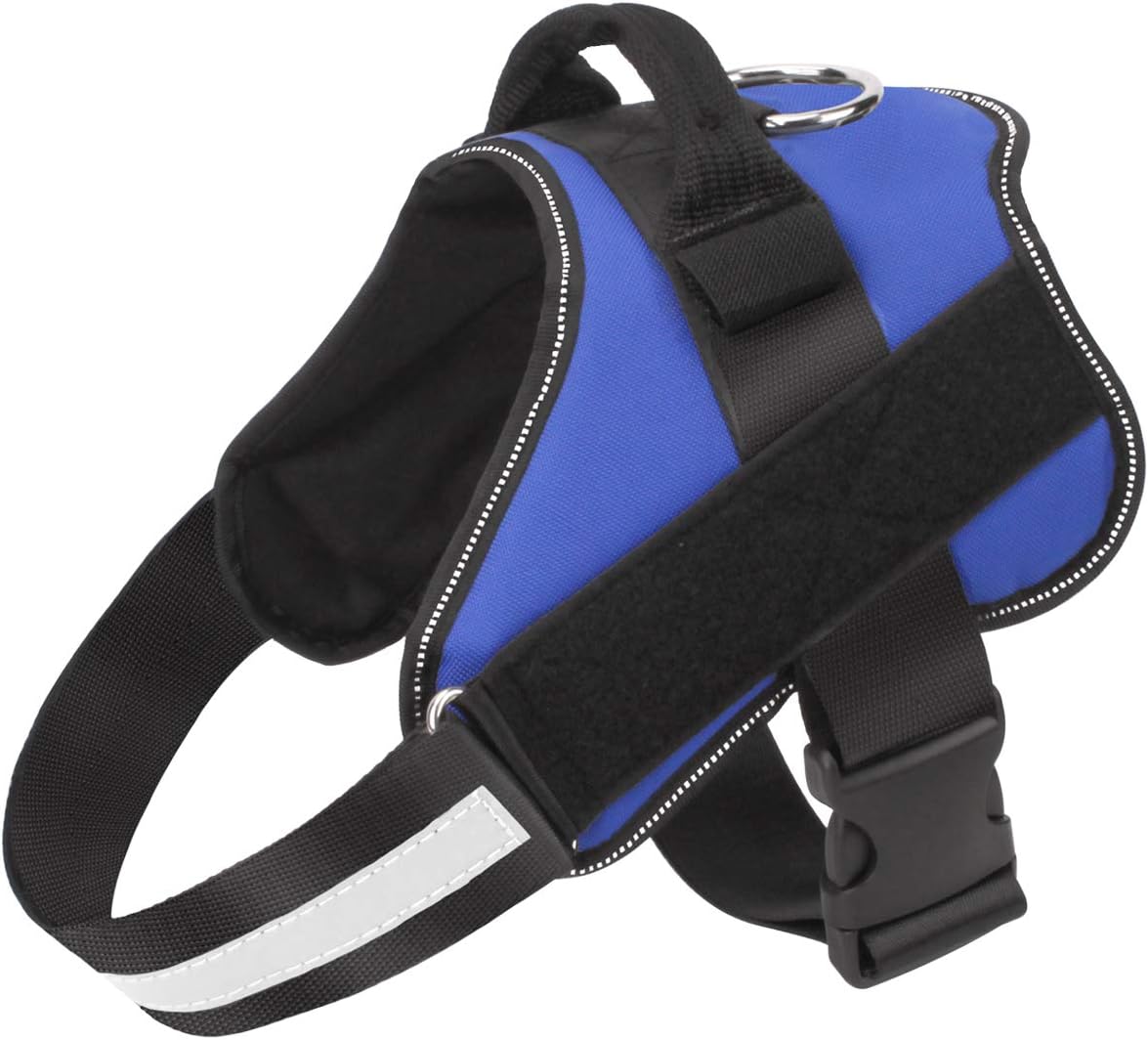
The Bolux no-pull dog harness is a vest-style harness intended to reduce pulling by distributing pressure across the dog's chest and body while providing a secure attachment point for a leash. It is typically used for daily walking, light training sessions and outdoor activities where control and visibility matter. Notable features include an adjustable chest strap with a snap-on buckle, a sturdy nylon top handle for close control, a D-ring for leash attachment and reflective trim for low-light visibility. The breathable polyester construction and machine-washable care instructions make it easy to clean after muddy walks. As a budget option it delivers the core training functions—no-pull design, handle control and reflective safety—without premium padding or heavy-duty hardware, so it works best for small dogs in the 11 to 20 pound range rather than heavy pullers. Sizing can feel fiddly on dogs near the upper or lower end of the size range, so measure carefully before buying.
Best for: Buyers who prioritize practical training features and visibility on a tight budget and need a simple, functional harness for small dogs.
Less Ideal for: Anyone with a large dog, a strong puller, or who wants heavy padding and heavy-duty hardware for rugged use should consider a sturdier, higher-end harness.
- No-pull vest design spreads pressure to reduce choking.
- Reflective trim increases visibility on early morning or evening walks.
- Top nylon handle gives quick close control for training or crowded areas.
- Machine-washable polyester makes cleanup simple.
- Adjustable chest strap with snap buckle allows basic fit customization.
- Not built for strong pullers or large dogs due to light hardware and slim construction.
- Limited padding compared with premium harnesses, which may be less comfortable on long hikes.
Verdict: The best budget no-pull chest harness for owners who want reliable anti-pull performance and acceptable comfort without a higher price tag.
2 Hounds Design Freedom No Pull Harness
Best Premium No-Pull Chest Harness

| Closure Type | Buckle |
|---|---|
| Dog Breed Size | Medium |
| Material Type | Velvet |
| Made In | USA |
The 2 Hounds Design Freedom No Pull Harness is built for training leash manners by giving owners both front and back attachment points and a control loop to discourage pulling. You put it on using snap buckles and four adjustment points to get an even, snug fit; the Swiss velvet-lined chest strap helps reduce chafing during longer sessions. Stainless steel O-rings and sturdy nylon webbing provide durable anchor points for short training bursts or daily walks, and the front connection lets you redirect forward movement without placing force on the throat. It is machine washable, which makes it easy to keep clean after outdoor training. Limitations are that persistent chewers can damage the webbing and that harness sizing requires accurate chest measurement for the system to work as intended; very small puppies may need a different, puppy-specific fit. For owners focused on consistent leash-training, the harness gives practical control and comfort that support repeatable training exercises.
Best for: Owners who want a training-focused harness to teach leash manners through repeated, guided practice using front-clip redirection and back-clip stabilization.
Less Ideal for: People with very young puppies that need tiny, puppy-specific harnesses or dog owners whose pets are persistent chewers and destroy gear quickly.
- Dual attachment points (front and back) for training and control
- Swiss velvet-lined chest strap reduces rubbing during walks
- Four adjustment points allow an even, secure fit
- Stainless steel hardware and durable nylon webbing for long-lasting use
- Machine washable for easy cleaning
- Nylon webbing can be damaged by persistent chewing
- Requires accurate chest measurement for correct fit
Verdict: The best premium no-pull chest harness for owners willing to pay more for superior materials, reinforced stitching, and extra comfort features.
Best Pet Supplies Voyager Step-In Air Harness Medium
Best Lightweight No-Pull Chest Harness

| Material Type | Air mesh |
|---|---|
| Closure Type | Buckle, Double Ring, Hook & Loop |
| Size (M) Chest | 16 – 18" |
| Care | Machine Wash |
The Voyager Step-In Air harness is a low-bulk vest-style harness built for everyday walking and active small to medium dogs. It uses breathable air mesh to stay comfortable and quick-dry after wet outings, and the step-in design plus a buckle and hook-and-loop closure makes it simple to put on and secure. Two reflective bands improve visibility on dawn or dusk walks and the double D-rings provide dependable attachment points for a leash and an ID tag or dual-clip setup. The harness is sized with a chest measurement chart rather than by breed, so measuring your dog before ordering is important to get the intended snug fit. It is lightweight and machine washable, which keeps maintenance easy, but it is not intended for large or very heavy pullers who need reinforced padding or heavy-duty hardware. For active small or medium dogs that need breathable, low-profile coverage and reliable attachment points, this harness balances comfort and function well.
Best for: Active owners of small to medium dogs who prioritize a lightweight, breathable harness with secure attachment points for daily walks and outdoor activity.
Less Ideal for: Owners of large, strong dogs or those who need a heavy-duty, heavily padded harness for intense pulling or working use should consider sturdier alternatives.
- Breathable air mesh construction for comfort and fast drying
- Step-in design with buckle and hook-and-loop for quick, secure on/off
- Double D-rings provide reliable leash attachment and option for dual clips
- Reflective bands increase visibility in low light conditions
- Machine washable for easy cleaning
- Not designed for large dogs or heavy pullers
Verdict: The best lightweight no-pull chest harness for dogs and owners who prioritize low weight, breathable fabric, and minimal restriction on movement.
PoyPet No Pull Dog Harness Medium
Best Adjustable No-Pull Chest Harness

| Closure Type | Buckle |
|---|---|
| Leash Attachment | Front & Back D-rings |
| Material | Breathable Air Mesh with Padded Cushion, Oxford Surface |
| Care | Hand Wash Only |
The PoyPet No Pull Dog Harness is a vest-style, quick-release harness built for everyday walks, training and outdoor activity. It uses three quick-snap buckles including a lockable neck buckle so you can fasten the harness without slipping it over the dog's head, and four adjustable straps to dial in a secure fit. Two metal D-rings provide a front clip for redirecting pulling and a back clip for relaxed walking, while dual elastic belly straps help absorb jerks and improve comfort. The interior breathable mesh and padded chest area reduce chafing on longer outings, and high-visibility reflective stitching plus a reinforced top handle give extra safety and instant control in traffic or crowded areas. Practical trade-offs are that the harness is primarily a vest fit so very broad-chested or unusually shaped dogs may need careful sizing, and hand-wash care is recommended rather than a machine cycle. For owners who want fast on/off and solid control during training or hikes, this harness performs reliably.
Best for: Buyers who prioritize fast, fuss-free on and off, want a secure adjustable fit, and need a harness that supports training and outdoor use without complicated strap threading.
Less Ideal for: Owners seeking a machine-washable harness or those with dogs that need a highly custom or non-vest fit should consider other styles.
- Quick-release buckles including lockable neck buckle for fast on/off
- Front and back metal D-rings for training and everyday walking
- Padded mesh interior and dual elastic belly straps for comfort and shock absorption
- Reflective stitching and reinforced top handle for visibility and instant control
- Hand wash only care instead of machine washable
- Vest cut may require careful size selection for unusual body shapes
Verdict: The best adjustable no-pull chest harness for dogs with unusual proportions or growing pups where achieving a custom, secure fit matters most.
PoyPet No Pull Dog Harness Medium
Best Reflective No-Pull Chest Harness

| Closure Type | Buckle |
|---|---|
| Leash Attachment | Front & Back D-rings |
| Material Type | Oxford outer with breathable mesh lining |
| Care | Hand Wash Only |
The PoyPet No Pull Dog Harness is a straightforward, budget-friendly vest built for daily walking and basic leash training. It uses a front D-ring to discourage pulling and a back D-ring for relaxed walking, plus a padded top handle for quick control or lifting. The harness fastens with quick-snap buckles and offers four adjustment points so you can get a snug fit without much fuss. Construction combines a wear-resistant Oxford outer layer with a breathable mesh lining that keeps dogs cooler on longer outings, and bright reflective strips improve visibility at dawn or after dark. Practical benefits include easy on/off operation, washable-friendly materials if hand washed, and a lightweight feel that reduces bulk on small to medium dogs. Limitations are typical for its price tier: hardware and webbing look functional but are not heavy-duty like higher-end tactical harnesses, and sizing requires careful measurement to avoid chafing or slippage on deep-chested or very stocky breeds. For the money it performs well for everyday walking, training, and casual outdoor use.
Best for: Buyers who need a safe, no-frills harness that handles everyday walking and basic training without a big investment and who prioritize easy fitting and visible safety features.
Less Ideal for: Owners who need a heavy-duty, long-lasting harness for very strong pullers, professional training, or extreme outdoor use should consider sturdier, premium options.
- Front and back D-rings support both no-pull training and relaxed walking
- Padded handle gives quick control and helps with lifting or guiding
- Four adjustment points and quick-snap buckles make fitting and on/off simple
- Breathable mesh lining and lightweight construction improve comfort for daily wear
- Reflective strips increase visibility for low-light walks
- Hardware and webbing are adequate for everyday use but not built for heavy-duty pulling
- Requires careful measurement to ensure a good fit for atypical body shapes
Verdict: The best reflective no-pull chest harness for owners who frequently walk at dawn, dusk, or night and need extra visibility and safety.
KNK Heavy Duty Dog Harness
Best Heavy-Duty No-Pull Chest Harness

| Size | Medium, Large and Extra Large |
|---|---|
| Closure Type | Buckle, Clip |
| Material Type | Metal, Polyester, Webbing |
| Neck Girth | 24" to 34" |
| Chest Girth | 29" to 45" |
This KNK harness is built for powerful, active dogs and translates its heavy-duty claims into practical control and durability. It uses 2-inch ultra-strong webbing, welded D-rings and O-rings, and metal adjusters so the hardware resists bending or slipping during strong pulls, while a padded chest panel spreads pressure for comfort. The front-clip no-pull attachment helps redirect pulling without locking shoulder movement, and a rear D-ring gives a standard leash option for regular walks. The step-in design and quick buckles make it easy to don and adjust, and the locking-style adjusters keep straps from loosening on the move. Expect a sturdy feel that suits training, hiking, and high-activity days, though the harness is optimized for medium to XXL sizes and may be bulkier than lighter everyday harnesses. It requires hand washing and air drying to preserve materials. For English Bulldogs that need reinforced hardware and rugged construction, this harness provides the strength and control those dogs demand while keeping comfort in mind.
Best for: Buyers of English Bulldogs who need a reinforced, no-pull harness that stands up to strong pulling and frequent high-activity use and who prioritize hardware strength and durability.
Less Ideal for: Owners seeking an ultra-lightweight or minimalist harness for short, casual walks or those who prefer machine-washable textile gear should consider other options.
- Welded metal D-rings and O-rings for high-strength leash attachment
- Ultra-strong 2-inch webbing and reinforced one-piece strap design resist tearing
- Padded chest panel distributes pressure and reduces neck strain
- Front-clip no-pull plus rear leash attachment offers training flexibility
- Locking metal adjusters keep fit secure during activity
- Designed for medium to extra-large sizes and may be bulky on compact builds
- Requires hand wash and air dry care rather than machine cleaning
Verdict: The best heavy-duty no-pull chest harness for powerful or persistent pullers where reinforced fabric, strong hardware, and durability are priorities.
Choosing the Right No Pull Chest Harness Dog: Key Factors to Consider
Fit and Adjustability
A proper fit is the single most important factor for a no-pull chest harness. If the harness is too loose it can slip, let the dog turn in it, or fail to redirect the forward force that causes pulling. If it is too tight it can chafe or restrict breathing during exertion.
Look for multiple adjustment points around the chest and belly so you can fine-tune the harness to your dog's proportions. Adjustable straps should lock in place and not slip under load. A snug, stable fit keeps the front-attachment hardware aligned with the dog's shoulders and chest, which is essential for consistent redirection when the dog braces or leans into the leash.
Front-attachment Geometry and Control
How the front leash attachment is positioned and oriented determines how effectively the harness discourages pulling. A front ring placed lower on the chest and centered tends to pivot the dog's shoulder and redirect momentum back toward you without jerking the neck.
Some designs use a short bungee or sliding connector to soften sudden tugs; others rely on fixed hardware and strap geometry. Consider whether you need firm, immediate redirection for a strong puller or a gentler corrective action for a dog that mostly needs guidance. The attachment should be strong and positioned so it does not rub under the armpit.
Comfort and Padding
Comfort affects how willingly a dog will accept and move in a harness. Soft, abrasion-resistant padding across contact points prevents rubbing and distributes pressure over a larger area. Breathable fabrics reduce overheating on long walks or in warm weather.
Padding should be placed where straps cross the chest and where the harness runs along the ribs. Avoid bulk that interferes with the dog's natural stride. Also check for seams or hardware that sit against the skin; these should be covered or recessed to reduce irritation during movement.
Durability and Hardware Quality
A no-pull harness sees frequent tension and repeated clipping; weak hardware or stitching will fail faster on active dogs. Look for harnesses with reinforced stitching at stress points and metal or heavy-duty polymer buckles rated for repeated loads.
Webbing should resist fraying and retain strength after exposure to moisture and dirt. Hardware that corrodes or buckles that crack under cold are common failure modes to avoid. Durable construction keeps the harness safe and trustworthy over months or years of regular walking.
Sizing Range and Clear Measurement Guidance
Dogs come in many shapes, so a usable harness must offer a generous sizing range and clear instructions for measuring. A product with limited sizes or vague sizing charts often leads to returns and ill-fitting gear.
Good sizing guidance includes where to measure (girth, neck, and sometimes chest depth), examples of body types that fit each size, and how much adjustability is built into the straps. If you are between sizes, instructions on whether to size up or down and why can prevent common fitting mistakes.
Ease of Use and Leash Compatibility
If a harness is difficult to put on or prone to tangling, you will likely avoid using it consistently. Look for designs that open wide for head-first entry or feature quick-release buckles that align clearly so you can secure them one-handed.
Also check how the harness accommodates different leash styles: single-clip, dual-clip, or hands-free setups. Multiple attachment points increase versatility for training and activities like jogging. Finally, consider whether the harness allows for a secondary back clip for car harnessing or a handle for brief lift-and-control needs.
How Do I Measure My Dog for a No-pull Chest Harness?
Measure girth at the widest part of the ribcage, right behind the front legs, because that number determines most harness sizes. Use a soft tape measure and keep it snug but not tight; you want to record the circumference the harness will encircle.
- Also measure neck circumference and, for deep-chested breeds, chest depth from the base of the neck to the lowest point of the ribcage.
- Compare those measurements to the manufacturer's sizing chart and prioritize girth first; adjust straps take up minor differences.
- If a dog is between sizes, choose the size that allows the chest strap to sit low enough to pivot the shoulders without riding up into the throat.
Can a No-pull Chest Harness Cause Discomfort or Injury?
When fitted and used correctly, a chest harness reduces neck pressure and lowers the risk of throat or tracheal injury compared with collars. However, poor fit or inappropriate use can create pressure points, chafing, or restricted movement.
- Check for rubbing after the first few walks and re-adjust straps if you see hair breakage or hot spots.
- Avoid overtightening; you should be able to fit two fingers between the harness and the dog at several contact points.
- Give the dog short practice sessions while supervised to let them acclimate before long outings.
What Leash Setup Works Best with a Front-clip Harness?
A standard flat leash of moderate length works well for everyday walks when using the front clip. For dogs that pull intermittently, a short training leash gives you more immediate control. Hands-free waist-leash systems are compatible with some harness designs but change the angle of pull and may reduce the redirection effect of a front clip.
- Avoid retractable leashes for heavy pullers because they can create inconsistent tension and sudden jerks.
- Use a leash length that keeps the dog close enough to redirect quickly—4 to 6 feet is common for urban walks.
- For training, combine the front clip with reward-based techniques rather than relying solely on equipment.
How to Acclimate a Dog to Wearing a Harness
Introduce the harness gradually: let the dog sniff and investigate the equipment, then reward calm behavior with treats. Practice short sessions of wearing the harness indoors for a few minutes, increasing duration as the dog tolerates it. Pair putting the harness on with positive experiences like treats, leash-walks around the house, or brief play so the dog associates it with good things. Supervised, low-distraction walks help the dog learn the harness's feel before testing control in high-stimulus environments.
- Start with short, frequent sessions and keep initial walks calm.
- If the dog resists, stop and reward any small compliance before taking the next step.
- Consistency and patience yield faster acceptance than force or punishment.
When Should I Consult a Trainer About Pulling?
If a dog continues to pull strongly despite a properly fitted no-pull harness and consistent training, consult a qualified behavior or training professional. Persistent pulling can be reinforced by routine and may require behavior modification techniques beyond equipment changes. A trainer can assess gait, motivation, and reinforcement schedules and recommend targeted exercises to reduce leash reactivity. They can also show how to use the harness in training routines that teach loose-leash walking without relying solely on corrective force.
- Seek positive-reinforcement trainers who use evidence-based techniques.
- Get a professional fit check if your dog has an unusual body shape or medical conditions.
- Consider a trainer earlier if pulling escalates into lunging, snapping at stimuli, or unsafe behavior near roads.
How We Chose the Best No Pull Chest Harness Dog
We selected products based on attributes that matter for controlling pulling behavior while keeping your dog comfortable and safe. Our evaluation emphasized secure, adjustable fit systems that work across a range of body shapes and sizes; front-attachment geometry that provides effective, predictable redirection without creating pressure points; and materials and construction that tolerate everyday wear and repeated use. We also considered padding and hardware quality for long-term comfort and reliability, plus visibility and leash-attachment options that support different walking setups. Ease of use—how quickly a harness can be put on or removed—was weighed because owners are more likely to use a harness that is convenient. Finally, we checked for size ranges and adjustability so each pick can achieve an appropriate, snug fit. Excluded from this list were lightweight decorative harnesses, products that rely on choking or neck pressure, and items intended primarily for car restraint rather than on-leash control. The final selection favors functional design and durable materials that help reduce pulling without causing discomfort.
Our full evaluation process is outlined in our review methodology.
FAQ
Will a no-pull chest harness stop my dog from lunging at dogs or squirrels?
A harness helps you control forward motion and makes it easier to steer a lunging dog, but it does not change the dog's motivation. Training that reduces reactivity and reward-based desensitization are needed alongside a harness to address the root cause of lunging.
Can puppies wear no-pull chest harnesses?
Puppies can wear harnesses if sized and fitted correctly, but growing bodies need frequent rechecking and adjustment. Choose a harness with multiple adjustment points and avoid heavy or overly restrictive designs while the puppy is still developing.
How tight should a chest harness be?
The harness should be snug enough to prevent slipping but loose enough to allow comfortable movement; you should be able to fit two fingers under the straps at key contact points. Recheck the fit after the dog moves and after a few walks because straps can shift slightly with activity.
Are front-clip harnesses better than back-clip harnesses for pulling?
Front-clip harnesses are generally more effective at redirecting forward momentum and discouraging pulling. Back-clip harnesses are better for controlled leisure walks or attaching to a car restraint, but they do not provide the same steering advantage for pullers.
How often should I replace a harness?
Replace a harness when you see significant wear such as frayed webbing, cracked buckles, or loose stitching that compromises safety. Regular inspection after walks helps catch problems early; heavy users may need replacements more often than occasional walkers.
Final Verdict
Choose a no-pull chest harness that balances secure control with comfort and long-term durability. Prioritize an adjustable fit and proper front-attachment geometry so the harness redirects pulling without restricting natural movement. Consider padding and hardware quality to ensure everyday comfort and reliability. Remember that a harness is one tool in a broader approach: combine the right equipment with consistent, reward-based training to reduce pulling over time. Pick a design you can fit confidently and use reliably for the best results.

