

If you are considering wearing a no-pull harness backwards to manage strong pulling or to change where pressure is applied, the right setup can make daily walks calmer and safer. A backwards-fit approach is an uncommon but practical tactic some owners use to shift leash forces and reduce forward momentum. Choosing the best options matters because an ill-fitting harness can chafe, restrict movement, or make pulling worse. This guide shortlists seven top no-pull harnesses suitable for backwards use and explains the criteria we used to evaluate fit, control, and comfort. Read on to compare features that matter and find the setup likely to work best for your dog. The next section walks through the specific factors we considered when selecting the picks.
Top Picks at a Glance
| Best Overall No-Pull Harness The best all-around no-pull harness for most dog owners | PetSafe Easy Walk Harness Medium/Large |  |
| Best Budget No-Pull Harness A low-cost no-pull harness that still offers basic control | Bolux No-Pull Dog Harness Small |  |
| Best Premium No-Pull Harness A higher-end no-pull harness with upgraded materials and features | GO&LiNK KineticVeer No-Pull Harness Medium |  |
| Best Heavy-Duty No-Pull Harness Built for strong pullers with reinforced straps and hardware | Carhartt Nylon Duck No Pull Harness Medium |  |
| Best Front-Clip No-Pull Harness A front-attachment design that helps redirect and reduce pulling | Plutus Pet No Pull Front-Clip Harness |  |
| Best Reflective No-Pull Harness High-visibility materials and reflective trim for low-light safety | Huntboo Escape Proof Dog Harness Large |  |
| Best Adjustable No-Pull Harness Multiple adjustment points for a customizable, secure fit | rabbitgoo Easy On 3-Buckle Harness Large |  |
PetSafe Easy Walk Harness Medium/Large
Best Overall No-Pull Harness
| Material Type | Nylon |
|---|---|
| Closure Type | Buckle |
| Included Components | 1 PetSafe Easy Walk Harness |
| Pet Type | Dog |
| Dog Breed Size | Medium |
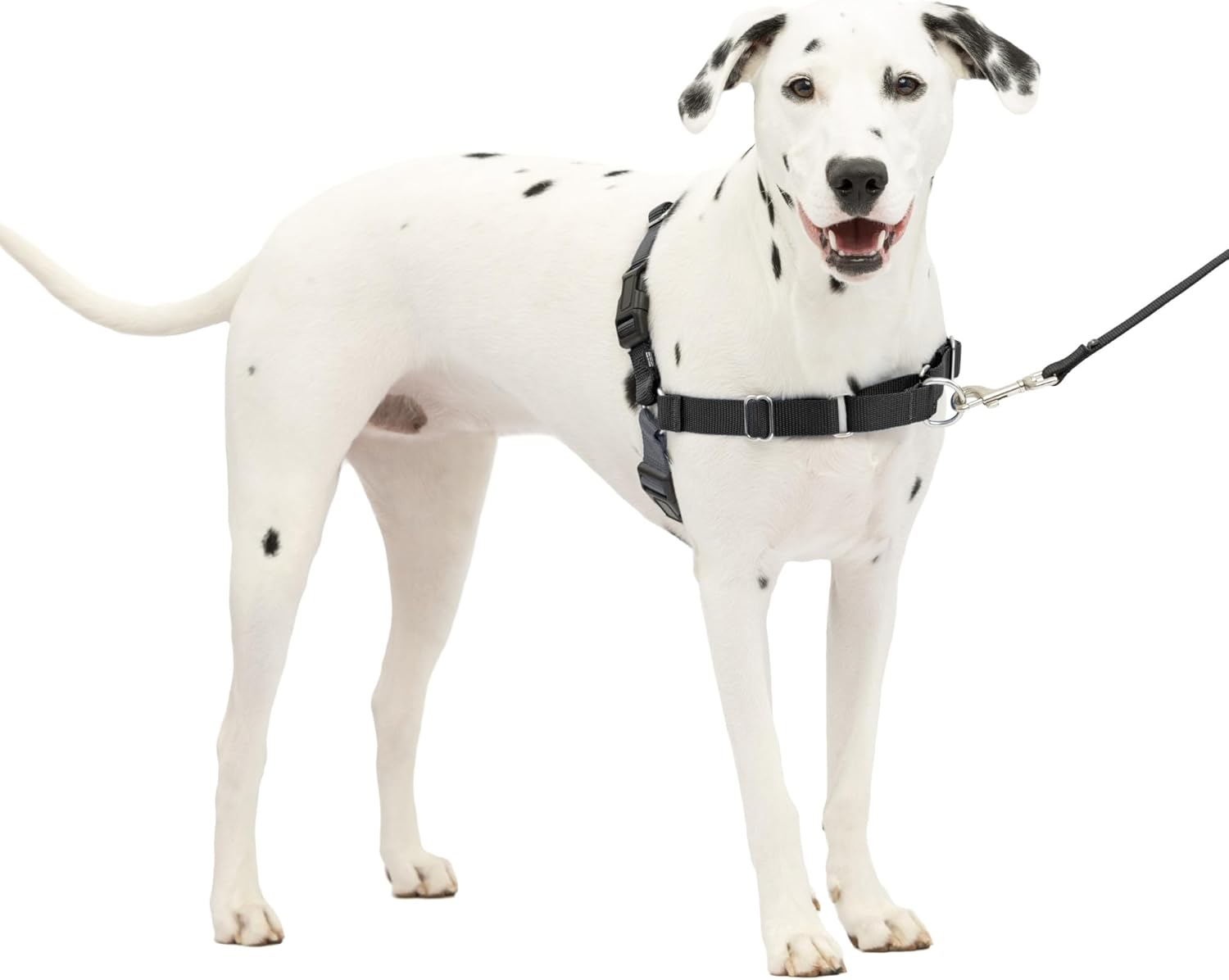
The PetSafe Easy Walk Harness is designed to reduce pulling by routing the leash to a front-chest attachment and using a patented martingale loop that tightens across the shoulders when a dog lunges. You use it by slipping the shoulder strap over the dog, fastening the contrasting belly strap, and adjusting the metal sliders so the O-rings sit above and behind the front legs. In practice the lightweight, low-coverage nylon construction makes it breathable for longer walks and hikes, and the front-clip placement gives you direct leverage to redirect a reactive dog without pressure on the throat. The quick-snap buckle and contrasting belly strap make it straightforward to put on and check fit, and the harness is built for repeated outdoor use. Limitations are that it is not heavily padded and offers less overall restraint than thicker, full-coverage harnesses, so very strong pullers or dogs that need more control-related features may prefer a sturdier step-in or dual-clip model; accurate measuring is important to get the martingale centered and effective.
Best for: Buyers who want a balance of control and comfort for a reactive or pull-prone dog and value a breathable, easy-to-fit harness for regular walks and hikes.
Less Ideal for: Owners who need maximum restraint, heavy padding, or integrated safety features for very large or extremely strong dogs should consider more heavy-duty control harnesses.
- Front-chest leash clip with martingale loop redirects pulling without neck pressure
- Lightweight, low-coverage design increases breathability and comfort on long walks
- Quick-snap belly buckle and contrasting strap make the harness easy to put on and verify fit
- Durable nylon construction suited for frequent outdoor use
- Minimal padding may be uncomfortable for dogs that prefer cushioned harnesses
- Less overall coverage and restraint than heavy-duty control harnesses for very strong pullers
Verdict: The best overall no-pull harness that balances control, comfort, fit options, and durable construction for everyday walks and training.
Bolux No-Pull Dog Harness Small
Best Budget No-Pull Harness
| Closure Type | Buckle |
|---|---|
| Dog Breed Size | Small |
| Weight Range | 11-20 lbs |
| Material Type | Polyester |
| Product Care Instructions | Machine Wash |
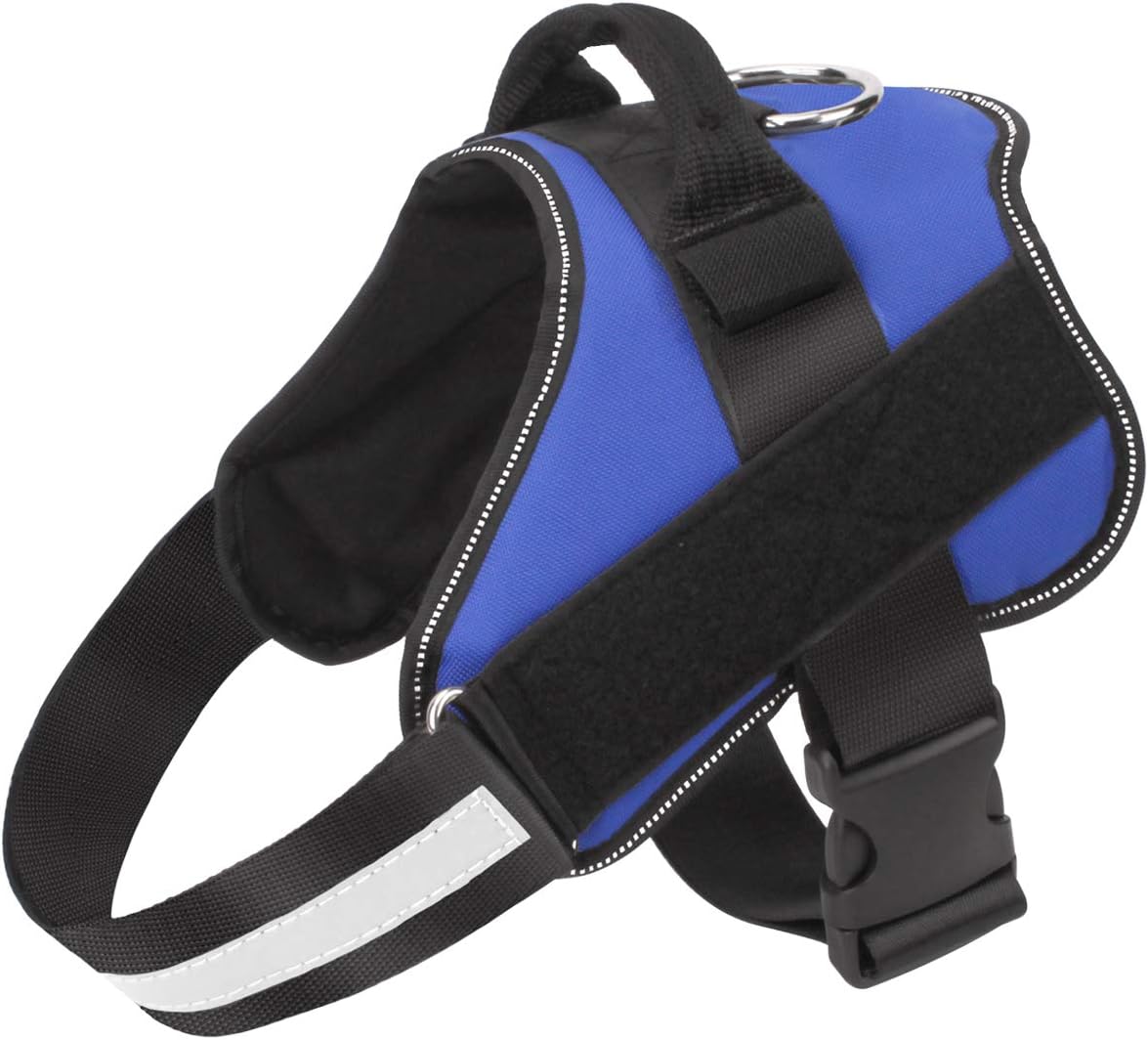
The Bolux no-pull dog harness is a vest-style harness intended to reduce pulling by distributing pressure across the dog's chest and body while providing a secure attachment point for a leash. It is typically used for daily walking, light training sessions and outdoor activities where control and visibility matter. Notable features include an adjustable chest strap with a snap-on buckle, a sturdy nylon top handle for close control, a D-ring for leash attachment and reflective trim for low-light visibility. The breathable polyester construction and machine-washable care instructions make it easy to clean after muddy walks. As a budget option it delivers the core training functions—no-pull design, handle control and reflective safety—without premium padding or heavy-duty hardware, so it works best for small dogs in the 11 to 20 pound range rather than heavy pullers. Sizing can feel fiddly on dogs near the upper or lower end of the size range, so measure carefully before buying.
Best for: Buyers who prioritize practical training features and visibility on a tight budget and need a simple, functional harness for small dogs.
Less Ideal for: Anyone with a large dog, a strong puller, or who wants heavy padding and heavy-duty hardware for rugged use should consider a sturdier, higher-end harness.
- No-pull vest design spreads pressure to reduce choking.
- Reflective trim increases visibility on early morning or evening walks.
- Top nylon handle gives quick close control for training or crowded areas.
- Machine-washable polyester makes cleanup simple.
- Adjustable chest strap with snap buckle allows basic fit customization.
- Not built for strong pullers or large dogs due to light hardware and slim construction.
- Limited padding compared with premium harnesses, which may be less comfortable on long hikes.
Verdict: The best budget no-pull harness for owners who want effective leash control and acceptable comfort without spending much.
GO&LiNK KineticVeer No-Pull Harness Medium
Best Premium No-Pull Harness

| Material Type | Nylon |
|---|---|
| Closure Type | Buckle |
| Dog Breed Size | Medium |
| Product Care Instructions | Hand Wash Only |
The GO&LiNK KineticVeer harness is a vest-style no-pull training harness built around a movable guide that redirects forward pulling forces so owners can steer and train with less brute strength. It fastens with buckles and uses metal hardware and high-strength nylon webbing, with padded sections for comfort on medium dogs during regular walks and training sessions. The harness is intended to support loose-leash walking by helping owners change direction and reinforce calmer behavior rather than acting as a permanent restraint. Practical benefits include sturdy construction that should hold up to frequent use and padded contact areas that reduce chafing for active dogs. Limitations are that sizing must be chosen carefully for a proper fit, hand-wash care is required, and owners used to simpler clip-and-go harnesses may need a short adjustment period to use the guidance system effectively. For buyers prioritizing premium build and training function, this harness focuses on durability and control rather than minimalist convenience.
Best for: Owners willing to invest in a premium training harness who want durable construction and a mechanical guidance system to reduce pulling and improve leash manners over time.
Less Ideal for: People seeking a simple, low-cost everyday harness or those who prefer machine-washable gear should consider other options.
- Patented movable guidance system redirects pulling forces for easier steering during training
- High-strength nylon webbing and metal hardware for long-term durability
- Padded sections increase comfort and reduce chafing on regular walks
- Buckle closures provide secure, adjustable fit for medium-size dogs
- Requires hand washing for care rather than machine washable convenience
- Higher-feature design may have a learning curve compared with basic harnesses
Verdict: The best premium no-pull harness for owners willing to pay more for superior padding, hardware, and long-term durability.
Carhartt Nylon Duck No Pull Harness Medium
Best Heavy-Duty No-Pull Harness

| Material Type | Mesh, Nylon |
|---|---|
| Closure Type | Buckle |
| Dog Breed Size | Medium |
| Included Components | No Pull Harness |
The Carhartt Nylon Duck No Pull Harness is built for active dogs that need extra control without sacrificing comfort. Its martingale chest strap provides the no‑pull function by tightening slightly when the dog pulls, and the over‑the‑head yoke with fully adjustable chest and belly straps helps achieve a secure fit. Made from 500‑denier polyester with a Rain Defender DWR finish, the harness stands up to light rain and routine outdoor use, while spacer mesh backing keeps the dog more breathable on longer walks. Reflective low‑light stitching improves visibility for early morning or evening outings, and a quick control handle plus a sturdy D‑ring on the back make short corrections and leash attachment simple. Expect durable hardware and reinforced construction suited to frequent use, though very large or extremely strong pullers may still require a harness with additional heavy‑duty metal fittings or specialized service‑dog gear. Fit and adjustment are important to get the martingale action working effectively.
Best for: Buyers who want a rugged everyday no‑pull harness for active medium‑sized dogs and prioritize weather resistance and visibility during walks.
Less Ideal for: Owners of very large, exceptionally strong pullers or working dogs who need industrial‑grade metal hardware and reinforced stitching for heavy loads should consider purpose‑built heavy‑duty models.
- Martingale chest strap provides effective no‑pull control during walks
- 500‑denier polyester with DWR finish resists light rain and regular outdoor use
- Reflective stitching enhances visibility in low light
- Fully adjustable straps and yoke design allow a secure, customized fit
- Quick control handle and metal D‑ring simplify short corrections and leash attachment
- Hardware is durable but primarily plastic buckles rather than heavy gauge metal
- Not specified for extreme pulling or professional service‑dog loads
Verdict: The best heavy-duty no-pull harness for dogs that need extra strength and reinforced construction to withstand hard pulling.
Plutus Pet No Pull Front-Clip Harness
Best Front-Clip No-Pull Harness
| Closure Type | Buckle |
|---|---|
| Material Type | Nylon |
| Pet Type | Dog |
| Dog Breed Size | Large |
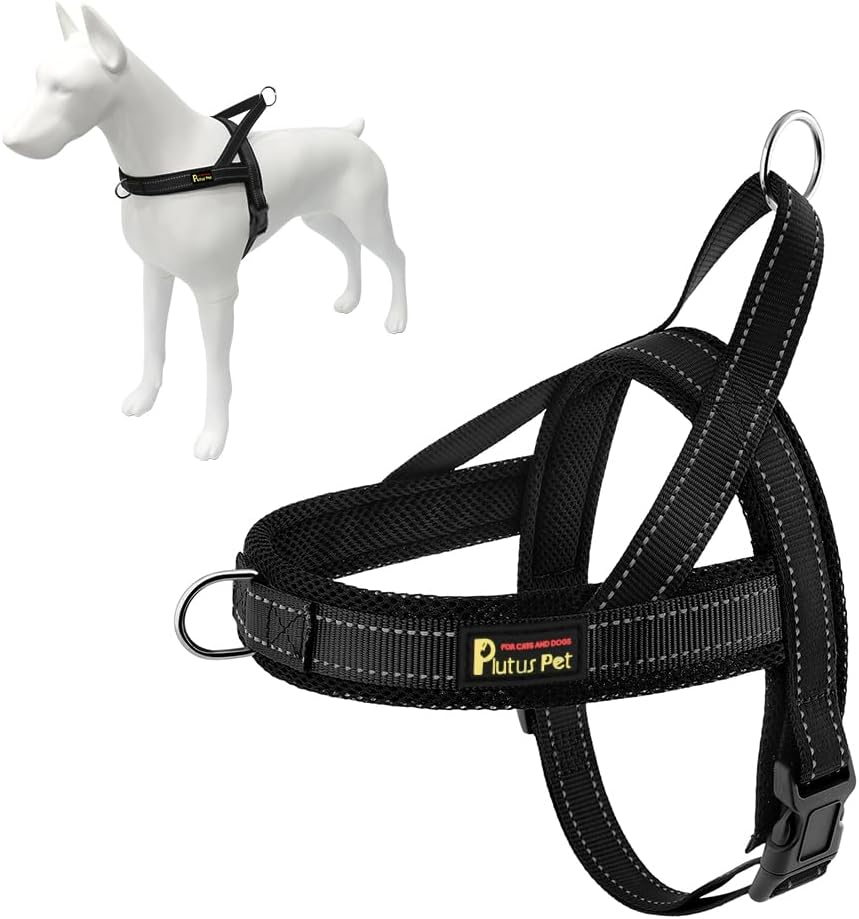
This Plutus Pet harness is a step-in, quick-fit vest designed for training dogs that tend to pull. It features a front D-ring for gentle redirection during training and a back O-ring for casual walks, plus a single-buckle closure and an adjustable strap system to tailor the fit. The vest is padded with breathable mesh to reduce chafing and keep dogs cooler during activity, and reflective stitching improves visibility on low-light outings. Reinforced nylon straps and welded rings aim to hold up under regular use, while the one-buckle design makes the harness fast to put on and remove. Expect effective leash control for dogs responsive to front-clip guidance, but know that very strong pullers may still require additional training or a sturdier, no-pull-specific design; sizing must be checked against the chest measurement for a secure fit. The harness cleans by hand washing only, which keeps care simple but adds an extra step versus machine-washable covers.
Best for: Owners focused on training and gently redirecting pulling on walks who want a comfortable, easy-to-fit front-clip harness for regular use.
Less Ideal for: People seeking a heavy-duty restraint for very large or extremely strong dogs or owners who prefer a harness that is machine-washable.
- Front chest D-ring for effective no-pull redirection during training
- Breathable mesh padding for comfort and reduced skin irritation
- Reflective stitching for increased visibility on night walks
- Quick step-in design with a single buckle for fast on/off
- Reinforced D-ring and O-ring hardware for everyday durability
- Hand wash only care rather than machine-washable cover
- May not fully stop very strong, persistent pullers without additional training
Verdict: The best front-clip no-pull harness for owners focused on training and gentle redirection of pulling behavior on walks.
Huntboo Escape Proof Dog Harness Large
Best Reflective No-Pull Harness
| Material Type | Lining: Air Mesh, Padding: Soft Cushion, Polyester |
|---|---|
| Closure Type | Buckle |
| Adjustability | 5 Points of Adjustment |
| Care | Machine Wash |
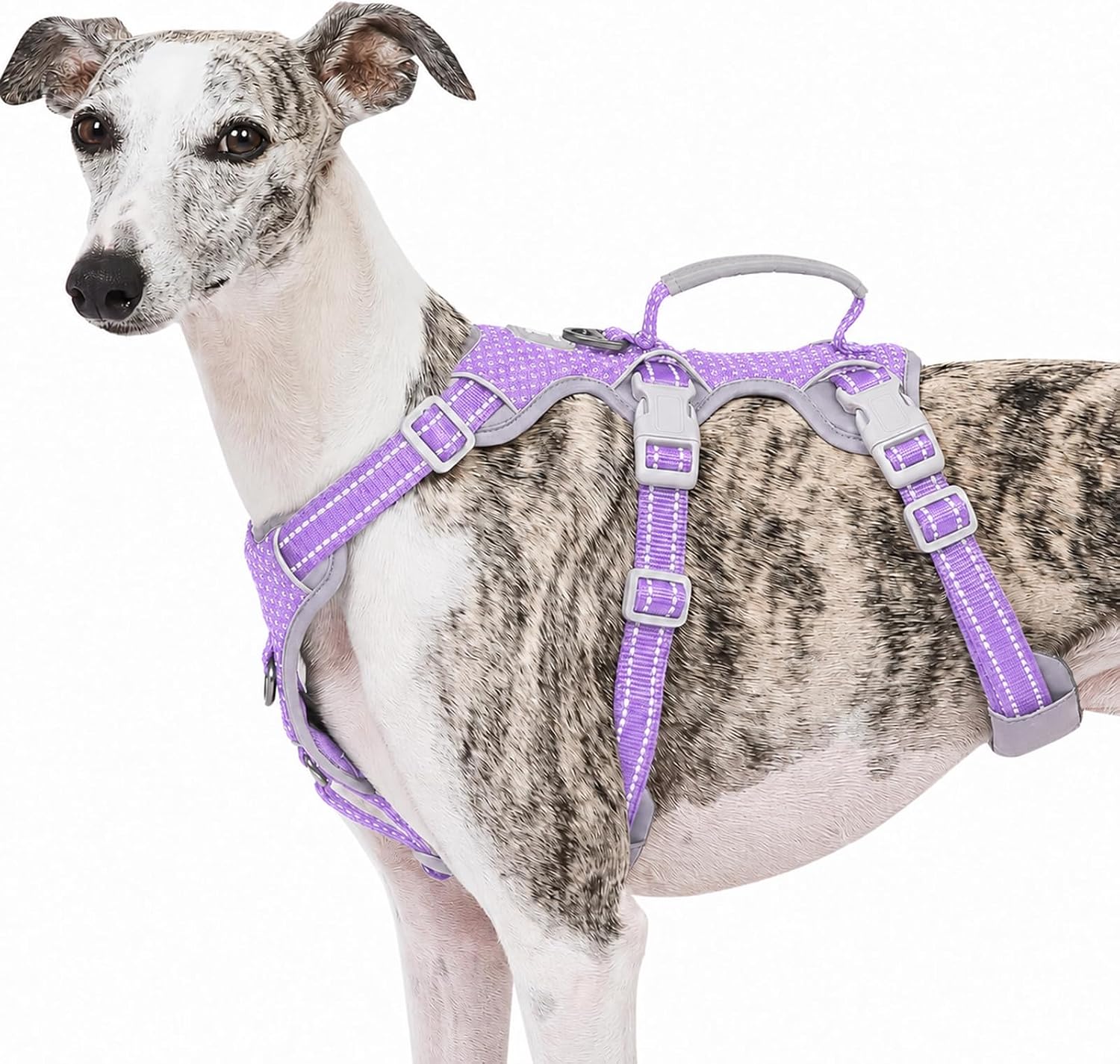
The Huntboo Escape Proof Dog Harness is a vest-style, no-pull harness built to keep squirmy or reactive dogs secure on walks. It uses five adjustment points and four quick-release buckles so you can dial in a snug fit across the chest, neck, and girth, and the breathable padded air-mesh keeps the dog comfortable for longer outings. A reinforced zinc-alloy D-ring on the back and a front chest clip let you leash from either position to discourage pulling and redirect motion, while the wider, durable buckles and heavy-duty webbing improve overall retention. A padded lift handle gives immediate control over obstacles or in high-stress moments, and full-body reflective fly-woven fabric improves nighttime visibility. The harness is machine washable, but bulkier buckles and heavier construction can feel stiff on smaller builds and require careful initial fitting to prevent chafing. For reactive dogs that try to back out or slip harnesses, Huntboo offers strong hardware and multiple adjustment points that noticeably reduce escape attempts.
Best for: Owners needing a secure, adjustable harness for dogs that try to back out or pull, and who prioritize retention and emergency control during walks or training.
Less Ideal for: Owners who want an ultra-light minimalist harness for short, casual walks or who prefer very low-profile hardware for tiny toy breeds.
- Five points of adjustment allow a tailored, escape-resistant fit for different body shapes
- Zinc-alloy D-rings rated for high pull force and metal hardware increase leash security
- Padded air-mesh and soft cushioning reduce rubbing for longer wear
- Padded lift handle gives fast, positive control in emergencies or over obstacles
- Full-body reflective fabric improves low-light visibility
- Larger buckles and heavier materials can be stiff and require break-in on smaller dogs
- May need careful sizing and trimming of excess straps to avoid rubbing
Verdict: The best reflective no-pull harness for owners who frequently walk in dawn, dusk, or nighttime conditions and need improved visibility.
rabbitgoo Easy On 3-Buckle Harness Large
Best Adjustable No-Pull Harness

| Closure Type | Buckle |
|---|---|
| Dog Breed Size | Large |
| Material Type | Nylon, Polyester |
| Product Care Instructions | Hand Wash Only |
| Size | Large |
This rabbitgoo Easy On harness is designed to make fitting and daily walks simpler for large dogs. The three-buckle design lets you fasten the neck and two side closures instead of slipping the harness over the head, which speeds up putting it on and reduces stress for dogs that dislike overhead fitting. It combines a soft padded interior and inner air mesh for breathability and comfort, plus ripstop Oxford on the outside for durability. You get both a front clip for no-pull training and a back clip for casual walking, plus two metal leash rings and a wide top handle for extra control when lifting or guiding. Four adjustable sliders and flexible straps let you fine-tune the fit, and reflective trim improves visibility on evening walks. Limitations to note are that the harness is not chew-proof and requires hand washing, and sizing still needs careful checking against the listed neck and chest ranges to get the right fit.
Best for: Owners who need a harness they can easily fine-tune for a large dog that dislikes overhead fitting or has a tricky body shape, and who prioritize comfort and control for regular walks and outdoor activity.
Less Ideal for: People looking for a chew-proof, machine-washable service harness or those who need a minimalist single-clip training setup should consider alternatives.
- Three quick-release buckles for faster, less stressful on/off
- Front and back metal leash rings for training and everyday walking
- Soft padded air-mesh interior for breathability and comfort
- Multiple adjustable sliders for a customizable fit
- Reflective trim and a wide top handle for night visibility and added control
- Not chew-resistant so avoid use with dogs that chew hardware
- Requires hand washing rather than machine laundering
Verdict: The best adjustable no-pull harness for owners who need precise sizing and a secure, comfortable fit across different body shapes.
Choosing the Right No Pull Dog Harness Backwards: Key Factors to Consider
Adjustability
Adjustability determines whether a harness can be repositioned safely when worn backwards. Multiple straps and sliders let you redistribute pressure away from the throat and armpits so no single strap bears the load.
Without sufficient adjustment, reversing a harness can create gaps or tight spots that cause chafing or restrict the dog's gait. Look for wide adjustment ranges on the chest and belly straps and the ability to change both length and angle of those straps because small changes can significantly alter how force transfers during a pull.
Attachment Placement and Type
Where the leash attaches and how it attaches matters more when the harness is reversed. A front-clip designed to redirect forward momentum works differently when flipped, so you need hardware placements that still allow leverage and steering in the backwards orientation.
D-rings, low-profile front clips, and multiple attachment points give you options to experiment. Consider whether the attachment point sits low enough to engage the dog's chest and whether it can be repositioned without pressuring the throat or spine.
Padding and Material
Padding and fabric choices affect comfort when straps lie against different parts of the body than originally intended. Soft, breathable padding prevents hotspots and rubbing when the harness is reversed and may be critical for long walks.
Durable outer materials help maintain shape under load and resist abrasion from collars or leash hardware. Seam placement and the presence of binding reduce the chance that edges will cut into fur or skin when the harness is adjusted into an unconventional fit.
Fit Profile and Range of Sizes
A harness with a forgiving fit profile and a wide size range is easier to adapt for backwards use. Look for designs that accommodate variations in chest depth, neck circumference, and body length so you can find a configuration that sits securely without pinching.
Measure your dog carefully and compare those measurements to a harness's size chart rather than relying on generic size names. A proper fit prevents rotation, slipping, or restricting shoulder movement once the harness orientation changes.
Hardware Quality and Placement
Sturdy, well-placed hardware keeps the harness functional and safe when forces are applied differently than intended. Corrosion-resistant buckles and welded rings resist deformation and maintain reliable leash attachment points.
Consider how buckles and adjustment tri-glides will contact the dog in a backwards setup. Low-profile, rounded hardware is less likely to create pressure points, and quick-release buckles positioned away from high-friction areas improve comfort and convenience.
Ease of Use and Everyday Practicality
A harness that is difficult to put on or adjust will discourage consistent use, especially if you need to experiment with a reversed fit. Quick adjustments, clear strap paths, and intuitive buckles make it practical to fine-tune the harness for comfort and control.
Also consider maintenance: harnesses that are machine-washable or have removable padding will be easier to keep clean after regular walks. Practicality influences whether you end up using the harness regularly or abandoning an otherwise effective setup.
Can Wearing a No-pull Harness Backwards Reduce Pulling?
Wearing a harness backwards can change where leash forces apply, which sometimes reduces forward momentum for certain dogs. When the leash attaches in a position that creates a counteracting angle, some dogs become easier to redirect. The effect depends largely on your dog's gait, size, and pulling behavior.
Experiment carefully and in a controlled setting. Start with short, leashed practice walks and monitor for signs of discomfort or restricted shoulder movement. If the backwards orientation concentrates pressure on the throat, chest, or shoulders in a way that causes coughing, chafing, or altered gait, stop and reassess.
- Test the reversed fit in a quiet area before using it on busy walks
- Check for rubbing points after a short walk and readjust straps as needed
- Use a second leash attachment or a handler's secondary hold when first trying the orientation
How to Fit a Harness Safely when Reversing It
Begin by loosening all adjustment points so the harness can be reoriented without twisting straps. Put the harness on slowly and adjust each strap in small increments, checking how the dog moves after each change. Ensure the chest strap does not ride up into the throat and that shoulder motion is unimpeded.
Look for even pressure distribution. The harness should sit snugly without compressing soft tissues. Confirm that any padding covers areas that now bear load, and move or pad exposed buckles if they rest against the skin.
- Keep two fingers' width between the strap and the dog's body at the tightest point
- Observe shoulder blades for free movement during a short leash walk
- Trim any loose webbing that might flap and irritate the dog
When Backwards Fitting Is Not Appropriate
Not every dog or harness is suited to a reversed orientation. Puppies with developing bodies, dogs with respiratory or neck sensitivities, and breeds with short necks or deep chests may experience unsafe pressure distribution when straps are repositioned. If your dog shows signs of pain, labored breathing, or altered gait, discontinue the approach.
Also avoid reversing harnesses that have rigid frames, integrated front plates, or one-way stretch panels. These features are designed for a single orientation and can create dangerous pressure points when flipped.
- Do not use a reversed harness for extended periods until you are confident in the fit
- Seek veterinary advice if the dog has existing musculoskeletal or respiratory conditions
- Prefer reversible adjustments over permanent modifications like sewing or cutting straps
Simple Training Strategies to Combine with a Backwards Harness
A harness change alone is rarely a complete solution for pulling. Pair the reversed harness with short, consistent training sessions that reward loose-leash walking and attentive behavior. Use treats, quick turns, and timing to reinforce the behavior you want.
Start in low-distraction environments and gradually add difficulty. If you rely on the harness to provide leverage, also practice cues that encourage the dog to check in with you, because long-term improvement depends on training as much as hardware.
- Use high-value treats in the first training sessions
- Reinforce calm behavior with immediate rewards to build a positive association
- Gradually increase walk duration and distraction once leash manners improve
Maintenance and Safety Checks for a Harness Used Backwards
Regular inspection is important because a different strap orientation can change wear patterns. Check stitching, webbing, and hardware for signs of abrasion or loosening after initial use and periodically thereafter. Replace or repair components that show fatigue.
Clean the harness according to the manufacturer's care instructions to prevent material breakdown and to keep padding effective. If you add temporary padding or covers to protect the dog, confirm they are breathable and securely attached.
- Inspect buckles and rings for cracks or deformation monthly
- Wash removable padding to prevent odor and bacterial buildup
- Retighten sliders and buckles before every outing
How We Chose the Best No Pull Dog Harness Backwards
We evaluated models against criteria that reflect the special demands of fitting and using a no-pull harness backwards. First, we prioritized adjustability: multiple adjustment points let you reshape the harness to sit correctly when reversed without creating pressure points. Second, we checked materials and seam construction for abrasion resistance and breathability so the harness remains comfortable even when the fit changes. Third, attachment options mattered: hardware placement and the type of front or back leash attachment affect how effectively the harness redirects forward momentum when worn backwards. Fourth, overall control and leverage were considered; certain designs translate better to a reversed orientation without compromising steering. Fifth, ease of put-on and removal was included because a harness that is hard to fit in a nonstandard orientation is impractical for regular use. We excluded items that rely solely on rigid framing or one-size fabric with no adjustment because they cannot be safely adapted to a backwards fit. We also filtered out harnesses with minimal padding or exposed hardware that could rub the dog when repositioned. The final selection balances durable construction, clear adjustment ranges, safe hardware layout, and rider comfort to ensure candidates are practical for owners who want to try a backwards configuration.
Our full evaluation process is outlined in our review methodology.
FAQ
Will reversing a harness hurt my dog's shoulders?
It can if the harness restricts shoulder blade movement or concentrates pressure on the wrong area. Always check for free shoulder motion and short leash-test walks after fitting. Stop if you see altered gait or signs of discomfort.
Is a backwards fit safe for puppies?
Puppies have growing bones and softer tissues, so a backwards configuration is usually not recommended. If you must try it, use only short trials with close observation and consult a veterinarian if you notice any issues.
How do I know which attachment point to use when the harness is backwards?
Choose the attachment that produces the most effective steering without pressuring the throat or spine. Multiple attachment points are ideal because they let you test angles. Start with a low chest-positioned attachment and adjust from there.
Can I modify a harness to make it better for backwards use?
Minor, reversible adjustments like adding soft covers or moving removable padding are usually safer than cutting or sewing. Permanent alterations can weaken webbing or change force distribution and are not recommended.
How often should I check the fit when trying a new orientation?
Check fit before every walk during the trial period and do a quick in-park inspection afterward. Reassess strap tension and any rubbing or wear weekly once you settle on a configuration.
Final Verdict
Trying a no-pull harness backwards can be a useful tactic for changing how leash forces act on your dog, but it is not a universal solution. Prioritize adjustability, padding, safe hardware placement, and a fit that allows free shoulder movement. Combine any harness-based approach with training that rewards loose-leash walking to achieve the best, long-term results. If you follow careful fitting steps and monitor your dog closely for signs of discomfort, a reversed harness orientation can be a practical option for some dogs. Choose solutions that offer clear adjustment ranges and durable construction so you can fine-tune fit safely and confidently.

