

Choosing the right outdoor dog house for hot weather matters because excessive heat can cause discomfort, stress, and serious health risks for dogs. You need shelter that reduces direct sun exposure, improves airflow, and uses materials that do not retain or radiate heat. This guide shortlists the best outdoor houses for hot weather and explains the practical features that matter for summer comfort and safety. Below you will find top picks selected for ventilation, shade performance, and durable construction, followed by guidance on matching a house to your dog and climate.
Top Picks at a Glance
| Best Overall Outdoor House for Hot Weather Top all-around pick balancing shade, airflow, and durable construction | Fancyango Large Dog House |  |
| Best Budget Outdoor House for Hot Weather An affordable shelter that keeps dogs cooler without breaking the bank | Floppy Dawg Portable Dog House Large |  |
| Best Premium Outdoor House Higher-end materials and features for long-term comfort and performance | ketive 55" Extra Large Dog House |  |
| Best Ventilated Outdoor House Designed for maximum airflow to reduce inside temperatures quickly | SUDDUS Dog House XXL |  |
| Best Elevated Outdoor House Raised design improves airflow and reduces ground heat transfer | K&H Elevated Dog Bed Large |  |
| Best Large-Capacity Outdoor House Roomier interior for large breeds or multi-dog households | Veehoo Extra Large Dog House |  |
| Best Easy-Clean Outdoor House Simple maintenance features for quick cleanup and low upkeep | DRATO Resin Dog House Medium |  |
Fancyango Large Dog House
Best Overall Outdoor House for Hot Weather

| Material Type | Polypropylene (PP) |
|---|---|
| Dog Breed Size | Medium |
| Included Components | doghouse |
| Item model number | TT057/TT030 |
The Fancyango Large Dog House is a molded polypropylene shelter built to sit outdoors year-round and provide a dry, ventilated space for medium to large dogs. It assembles quickly and locks together without tools, and the elevated floor plus air vents encourage airflow that helps keep the interior cooler in summer and reduces ground moisture in wet conditions. The smooth PP surfaces wipe clean easily, and included ground nails give extra anchoring in breezy spots. Because it is fully waterproof and made from rigid plastic, it resists rot and insect damage that wooden houses face and is low maintenance. Limitations to note are modest insulation: the hard plastic shell and ventilation mean it does not trap heat like a heavily insulated wooden or foam-lined house, so you will likely need added bedding or a heated pad in very cold climates. Also, size guidance lists medium dogs but buyers should verify dimensions against their dog to ensure a comfortable fit.
Best for: Buyers who need a low-maintenance, weatherproof outdoor shelter that keeps dogs dry and ventilated and who plan to supplement bedding or heating in cold conditions.
Less Ideal for: Owners seeking a highly insulated, heat-trapping permanent winter shelter without adding bedding or heating should consider insulated or foam-lined alternatives.
- Waterproof molded polypropylene construction resists rot and weather
- Elevated floor and vents improve airflow and reduce ground moisture
- Easy to assemble and simple to clean smooth surfaces
- Includes ground nails for improved wind stability
- Hard plastic shell offers limited passive insulation in very cold weather
- Designed more for weather resistance than heat retention
Verdict: The best overall outdoor house for hot weather, offering the right mix of ventilation, reflective materials or shade, durable build, and comfort for most dogs in warm climates.
Floppy Dawg Portable Dog House Large
Best Budget Outdoor House for Hot Weather

| Material Type | Metal, Nylon |
|---|---|
| Dog Breed Size | Large |
| Product Style | Portable |
| Item Weight | 13 pounds |
The Floppy Dawg Just Chillin' Portable Dog House is a travel-friendly elevated shelter designed for medium to large dogs up to about 60 pounds. It assembles quickly into a metal-frame cot with a 600D nylon exterior, an attached roof for sun and rain protection, and a mesh floor that improves airflow and comfort. Because it stands a few inches off the ground and includes a soft pad, it keeps pets drier and cooler than a simple fabric tent when used outdoors and provides a defined resting spot indoors. The unit is lightweight and easy to carry, so it works well for camping, porch use, or seasonal setups that need frequent moving or storage. Expect basic weather resistance rather than full waterproofing in heavy storms, and the fabric-and-frame construction will not offer the insulation or durability of a solid wood or plastic house for long-term outdoor exposure. Still, for short-term shelter and portable comfort it is simple to set up, clean, and pack away.
Best for: Buyers who need a shelter that is simple to assemble, move, and store for travel, camping, porch use, or seasonal setups where portability and quick setup matter most.
Less Ideal for: People seeking a permanent, heavily weatherproof, or highly durable outdoor dog house for year-round exposure should choose a solid wood or plastic model instead.
- Lightweight and easy to transport for travel or temporary setups
- Elevated mesh floor improves airflow and helps keep pets cool and dry
- Water-resistant 600D nylon wipes clean readily
- Attached roof provides shade and light rain protection
- Quick to assemble with a metal frame for basic stability
- Not fully waterproof or insulated for prolonged outdoor exposure
- Frame and fabric construction is less durable than solid-material houses
Verdict: The best budget outdoor house for hot weather that provides basic sun protection and improved airflow at a low price for owners prioritizing cost.
ketive 55" Extra Large Dog House
Best Premium Outdoor House

| Material | Solid Fir Wood |
|---|---|
| Roof | Asphalt |
| Raised Floor Height | 1.97" |
| Interior Floor Area | Approx. 9.36 sq. ft. |
| Maximum Supported Weight | Up to 220 lbs |
This 55" extra large wooden dog house is designed to give bigger dogs a roomy, weather-resistant place to rest outdoors. Built from solid fir with iron reinforcement on exposed edges, it resists everyday chewing and adds structural support for active pets. The sloped asphalt roof and raised floor help keep the interior drier during rain and snow, while a PVC door curtain and an adjustable vented window let you balance airflow and wind protection through the seasons. The top-opening roof and two removable floor panels make adding bedding and routine cleaning straightforward without having to reach through the doorway. It is typically placed on a patio, in a fenced run, or inside a kennel as a sheltered spot for large breeds to sleep or lounge. Expect a fairly heavy assembly and a substantial footprint that needs stable, level placement; the wooden construction will also require periodic care if left exposed to harsh weather for long periods. If you want a spacious, comfortable shelter that looks like backyard furniture and simplifies daily access and cleaning, this model delivers.
Best for: Buyers who prioritize roomy, comfortable shelter for large or extra-large dogs and want easy interior access for bedding and cleaning.
Less Ideal for: People who need a lightweight, portable, or maintenance-free plastic shelter for frequent relocation or year-round exposure without upkeep.
- Generous interior area suitable for large breeds allowing standing and stretching
- Iron-reinforced frame and fir wood construction improve durability and reduce chewing damage
- Raised floor and sloped asphalt roof protect against ground moisture and precipitation
- PVC door curtain and adjustable vented window let you manage airflow and cold drafts
- Openable roof and removable floor panels make bedding placement and cleaning easier
- Heavy and bulky which makes moving or assembly more demanding
- Wood exterior needs periodic maintenance if exposed to prolonged harsh weather
Verdict: The best premium outdoor house for owners who want superior build quality, weather-resistant finishes, and thoughtful heat-management features worth the extra investment.
SUDDUS Dog House XXL
Best Ventilated Outdoor House

| Size | XXL (48"D x 48"W x 39"H) |
|---|---|
| Cover Material | 420D Oxford fabric |
| Mesh Material | Teslin fabric |
| Fill Material | Polyester Fiber |
| Recommended Uses | Outdoor |
This SUDDUS outdoor dog tent is a roomy, tent-style shelter built around a metal frame with mesh panels on three sides for heavy airflow. It is used as a shaded outdoor refuge for large dogs and other outdoor animals where ventilation is the priority: the Teslin mesh windows and a large door let breezes pass straight through, while the 420D Oxford outer fabric and inner PVC coating block sun and light rain. Assembly is tool-free and straightforward, so you can set it up in under 15 minutes and move it to a shaded spot or campsite as needed. Practical benefits include excellent cross-ventilation that helps keep the interior cooler on hot days, a roll-down curtain door and Velcro bottom for additional stability, and materials that are described as UV resistant and scratch resistant. Limitations are typical for fabric tents: it is not a fully weatherproof, insulated kennel for heavy storms or winter use, and the tent form offers less rigid protection than a hard-sided house. For hot climates where airflow matters most, the design makes sense, but expect reduced protection in extreme weather.
Best for: Buyers in hot climates who prioritize airflow and a shaded, breathable outdoor shelter for large dogs or multi-pet yards and want something portable and quick to set up.
Less Ideal for: Owners needing a rigid, fully weatherproof or insulated dog house for cold, wet, or windy conditions should consider a hard-sided alternative.
- Three-sided Teslin mesh windows provide strong cross-ventilation to lower interior temperature
- 420D Oxford fabric with PVC coating offers UV resistance and splash protection
- Tool-free assembly that can be completed in about 15 minutes
- Spacious interior accommodates large dogs and allows them to stand and turn comfortably
- Fabric tent construction is less protective in heavy storms or winter conditions
- Not insulated so it will not retain heat on cool nights
Verdict: The best ventilated outdoor house for hot-weather use, prioritizing louvers, raised vents, or mesh panels to keep interior temperatures lower and air moving.
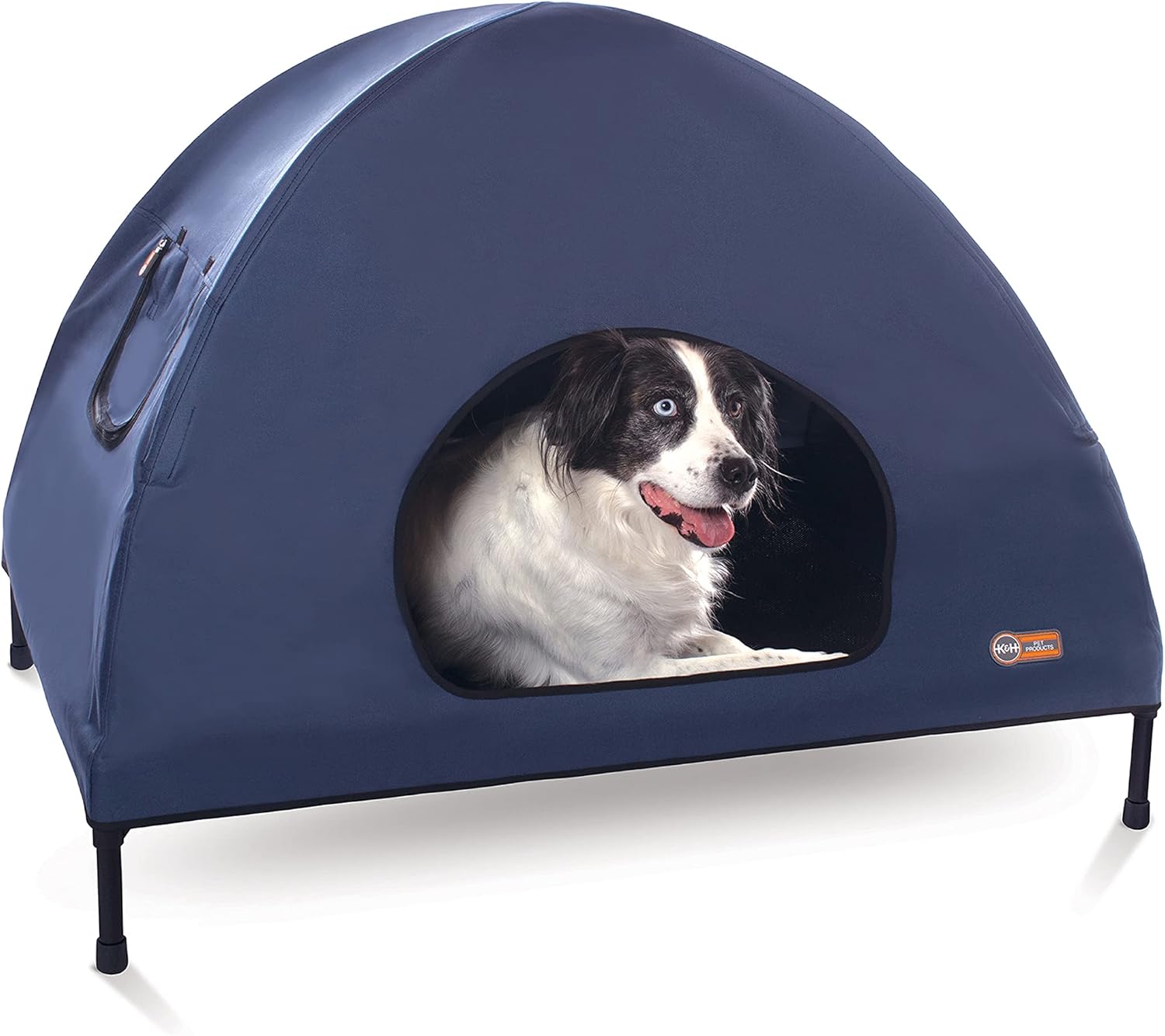
K&H Elevated Dog Bed Large
Best Elevated Outdoor House
| Item model number | 100213619 |
|---|---|
| Manufacturer | Central Garden & Pet |
| Material Type | Polyester |
| Supports up to | 200 lbs |
The K&H Elevated Pet Cot House is an elevated shelter that combines a raised metal frame with a fabric canopy to keep dogs off cold, wet ground while offering a private, den-like space. Setup is tool-free and quick, and the lightweight steel frame plus non-skid rubber feet make it stable for indoor or outdoor placement. The house uses heavy-denier, water-resistant fabric and closable window flaps to retain warmth in colder weather while a central breathable mesh and two windows allow airflow when temperatures rise. The removable, washable cover and canopy simplify cleaning after outdoor use. Strength-tested for up to 200 pounds, the large size fits most larger breeds and is portable enough for camping or travel. Limitations to consider are that the shelter is fabric-based rather than insulated, so it provides separation from the ground and wind protection but will not replace a fully insulated dog house in extreme cold, and chewing or damage can compromise weather resistance. For owners wanting a raised, weather-resistant winter resting spot that is easy to move and clean, this offers a practical balance of protection and breathability.
Best for: Owners who need a raised, portable winter shelter that keeps their dog off cold or damp ground while providing a sheltered, den-like resting spot that is easy to clean and move.
Less Ideal for: People seeking a fully insulated, heavy-duty outdoor dog house for prolonged exposure to extreme cold should consider a solid insulated structure instead.
- Elevated metal frame lifts pet off cold or wet ground to improve airflow and reduce ground chill
- Water-resistant heavy-denier fabric with closable window flaps provides year-round shelter options
- Removable, washable cover and canopy make cleaning after outdoor use straightforward
- Tool-free assembly and lightweight, portable design for easy setup and travel
- Strength-tested to support up to 200 pounds suitable for most large breeds
- Fabric canopy offers limited thermal insulation compared with solid or insulated dog houses
- Not chew-proof; fabric damage can reduce weather resistance
Verdict: The best elevated outdoor house for pet owners who want extra airflow underneath the shelter and less heat transfer from hot ground surfaces.
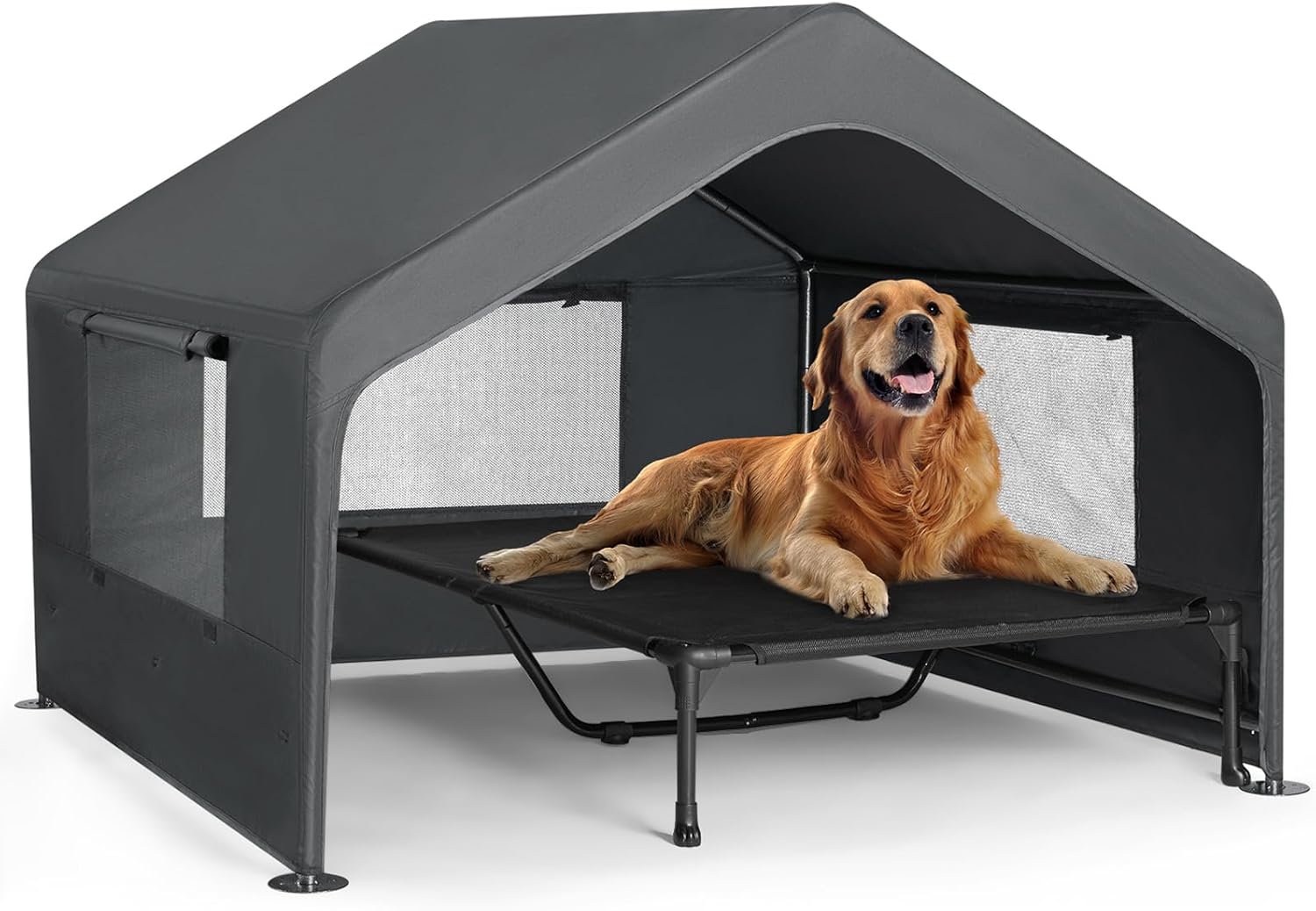
Veehoo Extra Large Dog House
Best Large-Capacity Outdoor House
| Material Type | Alloy Steel, Plastic, Polyester |
|---|---|
| Dog Breed Size | Large |
| Included Components | Dog Tent, Elevated Dog Bed, Manual |
| Item model number | CWC2530CP18 |
This Veehoo extra large dog house pairs a canopy-style shelter with an integrated elevated bed so larger dogs can rest off the ground while staying protected from sun and rain. Set up is tool-free and straightforward, and the polyester canopy includes three mesh windows with roll-up flaps for ventilation in summer and added warmth when closed in colder weather. The frame uses alloy steel and plastic fittings to keep the bed elevated and stable, and ground stakes plus windproof buckles help hold the shelter in place outdoors. The elevated platform keeps pets away from wet or dirty ground and is easy to wipe clean. Size and material choices make it a good fit for yards, patios, or sheltered outdoor spots, but the polyester canopy and lightweight construction mean it is not a heavy-duty permanent kennel for constant, unsupervised outdoor exposure in extreme weather. Expect a roomy, portable shelter that prioritizes airflow and convenience over permanent, heavy structural protection.
Best for: Owners who need a roomy elevated bed solution that gives larger dogs off-ground comfort plus sun and rain protection and who value portability and quick assembly.
Less Ideal for: People seeking a permanent, heavy-duty outdoor kennel or a fully insulated winter shelter should consider more robust, fixed-structure options instead.
- Integrated elevated bed keeps dogs off wet or hot ground
- Weather-resistant polyester canopy with mesh windows for adjustable ventilation
- Tool-free assembly for quick setup and portability
- Ground stakes and windproof buckles improve outdoor stability
- Spacious interior suitable for large dogs or multiple small pets
- Polyester canopy and lightweight frame are not intended as a permanent heavy-duty kennel in extreme weather
- No detailed mattress padding specifications provided so comfort level may vary by dog
Verdict: The best large-capacity outdoor house for bigger dogs or households with multiple pets that need more interior space to lie down comfortably and stay cool.
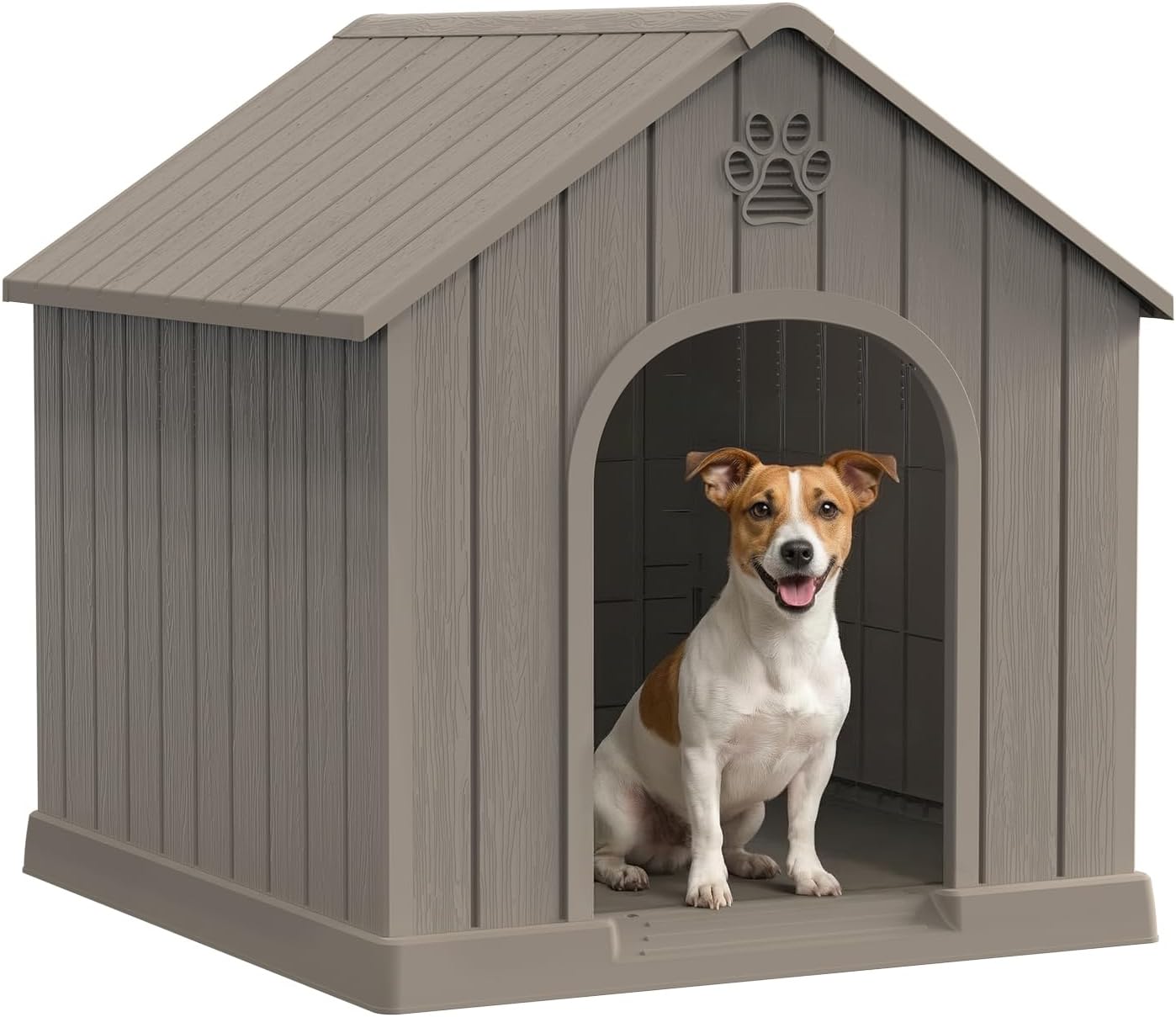
DRATO Resin Dog House Medium
Best Easy-Clean Outdoor House
| Dog Breed Size | Medium, Small |
|---|---|
| Material Type | Polyethylene (PE), Polypropylene (PP), Metal, Mixed fibers |
| Waterproof | Yes |
| Number of Items | 1 |
This resin dog house provides a simple, low-maintenance shelter for small and medium dogs both inside and outside the home. It uses molded polyethylene/polypropylene panels with a waterproof roof and hidden vents to keep rain out while allowing airflow, so the interior stays drier and less stuffy in hot weather. The smooth resin surfaces wipe clean easily and resist damage from outdoor exposure, and assembly uses plastic pegs so no tools are required for setup. Practical benefits include a lightweight unit that is easy to move and clean and a compact footprint that fits balconies or small yards. Limitations are the modest internal space suited to small and medium breeds only and the lack of removable washable fabric or raised floor for extra insulation against ground heat; in very hot climates you may still need shade, insulation pads, or elevated placement to keep the interior cool. The dog house is best when you prioritize easy surface cleaning and weather resistance over plush insulation or large-dog comfort.
Best for: Owners who need a weatherproof, easy-to-wipe shelter they can clean quickly and place outdoors without heavy maintenance.
Less Ideal for: Those seeking a plush, insulated or extra-large house for big-breed dogs or a unit with removable washable liners should look elsewhere.
- Waterproof roof prevents rain from entering the interior
- Smooth resin panels wipe clean quickly for easy sanitation
- Hidden vents provide passive airflow to reduce stuffiness
- Durable plastic construction resists outdoor wear and is lightweight for relocation
- Tool-free assembly with included plastic pegs
- No removable washable fabric or interior cushion included
- Interior space is limited to small and medium dogs
Verdict: The best easy-clean outdoor house for owners who need removable panels, smooth surfaces, or washable materials to keep the shelter sanitary in hot, messy conditions.
Choosing the Right Outdoor Dog House Hot Weather: Key Factors to Consider
Ventilation and Airflow
Good ventilation prevents heat from building up inside the house and reduces the risk of heat stress. Look for designs that promote cross-breeze through vents at the rear or sides, raised floors that allow air to circulate underneath, or strategically placed openings that encourage airflow without creating drafts. Roof vents or chimney-style outlets help hot air escape while keeping rain out.
Ventilation should balance airflow with protection from insects and rain. Screens or louvered vents can keep pests out while allowing air to move. For particularly hot, still days, consider houses that allow for optional passive cooling accessories such as clip-on fans or mesh panels.
Reflective and Low-heat Materials
Materials matter because some surfaces absorb and store heat, radiating it back into the interior. Choose houses constructed with light-colored, reflective finishes or materials with low thermal mass to reduce solar heat gain. Metal roofs may heat quickly unless finished with reflective coatings; certain plastics can become hot to the touch but can also dissipate heat if ventilated properly.
Consider UV-stable materials that resist fading and degradation from prolonged sun exposure. A reflective top layer or paint specifically formulated to lower heat absorption can noticeably reduce interior temperatures when paired with good ventilation.
Shade Design and Placement
How a house shades itself and how you position it in the yard directly influence its effectiveness in hot weather. Features like extended eaves, built-in awnings, or raised roof profiles keep direct sun off entryways and sidewalls. Overhangs also allow windows or vents to stay open without letting rain in.
Placement under natural shade, such as a tree or covered patio, amplifies the house's cooling. Orient the entrance away from the afternoon sun and consider seasonal sun paths; what is shaded in spring may be exposed in midsummer. A movable house can be repositioned as needed to follow shade patterns.
Flooring and Raised Base
A raised floor separates the interior from hot ground surfaces and enables airflow beneath the house, which helps lower floor temperature. Materials that do not conduct heat well, such as treated wood or insulated composite panels, keep the interior surface cooler than metal or concrete.
A removable or elevated floor also simplifies cleaning and inspection for pests. Check for secure but ventilated floor designs that keep insects and moisture out while allowing trapped heat to escape.
Insulation and Seasonal Versatility
Although insulated houses are often associated with cold climates, the right type of insulation can help stabilize internal temperatures in extremes by slowing heat transfer. In hot weather, reflective insulation or radiant barriers can be more effective than thick thermal insulation because they block solar radiation rather than trapping heat inside.
If you need a house that will be used year-round, seek designs that allow seasonal adjustments such as removable insulation panels, openable vents, or interchangeable doors. That flexibility helps maintain comfort without creating a heat trap in summer.
Size, Entry Design, and Dog Behavior
Choose a house size that allows the dog to stand up, turn around, and lie down comfortably without excess interior volume that will be harder to ventilate. Smaller spaces warm quickly, but excessive interior space can prevent effective airflow from cooling the area the dog occupies.
Entry design affects both airflow and shade. A recessed or offset door reduces direct sun entering the house, while doors with attached flaps or vestibules can create a shaded buffer. Consider your dog's habits—whether they prefer to fully retreat inside or rest near the entrance—when selecting door placement and internal space.
How Should I Position an Outdoor House to Minimize Heat?
Position the house so the entrance faces away from the afternoon sun, which is typically the hottest and most damaging. Use natural shade from trees or man-made shade structures when possible. The goal is to keep the house out of direct sun during peak heat hours.
Elevate the house slightly to allow airflow beneath and avoid placing it directly on hot surfaces like concrete or asphalt. Check shade at different times of day and seasonally so the house remains protected during the hottest months.
- Face the entrance north or east in most northern-hemisphere locations.
- Keep several feet between the house and reflective surfaces like driveways.
- Allow airflow around all sides; avoid corners where heat can pool.
Can I Add Cooling Accessories to an Outdoor Dog House?
Yes. Passive accessories such as reflective covers, awnings, and breathable mesh liners improve cooling without requiring power. These reduce solar gain and enhance airflow when attached correctly.
For active cooling, low-voltage fans or battery-operated circulators can be used if weather-protected and secured. Avoid direct-flow high-power fans that blow hot air into the shelter; instead use fans that move air through the structure or across shaded exterior surfaces.
- Install a removable reflective roof cover for hottest months.
- Use clip-on shaded fans aimed at promoting cross-ventilation.
- Add breathable, washable liners that block radiant heat from floor and walls.
What Maintenance Keeps an Outdoor House Performing Well in Heat?
Regular cleaning prevents debris build-up that can trap heat or block vents. Inspect seals, vents, and floor gaps to ensure they remain clear and functional. Replace or repair UV-damaged surfaces before they begin to fail.
Reapply reflective coatings or paints as they fade, and check fasteners for corrosion since sun and heat accelerate material wear. Seasonal checks before peak heat ensure the house will perform properly when temperatures rise.
- Clear vents of dirt and debris monthly during warm months.
- Wash interior liners and floors regularly to remove dirt that can retain heat.
- Inspect roofing and paint for signs of UV breakdown and recoat as needed.
How Do I Size an Outdoor House Correctly for Summer Comfort?
Measure your dog from nose to tail and add room for standing and turning. The house should be large enough for comfort but not so large that airflow cannot effectively cool the space the dog uses. A snug but comfortable fit helps moving air change the microclimate where the dog rests.
If multiple dogs will share the house, factor in combined body heat and choose a design with enhanced ventilation and larger shaded areas to compensate.
- Allow headroom so the dog can sit or stand comfortably.
- Prefer multiple-entry designs or extra vents for shared houses.
- Consider a secondary shaded rest area outside the house for dogs that prefer to nap near the entrance.
Are Certain Roof Styles Better for Hot Weather?
Yes. Roofs with high profiles, vents, or reflective finishes help keep internal temperatures lower. A peaked roof that allows hot air to rise above the living area and exit through vents prevents heat pooling under a flat roof.
Extended eaves or small awnings provide shade to walls and doorways, further reducing solar load. Roof materials that are light-colored or treated with reflective coatings are preferable in sunny climates.
- Choose ventilated, raised profiles over flat, dark roofs.
- Add overhangs to shade walls and entries.
- Use UV-resistant, light-toned roofing materials for best results.
How We Chose the Best Outdoor Dog House Hot Weather
We selected the seven outdoor houses on this list using criteria that reflect real-world needs in hot climates. First, ventilation: options needed effective passive airflow through vents, raised floors, or cross-breeze designs to prevent hot air buildup. Second, thermal performance: materials and finishes were judged for low heat absorption and the ability to reflect or dissipate solar gain. Third, shade and orientation features: overhangs, awnings, or designs that minimize direct sun on entryways and walls were prioritized. Fourth, durability and weather resistance: houses had to withstand sun exposure and resist warping or rapid material degradation. Fifth, easy maintenance: removable roofs, washable interiors, or simple-clean materials were favored. We excluded structures intended primarily for cold-weather insulation or indoor use and any designs that lacked basic ventilation or used heat-trapping opaque materials. The final list balances cooling performance, longevity in sun-exposed conditions, and practical owner maintenance needs.
Our full evaluation process is outlined in our review methodology.
FAQ
How much ventilation does an outdoor house for hot weather need?
It often depends on size and local climate, but you should have both intake and exhaust airflow. Small houses benefit from vents near the floor and roof vents to create a convection path that removes hot air.
Is it better to use reflective paint or add shade cloth?
Both are useful. Reflective paint reduces solar absorption on the roof and walls, while shade cloth cuts direct sun and lowers ambient temperature. Combining them provides the best reduction in heat load.
Can insulation ever make a house cooler in summer?
Insulation can help if it is reflective or designed to block radiant heat. Traditional thermal insulation may trap heat if vents are inadequate, so pair any insulation with good ventilation or use removable insulating panels for cooler seasons.
Should the house sit on concrete or grass?
Grass or soil is preferable because they stay cooler than concrete, which absorbs and radiates heat. If concrete is your only option, elevate the house and add a breathable barrier to reduce heat transfer from the slab.
Are plastic houses bad in hot weather?
Plastic can be acceptable when designed for ventilation and UV resistance, but some plastics become hot to the touch and may trap heat. Look for lighter colors, venting, and features that keep the interior shaded.
Final Verdict
Prioritize ventilation, reflective surfaces, and shade when choosing an outdoor dog house for hot weather. The best options combine airflow with materials and roof designs that reduce solar gain while remaining durable in sun exposure. Be realistic about tradeoffs: a very snug house cools faster but needs excellent ventilation, while larger houses require more passive or active airflow. Focus on placement, maintenance, and seasonal adjustments so the shelter remains safe and comfortable during peak heat.

