

When winter arrives, an ordinary shelter can leave a dog cold, wet, or uncomfortable. Choosing the right outdoor dog house for winter conditions matters for safety, health, and daily comfort. You want a shelter that blocks wind and moisture, traps body heat, and is easy to maintain without becoming a drafty, damp box. This guide shortlists seven top picks built to handle cold weather. We evaluated options that balance insulation, weatherproofing, size, and practical maintenance. Read on for the key things to look for and how to match a winter house to your dog and climate.
Top Picks at a Glance
| Best Overall Outdoor House for Winter A well-rounded, winter-ready house balancing warmth and durability | Fancyango Large Dog House |  |
| Best Budget Outdoor House for Winter A low-cost winter option that still protects against cold and drafts | Bifanuo Outdoor Indoor Dog House |  |
| Best Insulated Outdoor House Extra thermal protection focused on retaining heat and blocking wind | ALEKNEKI Insulated Dog House |  |
| Best Large-Capacity Outdoor House Roomier design for bigger dogs or multi-dog households | GUTINNEEN XXL Heated Dog House |  |
| Best Compact Outdoor House Smaller footprint for limited porches or narrow outdoor spaces | Bifanuo Small Dog House |  |
| Best Heavy-Duty Outdoor House Built for maximum toughness and long-term outdoor exposure | FunXplore Insulated Dog House PD-1009 |  |
| Best Premium Outdoor House Higher-end materials and features for long-lasting comfort and care | GUTINNEEN Heated Large Dog House |  |
Fancyango Large Dog House
Best Overall Outdoor House for Winter

| Material Type | Polypropylene (PP) |
|---|---|
| Dog Breed Size | Large |
| Product Dimensions | 37.2 x 40 x 40 inches |
| Item Weight | 33.3 pounds |
The Fancyango Large Dog House is a molded polypropylene shelter intended to give medium to large dogs protected year-round outdoor housing with indoor flexibility. It assembles quickly and uses a removable roof and elevated floor to help airflow and keep bedding dry, while molded PP construction resists rain and is easy to wipe clean. Built-in vents and the raised floor improve ventilation and temperature regulation in warm months and reduce ground moisture in wet conditions. The design includes anchor points for stability in wind and a smooth surface that makes maintenance simple. Expect a durable, lightweight plastic structure rather than heavy timber or insulated composite walls, so it will not provide the same thermal mass as thick wooden or foam-insulated houses in extreme cold. The aesthetic Art Deco styling and neutral grey finish suit visible yards and patios, and assembly time is short for most users. For buyers wanting upscale features like weatherproofing and good ventilation on a budget, this is a practical, low-maintenance option.
Best for: Buyers who want upscale, practical features—weatherproofing, ventilation, and easy maintenance—without paying for heavy insulated or custom-built houses.
Less Ideal for: Owners seeking maximum cold-weather insulation or a heavy, decorative wooden kennel should consider insulated or timber models instead.
- Waterproof polypropylene construction for reliable all-weather protection
- Elevated floor and vents that promote airflow and reduce ground moisture
- Removable roof and smooth surfaces make cleaning and access easy
- Quick, tool-light assembly and included anchor points for stability
- Plastic shell offers less insulation against extreme cold compared with insulated or wooden houses
- Lighter-weight construction may feel less sturdy than heavy timber options in high-impact situations
Verdict: The best overall outdoor house for winter that balances insulation, weather resistance, size options, and build quality for most dog owners seeking reliable cold-weather shelter.
Bifanuo Outdoor Indoor Dog House
Best Budget Outdoor House for Winter

| Material Type | Polypropylene (PP) |
|---|---|
| Dog Breed Size | Medium, Small |
| Product Dimensions | 26.18 x 24.03 x 25.98 inches |
| Item Weight | 5.4 kg |
This Bifanuo dog house is a budget-friendly shelter designed for small and medium dogs that can be used indoors or outdoors. It is molded from polypropylene, which makes the shell sturdy, scratch resistant, and simple to wipe clean, and the elevated floor helps keep the interior off cold or damp ground to preserve warmth during colder months. Built-in hidden vents provide airflow without exposing the interior to drafts, and the snap-together, tool-free assembly means you can put it together quickly without special tools. For winter use the raised floor and closed-shell PP construction provide basic wind and moisture resistance, though the hard plastic walls are not insulated like foam or thermal-lined houses so you may want to add bedding or an insulated pad for very low temperatures. Size and materials make it lightweight and easy to relocate, but that also means it is less heavy-duty than wood or insulated models for prolonged exposure to extreme weather. Overall it offers a practical, low-cost winter shelter when paired with additional bedding for extra warmth.
Best for: Buyers who need an affordable, easy-to-assemble outdoor shelter that provides basic wind and moisture protection for small to medium dogs and who plan to add bedding for winter warmth.
Less Ideal for: Owners seeking a heavy, permanently outdoor, fully insulated winter house for very cold climates should consider insulated or wood models instead.
- Tool-free quick assembly for fast setup
- Elevated floor protects the interior from cold, damp ground
- Polypropylene shell is sturdy, scratch resistant, and easy to clean
- Hidden vents allow airflow without creating obvious drafts
- No built-in thermal insulation so additional bedding is needed in very cold climates
- Lightweight construction is less robust than heavy wood or insulated models for extreme outdoor exposure
Verdict: The best budget outdoor house for winter for owners looking to minimize cost while still getting sufficient insulation, wind resistance, and basic durability for seasonal outdoor use.
ALEKNEKI Insulated Dog House
Best Insulated Outdoor House

| Material Type | Fir Wood |
|---|---|
| Dog Breed Size | Giant, Large |
| Item model number | DXCH006 |
| Included Components | Fir Wood |
This insulated outdoor wooden dog house is built to keep large dogs warm in cold weather by combining a six-sided sandwich foam insulation design, 0.78-inch thermal sponge lining and an elevated, weatherproof base. Typical use is as a permanent outdoor shelter during winter months where draft resistance and heat retention matter; the Velcro-backed liner can be removed for machine washing and the hinged asphalt roof lifts for easy interior access. The iron frame under the wooden shell reduces chewing damage and the PVC door curtain plus raised supports help keep wind and water out of the interior. Practical benefits include a washable liner, a sturdy chew-resistant frame and design elements aimed at staying dry and insulated even in harsh conditions. Limitations to consider are the relatively heavy assembled weight and the need for adult assembly and placement on a level surface, and while the house is described for very large breeds the interior dimensions should be checked against your dog to ensure a comfortable fit.
Best for: Pet owners who need a winter-ready outdoor shelter that prioritizes maximum thermal retention and draft protection for large or giant-breed dogs.
Less Ideal for: People looking for a lightweight, portable kennel or those who need a very small indoor-only house are better served by simpler, more compact options.
- Six-sided sandwich foam insulation and 0.78-inch thermal sponge liner improve heat retention
- Removable Velcro liner is machine washable for easier cleaning
- Elevated iron supports and PVC door curtain reduce drafts and keep interior dry
- Iron frame underneath wooden exterior resists chewing and increases durability
- Heavy and bulky which makes moving or placement more difficult
- Interior dimensions are not listed explicitly so buyer must verify fit for specific dogs
Verdict: The best insulated outdoor house for pets that need superior warmth retention and draft protection through thicker walls, raised floors, and thermal materials.
GUTINNEEN XXL Heated Dog House
Best Large-Capacity Outdoor House

| Included Components | Dog House, Heating Pad, Insulated Liner |
|---|---|
| Material Type | Asphalt, Fir Wood, Metal |
| Dog Breed Size | Giant, Large |
| Item model number | AIR63-IN-HP |
This XXL heated dog house is built for big breeds that need space and consistent warmth outdoors. It pairs a reinforced iron frame and asphalt roof with an 8-layer insulated heating pad that delivers floor-level heat and includes overheat protection and a washable removable cover. The hinged openable roof and wide entrance make bedding changes and access easy, while the elevated base and PVC curtain help keep moisture and drafts out. In practice the insulated pad and multi-layer liner provide steady localized warmth for a dog lying on the floor, and the sturdy frame gives the shelter a more permanent, weatherproof feel than flimsy plastic kennels. Expect an assembly step and a heavy footprint given the solid materials, and the heating pad means you will need to manage the power cable and a safe outdoor outlet. For owners who want a roomy, durable outdoor shelter that prioritizes warmth and access for large or giant dogs, this model delivers practical performance.
Best for: Buyers who need a spacious, well-insulated outdoor shelter for large or giant dogs and prioritize consistent floor-level warmth and durable construction.
Less Ideal for: People with small yards, frequent need to move the shelter, or owners who cannot provide a weatherproof outdoor power outlet should consider lighter or non-heated options instead.
- Extra-large interior suitable for giant and large breeds
- 8-layer insulated heating pad with overheat protection and washable cover
- Reinforced iron frame and hinged roof for easy access and durability
- Weatherproof asphalt roof, elevated base, and PVC curtain to reduce drafts and moisture
- Heavy, bulky construction that requires space and effort to assemble
- Heating pad requires a safe outdoor power source and cable management
Verdict: The best large-capacity outdoor house for owners of big-breed dogs or multiple pets who need more internal space and sturdier construction to accommodate larger sleepers.
Bifanuo Small Dog House
Best Compact Outdoor House

| Material Type | Polypropylene (PP) |
|---|---|
| Dog Breed Size | Extra Small, Medium, Small |
| Item model number | TT057 |
| Included Components | doghouse |
This compact plastic dog house provides a snug, weather-resistant shelter for small breeds and is intended for both indoor and protected outdoor spots. The polypropylene shell snaps together without tools in minutes, making it easy to set up on a balcony, patio, or inside a living room. A sloped roof and raised floor help shed light rain and keep the interior dry, while the manufacturer's hidden ventilation channels maintain airflow so the space does not become stuffy. The material is moisture-resistant and wipe-cleanable, so routine maintenance is quick and it stands up to typical scratches and outdoor exposure. Because it is sized for extra-small to small breeds, it creates a cozy enclosed space but will be too tight for medium or larger dogs and does not include insulation for extreme cold. The design is simple and low-profile, which helps it blend with home decor but limits customization options like cushions or modular add-ons. For pet owners needing a compact, easy-care shelter that works indoors or in mild outdoor conditions, this is a practical choice.
Best for: Buyers who need a low-profile, space-saving shelter that fits small indoor areas or compact outdoor spots and prefer quick setup and easy cleaning.
Less Ideal for: People seeking a heavy-duty, insulated outdoor kennel for extreme weather or owners of medium to large dogs should look for larger, more robust housings.
- Tool-free assembly that can be completed in minutes
- Moisture-resistant polypropylene construction suitable for indoor or sheltered outdoor use
- Sloped roof and elevated floor keep the interior drier in light rain or dew
- Hidden ventilation promotes airflow to reduce stuffiness
- Wipe-clean surface simplifies maintenance
- Sized specifically for very small dogs so not suitable for larger breeds
- No built-in insulation for cold climates
Verdict: The best compact outdoor house for pet owners with tight outdoor spaces or small dogs who need a cozy, space-efficient shelter without excess bulk.
FunXplore Insulated Dog House PD-1009
Best Heavy-Duty Outdoor House
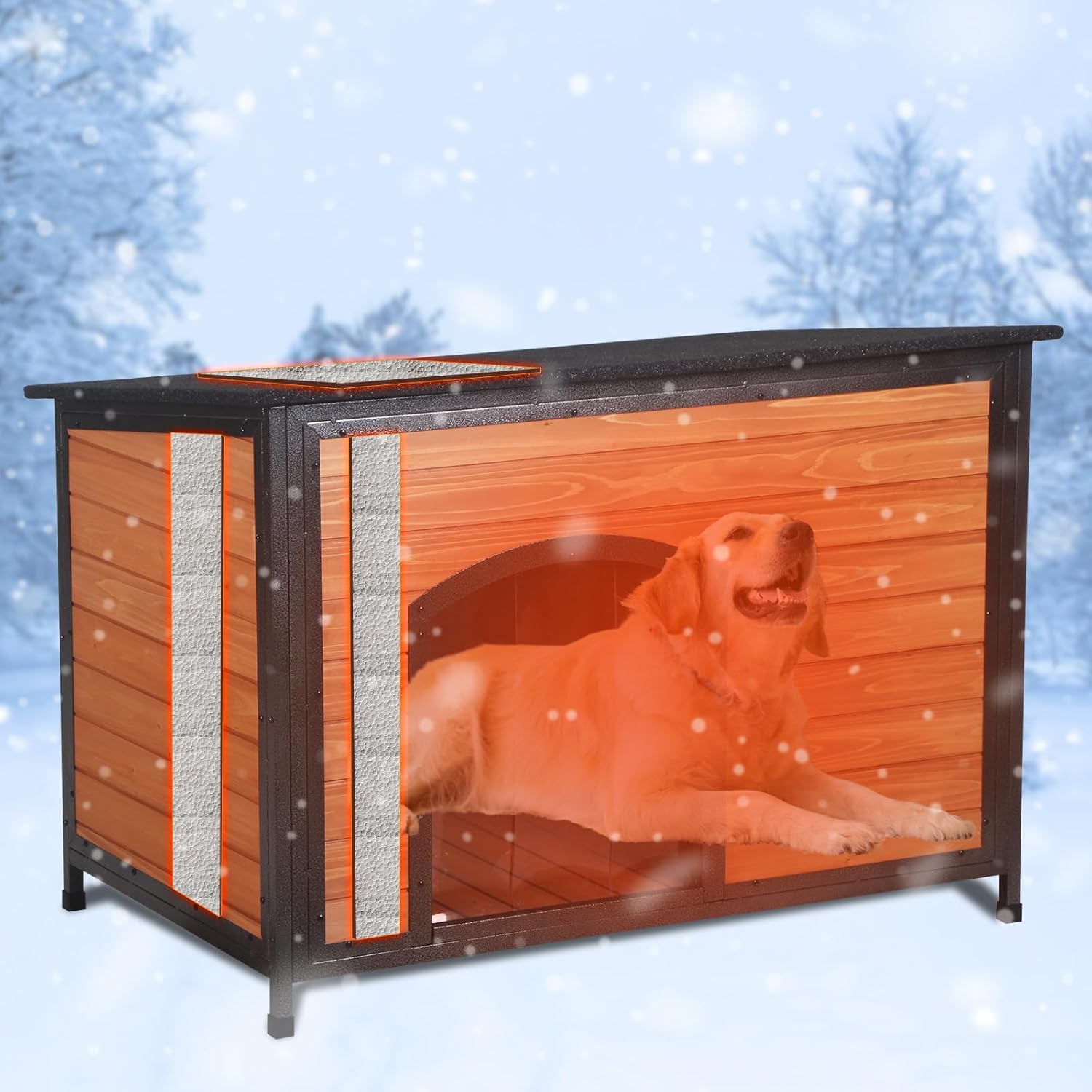
| Item model number | PD-1009 |
|---|---|
| Material Type | Insulated |
| Dog Breed Size | Large |
| Item Highlight | 6-Side Foam Insulation, Chew-Resistant Metal Frame, 220 LBS Load Capacity, Openable Top & Removable Floor |
| Included Components | Insulated Dog House |
This FunXplore insulated dog house is designed for outdoor use and focuses on weather protection and easy maintenance. The panels include 6-side foam insulation and an elevated waterproof base to keep the interior warmer and drier, while a slanted roof sheds rain and snow. A metal frame around the structure adds chew resistance and strength, and the wooden panels are rated to bear heavy loads. For cleaning the design helps: the roof opens and the floor panel is removable so you can reach the interior without disassembling the unit, and the permanently sealed foam means there are no loose liners to remove. In practice the house suits dogs that need a more weatherproof sheltered spot and owners who want less frequent deep cleaning; the open top and removable floor make spot washing and debris removal straightforward but the wooden exterior still requires occasional care and is not machine-washable. Assembly is typical for this size and you should plan for two people to move and position it outdoors.
Best for: Buyers who want an insulated outdoor dog house that is easy to access for cleaning and provides reliable weather protection for medium to large dogs.
Less Ideal for: People seeking a fully machine-washable or lightweight portable pet shelter for travel or frequent indoor moves should consider alternatives.
- Six-side foam insulation and elevated waterproof floor for better temperature control and moisture resistance
- Openable roof and removable floor speed up interior access for cleaning and spot maintenance
- Chew-resistant iron frame increases durability for dogs that chew
- Slanted roof and sealed foam construction help the house withstand rain and snow
- Wood panels and fixed insulation are not machine-washable so stains require spot cleaning
- Large and heavy unit requires two people to assemble and move
Verdict: The best heavy-duty outdoor house for owners who want rugged construction, reinforced framing, and weatherproof materials that stand up to harsh conditions and wear.
GUTINNEEN Heated Large Dog House
Best Premium Outdoor House

| Included Components | Dog House, Heating Pad, Insulated Liner |
|---|---|
| Dog Breed Size | Giant, Large |
| Material Type | Fir Wood, Metal |
| Heating Pad Temperature Range | 89–116°F |
| Weight Capacity | up to 180 lbs |
This extra-large dog house is built to keep big breeds comfortable through cold weather while standing up to outdoor use. The unit combines solid fir wood panels, a reinforced metal frame with L-shaped steel connectors, and a 6-sided insulated liner with 0.78-inch foam in walls, floor, and roof to trap heat. A UL-tested heating pad with a built-in thermostat provides automatic temperature control in the advertised 89 to 116°F range and includes a chew-resistant cord and overheat protection for safety. Practical features include an entrance curtain to block wind, an openable roof for cleaning and access, and a 360° rotatable dual stainless-steel bowl for easy refilling without opening the main door. Assembly and moving will be more demanding because of the house's weight and size, and the wood construction needs periodic maintenance if left exposed to weather long-term. For owners wanting a roomy, well-insulated shelter for one or more large dogs, this model delivers strong structural durability and an integrated heating system tailored for cold climates.
Best for: Buyers who need a roomy, rugged shelter that can reliably warm and protect large or multiple dogs through cold seasons and who prioritize structural strength over lightweight portability.
Less Ideal for: People who need a lightweight, easily portable shelter or who prefer low-maintenance all-weather plastics that do not require periodic wood care.
- Very large interior space suited to giant and large breeds
- Comprehensive 6-sided foam insulation across walls, floor, and roof for cold protection
- UL-tested heating pad with thermostat and chew-resistant cord for safer, automatic warmth
- Reinforced metal frame and L-shaped steel connectors improve chew resistance and long-term durability
- 360° rotatable dual stainless-steel bowls allow refills without opening the main door
- Heavy and bulky which makes assembly and relocation difficult
- Wood construction requires periodic exterior maintenance if exposed to harsh weather
Verdict: The best premium outdoor house for owners willing to pay more for superior insulation, craftsmanship, refined features, and longer-lasting materials that improve pet comfort and durability.
Choosing the Right Outdoor Dog House Winter: Key Factors to Consider
Insulation and Thermal Retention
Insulation determines how well a house traps a dog's body heat. Look for multi-layer walls, insulated panels, or the ability to add approved insulation inserts. A well-insulated house reduces the need for supplemental heat and helps maintain a stable internal temperature.
Insulation interacts with house volume. Smaller internal space warms faster, so match insulation to the dog's size and the typical low temperatures in your area. Also consider thermal bridging at joints and seams; continuous interior lining improves performance versus single-panel constructions.
Weatherproofing and Roof Design
Effective weatherproofing sheds snow and rain and prevents water intrusion that robs insulation value. Sloped, overhanging roofs with sealed seams and quality exterior finishes keep the interior dry. Roof venting should balance moisture control without creating drafts that lower internal temperature.
Materials that resist rot and rust extend service life in freeze-thaw cycles. Look for houses with sealed roof edges, sealed screw penetrations, and ideally a weather-resistant coating or composite material that stands up to snow and ice.
Entrance, Draft Control, and Closure Options
The entrance is a primary source of heat loss. A recessed doorway, flexible flap, or storm vestibule reduces direct wind and cold air entry. Door flaps that close reliably but allow easy exit are useful in consistently cold conditions.
Consider designs with entrance baffles or optional removable flaps for milder weather. Avoid houses with large open doorways that permit wind tunnels; small, protected openings preserve interior warmth more effectively than larger unshielded entries.
Raised Floor and Moisture Management
A raised and sealed floor prevents cold and damp transfer from the ground. Elevation keeps the base dry and reduces heat loss through conduction. Look for a floor with insulation or the ability to add a raised insulated pad.
Also evaluate how the floor deals with meltwater and paw debris. Slight internal slope or a tight seam between floor and walls helps prevent pooling. Removable floor panels simplify cleaning and inspection after winter storms.
Size and Interior Volume
Size affects comfort and thermal performance. The ideal winter house is large enough for the dog to stand, turn, and lie down comfortably but not so large that body heat is ineffective at warming the space. Measure your dog from nose to tail and add a few inches for turning.
Consider breed-specific needs such as extra bedding or a heated pad. Too-large houses trap cold air; too-small houses restrict movement and can create humidity issues from respiration. Adjustable sizing or models with interior partitions help tailor volume to seasonal needs.
Maintenance, Cleaning, and Longevity
Winter shelters face salt, mud, and moisture that accelerate wear. Removable roofs, washable liners, and materials that tolerate scrubbing make upkeep practical. Easy maintenance keeps insulation performing and reduces mold or odor buildup.
Durability matters because repairs in freezing weather are difficult. Choose constructions with replaceable parts, rust-resistant fasteners, and finishes that tolerate outdoor cleaning products. A design that simplifies snow removal from the roof or around the entrance also reduces long-term maintenance burdens.
How Much Insulation Does My Dog Actually Need in Winter?
Insulation needs depend on your local low temperatures, your dog's size and coat, and how long the dog spends outside. Short-haired or small dogs generally need more insulation than large, thick-coated breeds. If temperatures regularly drop below freezing, plan for continuous wall and floor insulation plus a draft-reducing entrance.
If your dog is only outdoors for short supervised periods, a thinner insulated house may suffice. For unsupervised overnight or extended exposure, prioritize thicker panels, sealed seams, and the ability to add bedding that retains warmth without trapping moisture.
- Short-haired dogs: higher insulation and smaller internal volume
- Thick-coated breeds: moderate insulation and ventilation to avoid overheating
- Frequent overnight exposure: prioritize sealed floors and reliable door closure
Can I Add Bedding or a Heated Pad Safely?
Bedding helps preserve warmth but can absorb moisture and lose insulating value if it gets wet. Use elevated, quick-drying bedding or replaceable pads designed for outdoor use. Avoid materials that compact and trap moisture against the dog's skin.
Heated pads can be safe if they are specifically rated for outdoor use and have proper insulation under them to prevent cold transfer to the ground. Always choose a pad with built-in thermostats and chew-resistant cords, and place it on a raised, insulated floor. Follow product-specific safety instructions for wiring and placement.
- Prefer removable, washable bedding
- Use an insulated platform under heated pads
- Check cords and connections for outdoor safety ratings
What Placement and Sheltering Tips Improve Winter Performance?
Position the house out of prevailing winds and on level, well-drained ground. A slight elevation or placing the shelter on a gravel or paver base improves drainage and reduces freeze-related mud. Avoid low spots where meltwater collects.
Provide a windbreak such as a fence, hedge, or temporary barrier on the windward side without blocking ventilation. Keep the entrance facing away from prevailing winds while allowing sunlight to reach the house during the day when possible to add passive warmth.
- Site on level, drained ground or a raised platform
- Orient entrance away from prevailing winds
- Keep area clear of snow build-up directly against the house
How Do I Maintain Ventilation Without Creating Drafts?
Balanced ventilation reduces condensation while minimizing heat loss. Small, high vents allow moist air to escape without directing cold air across the dog. Vents placed near the roofline work best because warm air rises and exits above the animal.
Avoid large opposing vents that create cross-breezes. If adding vents, make them adjustable so you can reduce airflow during extreme cold and open them slightly during milder periods to control humidity.
- Use small roofline vents for moisture control
- Make vents adjustable for seasonal tuning
- Inspect vents for ice or snow blockage regularly
Are Plastic, Wood, or Composite Houses Better for Winter?
Each material has tradeoffs. Wood offers natural insulation and a traditional look but can absorb moisture and require weatherproof finishes. Plastic is low-maintenance and resists rot but can become brittle in extreme cold and may transmit cold more readily if thin. Composite materials combine durability and insulation but vary by construction quality.
Whatever material you choose, prioritize tight seams, a sealed floor, and the ability to add or replace insulation. Consider how the material holds up to salt, repeated wetting and drying, and mechanical damage from snow removal tools.
- Wood: good thermal properties, needs weatherproofing
- Plastic: low maintenance, check panel thickness for cold performance
- Composite: balanced durability and insulation when well made
How We Chose the Best Outdoor Dog House Winter
We focused on attributes that directly affect winter performance and everyday usability. Primary evaluation criteria included insulation effectiveness, weatherproof construction, entrance design and draft control, raised and sealed flooring, and maintenance features such as removable roofs or washable linings. Durability and materials were weighted to reflect exposure to snow, ice, and road salt. We also considered size options that allow a dog to curl up without excessive air volume that cools quickly. We excluded shelters that are intended only for indoor use or that lack basic weather sealing. Products with unprotected or slatted floors, ineffective closures, or no realistic way to add insulation were not considered. The final list emphasizes realistic winter performance rather than purely aesthetic features. Safety, ease of cleaning, and installation practicality were used as tie-breakers when multiple options offered similar thermal protection.
Our full evaluation process is outlined in our review methodology.
FAQ
How warm should the interior be for my dog in freezing temperatures?
There is no single target temperature because needs vary by breed and coat. A properly insulated house should be noticeably warmer than outside air and free of drafts. If the dog appears comfortable, can curl without shivering, and bedding remains dry, the shelter is likely adequate.
Is a door flap necessary for winter use?
A door flap helps reduce drafts and retains heat, especially during wind and snow. Flaps that close reliably but allow easy exit are useful for unsupervised or overnight exposure. For brief supervised outings, a flap is helpful but not always essential.
Can I place the dog house directly on grass or snow?
Direct placement on grass or snow increases moisture and heat loss. A raised platform, pavers, or gravel pad improves drainage and reduces conductive heat loss. If temporary placement on snow is unavoidable, clear snow away and elevate the house slightly to prevent melting and refreezing at the base.
How often should I check the house in winter conditions?
Check the house after heavy storms, during prolonged cold snaps, and at least once daily if the dog sleeps there overnight. Look for snowdrifts blocking the entrance, ice buildup on vents, wet bedding, and any signs of structural damage from freezing and thawing.
Will insulation trap moisture and cause problems?
Insulation itself does not cause moisture issues if the house is properly ventilated and the insulation material is appropriate for outdoor use. Poor ventilation, wet bedding, or leaks are the usual causes of dampness. Use moisture-resistant insulation and maintain airflow near the roofline to manage humidity.
Final Verdict
Prioritize insulation, a sealed raised floor, and a protected entrance when choosing a winter outdoor dog house. Balance interior volume with your dog's size so body heat is effective, and select materials and construction that resist moisture and repeated freeze-thaw cycles. Tradeoffs include ease of maintenance versus maximal insulation and whether to add powered heating. Focus on draft control, drainage, and safe bedding choices to keep a dog warm and healthy. With those priorities, you can confidently select a shelter that performs reliably through winter.

