

If you own a german shepherd that pulls, lunges, or needs clearer leash guidance, the right pinch collar can make routine walks safer and more manageable. You want a collar that gives effective, immediate feedback without causing unnecessary harm or discomfort. This guide shortlists the top pinch collars chosen for german shepherds and explains why each type of design might suit different handling styles and training needs. The picks focus on proper sizing, material strength, and ease of use so you can choose a collar that matches your dog and training approach. Below you will find our top selections followed by practical buying criteria and answers to common questions to help you decide confidently.
Top Picks at a Glance
| Best Overall Pinch Collar for German Shepherd The top all-around choice balancing control, fit, and durability | Herm Sprenger Ultra-Plus Prong Collar 20 in |  |
| Best Budget Pinch Collar for German Shepherd A dependable low-cost option that still offers safe control | Supet Prong Training Collar Medium |  |
| Best Premium Pinch Collar Higher-end materials and finish for long-term performance and comfort | Herm Sprenger Curogan Pinch Collar 23" |  |
| Best Heavy-Duty Pinch Collar Built for strong pulls and tough, high‑stress use scenarios | Generic Heavy-Duty Prong Collar Large |  |
| Best Adjustable Pinch Collar Easy sizing and a custom fit across different neck sizes | HAESINPA Prong Training Collar S |  |
| Best Coated Pinch Collar Protective coating for reduced pinching discomfort and collar longevity | Supet Dog Prong Collar Large |  |
Herm Sprenger Ultra-Plus Prong Collar 20 in
Best Overall Pinch Collar for German Shepherd

| Material Type | Steel Chrome Plated |
|---|---|
| Neck Size | up to 19 in |
| Wire Gauge | 3.2 mm |
| Chain Length | 22 in Chain Length |
The Herm Sprenger Ultra-Plus Prong Collar is a heavy-duty training collar built for hands-on obedience work with strong or active dogs. It uses chrome-plated steel links and a patented center plate with symmetrical prong placement to give consistent, evenly distributed contact when corrections are needed, and the solid fastener plate makes attaching and removing the chain more secure than simpler link designs. Size is adjusted by adding or removing individual links so you can fine-tune fit for higher placement on the neck as recommended for training. Practical benefits include durable metal construction that withstands frequent handling and easy cleaning with a damp cloth. Important limitations are inherent to prong collars: they require proper, experienced use to avoid causing discomfort, and they are not suitable where a gentler training tool is preferred or where prong-style restraints are restricted. For obedience trainers working with strong dogs who know how to apply them, this collar delivers consistent, factory-quality hardware and predictable performance.
Best for: Buyers seeking a rugged, factory-quality training collar for supervised obedience work with strong or very active dogs who prioritize durable hardware and precise fit.
Less Ideal for: Pet owners looking for a gentle everyday collar, inexperienced trainers, or households where prong-style devices are not allowed should consider alternative training tools.
- Chrome-plated steel construction for high durability
- Solid fastener plate for a secure, easy-to-use connection
- Adjustable by adding or removing links for a custom fit
- Symmetrical prong placement provides consistent contact during corrections
- Requires knowledgeable, careful use to avoid causing pain or misuse
- Not appropriate where non-aversive training tools are preferred
Verdict: The best overall pinch collar for German Shepherd owners who want a reliable, well‑built option that balances effective training control, comfort, and long-term durability.
Supet Prong Training Collar Medium
Best Budget Pinch Collar for German Shepherd
| Material Type | Stainless Steel |
|---|---|
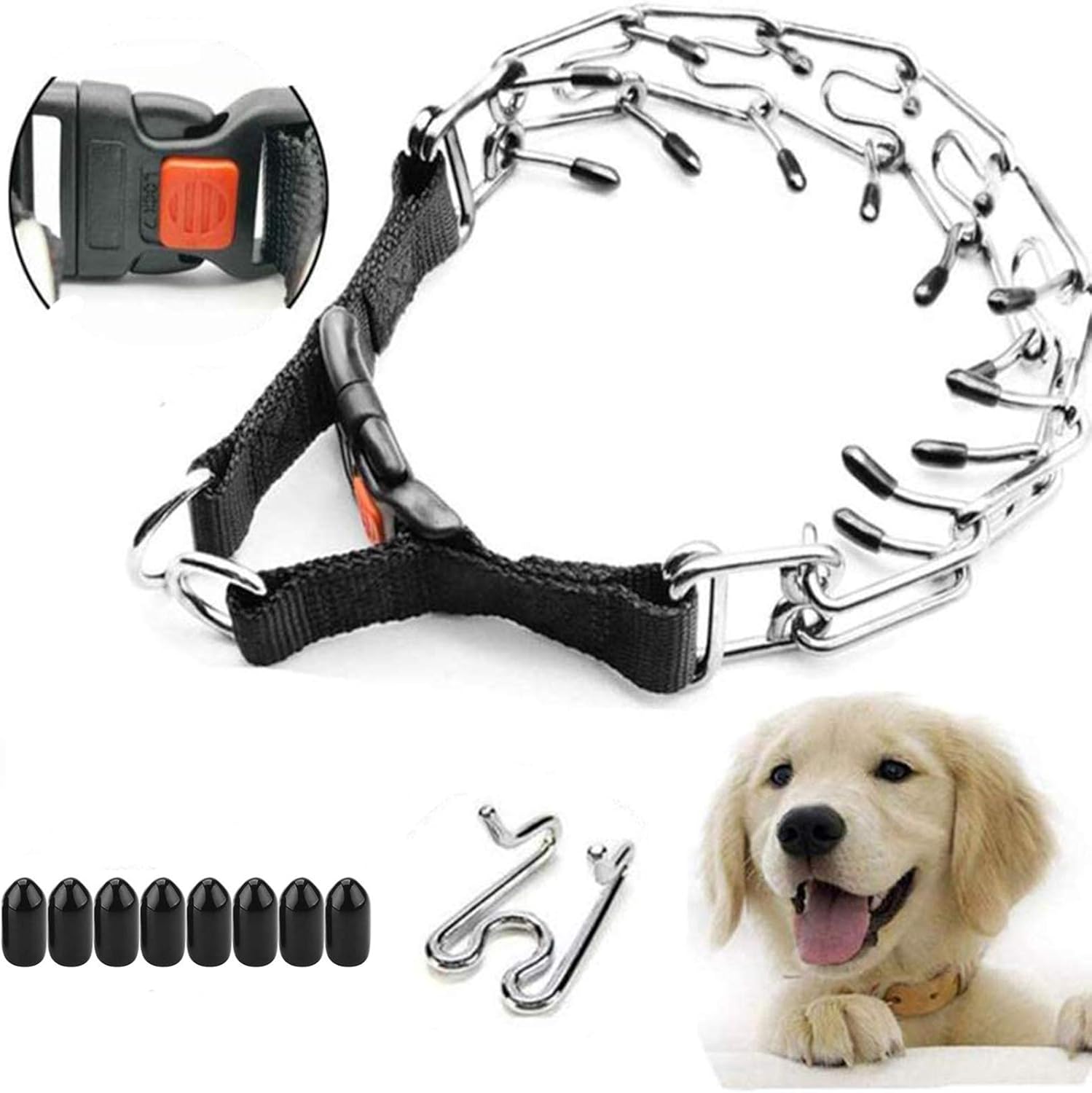
| Included Components | Links, Rubber Caps |
| Closure Type | Buckle |
| Size | M (Neck: 16"–18'') |
The Supet prong training collar is a metal-link pinch collar meant for short, supervised training sessions and daily walks to reduce pulling and improve leash communication. It fastens with a quick-release plastic buckle and uses interlocking chrome-plated links that can be removed or added to fine-tune fit; rubber caps cover the contact points for a gentler feel and can be removed if a firmer correction is needed. Use it high on the neck, just below the ears and under the jaw, for brief cueing rather than continuous wear. Practical benefits include clear, consistent feedback to the dog, durable stainless steel construction, and included extra links so the collar can be adjusted across several neck sizes. Limitations are that pinch-style collars require careful, experienced handling and supervision, and the plastic quick-release buckle, while convenient, is less robust than an all-metal closure. This collar is best treated as a training tool used intermittently rather than an everyday fastening collar.
Best for: Buyers who want an adjustable prong-style training tool that can be finely sized for different necks and used for short, supervised leash training sessions.
Less Ideal for: Owners looking for a daily, hands-off collar solution or users unfamiliar with safe prong collar handling should consider alternative no-pull harnesses or consult a trainer first.
- Adjustable metal links allow precise sizing by adding or removing links
- Rubber caps on contact points reduce sharpness for gentler guidance
- Includes extra links to fit a range of neck sizes
- Chrome-plated stainless steel construction offers strength and corrosion resistance
- Quick-release buckle makes putting on and removing the collar fast and convenient
- Plastic quick-release buckle is less durable than an all-metal closure
- Not intended for unsupervised or continuous wear and demands correct handling
Verdict: The best budget pinch collar for German Shepherds that provides effective correction and acceptable build quality for owners prioritizing cost without sacrificing basic safety.
Herm Sprenger Curogan Pinch Collar 23"
Best Premium Pinch Collar

| Length | 23 inches |
|---|---|
| Wire gauge | 3.2 millimeters |
| Material Type | Curogan |
| Included Components | Center plate, assembly chain, 2 O-rings, blunt prongs |
The Herm Sprenger Curogan Ultra-Plus pinch collar is a premium prong collar made for large dogs and marketed for breeds like German Shepherds. It is constructed from curogan, a nickel-free alloy that resists rust and is labeled anti-allergenic for dogs that react to nickel. The collar includes a center plate intended to spread pressure more evenly around the neck, blunt prongs arranged symmetrically to reduce trauma, an assembly chain, two O-rings for leash attachment, and removable links to customize fit. In practice this collar is for controlled correction training on a lead where precise, short corrections are needed; the center plate and link system make it easier to size and position correctly. Limitations include the inherent need for experienced handling and trainer guidance to avoid misuse, and the metal construction means it requires occasional cleaning and proper fitting to prevent irritation. The product is a higher-end option for owners who prioritize durable, nickel-free metal and a design meant to minimize localized pressure on the neck.
Best for: Owners who plan to use a prong collar as a training tool and want a higher-quality, nickel-free metal option built for frequent or long-term use.
Less Ideal for: Owners looking for a beginner-friendly or non-correction training option, or those who prefer entirely non-metal or harness-based solutions.
- Nickel-free curogan construction reduces risk of nickel-related skin irritation and rusting
- Center plate distributes pressure for a more even feel during corrections
- Removable links allow custom sizing for a precise fit
- Blunt, symmetrically arranged prongs designed to reduce concentrated neck trauma
- Requires knowledgeable handling and trainer guidance to use safely
- Metal construction needs cleaning and care to maintain condition
Verdict: The best premium pinch collar for owners willing to invest in superior materials, finer construction, and added comfort features for frequent use or long-term reliability.
Generic Heavy-Duty Prong Collar Large
Best Heavy-Duty Pinch Collar

| Breed Recommendation | Large |
|---|---|
| Size | 20"-21.6" |
| Included Components | 1 Dog Prong Collar |
| Closure Type | Pull On |
This heavy-duty prong collar is built to give handlers stronger, more consistent control during walks and training for large breeds like a Cane Corso. It uses interlocking stainless steel links so you can add or remove segments to fit necks in the 20"–21.6" range, and the rounded prongs have soft rubber tips to reduce sharp contact. A quick-release buckle and a stout D-ring make leash attachment and removal straightforward for frequent use, and the stainless construction resists everyday wear. In practice the collar delivers immediate, evenly distributed feedback when correcting leash pulling or attention issues, which can speed up training when used correctly. Limitations are the inherent nature of prong collars: they require correct placement and gradual introduction to avoid causing discomfort, and the fixed size range may need a different length or link set for some large dogs. This model is a straightforward, rugged option when you need reinforced hardware for strong, active breeds.
Best for: Owners of strong, large-breed dogs who need a reinforced, reliable training collar for regular walks and handling of high-drive or powerful dogs.
Less Ideal for: First-time handlers unwilling to learn proper fitting and introduction techniques or owners of dogs with neck injuries or medical restrictions.
- Stainless steel links and hardware offer durability for frequent use.
- Quick-release buckle and solid D-ring simplify on/off and leash attachment.
- Adjustable by adding or removing links to achieve a closer fit.
- Rubber-tipped prongs provide gentler contact than bare metal points.
- Size range limited to about 20"–21.6", may not fit all large-neck measurements.
- Requires handler knowledge for safe, correct placement and use.
Verdict: The best heavy-duty pinch collar for owners of powerful dogs who need reinforced links, thicker metal, and rugged construction to withstand strong, frequent pulling.
HAESINPA Prong Training Collar S
Best Adjustable Pinch Collar
| Breed Recommendation | Small, Medium |
|---|---|
| Included Components | 2 Extra Link and 20 Caps |
| Size | S (14-17" Neck, 2.25mm) |
| Closure Type | Buckle |
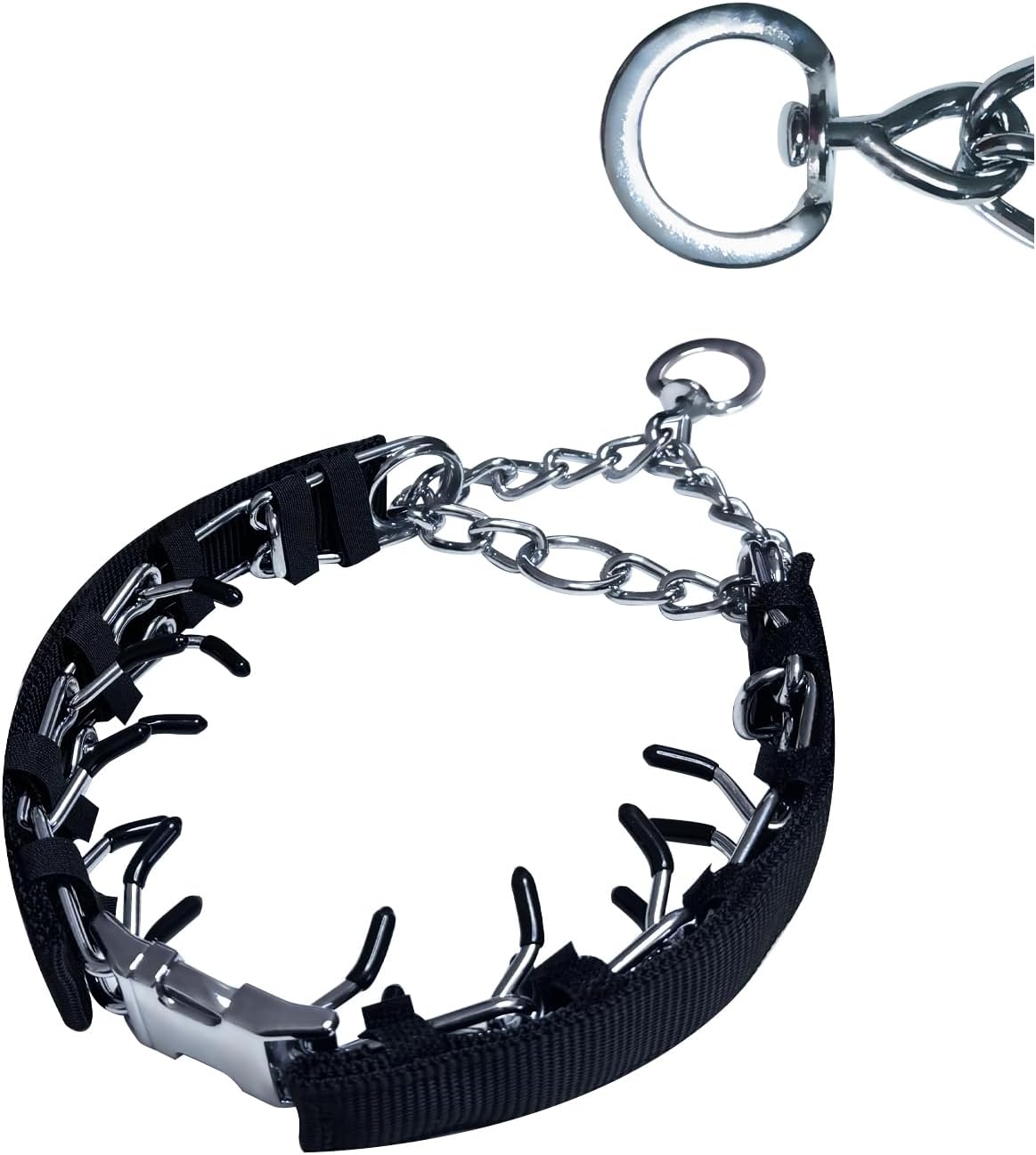
This HAESINPA prong training collar is built as an adjustable pinch-style training tool that combines a welded metal link construction with a quick-release buckle and soft rubber caps for the prongs. You size it by adding or removing links and the package includes two extra links and 20 caps so you can fine-tune fit; the neck range listed for the S size is 14 to 17 inches. The collar's welded joints and rotating D-ring aim to reduce weak points and keep the leash from twisting, while the cloth exterior and rubber covers make it look more like a normal collar and soften the prong contact so dogs tolerate it better in training sessions. Typical use is for supervised correction during leash training or to reduce pulling when combined with handler timing and commands. Limitations are that pinch collars require careful fitting and hands-on adjustment and are not a standalone solution for behavioral issues; they are intended for short, supervised training rather than continuous wear. For owners who know how to fit and use pinch collars, this model offers practical adjustability and concealment features that help with everyday training work.
Best for: Owners who prioritize precise, secure adjustments and want a training collar that can be tailored for a snug, controllable fit during supervised leash training sessions.
Less Ideal for: People seeking a hands-off or continuous-wear solution or first-time trainers uncomfortable with corrective collars should consider gentler alternatives or professional guidance.
- Welded link interface for stronger joints and resistance to breakage
- 360° rotatable D-ring reduces leash twisting during walks
- Quick-release buckle speeds on/off and looks like a regular collar when worn
- Includes extra links and 20 rubber caps for tailored fit and added comfort
- Designed for supervised training rather than continuous all-day wear
- Sizing requires manual link changes which can be fiddly without pliers
Verdict: The best adjustable pinch collar for owners who need straightforward, secure sizing adjustments to ensure a proper fit without compromising safety or control.
Supet Dog Prong Collar Large
Best Coated Pinch Collar

| Material | Nylon, Rubber, Stainless Steel |
|---|---|
| Closure Type | Buckle |
| Size | L (Neck:18''-20'') |
| Included Components | Spare link, Additional rubber tips, Protector cover |
This Supet prong collar pairs solid stainless steel links with rubber caps and an optional nylon protector to soften contact while still providing corrective control during walks or training sessions. Use it as an on-leash training aid: size the collar to the dog by adding or removing links and clip the quick-release buckle for daily use or the full chain for session-based corrections. The rubber tips smooth the link edges and the nylon cover gives a gentler option for emergency restraint, so it can reduce chafing compared with bare-prong designs. It ships with an extra link and spare rubber tips so you can fine-tune fit, and the chrome plating helps resist rust from outdoor use. Important limitations are that correct, brief application and proper fit are essential to avoid misuse, and some handlers will still prefer force-free alternatives; adjustments require simple tools like pliers and the collar is intended for training rather than continuous wear.
Best for: Owners who need a high-control training tool for a powerful breed but want softer contact points to minimize neck irritation during short, supervised training sessions.
Less Ideal for: People seeking completely force-free training methods or those who want a collar intended for constant everyday wear without removal for sessions.
- Rubber caps on each link and nylon protector reduce direct metal contact and potential neck irritation
- Stainless steel construction with chrome plating offers strength and corrosion resistance
- Includes extra link and spare rubber tips for adjustable fit
- Quick-release buckle lets you switch between training setup and a safer covered option quickly
- Requires correct sizing and occasional use of pliers to add or remove links
- Not suitable as a continuous collar or for owners inexperienced with prong training methods
Verdict: The best coated pinch collar for pet owners who want a gentler contact surface that reduces skin irritation while still delivering consistent training corrections.
Choosing the Right Pinch Collar German Shepherd: Key Factors to Consider
Correct Sizing and Fit
A properly sized pinch collar sits snugly high on the neck behind the ears without being loose enough to slide to the throat. Too small a collar can concentrate pressure on a narrow area and cause injury, while too large a collar will be ineffective and increase the risk of entanglement. When sizing, measure your dog standing and breathing normally; adjust for the thicker neck of adult german shepherds and allow for any seasonal coat changes.
Fit also influences how the collar delivers feedback. A collar that rides up or down will transfer force inconsistently, which confuses training cues and can create hotspots on the skin. Look for collars with clear sizing increments and enough links to fine-tune the circumference.
Link Design and Edge Finishing
The shape, thickness, and edge treatment of the metal links affect both function and comfort. Rounded, deburred edges distribute pressure more evenly and reduce the chance of skin chafing, while sharp edges increase the risk of cuts or hair breakage. Link thickness influences durability and how the link engages under tension; heavier links are more resistant to bending but add weight.
Consider how links articulate with one another. Smooth pivoting reduces pinching between links and prevents hair from becoming trapped. Also inspect whether the collar design includes welded or solid links for added strength.
Material and Corrosion Resistance
Materials determine both longevity and maintenance needs. Stainless steel and chrome-plated steels resist rust and hold up to exposure from moisture and sweat better than untreated metals. For dogs taken on hikes or that swim, corrosion resistance prevents structural weakening and keeps links moving freely.
Surface coatings can wear over time, so choose materials or finishes known to last. Avoid collars with visible plating gaps or poor welds because those spots are where rust and failure usually begin.
Ease of Use and Adjustability
A collar that is quick to fit and simple to adjust reduces the chance of improper setup and makes training sessions smoother. Some pinch collars allow you to add or remove links without tools, which is useful for fine-tuning fit as your german shepherd grows or as coat thickness varies seasonally.
Consider how the collar is fastened and whether the handler can operate it one-handed if needed. Simpler designs reduce user error and improve consistency in how corrections are applied during walks or training.
Training Suitability and Control Characteristics
Not all pinch collars deliver the same type or amount of feedback. Some provide a sharper, shorter correction while others give a milder, distributed pressure. Think about your training goals and your dog's sensitivity: a collar that is too harsh can shut down learning, while an overly mild collar may not stop dangerous pulling.
Look for collars that are intended for progressive corrections and that allow you to control the intensity by hand placement and leash handling. Pairing proper fitting with consistent handler technique produces the best behavioral results.
Durability and Maintenance
A durable pinch collar holds up to daily use and resists bending, rusting, and link wear. For active german shepherds that pull hard or that live outdoors part of the time, durability directly impacts safety. Check for solid construction details such as welded links, robust rivets, and finishes that withstand abrasion.
Maintenance is part of longevity. Choose collars that are easy to clean and that do not trap debris between links. Periodically inspect the collar for bent links, loose components, or corrosion and replace it if wear compromises integrity.
How Tight Should a Pinch Collar Sit on a German Shepherd?
Place the collar high on the neck just behind the ears and adjust it so it sits snugly without compressing the windpipe. When the dog is relaxed the collar should stay in position and not hang loose; you should be able to feel it against the neck but not pinch skin excessively.
During fitting, check for even contact around the neck and remove or add links to get a consistent, secure fit. If the collar slips forward toward the throat when tension is applied, it needs to be tightened or resized.
- Fit while the dog is standing and breathing normally.
- Aim for snugness without skin compression.
- Re-check fit after the dog moves or shakes its head.
When Is a Pinch Collar Appropriate Versus Other Training Tools?
A pinch collar is a tool for experienced handlers who need quick, clear corrections for strong or persistent leash pulling. It is most useful when other positive-reinforcement strategies have not produced safe, reliable leash behavior and when the handler understands how to apply brief, consistent corrections.
It is not the first option for newly socialized puppies or dogs with known neck or airway issues. For those dogs, gentler options and professional guidance are safer initial choices.
- Use with a consistent training plan and clear timing.
- Avoid as a default tool for fearful or reactive dogs without professional advice.
How to Put on and Remove a Pinch Collar Safely
Put the collar on while the dog is standing so it can be positioned high on the neck behind the ears. Unfasten any quick links, slide the collar over the head, then reattach and check the fit by adjusting link count. Ensure the leash attachment sits on the top of the neck and that the collar does not twist.
When removing, do so calmly and avoid jerking the collar off. Regularly inspect the collar before and after use for sharp edges, bent links, or other damage that could cause injury during handling.
- Practice placing and removing the collar without leash tension first.
- Inspect links and edges before each use.
Common Fitting Mistakes to Avoid with Large-breed Dogs
Owners often leave pinch collars too loose, which makes corrections inconsistent and increases entanglement risk. Another frequent mistake is placing the collar low on the throat; this can compress the airway and create danger during corrections. Over-tightening is also an issue, as it can cause unnecessary discomfort and skin abrasion.
To avoid these errors, measure carefully, follow fitting steps, and re-check fit after the dog moves or after a few minutes of walking. Replace the collar when links bend or the finish breaks down.
- Do not let the collar hang loose under the throat.
- Avoid placing the collar too low on the neck.
- Replace when structural wear appears.
How to Maintain and Clean a Metal Pinch Collar
Rinse off mud and salts after outdoor activities and dry the collar thoroughly to prevent corrosion. For deeper cleaning, use a mild detergent and a soft brush to remove debris between links, then rinse and dry. Periodically apply a light corrosion inhibitor to moving link joints if the collar will be exposed to moisture regularly.
Store the collar in a dry place away from fluctuating temperatures to preserve the finish. Regular inspections for rust or bent links will catch problems before they become safety issues.
- Rinse and dry after wet use.
- Brush debris from between links during cleaning.
- Inspect for rust and bent links monthly for active dogs.
How We Chose the Best Pinch Collar German Shepherd
To assemble this list we applied practical, dog-centered criteria aimed at owners of german shepherds who need reliable leash control. We prioritized build quality and material strength to handle the breed's power, then considered sizing range and adjustability so the collar can be fitted correctly to the neck shape and thickness typical of german shepherds. We evaluated link design and edge finishing because those features determine whether the collar provides consistent signals or creates sharp pressure points. Ease of putting the collar on and taking it off was included since handlers should be able to operate the collar quickly and safely. We also weighed training suitability, looking for collars that work with progressive correction rather than unpredictable pinching. Corrosion resistance and maintenance were considered because outdoor use and exposure to moisture affect longevity. Excluded from consideration were collars lacking clear sizing information or those with flimsy link construction that could fail under sustained force. The final list reflects products that meet these functional standards and practical durability tests relevant to german shepherd ownership.
Our full evaluation process is outlined in our review methodology.
FAQ
Can I use a pinch collar every day on my german shepherd?
Often daily use is acceptable for walks when the collar is properly fitted and the dog is acclimated, but it depends on the dog's skin sensitivity and training needs. Monitor the neck for signs of irritation and alternate with a flat collar during rest periods if you see redness or hair loss.
Will a pinch collar harm my dog if used correctly?
When used with correct fit and proper handling, a pinch collar provides short, targeted feedback rather than sustained pressure. Risk decreases when the handler applies brief, consistent cues and inspects the collar and neck regularly for signs of discomfort.
How do I choose the right link count for my dog?
Start by measuring the neck at the proper placement and choose a collar that allows fine adjustments. Add or remove links so the collar sits high and snug without pinching skin unduly, and re-evaluate after the dog moves or after a short walk to ensure it stays in position.
Are there medical conditions that make pinch collars unsafe?
Yes. Dogs with tracheal weakness, neck injuries, or certain respiratory conditions may face increased risk from neck pressure. Consult a veterinarian before using a pinch collar on a dog with known medical issues.
How can I tell if a collar is causing skin damage?
Look for redness, raw spots, hair loss, or swelling where the collar contacts the neck. If you notice any of these signs, stop using the collar and consult a veterinarian or a qualified trainer to reassess fit and training methods.
Final Verdict
Choose a pinch collar for a german shepherd by prioritizing correct fit, durable construction, and a link design that minimizes sharp pressure points. Fit the collar high on the neck, inspect it regularly for wear, and pair its use with consistent, well-timed handling so corrections are brief and predictable. Balance control needs against potential sensitivity; if you are unsure about medical or behavioral suitability, seek professional guidance. With careful sizing and responsible use, a properly selected pinch collar can be an effective tool for improving leash manners in german shepherds.

