

After surgery, keeping your dog from licking, biting, or rubbing at incisions is essential for smooth healing. The right post surgery collar helps protect surgical sites, prevents infection, and reduces the chance of re-injury while your pet rests and recovers. This guide highlights seven shortlisted post surgery collars chosen for common recovery needs and explains what matters when you pick one for your dog. Read on to understand the factors we considered, from secure fit to material and ease of use, so you can choose a collar that supports safe, comfortable healing.
Top Picks at a Glance
| Best Overall Post Surgery Collar The top all-around pick that suits most recovery needs | BENCMATE Inflatable Dog Collar Medium |  |
| Best Budget Post Surgery Collar A low-cost option that still protects and fits reliably | Grand Line Donut Inflatable Collar Small |  |
| Best Adjustable Post Surgery Collar Offers wide range of sizing and precise fit control | Supet Dog Recovery Collar |  |
| Best Lightweight Post Surgery Collar A minimal, low-profile design that reduces bulk and fatigue | Loflaze Inflatable Dog Cone Collar |  |
| Best Heavy-Duty Post Surgery Collar Built from tougher materials for chewers and active dogs | Cover Geny Plastic Dog Recovery Cone L |  |
| Best Easy-Clean Post Surgery Collar Materials and construction that withstand frequent washing and quick cleanup | Didopet Dog Recovery Collar XL |  |
| Best Premium Post Surgery Collar Higher-end construction and comfort features for fussier owners | Didopet Clear Dog Cone XL-Long |  |
BENCMATE Inflatable Dog Collar Medium
Best Overall Post Surgery Collar

| Material Type | Polyvinyl Chloride (PVC) |
|---|---|
| Closure Type | Zipper |
| Fit Type | Snug Fit |
| Neck Size | 12 inches |
The BENCMATE inflatable dog collar replaces bulky Elizabethan cones with a soft, donut-shaped barrier that protects surgical sites, rashes, and other injuries while letting pets see, eat, and move more freely. It is used by slipping the everyday collar through the inner loop, then inflating the PVC air bladder to a comfortable firmness and securing the outer cover with the zipper and hook-and-loop closure. Key features include a plush or anti-stick outer fabric option, an inner fixation strap to prevent slipping, and a zipper for removing the cover for cleaning. In practice the collar is much less intrusive than a rigid cone and is easier for most dogs to tolerate during recovery, and deflates for compact storage when not in use. Limitations are that very flexible dogs or those with long snouts may still reach extremities, the PVC bladder can lose air in extreme temperature changes, and it does not offer rigid, full-face protection for dogs that persistently try to remove barriers.
Best for: Buyers who want a comfortable, low-stress recovery collar that balances protection with the pet's ability to eat, sleep, and move during healing.
Less Ideal for: Owners whose pets repeatedly try to bite or reach wounds despite soft barriers or who need a completely rigid, full-face shield for aggressive chewers should consider a hard cone alternative.
- Comfortable soft donut design that preserves vision and mobility
- Inner loop/strap allows use with the pet's regular collar to prevent slipping
- Removable outer cover and zipper make cleaning easier
- Inflatable bladder deflates for compact storage and transport
- May not fully block access to paws or long-snout pets
- Air bladder can be affected by temperature-related pressure changes
Verdict: The best all-around post surgery collar that balances comfort, protection, fit adjustability, and durability for typical canine post-op recovery.
Grand Line Donut Inflatable Collar Small
Best Budget Post Surgery Collar

| Closure Type | Hook & Loop |
|---|---|
| Fit Type | Custom Fit |
| Water Resistance Level | Not Water Resistant |
| Material Type | PVC, Velvet |
This inflatable donut collar is a soft, low-profile alternative to a rigid Elizabethan cone for post-neuter recovery. It inflates to form a padded ring around the neck that blocks access to surgical sites while leaving the pet's forward view unobstructed, so eating, drinking, and basic movement remain easier. The PVC air bladder is covered in velvet for comfort and simple wiping, and hook-and-loop straps plus three inner tabs let you secure it to the pet's regular collar for a more stable fit. Because it is lightweight and cushioned it is better tolerated by many cats and small to medium dogs than hard cones. Limitations include the lack of water resistance and less protection for pets that paw vertically at their abdomen or have very long snouts, so sizing up or choosing a rigid cone may be needed in those cases. For budget-conscious owners this collar gives effective basic protection with a comfortable, compact design.
Best for: Pet owners seeking a low-cost, comfortable recovery option that still prevents most licking after neuter and prioritizes ease of eating and wearing for small to medium pets.
Less Ideal for: Owners of large, long-snouted dogs or pets that aggressively paw at their abdomen should consider sturdier or full-coverage cones instead.
- Soft, padded donut design improves comfort versus hard plastic cones
- Keeps forward vision and access to food and water for easier daily care
- Adjustable hook-and-loop strap and inner tabs allow a more secure, custom fit
- Velvet cover is pleasant for pets and easy to wipe clean
- Lightweight construction is easier for small and medium pets to wear for longer periods
- Not water resistant so it can be damaged if soaked
- Provides less barrier for long-snouted breeds or pets that can reach wounds by pawing vertically
Verdict: The best budget post surgery collar for owners who need dependable post-op protection and reasonable comfort without spending extra.
Supet Dog Recovery Collar
Best Adjustable Post Surgery Collar

| Material Type | Polyvinyl Chloride (PVC) |
|---|---|
| Closure Type | Hook & Loop |
| Fit Type | adjustable |
| Neck Size | 13.5 inches |
The Supet Dog Recovery Collar is a lightweight PVC Elizabethan cone that keeps pets from accessing wounds during healing. It fastens with hook-and-loop straps so you can tighten or loosen the fit quickly, and the padded fabric edge reduces chafing against the neck. Typical use is for post-surgery recovery, dermal treatment, or any situation where you need to stop licking and biting; measure your pet and pick the next size up if they are near the maximum measurements. The collar is water resistant level "Not Water Resistant," so it should be kept dry and wiped clean rather than submerged, and its PVC construction makes it easy to clean and reasonably durable. Because the closure is adjustable, it suits pets with changing neck girths or those that need a snug, secure fit to prevent removal. The main compromises are that it is not waterproof and the rigid PVC shape can still interfere with peripheral vision and mobility for some dogs, so monitoring and short acclimation sessions help pets adjust.
Best for: Pet owners who need a collar that can be tightened or loosened to match unusual or changing neck measurements and who prioritize a secure, adjustable fit during recovery.
Less Ideal for: Owners who need a waterproof or fully flexible recovery option for frequent outdoor or bathing use should consider different designs.
- Adjustable hook-and-loop closure for custom neck fit
- Padded fabric edge reduces rubbing and improves comfort
- Lightweight PVC construction is easy to clean and carry
- Available in sizes covering small to large breeds for better fit options
- Not water resistant so it should be kept dry and not used for swimming or baths
- Rigid cone shape can limit peripheral vision and mobility for some pets
Verdict: The best adjustable post surgery collar for dogs with unusual sizes or fluctuating neck measurements, allowing secure, customized fit during recovery.
Loflaze Inflatable Dog Cone Collar
Best Lightweight Post Surgery Collar
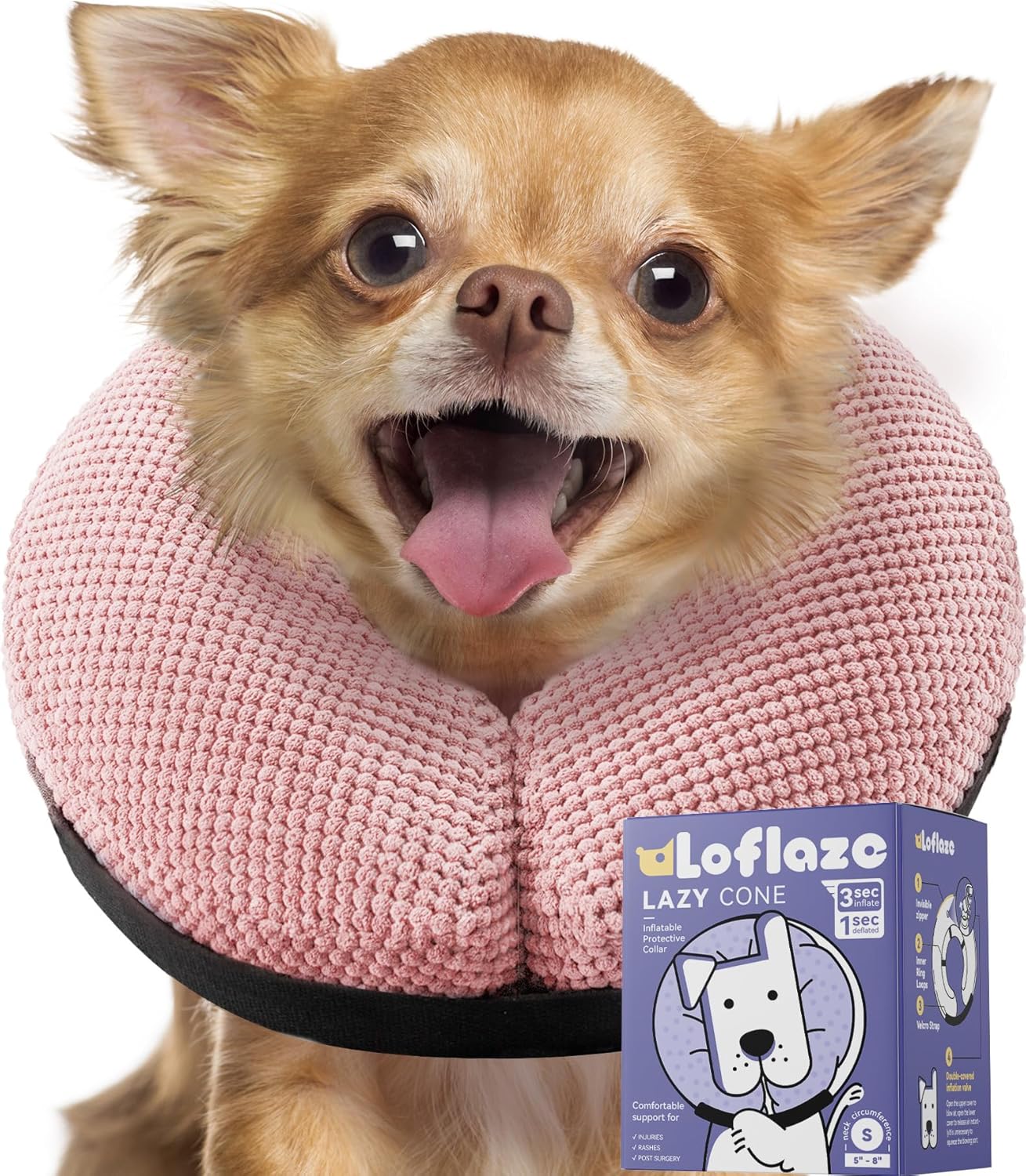
| Closure Type | Zipper |
|---|---|
| Fit Type | Custom Fit |
| Water Resistance Level | Not Water Resistant |
| Material Type | Cotton |
| Neck Size | 8 inches |
The Loflaze inflatable dog cone is a low-profile, donut-style recovery collar designed to keep dogs and cats from licking or biting wounds after neuter surgery. It inflates to create a cushioned ring around the neck and secures with a zipper cover and Velcro-adjustable strap so you can fine-tune the fit and air volume. The outer cover is a soft 3D cotton fabric that unzips for machine washing, which helps with post-op cleanliness. Because it does not block forward vision or impede eating and drinking, pets can move, rest, and play more naturally than with a rigid Elizabethan cone. Important limitations are that it is not water resistant and the inflatable bladder can be punctured by sharp teeth or rough surfaces, so it requires supervision and occasional reinflation. The collar is best used for preventing access to the neck and torso after routine neuter recovery rather than for protecting larger flank or abdominal areas that need a wide rigid barrier.
Best for: Owners who want a comfortable, low-profile post-neuter collar that minimizes stress and lets their pet move, eat, and rest more normally while preventing licking.
Less Ideal for: Pets that chew aggressively, unsupervised outdoor dogs, or cases needing a wide rigid barrier for abdominal protection should choose a sturdier cone alternative.
- Low-profile donut shape preserves forward vision and lets pets eat and drink normally
- Soft 3D fabric cover unzips for machine washing to keep the collar sanitary
- Adjustable air volume and Velcro strap allow a custom, cushioned fit
- Inner high-density air bladder reduces leaks and provides padding compared with rigid cones
- Not water resistant so it should not be used for bathing or outdoor wet conditions
- Inflatable design can be punctured by sharp teeth or rough surfaces and needs monitoring
Verdict: The best lightweight post surgery collar for pets that need protection but struggle with heavy or cumbersome recovery gear.
Cover Geny Plastic Dog Recovery Cone L
Best Heavy-Duty Post Surgery Collar

| Material Type | Plastic, Polyester |
|---|---|
| Closure Type | Hook & Loop, Drawstring |
| Fit Type | Custom Fit |
| Neck Size | 18.1 inches |
This recovery cone pairs a rigid PE board shell with a soft, breathable polyester mesh lining to give dogs protective coverage without the harsh edges of a traditional hard cone. It fastens with wide hook-and-loop straps plus an adjustable drawstring lock so you can tighten the fit to resist slipping or removal while still easing pressure on the neck. The water‑resistant exterior wipes clean and the soft neck contact area reduces chafing during longer wear. In real-world use it works best for active dogs who need a more escape‑resistant option than a flimsy fabric collar but who do not tolerate fully rigid cones. The collar prevents licking and biting of wounds effectively, but sizing matters—measure neck circumference and depth carefully because a too-small cone will fail to block access and a too-large one can be awkward. Some dogs might still figure out how to reach certain spots or try to chew the edge, so supervision and occasional adjustments are recommended.
Best for: Buyers who need a tougher-than-average recovery collar for strong, active dogs that try to escape or remove softer cones and who prioritize a balance of protection and comfort.
Less Ideal for: Owners seeking an ultra-rigid, medical‑grade cone for dogs that aggressively chew through plastic or for very small breeds where this size and depth will be oversized.
- Rigid PE board shell for stronger protection than soft fabric cones
- Breathable mesh lining and soft neck contact to reduce irritation
- Wide hook-and-loop plus drawstring lock creates an escape-resistant fit
- Water-resistant surface wipes clean easily for simple maintenance
- Not fully rigid like traditional plastic cones so very determined chewers may still damage it
- Proper fit requires careful measurement and occasional readjustment
Verdict: The best heavy-duty post surgery collar for dogs that are strong, active, or prone to chewing and need extra durability during healing.
Didopet Dog Recovery Collar XL
Best Easy-Clean Post Surgery Collar

| Closure Type | Hook & Loop, Zipper |
|---|---|
| Fit Type | Custom Fit |
| Water Resistance Level | Water Resistant |
| Neck Size | 20.5 inches |
This Didopet recovery collar is a sturdier clear cone designed to keep dogs from licking or biting wounds while allowing good peripheral vision. It is typically used after surgeries, for hot spots, or skin injuries and installs with hook-and-loop straps, a zipper extension for extra length, and four elastic neck rings for a custom fit. The detachable zipper extension is useful for tailoring coverage to the wound and for quickly removing it at mealtimes, and the padded neck edge reduces rubbing for longer wear. The reinforced, crack-resistant plastic wipes clean easily compared with fabric recovery suits and the water-resistant build stands up to damp conditions. Expect a short break-in period while your dog adjusts and keep the hook-and-loop free of hair to maintain a secure fit, and be careful not to force the zipper when changing the extension. For households that need frequent sanitation, the cone's hard surface and simple closures make cleaning fast and practical, though very anxious chewers may still damage the plastic without supervision.
Best for: Households that need a recovery collar they can sanitize often and tailor quickly to different wounds, especially for large-breed dogs recovering from surgery or skin injuries.
Less Ideal for: Owners who prefer soft fabric or inflatable collars for maximal chew resistance or who need a collar that never requires manual cleaning.
- Reinforced crack-resistant plastic wipes clean quickly and resists damage from moisture
- Detachable zipper extension lets you adjust cone length for different wound locations or remove for meals
- Clear design preserves 360° vision to reduce anxiety and accidental collisions
- Padded neck edge and elastic rings help maintain comfort and a stable fit during extended wear
- Hook-and-loop fasteners can collect hair and require regular cleaning to stay effective
- Plastic construction may be vulnerable to determined chewers if not supervised
Verdict: The best easy-clean post surgery collar for households that need frequent washing or fast sanitation after accidents during recovery.
Didopet Clear Dog Cone XL-Long
Best Premium Post Surgery Collar

| Fit Type | Custom Fit |
|---|---|
| Closure Type | Hook & Loop |
| Water Resistance Level | Water Resistant |
| Neck Size | 20.5 inches |
This Didopet clear dog cone is a heavy-duty recovery collar meant to keep large dogs from licking or biting wounds while staying relatively comfortable. It uses reinforced, scratch-resistant plastic for visibility and durability and includes a soft neck pad to reduce chafing during long wear. The cone converts between extended and folded modes so you can shorten it for mealtimes, and elastic loops let you thread the dog's regular collar through for added security. Hook-and-loop fasteners with adhesive strips let you fine-tune the circumference and lock the fit. In practice the cone gives good peripheral vision compared with opaque cones and the fold-in design makes feeding and drinking easier without removing the collar. Expect some creasing from shipping that flattens with weight, and very determined chewers may still test the closure, so supervision is recommended. This model is sized for giant breeds and is best when owners measure carefully before ordering.
Best for: Owners of large or giant-breed dogs who prioritize stronger materials, a refined fit, and added comfort during recovery and are willing to invest in a higher-quality collar for smoother healing.
Less Ideal for: Owners of small or toy breeds looking for a lightweight or inflatable option should consider smaller, softer alternatives designed for petite dogs.
- Reinforced transparent plastic for better durability and full peripheral vision
- Padded neck cushion for reduced chafing during extended wear
- Adjustable depth with fold-in design allows easier eating and short-term shortening
- Elastic loops enable threading the dog’s collar for extra security
- Hook-and-loop closure with adhesive strips lets you customize the neck circumference
- Not chew-proof for determined dogs and requires supervision
- May arrive creased from shipping and benefits from flattening before use
Verdict: The best premium post surgery collar for owners willing to pay more for superior materials, refined fit, and enhanced comfort features during recovery.
Choosing the Right Post Surgery Collar Dog: Key Factors to Consider
Fit and Adjustability
A correct fit is the foundation of effective postoperative protection. A collar must sit at the right height to block a dog's reach to the incision without forcing the neck into an awkward angle. Adjustable straps, multiple sizing options, and easy-to-use fasteners help you tune the collar for body shape changes caused by swelling or bandages.
Poor fit increases the risk of the collar shifting or allowing access to the wound, so look for options that offer clear sizing guidance and micro-adjustment where possible. Think about how the collar interacts with other recovery items such as bandages, harnesses, or medication wraps.
Protective Coverage
Coverage determines how effectively the collar prevents licking or chewing at surgical sites. Some collars provide full circumferential barriers while others rely on a rigid flange or broad cone to block access. The shape should account for common incision locations on the torso, limbs, and head.
Consider whether the collar's profile will remain effective when your dog lies down, turns, or tries to reach the wound at different angles. Good coverage minimizes repeated interference with the incision and reduces the need for constant supervision.
Comfort and Padding
Because dogs often wear a postoperative collar for days to weeks, comfort is crucial. Soft padding at pressure points, breathable fabrics, and ergonomic shapes reduce chafing and skin irritation. Collars that allow a natural resting position for the head and neck help maintain normal sleeping and eating behavior.
Assess padding durability — some soft materials compress quickly and lose protective spacing — and whether the collar's interior will trap heat or moisture. Comfortable collars make it easier for pets to tolerate the required wear time, reducing stress for both the dog and the owner.
Durability and Cleaning
Recovery periods can be messy, with bandage soiling, drool, and occasional vomit. Materials that resist staining and stand up to repeated cleaning are more practical. Rigid plastics should resist cracking, and fabrics must tolerate regular washing without losing shape or padding.
Evaluate how easy it is to clean the collar in place and whether components are removable for washing. Durable collars protect the investment of time and reduce the likelihood of needing a replacement mid-recovery.
Visibility and Safety Features
Visibility matters for both daytime supervision and low-light safety. Reflective trim or bright colors help you spot the dog quickly and can reduce accidental collisions in busy homes. Safety features should also include secure fastenings that resist accidental release while allowing a caregiver to remove the collar when needed.
Avoid collars with small detachable parts that could become choking hazards. Consider how the collar behaves if the dog becomes entangled with furniture or a crate; breakaway features are not usually recommended for postoperative use because they can defeat protection, so weigh tradeoffs carefully.
Impact on Eating, Drinking, and Daily Care
A collar should block access to wounds without preventing basic care activities. Some designs obstruct bowls or make grooming and medicating more difficult. Look for collars that allow a dog to eat and drink with minimal adjustment, or that are compatible with raised feeders.
Think about how you will perform routine checks and apply topical treatments. Collars that are quick to remove and replace, or that provide a way to access the incision without full removal, simplify follow-up care and reduce stress for the animal.
How Do I Measure My Dog for a Post Surgery Collar?
Measure neck circumference where a collar normally sits, and double-check the distance from the base of the neck to the tip of the nose to estimate needed extension. Many manufacturers provide a size chart that combines neck girth with length or overall weight ranges; use both measurements when possible.
If your dog has bandages or swelling, measure with those in place so the collar will fit over them. When between sizes, choose the larger option and rely on adjustability to fine-tune the fit rather than forcing a tight fit that could cause discomfort.
- Measure neck at the widest point and add the recommended clearance for comfort.
- Measure nose-to-base distance to estimate cone or flange length.
- Allow extra room for bandages or abrupt size changes during recovery.
Can My Dog Eat and Drink While Wearing a Post Surgery Collar?
Many collars are designed to permit eating and drinking without removal, but the specific outcome depends on collar shape and bowl height. If your dog struggles to reach food or water, a raised bowl or short-term supervised removal during meals can be used.
Try offering water before deciding a collar is unsuitable; some dogs adapt quickly. For dogs that cannot drink comfortably, opt for a design with a shorter forward profile or plan to provide supervised breaks to ensure hydration and nutrition.
- Test water access immediately after fitting the collar.
- Use raised feeders or shallow bowls to reduce interference.
- Supervised short removals are acceptable when necessary for feeding, provided you watch the incision closely.
What to Do if Your Dog Keeps Escaping or Dislodging the Collar
If the collar shifts or comes off, first confirm the fit and fastening method are appropriate for your dog's activity level. Replaceable or additional fasteners can improve security, and some collars include secondary straps to prevent rotation.
Behavioral factors matter. Dogs that are particularly determined may need additional supervision or temporary confinement to reduce movement and repeated attempts to remove the collar. If problems continue, consult your veterinarian about alternative protective strategies that still keep the wound covered.
- Check fastener integrity and tighten adjustments as needed.
- Use temporary supervision or restricted movement to discourage removal.
- Consult a veterinarian if repeated escape attempts happen despite secure fit.
How Long Should a Dog Wear a Post Surgery Collar?
Wear time depends on the surgery type and your veterinarian's guidance, but many dogs need consistent protection for 7 to 14 days after minor procedures and longer for more involved surgeries. The key is to keep the incision undisturbed until it is healed enough to resist licking or chewing.
Follow-up checks and veterinary advice should determine when it is safe to stop using the collar. If you notice redness, swelling, or persistent licking beneath the collar, extend protection and contact your veterinarian for evaluation.
- Follow vet instructions for specific healing timelines.
- Monitor incision daily for signs of interference or infection.
- Extend collar use if the dog keeps reaching the wound or if healing is slow.
Are Soft Collars Better than Rigid Cones for Recovery?
Soft collars can be more comfortable and easier for a dog to navigate around the home, but they sometimes provide less reliable coverage for quick or flexible dogs. Rigid cones often give a clearer barrier that prevents reach but can be less comfortable and may interfere more with sleeping and eating.
Choose based on your dog's tolerance and the incision location. For head and neck surgeries, a rigid barrier may be necessary, while soft options may suffice for less accessible torso incisions. Prioritize a solution that the dog will tolerate for the required duration of healing.
- Soft collars: higher comfort, potentially lower restriction.
- Rigid cones: stronger prevention of access, may impede daily activities.
- Match collar type to incision location and the dog's behavior.
How We Chose the Best Post Surgery Collar Dog
We selected products that address the core goals of postoperative care: preventing incision access, promoting comfort during recovery, and remaining secure during normal activity. Evaluation prioritized fit range and adjustability so collars work across common dog sizes and shapes. Material and construction were judged for a balance of protective coverage, breathability, and durability to stand up to typical wear during a recovery period. Ease of use factors included how quickly a collar can be put on or removed, whether it allows for necessary veterinarian checks, and whether it interferes with eating, drinking, or resting. Safety considerations such as visibility, presence of soft edges, and secure fastenings were also weighed. We excluded collars that are primarily decorative or intended for short-term novelty use rather than sustained postoperative protection. Items that could not demonstrate adequate coverage of typical incision locations or that relied on unproven attachment methods were not considered. The final shortlist favors practical designs that meet common veterinary guidance and that balance protection with daily comfort for both dog and owner.
Our full evaluation process is outlined in our review methodology.
FAQ
Will a post surgery collar stop my dog from scratching all wounds?
Often it will reduce or prevent direct licking and chewing, but collars are not perfect. Dogs can sometimes reach areas depending on collar fit and flexibility. Monitor the incision and adjust the fit or type of collar if you still see persistent access.
Can I leave a collar on my dog overnight?
Generally yes. Most veterinarians recommend continuous wear, including overnight, to prevent unchecked licking. Ensure the collar is comfortable and does not cause pressure sores; check the skin daily and reposition or pad pressure points if needed.
Is it safe to let my dog wear a collar in a crate or carrier?
Crate use with a postoperative collar can be safe if the crate provides enough room to prevent snagging. Avoid tight crates or ones with protruding bars that could catch the collar. Supervise initial crate sessions and remove the collar temporarily only if you can watch the dog closely.
How do I prevent rubbing or chafing from the collar?
Inspect the collar edges and interior for hard seams or exposed fasteners and add soft padding in problem areas. Keep the skin clean and dry, and remove the collar briefly for short, supervised checks if the skin shows irritation. If chafing persists, try a different material or consult your veterinarian.
Can puppies use the same postoperative collars as adult dogs?
Puppies can use postoperative collars but you need to pay close attention to proper sizing and growth-related fit changes. Choose a collar with fine adjustability and check fit more frequently, since puppies change size quickly and bandage needs may alter recommended clearance.
Final Verdict
Selecting the right post surgery collar for a dog is a balance between reliable protective coverage and everyday comfort. Prioritize a collar that fits well, stays in place during normal activity, and allows you to care for the incision without constant struggle. Expect tradeoffs: more rigid designs block access better but may reduce comfort, while softer options are easier to live with but sometimes less secure. Use the factors in this guide to weigh fit, coverage, comfort, and cleaning needs against your dog's behavior and the surgery type. When in doubt, follow veterinary guidance and choose the option that your dog tolerates consistently, since consistent protection is the most important element for a smooth recovery.

