

Feeding a 1-month-old puppy sets the foundation for healthy growth, immune development, and early food tolerance. At this age puppies are transitioning from exclusive nursing to supplemental feeding, so what you offer must be easy to digest, calorie-dense enough to support rapid growth, and properly balanced for developing organs. This guide shortlists seven top puppy food options designed specifically for 1-month-old puppies. We evaluated each choice against feeding texture, nutrient profile, and safety considerations so you can pick an option that helps your puppy thrive during this critical early stage. Read on for practical guidance on introducing and managing meals for a one-month-old pup.
Top Picks at a Glance
| Best Overall Puppy Food The best all-around formula for most 1-month-old puppies | Blue Buffalo Life Protection Puppy 5 lb |  |
| Best Budget Puppy Food A low-cost puppy formula that still meets basic growth needs | Pedigree Puppy Dry Dog Food 3.5 lb |  |
| Best Premium Puppy Food Higher-end formulations with superior ingredients and targeted nutrition | ORIJEN Puppy Dry Dog Food 4.5 lb |  |
| Best High-Calorie Puppy Food Higher-calorie formulas to support rapid growth and energy needs | Purina Pro Plan Large Breed Puppy |  |
| Best High-Protein Puppy Food Protein-forward recipes to support muscle development and growth | Diamond Puppy High Protein 6lb |  |
| Best Grain-Free Puppy Food Formulas without grains for owners seeking grain-free options | Open Farm Grain Free Puppy Food Salmon |  |
| Best Easy-to-Digest Puppy Food Gentler recipes formulated for sensitive tummies and small digestive systems | Pet-Ag PetLac Puppy Powder 10.5 oz |  |
Blue Buffalo Life Protection Puppy 5 lb
Best Overall Puppy Food

| Flavor | Chicken & Brown Rice |
|---|---|
| Age Range Description | Puppy |
| Crude Protein | 27% min |
| Crude Fat | 16% min |
| DHA | 0.1% min |
Blue Buffalo Life Protection Formula Chicken & Brown Rice Puppy is a grain-inclusive dry kibble designed to support healthy growth and development in puppies. It uses real deboned chicken as the first ingredient and adds chicken meal, fish meal, and fish oil to boost protein and omega-3 content, while brown rice, oatmeal, and barley provide digestible carbs for steady energy. The formula includes DHA and ARA to support brain and eye development and LifeSource Bits, a blend of antioxidants, vitamins, and minerals processed at lower temperatures to preserve potency. Practical benefits include joint support from glucosamine and chondroitin, natural prebiotic fiber for digestion, and a recipe free of corn, wheat, soy, and artificial preservatives. As a typical everyday puppy food it balances nutrition and palatability for most breeds, though it is a grain-containing option so it is not suited to owners specifically seeking grain-free diets or limited-ingredient recipes for dogs with complex food sensitivities.
Best for: Puppy owners who want a complete, veterinarian-formulated everyday food that balances growth nutrients, digestibility, and ingredient quality for most breeds.
Less Ideal for: Owners seeking a grain-free formula, a minimal-ingredient diet for diagnosed food allergies, or therapeutic veterinary prescriptions should look elsewhere.
- Real deboned chicken listed first for high-quality animal protein
- Includes DHA and ARA plus choline to support brain and eye development
- LifeSource Bits provide a targeted mix of antioxidants, vitamins, and minerals
- Contains natural prebiotic fiber to support digestion and stool quality
- Formulated without corn, wheat, soy, or artificial flavors and preservatives
- Contains multiple grains so not appropriate for grain-free or strict elimination diets
- Includes a long ingredient list that may be unsuitable for puppies with specific single-ingredient sensitivities
Verdict: The best overall puppy food delivers balanced nutrition, appropriate calories, and digestibility for 1-month-old puppies while supporting growth and easy home feeding.
Pedigree Puppy Dry Dog Food 3.5 lb
Best Budget Puppy Food

| Flavor | Chicken & Vegetable |
|---|---|
| Age Range Description | Puppy |
| Item Form | Dry Kibble |
| Unit Count | 56 Ounce |
| Animal Food Nutrient Content Claim | High Protein, No Added Sugar |
Pedigree Puppy Dry Dog Food is a straightforward, budget-friendly puppy kibble made from chicken-based protein, grains, and added vitamins and minerals to support growth. You would typically use it as a daily staple while transitioning a young dog from weaning to adult food, following the feeding guide on the package to match your puppy's weight and age. The formula emphasizes high-quality protein sources for muscle development and includes 36 vitamins, minerals, and amino acids intended to support immune health, brain development, and bone strength. In practice this means an owner gets a complete and balanced commercial diet that is easy to portion and serve dry or softened with water for very young pups. Ingredient-wise it contains common commodity grains and by-product meals rather than premium single-source meats, so it delivers required calories and nutrients at a lower cost but not the cleanest ingredient panel. Expect good availability and consistent kibble size, but owners seeking grain-free, novel proteins, or limited-ingredient formulas will need to look elsewhere.
Best for: Value-conscious puppy owners who need an affordable, complete puppy kibble that supports growth and daily feeding routines.
Less Ideal for: Owners who require grain-free, novel-protein, or limited-ingredient veterinary diets for food sensitivities should consider specialty formulas instead.
- Formulated specifically for puppies with nutrients to support growth and immune health
- Contains high-protein sources to support muscle development
- Includes 36 vitamins, minerals, and amino acids for complete and balanced nutrition
- Easy-to-follow feeding guide for age and weight makes portioning simple
- Uses ingredient list with grains and by-product meals rather than single-source premium proteins
- Not suitable for owners seeking grain-free or limited-ingredient diets
Verdict: The best budget puppy food provides essential nutrients and adequate calories for early growth at a lower price while maintaining acceptable ingredient quality and digestibility.
ORIJEN Puppy Dry Dog Food 4.5 lb
Best Premium Puppy Food

| Flavor | Puppy Recipe |
|---|---|
| Item Form | Dry Kibble |
| Unit Count | 72 Ounce |
| Age Range Description | Puppy |
| Animal Food Diet Type | Raw |
ORIJEN Puppy is a grain-free dry dog food designed to deliver high-protein, nutrient-dense nutrition for growing puppies. It uses an 85 percent fresh-or-raw animal ingredient approach with wholeprey components such as muscle, organs, and bones so pups get a concentrated source of amino acids, vitamins, and minerals without relying on synthetic additives. Typical use is twice-daily feeding guided by the brand chart, and the kibble includes a freeze-dried coating for added palatability. Practical benefits include a protein-forward recipe to support muscle and brain development, small kibble size aimed at puppies, and added functional ingredients for digestive and immune support. Limitations to consider are the grain-free formulation itself, which may not be necessary for all puppies and can be higher in calories and protein than some owners expect, and the bag size is modest at 4.5 pounds which may require more frequent repurchasing for larger litters or bigger-breed pups.
Best for: Puppy owners who want a grain-free, biologically inspired diet that emphasizes fresh animal ingredients and nutrient density to support rapid growth and development.
Less Ideal for: Owners who prefer lower-protein or grain-inclusive recipes, those feeding adult dogs or puppies with specific caloric restrictions, or caretakers who need larger bulk bags to avoid frequent restocking.
- High inclusion of fresh or raw animal ingredients for complete amino acid profile
- WholePrey meats and organs provide naturally occurring vitamins and minerals
- Grain-free recipe for owners avoiding grains or managing suspected grain sensitivities
- Small kibble and nutrient profile formulated specifically for puppies
- Includes freeze-dried coating to boost palatability and encourage eating
- Smaller 4.5 lb bag may require frequent repurchasing for larger or multiple puppies
- Protein- and calorie-dense formula may be excessive for puppies that need lower energy diets
Verdict: The best premium puppy food is for owners willing to pay more for higher-quality ingredients, precise nutrient ratios, and enhanced support for healthy development.
Purina Pro Plan Large Breed Puppy
Best High-Calorie Puppy Food
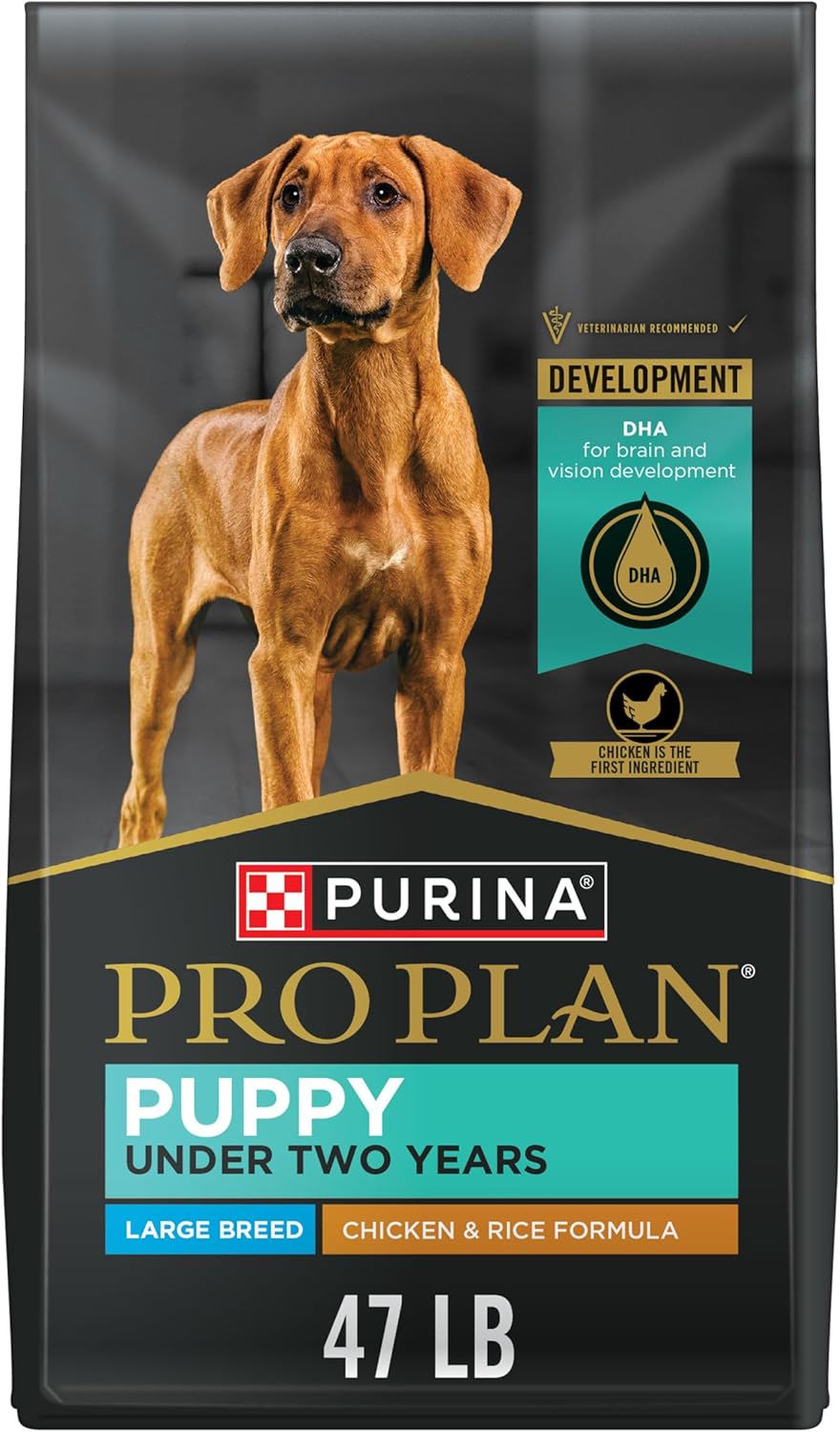
| Flavor | Chicken & Rice |
|---|---|
| Age Range Description | Puppy – Large Breed |
| Item Form | Dry |
| Unit Count | 752 Ounce |
Purina Pro Plan Large Breed Chicken & Rice dry puppy food is designed to support the specific needs of large-breed puppies during growth with a crunchy kibble built around real chicken as the primary ingredient. In everyday use it is fed as a complete diet following the bag feeding chart and can be offered moistened for young pups then switched to dry as they age. Notable features include DHA from fish oil for brain and vision support, added glucosamine for joint development, omega-6 fatty acids and vitamin A for skin and coat, and antioxidants plus minerals to support immune and bone development. The 47 lb bulk bag suits owners who want fewer shopping trips and consistent formula availability, and the high-protein, high-calorie formulation helps fuel active growing puppies. Limitations to consider are that the ingredient list includes grains and poultry by-product meals so it is not strictly grain-free or limited-ingredient by some definitions, and the large bulk size may be inconvenient for small households once opened if storage or freshness are concerns.
Best for: Buyers who want a veterinarian-backed, high-protein puppy formula in a large package to minimize shopping trips and support steady growth in large-breed puppies.
Less Ideal for: Owners specifically seeking a grain-free or novel-protein limited-ingredient formula, or those who cannot store or use a large bulk bag before freshness declines.
- Formulated for large-breed puppies with added glucosamine to support joint development
- Real chicken listed as the first ingredient for high-quality protein
- Includes DHA from fish oil to support brain and vision development
- Available in a 47 lb bulk bag to reduce shopping frequency
- Contains grains and poultry by-product meals, so it is not grain-free
- Large 47 lb bag may present freshness and storage challenges for some households
Verdict: The best high-calorie puppy food is intended for very active or fast-growing 1-month-old puppies who need extra energy and calories to maintain healthy weight gain.
Diamond Puppy High Protein 6lb
Best High-Protein Puppy Food

| Flavor | Puppy |
|---|---|
| Item Form | Dry Kibble |
| Special Ingredients | Chicken, Flaxseed, Fish Meal, Salmon Oil |
| Unit Count | 96 Ounce |
Diamond Puppy High Protein is a puppy kibble formulated to support growth with chicken protein listed as the first ingredient and a nutrient package targeted at brain, vision and bone development. It is used as a daily feeding for puppies and is also suitable for pregnant or nursing adults; the bag contains smaller kibble suited to young mouths. Notable features include DHA from salmon oil for neural and visual development, a probiotic blend and antioxidants to support digestion and immune health, and higher protein and fat levels to fuel growth. Ingredients list includes chicken by-product meal, whole grains, flaxseed and fish meal, so you get concentrated protein sources alongside grains and added functional fats. Practical benefits are straightforward nutrition designed by veterinarians, family-owned U.S. manufacturing, and an emphasis on value for owners who need a complete high-protein puppy diet on a budget. Limitations include the use of by-product meal and grain ingredients for some buyers who prefer single-source or grain-free recipes, and limited packaging size choices compared with larger bulk bags for heavy feeders.
Best for: Cost-conscious puppy owners who need a complete, higher-protein growth formula that supports brain and bone development without a high price tag.
Less Ideal for: Owners seeking grain-free or single-source whole-muscle protein formulas, or those who prefer novel protein recipes for allergy-prone puppies.
- Chicken protein is listed first for muscle-building support
- Includes DHA from salmon oil to support brain and vision development
- Contains a probiotic blend and antioxidants to aid digestion and immune health
- Smaller kibble size formulated for puppies and suitable for pregnant or nursing adults
- Uses chicken by-product meal and mixed grain ingredients rather than single whole-muscle protein sources
- Limited bag size may require more frequent repurchasing for fast-growing litters
Verdict: The best high-protein puppy food suits young puppies needing extra protein for muscle and tissue development while still providing balanced vitamins and minerals.
Open Farm Grain Free Puppy Food Salmon
Best Grain-Free Puppy Food

| Flavor | Salmon |
|---|---|
| Age Range Description | Puppy |
| Item Form | Pellet |
| Special Ingredients | Wild-caught salmon, non-GMO fruits and vegetables, coconut oil, pumpkin |
| Additional Features | Ocean Wise Certified, Grain-Free |
This Open Farm grain-free puppy formula uses wild-caught salmon as the first ingredient and packs a protein-forward, nutrient-dense kibble aimed at supporting growth, brain and vision development, and healthy skin and coat. You would use it as a daily complete diet for puppies, spooning measured portions from the bag according to feeding guidelines and transitioning slowly if switching from another food. Notable features include omega-3 rich salmon and fish meals, non-GMO fruits and vegetables like sweet potato and pumpkin, and added vitamins and minerals to create a balanced puppy profile. The grain-free recipe avoids corn, wheat, and soy and includes ingredients intended to support digestive health. Practical benefits are a high-protein, palatable formula that can help picky or sensitive puppies accept meals and that emphasizes traceable ingredients for owners who prioritize sourcing. Important limitations are that grain-free diets are not necessary for all puppies and some veterinarians advise caution for certain breeds or cardiac risk factors, so consult your vet before long-term feeding; also the bag is a 4 lb size which may require more frequent repurchasing for larger litters or fast-growing pups.
Best for: Owners seeking a grain-free, high-protein puppy kibble with traceable ingredients for puppies that show grain sensitivity or when they prefer a grain-free diet.
Less Ideal for: Owners who prefer grain-inclusive diets or are feeding puppies with specific cardiac concerns without veterinary guidance should consider other options.
- Wild-caught salmon first ingredient provides omega-3s for brain, vision, and coat support
- Grain-free formula excludes corn, wheat, and soy which may help puppies with grain sensitivities
- Includes non-GMO fruits and vegetables like sweet potato and pumpkin for added nutrients and fiber
- Formulated with vitamins, minerals, and protein sources to be complete and balanced for puppies
- Small 4 lb bag size may require frequent repurchasing for larger or rapidly growing puppies
- Grain-free approach may not be necessary for every puppy and should be discussed with a veterinarian
Verdict: The best grain-free puppy food fits owners preferring grain-free recipes and provides alternative carbohydrate sources while meeting puppies' nutrient and energy requirements.
Pet-Ag PetLac Puppy Powder 10.5 oz
Best Easy-to-Digest Puppy Food

| Unit Count | 10.5 Ounce |
|---|---|
| Item Form | Powder |
| Age Range Description | Puppy |
| Target Species | Dog |
PetLac Puppy Powder is a powdered milk replacer intended as a complete, easy-to-digest food source for newborn to six-week-old puppies and for supplemental feeding of nursing or weaning pups. You mix the powder with warm water to create a formula for bottle feeding or offer it in a shallow bowl as puppies begin to lap; the package gives clear mixing and feeding guidelines tied to body weight and age. The formula includes vitamins, minerals, amino acids, prebiotics and probiotics to support digestion and growth, and instructions cover use for orphaned puppies, supplemental feeding for thin or older dogs, and feeding pregnant or lactating females. Practical benefits include ready-to-mix powder that stores in the refrigerator or freezer for extended use and a nutrient profile designed to mimic mother's milk. Limitations are that it is intended for intermittent or supplemental feeding only and that proper dosing requires attention to the provided weight-based directions and frequent feedings for very young or weak puppies.
Best for: Caregivers of one-month-old puppies who need a gently digestible, nutrient-complete milk replacer to support growth and manage sensitive stomachs.
Less Ideal for: Owners seeking a long-term sole diet for older puppies or those who prefer wet ready-to-feed formulas should consider alternatives.
- Complete vitamin and mineral profile formulated for growth and development
- Contains prebiotics and probiotics to aid digestion
- Clear mixing and feeding directions with age and weight guidance
- Powder form stores refrigerated or frozen for longer shelf life
- Intended for intermittent or supplemental feeding rather than sole long-term diet
- Requires careful measurement and frequent feedings for newborns
Verdict: The best easy-to-digest puppy food is designed for 1-month-old puppies with sensitive digestion, using gentle proteins and carbohydrates to reduce stomach upset while supporting growth.
Choosing the Right Puppy Food 1 Month Old Puppy: Key Factors to Consider
Nutrient Density and Calorie Concentration
Puppies at one month grow quickly and burn a lot of energy between feedings. Foods need concentrated calories and the right balance of protein, fat, and carbohydrates to support steady weight gain without requiring very large volumes of food. Look for formulations where protein supplies essential amino acids for muscle and organ development and fat provides energy and support for brain development.
Micronutrients matter as well. Adequate levels of calcium and phosphorus, plus vitamins A, D, and E, are important for bone and immune development. Because young puppies have small stomachs, nutrient-dense foods let you meet daily requirements in smaller portions, which helps prevent digestive overload and ensures consistent growth.
Protein Quality and Source
High-quality animal protein supplies the essential amino acids puppies cannot make on their own and supports rapid tissue growth. The digestibility of the protein source affects how well a young puppy can absorb and use those amino acids; highly digestible proteins reduce the likelihood of loose stool and nutrient loss.
Avoid relying solely on unspecified 'meat by-products' as the primary protein source because those can vary in quality. Instead, prefer foods that list a recognizable animal protein early in the ingredient list. For puppies that are sensitive, look for options with single-source proteins or hydrolyzed proteins if recommended by a veterinarian.
Texture and Particle Size for Early Transition
At one month many puppies are still learning to lap or nibble solids, and their mouths and teeth are small and delicate. Food texture should be appropriate for this transition phase: very small kibble or a soft, moistened texture can ease the shift from nursing to eating.
If using dry kibble, consider how easily it can be softened with warm water or puppy-safe milk replacer. Wet or gruel-style preparations can help reluctant eaters and ensure they get enough calories. Proper texture reduces choking risk and encourages consistent intake during frequent short feedings.
Digestibility and Gentle Ingredients
Young puppies have immature digestive systems that can react poorly to heavy fiber, unfamiliar ingredients, or sudden dietary changes. Ingredients that are easy to digest and have a history of being well tolerated in puppies lower the risk of diarrhea and dehydration.
Look for limited use of hard-to-digest fillers, and consider formulas with prebiotics or gentle carbohydrate sources that support healthy gut flora. If a puppy has had episodes of gastrointestinal upset, choose a formulation designed for sensitive stomachs and consult a veterinarian before switching diets.
Feeding Schedule and Portion Guidance
One-month-old puppies require frequent, small meals to maintain blood sugar and energy levels. Clear feeding schedules and portion charts tailored to age and expected growth rate are essential for caregivers to avoid underfeeding or overfeeding.
Choose foods that provide concrete guidance for dividing the daily ration into multiple meals and that note how to adjust portions based on activity, littermate competition, and weight checks. Practical feeding directions help new owners establish consistent routines during this formative stage.
Safety, Recalls, and Manufacturing Transparency
Because very young puppies are especially vulnerable to contaminants and formulation errors, safety and manufacturing transparency are important. Foods produced with clear sourcing, batch testing, and good manufacturing practices reduce the likelihood of feeding setbacks tied to contamination.
While you may not have full access to every supplier detail, pick options with readily available information on nutritional analysis, ingredient sourcing, and clear contact channels for questions. Avoid products that lack basic labeling or omit essential nutrient guarantees.
How Do I Introduce Solid Food to a 1-Month-old Puppy?
Begin by offering a moistened gruel made from a puppy-appropriate food mixed with warm water or a vet-recommended milk replacer. Start with a very thin consistency and gradually thicken it over several days as the puppy learns to lap and chew.
Offer small amounts multiple times per day and monitor whether the puppy is swallowing easily and maintaining weight. Replace any uneaten fresh food within a short window to avoid spoilage, and keep feeding calm and gentle to reduce stress during the transition.
- Mix food to a porridge-like texture at first.
- Feed at least four times per day for consistent energy.
- Monitor stool and hydration during the transition.
- Use shallow dishes to make lapping easier.
What Portion Sizes and Feeding Frequency Work Best?
One-month-old puppies need small, frequent meals—typically four to six feedings daily depending on litter size and individual appetite. Portion sizes should be small but nutritious to avoid overloading the stomach while meeting daily calorie needs.
Adjust portions based on observed weight gain, body condition, and stool consistency. Frequent weighing during the first weeks helps ensure the feeding plan supports healthy growth and lets you tweak portions before problems arise.
- Start with small spoonfuls or shallow dish servings multiple times a day.
- Weigh pups weekly to track growth.
- Increase portion sizes gradually as the puppy accepts solids.
What Are Common Feeding Problems and How Do I Handle Them?
Common issues include refusal to eat, loose stool, and vomiting. Refusal to eat can be eased by softening food more, warming it slightly to improve aroma, or offering feedings near the mother to reduce stress. Persistent refusal should prompt veterinary advice.
Loose stool often indicates digestive upset from a new formula or feeding quantity. Temporarily reduce portion size and return to a simpler, easily digestible formulation. If diarrhea continues beyond a day or if the puppy shows signs of dehydration or lethargy, seek veterinary care.
- Soften food and warm slightly to entice eating.
- Reduce portion size if stool becomes loose.
- Monitor for dehydration and seek vet help when needed.
- Introduce dietary changes gradually over several days.
How Important Is Formula Compatibility with Nursing?
If the puppy is still nursing occasionally, the supplemental food should complement the nutritional profile of the dam's milk without causing imbalance. Milk replacers used for supplemental feedings need to be designed for puppies, providing appropriate fat and protein levels close to natural milk to prevent digestive upset.
Do not mix arbitrary human or non-puppy milks, as those can cause nutrient imbalances and gastrointestinal distress. When in doubt, choose formulations specified for young puppies and follow veterinary guidance for combined nursing and supplemental feeding schedules.
- Use puppy-specific milk replacer when supplementing nursing.
- Avoid cow's milk and other non-recommended human dairy products.
- Coordinate supplemental feeding with the dam's availability and milk output.
When Should I Involve a Veterinarian in Feeding Decisions?
Contact a veterinarian promptly if the puppy refuses multiple feedings, shows signs of dehydration, fails to gain weight, or has persistent vomiting or diarrhea. Young puppies can deteriorate quickly, so early veterinary assessment helps identify underlying causes like infections or congenital issues.
Also consult a veterinarian before making major diet changes if the puppy has known health concerns, was orphaned, or requires special formulas for medical reasons. A professional can recommend specific nutrient adjustments and monitoring plans tailored to the puppy's condition.
- Seek veterinary care for persistent feeding refusal or digestive issues.
- Get professional advice for orphaned or medically fragile puppies.
- Use vet guidance to modify diets for congenital or metabolic concerns.
How We Chose the Best Puppy Food 1 Month Old Puppy
We prioritized foods formulated or suitable for the needs of 1-month-old puppies and applied filters that reflect the unique demands of this early life stage. Key evaluation criteria included nutrient density and macronutrient balance to support rapid growth; digestibility and ingredient quality to reduce common stomach upset; appropriate texture and particle size for puppies transitioning from milk; and safety standards such as absence of controversial additives and appropriate calcium to phosphorus ratios for bone development. We also considered feeding practicality: ease of preparation for wetting or mixing, clear feeding guidelines for small frequent meals, and packaging that preserves freshness. Products that lacked clear suitability for very young puppies, omitted essential nutrient information, or used questionable filler ingredients were excluded. Our shortlist focuses on options that meet these nutritional and handling requirements while remaining realistic for caregivers managing one-month-old puppies.
Our full evaluation process is outlined in our review methodology.
FAQ
Can a 1-month-old puppy eat dry kibble?
Some 1-month-old puppies can handle very small, softened kibble that has been moistened to a porridge consistency. Dry kibble should generally be softened with warm water or milk replacer to reduce choking risk and make it easier to digest.
How often should I weigh a 1-month-old puppy?
Weigh puppies at least once a week to monitor steady growth. More frequent weighing can be useful for puppies with feeding challenges or those that are orphaned to ensure feeding plans meet caloric needs.
What signs indicate a feeding problem in a one-month-old pup?
Warning signs include repeated refusal to eat, persistent diarrhea, vomiting, decreased activity, and poor weight gain. Any combination of these signs, especially dehydration symptoms, warrants prompt veterinary attention.
Is a milk replacer necessary at one month?
A milk replacer is often useful for supplemental feedings, especially for orphaned puppies or litters where the dam cannot meet demand. When used, choose a formula designed for puppies and consult a veterinarian on proper mixing and feeding frequency.
How do I transition from gruel to firmer food?
Gradually thicken the gruel over several days by reducing the liquid used to moisten the food. Watch the puppy's acceptance and stool quality, and move to firmer textures once the puppy latches onto the thicker mixture and shows steady weight gain.
Final Verdict
For one-month-old puppies prioritize nutrient-dense, easily digestible foods with appropriate protein and fat levels, and pick textures that match your puppy's ability to lap or chew. Establish a routine of frequent small meals, monitor weight and stool, and be ready to adjust portions or textures based on how the pup tolerates the food. Balance convenience with careful attention to ingredient quality and feeding guidance. When in doubt, seek veterinary advice early—rapid intervention and thoughtful feeding choices make the biggest difference for a healthy start.

