

Feeding a litter of 4-week-old puppies is a critical early step in their development. At this age puppies transition from nursing to more solid textures and need food that eases digestion while delivering the calories, protein, and micronutrients required for rapid growth. Choosing the right formula affects stool quality, energy, and how smoothly the weaning process goes. This guide shortlists seven top puppy food options chosen for their suitability for 4-week-old puppies. We evaluate digestibility, nutrient density, and feeding practicality so you can pick an option that supports steady growth and an easier transition off the dam.
Top Picks at a Glance
| Best Overall Puppy Food for 4-Week-Old Puppies A complete, balanced starter formula suited to newborn puppy needs | Royal Canin Mother & Babydog Mousse 5.1 oz |  |
| Best Budget Puppy Food for 4-Week-Old Puppies A low-cost, nutritionally adequate option for budget-conscious owners | Pedigree Puppy Dry Dog Food 3.5 lb |  |
| Best Premium Puppy Food A higher-end formula emphasizing superior ingredients and nutrient density | Fromm Puppy Gold Dry Dog Food 5 lb |  |
| Best High-Calorie Puppy Food More calories per serving for fast-growing or underweight puppies | Bully Max Puppy Food 24/14 |  |
| Best Wet Puppy Food Moist, palatable formulas that ease transition and encourage eating | Purina Pro Plan Puppy Pate 13 oz |  |
| Best Small-Kibble Puppy Food Smaller, bite-sized pieces designed for tiny mouths and teeth | Hill's Science Diet Puppy Small Bites |  |
| Best Limited-Ingredient Puppy Food A simpler formula with fewer ingredients for sensitive pups | Blue Buffalo Basics Turkey Puppy 4 lb |  |
Royal Canin Mother & Babydog Mousse 5.1 oz
Best Overall Puppy Food for 4-Week-Old Puppies

| Flavor | Chicken |
|---|---|
| Item Form | Pate |
| Age Range Description | Baby |
| Number of Items | 24 |
| Unit Count | 122.4 Ounce |
Royal Canin Mother and Babydog Starter Mousse is a wet pate-style puppy food designed to support both late-gestation/lactating mothers and very young puppies during the transition from nursing. It is used as a complementary wet food to provide extra calories, moisture, and an easy-to-eat texture for puppies learning to lap and chew. The formula highlights a blend of prebiotics and highly digestible proteins for microbiome and stool quality support, plus clinically proven antioxidants such as vitamins E and C to help immature immune systems. Its soft mousse texture makes portioning and mixing with dry kibble straightforward for weaning. The product is targeted nutrition rather than an everyday adult diet, so buyers should plan feeding schedules around life stage recommendations and expect a specialized, smaller-can format sold in multi-can packs. Ingredients include real animal proteins and added vitamins and minerals, but the label also lists by-products and fillers that some owners may choose to avoid when seeking only whole-food ingredient lists.
Best for: Owners who prioritize targeted, life-stage nutrition and want a moist, easy-to-eat starter food to support nursing mothers and puppies during the critical weaning period.
Less Ideal for: Owners seeking a strictly whole-food or grain-free wet puppy diet or those who need a long-term everyday wet food for older puppies or adults.
- Soft mousse texture eases weaning and mixing with dry food for transitioning puppies
- Formulated for mothers and puppies with added calories and nutrients for gestation and lactation
- Contains prebiotics and highly digestible proteins to support digestive health and stool quality
- Includes clinically proven antioxidants like vitamins E and C to support developing immune systems
- Includes animal by-products and some grain/filler ingredients that may concern buyers seeking only whole-protein formulas
- Sold in multi-can packs which may be more than needed for single small litters or occasional use
Verdict: The best overall puppy food for 4-week-old puppies provides complete nutrition in an easily digestible form that supports growth, energy, and gradual weaning from mother’s milk.
Pedigree Puppy Dry Dog Food 3.5 lb
Best Budget Puppy Food for 4-Week-Old Puppies

| Flavor | Chicken & Vegetable |
|---|---|
| Age Range Description | Puppy |
| Item Form | Dry Kibble |
| Unit Count | 56 Ounce |
| Animal Food Nutrient Content Claim | High Protein, No Added Sugar |
Pedigree Puppy Dry Dog Food is a straightforward, budget-friendly puppy kibble made from chicken-based protein, grains, and added vitamins and minerals to support growth. You would typically use it as a daily staple while transitioning a young dog from weaning to adult food, following the feeding guide on the package to match your puppy's weight and age. The formula emphasizes high-quality protein sources for muscle development and includes 36 vitamins, minerals, and amino acids intended to support immune health, brain development, and bone strength. In practice this means an owner gets a complete and balanced commercial diet that is easy to portion and serve dry or softened with water for very young pups. Ingredient-wise it contains common commodity grains and by-product meals rather than premium single-source meats, so it delivers required calories and nutrients at a lower cost but not the cleanest ingredient panel. Expect good availability and consistent kibble size, but owners seeking grain-free, novel proteins, or limited-ingredient formulas will need to look elsewhere.
Best for: Value-conscious puppy owners who need an affordable, complete puppy kibble that supports growth and daily feeding routines.
Less Ideal for: Owners who require grain-free, novel-protein, or limited-ingredient veterinary diets for food sensitivities should consider specialty formulas instead.
- Formulated specifically for puppies with nutrients to support growth and immune health
- Contains high-protein sources to support muscle development
- Includes 36 vitamins, minerals, and amino acids for complete and balanced nutrition
- Easy-to-follow feeding guide for age and weight makes portioning simple
- Uses ingredient list with grains and by-product meals rather than single-source premium proteins
- Not suitable for owners seeking grain-free or limited-ingredient diets
Verdict: The best budget puppy food for 4-week-old puppies delivers essential nutrients and calories at an affordable price while still supporting healthy early growth and development.
Fromm Puppy Gold Dry Dog Food 5 lb
Best Premium Puppy Food

| Flavor | Chicken |
|---|---|
| Age Range Description | Puppy |
| Item Form | Pellet |
| Special Ingredients | Proteins |
| Animal Food Diet Type | Veterinary Diet |
Fromm Puppy Gold is a premium kibble formulated specifically for small and medium breed puppies and pregnant or nursing mothers. It uses real chicken as the first ingredient along with chicken meal, fish meal, and other high quality proteins to supply amino acids needed for growth and tissue development. The recipe includes whole grains and added functional ingredients such as probiotics to aid digestion and salmon oil to support coat health, which makes it useful for puppies with sensitive stomachs or higher nutrient needs. Typical use is as a complete daily diet fed to growing puppies or as a gestation/lactation formula for mothers, following AAFCO feeding guidelines. The practical benefits are concentrated nutrition in a 5 lb bag that is easy to portion, recognizable meat-first ingredients, and digestive support from multiple fermentation products. Limitations to consider are that the formula contains grains and a broad ingredient list that may not suit owners seeking grain-free or single-protein limited-ingredient diets, and the smaller bag size means more frequent repurchasing for multi-puppy households.
Best for: Owners who prioritize higher-quality, meat-forward puppy nutrition with added digestive and coat-support ingredients and are willing to pay for premium formulations.
Less Ideal for: Owners who need grain-free, single-protein, or veterinary elimination diets should consider alternative formulas tailored to those restrictions.
- Real meat (chicken) listed as the first ingredient for high-quality protein
- Includes probiotics and multiple fermentation products to support digestion
- Added salmon oil provides omega fatty acids for skin and coat health
- Formulated to meet AAFCO nutrient profiles for growth and gestation/lactation
- Contains whole grains, so not suitable for owners seeking grain-free diets
- Smaller 5 lb bag requires more frequent repurchasing for larger litters or multiple puppies
Verdict: The best premium puppy food is for owners wanting top-tier ingredients and nutrient profiles that support optimal growth, immune development, and long-term health.
Bully Max Puppy Food 24/14
Best High-Calorie Puppy Food

| Crude Protein | 24% |
|---|---|
| Crude Fat | 14% |
| Calories | 419 cal/cup |
| Primary Flavor | Lamb |
Bully Max Puppy Food is a meat-forward dry kibble designed to support healthy muscle growth, energy needs, and digestive health in growing puppies. It supplies 24% protein and 14% fat with 419 calories per cup, so it is typically used as a primary daily diet for puppies that need extra calories and protein during growth phases. Notable features include lamb meal as the first ingredient, added pork and fish meal for concentrated animal protein, and a TruMune postbiotic blend alongside prebiotics and probiotics to support gut health and immune development. Practical benefits include concentrated nutrition for steady weight gain and muscle development, formula gentleness for sensitive stomachs, and omega fatty acids for skin and coat support. Important limitations are that the formula is calorie-dense so portioning must be monitored to avoid excessive weight gain in less active puppies, and some owners may prefer a chicken-inclusive protein if lamb/pork is not suitable for their dog. It is best used with a feeding plan adjusted for breed, activity, and growth rate.
Best for: Puppy owners seeking a high-protein, calorically rich formula to support muscle development and growth, especially for puppies that benefit from digestive support.
Less Ideal for: Owners who need a lower-calorie or lower-protein puppy food for less active or quickly maturing breeds should consider gentler formulations instead.
- High protein (24%) and calorie density (419 cal/cup) to support muscle growth and energy
- Lamb meal listed as the first ingredient for concentrated animal protein
- Includes TruMune postbiotics plus prebiotics and probiotics for digestive and immune support
- Formulated without corn, wheat, soy, or artificial colors and suitable for sensitive stomachs
- High calorie density requires careful portion control to prevent overfeeding
- Chicken-free formulation may not suit puppies that tolerate or need chicken-based diets
Verdict: The best high-calorie puppy food is ideal for very active, fast-growing, or underweight puppies who need extra energy and nutrient density to reach healthy weight milestones.
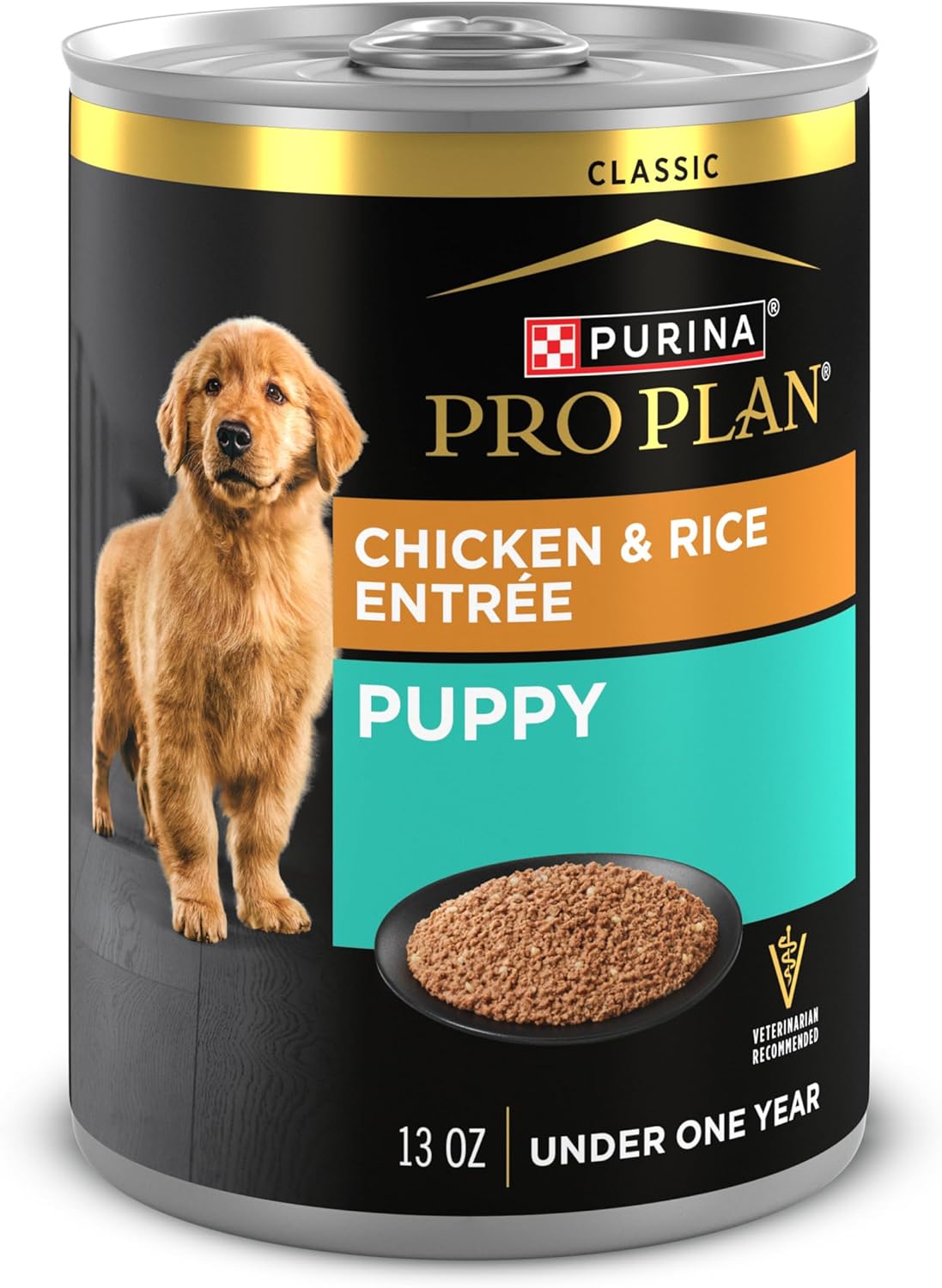
Purina Pro Plan Puppy Pate 13 oz
Best Wet Puppy Food
| Flavor | Chicken & Rice |
|---|---|
| Age Range Description | Puppy |
| Item Form | Wet |
| Container Type | Can |
| Unit Count | 156 Ounce |
Purina Pro Plan Development Chicken & Brown Rice Entree is a high-protein wet puppy pate meant to be fed as part of a daily ration for puppies up to about one year (longer for larger breeds). It uses real chicken as the first ingredient and provides DHA, vitamins, minerals, and antioxidants to support brain and vision development, immune function, and skin and coat health. The pate texture makes it easy to spoon, mix with dry kibble, or use for weaning and picky eaters, and the formula contains no artificial colors, flavors, or preservatives. Practical benefits include a nutrient-dense canned option that replaces about 1 cup of dry Pro Plan per 13 oz can and a feeding schedule that divides portions for young puppies. Limitations are that the ingredient list includes meat by-products and typical canned fillers, so buyers seeking single-source or limited-ingredient recipes may prefer specialty formulas, and the product is targeted to puppies specifically rather than adult maintenance feeding.
Best for: Buyers who want a widely available, nutrient-dense wet puppy food that supports growth, brain development, and easy feeding transitions for typical puppies during their development.
Less Ideal for: Owners seeking limited-ingredient, single-protein, or hypoallergenic wet diets or those who need a long-term adult maintenance canned food.
- Real chicken as the first ingredient for high-quality protein
- Includes DHA plus 23 vitamins and minerals to support brain and vision development
- 100 percent complete and balanced for puppy growth and development
- No artificial colors, flavors, or preservatives
- Pate texture mixes easily with dry food and helps with weaning or picky eaters
- Contains meat by-products and typical canned fillers rather than single-source proteins
- Formulation is puppy-focused and not intended as an adult maintenance diet
Verdict: The best wet puppy food is great for early weaning and picky eaters because its texture and moisture content make it easier to eat and digest while encouraging intake.
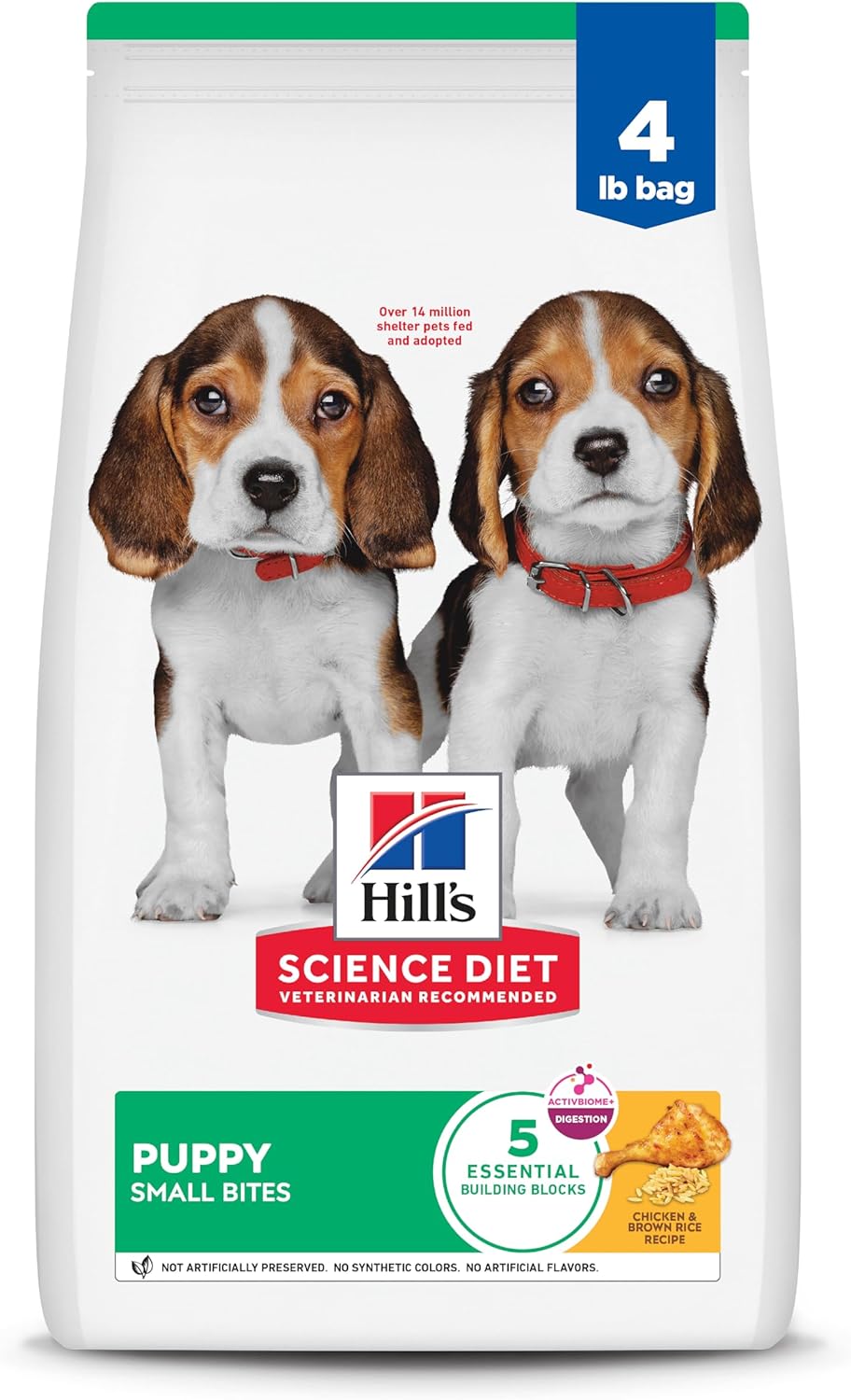
Hill's Science Diet Puppy Small Bites
Best Small-Kibble Puppy Food
| Flavor | Chicken & Brown Rice |
|---|---|
| Age Range | Puppy |
| Dog Breed Size | Small |
| Unit Count | 72 Ounce |
Hill's Science Diet Puppy Small Bites is a dry puppy food made with small kibble sized for puppies and small-breed mouths and formulated to support growth, digestion, and developing systems. It is typically fed as a daily diet for puppies and can be introduced gradually over a week when switching foods. Notable features include chicken as the primary ingredient, brown rice and whole grains for energy, a blend of vitamins and minerals to support muscle, bone, brain and eye development, and ActivBiome+ prebiotic fibers to support gut microbiome health. Practical benefits are easy chewing for small mouths, nutrient balance targeted at growing puppies, and guidance from feeding charts on the package. Limitations are that the ingredient list includes common allergens like chicken and whole grains, so it may not suit puppies with specific protein or grain sensitivities, and the formula is a standard puppy recipe rather than a limited-ingredient or hypoallergenic prescription diet for pronounced skin sensitivities. The kibble size and nutrient focus make it a convenient everyday option for small-breed puppies that tolerate chicken and grain ingredients.
Best for: Buyers looking for an everyday growth-focused puppy kibble sized for small mouths and aimed at supporting development and digestive health.
Less Ideal for: Puppies with diagnosed food allergies, persistent skin reactions, or owners seeking a veterinary hypoallergenic or grain-free prescription diet should consider specialized alternatives.
- Small, bite-sized kibble designed for puppies and small breeds
- Formulated with DHA and fish oil to support brain and eye development
- Includes prebiotic fiber blend (ActivBiome+) to support digestion
- Balanced vitamins and minerals to support bone, muscle and immune development
- Contains common protein and grain ingredients that can trigger sensitivities in some puppies
- Not a limited-ingredient or veterinary hypoallergenic prescription formula
Verdict: The best small-kibble puppy food offers appropriately sized pieces for tiny mouths, making chewing and gradual dry-food introduction simpler and more comfortable for young puppies.
Blue Buffalo Basics Turkey Puppy 4 lb
Best Limited-Ingredient Puppy Food

| Flavor | Turkey & Potato |
|---|---|
| Age Range Description | Puppy |
| Item Form | Dry |
| Special Ingredients | limited ingredients |
| Allergen Information | Corn-Free, Dairy Free, Soy Free, Wheat Free |
Blue Buffalo Basics Turkey & Potato puppy formula is a limited-ingredient dry food that prioritizes a single animal protein and gentle carbohydrate sources to help puppies with sensitive digestion. It is designed for daily feeding from early puppyhood and includes small-bite kibble, DHA and ARA for brain and eye development, and LifeSource Bits for antioxidant and immune support. Key ingredients such as deboned turkey and turkey meal appear first, while potatoes, oatmeal, and brown rice provide digestible fiber and energy; fish oil and flaxseed contribute omega fatty acids for skin and coat health. Practical benefits include simplified ingredient tracking for owners managing sensitivities, easy-to-portion 4 lb packaging for trying a new diet, and a formulation aimed at both digestive tolerance and developmental needs. Limitations are that the formula still contains multiple plant ingredients (peas, brown rice, oatmeal) so it is not single-ingredient fiber, and the bag size may be small for multi-puppy households or long-term feeding without frequent repurchasing.
Best for: Buyers who want a puppy formula with limited animal proteins and recognizable carbohydrate sources to simplify ingredient tracking while supporting digestion and early development.
Less Ideal for: Owners seeking a strictly single-fiber-source or prescription-level gastrointestinal diet, or those who need large bags for feeding multiple growing puppies without frequent repurchases.
- Single animal protein focus with deboned turkey and turkey meal as primary proteins
- Includes digestible carbohydrate sources like potatoes and oatmeal that support gentle digestion
- Contains DHA and ARA to support puppy brain and eye development
- Added fish oil and flaxseed provide omega fatty acids for skin and coat support
- Uses multiple plant ingredients for fiber rather than a single isolated fiber source
- 4 lb bag is relatively small for households feeding several puppies or using long-term
Verdict: The best limited-ingredient puppy food is aimed at puppies with sensitivities or suspected food reactions, offering a shorter ingredient list to help identify and avoid triggers while still meeting growth needs.
Choosing the Right Puppy Food 4 Week Old Puppy: Key Factors to Consider
Digestibility and Stool Tolerance
Puppies at four weeks have immature digestive systems and limited enzyme activity, so highly digestible ingredients reduce the risk of diarrhea and nutrient malabsorption. Look for formulas with single high-quality protein sources, cooked or hydrolyzed proteins when appropriate, and limited filler ingredients that can irritate a young gut.
Texture matters too: powder, grinds, or softened kibbles that rehydrate into a porridge-like consistency are easier for puppies to lap up and digest. Gradual changes and ensuring foods mix smoothly with milk replacer or warm water will help maintain stool consistency during weaning.
Protein Quality and Appropriate Levels
Rapid tissue growth at four weeks requires concentrated, bioavailable protein. The ideal food provides complete proteins with a good amino acid profile, not just a high percentage number. Digestible animal proteins are often easier for young puppies to use for growth and immune development.
Excessive protein is not helpful and can stress immature kidneys, while too little impairs growth. Choose foods formulated specifically for growth that balance protein with other nutrients rather than adult maintenance recipes scaled down.
Energy Density and Fat Content
Small puppies need lots of calories in small volumes. Energy-dense formulas supply sufficient calories without requiring large meals that a tiny stomach cannot hold. Healthy fats provide concentrated calories and supply essential fatty acids for brain and coat development.
However, very high fat levels can cause loose stools in some litters. Look for moderate to high-quality fat sources and monitor tolerance, adjusting meal volume and dilution to match each puppy's digestion and activity level.
Calcium, Phosphorus, and Mineral Balance
Mineral balance is essential for proper bone growth. Calcium and phosphorus must be present in the correct ratios; too much or too little of either can interfere with bone development. Puppies at rapid growth stages are especially sensitive to imbalanced mineral intake.
Complete growth formulas are formulated to deliver balanced minerals, but when mixing with milk replacer or supplements, owners should account for cumulative mineral intake to avoid excesses.
Texture and Ease of Preparation
At four weeks puppies often still lap softened food rather than chew solid kibbles. Powders, grinds, or small extruded pieces that rehydrate easily are practical because they can be blended into a smooth gruel. Ease of preparation matters for consistency—food that mixes predictably with warm water or milk replacer reduces risk of clumps and choking hazards.
Packaging that allows measuring small portions and reseals to keep moisture out also helps keep daily prep consistent and reduces waste.
Allergen Sensitivity and Ingredient Simplicity
Some litters show early sensitivity to common ingredients like dairy, soy, or certain grains. Simpler ingredient lists with limited novel proteins can make it easier to spot and manage food intolerances. Ingredients labeled as whole-food sources instead of vague commodity names help owners understand what they are feeding.
When an individual puppy shows signs of intolerance, switching to a limited-ingredient or single-protein formula can clarify the cause without disrupting the entire litter's nutrition plan.
How Do I Transition a 4-Week-old Puppy From Milk to Solid Food?
Start by offering a thin gruel made from puppy growth formula mixed with warm water or milk replacer. Offer the gruel in a shallow dish so puppies can lap it up; use your finger to encourage nuzzling if they are hesitant.
Increase the solids concentration gradually over several days while monitoring stool quality and energy. Offer brief, frequent feedings rather than large meals, and keep the gruel warm to improve palatability.
- Begin with mostly liquid and a tablespoon of dry food per multiple puppies
- Gradually reduce liquid over 5 to 10 days as puppies learn to chew and digest
- Keep fresh water available as the diet is more solid
What Feeding Schedule Works Best for Very Young Puppies?
Four-week-old puppies do best with multiple small meals throughout the day because their stomachs are small and their energy needs are high. Aim for four to six feedings spaced evenly to maintain steady glucose and prevent hunger-driven stress.
Consistency helps with digestion and socialization. Establish predictable times and use short supervised feeding sessions to reduce competition and ensure each pup eats enough.
- 4–6 feedings daily at regular intervals
- Monitor each puppy's intake and body condition to adjust portions
- Avoid leaving food out unsupervised for long periods to prevent overeating by dominant puppies
How Do I Monitor Whether the Food Is Working for My Litter?
Watch stool quality, weight gain, hydration, and energy levels. Healthy stools are formed but not hard; frequent watery stools indicate tolerance issues or over-dilution. Puppies should steadily gain weight on a growth curve appropriate for their breed size.
Also observe coat condition and activity. Lethargy, persistent diarrhea, or rapid weight loss are signs to stop the current diet and consult a veterinarian. Keep a simple daily log of weights and stool notes during the weaning phase to spot trends quickly.
- Record weights daily or every other day in the first weeks
- Note any vomiting, diarrhea frequency, or changes in appetite
- Adjust dilution, meal frequency, or switch to a different texture if problems persist
Can I Mix Supplements or Milk Replacer with Puppy Food?
Yes, mixing milk replacer with dry or powdered puppy food is standard during the early transition, especially at four weeks. Use a growth-formulated replacer and follow mixing guidelines so the pups receive balanced nutrients without overloading minerals or calories.
Be cautious adding extra supplements unless advised by a veterinarian because duplicate vitamins or minerals can lead to excesses. If individual puppies lag behind, targeted supplemental feeding under veterinary guidance can be appropriate.
- Follow manufacturer dilution recommendations for replacers
- Avoid adding human supplements unless specifically prescribed
- Use supplements only to correct identified deficiencies
Common Feeding Problems and How to Address Them
Diarrhea, failure to thrive, and refusal to eat are common issues during weaning. Mild loose stools often resolve with small adjustments in dilution or frequency. Persistent problems warrant a veterinary exam to rule out parasites, infections, or congenital conditions.
Competition among littermates can lead to uneven intake. Separate pups for short, supervised meals or use multiple shallow dishes to reduce bullying and ensure fair access.
- Treat persistent diarrhea as a veterinary concern
- Separate weak pups to hand-feed if necessary
- Ensure bedding and feeding dishes are kept clean to reduce infection risk
How We Chose the Best Puppy Food 4 Week Old Puppy
To build this shortlist we applied selection filters that reflect the specific needs of 4-week-old puppies. First, digestibility was a primary screen: formulas and textures that are easy on undeveloped digestive systems were prioritized. Protein quality and balance of essential amino acids were measured next, since early growth demands bioavailable protein at appropriate levels. We also evaluated calorie density and fat levels to ensure adequate energy for growth without overwhelming small stomachs, plus included micronutrient completeness—especially calcium, phosphorus, and key vitamins—relative to growth-stage needs. Practical feeding considerations factored in as well: texture or grind size suitable for mixing with milk replacer or water, and packaging that supports small-portion handling. Excluded from consideration were adult formulas, foods clearly labeled for older puppies only, and specialty therapeutic diets intended for medical conditions. Our goal was to include broadly appropriate, nutritionally complete puppy foods that help owners manage the early weaning window safely and effectively.
Our full evaluation process is outlined in our review methodology.
FAQ
When should puppies start eating solid food instead of nursing?
Puppies typically begin exploring softened solids around three to four weeks, with gradual weaning over the next several weeks. Full independence from nursing often occurs between seven and nine weeks, but individual timing varies.
How much food should a 4-week-old puppy eat at each meal?
Portions depend on litter size and breed, but offer small amounts several times a day and allow puppies to feed until satisfied. Track weight daily and adjust portions so each puppy gains steadily without large leftover meals.
Is it okay to use cow's milk when preparing gruel for puppies?
Cow's milk is not recommended because it can be hard for puppies to digest and may cause diarrhea. Use a commercial milk replacer formulated for puppies when adding liquid to dry food.
What signs indicate a food allergy or intolerance in young puppies?
Signs include chronic diarrhea, persistent vomiting, skin irritation, excessive scratching, and failure to gain weight. If you suspect an intolerance, switch to a limited-ingredient formula and consult a veterinarian for testing or guidance.
Can I give treats or supplemental foods to 4-week-old puppies?
Avoid treats and supplemental human foods during early weaning because they can unbalance nutrients and upset digestion. Focus on balanced puppy growth formulas until the puppies are older and eating a regular schedule.
Final Verdict
Focus on gentle digestibility, balanced growth nutrients, and appropriate texture when choosing food for 4-week-old puppies. Prioritize formulas designed for growth that mix easily into a gruel, monitor each puppy's weight and stool, and adjust dilution and frequency to individual tolerance. Accept that some tradeoffs are normal: higher calorie density supports growth but may require careful portioning to avoid loose stools. Use the factors discussed here to choose an option that matches your litter's digestive tolerance and growth rate, and consult a veterinarian promptly if any puppy shows persistent problems.

