

Finding the right puppy food for an Airedale terrier matters because this breed grows quickly and needs a balanced mix of nutrients to support muscle, bone, and joint development. You want a formula that matches the breed's expected energy level, provides digestible protein, and uses kibble shaped for a medium-to-large puppy mouth. This guide covers seven shortlisted puppy foods chosen for those specific needs and explains why each option earned a spot. Below you will find the top picks for Airedale puppies along with the evaluation criteria we used, practical buying factors, and answers to common feeding questions to help you narrow choices for your pup.
Top Picks at a Glance
| Best Overall Puppy Food for Airedale Terriers The best all-around nutrition tailored for Airedale puppy needs | Royal Canin Small Puppy Dry Dog Food 4 lb |  |
| Best Budget Puppy Food for Airedale Terriers A lower-cost formula that still meets puppy nutritional basics | Pedigree Puppy Dry Dog Food 3.5 lb |  |
| Best Premium Puppy Food Higher-end ingredients and formulations for owners who prioritize quality | ZIWI Peak Puppy Air-Dried Chicken & Lamb 14oz |  |
| Best High-Protein Puppy Food Higher protein content to support muscle growth and active puppies | Diamond Puppy Dry Dog Food 40 lb |  |
| Best Grain-Free Puppy Food A grain-free recipe for owners avoiding traditional cereal grains | ORIJEN Puppy Dry Dog Food 4.5 lb |  |
| Best Limited-Ingredient Puppy Food Simpler recipes with fewer ingredients to reduce allergy triggers | Purina Pro Plan Puppy Sensitive Salmon 4 lb |  |
| Best Digestive-Support Puppy Food Formulated for sensitive tummies with probiotics and easy proteins | Hill's Science Diet Puppy Sensitive Stomach & Skin |  |
Royal Canin Small Puppy Dry Dog Food 4 lb
Best Overall Puppy Food for Airedale Terriers

| Flavor | Chicken |
|---|---|
| Age Range Description | Puppy |
| Specific Uses For Product | Brain Health, Digestive Health, Immune Support |
| Item Form | Pellet |
| Package Size Name | 4 lb |
Royal Canin Small Breed Puppy Dry Dog Food is a targeted kibble made for 2-to-10-month-old puppies expected to reach about 9–22 pounds as adults. The formula combines small, crunchy kibble with nutrients sized and balanced for small mouths and higher energy needs, delivering DHA and omega-3s for brain development plus antioxidants for immune support. It also includes prebiotics and highly digestible proteins to promote steady digestion during rapid growth. Owners typically feed this as a primary dry diet or mix with the brand's wet thin-slices for variety during transition periods. Practical benefits include thoughtfully portioned kibble texture that encourages chewing and a nutrient profile tuned for small-breed metabolism. Limitations are that the formula contains ingredients like chicken by-product meal, grains, and fish, so buyers seeking grain-free or single-protein limited-ingredient diets will need alternatives, and puppies with specific allergies to listed allergens should avoid it. Packaging is a standard bag so expect typical storage needs to maintain freshness.
Best for: Buyers with small-breed puppies who need a nutrient-dense dry food with appropriately sized kibble and focused support for growth and digestion.
Less Ideal for: Owners seeking grain-free, single-source protein, or hypoallergenic limited-ingredient formulas should consider other options.
- Small, crunchy kibble sized for puppies with small mouths
- Includes DHA and omega-3s to support brain development
- Prebiotics and highly digestible proteins help support digestion
- Antioxidants such as vitamins E and C for immune support
- Contains multiple common allergens and grain ingredients, not grain-free
- Uses chicken by-product meal rather than single whole-protein labeling
Verdict: The best overall puppy food for Airedale terriers balances age-appropriate calories, protein, digestibility, and essential nutrients to support growth, coat health, and energy levels.
Pedigree Puppy Dry Dog Food 3.5 lb
Best Budget Puppy Food for Airedale Terriers

| Flavor | Chicken & Vegetable |
|---|---|
| Age Range Description | Puppy |
| Item Form | Dry Kibble |
| Unit Count | 56 Ounce |
| Animal Food Nutrient Content Claim | High Protein, No Added Sugar |
Pedigree Puppy Dry Dog Food is a straightforward, budget-friendly puppy kibble made from chicken-based protein, grains, and added vitamins and minerals to support growth. You would typically use it as a daily staple while transitioning a young dog from weaning to adult food, following the feeding guide on the package to match your puppy's weight and age. The formula emphasizes high-quality protein sources for muscle development and includes 36 vitamins, minerals, and amino acids intended to support immune health, brain development, and bone strength. In practice this means an owner gets a complete and balanced commercial diet that is easy to portion and serve dry or softened with water for very young pups. Ingredient-wise it contains common commodity grains and by-product meals rather than premium single-source meats, so it delivers required calories and nutrients at a lower cost but not the cleanest ingredient panel. Expect good availability and consistent kibble size, but owners seeking grain-free, novel proteins, or limited-ingredient formulas will need to look elsewhere.
Best for: Value-conscious puppy owners who need an affordable, complete puppy kibble that supports growth and daily feeding routines.
Less Ideal for: Owners who require grain-free, novel-protein, or limited-ingredient veterinary diets for food sensitivities should consider specialty formulas instead.
- Formulated specifically for puppies with nutrients to support growth and immune health
- Contains high-protein sources to support muscle development
- Includes 36 vitamins, minerals, and amino acids for complete and balanced nutrition
- Easy-to-follow feeding guide for age and weight makes portioning simple
- Uses ingredient list with grains and by-product meals rather than single-source premium proteins
- Not suitable for owners seeking grain-free or limited-ingredient diets
Verdict: The best budget puppy food for Airedale terriers provides complete growth nutrition at a lower price while maintaining acceptable protein and nutrient levels for healthy development.
ZIWI Peak Puppy Air-Dried Chicken & Lamb 14oz
Best Premium Puppy Food

| Flavor | Chicken |
|---|---|
| Age Range Description | Puppy |
| Item Form | Air-Dried |
| Unit Count | 14 Ounce |
| Animal Food Ingredient Claim | Grass-Fed |
ZIWI Peak Puppy Air-dried Chicken & Lamb is a nutrient-dense dry-format meal intended as a complete diet or topper for puppies aged roughly 2 to 24 months. The formula uses roughly 90% premium animal ingredients including free-range chicken, grass-fed lamb, organs and bone plus New Zealand green mussel and fish oil for omega-3s. Because the recipe is gently air-dried rather than extruded, it preserves more of the original nutrients and delivers a concentrated, highly palatable product that many puppies accept readily. The inclusion of natural sources of glucosamine and chondroitin from bone and cartilage supports joint development, and added prebiotic fiber and digestible carbohydrates like sweet potato and pumpkin help stool quality and digestion. Practical considerations: the product is calorie- and protein-dense so feeding portions must be adjusted for small breed puppies like West Highland Terriers, and the premium ingredients mean a higher per-ounce cost than typical kibble. It is not wet food, so hydration should be monitored, and pups with specific ingredient sensitivities should have the ingredient list reviewed. For owners prioritizing ethically sourced, high-protein, minimally processed nutrition, this delivers a clear premium option.
Best for: Owners who want a premium, minimally processed puppy diet with high-quality animal proteins and thoughtful sourcing and who are comfortable paying more for concentrated nutrition.
Less Ideal for: Budget-conscious buyers seeking lower-cost kibble or owners who prefer wet diets or need a prescription veterinary formula for medical conditions.
- Very high proportion of animal ingredients (about 90%) for strong protein and amino acid profile
- Air-dried processing preserves nutrients and creates a palatable, nutrient-dense meal
- Includes natural joint and skin support ingredients such as chicken bone, cartilage and New Zealand green mussel
- Formulated for puppies with added DHA/EPA from fish oil to support brain and eye development
- Can be used as a complete meal or a nutrient-rich topper to boost picky eaters
- Premium formulation is more expensive per serving than standard kibble
- Dense, concentrated calories require careful portion control especially for small-breed puppies
Verdict: The best premium puppy food emphasizes superior ingredient sources, targeted nutrient ratios, and advanced formulations for owners willing to invest in top-tier growth nutrition.
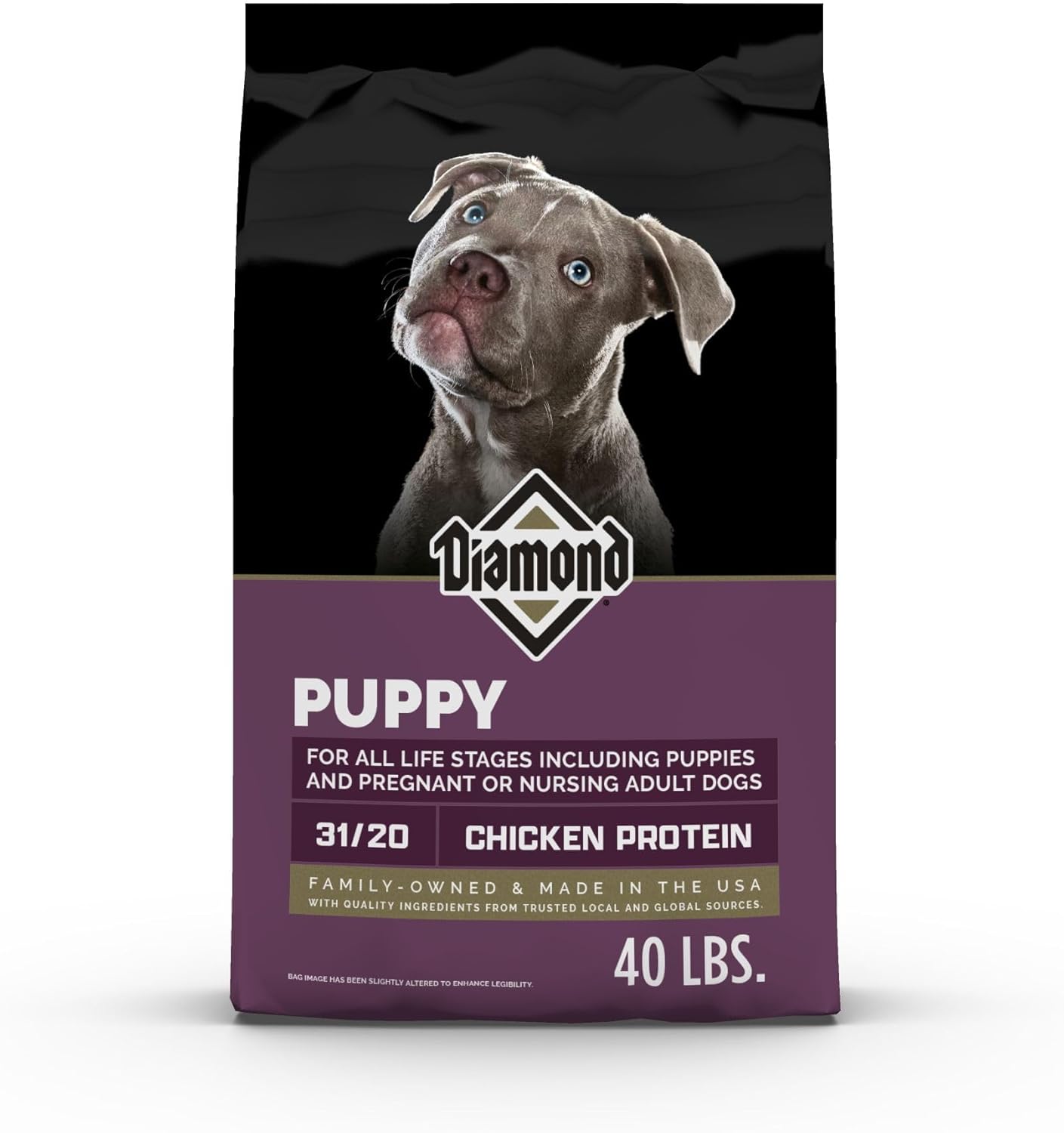
Diamond Puppy Dry Dog Food 40 lb
Best High-Protein Puppy Food
| Flavor | Puppy |
|---|---|
| Item Form | Pellet |
| Breed Recommendation | Large Breeds |
| Animal Food Diet Type | Veterinary Diet |
| Unit Count | 640 Ounce |
Diamond Puppy is a 40-pound dry dog food designed for growing puppies and pregnant or nursing dogs, with chicken protein listed first and added DHA from salmon oil for brain and vision support. It is typically used as a staple daily diet during a puppy's first year and can be portioned according to the feeding guide and adjusted with a veterinarian. Notable features include high protein to support muscle development, calcium for bone and tooth growth, a probiotic blend and antioxidants for digestive and immune health, and smaller kibble that is easier for young mouths to chew. In real-world use the large bag delivers cost-per-pound value, making it attractive for owners feeding big-breed puppies that consume a lot of food, and the formula's nutrient focus suits rapid growth phases. Buyers should note the ingredient list includes chicken by-product meal and grain ingredients rather than premium single-protein or grain-free sources, so it is a budget-conscious choice rather than a boutique or limited-ingredient diet.
Best for: Buyers raising large-breed or fast-growing puppies who prioritize complete growth nutrition and need an economical, nutrient-dense bag to feed a hungry dog affordably.
Less Ideal for: Owners seeking limited-ingredient, novel-protein, or grain-free diets for allergy management or buyers who want only whole-meat first ingredients should consider alternative formulas.
- High protein with chicken as first ingredient to support muscle growth
- Includes DHA from salmon oil for brain and vision development
- Calcium and nutrient profile targeted for growth and bone support
- Added probiotics and antioxidants to support digestion and immune health
- Large 40 lb bag provides lower cost per feeding for large-breed puppies
- Contains chicken by-product meal and grain ingredients rather than single whole-muscle protein
- Not formulated as a limited-ingredient or grain-free recipe for dogs with specific sensitivities
Verdict: The best high-protein puppy food is designed to support lean muscle development and higher activity levels with elevated animal-based protein as a primary ingredient.
ORIJEN Puppy Dry Dog Food 4.5 lb
Best Grain-Free Puppy Food

| Flavor | Puppy Recipe |
|---|---|
| Item Form | Dry Kibble |
| Unit Count | 72 Ounce |
| Age Range Description | Puppy |
| Animal Food Diet Type | Raw |
ORIJEN Puppy is a grain-free dry dog food designed to deliver high-protein, nutrient-dense nutrition for growing puppies. It uses an 85 percent fresh-or-raw animal ingredient approach with wholeprey components such as muscle, organs, and bones so pups get a concentrated source of amino acids, vitamins, and minerals without relying on synthetic additives. Typical use is twice-daily feeding guided by the brand chart, and the kibble includes a freeze-dried coating for added palatability. Practical benefits include a protein-forward recipe to support muscle and brain development, small kibble size aimed at puppies, and added functional ingredients for digestive and immune support. Limitations to consider are the grain-free formulation itself, which may not be necessary for all puppies and can be higher in calories and protein than some owners expect, and the bag size is modest at 4.5 pounds which may require more frequent repurchasing for larger litters or bigger-breed pups.
Best for: Puppy owners who want a grain-free, biologically inspired diet that emphasizes fresh animal ingredients and nutrient density to support rapid growth and development.
Less Ideal for: Owners who prefer lower-protein or grain-inclusive recipes, those feeding adult dogs or puppies with specific caloric restrictions, or caretakers who need larger bulk bags to avoid frequent restocking.
- High inclusion of fresh or raw animal ingredients for complete amino acid profile
- WholePrey meats and organs provide naturally occurring vitamins and minerals
- Grain-free recipe for owners avoiding grains or managing suspected grain sensitivities
- Small kibble and nutrient profile formulated specifically for puppies
- Includes freeze-dried coating to boost palatability and encourage eating
- Smaller 4.5 lb bag may require frequent repurchasing for larger or multiple puppies
- Protein- and calorie-dense formula may be excessive for puppies that need lower energy diets
Verdict: The best grain-free puppy food swaps cereal grains for alternative carbohydrate sources and higher-quality proteins for puppies whose owners prefer grain-free diets.
Purina Pro Plan Puppy Sensitive Salmon 4 lb
Best Limited-Ingredient Puppy Food

| Flavor | Salmon & Rice |
|---|---|
| Item Form | Dry |
| Manufacturer recommended age | 1 month and up |
| Unit Count | 64 Ounce |
Purina Pro Plan Sensitive Skin & Stomach Puppy Salmon & Rice is a dry puppy formula designed to support digestive health and skin development in young dogs. It uses real salmon as the first ingredient and includes rice and other easily digestible carbohydrates to help maintain stool quality, while added live probiotics and natural prebiotic fiber promote healthy gut bacteria. The formula also supplies DHA from fish oil for brain and vision development, omega-6 fatty acids and vitamin A for skin and coat, and a blend of vitamins and minerals for overall growth. In everyday use you would feed smaller, frequent meals for young puppies and follow the gradual transition guidance to avoid upset tummies. Practical strengths are the focus on digestive tolerance and targeted nutrients for growth, but the 4 lb bag size means more frequent repurchase for multi-puppy households and the recipe is not grain-free. For buyers prioritizing a high-fiber, probiotic-supported puppy diet that still delivers complete growth nutrition, this is a reliable option.
Best for: Pet owners who want a balanced, growth-focused puppy food that emphasizes digestive tolerance and gut support for everyday feeding.
Less Ideal for: Owners specifically seeking grain-free or limited-ingredient elimination diets should consider alternative formulas designed for those needs.
- Real salmon as the first ingredient for animal protein and omega fatty acids
- Guaranteed live probiotics plus natural prebiotic fiber to support digestion
- Includes DHA from fish oil to support brain and vision development
- Formulated to nourish skin and coat with omega-6s and vitamin A
- 4 lb bag may require frequent replacement for larger or multiple puppies
- Contains grains so not suitable for owners seeking grain-free recipes
Verdict: The best limited-ingredient puppy food uses a short, focused ingredient list and single protein/carbohydrate sources to help identify or avoid dietary sensitivities.
Hill's Science Diet Puppy Sensitive Stomach & Skin
Best Digestive-Support Puppy Food

| Flavor | Salmon & Brown Rice |
|---|---|
| Age Range Description | Puppy |
| Item Form | Dry Food |
| Unit Count | 64 Ounce |
| Animal Food Diet Type | Limited Ingredient |
Hill's Science Diet Puppy Sensitive Stomach & Skin is a dry puppy formula designed to reduce digestive upsets while supporting skin and coat during growth. It is used as an everyday puppy food or as a transitional diet when pups have mild stomach sensitivity; feeding instructions on the bag guide gradual switching. The recipe lists salmon as the first ingredient and includes prebiotic fiber to support a balanced gut microbiome, plus DHA from fish oil for brain and eye development and vitamin E and omega fatty acids for skin health. Practical benefits include easier digestion for sensitive puppies, nutrients targeted at immune and cognitive development, and a single-source fish protein focus that can simplify ingredient tracking. Limitations are that it is a dry kibble so dogs that require wet food or very limited-ingredient veterinary prescriptions may need other options, and the formula still contains multiple grains and added ingredients that some owners avoiding certain grains or novel-protein approaches might not prefer.
Best for: Buyers who prioritize a vet-recommended, digestive-friendly everyday puppy food that also supports skin and coat health for growing dogs.
Less Ideal for: Owners seeking a strict novel-protein, grain-free, or veterinary-prescription elimination diet should consider specialized formulas instead.
- Prebiotic fiber to support gut microbiome and help reduce occasional digestive upset
- Salmon is the first ingredient, providing a high-quality fish protein and DHA for development
- Added vitamin E and omega fatty acids to nourish skin and promote a healthy coat
- Clinically proven antioxidants including vitamins C and E to support immune health
- Contains multiple grains and shared protein sources, so not a novel-protein or grain-free prescription option
- Dry kibble format may not suit puppies needing canned diets or strict veterinary therapeutic feeds
Verdict: The best digestive-support puppy food prioritizes gentle, highly digestible ingredients plus prebiotics or probiotics to ease stool consistency and reduce gastrointestinal upset.
Choosing the Right Puppy Food Airedale Terrier: Key Factors to Consider
Protein Quality and Level
Protein fuels healthy muscle and tissue growth in a growing Airedale puppy. Look for named animal proteins early in the ingredient list; these provide essential amino acids needed during rapid development.
Too little protein can slow growth and undermine lean-mass development, while excessively high protein without balanced calories may strain immature kidneys or encourage overly rapid, uneven growth. Aim for puppy formulations that state crude protein percentages appropriate for medium-to-large-breed puppies and that use digestible protein sources.
Calcium and Phosphorus Balance
Correct calcium and phosphorus ratios are crucial for steady bone and joint formation as Airedales grow. An improper balance can contribute to skeletal problems or uneven growth plate development.
Select puppy foods formulated specifically for growing dogs, which list guaranteed analyses for calcium and phosphorus. Avoid adult formulas with different mineral targets and be cautious with homemade or unbalanced feeding plans that do not specify these minerals.
Kibble Size and Texture
Kibble size affects how comfortably a puppy can pick up and chew food. Airedale puppies have medium-to-large muzzles, so overly small kibbles can be fiddly, while very large kibbles may be hard to break down.
Texture also matters for dental engagement and palatability. Choose a kibble shape and firmness that your puppy can mouth easily but that still encourages chewing rather than gulping. For weaning and very young puppies, consider moistened kibble options or transition-friendly shapes.
Calorie Density and Feeding Guidelines
Energy requirements change quickly during a puppy's first year. Calorie-dense formulas are useful for very active pups but can lead to excess weight if portions are not carefully controlled.
Reliable feeding guidelines on the package, ideally with ranges by age and expected adult weight, help you portion correctly. Look for formulas where the calorie content is clearly stated so you can adjust serving sizes as growth and activity change.
Joint-supporting Nutrients
Airedales are an active breed that benefits from nutrients that support joint health during rapid growth. Ingredients such as glucosamine, chondroitin, and omega-3 fatty acids can contribute to cartilage support and healthy inflammatory response.
While these ingredients do not replace veterinary treatments, their inclusion in puppy formulas supports long-term mobility when combined with balanced growth and proper exercise management.
Digestibility and Gut Health
Airedale puppies can be sensitive to abrupt dietary changes or novel proteins. Highly digestible diets reduce stool volume, improve nutrient absorption, and minimize gastrointestinal upset during growth.
Look for formulas that include probiotics or prebiotic fibers, limited-ingredient options if sensitivities appear, and clear labeling about ingredient sources. Ease of digestibility helps maintain appetite and consistent growth.
How Much Should an Airedale Puppy Eat at Each Stage?
Feeding amounts change across early life stages. In the first weeks after weaning, puppies typically eat smaller, more frequent meals to match their smaller stomach capacity. As they approach three to six months, meal frequency can be reduced while portion sizes increase to meet higher growth demands.
Use the calorie information and portion recommendations on the chosen puppy food as a starting point, then monitor body condition weekly. Adjust portions to keep the puppy on a steady growth curve without excess fat. Consult your veterinarian if growth seems unusually fast or slow.
- 4 meals per day for very young weaned pups
- 3 meals per day from about 3 to 6 months
- 2 meals per day after roughly 6 to 12 months, depending on growth
When to Switch From Puppy Food to Adult Maintenance?
Timing the switch depends on individual maturity. For many Airedales, skeletal maturity occurs around 12 to 18 months. Monitor growth plate closure and body condition rather than relying on an arbitrary age alone.
A gradual transition over 7 to 10 days helps avoid digestive upset. Choose an adult formula designed for medium-to-large adult dogs and reduce the proportion of puppy formula incrementally while observing stool quality and energy levels.
- Consider switching when growth slows and body proportions stabilize
- Use a 7- to 10-day mix-and-increase transition strategy
- Consult your veterinarian for breed-specific maturity indicators
Managing Common Feeding Issues: Picky Eating and Sensitive Stomachs
Picky eating can be driven by flavor, texture, or minor health issues. Try a consistent feeding schedule, limit treats during mealtimes, and offer a palatable, well-balanced puppy formula to reestablish routine appetite. Avoid free-feeding to encourage regular eating habits.
For puppies with loose stools or frequent digestive upset, select more digestible formulas with limited novel ingredients, added probiotics, and higher-quality protein. If digestive problems persist, seek veterinary guidance to rule out parasites, food intolerances, or infections.
- Keep meals regular and remove uneaten food after 15–20 minutes
- Introduce new foods slowly over several days
- Consider a veterinary checkup for ongoing digestive issues
How to Read Guaranteed Analysis and Ingredient Lists
The guaranteed analysis lists crude protein, fat, fiber, and moisture percentages. Use these values to compare nutrient density, but remember they do not tell the whole story about ingredient quality. Evaluate both guaranteed analysis and the ingredient statement together.
Ingredients are listed by weight before cooking, so named whole meats and meals are preferable to vague meat by-product listings. Also check for the presence of added vitamins, minerals, and omega fatty acids that are beneficial during puppyhood.
- Prioritize named proteins (chicken, lamb, fish) and identifiable carbohydrate sources
- Check for explicit nutrient levels for calcium and phosphorus
- Look for added DHA or omega-3s for brain and coat development
Practical Tips for Transitioning Formulas or Flavors
When changing formulas or introducing new flavors, use a progressive mixing schedule over a week to ten days: start with mostly the old food and gradually increase the new food proportion. Observe stool consistency and appetite during the transition.
If your puppy resists the new formula, try slightly warming the food or adding a small amount of warm water to release aromas. Avoid adding human food toppers regularly as they can create pickiness and unbalance the diet.
- 7- to 10-day mixing schedule recommended
- Monitor stool and appetite; pause transition if problems arise
- Use minimal, healthy toppers only for short-term palatability boosting
How We Chose the Best Puppy Food Airedale Terrier
We prioritized puppy foods that match the growth and activity profile of Airedale terriers. Our selection criteria focused on appropriate protein levels and quality source, calcium-to-phosphorus balance for safe bone growth, controlled calorie density to avoid excessive weight gain, kibble size and texture suited to a medium-to-large muzzle, and ingredients that support joint and immune development. We also considered ingredient digestibility and the presence of added DHA or omega fatty acids for brain and coat health, plus options with probiotics or prebiotics for sensitive stomachs. Excluded from consideration were adult maintenance formulas, specialty therapeutic diets intended for diagnosed medical conditions, and products with unclear ingredient sourcing or incomplete nutrient panels. We favored full puppy formulations that provide complete and balanced nutrition and that list measurable nutrient values. Practical handling factors such as shelf life stability and packaging that preserves freshness were also considered when multiple suitable formulations were available.
Our full evaluation process is outlined in our review methodology.
FAQ
Is grain-free puppy food better for an Airedale terrier?
Grain-free is not inherently better or worse. Some puppies tolerate grain-free diets well, while others do fine with whole grains. Choose grain or grain-free formulas based on your puppy's tolerance and digestion, and consult your veterinarian for concerns about specific ingredients.
How much protein does an Airedale puppy need?
A growing Airedale puppy generally benefits from a moderate to high protein level appropriate for medium-to-large breeds. Exact percentages vary by formula; check the guaranteed analysis and follow feeding guidelines tailored to the expected adult weight.
Can I feed the same puppy food from 8 weeks until adulthood?
Many complete puppy formulas are suitable from weaning through the majority of growth, but you should reassess around one year as growth slows. Transition to an adult formula once growth has stabilized and your veterinarian confirms maturation.
What if my Airedale puppy has a sensitive stomach?
For sensitive stomachs, opt for highly digestible formulations, limited-ingredient diets, or foods with added probiotics. Introduce changes slowly and consult your veterinarian if symptoms persist or worsen.
Are wet foods or toppers useful for picky Airedale puppies?
Occasional wet food or a small topper can increase palatability and encourage eating, but frequent use may create reliance and picky behavior. Use toppers sparingly and choose complete, balanced options when used regularly.
Final Verdict
Prioritize a balanced puppy formula that matches the growth pattern and activity level of an Airedale terrier. Focus on quality protein, correct calcium-to-phosphorus balance, appropriate kibble size, and digestibility when narrowing options. Consider joint-support nutrients and clear feeding guidelines to manage steady growth. Balance tradeoffs between calorie density and portion control, and transition formulas gradually while monitoring body condition. With those priorities in mind you can choose a puppy food that supports healthy development and long-term mobility for your Airedale.

