

Choosing the right puppy food for a mini poodle matters because early nutrition shapes growth, coat health, and long-term metabolic balance. Mini poodles have small mouths, fast metabolisms, and sometimes sensitive stomachs, so the food you pick should balance nutrient density with digestibility and appropriately sized kibble. This guide shortlists seven top choices tailored to mini poodle puppies and explains the practical reasons each type of formula can work for small-breed puppies. We evaluated options for nutrient profile, digestibility, and bite size to help you pick a food that supports healthy development and everyday care.
Top Picks at a Glance
| Best Overall Puppy Food A well-balanced formula that suits most growing mini poodles | Hill's Science Diet Puppy Small & Mini |  |
| Best Budget Puppy Food A low-cost option that still meets essential puppy nutrition needs | Blue Buffalo Baby BLUE Puppy Small Breed |  |
| Best Premium Puppy Food Higher-end ingredients and formulation for owners wanting top quality | ORIJEN Puppy Dry Dog Food 4.5 lb |  |
| Best Grain-Free Puppy Food A recipe without grains for dogs with grain sensitivities or preferences | Nulo FreeStyle Small Breed Salmon & Lentils |  |
| Best High-Protein Puppy Food A protein-forward formula to support muscle growth and energy needs | Purina Pro Plan Puppy Chicken & Rice 6 lb |  |
| Best Limited-Ingredient Puppy Food Simpler recipes with fewer ingredients for sensitive stomachs or allergies | Nature's Protection Puppy Dry Food White Fish 3.3 lb |  |
| Best Wet Puppy Food Canned or pouch options that boost hydration and palatability | Cesar Filets in Gravy 40-Count |  |
Hill's Science Diet Puppy Small & Mini
Best Overall Puppy Food
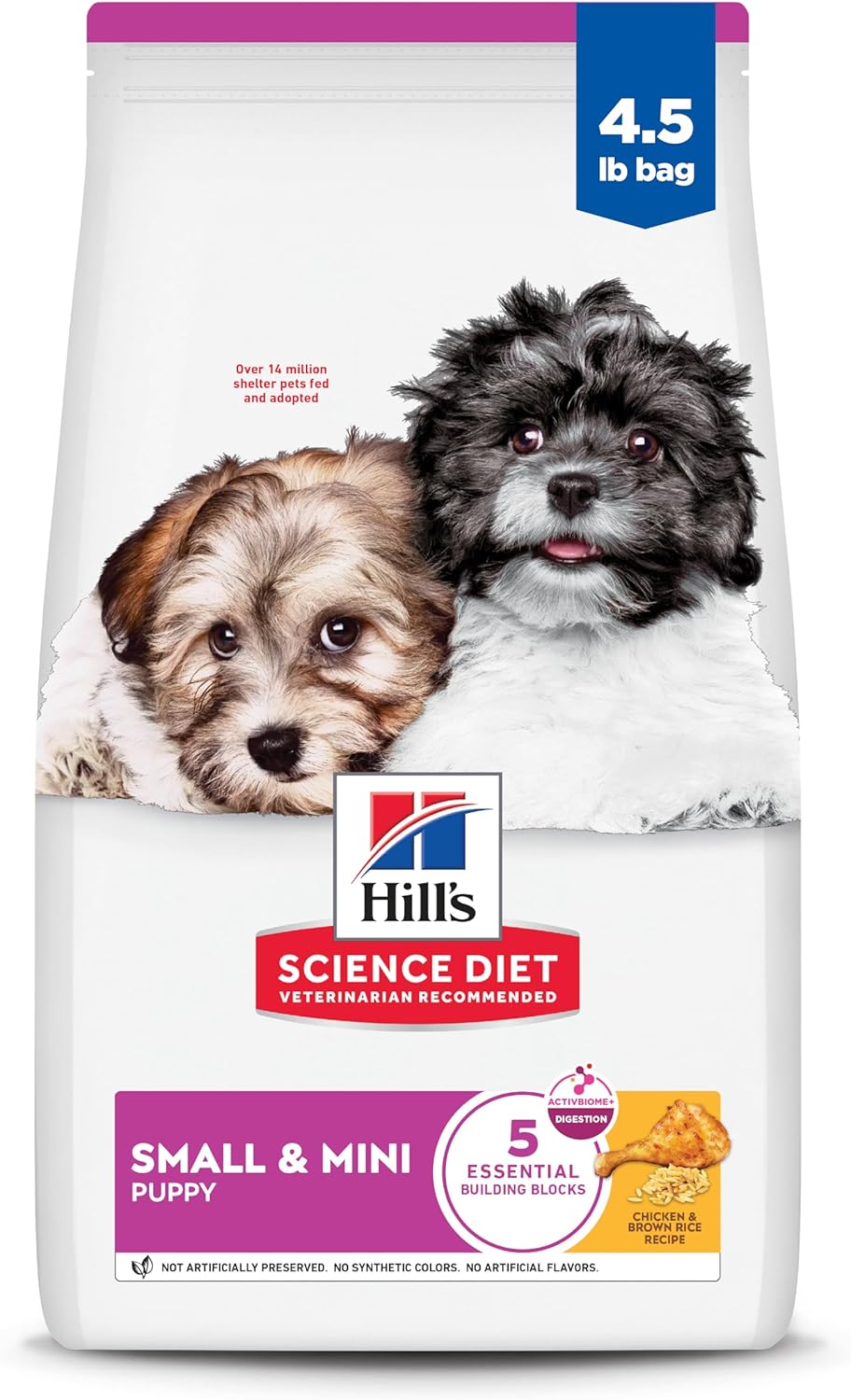
| Flavor | Chicken & Brown Rice |
|---|---|
| Age Range Description | Puppy |
| Specific Uses For Product | Small & Mini Breeds Puppy Premium Nutrition |
| Unit Count | 72 Ounce |
Hill's Science Diet Puppy Small & Mini is a dry kibble formulated specifically for toy and small-breed puppies, combining concentrated calories, high-quality proteins, and nutrients aimed at early development. The small nibble size and calorie density make it convenient for frequent small meals and help meet the higher metabolic needs of little puppies. Notable features include DHA and fish oil for brain and eye development, balanced minerals to support growing bones and teeth, a special antioxidant blend for immune support, and prebiotic fibers to aid digestion. In practice the food is used as a complete diet from weaning through the puppy stage with feeding amounts adjusted to body condition; the bag includes feeding guidelines and the manufacturer recommends transitioning over seven days. Limitations are that the ingredient list includes grains and several plant proteins, so owners preferring grain-free or novel-protein formulas for allergy management may need alternatives, and the 4.5 lb bag size may require frequent repurchasing for multi-puppy households. For most small-breed puppies this provides a vet-focused, nutrient-dense base for growth.
Best for: Buyers seeking a veterinary-recommended, nutrient-dense puppy formula tailored to toy and small breeds who prioritize brain, bone, and immune development in early life.
Less Ideal for: Owners who need a grain-free, limited-ingredient, or novel-protein diet for food sensitivities should look at specialized alternatives.
- Kibble sized for small and toy breed mouths
- Contains DHA and fish oil to support brain and eye development
- Antioxidant blend and vitamins to support immune health
- Prebiotic fibers to support digestion and gut microbiome
- Formulated with concentrated calories and high quality proteins for growth
- Contains grains and common plant proteins that may not suit dogs with specific food sensitivities
- Smaller 4.5 lb bag may require frequent repurchase for multiple puppies
Verdict: The best overall puppy food balances complete nutrition, digestibility, and taste for most mini poodles during critical growth stages.
Blue Buffalo Baby BLUE Puppy Small Breed
Best Budget Puppy Food

| Flavor | Chicken & Oatmeal |
|---|---|
| Age Range Description | Puppy |
| Breed Recommendation | Small Breeds |
| Crude Protein | 29.0% min. |
| Crude Fat | 17.0% min. |
Blue Buffalo Baby BLUE Small Breed Puppy is a dry kibble formulated to support the growth and development of small-breed puppies. It uses deboned chicken as the first ingredient and includes chicken meal, DHA and ARA for cognitive and retinal development, plus LifeSource Bits of vitamins and antioxidants to support immune health. The recipe lists higher protein and fat levels appropriate for energetic young dogs and includes sources of omega fatty acids for skin and coat support. Typical use is daily feeding using the package feeding chart and adjusting for activity and body condition; the kibble is sized and calorie-dense for small mouths and faster metabolisms. It avoids corn, wheat, soy and poultry by-product meals, which can help owners seeking simpler ingredient sets. Limitations for the hypoallergenic pick: the formula contains common proteins like chicken and multiple grains such as oatmeal and barley, so it is not strictly single-protein or grain-free for puppies with confirmed meat or grain allergies. The bag size and ingredient list make this an easy-to-feed, nutrient-forward option for small-breed pups without strict protein or grain sensitivity.
Best for: Small-breed puppy owners who want a nutrient-dense, bite-sized kibble that supports growth and cognitive development without corn, wheat or soy.
Less Ideal for: Owners whose puppies have confirmed chicken or multi-grain sensitivities or who require a strictly single-protein or grain-free hypoallergenic diet.
- Real deboned chicken listed as first ingredient for high-quality protein
- Includes DHA and ARA to support brain and eye development
- LifeSource Bits provide added vitamins, minerals and antioxidants for immune support
- Formulated with smaller, calorie-dense kibble suitable for small mouths and metabolisms
- No corn, wheat, soy, or poultry by-product meals
- Contains chicken and multiple grains so it is not suitable as a single-protein or grain-free hypoallergenic formula
- Only available in a 4 lb bag in this listing which may require more frequent repurchases for multi-puppy households
Verdict: The best budget puppy food provides required vitamins, minerals, and calories for healthy growth while keeping cost per serving low.
ORIJEN Puppy Dry Dog Food 4.5 lb
Best Premium Puppy Food

| Flavor | Puppy Recipe |
|---|---|
| Item Form | Dry Kibble |
| Unit Count | 72 Ounce |
| Age Range Description | Puppy |
| Animal Food Diet Type | Raw |
ORIJEN Puppy is a grain-free dry dog food designed to deliver high-protein, nutrient-dense nutrition for growing puppies. It uses an 85 percent fresh-or-raw animal ingredient approach with wholeprey components such as muscle, organs, and bones so pups get a concentrated source of amino acids, vitamins, and minerals without relying on synthetic additives. Typical use is twice-daily feeding guided by the brand chart, and the kibble includes a freeze-dried coating for added palatability. Practical benefits include a protein-forward recipe to support muscle and brain development, small kibble size aimed at puppies, and added functional ingredients for digestive and immune support. Limitations to consider are the grain-free formulation itself, which may not be necessary for all puppies and can be higher in calories and protein than some owners expect, and the bag size is modest at 4.5 pounds which may require more frequent repurchasing for larger litters or bigger-breed pups.
Best for: Puppy owners who want a grain-free, biologically inspired diet that emphasizes fresh animal ingredients and nutrient density to support rapid growth and development.
Less Ideal for: Owners who prefer lower-protein or grain-inclusive recipes, those feeding adult dogs or puppies with specific caloric restrictions, or caretakers who need larger bulk bags to avoid frequent restocking.
- High inclusion of fresh or raw animal ingredients for complete amino acid profile
- WholePrey meats and organs provide naturally occurring vitamins and minerals
- Grain-free recipe for owners avoiding grains or managing suspected grain sensitivities
- Small kibble and nutrient profile formulated specifically for puppies
- Includes freeze-dried coating to boost palatability and encourage eating
- Smaller 4.5 lb bag may require frequent repurchasing for larger or multiple puppies
- Protein- and calorie-dense formula may be excessive for puppies that need lower energy diets
Verdict: The best premium puppy food offers superior ingredient quality, targeted nutrients, and careful sourcing for owners willing to invest more in early development.
Nulo FreeStyle Small Breed Salmon & Lentils
Best Grain-Free Puppy Food

| Flavor | Salmon & Lentils |
|---|---|
| Item Form | Dry |
| Breed Recommendation | Small Breeds |
| Package Size | 6 lb Bag |
| Special Ingredients | Probiotic |
Nulo FreeStyle Small Breed Salmon & Lentils is a grain-free kibble designed for toy and small-breed puppies and adults. It uses deboned salmon and other animal meals to deliver a high proportion of animal-sourced protein and smaller kibble sized for little mouths. The formula includes omega fatty acids for skin and coat health, taurine and essential amino acids for heart support, and BC30 probiotics plus prebiotic fibers aimed at improving digestion and nutrient absorption. It excludes common fillers and several potential allergens such as grains, chicken, eggs, and artificial colors or preservatives, which can help dogs with grain sensitivities. Feeding follows standard daily portion guidance for small dogs, and the product emphasizes steady energy and lean-muscle support for active little dogs. Limitations are that it is grain-free and higher in animal protein, which may not be necessary or ideal for every Havanese depending on individual medical advice, and owners should confirm portions with their veterinarian for weight management and specific health needs.
Best for: Owners of Havanese who want a grain-free recipe tailored to small mouths and who prioritize animal-based protein, coat support, and digestive-friendly probiotics.
Less Ideal for: Owners whose dogs are on veterinary-prescribed grain-inclusive or low-protein diets, or those who prefer formulas with whole grains for long-term weight management.
- High ratio of animal-based protein with deboned salmon first for lean muscle support
- Smaller kibble size suited to small and toy breed mouths
- Includes omega-3 and omega-6 fatty acids to support skin and coat condition
- Contains BC30 probiotics and prebiotic fibers to help digestive health and nutrient absorption
- Grain-free formulation may not be appropriate for dogs that do better on whole grains or specific veterinary diets
- Higher protein, calorie content requires careful portion control to avoid weight gain
Verdict: The best grain-free puppy food is formulated to supply complete nutrition without grains, useful for puppies with grain sensitivities or owners preferring grain-free diets.
Purina Pro Plan Puppy Chicken & Rice 6 lb
Best High-Protein Puppy Food

| Flavor | Chicken & Rice |
|---|---|
| Age Range Description | Puppy |
| Item Form | Dry |
| Specific Uses For Product | Hip and Joint Support |
| Animal Food Nutrient Content Claim | High Protein |
Purina Pro Plan High Protein Dry Puppy Food Chicken & Rice is a puppy formula designed to support active growth with real chicken as the primary protein source. It is typically fed as a daily dry kibble for puppies and can be offered moistened during weaning or fed dry as puppies mature. Notable features include DHA from fish oil to support brain and vision development, added calcium and phosphorus for bone and tooth growth, live probiotics for digestive health, and antioxidants to support immune development. In practice this formula helps build lean muscle and provides concentrated nutrients for puppies that need higher protein intake, and its digestible recipe reduces the chance of stomach upset during diet transitions. Limitations include the presence of some by-product meals and grain ingredients, which may be less suitable for owners seeking grain-free or novel-protein diets, and the ingredient list includes salts and common additives that some sensitive puppies may not tolerate. Feeding amounts should be adjusted as puppies grow and you may want to consult your veterinarian for breed-specific needs.
Best for: Buyers looking to support active, growing puppies with a higher-protein, vet-backed kibble that emphasizes muscle development and digestive support.
Less Ideal for: Owners seeking a grain-free, novel-protein, or limited-ingredient puppy diet for allergy-prone dogs should consider specialized formulas instead.
- Real chicken listed as the first ingredient for bioavailable animal protein
- Includes DHA from fish oil to support brain and vision development
- Live probiotics and highly digestible formula to ease digestion and stool quality
- Added calcium, phosphorus and minerals to support bone and tooth growth
- Contains poultry by-product meal and common grains rather than novel or grain-free sources
- Includes multiple added ingredients and preservatives that some owners may avoid
Verdict: The best high-protein puppy food emphasizes increased quality protein to support healthy muscle development and active energy needs in growing pups.
Nature's Protection Puppy Dry Food White Fish 3.3 lb
Best Limited-Ingredient Puppy Food
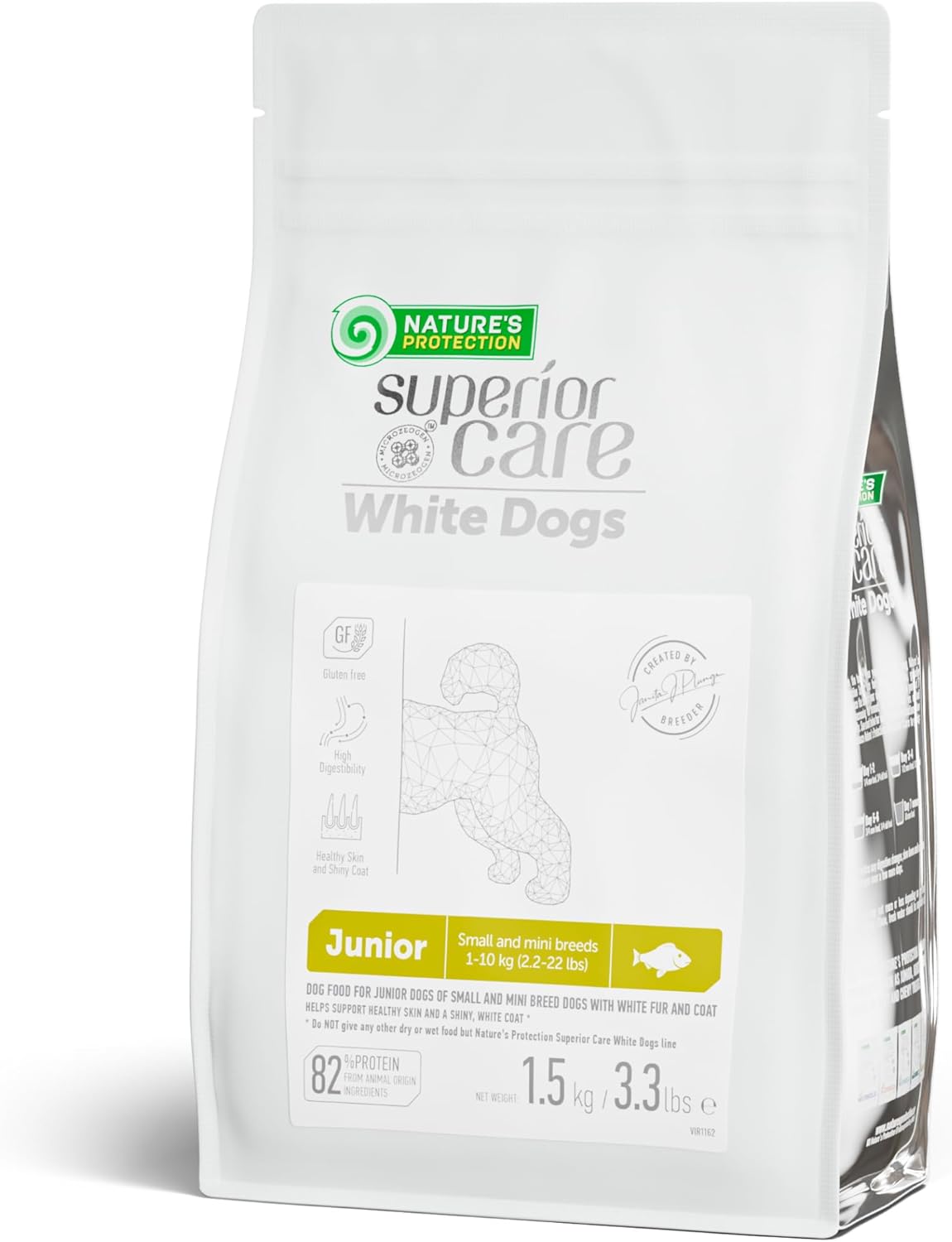
| Flavor | Ocean Whitefish |
|---|---|
| Age Range Description | Puppy |
| Breed Recommendation | Small Breeds |
| Unit Count | 52.8 Ounce |
| Allergen Information | Allergen-Free, Gluten Free, Hypoallergenic |
This Nature's Protection puppy formula is a small-breed dry kibble that uses white fish meal as its first ingredient and targets puppies aged roughly 3–12 months. It is designed for sensitive skin and coat concerns with Microzeogen, salmon oil and flaxseed to boost omega fatty acids, plus added DHA and calcium to support brain development and bone growth. The recipe is grain-free, gluten free and excludes common proteins such as beef and pork, which makes it straightforward to use when diagnosing food sensitivities or reducing exposure to allergens. Kibble size and portion guidance are tuned for small breeds, and the bag size is convenient for trialing a new diet without long-term commitment. Limitations to note are that the ingredient list still contains multiple plant-based ingredients and additives like beet pulp and mixed tocopherols, so it is not a single-protein or ultra-minimal formula; owners tracking strict elimination diets may need a prescription or home-prepared option. Feeding requires the usual gradual transition and portion adjustments by age and weight.
Best for: Buyers who need a puppy formula with a simplified animal-protein focus and gentle coat-support ingredients for small-breed puppies, especially when trying to narrow potential triggers without jumping to a prescription diet.
Less Ideal for: Owners requiring an ultra-minimal or single-ingredient elimination diet for diagnosed food allergies or those who need a prescription therapeutic formula.
- White fish meal listed first for a single primary animal protein source
- Formulated for small-breed puppies with kibble and portion guidance for growth stages
- Includes DHA, calcium and omega fatty acids to support brain, bone and coat health
- Grain-free, gluten-free and marketed as hypoallergenic to reduce common irritants
- Smaller 3.3 lb bag size makes it easy to trial for puppies with sensitivities
- Ingredient list still contains several plant ingredients and additives so it is not an extremely short limited-ingredient diet
- Not a veterinary prescription diet for diagnosed food allergies
Verdict: The best limited-ingredient puppy food uses a short ingredient list to minimize potential allergens and make dietary issues easier to manage.
Cesar Filets in Gravy 40-Count
Best Wet Puppy Food

| Unit Count | 40 Count |
|---|---|
| Item Form | Wet |
| Flavor | Variety Pack |
| Age Range Description | Adult |
| Container Type | Pouch |
Cesar Filets in Gravy arrives as individually sealed peel-and-serve pouches with tender filet pieces slow-cooked in gravy and offered in a three-flavor variety pack. It is used as a full meal, a topper for dry kibble, or a palatable snack to tempt picky eaters and add moisture to daily feeding. Notable features include single-serve convenience, recipes made with real chicken or beef, and formulation declared complete and balanced for adult dogs. In practice the pouches make portioning easy for small breeds and multi-dog households and the gravy helps encourage dogs that need more moisture or are finicky about texture. Limitations are that the recipes contain ingredients like wheat gluten and added color, and the pouch portions are small so multiple pouches are needed for larger dogs or for feeding full daily allowances to active adults; buyers should follow the feeding guide for appropriate portions. Overall the product is a convenient, flavorful wet option that simplifies serving and encourages eating for small or picky dogs.
Best for: Owners of small breeds or picky adult dogs who need a flavorful, easy-to-serve wet meal or topper to boost moisture and appetite.
Less Ideal for: Owners seeking grain-free or limited-ingredient diets or those who need calorie-dense large-portion wet meals for large or very active dogs.
- Individually sealed mini-pouches for easy portioning and grab-and-serve convenience
- Made with real chicken or real beef for recognizable protein sources
- Formulated to be 100% complete and balanced for adult dogs
- Savory gravy increases moisture and helps entice picky eaters
- Variety pack offers multiple flavors to reduce menu fatigue
- Contains wheat gluten and added color which some owners may avoid
- Small pouch size requires multiple pouches to meet full daily needs for larger or very active dogs
Verdict: The best wet puppy food delivers higher moisture content and strong palatability, ideal for fussy eaters or to add hydration to a pup's diet.
Choosing the Right Puppy Food Mini Poodle: Key Factors to Consider
Appropriate Protein Level and Source
Protein supports muscle development and immune function in growing puppies. For mini poodles, choose formulas with moderate to high-quality animal proteins listed early in the ingredient panel. Whole-meat meals and named meat sources generally provide concentrated amino acids that small-breed puppies need for steady growth.
Pay attention to digestibility rather than raw percentage alone. Highly digestible proteins let a small puppy extract more usable nutrients from a smaller volume of food, which is important for tiny stomach capacity. If your pup shows sensitivity, single-protein or novel-protein recipes can reduce digestive upset.
Kibble Size and Texture
Small mouths require appropriately sized kibble to prevent gagging and encourage efficient chewing. Tiny, rounded pieces or thin biscuits are easier for mini poodles to pick up and break down with young teeth. Some diets offer soft-moist or rehydratable options that can be gentler during teething.
Texture also affects saliva production and digestion. Very hard, oversized kibbles can deter a finicky puppy, while overly soft options may be less effective at promoting chewing. Look for formulas that state they are developed for small-breed puppies or list dimensions when available.
Calcium, Phosphorus, and Controlled Calorie Density
Growth demands require the right balance of calcium and phosphorus to support bone development without accelerating growth too rapidly. Small breeds like mini poodles reach skeletal maturity sooner than large breeds, so diets formulated for small-breed puppies typically control mineral ratios and calorie density to match their faster metabolisms.
Calorie concentration matters because tiny puppies need nutrient-dense food in small portions. Overly calorie-dilute diets can force frequent feeding, while overly calorie-concentrated formulas risk rapid weight gain. Follow feeding guidelines and adjust by monitoring body condition during growth.
Digestive Tolerance and Probiotic Support
Sensitive digestion is common in small puppies. Formulas that include highly digestible carbohydrates, limited filler ingredients, and added digestive enzymes or probiotics can reduce gas, loose stools, and meal refusal. Prebiotic fibers support a healthy gut microbiome, which in turn improves nutrient absorption and immune resilience.
If you switch foods, do so gradually over 7 to 10 days to give the microbiome time to adapt. For puppies with recurrent digestive issues, veterinary guidance is advisable before trying specialty formulations.
Fatty Acids and Coat Support
Mini poodles have a curly coat that benefits from dietary omega-3 and omega-6 fatty acids for softness, shine, and skin health. Ingredients like fish oil or flaxseed contribute essential fatty acids that also support brain development and inflammation control. The ratio and bioavailability of these fats impact how noticeable the coat improvements will be.
Look for guaranteed minimums for crude fat and mention of specific omega sources. Adequate fat also provides concentrated energy for an active small-breed puppy, helping maintain body temperature and stamina between meals.
Feeding Convenience and Portion Control
Because mini poodles consume small meals, practical packaging and clear feeding tables help you portion accurately. Formulas that break easily into halves or that offer smaller bite-sized pieces make it simpler to divide daily rations across multiple feedings. Consistent portioning supports steady energy levels and helps avoid overeating.
Consider how the food stores after opening, whether it is easy to measure in grams or tablespoons, and whether it suits your feeding routine, such as free feeding versus scheduled meals. For multi-puppy households, clearly portioned single-feed packs or resealable bags reduce waste and preserve freshness.
How Much Should a Mini Poodle Puppy Eat Each Day?
Daily intake varies with age, activity level, and the food's calorie density. Young puppies typically need three to four meals per day, shifting to two meals by around six months. Use the feeding chart on the package as a starting point, then adjust by monitoring weight and body condition.
Aim for a slim, athletic look rather than plumpness. If your puppy gains too quickly, reduce portion size slightly or switch to a lower-calorie growth formula. If the puppy seems constantly hungry and is failing to gain, increase portions modestly and check stool quality for signs of poor absorption.
- Feed more frequently for very young puppies to stabilize blood sugar.
- Measure portions by weight when possible for accuracy.
- Adjust portions as growth slows to prevent excess weight gain.
What to Do if Your Puppy Has a Sensitive Stomach
Start with a bland transition if you notice loose stools or vomiting: temporary meals of plain cooked lean protein and easily digestible carbs can help stabilize digestion. Then move gradually to a commercial puppy formula designed for sensitive digestion, ideally one with a single protein source or hydrolyzed proteins if advised by a veterinarian.
Introduce probiotics and prebiotic fiber gradually, and avoid sudden ingredient changes. If issues persist beyond a few days or are accompanied by lethargy or dehydration, seek veterinary care for testing and tailored recommendations.
- Switch slowly over 7 to 10 days to reduce digestive upset.
- Look for formulas with added probiotics and digestive enzymes.
- Consult a veterinarian for chronic or severe symptoms.
Can You Mix Wet Food with Kibble for Picky Eaters?
Mixing a small amount of wet food or a food topper with kibble can increase palatability while keeping most meals dry for dental and convenience reasons. Use a modest portion of wet food so you do not dilute the balanced nutrient profile of the complete kibble unless the wet item is formulated as a complete puppy diet.
Be mindful of calorie additions and overall meal balance. If mixing becomes a long-term habit, occasionally rotate the topper or use warm water to soften kibble instead to maintain acceptance without adding extra calories or sodium.
- Limit wet additions to a tablespoon or two for small puppies.
- Prefer complete wet puppy diets when feeding larger wet portions.
- Warm kibble slightly or mix with low-sodium broth as an alternative.
How to Transition From Puppy Food to Adult Food for Mini Poodles
Most mini poodles are ready to switch to adult maintenance food between 9 and 12 months, depending on individual maturity. Watch for slowed growth, reduced appetite for growth formulas, and a stable body condition as signals to transition. Do the change gradually over one to two weeks by increasing adult food proportion while reducing puppy formula.
Choose an adult formula designed for small breeds with appropriate calorie content and continued coat support. Monitor weight and energy in the months after transition and adjust feeding amounts to maintain a lean physique.
- Transition gradually to avoid gastrointestinal upset.
- Time the switch based on maturity, not an arbitrary age.
- Maintain coat-support nutrients through adulthood.
How to Read a Puppy Food Label for Mini Poodle Needs
Start with the guaranteed analysis: check crude protein, crude fat, and crude fiber to understand macronutrient balance. Look for a life-stage claim stating the formula is complete for growth. Ingredient order matters; named animal proteins at the top are preferable to vague meat byproducts.
Also scan for added vitamins and minerals that support development, and note the presence of omega fatty acids for coat health. Check feeding instructions for recommended portion sizes by weight or age and any guidance on kibble size if provided.
- Prioritize formulas labeled for growth or small-breed puppies.
- Look for named protein sources and clear ingredient lists.
- Confirm guaranteed analysis aligns with puppy nutritional needs.
How We Chose the Best Puppy Food Mini Poodle
We focused on criteria that directly affect how well a puppy food meets the needs of mini poodle puppies. First, nutrient density and life-stage balance: we prioritized formulas formulated for growth with appropriate protein, fat, and calcium-to-phosphorus ratios for puppies. Second, kibble size and texture: we looked for small, easy-to-chew pieces or moist alternatives that reduce choking and encourage steady eating in small mouths. Third, digestibility and ingredient quality: protein sources, presence of easily digestible carbohydrates, and limited fillers matter for sensitive stomachs. Fourth, coat and skin support: sources of omega fatty acids and bioavailable zinc or vitamin A help maintain the poodle's curly coat. Fifth, palatability and acceptance: we considered how likely a small puppy is to eat consistently. Finally, safety and manufacturing transparency: packaging that shows guaranteed analysis and clear feeding guidelines scored higher. We excluded formulas intended only for large-breed puppies, adult maintenance, or weight-loss therapeutic diets. We also filtered out products lacking life-stage labeling or those with undisclosed ingredient sources. The shortlist reflects a balance of growth nutrition, small-bite practicality, and ingredient quality rather than single-factor dominance.
Our full evaluation process is outlined in our review methodology.
FAQ
Is grain-free puppy food necessary for mini poodles?
Not usually. Grain-free diets can suit puppies with grain sensitivities, but most mini poodles digest grain-containing diets well. Grain-free is not inherently healthier and should be chosen only for specific tolerances or veterinary recommendations.
How many times a day should a mini poodle puppy be fed?
Feed three to four times daily for young puppies, moving to two meals a day by about six months. Frequent small meals help maintain steady energy and prevent hypoglycemia in tiny breeds.
Can I give human baby food to my puppy during illness?
Plain meat- or poultry-based baby food without added salt or onion powder can be used temporarily to encourage eating, but it lacks balanced nutrition for long-term feeding. Use it briefly and consult your veterinarian if illness persists.
When should I expect to switch from puppy to adult food?
Many mini poodles are ready between 9 and 12 months, but individual maturity varies. Watch for slowed growth and stable body condition to decide the timing, and transition gradually over several days.
Are small-breed puppy formulas better than standard puppy formulas?
Small-breed formulas are formulated with appropriate calorie density, smaller kibble, and adjusted mineral levels for faster-maturing small dogs. They can be more convenient and effective for mini poodles than standard puppy formulas.
Final Verdict
Prioritize balanced growth nutrition, appropriately sized kibble, and digestive tolerance when choosing puppy food for a mini poodle. Focus on digestible protein sources, controlled calorie density, and omega fatty acids to support both development and the characteristic curly coat. Weigh tradeoffs between palatability and nutrient density, and adjust portions based on growth and body condition. With careful selection and gradual transitions, you can choose a food that supports healthy development and makes daily feeding manageable for both you and your mini poodle.

