

Feeding a miniature dachshund puppy requires more precision than feeding larger breeds. You need food that supports steady growth, protects developing joints, and fits the breed's small mouth. This guide shortlists the top puppy foods tailored to miniature dachshunds, focusing on nutrient balance, appropriate calorie density, and bite size that suits tiny jaws. We evaluated options that emphasize digestibility, controlled calcium and phosphorus levels, and joint-supporting nutrients so you can pick food that helps your puppy thrive. Below are our top picks followed by the buying criteria and practical guidance to help you choose the best fit.
Top Picks at a Glance
| Best Overall Puppy Food for Miniature Dachshund An all-around balanced formula suited to most miniature dachshund puppies | Royal Canin Dachshund Puppy 2.5 lb |  |
| Best Budget Puppy Food for Miniature Dachshund A lower-cost option that still meets basic puppy nutritional needs | Pedigree Puppy Dry Dog Food 3.5 lb |  |
| Best Premium Puppy Food A higher-end formula with premium ingredients and extra nutritional features | Farmina N&D Lamb Pumpkin Blueberry Puppy 2.5 kg |  |
| Best High-Protein Puppy Food Formulas with elevated protein levels for active growth and muscle support | Nutro Ultra High Protein Puppy Food 3.5 lb |  |
| Best Small-Breed Puppy Food Kibble and formulas sized and balanced for small-breed puppy needs | Hill's Science Diet Puppy Small & Mini |  |
| Best Limited-Ingredient Puppy Food Simpler recipes with fewer ingredients for sensitive stomachs or allergies | Zignature Puppy Formula 4lb |  |
| Best Grain-Free Puppy Food Grain-free recipes that substitute alternative carbohydrate sources | Solid Gold Chicken Puppy Food 3.75 lb |  |
Royal Canin Dachshund Puppy 2.5 lb
Best Overall Puppy Food for Miniature Dachshund

| Age range | 1 month and up / 8 weeks to 10 months |
|---|---|
| Flavor | Chicken |
| Unit Count | 40 Ounce |
| Item Form | Pellet |
| Breed Recommendation | Dachshund |
Royal Canin Dachshund Puppy is a breed-tailored dry kibble designed specifically for Dachshund puppies during early growth. The formula uses a small, uniquely shaped kibble to match tiny jaws and encourage easy pickup, while a blend of antioxidants including vitamin E supports immune development. Calcium and phosphorus levels are balanced to help bone and joint support for a long-backed breed, and the recipe emphasizes highly digestible proteins and precise fiber to promote healthy digestion and firmer stool. The product also includes targeted additives such as glucosamine, chondroitin, and L-carnitine for joint and body development, and the chicken-flavored profile is generally palatable to small puppies. Limitations are that this is narrow in scope: it is specifically for purebred Dachshund puppies 8 weeks to 10 months and comes in a small 2.5 lb bag, so multi-puppy households or long-term feeding will require more frequent repurchase or larger sizes. Ingredients include common grains and chicken by-product meal, so owners preferring grain-free or whole-muscle-protein formulas should look elsewhere.
Best for: Buyers wanting a breed-specific, growth-stage formula that matches a mini Dachshund’s jaw shape and supports immune, bone, and digestive development during puppyhood.
Less Ideal for: Owners seeking grain-free, novel-protein, or long-term adult feeding solutions should consider other formulas or transition plans.
- Kibble shape and size designed for small Dachshund jaws for easier pickup and chewing
- Antioxidant complex with vitamin E to support developing immune system
- Balanced calcium and phosphorus plus joint supplements like glucosamine and chondroitin to support spine and limb development
- Highly digestible proteins and fiber to promote digestive health and better stool quality
- Formulated specifically for Dachshund puppies only, not intended as a long-term adult diet
- Contains grains and chicken by-product meal, which some owners may want to avoid
Verdict: The best overall puppy food for miniature dachshunds that balances appropriate calories, protein, fat, and micronutrients to support steady growth, healthy weight, and everyday energy needs.
Pedigree Puppy Dry Dog Food 3.5 lb
Best Budget Puppy Food for Miniature Dachshund

| Flavor | Chicken & Vegetable |
|---|---|
| Age Range Description | Puppy |
| Item Form | Dry Kibble |
| Unit Count | 56 Ounce |
| Animal Food Nutrient Content Claim | High Protein, No Added Sugar |
Pedigree Puppy Dry Dog Food is a straightforward, budget-friendly puppy kibble made from chicken-based protein, grains, and added vitamins and minerals to support growth. You would typically use it as a daily staple while transitioning a young dog from weaning to adult food, following the feeding guide on the package to match your puppy's weight and age. The formula emphasizes high-quality protein sources for muscle development and includes 36 vitamins, minerals, and amino acids intended to support immune health, brain development, and bone strength. In practice this means an owner gets a complete and balanced commercial diet that is easy to portion and serve dry or softened with water for very young pups. Ingredient-wise it contains common commodity grains and by-product meals rather than premium single-source meats, so it delivers required calories and nutrients at a lower cost but not the cleanest ingredient panel. Expect good availability and consistent kibble size, but owners seeking grain-free, novel proteins, or limited-ingredient formulas will need to look elsewhere.
Best for: Value-conscious puppy owners who need an affordable, complete puppy kibble that supports growth and daily feeding routines.
Less Ideal for: Owners who require grain-free, novel-protein, or limited-ingredient veterinary diets for food sensitivities should consider specialty formulas instead.
- Formulated specifically for puppies with nutrients to support growth and immune health
- Contains high-protein sources to support muscle development
- Includes 36 vitamins, minerals, and amino acids for complete and balanced nutrition
- Easy-to-follow feeding guide for age and weight makes portioning simple
- Uses ingredient list with grains and by-product meals rather than single-source premium proteins
- Not suitable for owners seeking grain-free or limited-ingredient diets
Verdict: The best budget puppy food for miniature dachshunds that provides necessary vitamins, minerals, and adequate protein at a lower price while remaining safe and palatable for growing pups.
Farmina N&D Lamb Pumpkin Blueberry Puppy 2.5 kg
Best Premium Puppy Food

| Flavor | Blueberry, Pumpkin |
|---|---|
| Age Range Description | Puppy |
| Item Form | Pellet |
| Unit Count | 88 Ounce |
| Animal Food Diet Type | Limited Ingredient |
Farmina N&D Lamb, Pumpkin & Blueberry Mini Puppy is a grain-free dry kibble designed for growing puppies with a focus on high animal protein and natural ingredients. It is typically fed as a complete diet for puppies, including those that will mature into larger sizes, and is used to support growth, immune function, and digestive regulation through ingredients like pumpkin, pomegranate, and botanical essences. The recipe highlights lamb and dehydrated lamb as primary protein sources, with added herring, dried eggs, and fish oils for additional animal-based nutrients and omega fatty acids. Pumpkin and fruit inclusions provide fiber, beta-carotene, and antioxidants intended to aid intestinal motility and immune support, while added cartilage sources supply glucosamine and chondroitin for joint support. Practical benefits include a high-protein, limited-ingredient formulation that suits owners prioritizing meat-forward recipes and functional botanical additions, and a compact 2.5 kg bag size that fits smaller households. Limitations are that it is grain-free and includes legumes like pea starch, which some puppies may not tolerate, and owners should transition gradually and monitor for individual sensitivities.
Best for: Owners seeking a premium, meat-forward puppy diet with targeted functional ingredients to support growth, digestion, and immune health.
Less Ideal for: Owners who prefer grain-inclusive or very low-legume diets, or those feeding multiple large-breed puppies who need larger bulk packaging.
- High animal protein focus with lamb and dehydrated lamb as main ingredients
- Includes functional ingredients like pumpkin, blueberry, and pomegranate for fiber and antioxidants
- Contains added sources of joint support such as chicken cartilage with glucosamine and chondroitin
- Formulated for puppy life stages and suitable for puppies that will grow into larger adults
- Grain-free formula uses pea starch which can cause digestive sensitivity in some puppies
- Smaller 2.5 kg bag may require more frequent repurchasing for multiple or rapidly growing puppies
Verdict: The best premium puppy food for owners who want top-tier ingredient quality, targeted nutrients, and enhanced formulations to support optimal development and long-term health.
Nutro Ultra High Protein Puppy Food 3.5 lb
Best High-Protein Puppy Food

| Flavor | Chicken, Lamb & Salmon |
|---|---|
| Age Range Description | Puppy |
| Item Form | Dry Kibble |
| Unit Count | 56 Ounce |
| Special Ingredients | Chicken, Lamb, Salmon |
Nutro Ultra High Protein Puppy Food is a kibble-style puppy diet built around chicken as the first ingredient plus lamb and salmon meals to boost protein and flavor. It is intended for daily feeding of growing puppies and includes DHA for brain and eye development, omega fatty acids for skin and coat support, and a 14-superfood medley of whole grains, seeds, and fruits. Typical use is straightforward: follow the provided feeding chart for age and weight, offer measured meals to support growth, and monitor body condition as activity levels change. The higher protein and trio of animal proteins deliver calorie density and amino acids useful for active breeds, while added antioxidants and vitamins support immune and developmental needs. Limitations include a relatively small 3.5 lb bag size that may require frequent repurchasing for medium or large litters, and the formula contains grains which some owners avoid on elimination diets. Ingredient transparency and an emphasis on real proteins make this a sensible choice for owners prioritizing protein-rich, nutritionally-complete puppy food.
Best for: Owners of active, fast-growing puppies who want a protein-forward, nutritionally complete kibble to support lean mass and developmental needs.
Less Ideal for: Owners who require grain-free or strict limited-ingredient diets, or those who need larger bulk bag sizes to feed multiple puppies without frequent repurchasing.
- Real animal proteins listed first with a protein trio (chicken, lamb, salmon) for amino acid variety
- Formulated with DHA to support brain and eye development in puppies
- Includes omega 3 and 6 sources to help skin and coat condition
- Contains a blend of 14 superfoods and added antioxidants for immune and overall health
- Small 3.5 lb bag may not be practical for larger or multi-dog households
- Contains grains, so it is not suitable for owners seeking grain-free or limited-ingredient diets
Verdict: The best high-protein puppy food for owners seeking extra amino acids to support lean muscle development, higher activity levels, and recovery during rapid growth stages.
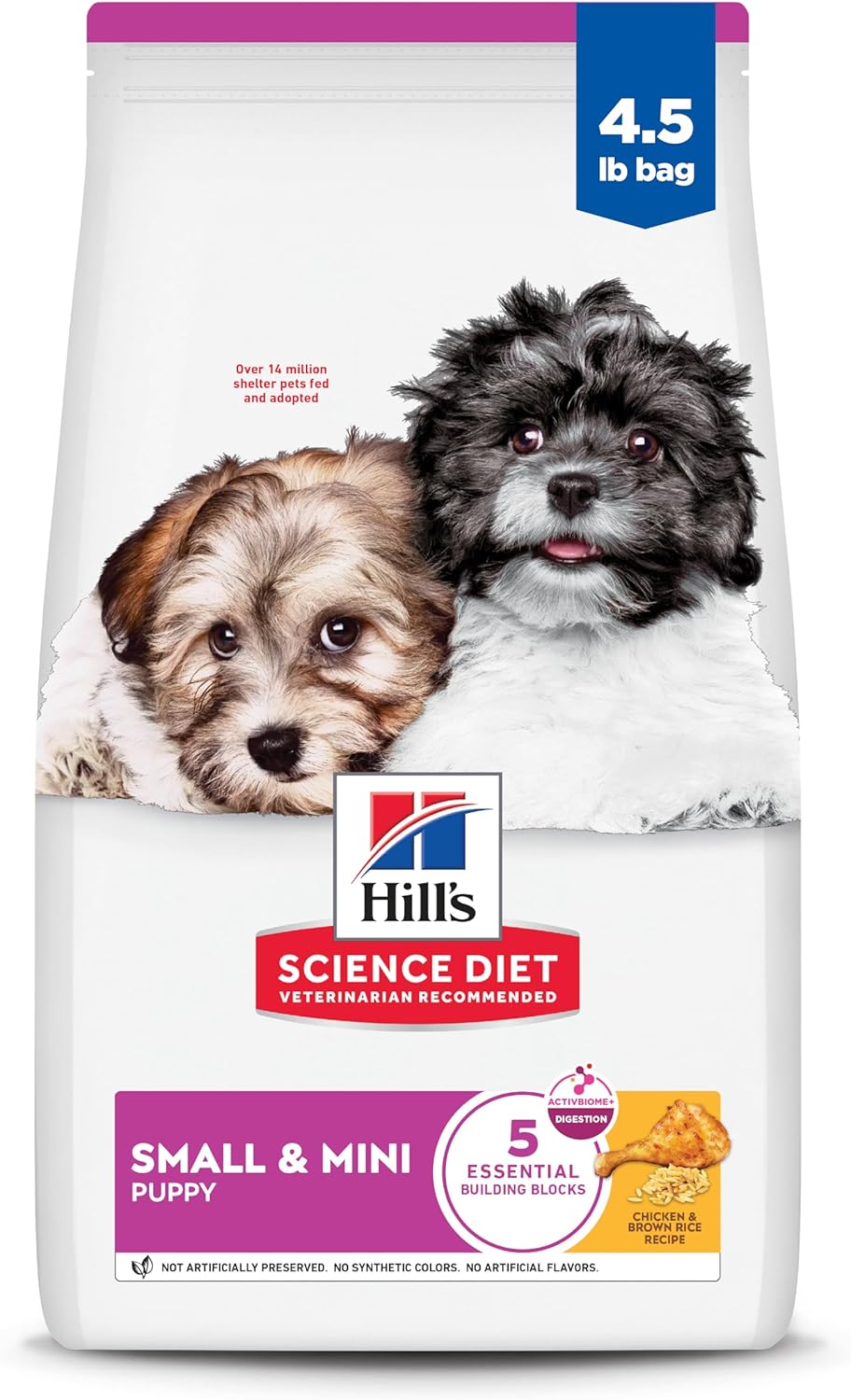
Hill's Science Diet Puppy Small & Mini
Best Small-Breed Puppy Food
| Flavor | Chicken & Brown Rice |
|---|---|
| Age Range Description | Puppy |
| Specific Uses For Product | Small & Mini Breeds Puppy Premium Nutrition |
| Unit Count | 72 Ounce |
Hill's Science Diet Puppy Small & Mini is a dry kibble formulated specifically for toy and small-breed puppies, combining concentrated calories, high-quality proteins, and nutrients aimed at early development. The small nibble size and calorie density make it convenient for frequent small meals and help meet the higher metabolic needs of little puppies. Notable features include DHA and fish oil for brain and eye development, balanced minerals to support growing bones and teeth, a special antioxidant blend for immune support, and prebiotic fibers to aid digestion. In practice the food is used as a complete diet from weaning through the puppy stage with feeding amounts adjusted to body condition; the bag includes feeding guidelines and the manufacturer recommends transitioning over seven days. Limitations are that the ingredient list includes grains and several plant proteins, so owners preferring grain-free or novel-protein formulas for allergy management may need alternatives, and the 4.5 lb bag size may require frequent repurchasing for multi-puppy households. For most small-breed puppies this provides a vet-focused, nutrient-dense base for growth.
Best for: Buyers seeking a veterinary-recommended, nutrient-dense puppy formula tailored to toy and small breeds who prioritize brain, bone, and immune development in early life.
Less Ideal for: Owners who need a grain-free, limited-ingredient, or novel-protein diet for food sensitivities should look at specialized alternatives.
- Kibble sized for small and toy breed mouths
- Contains DHA and fish oil to support brain and eye development
- Antioxidant blend and vitamins to support immune health
- Prebiotic fibers to support digestion and gut microbiome
- Formulated with concentrated calories and high quality proteins for growth
- Contains grains and common plant proteins that may not suit dogs with specific food sensitivities
- Smaller 4.5 lb bag may require frequent repurchase for multiple puppies
Verdict: The best small-breed puppy food designed with appropriately sized kibble, calorie density, and nutrient balance to meet the faster metabolisms and smaller mouths of little puppies.
Zignature Puppy Formula 4lb
Best Limited-Ingredient Puppy Food

| Flavor | Turkey |
|---|---|
| Age Range Description | All Life Stages |
| Item Form | kibble |
| Special Ingredients | Probiotics, Omega-3/Omega-6 Fatty Acids |
| Package Size Name | 4lb |
Zignature Puppy Formula is a limited-ingredient kibble aimed at supporting puppy growth while minimizing common dietary triggers. It uses primary proteins like turkey and whitefish and includes added probiotics plus omega-3/omega-6 fatty acids and DHA to support digestion, brain development, and skin and coat health. The recipe lists recognizable ingredients and avoids a long laundry list of novel additives, which makes it straightforward to use when testing for sensitivities: transition over a week using the supplied mixing schedule and monitor reactions. Practical benefits include multi-protein nutrition for growth, built-in digestive support from probiotic strains, and a formulation suited to puppies of various breeds. Important limitations are that the formula still contains several legume ingredients (chickpeas, lentils, peas) and multiple protein meals, so it may not be ideal for puppies with strict single-protein elimination needs, and the 4 lb retail bag means more frequent repurchasing for larger or fast-growing breeds like huskies. Feeding guides are provided by weight and age, but buyers should consult their veterinarian when managing suspected food sensitivities.
Best for: Owners of Husky puppies who need a generally simple, limited-ingredient kibble to help identify or manage mild sensitivities while still giving complete puppy nutrition.
Less Ideal for: Puppies that require a single-source protein elimination diet or households wanting large bulk bags to reduce shopping frequency.
- Limited-ingredient approach with primary proteins clearly listed (turkey, whitefish)
- Added probiotics to support digestive health during diet transitions
- Contains omega-3/omega-6 fatty acids and DHA for brain and skin/coat support
- Includes feeding transition instructions and age/weight feeding guide
- Contains multiple protein meals and legumes so it is not a strict single-protein elimination diet
- 4 lb bag size may require frequent repurchase for fast-growing or larger-breed puppies
Verdict: The best limited-ingredient puppy food for puppies with food sensitivities or suspected triggers, offering a shorter, simpler ingredient list to help identify and avoid problem items.
Solid Gold Chicken Puppy Food 3.75 lb
Best Grain-Free Puppy Food

| Flavor | Puppy Formula Chicken |
|---|---|
| Age Range Description | Puppy |
| Specific Uses For Product | Digestive Health |
| Unit Count | 60 Ounce |
Solid Gold Chicken Dry Puppy Food is a grain-free puppy kibble formulated around cage-free chicken and fortified with DHA, probiotics, and a mix of superfoods intended to support digestion, immune health, skin and brain development. You would typically feed this as an everyday complete diet for puppies of all breeds, following the package feeding guidelines by weight. Notable features include cage-free chicken as the first ingredient, added living probiotics and pumpkin for gut support, DHA and omega fatty acids for brain and coat health, and a nutrientboost blend with fruits and seeds. In practice the kibble aims to be digestible for sensitive tummies and offers nutrient density suitable for growing pups; the included probiotics and fiber sources should help with stool quality and nutrient absorption. Limitations are that it is a grain-free, higher-end formula which may cost more than generic puppy foods and may not be necessary for puppies without digestive issues or specific dietary needs. Also buyers who require grain-inclusive or limited-ingredient single-protein diets for allergies should compare ingredient lists carefully.
Best for: Owners who prioritize elevated ingredient quality and digestive support and are willing to invest in a premium puppy formula for long-term development and gut health.
Less Ideal for: Owners seeking an economical everyday puppy kibble or those who need a single-protein, limited-ingredient prescription for known allergies should consider other options.
- Cage-free chicken as first ingredient for a high-quality protein source
- Contains DHA and omega fatty acids to support brain and skin/coat development
- Added probiotics plus pumpkin and prebiotic fibers to support digestion and gut flora
- Grain-free and gluten-free formulation for owners avoiding corn, wheat, soy or gluten
- Grain-free specialty formula may be pricier than standard puppy diets
- Not a single-protein limited-ingredient diet for puppies with specific protein allergies
Verdict: The best grain-free puppy food for owners preferring formulas without traditional grains, focusing on alternative carbs and proteins while still delivering complete nutrition for growth.
Choosing the Right Puppy Food Miniature Dachshund: Key Factors to Consider
Calorie Density and Controlled Weight Gain
Miniature dachshund puppies burn energy quickly but also face lifelong risk of obesity if growth is excessive. Choose foods formulated with the right calorie density for small breeds so puppies can meet growth needs without gaining excess fat.
A balanced calorie profile helps you feed reasonable portion sizes that are manageable for a small stomach. Overfeeding during the rapid growth phase can increase stress on developing joints and the long spine common to dachshunds, so look for formulations that support steady, proportionate gain rather than rapid weight increases.
Protein Quality and Quantity
High-quality animal proteins supply the essential amino acids puppies need for muscle development and overall growth. For a miniature dachshund puppy, the protein source should be digestible and listed clearly in the ingredient panel.
Adequate protein supports lean mass while training and playing. Excessive protein is not beneficial and can add unnecessary calories, so select a formula that balances digestible protein levels appropriate for small-breed puppy growth stages.
Controlled Calcium and Phosphorus Levels
Mineral balance is critical during skeletal development. Too much calcium or an improper calcium-to-phosphorus ratio can lead to abnormal bone growth in small-breed puppies.
Puppy formulas designed for smaller breeds typically control these minerals to match the breed's growth rate. Ensuring the food follows recognized guidelines for puppy mineral levels reduces the risk of developmental orthopedic issues later in life.
Kibble Size and Texture
Miniature dachshunds have narrow jaws and shorter muzzles, so kibble that is too large or too hard makes eating difficult and can discourage proper chewing. Small, appropriately shaped kibble helps puppies pick up food and reduces the risk of gulping.
Texture also affects palatability and dental development. Softer kibbles or smaller, easily fractured pieces can be better for very young puppies transitioning from soft food, while firmer small kibbles support gradual dental abrasion as teeth emerge.
Digestive Aids and Ingredient Tolerability
Puppies commonly experience sensitive digestion during dietary transitions. Ingredients that support gut health, such as prebiotics, probiotics, and easily digestible fiber sources, can reduce stool variability and help nutrient absorption.
Avoiding common irritants or excessive fillers can also improve tolerability. Consider formulas that rely on whole-food carbohydrate sources and limit artificial additives if your puppy shows signs of digestive sensitivity.
Joint-supporting Nutrients and Healthy Fats
Because miniature dachshunds have an elongated spine and are susceptible to back issues, nutrients that support joint and spinal health are important even in puppyhood. Omega-3 fatty acids, including EPA and DHA, contribute to healthy tissue development and help modulate inflammation.
Appropriate levels of dietary fats supply concentrated energy for small stomachs and help with the absorption of fat-soluble vitamins. Look for balanced fat levels that provide energy without promoting excess weight gain.
How Much Should a Miniature Dachshund Puppy Eat Each Day?
Daily feeding amounts depend on the puppy's age, activity level, and the food's calorie density. Young puppies usually require several small meals per day to meet energy needs without overfilling a tiny stomach.
Follow the feeding guide on the product label as a starting point, then adjust portions based on steady weight gain and body condition. Monitor your puppy's ribs and waist visually and by touch; you should be able to feel ribs with a light fat covering and see a defined waistline. If weight climbs too quickly, reduce portion sizes slightly and consult a veterinarian for targeted guidance.
- Puppies under 4 months often do well with 3 to 4 meals daily.
- From about 4 to 6 months, transition to 2 to 3 meals daily.
- Weigh and condition-check weekly during rapid growth phases.
When Should You Switch From Puppy to Adult Food?
Most small-breed dogs finish rapid growth earlier than large breeds, often between 9 and 12 months. The right moment to switch depends on your puppy's growth trajectory and body condition rather than strict age alone.
Switch gradually over a week to 10 days to avoid digestive upset. Start the transition when your puppy shows mature body proportions: steady weight gain that has begun to slow and fully erupted adult teeth are helpful markers. If in doubt, consult your veterinarian for a growth-evaluation and personalized timing.
- Watch for slowed, steady growth as a sign to prepare for transition.
- Make dietary changes gradually: increase adult food proportion by 10–20% every few days.
How to Handle Picky Eating in a Tiny-breed Puppy
Picky eating can stem from teething, boredom, or abrupt diet changes. Maintain consistent meal times and avoid free-feeding to encourage appetite at scheduled meals. Warming dry food slightly or adding a small amount of a palatable topper can entice reluctant eaters during short-term phases.
Avoid frequent flavoring or topping that could create dependence on additives. If appetite loss persists for more than 24 to 48 hours or is accompanied by other symptoms, seek veterinary advice to rule out underlying health issues.
- Stick to routine feeding times and limit treats to conserve appetite.
- Use modest warming or a teaspoon of plain cooked protein as a temporary attractant.
Are Grain-free Formulas a Good Option for Miniature Dachshund Puppies?
Grain-free diets can be appropriate for puppies with specific grain sensitivities, but they are not inherently superior. Many well-formulated puppy foods include grains as digestible carbohydrate sources that provide fiber and steady energy.
If you suspect a sensitivity, try an elimination approach under veterinary guidance and watch for improvements in stool quality and coat condition. For most puppies, the overall nutrient balance and ingredient quality matter more than the presence or absence of grains.
- Do not assume grain-free equals healthier; evaluate based on ingredients and nutrition.
- Consider veterinary input before switching to grain-free for suspected sensitivities.
Tips for Feeding During Training and Socialization
Small, low-calorie training treats help reinforce behavior without adding excessive calories. Use tiny portions or break standard kibble pieces into smaller bits to reward quickly during sessions.
Incorporate training food into your puppy's daily ration so treats do not inflate total daily calories. Keep a consistent record of treats and adjust meal portions to keep overall intake balanced while supporting training progress.
- Reserve highly palatable treats for critical training moments.
- Count treats toward daily calorie allotment to prevent overfeeding.
How We Chose the Best Puppy Food Miniature Dachshund
We shortlisted products that specifically address the nutritional and physical needs of small-breed puppies. Our evaluation emphasized complete nutrient profiles that meet or exceed puppy growth requirements, with careful attention to protein quality, calorie density, and controlled mineral ratios to support healthy bone development. Digestibility and gastrointestinal support were key filters; we prioritized foods that include probiotic or prebiotic ingredients and limited hard-to-digest fillers. Kibble size and texture were evaluated to ensure bites are small enough for miniature dachshund mouths and easy to chew. We also considered formulation features that help protect developing joints and support healthy weight, such as appropriate levels of omega-3 fatty acids and joint-friendly nutrients. We excluded products intended for adult dogs, large-breed puppy formulas, and therapeutic veterinary diets that require a prescription. The final list reflects options that balance growth-phase nutrition, palatability, and physical bite considerations important to miniature dachshund puppies.
Our full evaluation process is outlined in our review methodology.
FAQ
How often should I feed a miniature dachshund puppy?
Feed young puppies 3 to 4 times daily when they are very small, then reduce to 2 to 3 meals as they grow older. Adjust frequency based on age, activity, and your veterinarian's advice.
What kibble size is best for a miniature dachshund puppy?
Choose small, narrow kibble pieces that are easy to pick up and chew. Kibble designed for small breeds or labeled small-bite is usually a better fit for tiny jaws and short muzzles.
Is it necessary to buy a small-breed puppy formula?
Small-breed formulas are tailored for higher calorie density and smaller kibble, which often suits miniature dachshund puppies. The decision depends on your puppy's growth rate and appetite; consult a vet if you are unsure.
Can I mix wet food with dry kibble for my puppy?
Mixing wet and dry can improve palatability and increase moisture intake, but be mindful of total calories. Introduce combinations gradually and adjust dry portions so overall nutrient balance and calorie intake remain appropriate.
What signs indicate my puppy needs a different food?
Poor weight gain, persistent digestive upset, dull coat, or signs of food intolerance suggest a need to reassess the diet. If you observe these issues, consult your veterinarian to identify suitable alternatives.
Final Verdict
Prioritize a puppy food that balances calorie density, digestible protein, and controlled mineral levels while offering appropriately sized kibble. For miniature dachshunds, steady growth and joint protection matter as much as immediate palatability. Weigh tradeoffs between energy density and portion control, and monitor your puppy's body condition and stool quality closely during growth. With attention to those factors and regular veterinary checkups, you can choose a feeding plan that supports healthy development and long-term wellbeing.

