

Picking the right puppy food matters more for spaniels than for many other breeds because their activity level, coat care needs, and growth patterns demand a particular balance of nutrients. You want a formula that supports steady muscle development, manageable energy bursts, and healthy skin and coat without upsetting a sensitive stomach. This guide shortlists the top puppy foods for spaniels and explains the nutritional strengths and tradeoffs to help you choose the best long-term option. Below you will find our top picks and the evaluation criteria we used to narrow the field, followed by practical buying guidance for spaniel owners.
Top Picks at a Glance
| Best Overall Puppy Food A well-rounded formula that fits most puppies' nutritional needs | Hill's Science Diet Puppy Small & Mini |  |
| Best Budget Puppy Food An affordable option that still meets basic puppy nutritional requirements | Pedigree Puppy Dry Dog Food 3.5 lb |  |
| Best Premium Puppy Food A higher-end formula focused on superior ingredients and nutrition | Royal Canin Medium Puppy Dry Dog Food 30 lb |  |
| Best High-Protein Puppy Food Formulas with elevated protein for active growth and muscle development | Purina Pro Plan Puppy Chicken & Rice 6 lb |  |
| Best Limited-Ingredient Puppy Food Simpler formulas that reduce exposure to common allergens and fillers | Zignature Puppy Formula 25 lb |  |
| Best Wet Puppy Food Canned or pouch options that boost palatability and hydration | Purina Pro Plan Puppy Pate 13 oz | 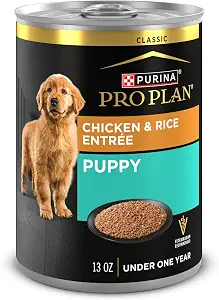 |
| Best Large-Breed Puppy Food Formulated for bigger breeds with controlled growth and joint support | Hill's Science Diet Puppy Large Breed |  |
Hill's Science Diet Puppy Small & Mini
Best Overall Puppy Food
| Flavor | Chicken & Brown Rice |
|---|---|
| Age Range Description | Puppy |
| Specific Uses For Product | Small & Mini Breeds Puppy Premium Nutrition |
| Unit Count | 72 Ounce |
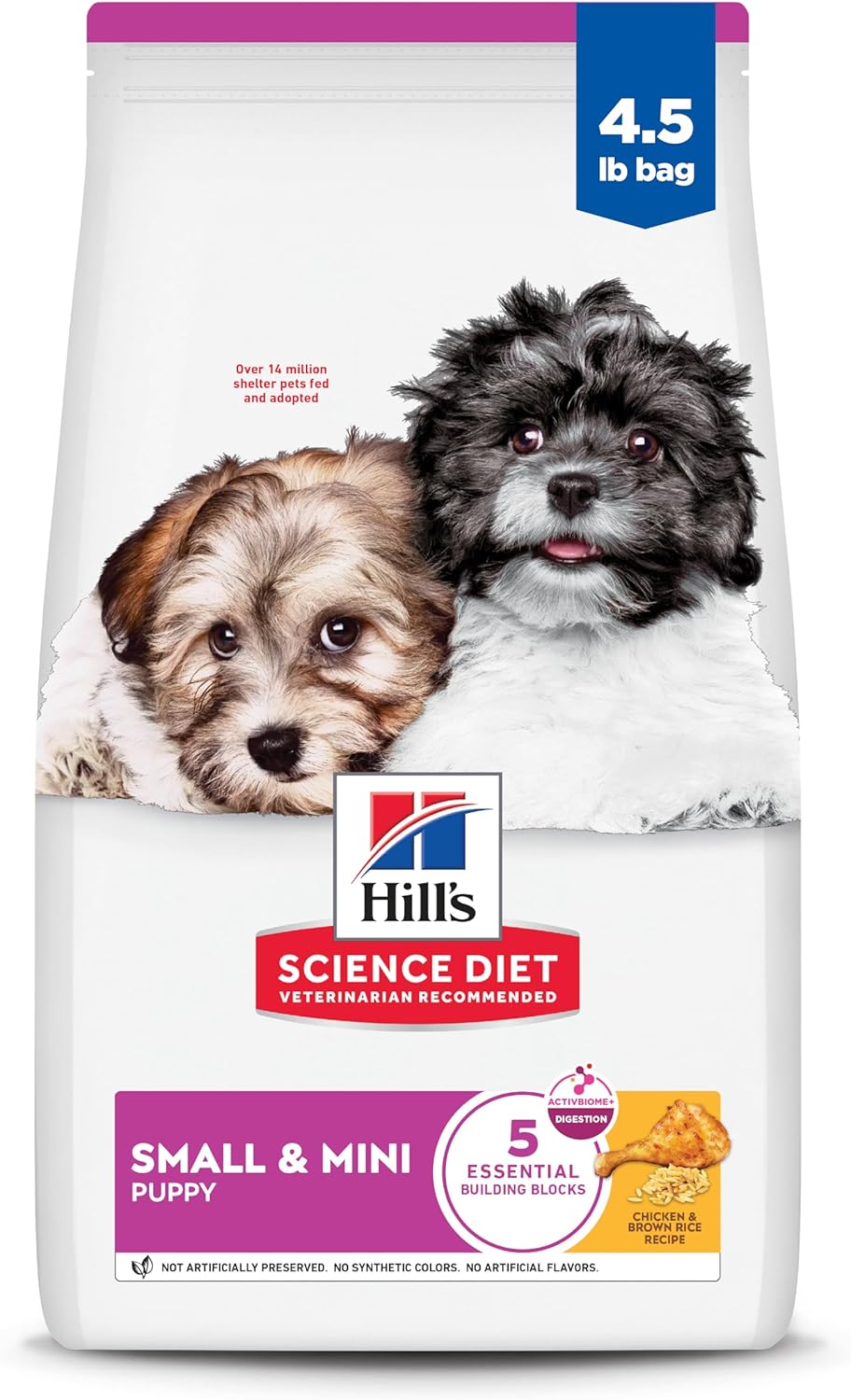
Hill's Science Diet Puppy Small & Mini is a dry kibble formulated specifically for toy and small-breed puppies, combining concentrated calories, high-quality proteins, and nutrients aimed at early development. The small nibble size and calorie density make it convenient for frequent small meals and help meet the higher metabolic needs of little puppies. Notable features include DHA and fish oil for brain and eye development, balanced minerals to support growing bones and teeth, a special antioxidant blend for immune support, and prebiotic fibers to aid digestion. In practice the food is used as a complete diet from weaning through the puppy stage with feeding amounts adjusted to body condition; the bag includes feeding guidelines and the manufacturer recommends transitioning over seven days. Limitations are that the ingredient list includes grains and several plant proteins, so owners preferring grain-free or novel-protein formulas for allergy management may need alternatives, and the 4.5 lb bag size may require frequent repurchasing for multi-puppy households. For most small-breed puppies this provides a vet-focused, nutrient-dense base for growth.
Best for: Buyers seeking a veterinary-recommended, nutrient-dense puppy formula tailored to toy and small breeds who prioritize brain, bone, and immune development in early life.
Less Ideal for: Owners who need a grain-free, limited-ingredient, or novel-protein diet for food sensitivities should look at specialized alternatives.
- Kibble sized for small and toy breed mouths
- Contains DHA and fish oil to support brain and eye development
- Antioxidant blend and vitamins to support immune health
- Prebiotic fibers to support digestion and gut microbiome
- Formulated with concentrated calories and high quality proteins for growth
- Contains grains and common plant proteins that may not suit dogs with specific food sensitivities
- Smaller 4.5 lb bag may require frequent repurchase for multiple puppies
Verdict: The best overall puppy food balances complete nutrition, digestibility, palatability, and ingredient quality to suit the majority of growing puppies.
Pedigree Puppy Dry Dog Food 3.5 lb
Best Budget Puppy Food

| Flavor | Chicken & Vegetable |
|---|---|
| Age Range Description | Puppy |
| Item Form | Dry Kibble |
| Unit Count | 56 Ounce |
| Animal Food Nutrient Content Claim | High Protein, No Added Sugar |
Pedigree Puppy Dry Dog Food is a straightforward, budget-friendly puppy kibble made from chicken-based protein, grains, and added vitamins and minerals to support growth. You would typically use it as a daily staple while transitioning a young dog from weaning to adult food, following the feeding guide on the package to match your puppy's weight and age. The formula emphasizes high-quality protein sources for muscle development and includes 36 vitamins, minerals, and amino acids intended to support immune health, brain development, and bone strength. In practice this means an owner gets a complete and balanced commercial diet that is easy to portion and serve dry or softened with water for very young pups. Ingredient-wise it contains common commodity grains and by-product meals rather than premium single-source meats, so it delivers required calories and nutrients at a lower cost but not the cleanest ingredient panel. Expect good availability and consistent kibble size, but owners seeking grain-free, novel proteins, or limited-ingredient formulas will need to look elsewhere.
Best for: Value-conscious puppy owners who need an affordable, complete puppy kibble that supports growth and daily feeding routines.
Less Ideal for: Owners who require grain-free, novel-protein, or limited-ingredient veterinary diets for food sensitivities should consider specialty formulas instead.
- Formulated specifically for puppies with nutrients to support growth and immune health
- Contains high-protein sources to support muscle development
- Includes 36 vitamins, minerals, and amino acids for complete and balanced nutrition
- Easy-to-follow feeding guide for age and weight makes portioning simple
- Uses ingredient list with grains and by-product meals rather than single-source premium proteins
- Not suitable for owners seeking grain-free or limited-ingredient diets
Verdict: The best budget puppy food provides necessary calories, protein, and essential nutrients at a lower price while maintaining acceptable ingredient quality and safety.
Royal Canin Medium Puppy Dry Dog Food 30 lb
Best Premium Puppy Food

| Flavor | Chicken |
|---|---|
| Age Range Description | Puppy |
| Breed Recommendation | Medium Breeds |
| Unit Count | 480 Ounce |
| Container Type | Bag |
Royal Canin Size Health Nutrition Medium Puppy is a dry kibble formulated for medium-breed puppies expected to reach 23–55 pounds as adults. It supplies tailored levels of protein, DHA and omega-3 for brain development, antioxidants for immune support, and a blend of prebiotics and digestible proteins to promote healthy digestion. The crunchy kibble is sized for medium jaws and can be mixed with Royal Canin wet puppy food for variety or added palatability. In practice this works well as a daily complete diet for owners focused on developmental support and digestive tolerance rather than novelty ingredients. Ingredients list includes chicken-derived meals and common grains, so buyers seeking specific single-protein or grain-free sourcing should note the formula is not specialty protein-forward. The bagged 30 pound package reduces frequency of repurchase but requires proper storage to maintain freshness. For owners prioritizing targeted, size-specific nutrition backed by research, this formula delivers consistent, development-focused nutrition in an easy-to-serve kibble.
Best for: Owners of medium-breed puppies seeking a research-backed, size-specific growth diet and willing to prioritize development and digestive support over boutique ingredient lists.
Less Ideal for: Owners who need grain-free, single-protein, or novel-ingredient diets for allergy management should consider specialized veterinary or limited-ingredient formulas instead.
- Formulated specifically for medium-breed puppies with kibble size and nutrient balance
- Includes DHA and omega-3 to support brain development
- Antioxidants and prebiotics to support immune function and digestive health
- Large 30 lb bag reduces shopping frequency for multi-puppy households
- Contains chicken by-product meal and common grains rather than single novel protein sources
- Not formulated as grain-free or limited-ingredient for dogs with known food sensitivities
Verdict: The best premium puppy food is for owners willing to invest in elevated ingredient sourcing, targeted nutrition, and extra formulation features for optimal growth.
Purina Pro Plan Puppy Chicken & Rice 6 lb
Best High-Protein Puppy Food

| Flavor | Chicken & Rice |
|---|---|
| Age Range Description | Puppy |
| Item Form | Dry |
| Specific Uses For Product | Hip and Joint Support |
| Animal Food Nutrient Content Claim | High Protein |
Purina Pro Plan High Protein Dry Puppy Food Chicken & Rice is a puppy formula designed to support active growth with real chicken as the primary protein source. It is typically fed as a daily dry kibble for puppies and can be offered moistened during weaning or fed dry as puppies mature. Notable features include DHA from fish oil to support brain and vision development, added calcium and phosphorus for bone and tooth growth, live probiotics for digestive health, and antioxidants to support immune development. In practice this formula helps build lean muscle and provides concentrated nutrients for puppies that need higher protein intake, and its digestible recipe reduces the chance of stomach upset during diet transitions. Limitations include the presence of some by-product meals and grain ingredients, which may be less suitable for owners seeking grain-free or novel-protein diets, and the ingredient list includes salts and common additives that some sensitive puppies may not tolerate. Feeding amounts should be adjusted as puppies grow and you may want to consult your veterinarian for breed-specific needs.
Best for: Buyers looking to support active, growing puppies with a higher-protein, vet-backed kibble that emphasizes muscle development and digestive support.
Less Ideal for: Owners seeking a grain-free, novel-protein, or limited-ingredient puppy diet for allergy-prone dogs should consider specialized formulas instead.
- Real chicken listed as the first ingredient for bioavailable animal protein
- Includes DHA from fish oil to support brain and vision development
- Live probiotics and highly digestible formula to ease digestion and stool quality
- Added calcium, phosphorus and minerals to support bone and tooth growth
- Contains poultry by-product meal and common grains rather than novel or grain-free sources
- Includes multiple added ingredients and preservatives that some owners may avoid
Verdict: The best high-protein puppy food suits puppies needing extra amino acids for growth and activity, offering concentrated animal-based protein sources and balanced nutrition.
Zignature Puppy Formula 25 lb
Best Limited-Ingredient Puppy Food

| Flavor | Turkey |
|---|---|
| Age Range Description | All Life Stages |
| Item Form | kibble |
| Special Ingredients | Probiotics, Multi-Protein Sources, Limited Ingredients, Omega-3, Omega-6, DHA |
| Package Size Name | 25 lb |
Zignature Puppy Formula is a limited-ingredient kibble designed for growing puppies that need a simpler protein profile and digestive support. It uses turkey and whitefish as primary proteins and includes added probiotics plus a tailored DHA and omega-3/6 blend to support brain development and skin and coat health. Typical use is as a complete daily diet for puppies across sizes with feeding guidelines by weight and age to ensure growth needs are met. The formula emphasizes digestive health and allergy-friendly sourcing by listing fewer, identifiable proteins and avoiding common fillers; that can make elimination feeding and sensitivity troubleshooting easier. Practical benefits include a multi-protein approach for balanced amino acids, built-in probiotics to help with stool consistency during transitions, and an AAFCO-backed all life stages claim so you can transition puppies fully onto the food. Limitations are that the kibble still contains multiple protein sources and legumes, which some highly reactive dogs may react to, and the 25 lb bag may be bulky for small households or trialing a new diet. Follow the recommended 7-day transition to reduce digestive upset when switching.
Best for: Buyers who need a puppy formula that narrows ingredient sources and prioritizes digestive support while still covering growth nutrient needs.
Less Ideal for: Owners seeking a single-protein prescription or an elimination diet for confirmed severe protein allergies should consider veterinary-recommended single-source options instead.
- Limited-ingredient focus with primary proteins listed as turkey and whitefish
- Added probiotics for digestive support during growth and diet changes
- Includes omega-3, omega-6 and DHA to support brain development and skin and coat health
- Feeding guidelines for age and weight simplify portioning during puppy growth
- Contains multiple protein sources and legumes so may not suit puppies with strict single-protein allergies
- Large 25 lb bag is not ideal for testing a new food or for households with limited storage
Verdict: The best limited-ingredient puppy food is for puppies with sensitivities or unclear food reactions, prioritizing a short, transparent ingredient list to simplify diagnosis and feeding.
Purina Pro Plan Puppy Pate 13 oz
Best Wet Puppy Food
| Flavor | Chicken & Rice |
|---|---|
| Age Range Description | Puppy |
| Item Form | Wet |
| Container Type | Can |
| Unit Count | 156 Ounce |
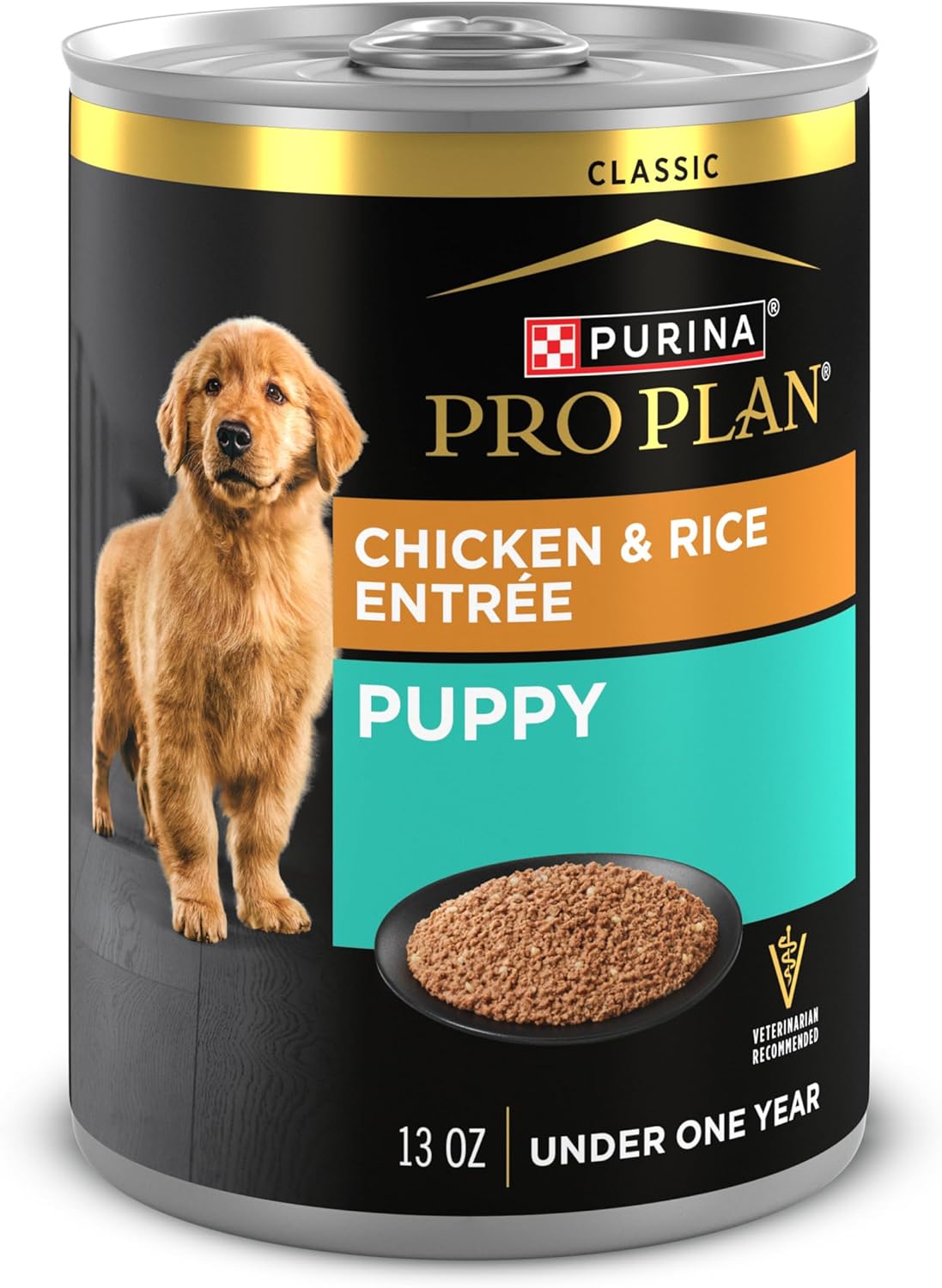
Purina Pro Plan Development Chicken & Brown Rice Entree is a high-protein wet puppy pate meant to be fed as part of a daily ration for puppies up to about one year (longer for larger breeds). It uses real chicken as the first ingredient and provides DHA, vitamins, minerals, and antioxidants to support brain and vision development, immune function, and skin and coat health. The pate texture makes it easy to spoon, mix with dry kibble, or use for weaning and picky eaters, and the formula contains no artificial colors, flavors, or preservatives. Practical benefits include a nutrient-dense canned option that replaces about 1 cup of dry Pro Plan per 13 oz can and a feeding schedule that divides portions for young puppies. Limitations are that the ingredient list includes meat by-products and typical canned fillers, so buyers seeking single-source or limited-ingredient recipes may prefer specialty formulas, and the product is targeted to puppies specifically rather than adult maintenance feeding.
Best for: Buyers who want a widely available, nutrient-dense wet puppy food that supports growth, brain development, and easy feeding transitions for typical puppies during their development.
Less Ideal for: Owners seeking limited-ingredient, single-protein, or hypoallergenic wet diets or those who need a long-term adult maintenance canned food.
- Real chicken as the first ingredient for high-quality protein
- Includes DHA plus 23 vitamins and minerals to support brain and vision development
- 100 percent complete and balanced for puppy growth and development
- No artificial colors, flavors, or preservatives
- Pate texture mixes easily with dry food and helps with weaning or picky eaters
- Contains meat by-products and typical canned fillers rather than single-source proteins
- Formulation is puppy-focused and not intended as an adult maintenance diet
Verdict: The best wet puppy food is for owners who want higher moisture content and strong palatability, ideal for picky eaters or mixing with dry kibble.
Hill's Science Diet Puppy Large Breed
Best Large-Breed Puppy Food
| Flavor | Chicken & Brown Rice |
|---|---|
| Age Range Description | Puppy |
| Breed Recommendation | Large Breeds |
| Item Form | Dry Food |
| Special Ingredients | all-natural |
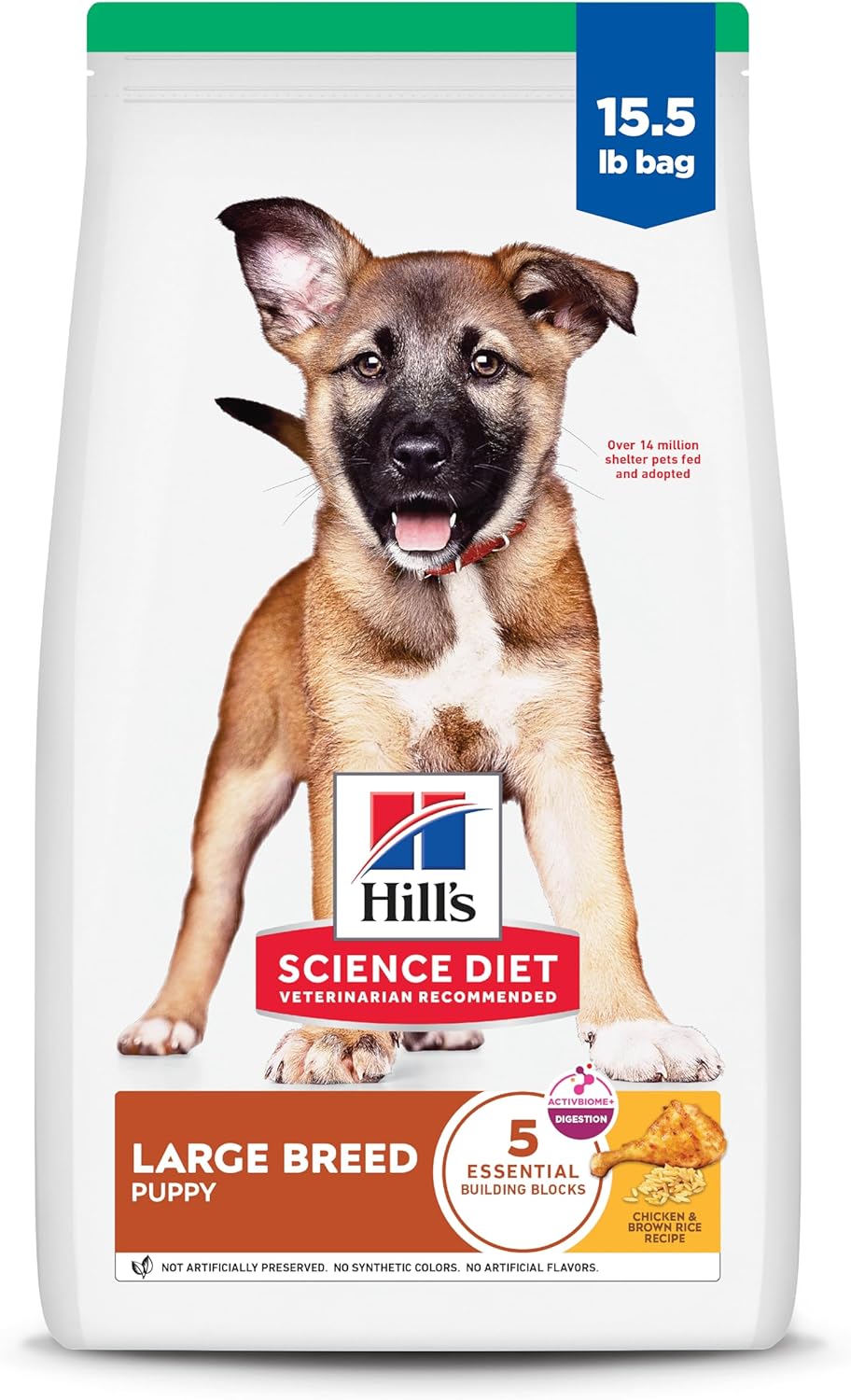
Hill's Science Diet Puppy Large Breed Chicken & Brown Rice is a dry formula designed to support the specific growth needs of large-breed puppies. It is used as an everyday maintenance diet during the rapid growth phase, providing controlled calcium levels for measured bone development and high-quality protein to support muscle growth. The formula includes marine algae oil as a DHA source for brain and eye development, a blend of prebiotic fibers to support digestive health, and antioxidants to bolster the developing immune system. In practice the kibble is intended to be fed following the package feeding guide and gradually introduced over a 7-day transition when switching foods. This product focuses on growth-stage nutrition rather than therapeutic joint repair so it does not list added glucosamine or chondroitin explicitly, and buyers should monitor weight to avoid excess calories during growth. For owners of very large breeds like Great Danes, the controlled calcium and balanced nutrient profile make this a sensible foundational diet to help promote appropriate skeletal development and overall puppy health.
Best for: Buyers raising very large-breed puppies who prioritize controlled skeletal development and foundational, vet-recommended growth nutrition for long-term joint health.
Less Ideal for: Owners seeking a therapeutic formula specifically concentrated on joint repair with added glucosamine or chondroitin should consider veterinary prescription joint-support diets instead.
- Formulated with controlled calcium to support appropriate bone growth in large-breed puppies
- Includes marine algae oil providing DHA for brain and eye development
- Prebiotic fiber blend supports digestive health and nutrient absorption
- Antioxidant blend helps strengthen the developing immune system
- Does not explicitly list glucosamine or chondroitin for targeted joint repair
- Higher calorie density may require careful portion control to prevent excess weight gain
Verdict: The best large-breed puppy food supports slower, controlled growth and joint health with adjusted calorie density and specific nutrient ratios for larger breeds.
Choosing the Right Puppy Food Spaniel: Key Factors to Consider
Protein Quality and Quantity
Protein supplies the amino acids needed for muscle growth, immune function, and organ development. For spaniel puppies, look for named animal proteins listed near the top of the ingredient panel and avoid vague terms that do not identify the source. The absolute percentage matters, but so does digestibility; highly digestible proteins let puppies absorb nutrients efficiently without overtaxing the gut.
Excessive protein is not necessary and can stress immature kidneys, while too little can slow muscle development and recovery after activity. Balance is key: moderate to moderately high protein levels from quality sources support lean growth and energy without creating unnecessary metabolic load.
Calorie Density and Feeding Amounts
Spaniels are active and energetic, so calorie density should match their activity and growth phase. Puppy formulas tend to be more calorie-dense than adult food, but the right balance prevents overly rapid weight gain, which can strain growing bones and joints. Check feeding charts and adjust for your pup's activity, body condition, and growth trajectory.
Smaller kibble or wet-dry combinations can make portioning easier for spaniel puppies. Gradual monitoring and portion adjustments during growth spurts help maintain steady development without excess fat accumulation.
Healthy Fats and Omega Fatty Acids
Fats are a concentrated energy source and supply essential fatty acids needed for skin and coat health. Spaniels often have dense, glossy coats that benefit from adequate omega-3 and omega-6 levels. Look for named sources of EPA/DHA or fish oil plus plant-based omega-6s from quality oils.
Too much fat can lead to loose stools, while too little can leave a dull coat and dry skin. The right ratio supports a shiny coat and cognitive development while contributing necessary calories for lively play and training sessions.
Digestive Tolerability and Fiber
Spaniel puppies can be sensitive to abrupt ingredient changes or low-quality fillers. Soluble fibers and moderate insoluble fiber content help with stool quality and nutrient absorption. Ingredients like beet pulp, pumpkin, or prebiotic fibers can support a stable microbiome, while probiotics may reduce episodes of diarrhea during transitions.
Avoid formulas with excessive indigestible fillers; those can bulk stools and reduce nutrient uptake. Digestibility directly affects how much of the labeled nutrients the puppy actually receives, which matters for steady growth and energy levels.
Mineral Balance and Bone Development
Correct calcium and phosphorus ratios are critical during the growth phase to ensure bones develop properly. Spaniels are medium-sized dogs with a particular risk of orthopedic stress if growth is too rapid or minerals are out of balance. A life-stage complete formula should provide controlled mineral levels appropriate for puppies.
Excess supplementation of minerals or imbalanced bone-building nutrients can cause developmental issues. Choose formulas designed specifically for puppies rather than adult products, and follow feeding guidance to avoid overnutrition.
Palatability and Texture
If a puppy refuses food, consistent nutrient intake is impossible. Palatability matters especially during weaning and early training stages. Kibble size and texture should suit spaniel puppy mouths so they can chew comfortably, and flavors should be appealing without relying on excessive additives or flavor enhancers.
Transitioning slowly between flavors and formats reduces acceptance problems. Consider wet or mixed feeding temporarily for picky eaters, but keep the overall nutritional balance consistent.
How Much Should My Spaniel Puppy Eat Each Day?
Daily food needs vary with age, activity, and individual metabolism. Start with the feeding chart on the package as a baseline, then monitor body condition twice weekly. A visible waist behind the ribs and feeling but not seeing ribs is a good target for most spaniel puppies.
During rapid growth phases (typically 8 to 24 weeks), increase portions slightly and check weight more often. If your puppy becomes overly round or lethargic, reduce portions and reassess activity. Frequent, smaller meals can help with digestion and stable energy levels.
- Wean puppies onto a consistent formula over 7–10 days to reduce digestive upset.
- Divide daily calories into three to four meals until about six months, then transition to two meals.
- Adjust portions after spay or neuter if activity decreases.
What Ingredients Are Worth Avoiding for Spaniel Puppies?
Avoid formulas that list vague protein sources or include excessive byproducts without clarity. Also be cautious with high levels of preservatives and artificial colors, which provide no nutritional benefit and may aggravate sensitive stomachs.
Highly processed carbohydrate fillers that add bulk without nutrition can reduce the overall nutrient density a puppy receives. Also avoid products that do not provide a complete guaranteed analysis for life-stage feeding, as that makes it difficult to confirm adequacy for growth.
- Vague protein listings such as generic 'meat meal' without source identification.
- Excessive amounts of corn or wheat as primary calorie sources if digestibility is low.
- Artificial colors and unnecessary flavor enhancers.
When Should I Introduce Supplements Like Fish Oil or Joint Support?
Most complete puppy formulas already include balanced fats and basic joint-support nutrients. Supplemental fish oil can be helpful for extra coat and skin support or for puppies with dry skin, but consult your veterinarian for dosing so you do not upset the overall fat balance or interfere with other nutrients.
Joint supplements such as glucosamine are usually reserved for breeds prone to early joint issues or for puppies with veterinary-identified needs. For typical spaniel puppies, focus first on a complete diet formulated for growth, then consider targeted supplements only on veterinary advice.
- Introduce supplements under veterinary guidance to avoid nutrient imbalance.
- Keep supplement dosing appropriate for weight and growth stage.
- Watch for changes in stool or appetite after adding supplements.
How to Transition Your Spaniel Puppy to a New Food
Transition gradually over 7 to 10 days by mixing increasing proportions of the new food with the old. Rapid switches can trigger diarrhea or vomiting, especially in puppies with sensitive stomachs. Observe stool quality and energy levels during the switch.
If problems occur during a standard transition, slow the process to two weeks and consider using a probiotic or bland supportive feed temporarily until the gut stabilizes. Always keep fresh water available, since diet changes can alter thirst and stool consistency.
- Day 1 to 3: 25 percent new, 75 percent old.
- Day 4 to 6: 50/50 mix.
- Day 7 to 10: 75 percent new, 25 percent old.
Feeding Format: Kibble, Wet, or Mixed?
Kibble is convenient and supports dental abrasion, while wet food can be useful for picky eaters or for increasing moisture intake. A mixed feeding approach offers flexibility but be mindful of calorie totals when combining formats so you do not overfeed.
For spaniel puppies, choose kibble sized for comfortable chewing and consider occasional wet-food mix-ins for palatability. Whatever format you choose, ensure the overall daily nutrient profile remains appropriate for growth.
- Use wet food sparingly as a topper or in mixed meals to boost palatability.
- Measure combined portions carefully to avoid excessive calories.
- Consider dental chew routines separately; food format alone will not prevent tartar.
Recognizing Food-related Allergies or Intolerances
Food allergies are less common than intolerances but can show as chronic ear issues, itchy skin, or recurring gastrointestinal upset. Observing the timing of symptoms relative to diet changes and working with your veterinarian can help identify triggers.
An elimination diet under veterinary supervision is the most reliable way to identify true food allergies. Temporary trials of limited-ingredient formulas can help determine whether symptoms improve, but do not attempt long-term restrictive feeding without professional guidance.
- Common signs: chronic itch, recurrent ear infections, persistent soft stool.
- Elimination trials should last several weeks and be veterinarian-supervised.
- Rule out parasites and environmental causes before concluding a food allergy.
How We Chose the Best Puppy Food Spaniel
We prioritized products that meet the nutritional and physiological needs common to spaniel puppies. Our evaluation focused on five concrete criteria: quality and source of protein, appropriate calorie density for a medium-active small-to-medium puppy, digestibility and fiber profile to reduce gastrointestinal upset, omega fatty acid levels for coat and skin health, and formulation details such as life-stage completeness and clear feeding guidelines. We also considered ingredient transparency and the presence of functional additives like probiotics, controlled calcium/phosphorus ratios, and joint-support nutrients when relevant. We excluded foods aimed exclusively at very small toy breeds or very large breeds because their calorie and mineral profiles do not match typical spaniel growth patterns. We also set aside novelty diets lacking complete nutritional statements or those with inconsistent ingredient sourcing. The final shortlist balances growth support, palatability, and digestive tolerance most pertinent to spaniel puppies.
Our full evaluation process is outlined in our review methodology.
FAQ
How often should a spaniel puppy be fed?
Feed young spaniel puppies three to four times daily until about six months, then reduce to two meals. Frequency helps maintain stable energy and supports digestion, especially during rapid growth.
Can I feed my spaniel puppy adult dog food temporarily?
Occasional small servings of adult food will not cause immediate harm, but adult formulas lack the concentrated nutrients puppies need for growth. Prolonged feeding of adult food can risk slow development or nutrient shortfalls.
Is grain-free puppy food better for spaniels?
Grain-free diets are not inherently better and often substitute other carbohydrate sources. Some spaniels tolerate grains well, while a few may do better on limited-ingredient or grain-free formulas; decisions should be based on individual tolerance and veterinary advice.
When should I switch my spaniel from puppy food to adult food?
Most spaniels can transition to adult food between 9 and 12 months, but timing depends on growth rate and body condition. Consult your veterinarian to choose the right moment based on size, activity, and musculoskeletal maturity.
What if my puppy refuses every food we try?
First, rule out medical causes with a vet visit. Try warm, moistening toppers, consistent feeding times, and gradual exposure to a single formula. If appetite issues persist, appetite stimulants or diagnostic tests may be necessary under veterinary care.
Final Verdict
For spaniel puppies, prioritize a complete puppy formula with quality protein, balanced calories, and omega fatty acids to support coat and brain development. Monitor growth and body condition closely and adjust portions or feeding frequency rather than switching formulas frequently. Balance digestibility with nutrient density, and introduce any supplements only with veterinary guidance. Focusing on those core priorities will help you choose a puppy food that supports steady, healthy development for a spaniel.

