

Picking the right puzzle toy matters when you have a young dog that needs mental stimulation, teething relief, and gentle training practice. A well-chosen puppy puzzle toy helps redirect chewing instincts, supports early problem-solving, and can make supervised alone time calmer and safer. This guide covers the top shortlisted puppy puzzle toys chosen for young dogs, with a focus on safety, ease of use, and real-world durability. We also explain the evaluation criteria so you know which features matter for different puppy ages and temperaments.
Top Picks at a Glance
| Best Overall Puppy Puzzle Toy A well-rounded pick that suits most puppies and owners | Outward Hound Nina Ottosson Dog Brick |  |
| Best Budget Puppy Puzzle Toy An affordable option that still stimulates and lasts reasonably well | Outward Hound Treat Tumble Small |  |
| Best Durable Puppy Puzzle Toy Built to withstand chewing and active, rougher play sessions | West Paw Toppl Dog Treat Toy Large |  |
| Best Compact Puppy Puzzle Toy A smaller, travel-friendly puzzle toy for limited spaces | ZHIERDE Treat Dispensing Ball Small |  |
| Best Treat-Dispensing Puppy Puzzle Toy Designed to hold treats and reward problem-solving reliably | FOXMM Dog Puzzle Toy S-Level 2 |  |
| Best Adjustable-Difficulty Puppy Puzzle Toy Lets you raise or lower challenge levels as skills improve | Yoboeew Interactive Dog Puzzle Toy |  |
| Best Premium Puppy Puzzle Toy A higher-end pick with superior materials and refined design | KADTC Dog Puzzle Toy Level 3 |  |
Outward Hound Nina Ottosson Dog Brick
Best Overall Puppy Puzzle Toy

| Pet Toy Type | Puzzle |
|---|---|
| Recommended Uses For Product | Indoor, Mental Health, Playing, Training |
| Additional Features | Lightweight, Portable |
| Water Resistance Level | Not Water Resistant |
| Material Type | Plastic |
The Outward Hound Nina Ottosson Dog Brick is a Level 2 interactive puzzle that challenges dogs to lift lids, slide red sliders, and remove bone covers to find hidden treats or kibble. Designed for supervised indoor play, it has multiple treat compartments and several ways to increase or decrease difficulty so you can match the puzzle to your dog's skill level. The plastic construction is lightweight and portable, and the food-safe materials are BPA, PVC, lead, and phthalate-free, making it simple to fill, clean, and reuse. It also doubles as a slow feeder for dogs that bolt their food, turning mealtime into an enrichment session. Limitations include the plastic pieces which are not chew-proof, so the toy requires supervision and is unsuitable for heavy chewers who may disassemble components. For many owners the adjustable challenge, clear learning curve for dogs, and moderate treat capacity make this one of the most versatile puzzle toys available.
Best for: Owners who want a single, versatile puzzle that provides adjustable mental stimulation and can double as a slow feeder during supervised indoor play.
Less Ideal for: Dogs that are aggressive chewers or owners who need an unsupervised, indestructible toy should consider more rugged options.
- Adjustable difficulty with lids, sliders, and removable covers to tailor challenge level
- Multiple treat compartments that also allow use as a slow feeder
- Made from food-safe materials and easy to clean
- Lightweight and portable for indoor supervised play
- Plastic construction is not chew-proof and requires supervision to prevent damage
Verdict: The best overall puppy puzzle toy balances engagement, safety, ease of cleaning, and appropriate difficulty for typical puppy play and learning.
Outward Hound Treat Tumble Small
Best Budget Puppy Puzzle Toy

| Pet Toy Type | Puzzle |
|---|---|
| Indoor Outdoor Usage | Indoor |
| Breed Recommendation | All Breed Sizes |
| Additional Features | Lightweight, Portable |
The Outward Hound Treat Tumble Small is a simple treat-dispensing puzzle ball designed to give dogs mental stimulation through rolling and nudging to release treats. You fill the two side openings with small or larger treats and adjust difficulty by treat size—smaller treats fall out faster while larger ones slow the reward. Its one-piece plastic sphere is lightweight and portable, intended for supervised indoor play and short training or enrichment sessions. The ball is food-safe and made without BPA, PVC, lead, or phthalates, and it rinses clean easily with soap and water. As a level 1 puzzle it is best suited to puppies or dogs new to enrichment toys; heavier chewers or dogs that prefer destructive play may remove pieces or break it if unsupervised, and the fixed small openings limit treat shapes and sizes. The design is straightforward with minimal parts, so you get easy setup and predictable dispensing rather than adjustable complexity or advanced puzzle mechanics.
Best for: Owners looking for an affordable, no-frills enrichment toy to introduce puppies or beginners to treat puzzles and add short supervised play sessions.
Less Ideal for: Families with power chewers or dogs that need multi-step puzzles and adjustable difficulty should consider more durable or advanced options.
- Simple, intuitive treat-dispensing action that encourages rolling and mental engagement
- Lightweight, portable one-piece design that is easy to fill and clean
- Made from food-safe materials free of BPA, PVC, lead, and phthalates
- Works as a slow-feeder for kibble and doubles as a basic enrichment toy for training
- Level 1 challenge may be too easy for experienced puzzle-savvy dogs
- Not water resistant and not intended for unsupervised chewing by heavy chewers
- Small fixed openings limit the size and shape of treats that will dispense
Verdict: The best budget puppy puzzle toy gives great mental stimulation and decent durability at a lower price for owners on a tighter budget.
West Paw Toppl Dog Treat Toy Large
Best Durable Puppy Puzzle Toy

| Pet Toy Type | Treat Dispenser Toy |
|---|---|
| Breed Recommendation | All Breed Sizes |
| Indoor Outdoor Usage | Indoor |
| Material Type | Plastic |
| Size | Large |
The West Paw Toppl is a premium treat-dispensing puzzle that turns kibble, wet food, or frozen mixtures into a slower, more engaging eating session. Dogs work to extract treats from the hollow, hexagonal body, so the toy encourages problem solving and occupies attention for longer than a simple chew. Made from West Paw's Zogoflex proprietary plastic, it is built for durability, is BPA-free and top-rack dishwasher safe for easy cleaning. Because it can be filled with different textures and frozen, the Toppl offers varied challenge levels to suit motivated chewers and dogs that need more mental stimulation. The toy is intended for indoor use and is best for dogs that enjoy puzzle play rather than aggressive power chewing; while Zogoflex is tough, the brand warns no toy is indestructible. Its large size and hollow design make it useful as a slow feeder and enrichment device but may be bulky for small breeds or travel. If you want a premium, American-made enrichment toy that supports varied treat formats and simple cleanup, the Toppl performs well in everyday use.
Best for: Owners who prioritize a long-lasting, thoughtfully designed enrichment toy and want flexible treat-format options to increase mental engagement.
Less Ideal for: Buyers seeking an ultra-chewproof ball for aggressive destroyers or a compact travel toy for tiny breeds should consider other options.
- Durable Zogoflex construction designed for repeated use
- Accepts kibble, wet food, and freezable fillings for varied challenge
- Top-rack dishwasher safe for straightforward cleaning
- Designed to slow eating and provide prolonged mental stimulation
- Made in USA with recyclable materials and a recycling program
- Not intended to be completely indestructible for heavy power chewers
- Large, hollow shape may be cumbersome for very small dogs or on-the-go use
Verdict: The best durable puppy puzzle toy is made from tougher materials and construction to survive heavier mouthing and more enthusiastic play by puppies.
ZHIERDE Treat Dispensing Ball Small
Best Compact Puppy Puzzle Toy
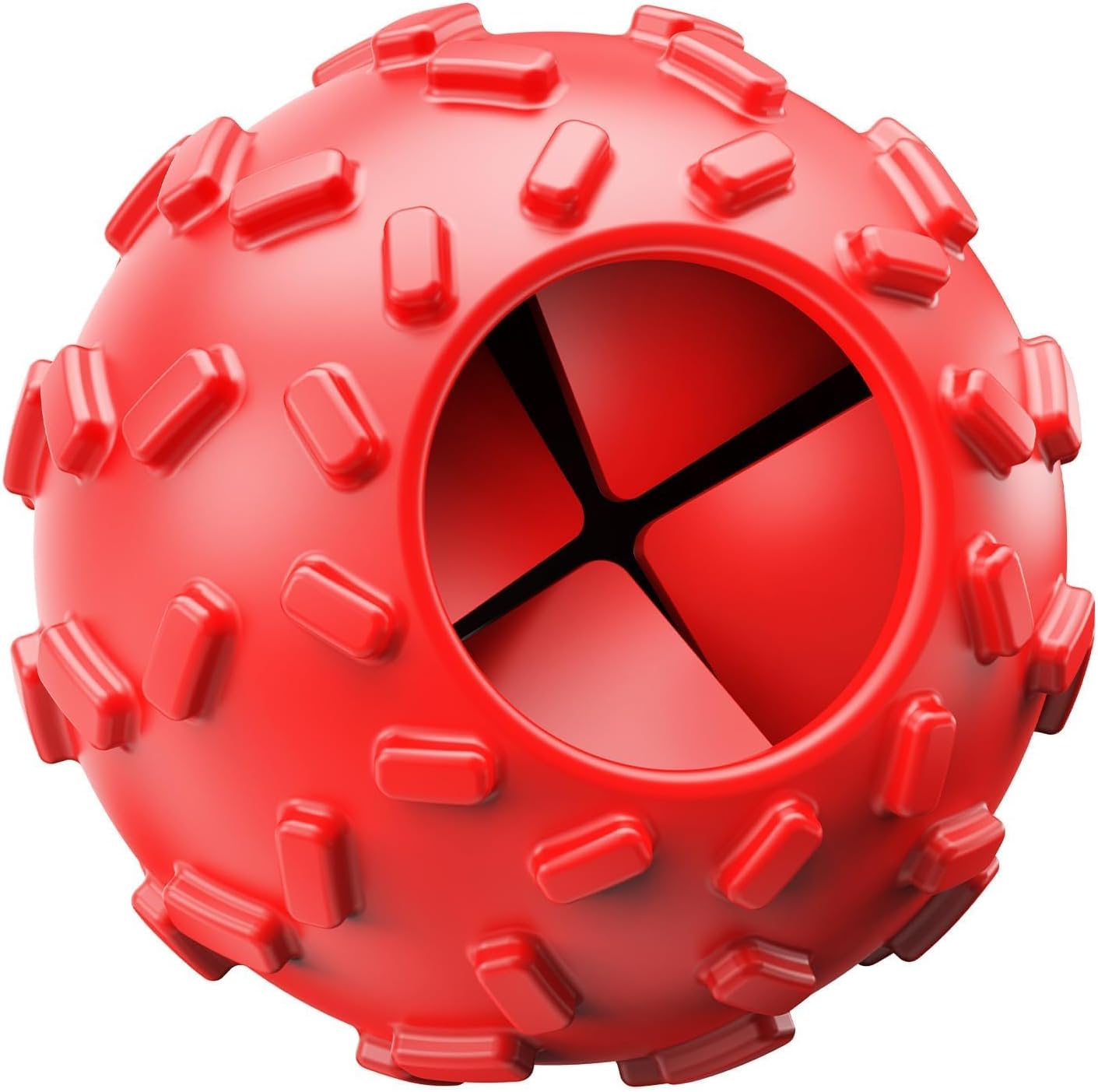
| Material Type | Natural Rubber |
|---|---|
| Pet Toy Type | Treat Dispenser Toy |
| Breed Recommendation | Small |
| Indoor Outdoor Usage | Indoor, Outdoor |
This compact treat-dispensing ball turns snacks into an interactive puzzle that keeps small dogs and puppies occupied. Fill the hollow core with kibble or small treats, then let the dog nudge, roll, and paw the ball to release rewards; flexible inner flaps can be trimmed to slow or speed dispensing so the challenge grows with the dog. The textured natural rubber surface gives grip for rolling and fetch, floats for water play, and is easy to rinse clean after use. Its small 2.7-inch size and 3.2-ounce weight make it easy to stash in a travel bag or crate and suitable for apartment play without taking much space. It is not intended for aggressive chewers or continuous heavy gnawing, so expect limited lifespan if a dog chews destructively. Scented options add extra interest but do not change function. For short supervised solo sessions, training, or slow-feeding enrichment, this ball is a practical, portable solution.
Best for: Owners who need a compact, travel-friendly enrichment toy to occupy small dogs or puppies in crates, apartments, or on the go and prioritize portability and adjustable challenge over chew resistance.
Less Ideal for: Households with powerful chewers or dogs that destroy toys quickly should choose a heavier-duty chew toy instead.
- Small, lightweight and highly portable for travel or crate use
- Adjustable inner flaps let you control treat flow for longer-lasting engagement
- Made from natural rubber with a textured surface for grip and easy rinsing
- Floats for versatile indoor, outdoor, or water play
- Not meant for aggressive chewers so durability is limited under heavy chewing
- Small opening limits treat size to kibble or small treats only
Verdict: The best compact puppy puzzle toy is sized for small spaces and easy transport while still offering meaningful mental challenges for young dogs.
FOXMM Dog Puzzle Toy S-Level 2
Best Treat-Dispensing Puppy Puzzle Toy

| Pet Toy Type | Puzzle |
|---|---|
| Breed Recommendation | Medium, Small |
| Indoor Outdoor Usage | Indoor |
| Material Type | Polypropylene |
The FOXMM Dog Puzzle Toy is a lightweight, food-safe polypropylene puzzle that hides treats under sliding pieces so puppies learn to move parts in sequence to reach rewards. Designed for indoor use and labeled S-Level 2, it suits small to medium dogs and can be used during training sessions or as a boredom buster to slow eating and reduce destructive behavior. The built-in squeaker in the center attracts attention and adds an extra layer of engagement while the waterproof, dishwasher-safe construction makes cleanup simple. Because it is a puzzle rather than a chew toy, it excels at extending playtime through repeated problem-solving but will not withstand heavy chewing, so supervision is necessary. The toy is portable and easy to reset for short training rounds, and the simple design keeps costs low while still teaching cause-and-effect and patience in young dogs.
Best for: Puppy owners who want a small, food-reward puzzle that extends training sessions and reinforces correct interactions with treats or kibble.
Less Ideal for: Households with aggressive chewers or puppies that destroy toys quickly should choose a more robust durable option instead.
- Treat-dispensing sliding compartments that reinforce sequential problem-solving
- Food-safe polypropylene construction that is washable and dishwasher-safe
- Compact, lightweight design easy to use for short training sessions and travel
- Built-in squeaker increases engagement and draws attention from puppies
- Not designed for chewing or heavy chewers so it can be damaged if used as a chew toy
- Simple level (S-Level 2) may be too easy for advanced or highly food-motivated puppies
Verdict: The best treat-dispensing puppy puzzle toy consistently rewards correct interactions with treats or kibble, extending playtime and reinforcing learning.
Yoboeew Interactive Dog Puzzle Toy
Best Adjustable-Difficulty Puppy Puzzle Toy

| Pet Toy Type | Treat Dispenser Toy |
|---|---|
| Breed Recommendation | Small Dogs |
| Indoor Outdoor Usage | Indoor |
| Additional Features | Dishwasher Safe, Interactive |
| Material Type | Polypropylene |
This plastic puzzle board combines sliding and spinning compartments to hide treats and force sequential moves, so puppies learn to solve multi-step problems rather than just pawing at food. You use it by loading treats in the recessed compartments and letting a puppy nudge sliders and rotate pieces to reveal rewards; it is suitable for short supervised sessions or as a slow-feeding aid at mealtime. Notable features include multiple difficulty steps, built-in nonremovable play pieces for safer solo play, dishwasher-safe polypropylene construction, and a larger footprint than many beginner toys to accommodate persistent pups. In practice it keeps curious puppies engaged, encourages scent work and paw coordination, and can reduce bored or destructive behavior when rotated into play routines. Limits are that the material is basic hard plastic so very aggressive chewers may damage it, and the challenge level likely tops out for very advanced problem-solvers since mechanisms are manual sliders and simple spins rather than complex locking parts.
Best for: Owners who want a puzzle that can be scaled through multiple steps as a puppy learns, using treat-motivated training to build problem-solving skills and slow feeding habits.
Less Ideal for: Households with powerful chewers or dogs that destroy hard plastic toys should look for more chew-resistant or indestructible options.
- Multiple sequential steps combine sliding and spinning actions for progressive challenge
- Dishwasher-safe polypropylene is easy to clean after food play
- Built-in, nonremovable play pieces reduce choking risk during unsupervised play
- Larger playing surface suited to small energetic puppies and small breed dogs
- Hard plastic construction can be chewed or cracked by strong, persistent chewers
- Difficulty is finite and may not satisfy highly advanced problem-solving dogs
Verdict: The best adjustable-difficulty puppy puzzle toy offers multiple challenge settings so owners can match the puzzle to a puppy’s progressing problem-solving ability.
KADTC Dog Puzzle Toy Level 3
Best Premium Puppy Puzzle Toy

| Pet Toy Type | Puzzle |
|---|---|
| Breed Recommendation | All Breed Sizes |
| Indoor Outdoor Usage | Indoor |
| Water Resistance Level | Waterproof |
This KADTC Level 3 puzzle is a premium-feeling brain game and slow feeder that combines adjustable challenge with easy cleanup. The 16.7-inch board holds nine sliding treat discs, four flip-lid cups and four sliding doors plus maze paths so you can dial difficulty from beginner to advanced as a puppy learns. It works as a treat puzzle for short training sessions and as a slow feeder for kibble, encouraging hunting behavior rather than gulping a meal. Food‑grade ABS construction, built-in storage under the board for extra pieces, non‑slip pads, and dishwasher-safe drain holes make it durable and convenient for regular use. For very determined chewers it is a puzzle rather than a chew toy, so supervision is advised and the manufacturer recommends removing it after play. The board typically occupies a pup 10 to 15 minutes on full setup but you can shorten or lengthen sessions by removing or adding pieces and using smellier rewards. Overall it is a thoughtful, well-made option for owners who want a long-lasting, adjustable toy to develop a puppy's problem solving and slow-eating habits.
Best for: Owners who prioritize durability, thoughtful features, and an adjustable challenge while training a puppy’s problem solving and slowing down mealtimes.
Less Ideal for: People wanting a toy that doubles as a chew or heavy-duty gnawing solution should choose a dedicated chew toy instead.
- Adjustable three-level design lets you increase challenge as a puppy learns
- Food-grade ABS construction and dishwasher-safe parts simplify cleaning and durability
- Built-in storage for extra pieces prevents losing components between sessions
- Non-slip pads keep the board steady on hardwood, tile, and carpet
- Not designed as a chew toy so supervised use is required for teething puppies
Verdict: The best premium puppy puzzle toy delivers top-tier materials, craftsmanship, and thoughtful features for owners willing to pay more for longevity and polish.
Choosing the Right Puppy Puzzle Toy: Key Factors to Consider
Safety and Material Hardness
Puppies are in a teething stage and will bite and chew vigorously. Choosing materials that are bite-safe and appropriately soft matters because overly hard plastics or brittle components can fracture and create sharp edges or small pieces that present a choking risk.
Look for non-toxic, BPA-free materials and flexible sections that give under puppy pressure while returning to shape. Softer rubbers and reinforced fabric panels reduce the chance of dental damage and are kinder on emerging teeth. Materials that wick moisture poorly or retain saliva can also harbor bacteria, so pick toys designed for easy cleaning.
Complexity and Cognitive Fit
Puppies have shorter attention spans and limited problem-solving experience, so puzzle difficulty should match developmental stage. A good puppy puzzle toy presents a clear cause-and-effect reward so a pup can learn quickly which actions lead to treats or movement.
Too-simple toys become boring fast, while puzzles that require fine motor skills or long sequences of steps will frustrate younger dogs. Choose toys that allow you to increase challenge incrementally so the puppy builds confidence and stays engaged as skills improve.
Chew Resistance and Durability
Even the gentlest chewers will test a toy's construction. Durability matters because a toy that falls apart quickly creates safety hazards and wastes effort. For puppies, look for reinforced seams, double-stitched fabric, and rubber components designed to flex rather than shear.
Durability is not the same as hardness; the ideal puppy puzzle toy balances resilience with forgiving textures that protect developing teeth. Consider how often you will need to replace the toy and whether replacement parts or inserts are available when relevant.
Cleaning and Hygiene
Puppies drool, carry debris in their mouths, and explore with taste, so keeping puzzle toys clean is essential for health. Toys with removable liners or dishwasher-safe parts are easier to sanitize and less likely to develop odors or mold.
Consider how the toy's nooks and crevices trap food and whether components can be fully dried between uses. Machine-washable fabric covers and hard parts that tolerate warm soapy water will extend the life of the toy and make regular cleaning simple.
Size and Weight for Breed and Age
A toy that is too large or too heavy will be unwieldy for a small puppy, while a tiny toy can be a choking risk for larger-breed pups. Matching the toy's dimensions to your puppy's mouth size and strength helps ensure comfortable handling and effective play.
Also consider balance: a lightweight toy is easier to carry and toss, but may slide too easily across floors. Heavier puzzle bases can provide stability during manipulation, which reduces frustration when a puppy nudges or paws to reveal a treat.
Reward Type and Scent Appeal
What you use as bait inside a puzzle toy affects how motivated a puppy will be to engage. Strong-smelling, soft treats are often most effective for young dogs learning the game. Some toys accept wet or paste-like rewards, while others require dry kibble or crunchy treats.
Think about dietary restrictions and treat size when selecting a toy. Also consider whether you want options that allow you to vary rewards for training value or to keep novelty high over repeated sessions.
How Should I Introduce a Puppy Puzzle Toy
Start slowly and make the first interactions overwhelmingly positive. Show the reward openly so the puppy sees the cause-and-effect relationship, then let the dog access the treat with minimal effort. Praise and short sessions reinforce the behavior.
If your puppy seems confused, simplify the task by propping open a compartment or placing treats on the surface. Gradually increase difficulty as the puppy gains confidence, keeping sessions brief to match their attention span.
- Begin on the floor in a quiet room with few distractions
- Use high-value soft treats the first few times
- Limit sessions to 5–10 minutes for young puppies
What Treats Work Best Inside Puppy Puzzles
Soft, aromatic treats and small pieces of wet food are often the most motivating for puppies because they release scent and are easy to extract. Dry kibble can work if the puzzle requires more chewing or if you prefer to control calories.
Avoid sticky or greasy fillings that are hard to clean. Consider tear-apart treats or pre-portioned paste rewards designed for puzzle use to minimize mess and simplify refills.
- Soft training treats for quick wins
- Small kibble for gradual challenge
- Avoid sticky spreads that clog crevices
How Often Should I Let a Puppy Play with Puzzle Toys
Use puzzle toys as brief enrichment sessions several times a day rather than leaving them out continuously. Frequent, short engagements keep the novelty high and reduce the chance the puppy will chew parts in frustration.
Rotate puzzles with other safe chew items and supervised play to provide a balanced routine. If a toy shows wear or loose parts, remove it until it can be repaired or replaced.
- 2–4 supervised sessions daily for young puppies
- Rotate toys every few days to maintain interest
- Inspect before each use for damage
Which Puzzle Designs Help with Basic Training
Simple hide-and-reveal puzzles teach patience and impulse control because the puppy must hold back from snatching a treat and instead perform an action. Sliding panels, removable cups, and shallow compartments are good starter mechanics.
Treat-dispensing balls and wobblers encourage natural foraging behavior and reinforce pawing and nose work. Integrate these toys into short training routines that pair commands like sit or wait with the reward release.
- Use puzzles to reinforce sit, wait, and leave-it
- Start with one-step puzzles and add complexity over weeks
- Pair puzzle time with calm praise, not hyper play
Cleaning Tips to Keep Puppy Puzzles Safe
Disassemble toys where possible and wash removable parts after each heavy use. For fabric elements, follow washing instructions and air-dry completely before reuse. Hard plastic and rubber parts can usually be washed with warm soapy water and rinsed thoroughly.
For persistent odors, soak components in a diluted vinegar solution, rinse well, and dry. Avoid harsh chemicals that could leave residues harmful to a puppy's mouth.
- Wash after wet or greasy fillings
- Air-dry fabric liners fully to prevent mold
- Inspect seams and joints during cleaning
How We Chose the Best Puppy Puzzle Toy
We shortlisted toys that meet the needs of young dogs while prioritizing safety and practical use. Our evaluation focused on bite-safe materials suitable for teething, simple mechanics that match a puppy's cognitive stage, and construction that resists early destruction. We favored options with easy cleaning or machine-washable components to prevent bacterial buildup. Portability and lightweight design were considered so the toy works at home and on short trips. We also looked for toys that encourage gradual skill development rather than overly complex puzzles that frustrate puppies. We excluded any items made from known brittle plastics, small parts that could be a choking hazard, or designs intended only for adult dogs. Final selections balanced chew resilience, ease of maintenance, progressive challenge, and how well the toy integrates with basic training and reward play.
Our full evaluation process is outlined in our review methodology.
FAQ
Are puppy puzzle toys safe for teething mouths?
Often yes, when they are designed for puppies and made from softer, flexible materials. Choose toys labeled for young dogs and inspect them regularly for damage. Replace any toy that shows tearing, cracking, or loose parts.
Can I use kibble in puppy puzzle toys every day?
It depends on your puppy's calorie needs. Using part of daily kibble in puzzles can add enrichment without extra calories, but monitor total intake and adjust meal portions if you use treats frequently.
How do I stop my puppy from chewing puzzle toys apart?
Supervise play and remove toys if chewing becomes destructive. Offer tougher chew options separately and choose puzzles with reinforced construction. Redirect to appropriate chews and end sessions before frustration builds.
What age can puppies start using puzzle toys?
Many puppies can begin simple puzzle play as early as 8 to 10 weeks with close supervision. Start with the easiest toys that reward immediate actions and keep sessions very short to match attention span.
How do I increase difficulty without frustrating my puppy?
Make changes incrementally: conceal treats slightly more, close one compartment, or switch to smaller rewards. Allow the puppy to succeed often so they associate the toy with positive outcomes.
Final Verdict
Choose a puppy puzzle toy that matches your pup's current size, chewing strength, and attention span. Prioritize soft, non-toxic materials, straightforward mechanics, and parts that are easy to clean. Expect to rotate toys and gradually increase challenge as the puppy matures. The right toy balances safety and stimulation: start simple, supervise sessions, and progress difficulty in small steps so your puppy builds confidence and learns to enjoy mental play without stress.

