

Picking the right treats for an Australian shepherd puppy affects more than training success. Because this breed is active and intelligent, treats should support steady energy, healthy growth, and easy digestibility while still being motivating during training sessions. You want options that are small, nutrient-dense, and made from ingredients your puppy can tolerate. This guide presents our top shortlisted puppy treats for Australian shepherds and explains the practical reasons each type of treat made the cut. Read on to see the evaluation criteria we used and find treats suited to housebreaking, reward-based training, and everyday snacking.
Top Picks at a Glance
| Best Overall Puppy Treat for Australian Shepherds A well-rounded treat balancing nutrition, palatability, and size | Wellness Soft Puppy Bites 8 oz |  |
| Best Budget Puppy Treat for Australian Shepherds A low-cost option that still meets basic pup needs | Blue Buffalo Baby BLUE Training Treats 4 oz |  |
| Best High-Protein Puppy Treat Higher protein treats to support growth and active puppies | Vital Essentials Beef Liver Treats 2.1 oz |  |
| Best Grain-Free Puppy Treat No-grain recipes for pups with grain sensitivities or preferences | Wellness CORE Brainiac Puppy Treats 5 oz |  |
| Best Training-Friendly Puppy Treat Small, low-calorie bites designed for frequent training rewards | Zuke's Mini Naturals Peanut Butter & Oats 16 oz |  |
| Best Soft Texture Puppy Treat Soft, chewy treats gentle on developing teeth and mouths | Pupford Soft & Chewy Training Treats 5 oz |  |
| Best Premium Puppy Treat Higher-end ingredients and craftsmanship for discerning pet owners | Stewart Freeze Dried Beef Liver 21 oz |  |
Wellness Soft Puppy Bites 8 oz
Best Overall Puppy Treat for Australian Shepherds

| Flavor | Lamb & Salmon |
|---|---|
| Age Range Description | Puppy |
| Item Form | Wafer |
| Unit Count | 8 Ounce |
Wellness Soft Puppy Bites are bite-sized, soft training treats made for puppies with a tender texture and simple ingredients. They are typically used as quick rewards during training sessions or as occasional supplemental snacks; each piece is low calorie which makes them convenient for repeated reinforcement. The recipe centers on lamb and salmon, and includes salmon-derived DHA to support brain development, while avoiding wheat, corn, soy, and artificial colors. The soft wafer form and small size let puppies chew and swallow fast, which speeds up high-repetition training and reduces interruptions. Because they are grain-free and made in the USA, they suit owners looking for limited-ingredient, premium treats. Limitations to note are that the bag is only 8 ounces so frequent trainers may need multiple bags, and the product is formulated specifically for puppies under one year so adult-only formulas might be a better fit for older dogs. Ingredients like chickpeas and potatoes add texture and carbs, so dogs with very specific allergies should check the full list first.
Best for: Puppy owners who need a soft, low-calorie treat that dogs can eat quickly during fast-paced training and who prefer limited-ingredient, grain-free options.
Less Ideal for: Buyers looking for long-lasting chews, larger bulk packs for extensive daily training, or treats formulated for adult dogs should consider other options.
- Soft, tender texture made for young puppies and sensitive mouths
- Small, bite-sized wafers that are quick to chew and ideal for rapid training repetitions
- Includes salmon for DHA to support brain development
- Grain-free recipe with no added wheat, corn, soy, or artificial colors
- Made in USA with a short, recognizable ingredient list
- Small 8 oz bag may require frequent repurchase for heavy trainers
- Formulated specifically for puppies under one year rather than adults
Verdict: The ideal everyday puppy treat for Australian Shepherds that balances appropriate protein, appealing taste, safe ingredient quality, and bite-size portions for training and rewards.
Blue Buffalo Baby BLUE Training Treats 4 oz
Best Budget Puppy Treat for Australian Shepherds
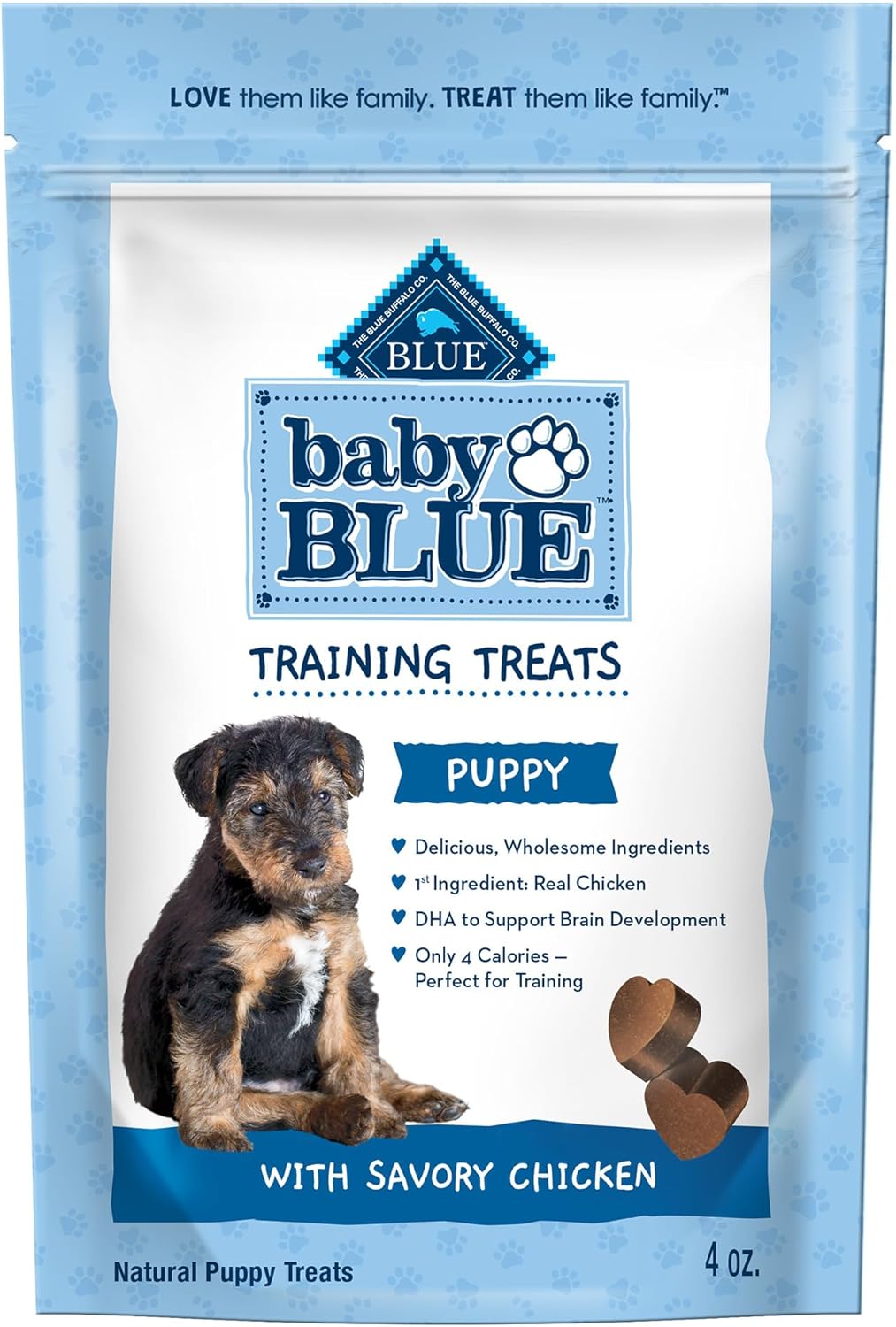
| Flavor | Chicken |
|---|---|
| Age Range Description | Puppy |
| Item Form | Semi Moist |
| Unit Count | 4 Ounce |
| Allergen Information | Corn-Free, Soy Free, Wheat Free |
These Baby BLUE Savory Chicken training treats are soft, bite-sized morsels designed for puppy training and intermittent rewards. Made with real chicken as the first ingredient and a semi-moist texture, they are easy to break or feed quickly during multi-step training sessions. The formula includes DHA for cognitive development and omega fatty acids to support skin and coat, while LifeSource-inspired nutrients and no corn, wheat, or soy aim to reduce common allergens. In practice the treats are highly palatable to most puppies and the small pieces minimize interruptions during repetitious drills. The 4-ounce bag is convenient for short outings or a training class, but frequent trainers may find the pack small and need to replenish often. Nutritional specs show modest protein and fat levels appropriate for treats rather than meal replacement, so they work best as rewards rather than primary food. Overall these treats balance taste and puppy-friendly texture, though the small package size limits how long one bag lasts for heavy training schedules.
Best for: Puppy owners focused on efficient, frequent reward-based training who want a tasty, soft treat that is easy to portion and gentle on young digestive systems.
Less Ideal for: People who run long, intensive daily training sessions or need bulk packaging for many repetitions should consider larger multi-pack options.
- Real chicken listed as the first ingredient for strong palatability
- Soft, semi-moist texture is easy to break and quick to deliver during training
- Includes DHA and omega fatty acids to support cognitive development and skin and coat
- Free of corn, wheat, soy and artificial colors or preservatives
- Small 4-oz bag may not be economical for heavy daily trainers
- Treat nutrient levels are modest so they should not replace regular food
Verdict: The best low-cost puppy treat for Australian Shepherd owners who want decent ingredients and palatable rewards without spending much on specialty formulations.
Vital Essentials Beef Liver Treats 2.1 oz
Best High-Protein Puppy Treat

| Item Form | Freeze Dried |
|---|---|
| Flavor | Beef |
| Special Ingredients | 100% Raw Freeze Dried Beef |
| Unit Count | 2.1 Ounce |
| Allergen Information | Grain-Free, Corn-Free, Gluten Free, Soy Free, Wheat Free |
These bite-sized freeze-dried beef liver treats deliver strong aroma and concentrated meat flavor that keeps dogs focused during training sessions. Each piece is made from 100% beef liver with no fillers or artificial additives, making them an easy single-ingredient reward for dogs with sensitivities. The freeze-drying process preserves nutrients and creates a lightweight, shelf-stable snack that is simple to carry and portion into multiple tiny rewards during repetition-heavy sessions. Because they are dense in protein and low in calories per piece, you can reward frequently without overfeeding, and the texture provides enough interest for picky eaters. Limitations include the small 2.1 ounce bag size, which may run out fast for heavy trainers, and the strong smell that some owners may find intense when opened. These treats are best used as high-value training rewards, meal toppers for picky dogs, or short-session incentives.
Best for: Trainers and pet owners who need a reliably enticing, single-ingredient reward for repeated short training intervals or to motivate picky eaters.
Less Ideal for: People who give large-volume treats during long training sessions, those who prefer low-odor rewards, or households needing bulk quantities for multiple dogs.
- Single-ingredient formula (100% beef liver) suitable for dogs with food sensitivities
- Freeze-dried to retain aroma, flavor, and nutrients for strong training appeal
- Small, bite-sized pieces that are easy to portion for frequent reinforcement
- Shelf-stable and lightweight for easy storage and on-the-go training
- Small 2.1 oz bag may be insufficient for frequent trainers or multi-dog households
- Very strong aroma that can be off-putting to some owners
Verdict: The best high-protein puppy treat for owners prioritizing extra animal protein to support muscle development and high activity levels in growing pups.
Wellness CORE Brainiac Puppy Treats 5 oz
Best Grain-Free Puppy Treat

| Flavor | Beef & Turkey |
|---|---|
| Age Range Description | Puppy |
| Unit Count | 5 Ounce |
| Item Form | Chunk |
| Allergen Information | Grain-Free |
These soft, bite-sized treats are designed for training and everyday rewarding of puppies and are formulated without wheat, corn, soy, or artificial colors. They use beef and turkey as primary proteins and include salmon oil to provide DHA and omega fatty acids aimed at supporting brain development and skin and coat health. At roughly 6 calories per piece they are convenient for repeated reinforcement during sessions, and the tender texture makes them easy for young mouths to chew. The ingredient list also contains chickpeas, vegetables, fruit inclusions like blueberries and apples, and natural preservatives such as mixed tocopherols and rosemary extract. Limitations to note are that the recipe still includes ingredients like potato and molasses and is not suitable as a balanced meal replacement since it is intended for intermittent or supplemental feeding only. For puppies with diagnosed food allergies, buyers should verify specific intolerances with their veterinarian even though the product is grain-free.
Best for: Puppy owners looking for a grain-free training treat that is flavorful, easy to chew, and formulated to support early brain development while used as a reward during training.
Less Ideal for: Owners seeking a complete or daily diet replacement for puppies or those whose dogs have confirmed allergies to listed ingredients such as potato or certain proteins should consider alternatives or consult a vet.
- Grain-free formula removes common fillers like wheat, corn, and soy
- Soft, bite-sized texture ideal for training and young puppies
- Includes salmon oil to supply DHA and omegas for brain and skin support
- Made in the USA with recognizable protein-first ingredients
- Intended only for supplemental feeding and not a complete food
- Contains other ingredients (potatoes, molasses) that may bother some sensitive pups
Verdict: The best grain-free puppy treat for puppies that need or benefit from grain-free ingredient lists while still offering balanced nutrition and flavor.
Zuke's Mini Naturals Peanut Butter & Oats 16 oz
Best Training-Friendly Puppy Treat

| Flavor | Peanut Butter & Oats |
|---|---|
| Unit Count | 16 Ounce |
| Item Form | Tender, Bites, Bits |
| Special Ingredients | Chicken |
| Recommended Uses For Product | Dog Training, On-the-go Rewards |
Zuke's Mini Naturals Peanut Butter & Oats are tiny, soft training treats formulated for frequent rewarding during training sessions or outings. Each treat is low in calories so you can give multiple rewards without dramatically increasing daily calorie intake, and the soft texture makes them easy to break up or quickly deliver during repetitions. The recipe highlights real ingredients like peanut butter, oats, and cherries and excludes corn, wheat, and soy, which helps with simple dietary needs and palatability. A resealable bag keeps the treats fresh for hikes or pockets, and the tender bite suits small and medium dogs that need quick, high-value reinforcement. Limitations include the peanut-forward formula, which is unsuitable for dogs with peanut allergies, and the bagged format can be less convenient than small training tins for some handlers. For weight-conscious owners who need many small, tasty rewards, these treats strike a good balance between flavor and low calories per piece.
Best for: Owners who need a small, low-calorie reward to give many repetitions while managing their dog’s daily calorie intake and reinforcing behavior frequently.
Less Ideal for: People seeking single-ingredient or hypoallergenic treats for dogs with multiple ingredient sensitivities or handlers who prefer compact training tins for pocket carry.
- Low calorie per piece suitable for frequent rewards during training
- Soft, tender texture that is easy to break and quickly deliver
- Made with real ingredients like peanut butter, oats, and cherries
- Resealable bag for portability and freshness on the go
- Peanut-forward recipe is not appropriate for dogs with peanut allergies
- Bag format can be bulkier than dedicated training treat tins or pouches
Verdict: The best training-friendly puppy treat for owners who need tiny, low-calorie, highly motivating rewards that are easy to carry and dispense during sessions.
Pupford Soft & Chewy Training Treats 5 oz
Best Soft Texture Puppy Treat

| Flavor | Chicken |
|---|---|
| Item Form | Bite-Sized Treat |
| Unit Count | 5 Ounce |
| Special Ingredients | Chicken, Sweet Potato |
| Animal Food Diet Type | Limited Ingredient |
Pupford Soft & Chewy Training Treats are bite-sized, chicken-flavored rewards designed for frequent use during training and enrichment. The treats come in a small pouch and have a soft, chewy texture that makes them easy to break into pieces or feed whole to young pups and dogs with sensitive teeth. Each treat is made from a short ingredient list that includes chicken and sweet potato and is free from artificial colors and fillers, which supports use with dogs that benefit from limited-ingredient snacks. With under 2 kcal per treat and a high protein claim, these are useful for extended training sessions without adding excess calories. They are intended for one-bite rewards, which helps keep sessions moving and reduces crumb mess. Limitations: the pouch is a 5 ounce size, so power users or trainers who reward very frequently may need to buy multiple packs, and the product information does not list guaranteed analysis values beyond general claims so buyers with strict allergy concerns should check ingredients closely.
Best for: Puppy owners and trainers seeking a soft, hypoallergenic-style reward for teething pups or dogs with sensitive mouths who need frequent, low-calorie treats during sessions.
Less Ideal for: Households that reward constantly or train multiple dogs at once and need bulk quantities or complete nutrient breakdowns for strict medical diets.
- Soft, easily chewable texture suitable for teething puppies and senior dogs
- Limited ingredient recipe focused on chicken and sweet potato, reducing exposure to fillers
- Low calorie per treat (<2 kcal) for frequent rewarding without weight gain
- Bite-sized pieces that minimize crumbs and keep training sessions fast
- Small 5 oz pouch may be insufficient for heavy trainers or multi-dog households
- Nutrient details are summarized by claims rather than full guaranteed analysis on the listing
Verdict: The best soft-texture puppy treat for young puppies or teething pups that require gentle, easily chewed rewards that still hold together for handling.
Stewart Freeze Dried Beef Liver 21 oz
Best Premium Puppy Treat

| Unit Count | 21 Ounce |
|---|---|
| Item Form | Freeze Dried |
| Flavor | Beef Liver |
| Target Species | Dog |
| Pet Type | Cat, Dog |
Stewart Freeze-Dried Beef Liver is a single-ingredient, high-protein treat packaged in a resealable 21 oz tub that works as both training rewards and meal toppers. The freeze-drying process preserves flavor and nutrients while keeping pieces lightweight and shelf-stable, and the tub contains up to several hundred morsels depending on piece size. Because it is 100% beef liver with no grains, fillers, artificial colors, or flavors, it is easy to portion for training sessions and is suitable for pets with common sensitivities. The tub format is convenient to store and the powder from crumbs mixes well into kibble as a topper. Limitations are that pure liver is calorie-dense and strong-smelling, so portion control is important and some households may find the odor noticeable; also this is not a balanced complete meal on its own but a supplement or treat. For buyers prioritizing premium single-ingredient nutrition and professional-trainer style rewards, this product delivers concentrated real-food appeal.
Best for: Owners who prioritize high-quality, single-ingredient treats and want a professional-style, nutrient-dense reward or topper for training and meal enrichment.
Less Ideal for: People looking for a complete daily food, very low-calorie treats, or subtle-smelling snacks for sensitive noses should consider other options.
- Single ingredient 100% beef liver for simple, recognizable nutrition
- Freeze-dried to lock in flavor and nutrients while remaining shelf-stable
- Resealable 21 oz tub provides a large quantity suitable for frequent training
- Grain-free, gluten-free, and free of artificial colors and flavors
- Very calorie-dense and strong-smelling, requiring strict portion control
- Not a complete balanced food and meant only as a treat or topper
Verdict: The best premium puppy treat for owners willing to invest in superior ingredient sourcing, limited-ingredient recipes, and gourmet flavors with strong quality control.
Choosing the Right Puppy Treat Australian Shepherd: Key Factors to Consider
Ingredient Quality and Transparency
Puppies need concentrated nutrients from digestible, whole-food ingredients. Look for treats that list a named protein source near the top of the ingredient list and avoid vague terms like "meat meal" when possible. Simpler formulas with fewer, recognizable ingredients reduce the chance of food sensitivity and make it easier to assess whether a treat fits your puppy's needs.
Manufacturers that disclose sourcing and provide guaranteed analysis give you more confidence that a treat supports growth. For Australian shepherd puppies, who can be food-sensitive, ingredient transparency helps you identify potential allergens and avoid additives that could trigger digestive upset.
Size, Shape, and Texture for Training
Training rewards should be small and quick to consume so they do not interrupt a learning sequence. Choose treats that can be broken into pea- or fingertip-sized pieces without crumbling into dust. Soft textures are often preferable for young puppies since they are easier to chew and swallow safely.
The right shape also matters for repeat reinforcement: uniform, bite-sized pieces keep training fast and predictable. Avoid large or irregularly shaped treats that require extended chewing, as they slow training and increase the chance of gulping, which can cause choking in enthusiastic puppies.
Protein Source and Digestibility
Protein quality influences how well a puppy uses calories for growth and muscle development. Single-source, named proteins such as chicken, turkey, or lamb are easier to evaluate and often easier to digest than blended or unnamed sources. For some puppies, novel proteins can reduce allergic reactions, so consider your puppy's history when choosing.
Digestibility also depends on processing and added fillers. Low-digestibility carbohydrates and excess fat can cause loose stools in sensitive puppies. Selecting treats formulated for young dogs, with moderate fat and digestible carbohydrate sources, helps maintain consistent stool quality while supporting activity levels.
Calorie Density and Feeding Frequency
Active breeds like Australian shepherds burn a lot of calories during play and training, but treats can quickly add extra energy if they are calorie-dense. Treats that are too high in calories can contribute to unwanted weight gain if used frequently during training sessions.
Aim for low- to moderate-calorie treats for routine reinforcement and reserve richer, more calorie-dense options for special occasions. Also factor treat calories into your puppy's daily intake to keep overall nutrition balanced and to support steady, healthy growth.
Allergen Considerations and Sensitivity Management
Many puppies show sensitivities to common ingredients such as beef, dairy, wheat, or soy. If your Australian shepherd puppy has a history of digestive upset or skin issues, choose treats with limited ingredient lists or novel protein sources to help isolate triggers.
When introducing a new treat, offer small amounts and monitor stool consistency and skin condition over several days. Rotating treat proteins occasionally can also reduce the chance of sensitization, but always make changes gradually to avoid digestive disturbance.
Safety and Packaging Convenience
Treat packaging affects freshness and usability during training. Resealable bags or single-serve pouches keep treats fresh and prevent crumb buildup, which preserves palatability and prevents contamination. Look for packaging that is easy to open and close quickly during a session.
Safety also covers choking risk and ingredient safety. Avoid treats with hard components or small parts that can be swallowed whole. For outdoor training, consider weather-stable treats that do not melt or crumble in heat.
How Many Treats Should I Use During a Training Session?
The number of treats depends on the size and calorie content of the treat and the intensity of the session. Use many tiny rewards rather than a few large ones to keep the puppy motivated and to maintain momentum. For brief obedience drills, you might offer 10 to 20 pea-sized pieces during a 10-minute session; for longer sessions, include short rest breaks and reduce reward frequency.
Always account for treat calories within your puppy's daily food allowance. If you use treats frequently, choose low-calorie options or decrease meal portions slightly to keep total energy intake appropriate for healthy growth.
- Use small, rapid-to-eat pieces for high-rate training.
- Plan shorter sessions focused on a single skill to limit total treat use.
- Adjust meal portions when treats are a regular part of daily training.
What to Do if My Puppy Has a Sensitive Stomach
Start by switching to single-ingredient or limited-ingredient treats made from a novel protein or a single carbohydrate source. Introduce the new treat in small amounts over several days while watching stool quality and energy levels. If symptoms persist, stop the treat and consult your veterinarian to rule out underlying issues.
Hydration and meal timing also influence digestion. Avoid giving large quantities of treats immediately before or after a full meal, and keep fresh water available during training.
- Introduce new treats slowly and monitor for 3 to 5 days.
- Prefer treats with short ingredient lists if sensitivity is suspected.
- Consult a veterinarian for persistent digestive or skin concerns.
Are Freeze-dried or Dehydrated Treats Better for Puppies?
Freeze-dried and dehydrated treats concentrate flavor and nutrients while remaining lightweight and easy to break into small pieces. They tend to be highly palatable and work well as high-value rewards during training. However, some freeze-dried options can be calorie-dense, so control portion size carefully.
Dehydrated treats may retain a chewier texture that some puppies enjoy, while freeze-dried pieces are often crumbly and quick to consume. Choose the format that matches your puppy's chewing ability and your training style.
- Freeze-dried: strong flavor, very lightweight, breaks easily.
- Dehydrated: chewier texture, longer-lasting in the mouth.
- Both formats are suitable if portioned appropriately for training.
How to Use Treats to Speed Up House Training
Use tiny, high-value treats to mark and reward immediate correct elimination outside. Carry treats so you can reward the puppy right after the behavior to strengthen the association. Consistency and timing matter more than treat size; a rapid, small reward is more effective than a delayed larger one.
Combine treat rewards with verbal praise and a consistent schedule. If an accident happens indoors, avoid punishment; instead, increase the frequency of outdoor trips and reward successes promptly.
- Reward immediately after the desired behavior to form a clear connection.
- Keep small treats easily accessible during potty training.
- Increase outdoor opportunities and reduce distractions during outings.
Can Treats Replace Mealtime Kibble for Training?
Treats can temporarily replace a portion of mealtime kibble during short training periods, which helps keep total daily calories consistent. For extended training days, gradually reduce meal portions and use kibble as low-value reinforcement to avoid overfeeding.
Ensure the replaced calories come from nutritionally appropriate sources so the puppy still receives essential vitamins and minerals. For long-term use, avoid relying solely on treats that lack balanced nutrition.
- Use kibble as low-value rewards for high-repetition drills.
- Adjust meal portions to account for treat calories on heavy training days.
- Reserve nutritionally complete meals as the primary source of daily nutrients.
Storing and Carrying Treats for On-the-go Training
Choose storage solutions that keep treats fresh and easy to reach during outdoor sessions. Small treat pouches that clip to a belt or leash provide quick access and limit fumbling during training. For freeze-dried or soft treats, a resealable container prevents breakage and maintains texture.
When hiking or traveling, pack treats in a waterproof container and label any packaging with ingredients if you may need to monitor for reactions. Dispose of wrappers responsibly and avoid leaving food where other animals can access it.
- Use resealable, portable containers for freshness and convenience.
- Carry a small measuring spoon or pre-portioned baggies to control portions.
- Label treats if rotating different proteins to track any reactions.
How We Chose the Best Puppy Treat Australian Shepherd
We focused on criteria that matter specifically for Australian shepherd puppies: ingredient quality, treat size and texture, protein source and digestibility, calorie density, and safety for training use. We prioritized treats that use recognizable whole-food ingredients or limited, clear ingredient lists to reduce the risk of stomach upset and food sensitivities common in growing dogs. Portion control and size were essential filters since Australian shepherds respond best to quick, bite-size rewards during high-rate training. We also examined chew texture to avoid treats that require long chewing sessions when a short, repeatable reward is needed. Nutritional balance was checked with an emphasis on protein-first recipes and moderate fat levels to support energy without excess calories. We excluded treats with vague ingredient lists, high levels of artificial colors or flavors, and products formulated primarily for adult dogs. Also removed were treats with choking-prone shapes or excessively hard textures unsuitable for young puppies. Final selections reflect these filters and the nutritional and practical demands of active herding-breed puppies.
Our full evaluation process is outlined in our review methodology.
FAQ
Are training treats okay for daily snacking?
They can be, if you choose low- to moderate-calorie treats and account for them in your puppy's daily calorie intake. Use training treats primarily during practice sessions and offer nutritionally balanced meals for regular feeding.
When should I switch from puppy-specific treats to adult formulations?
Transition timing depends on your puppy's growth rate and your veterinarian's guidance. Many puppies move to adult formulas when growth slows and their vet confirms skeletal maturity, but treat transitions can be gradual and based on ingredient suitability rather than age alone.
How can I prevent my puppy from getting bored with treats?
Rotate a few different treat options with varying textures and flavors to maintain novelty. Reserve higher-value treats for difficult behaviors and use lower-value options for routine reinforcement to keep interest high when it matters most.
Are soft treats better than crunchy ones for puppies?
Soft treats are typically easier for young puppies to chew and swallow, making them preferable for rapid-reward training. Crunchy treats can work for enrichment and chewing practice but may slow down training sequences.
What should I look for if my puppy is overweight but still needs training rewards?
Choose low-calorie, high-palability treats and reduce meal portions slightly to accommodate training calories. You can also use small pieces of vegetables or kibble as low-calorie alternatives, and focus on shorter, more frequent training sessions to limit total caloric intake.
Final Verdict
Prioritize small, easily digestible treats with clear ingredient lists and appropriate calorie density when selecting puppy treats for an Australian shepherd. Focus on single-source proteins, manageable portion sizes, and textures that suit a young pup's chewing ability to keep training fast and safe. Balance treat use with complete meals and adjust portions as training intensity changes. With attention to ingredient transparency and portion control, you can use treats effectively to reinforce behavior while supporting healthy growth and long-term wellbeing.

