

If your puppy has a sensitive stomach, picking treats requires more care than grabbing the first bag you see. The wrong treat can cause digestive upset, interrupt training, and leave your pup uncomfortable. This guide highlights a shortlist of the top options for puppies with sensitive digestion, focusing on simple ingredient lists, digestibility, and suitability for training. We evaluated treats for ingredient transparency, protein and carbohydrate sources, and texture to identify options that are gentle yet motivating. Read on to find treats that help you train consistently while minimizing digestive reactions.
Top Picks at a Glance
| Best Overall Puppy Treat A balanced pick that soothes sensitive tummies and tastes good | Wellness Soft Puppy Bites 8 oz |  |
| Best Budget Puppy Treat An affordable, gentle option that won’t irritate sensitive digestion | Blue Buffalo Baby BLUE Training Treats 4 oz |  |
| Best Limited-Ingredient Puppy Treat Simple, short ingredient lists to help identify triggers quickly | OH NORMAN! Pumpkin Dog Treats 6 oz |  |
| Best Soft Puppy Treat Tender texture that’s easy to chew and gentle on digestion | Blue Buffalo Baby BLUE Soft Biscuits 8-oz |  |
| Best Low-Fat Puppy Treat Lower fat formula to reduce stomach upset and digestive strain | Zuke’s Puppy Naturals Salmon Treats 5 oz |  |
| Best Premium Puppy Treat Higher-end ingredients and careful sourcing for picky, sensitive pups | Pupford Freeze Dried Training Treats 4 oz |  |
Wellness Soft Puppy Bites 8 oz
Best Overall Puppy Treat

| Flavor | Lamb & Salmon |
|---|---|
| Age Range Description | Puppy |
| Item Form | Wafer |
| Unit Count | 8 Ounce |
Wellness Soft Puppy Bites are bite-sized, soft training treats made for puppies with a tender texture and simple ingredients. They are typically used as quick rewards during training sessions or as occasional supplemental snacks; each piece is low calorie which makes them convenient for repeated reinforcement. The recipe centers on lamb and salmon, and includes salmon-derived DHA to support brain development, while avoiding wheat, corn, soy, and artificial colors. The soft wafer form and small size let puppies chew and swallow fast, which speeds up high-repetition training and reduces interruptions. Because they are grain-free and made in the USA, they suit owners looking for limited-ingredient, premium treats. Limitations to note are that the bag is only 8 ounces so frequent trainers may need multiple bags, and the product is formulated specifically for puppies under one year so adult-only formulas might be a better fit for older dogs. Ingredients like chickpeas and potatoes add texture and carbs, so dogs with very specific allergies should check the full list first.
Best for: Puppy owners who need a soft, low-calorie treat that dogs can eat quickly during fast-paced training and who prefer limited-ingredient, grain-free options.
Less Ideal for: Buyers looking for long-lasting chews, larger bulk packs for extensive daily training, or treats formulated for adult dogs should consider other options.
- Soft, tender texture made for young puppies and sensitive mouths
- Small, bite-sized wafers that are quick to chew and ideal for rapid training repetitions
- Includes salmon for DHA to support brain development
- Grain-free recipe with no added wheat, corn, soy, or artificial colors
- Made in USA with a short, recognizable ingredient list
- Small 8 oz bag may require frequent repurchase for heavy trainers
- Formulated specifically for puppies under one year rather than adults
Verdict: The best overall puppy treat for sensitive stomachs that balances gentle ingredients, palatability, digestibility, and consistent portion sizes for everyday training and rewards.
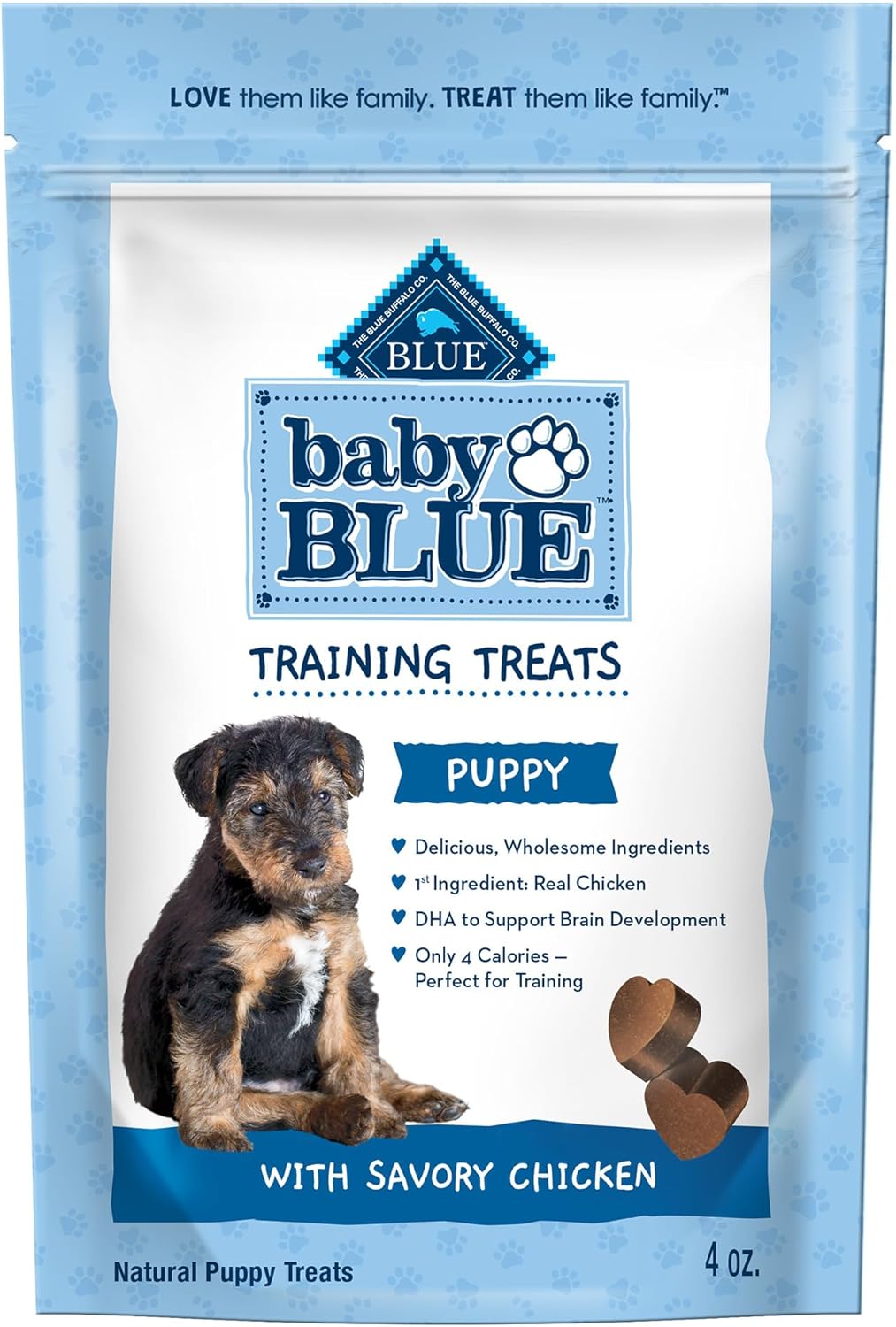
Blue Buffalo Baby BLUE Training Treats 4 oz
Best Budget Puppy Treat
| Flavor | Chicken |
|---|---|
| Age Range Description | Puppy |
| Item Form | Semi Moist |
| Unit Count | 4 Ounce |
| Allergen Information | Corn-Free, Soy Free, Wheat Free |
These Baby BLUE Savory Chicken training treats are soft, bite-sized morsels designed for puppy training and intermittent rewards. Made with real chicken as the first ingredient and a semi-moist texture, they are easy to break or feed quickly during multi-step training sessions. The formula includes DHA for cognitive development and omega fatty acids to support skin and coat, while LifeSource-inspired nutrients and no corn, wheat, or soy aim to reduce common allergens. In practice the treats are highly palatable to most puppies and the small pieces minimize interruptions during repetitious drills. The 4-ounce bag is convenient for short outings or a training class, but frequent trainers may find the pack small and need to replenish often. Nutritional specs show modest protein and fat levels appropriate for treats rather than meal replacement, so they work best as rewards rather than primary food. Overall these treats balance taste and puppy-friendly texture, though the small package size limits how long one bag lasts for heavy training schedules.
Best for: Puppy owners focused on efficient, frequent reward-based training who want a tasty, soft treat that is easy to portion and gentle on young digestive systems.
Less Ideal for: People who run long, intensive daily training sessions or need bulk packaging for many repetitions should consider larger multi-pack options.
- Real chicken listed as the first ingredient for strong palatability
- Soft, semi-moist texture is easy to break and quick to deliver during training
- Includes DHA and omega fatty acids to support cognitive development and skin and coat
- Free of corn, wheat, soy and artificial colors or preservatives
- Small 4-oz bag may not be economical for heavy daily trainers
- Treat nutrient levels are modest so they should not replace regular food
Verdict: The best budget puppy treat for sensitive stomachs that provides mild ingredients and reliable tolerance at a lower price for owners on a tight budget.
OH NORMAN! Pumpkin Dog Treats 6 oz
Best Limited-Ingredient Puppy Treat

| Flavor | Pumpkin |
|---|---|
| Unit Count | 6 Ounce |
| Item Form | Flake |
| Animal Food Diet Type | Limited Ingredient |
| Special Ingredients | Pumpkin |
These OH NORMAN! Pumpkin Dog Treats are an ultra-simple snack made from pumpkin and coconut glycerine, air-dried into flake-style bites intended for everyday rewards or meal toppers. Because the ingredient list is restricted to just two items, they are easy to read and use as a limited-ingredient option for puppies with food sensitivities or finicky digestions. The soft, flake form makes them easy to break into training-sized pieces and suitable for small mouths, and the product is labeled for all life stages so it can be used from puppyhood onward. Practical benefits include gentle digestibility and clear allergen control thanks to the minimal recipe, plus sustainable sourcing and bag packaging for shelf storage. Limitations are the narrow flavor profile and lack of added nutrients, so these are best as treats rather than a balanced supplement, and dogs that need higher protein rewards may find them less motivating than meat-based chews.
Best for: Buyers who prioritize minimal, easy-to-inspect ingredient lists for puppies with digestive sensitivities and who need a gentle, low-risk training reward.
Less Ideal for: Owners seeking high-protein or highly motivating meat treats for intensive training or dogs without ingredient sensitivities should consider meat-based options instead.
- Very short two-ingredient recipe reduces risk of unknown allergens
- Air-dried flakes are soft and easy to break into training-sized pieces
- Formulated for sensitive stomachs and labeled for all life stages
- Ethically sourced and packaged with sustainability in mind
- Not a protein-forward treat so may be less enticing for highly food-motivated dogs
- Limited ingredient list means no added vitamins or functional supplements
Verdict: The best limited-ingredient puppy treat for sensitive stomachs that keeps recipes minimal so owners can easily identify and avoid problem ingredients while still rewarding their pup.
Blue Buffalo Baby BLUE Soft Biscuits 8-oz
Best Soft Puppy Treat

| Flavor | Chicken & Carrots |
|---|---|
| Age Range | Puppy |
| Item Form | Semi Moist |
| Unit Count | 8 Ounce |
| Allergen Information | Corn-Free, Soy Free, Wheat Free |
These Baby BLUE Soft Biscuits are soft, semi-moist puppy treats made with real chicken first and small mix-ins like oats and carrots so pieces are easy to break into smaller rewards. They are meant for intermittent or supplemental feeding and are commonly used during short training sessions, socialization, or as an anytime reward for 8-week-old pups. Notable features include DHA from fish oil to support early brain and eye development and omega 3 and 6 fatty acids for skin and coat support, plus a limited-ingredient positioning that excludes corn, wheat, and soy. The bag is small and manageable for occasional training use and the soft texture reduces the risk of gagging compared with hard biscuits. Limitations are that these are treats, not a complete food, and moisture content means they should be stored properly to avoid drying out; puppies with specific ingredient sensitivities should still check the ingredient list. For budget-minded buyers looking for an everyday training treat that breaks into tiny portions and includes puppy-focused nutrients, these offer a practical balance of simplicity and utility.
Best for: Buyers who need an inexpensive, easy-to-portion puppy treat for short training sessions and want simple, recognizable ingredients with some developmental nutrients.
Less Ideal for: Owners who need a long-lasting or calorie-dense training treat for extended sessions or who require hypoallergenic prescriptions should look elsewhere.
- Real chicken is listed as the first ingredient for palatability
- Soft, break-apart texture makes it easy to create very small training rewards
- Includes DHA and omega fatty acids targeted to puppy development
- Free of corn, wheat, and soy and no artificial flavors or preservatives listed
- Small 8-oz bag may require frequent repurchase for heavy training use
Verdict: The best soft puppy treat for sensitive stomachs that offers a moist, easily chewed texture ideal for young pups and those with fragile digestion.
Zuke’s Puppy Naturals Salmon Treats 5 oz
Best Low-Fat Puppy Treat

| Flavor | Salmon & Chickpea |
|---|---|
| Unit Count | 5 Ounce |
| Item Form | Pellet |
| Age Range Description | Puppy |
| Special Ingredients | all-natural |
Zuke's Puppy Naturals Salmon treats are soft, pellet-style rewards designed for puppy training and on-the-go snacks. Each treat is chewy and low in calories, making it easy to deliver multiple rewards during short training sessions without overfeeding, and the soft texture is gentle on teething mouths and sensitive gums. The recipe lists real salmon first and includes fish oil to supply DHA and EPA intended to support brain development, while the formula excludes corn, wheat, and soy. The pouch is resealable for freshness and convenient to carry on walks or hikes. On the downside, the treats contain cane sugar and malted barley extract, so owners monitoring added sugars or grain derivatives may prefer alternatives, and the 5 oz pouch is relatively small for heavy trainers. In practice these work well as a high-value, easy-to-chew option for puppies that need frequent, palatable reinforcement, especially during early training and socialization.
Best for: Puppy owners who need a truly soft, highly palatable treat for frequent training rewards or for puppies with sensitive or teething mouths.
Less Ideal for: Owners seeking grain-free or zero-sugar veterinary therapeutic treats or those who need bulk quantities for extended pro-level training sessions should consider other options.
- Soft, chewy texture suitable for teething puppies and sensitive mouths
- Made with real salmon and fish oil providing DHA and EPA for brain support
- Small, low-calorie pellets allow frequent rewards without excess calories
- Resealable pouch for freshness and easy portability
- Free from corn, wheat, and soy
- Contains added sugars and malted barley extract which some owners may avoid
- 5 oz pouch is a small quantity for intensive training sessions
Verdict: The best low-fat puppy treat for sensitive stomachs that minimizes greasy ingredients and heavy fats to help reduce bouts of diarrhea or discomfort.
Pupford Freeze Dried Training Treats 4 oz
Best Premium Puppy Treat

| Flavor | Beef |
|---|---|
| Item Form | Pellet |
| Unit Count | 4 Ounce |
| Ingredients | Beef Liver, Beef Heart, Mixed Tocopherols (Natural Antioxidant) |
These freeze-dried beef liver treats are made from just a few natural ingredients and are built for everyday training. The pellets are bite-sized and lightweight so you can give multiple rewards in a short session without overfeeding, and the dry texture keeps hands and treat pouches clean during walks, classes, or clicker work. Because they are essentially meat, they are highly motivating for most dogs and work well for shaping behaviors, recall practice, and reward-based training. The simple ingredient list and low calorie profile also make them a reasonable choice for dogs with sensitive stomachs or owners tracking intake. Limitations include the small 4 ounce pouch, which will be used up quickly with frequent sessions, and the single-flavor profile may not suit dogs that need stronger variety to stay interested long term.
Best for: Trainers who want a simple, highly motivating everyday reward that stays mess free and supports frequent, low-calorie reinforcement.
Less Ideal for: People looking for large bulk quantities or multiple flavor mixes for long-term variety should consider larger or multi-flavor packs.
- Single-ingredient, natural meat formula that boosts motivation
- Freeze-dried, low-odor pellets that do not make hands or pockets messy
- Small, bite-sized pieces suitable for rapid repetition during training
- Low calorie so you can reward frequently without large calorie load
- Small 4 oz pouch can be depleted quickly with heavy training use
- Only one flavor option in this listing limits variety for picky dogs
Verdict: The best premium puppy treat for sensitive stomachs that justifies a higher price with superior ingredient quality, targeted formulations, and stricter production controls to support digestive health.
Choosing the Right Puppy Treat Sensitive Stomach: Key Factors to Consider
Ingredient Simplicity
Short, clear ingredient lists reduce the chance of including an irritant that triggers digestive upset. Look for treats with one or two main protein sources and minimal additives. Avoid treats with artificial colors, flavors, and long lists of preservatives.
Simpler recipes make it easier to spot potential allergens. If your puppy has known sensitivities, choose treats that match the proteins and grains that are already tolerated in their regular food to minimize reactions.
Protein Source
The type of protein matters because some puppies react to common meats like beef or chicken. Single-source proteins are easier to trial and monitor after feeding. Novel proteins or hydrolyzed proteins can be better for puppies with suspected food protein intolerance because they reduce immune recognition.
Consider whether the protein is whole-muscle meat, meat meal, or hydrolyzed; whole-muscle and named single-source proteins are preferable for straightforward ingredient transparency.
Carbohydrate and Filler Content
Carbohydrates can affect digestibility and stool quality. Easily digestible carbohydrates such as rice or sweet potato are usually gentler than highly processed cereal byproducts. Avoid treats heavy in simple sugars or bulky fillers that can ferment in the gut and cause gas or loose stools.
Low filler content also concentrates calories into smaller bites, which helps when using treats frequently during training without overfeeding.
Texture and Size
Texture influences how quickly a treat is eaten and how much work the digestive system must do. Soft, moist treats often digest faster and are gentler on sensitive stomachs than very hard, dense biscuits. For training, small, easily portioned treats reduce the risk of overloading a puppy's stomach at once.
Choose a size and texture that match your puppy's age and chewing ability to avoid choking risks and to ensure the treat is consumed quickly during sessions.
Additives, Probiotics, and Enzymes
Some treats include probiotics or digestive enzymes intended to support gut health. While these can be beneficial, their clinical benefits vary and they should not substitute for veterinary guidance. Check that any added cultures are clearly listed and that quantities are realistic for a treat format.
Avoid treats that compensate for poor ingredient quality with obscure additive blends. If your veterinarian has recommended supplemental enzymes or probiotics, treats that incorporate them may simplify administration.
Palatability and Consistency with Diet
A treat must be palatable enough to use reliably in training but consistent with the puppy's regular diet to avoid introducing new triggers. If your puppy already tolerates a specific protein or carbohydrate, choose treats with similar ingredients to reduce digestive surprises.
Test new treats in small amounts and observe stool, appetite, and energy levels for a few days before regular use.
How Do I Introduce a New Treat to a Puppy with a Sensitive Stomach?
Introduce new treats gradually over several days, starting with a single small piece mixed into a normal feeding routine. Monitor stool consistency, appetite, and activity for at least 48 to 72 hours after the first introduction before increasing the daily amount.
If you see vomiting, significant diarrhea, or lethargy, stop the treat immediately and consult your veterinarian. Keep portions small during training sessions to avoid concentrating too many new calories or ingredients in a short time.
- Start with one treat size equivalent to less than 10% of a normal meal
- Give new treats at low frequency for the first three days
- Record any digestive changes to spot patterns
Are Soft or Crunchy Treats Better for Digestion?
Soft treats are often easier to chew and swallow for young puppies, and they can be more quickly digested than very dense, crunchy biscuits. For puppies with sensitive stomachs, a soft or moist texture reduces chewing time and may lower the chance of minor gastric upset.
Crunchy treats are fine if they are proven to be made from gentle ingredients and are appropriate for the puppy's chewing ability. Choose treats that break into smaller pieces if you need tiny rewards for repetitive training.
- Soft treats: faster digestion, easier for small mouths
- Crunchy treats: durable and low mess, but require proper size and ingredient check
What Role Do Probiotics and Digestive Enzymes in Treats Play?
Probiotics and digestive enzymes can help support gut microflora and aid digestion, but in treat formats their doses are usually modest. They may offer incremental benefits for puppies with mild digestive sensitivity, though they are not a guaranteed fix for underlying conditions.
If your puppy has chronic gastrointestinal signs, these treats should be used as part of a broader plan discussed with your veterinarian rather than as a stand-alone solution.
- Look for clearly labeled strains and realistic colony counts
- Treat-based probiotics supplement but do not replace medical treatment
How to Use Treats During Training Without Upsetting a Sensitive Stomach
Use very small portions and break treats into micro-rewards to keep total calories low during training. Space sessions so the puppy's digestive system can handle intermittent feeding rather than large concentrated intakes of treats.
Rotate reward locations and avoid pairing treats with new, unfamiliar human foods that could confound tolerance checks. Maintain consistent feeding times and limit treats to a known proportion of daily caloric intake.
- Aim for treats to be under 10% of daily calories
- Prefer many small rewards over a few large ones
- Monitor daily stool quality when increasing training sessions
When Should I Consult a Veterinarian About Digestive Symptoms?
Consult a veterinarian if your puppy shows persistent vomiting, frequent watery diarrhea, blood in stool, rapid weight loss, or signs of abdominal pain. These symptoms may indicate an underlying medical issue rather than simple treat intolerance.
Also seek veterinary advice before trying long-term dietary changes or introducing supplements such as enzymes or probiotics, especially for very young or medically fragile puppies.
- Emergency signs: persistent vomiting, bloody stool, severe lethargy
- For mild issues, note timing related to treat introduction and bring records to the vet
How We Chose the Best Puppy Treat Sensitive Stomach
We prioritized products that balance digestive gentleness with real training value. Our selection criteria emphasized ingredient simplicity, limited novel proteins, and the absence of common irritants like artificial colors, flavors, and unnecessary fillers. Digestibility was judged by ingredient type and form: hydrolyzed or single-source proteins, easily digestible carbohydrates, and minimal added fibers or sugar. Texture and size mattered because treats used for training should be small, palatable, and quick to chew so they do not stress a sensitive stomach. We also considered formulation features such as added probiotics or digestive enzymes when present, as well as wet versus dry formats for ease of digestion. We excluded treats with complex multisource protein blends, extensive additive lists, or unclear labeling. Products intended for adult dogs only, or those with unverified ingredient claims, were not included. The final list focuses on items most likely to be tolerated by puppies with mild to moderate digestive sensitivity and that are convenient for regular reward-based training.
Our full evaluation process is outlined in our review methodology.
FAQ
Can treats with limited ingredients prevent allergic reactions?
Limited-ingredient treats reduce exposure to potential allergens and make it easier to identify triggers. They do not guarantee prevention, but they simplify elimination trials and lower the chance of unexpected ingredients causing a reaction.
How long should I test a new treat before deciding if it is tolerated?
Test a new treat for three to five days while giving only small amounts and monitoring stool and behavior. Some reactions appear quickly, while others are delayed; extend observation if the puppy has a history of slow-onset intolerance.
Are grain-free treats better for puppies with sensitive stomachs?
Grain-free does not automatically mean easier to digest. Some puppies tolerate grains like rice or oats better than certain starches used in grain-free formulas. Choose based on ingredient tolerance rather than simply avoiding grains.
Is it okay to give human baby food or pureed meat as a treat?
Plain, single-ingredient purees can be used sparingly, but check labels for additives like onion, garlic, or excess salt that are harmful to dogs. Consult your veterinarian before using human foods regularly, especially for puppies with sensitive digestion.
Do chew-based dental treats upset sensitive stomachs more often?
Dense dental chews can be harder to digest and may pose a higher risk of digestive upset in sensitive puppies. If you use dental chews, choose those formulated for puppies and monitor tolerance closely.
Final Verdict
When choosing treats for puppies with sensitive stomachs, prioritize simple, transparent ingredient lists and a protein and carbohydrate profile that mirrors what the puppy already digests well. Favor soft, small-format treats for training and introduce any new item gradually while monitoring stool and energy. Balance palatability with ingredient quality and be prepared to trade off novelty for tolerance. If digestive signs persist after careful introduction, consult your veterinarian to rule out medical causes and get tailored advice.

