

If your dog inhales meals or needs extra mental stimulation, choosing the right puzzle bowl can make daily feeding calmer and more engaging. The right design slows intake, encourages natural foraging behaviors, and reduces digestive upset while fitting into your cleaning routine. This guide shortlists seven top puzzle bowls for dogs across a range of difficulty levels and materials. We evaluated ease of cleaning, durability, and how well each design challenges pets so you can pick the bowl that best matches your dog's feeding style and household needs.
Top Picks at a Glance
| Best Overall Puzzle Bowl A balanced, well-designed pick that suits most dogs' needs | Outward Hound Fun Feeder Large |  |
| Best Budget Puzzle Bowl A low-cost puzzle bowl that still provides mental stimulation | Sufisat Starfish Slow Feeder Small |  |
| Best Premium Puzzle Bowl Higher-end materials and features for serious chewers and owners | Feedoo Slow Feeder 3-Cup |  |
| Best Large-Capacity Puzzle Bowl Bigger volume and wider footprint for large dogs or multi-meal portions | Puzzle Feeder Wave Large |  |
| Best Compact Puzzle Bowl Smaller footprint for apartments, travel, or limited floor space | Novery Slow Feeder Dog Bowl 2-Cup |  |
| Best Easy-Clean Puzzle Bowl Designed for quick washing and frequent sanitizing, often dishwasher-safe | kactoily 304 Stainless Steel Slow Feeder Bowl 2.5 cups |  |
| Best Durable Puzzle Bowl Built to withstand heavy use and persistent chewers over time | Oiwliur Slow Feeder Stainless Steel Bowl 5 Cups |  |
Outward Hound Fun Feeder Large
Best Overall Puzzle Bowl

| Capacity | 4 cups |
|---|---|
| Material Type | Plastic |
| Dishwasher Safe | Top-rack Dishwasher Safe |
| Recommended Uses For Product | Dry Food, Wet Food, Mental Stimulation |
The Outward Hound Fun Feeder is a maze-style slow bowl designed to extend mealtime for fast eaters by forcing dogs to work around raised ridges and deep grooves. You fill it like a normal bowl with dry or wet food and the pattern distributes kibble so dogs must nudge and lick to access each portion, which can stretch eating time up to roughly ten times compared with a flat dish. It is molded from dishwasher-safe plastic, rated for top-rack cleaning, and is made without BPA, PVC, lead, or phthalates, so sanitation between meals is straightforward if you run it through the dishwasher or rinse and scrub by hand. The non-slip base helps reduce sliding and spills during use. Trade-offs are that this model is plastic rather than metal, so it can show scratches over time and is not as heat-resistant or dent-proof as a metal feeder; very aggressive chewers should not be left unsupervised. For owners wanting a durable, easy-to-clean metal option this exact product is not metal, but it does deliver reliable slow-feeding performance and simple cleanup for everyday household use.
Best for: Buyers who prioritize a proven, easy-to-clean slow-feeding solution that reliably stretches mealtime for medium and large dogs and want minimal daily maintenance.
Less Ideal for: Owners specifically seeking a metal, heavy‑duty feeder for very rough use or high-heat environments should consider a true metal slow feeder instead.
- Effective maze design that significantly slows rapid eaters
- Holds up to a full large-dog meal (4 cups)
- Top-rack dishwasher safe for easy sanitation
- Non-slip base reduces sliding and spills
- Made without BPA, PVC, lead, or phthalates
- Constructed from plastic rather than metal so it is less dent- and heat-resistant
- Not intended as a chew toy and can be damaged by persistent chewing
Verdict: The best overall puzzle bowl because it balances engagement, durability, cleaning ease, and portion control for everyday use with most dogs.
Sufisat Starfish Slow Feeder Small
Best Budget Puzzle Bowl

| Capacity | 350 ml |
|---|---|
| Material Type | Polypropylene |
| Dog Breed Size | Small |
| Operation Mode | Manual |
This compact starfish-shaped slow feeder is built for small breeds and travel-friendly feeding. The 350 ml maze uses raised ridges and concentric circles to break up meals so dogs eat more slowly and get a little mental stimulation during feeding. Made from food-grade polypropylene the bowl is lightweight, hangable, and dishwasher-safe which makes cleaning and stashing it in small spaces simple. Because it is shallow and holds about one cup, it works best for portion control and short trips but will not suit larger dogs or multi-meal feeding sessions. The molded pattern is effective at slowing eager eaters and can reduce choking or bloating risks, though very determined chewers could bypass the obstacle. Practical touches like the hanging hole and smooth surfaces make daily use convenient for busy owners who need an easy-to-store solution.
Best for: Buyers who need a small, travelable slow feeder that saves space while providing portion control and mild puzzle enrichment for puppies or petite dogs.
Less Ideal for: Owners of medium or large dogs, multi-dog households, or dogs that destroy plastic bowls should look for larger or heavy-duty alternatives.
- Compact 350 ml capacity suitable for small breeds and travel
- Starfish maze design slows eating and adds mental enrichment
- Dishwasher-safe food-grade polypropylene for easy cleaning
- Built-in hanging hole for compact storage and drying
- Shallow, single-cup capacity not suitable for medium or large dogs
- Not designed as a heavy-duty chew-resistant bowl
Verdict: The best budget puzzle bowl for owners who want an affordable way to slow feeding and stimulate their dog without sacrificing basic durability.
Feedoo Slow Feeder 3-Cup
Best Premium Puzzle Bowl
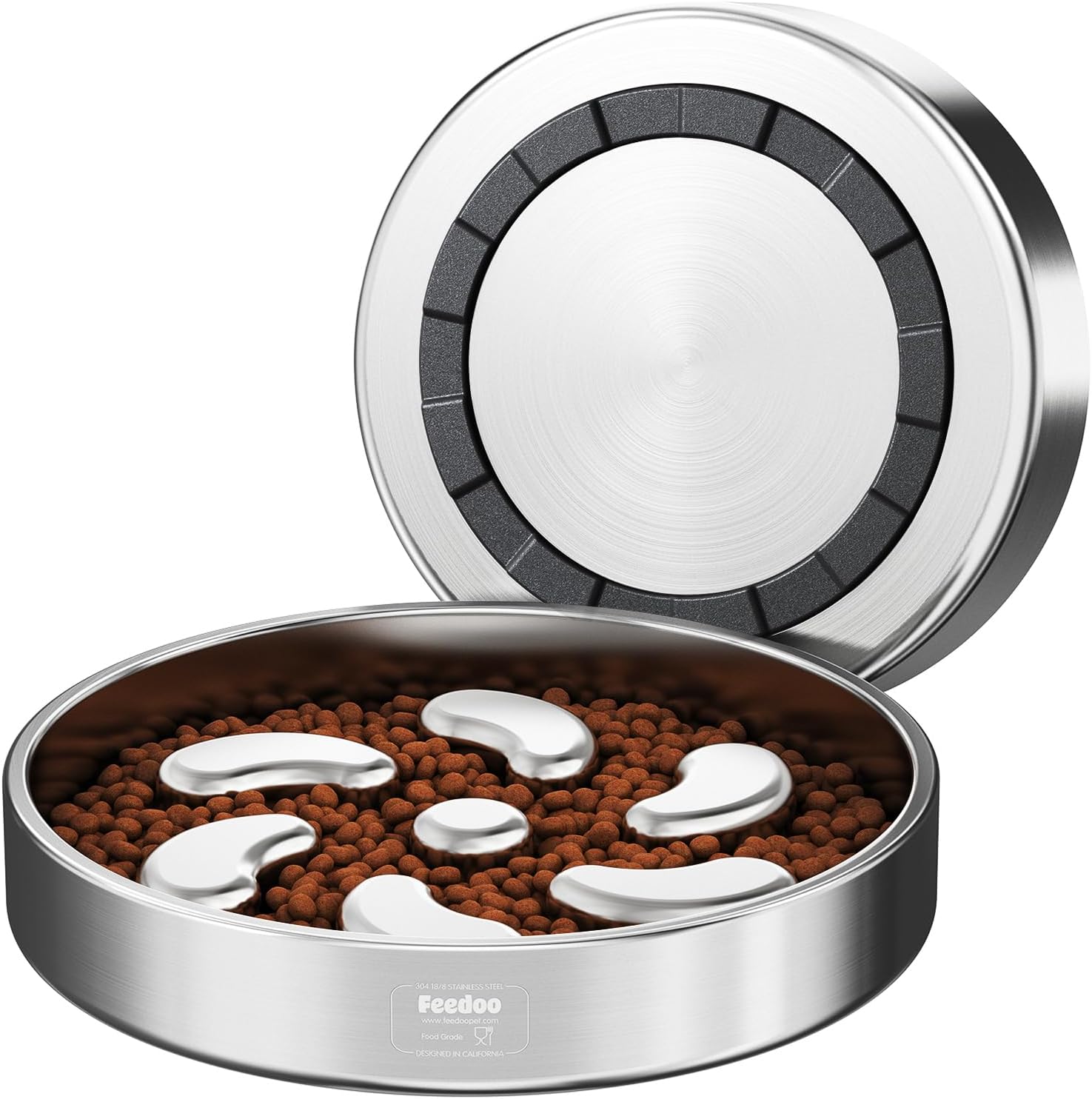
| Capacity | 3 cups |
|---|---|
| Material Type | Stainless Steel |
| Target Species | Large Breed Dogs |
| Operation Mode | Manual |
The Feedoo Slow Feeder is a heavy-duty stainless steel bowl built to slow rapid eaters and withstand everyday use. Its raised, flower-shaped maze forces dogs to work for kibble, which helps reduce gulping, vomiting, and overeating while extending meal time to promote digestion. The bowl uses a double-wall stainless design for extra heft and durability, and a full-circle silicone ring on the underside keeps it from sliding or tipping during enthusiastic feeding. Because it is stainless steel it is rust-resistant and safe for dry or wet food, and it is advertised as dishwasher safe for easy cleanup. The deep, rounded maze keeps edges smooth so it is gentle on muzzles, but the pattern can make scraping the last bits of food out a little harder than a simple bowl. It is heavier than plastic slow feeders, which aids stability but makes it less portable. For buyers who want a refined, long-lasting slow feeder the Feedoo offers a premium-feel alternative to plastic or ceramic options, though those who need ultra-lightweight or very shallow designs should look elsewhere.
Best for: Buyers who prioritize premium materials and long-lasting performance and want a durable, refined stainless steel slow feeder that improves mealtime behavior.
Less Ideal for: Those who need an ultra-light, collapsible, or very shallow bowl for travel or for dogs that prefer flat feeding surfaces should consider different styles.
- Double-wall food-grade stainless steel construction for durability and rust resistance
- Raised maze slows eating and reduces gulping and vomiting
- Full-circle non-slip silicone base keeps the bowl stable and protects floors
- Dishwasher-safe stainless steel makes cleaning straightforward
- Maze design can trap small food pieces and take more effort to fully clean by hand
- Heavier double-wall construction reduces portability for travel
Verdict: The best premium puzzle bowl for owners willing to pay more for superior materials, advanced puzzle features, and long-term durability.
Puzzle Feeder Wave Large
Best Large-Capacity Puzzle Bowl

| Capacity | 6 cups |
|---|---|
| Material Type | Silicone, Wheat Straw |
| Dog Breed Size | Large |
| Operation Mode | Manual |
The Puzzle Feeder Wave Large is a 6-cup slow feeder designed to slow rapid eaters by turning mealtime into a multi-step puzzle. The base bowl accepts two silicone inserts — a bone-shaped puzzle and a wave lick mat — that can be combined or used separately to create four feeding modes ranging from easy to challenging. Its non-slip base helps keep the bowl stable on hard floors and the plant-based wheat straw construction with silicone inserts is dishwasher-safe for everyday cleanup. In practice the inserts force dogs to pick at pockets and channels instead of gulping, which reduces fast-eating behaviors and the associated risks of choking and vomiting. The 6-cup capacity and wide 9.8-inch diameter make it suitable for large breeds or households that want fewer refills. Limitations include the plastic-like wheat straw material that is less durable than heavy-duty ceramic or metal if chewed, and very determined food-motivated dogs might still extract kibble faster than intended on the easiest settings.
Best for: Buyers who need a slow-feeder sized for large breeds or longer between-refill intervals and who want adjustable puzzle difficulty to train slower eating.
Less Ideal for: Owners who need chewproof, indestructible bowls for heavy chewers or those who prioritize premium materials like stainless steel or ceramic.
- Interchangeable inserts provide four feeding difficulty levels to phase training
- 6-cup capacity holds a full meal for many large breeds or reduces refills for multi-dog homes
- Dishwasher-safe components and removable inserts make cleaning quick
- Non-slip base keeps the bowl steady on tile, hardwood, or vinyl floors
- Made from wheat-straw composite rather than heavy-duty materials so chewing can damage it
- Not as effective for extremely determined or high-IQ dogs on the easiest settings
Verdict: The best large-capacity puzzle bowl for bigger dogs or multi-meal servings that need more food volume without frequent refills.
Novery Slow Feeder Dog Bowl 2-Cup
Best Compact Puzzle Bowl

| Capacity | 2 cups |
|---|---|
| Material Type | Stainless Steel |
| Dog Breed Size | Small |
| Operation Mode | Manual |
This Novery slow feeder is a simple, budget-friendly stainless steel bowl that uses raised ridges to slow a pet's eating and a flip-over concave side for licking treats. You use it like a normal feeding bowl for dry or wet food but fill it below the inner ridge so kibble sits in the channels; when flipped it becomes a shallow lick surface for peanut butter or yogurt. The stainless steel construction resists odors and is dishwasher-safe for easy cleanup, while the wide, rubberized base keeps the bowl from sliding or tipping during eager meals. At two cups capacity it fits small to medium portions without being bulky. Limitations are its low depth if you prefer large portioning and the fixed ridge pattern, which may not challenge very food-driven dogs as much as deeper puzzle feeders. For the price it provides durable, hygienic slow-feeding and a handy second use as a licking plate.
Best for: Buyers wanting an inexpensive, durable slow-feeding solution that is easy to clean and stable on the floor, especially for small to medium pets or owners prioritizing hygiene and simplicity.
Less Ideal for: Owners who need larger capacity bowls, deep puzzle complexity for highly food-motivated dogs, or multi-pet feeding setups should consider larger or more intricate feeders.
- Stainless steel construction resists rust, odors, and is dishwasher-safe
- Built-in ridges slow eating to reduce gulping and improve digestion
- Non-slip rubberized base prevents sliding and tipping during meals
- Reversible design doubles as a shallow licking/treat surface
- 2-cup capacity and shallow depth may be small for larger or multi-dog portions
- Fixed ridge pattern is less adjustable than multi-piece puzzle feeders
Verdict: The best compact puzzle bowl for owners who need a space-saving option that still offers engaging slow-feeding challenges.
kactoily 304 Stainless Steel Slow Feeder Bowl 2.5 cups
Best Easy-Clean Puzzle Bowl
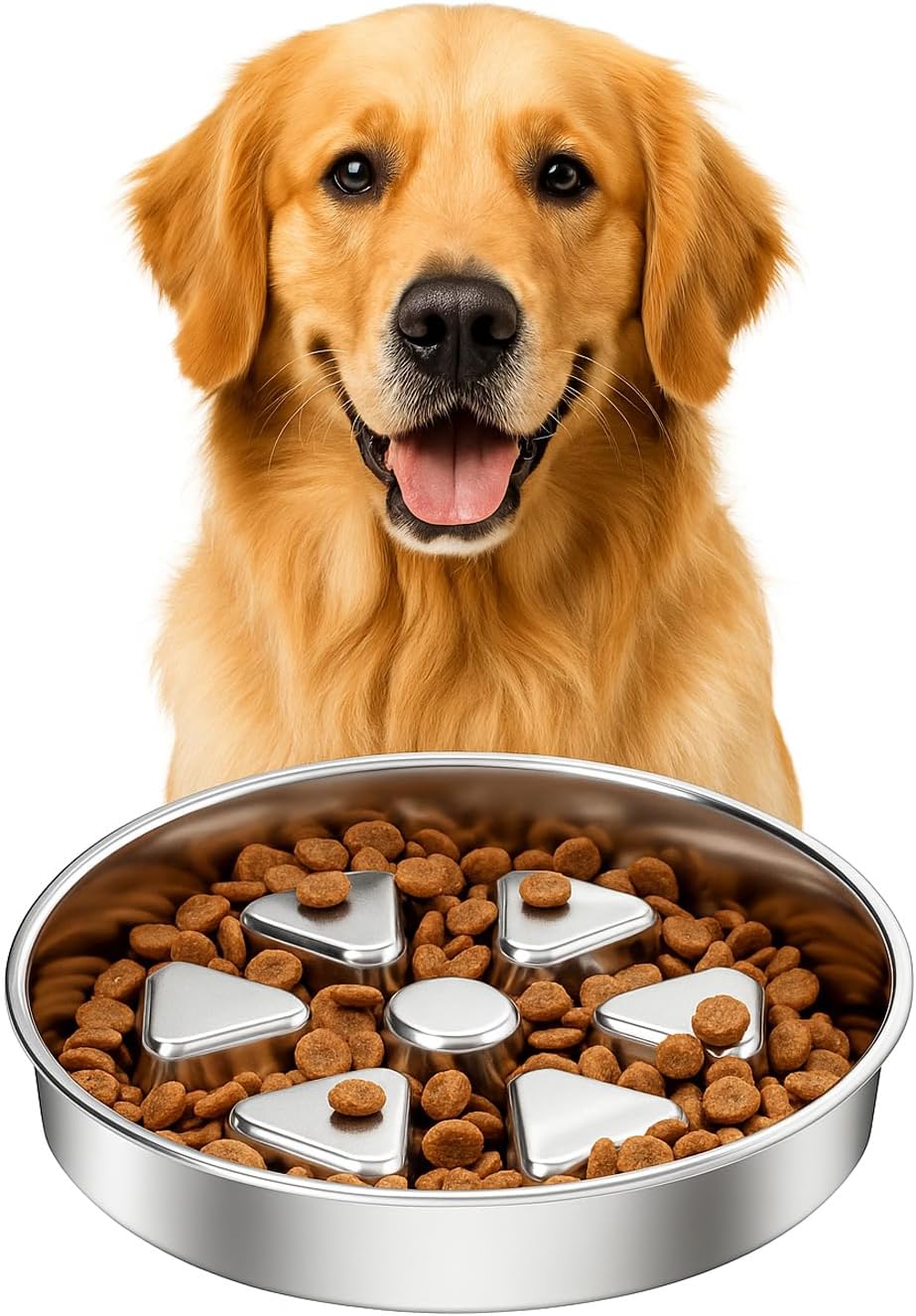
| Material Type | Stainless Steel |
|---|---|
| Capacity | 2.5 cups |
| Recommended Uses For Product | Dry Food, Indoor, Wet Food |
| Additional Features | Durable, Easy to Clean, Nonslip, Slow |
| Product Care Instructions | Dishwasher Safe |
This slow feeder bowl uses a raised 0.98-inch center to slow dogs down and encourage healthier eating, which can reduce gulping, choking, and bloating during meals. Made from food-grade 304 stainless steel, the bowl resists corrosion and is easy to rinse or run through the dishwasher for regular cleaning. The silicone anti-slip ring keeps the bowl steady on most floors so energetic eaters are less likely to tip or slide it. At about 2.5 cups capacity and a low profile, it is sized for medium to large dogs and works with dry kibble or wet food. The construction feels sturdy and the smooth stainless surface does not retain odors or residues. The main limitations are its single-size capacity, which may be small for very large dogs with high food intake, and the low rim height that could let some enthusiastic eaters reach around the obstacle rather than being forced to work the food through tighter channels. Still, for everyday home use this bowl combines durable materials, stability, and simple cleaning into a practical slow-feeding solution.
Best for: Buyers who want a durable, easy-to-clean slow feeder that performs reliably for everyday home meals and prioritizes stability and material quality.
Less Ideal for: People who need larger capacity bowls for very large breeds or multiple dogs, or those seeking an extra-challenging maze-style slow feeder.
- Raised center design slows eating to help reduce gulping and aid digestion
- Food-grade 304 stainless steel is durable, hygienic, and corrosion-resistant
- Silicone non-slip ring keeps the bowl stable during use
- Dishwasher-safe and easy to clean, resists odor and residue buildup
- Single capacity may be too small for very large or multi-dog households
- Low profile design may be less challenging for highly determined fast eaters
Verdict: The best easy-clean puzzle bowl for households that prioritize fast cleanup and hygienic maintenance after every meal.
Oiwliur Slow Feeder Stainless Steel Bowl 5 Cups
Best Durable Puzzle Bowl

| Material Type | Stainless Steel |
|---|---|
| Capacity | 5 cups |
| Additional Features | Nonslip |
| Product Care Instructions | Hand Wash Only |
| Power Source | Battery Powered |
The Oiwliur slow feeder is a stainless steel bowl shaped with internal ridges to slow a dog's eating and a rubberized non-slip base to keep it steady during mealtimes. It is intended for use with dry or wet food and water and holds up to 5 cups, so it works for single-meal portions for small to medium dogs or combined feeding for multiple smaller pets. The 304 stainless steel construction resists rust and is easy to clean by hand or in the dishwasher, which helps prevent lingering odors and staining over time. The manual operation and simple shape make it durable against chewing and rough use compared with plastic slow feeders, and the low profile helps dogs reach food while slowing their pace. Limitations are the flat, compact footprint that may not suit very large breeds that need raised feeders and the fixed internal pattern that cannot be adjusted for different slowdown levels.
Best for: Buyers who prioritize a durable, hygienic metal bowl that slows eating and is simple to clean will appreciate this product for everyday feeding of small to medium dogs or multi-pet setups.
Less Ideal for: Owners seeking an elevated feeder or an adjustable slow-feed solution for very large breeds should consider other formats designed for height or variable resistance.
- 304 stainless steel resists rust and is food-safe
- Non-slip rubber base keeps bowl stable during feeding
- 5-cup capacity handles typical single meals for small to medium dogs
- Dishwasher-safe finish makes cleaning and odor control easy
- Low, compact profile may be awkward for very large or tall dogs
- Fixed slow-feeder pattern cannot be changed to alter eating resistance
Verdict: The best durable puzzle bowl for dogs that push toys hard or for owners who want a long-lasting, rugged slow-feeding solution.
Choosing the Right Puzzle Bowl Dog: Key Factors to Consider
Difficulty Level and Puzzle Design
How challenging the bowl is directly affects whether it will slow a fast eater or merely frustrate a dog. Simple ridges or shallow chambers offer mild slowing for dogs that gulp, while multi-step mazes, removable obstacles, or deep wells require more dexterity and time.
Consider whether your dog already uses food puzzles: beginners need gentler designs and clear treat-reward feedback so they learn the behavior. Advanced chewers or highly food-motivated dogs benefit from adjustable difficulty or multiple modes so the bowl remains effective over time. A mismatch in difficulty can lead to boredom or stress, so pick a design that matches your dog's current skills and can be increased as they improve.
Material Safety and Durability
Materials determine both safety and lifespan. Food-safe plastics are lightweight and often dishwasher-friendly, but lower-grade plastic can scratch and harbor bacteria. Heavy-duty plastics with BPA-free labeling and smooth, non-porous surfaces are better for long-term hygiene.
Stainless steel components or fully stainless bowls resist staining and chewing damage and usually last longest. Silicone adds flexibility and grip, helpful for removable inserts, but check for chew resistance in heavy chewers. Whatever the material, confirm it is non-toxic and built to withstand repeated use without breaking into small pieces that could pose a choking hazard.
Ease of Cleaning
A puzzle bowl that is hard to clean will quickly become a source of odor and bacteria. Look for designs with removable parts that disassemble without tools and have broad, accessible cavities. Dishwasher-safe labels are useful, but even hand-washable bowls should avoid tight crevices where food can get trapped.
Surface finishes matter too: smooth, non-porous surfaces rinse clean more readily than textured plastics. If a bowl has foam or fabric elements, expect more frequent deep cleaning. Ask whether the manufacturer recommends specific cleaning methods and whether replacement parts are available if seals or inserts degrade.
Size, Capacity, and Portion Control
Portion control is central to a puzzle bowl's usefulness. A bowl that is too small forces multiple refills for larger dogs, while an oversized bowl can make treats easier to access and reduce the intended challenge. Match bowl capacity to typical meal sizes and consider whether the bowl's internal layout distributes food evenly or concentrates it in an accessible spot.
Also factor in kibble size; tiny kibble may fall into crevices intended for larger pieces, changing the challenge level. For multi-dog households, consider whether the bowl can be used for single servings or if you need multiple bowls sized for each dog.
Stability and Non-slip Features
Dogs can be vigorous feeders, and unstable bowls lead to frustration and mess. Non-slip bases, suction feet, or heavier base materials help keep the bowl in place during play or eating. A low center of gravity reduces tipping for enthusiastic users.
If using on hardwood or tiled floors, rubberized edges prevent sliding and reduce noise. For outdoor feeding, consider wind and uneven surfaces; bowls with broader bases or stakes perform better. Stability also affects how safe the puzzle is: a wobbling bowl can cause dogs to overreach or jostle, creating risk for smaller or older dogs.
Adjustability and Progression Options
A puzzle bowl that lets you increase difficulty extends the product's usefulness and keeps your dog challenged as they learn. Look for removable inserts, adjustable barriers, or reversible pieces that change food access patterns.
Progression is important because what slows a dog today may be trivial after a week. Adjustable designs also help trainers introduce the puzzle gradually, rewarding early success and reducing the chance of frustration. Finally, check whether spare parts are available so you can modify or replace worn elements to maintain challenge and safety.
How Quickly Should a Puzzle Bowl Slow My Dog's Eating?
Expect a noticeable reduction in eating speed on first use for most dogs, but full behavior change usually takes several supervised meals. The initial goal is to alter the rhythm, not necessarily to make every meal last a long time.
Begin with short, guided sessions where you encourage interaction and occasionally help the dog access food. If your dog becomes frustrated and gives up, reduce difficulty or pre-load a few easily reachable treats to build confidence. Over time and with consistent use, many dogs will adopt a calmer pace without needing constant supervision.
- Start with guided sessions of one or two meals.
- If dog shows frustration, lower difficulty for a few meals.
- Aim for gradual adoption rather than instant mastery.
Can Puzzle Bowls Help with Anxiety and Enrichment?
Yes, for many dogs puzzle bowls provide mental stimulation that reduces boredom and anxious behaviors by engaging natural foraging instincts. Using mealtimes as enrichment can channel energy into a focused task and create a predictable routine that some dogs find calming.
However, puzzles are not a cure-all for clinical anxiety. They work best as one tool in a broader enrichment plan that includes exercise, training, and environmental management. Monitor your dog's response and consult a professional if anxiety persists or worsens.
- Use puzzles as part of a varied enrichment schedule.
- Observe behavior; some dogs need gradual introduction.
- Combine with physical exercise for best results.
What Cleanup Routine Keeps a Puzzle Bowl Sanitary?
Daily rinsing and periodic deep cleaning help prevent odors and bacteria. Remove any detachable parts and wash them with warm, soapy water, paying attention to seams and crevices where food can accumulate. Air-dry components fully before reassembling to avoid mold or mildew.
If a bowl is dishwasher-safe, use the top rack and a standard cycle for convenience. For silicone or rubber pieces, occasional boiling or soaking in a pet-safe disinfectant can remove stubborn residues, but always follow manufacturer care instructions to avoid degrading materials.
- Rinse after each meal; deep clean weekly for regular use.
- Disassemble removable parts for thorough washing.
- Air-dry completely before reassembling to prevent mold.
How to Choose the Right Difficulty for Puppies and Seniors?
Puppies and senior dogs have different physical and cognitive abilities that influence suitable puzzle complexity. Puppies may be more curious but less dexterous, so choose simpler puzzles that reward exploration. Seniors may have reduced teeth strength or limited mobility, so opt for shallow designs with larger openings.
Adjust difficulty based on observed frustration or ease. A puppy progressing quickly can move to more challenging inserts, while a senior might benefit from softer materials that are gentle on gums and teeth. Always prioritize safety and comfort when selecting for age-specific needs.
- Puppies: start simple and increase challenge gradually.
- Seniors: favor shallow, easy-access designs and softer materials.
- Monitor dental health and mobility when choosing materials.
Placement and Feeding Routines That Improve Results
Where you place the puzzle bowl affects how your dog uses it. A quiet, low-traffic area reduces distractions and encourages focus. Avoid placing the bowl near other dogs if competition could lead to guarding or stress.
Establish a consistent feeding routine so the puzzle becomes part of a predictable daily rhythm. Mixing puzzle meals with one or two normal bowls each day can maintain balance between enrichment and simple feeding, and avoids turning every meal into a challenging task which could lead to avoidance.
- Place in a calm spot with sufficient space for movement.
- Keep puzzle meals on a consistent schedule.
- Alternate puzzle and regular bowls if needed to prevent over-challenge.
Troubleshooting Common Issues
If your dog refuses to use a bowl, try making the first sessions easier by leaving a few accessible treats or scattering kibble on top. Positive reinforcement and brief training can help them discover the puzzle's reward structure. Avoid forcing interaction, which can create negative associations.
If parts fail or retain odors, replace worn inserts and increase cleaning frequency. For dogs that chew pieces, remove or avoid fragile components and consider heavier-duty materials. Persistent problems with tipping, inaccessible treats, or hygiene concerns usually indicate a mismatch between bowl design and household routines.
- Introduce the puzzle gradually and reward small successes.
- Replace or remove worn or chewed components promptly.
- If hygiene is an issue, choose simpler, dishwasher-safe designs.
How We Chose the Best Puzzle Bowl Dog
To build this list we applied practical, dog-centered filters focused on real-world use. Primary evaluation criteria included difficulty level and engagement, since the puzzle must actually slow eating and stimulate problem solving; material durability and safety, to ensure bowls hold up to regular chewing and washing; ease of cleaning, because complex puzzles that are hard to clean get abandoned; size and capacity, matching bowl volume to typical portion sizes for different dog sizes; and stability, to prevent tipping or slipping during use. We also considered portability and storage when shapes were unusually large or awkward, plus whether designs allow progressive difficulty so the same bowl can grow with a dog's skill. Exclusions included novelty items that rely on bells or removable treats that create choking hazards, and any bowls with unclear food-safe materials or that require specialized cleaning tools. Overall we prioritized solutions that balance sustained engagement with hygiene and durability, filtering out designs that work in theory but fail in everyday household routines.
Our full evaluation process is outlined in our review methodology.
FAQ
How often should I give my dog meals in a puzzle bowl?
Many owners start with one puzzle meal per day and increase if the dog responds well. Using the puzzle for every meal can be effective but may tire some dogs; alternating puzzle and regular bowls maintains variety and prevents frustration.
Will a puzzle bowl help slow down a dog that eats too fast?
Often it will. Puzzle bowls introduce obstacles and require more time and effort to access food, which reduces gulping. Results depend on the dog's motivation and the chosen difficulty level, so pick a design suited to your dog's eating habits.
Are puzzle bowls safe for all dogs?
Usually yes for healthy dogs, but monitor puppies and dogs that are aggressive chewers. Avoid designs with small detachable parts for dogs that tend to destroy toys, and consult a vet if your dog has dental issues or trouble with dexterity.
How do I clean a puzzle bowl that has many crevices?
Disassemble removable pieces and soak them in warm, soapy water before scrubbing with a bottle brush or similar tool to reach crevices. If dishwasher-safe, run parts on the top rack; otherwise air-dry completely to prevent moisture buildup.
Can puzzle bowls be used for treats as well as meals?
Yes. Filling the bowl with treats or part of a meal works as enrichment and training. For calorie management, adjust portion sizes so treat-filled puzzle sessions do not exceed your dog's daily calorie needs.
Final Verdict
Choose a puzzle bowl that matches your dog's current skill, chewing style, and household cleaning routine. Prioritize safe, food-grade materials and a design that you can clean easily, and opt for adjustable difficulty so the bowl stays effective as your dog learns. Balance enrichment with routine: begin with supervised, gradual introductions and adjust challenge over time. With the right match, a puzzle bowl can slow eating, reduce boredom, and add daily mental stimulation without creating extra maintenance burdens.

