
Picking the right puzzle toy for your dog can turn boredom into productive play and make mealtime more engaging. The right toy reduces destructive behavior by offering mental challenges, encourages problem-solving, and can slow fast eaters. This guide highlights six shortlisted puzzle toys chosen for durability, engagement, and safety, so you can find options that fit your dog's size, energy level, and feeding habits. Read on to see which styles and features best match how your dog plays and learns.
Top Picks at a Glance
| Best Overall Puzzle Toy A versatile, well-rounded toy that suits most dogs | Outward Hound Nina Ottosson Dog Brick |  |
| Best Budget Puzzle Toy An inexpensive option that still provides solid mental stimulation | Outward Hound Treat Tumble Small |  |
| Best Premium Puzzle Toy Higher-end materials, smarter mechanics, and longer-lasting design | KADTC All-in-One Dog Puzzle Toy XL |  |
| Best Durable Puzzle Toy Built for heavy chewers and frequent, rough play sessions | KONG Wobbler Large |  |
| Best Treat-Dispensing Puzzle Toy Designed specifically to hold and release treats for motivated play | Starmark Bob-A-Lot Large |  |
| Best Slow-Feeding Puzzle Toy Encourages slower consumption and longer mealtime engagement | BoYoYo Tire2 Puzzle Toy |  |
Outward Hound Nina Ottosson Dog Brick
Best Overall Puzzle Toy

| Pet Toy Type | Puzzle |
|---|---|
| Recommended Uses For Product | Indoor, Mental Health, Playing, Training |
| Additional Features | Lightweight, Portable |
| Water Resistance Level | Not Water Resistant |
| Material Type | Plastic |
The Outward Hound Nina Ottosson Dog Brick is a Level 2 interactive puzzle that challenges dogs to lift lids, slide red sliders, and remove bone covers to find hidden treats or kibble. Designed for supervised indoor play, it has multiple treat compartments and several ways to increase or decrease difficulty so you can match the puzzle to your dog's skill level. The plastic construction is lightweight and portable, and the food-safe materials are BPA, PVC, lead, and phthalate-free, making it simple to fill, clean, and reuse. It also doubles as a slow feeder for dogs that bolt their food, turning mealtime into an enrichment session. Limitations include the plastic pieces which are not chew-proof, so the toy requires supervision and is unsuitable for heavy chewers who may disassemble components. For many owners the adjustable challenge, clear learning curve for dogs, and moderate treat capacity make this one of the most versatile puzzle toys available.
Best for: Owners who want a single, versatile puzzle that provides adjustable mental stimulation and can double as a slow feeder during supervised indoor play.
Less Ideal for: Dogs that are aggressive chewers or owners who need an unsupervised, indestructible toy should consider more rugged options.
- Adjustable difficulty with lids, sliders, and removable covers to tailor challenge level
- Multiple treat compartments that also allow use as a slow feeder
- Made from food-safe materials and easy to clean
- Lightweight and portable for indoor supervised play
- Plastic construction is not chew-proof and requires supervision to prevent damage
Verdict: The best overall puzzle toy balances engagement, durability, and treat capacity to entertain most dogs reliably during play and training.
Outward Hound Treat Tumble Small
Best Budget Puzzle Toy

| Pet Toy Type | Puzzle |
|---|---|
| Indoor Outdoor Usage | Indoor |
| Breed Recommendation | All Breed Sizes |
| Additional Features | Lightweight, Portable |
The Outward Hound Treat Tumble Small is a simple treat-dispensing puzzle ball designed to give dogs mental stimulation through rolling and nudging to release treats. You fill the two side openings with small or larger treats and adjust difficulty by treat size—smaller treats fall out faster while larger ones slow the reward. Its one-piece plastic sphere is lightweight and portable, intended for supervised indoor play and short training or enrichment sessions. The ball is food-safe and made without BPA, PVC, lead, or phthalates, and it rinses clean easily with soap and water. As a level 1 puzzle it is best suited to puppies or dogs new to enrichment toys; heavier chewers or dogs that prefer destructive play may remove pieces or break it if unsupervised, and the fixed small openings limit treat shapes and sizes. The design is straightforward with minimal parts, so you get easy setup and predictable dispensing rather than adjustable complexity or advanced puzzle mechanics.
Best for: Owners looking for an affordable, no-frills enrichment toy to introduce puppies or beginners to treat puzzles and add short supervised play sessions.
Less Ideal for: Families with power chewers or dogs that need multi-step puzzles and adjustable difficulty should consider more durable or advanced options.
- Simple, intuitive treat-dispensing action that encourages rolling and mental engagement
- Lightweight, portable one-piece design that is easy to fill and clean
- Made from food-safe materials free of BPA, PVC, lead, and phthalates
- Works as a slow-feeder for kibble and doubles as a basic enrichment toy for training
- Level 1 challenge may be too easy for experienced puzzle-savvy dogs
- Not water resistant and not intended for unsupervised chewing by heavy chewers
- Small fixed openings limit the size and shape of treats that will dispense
Verdict: The best budget puzzle toy gives good enrichment and basic durability at a low price for owners who want value without complex features.
KADTC All-in-One Dog Puzzle Toy XL
Best Premium Puzzle Toy

| Pet Toy Type | Puzzle |
|---|---|
| Additional Features | Six Gameplay – Five Difficulty Levels |
| Water Resistance Level | Waterproof |
| Material Type | Acrylonitrile Butadiene Styrene |
| Breed Recommendation | All Breed Sizes |
The KADTC All-in-One Dog Puzzle Toy is an extra-large, modular slow-feeding puzzle that turns kibble and small treats into multi-step challenges. It ships ready to use and includes six gameplay configurations with five difficulty settings so you can start simple and increase complexity as your dog learns. Built from food-grade ABS and marketed as waterproof and scratch-resistant, the toy is designed for frequent interactive sessions where dogs paw, nudge, spin, slide, and search to uncover rewards. The XL play surface gives plenty of room for single or supervised multi-dog use, and the built-in pieces remove loose parts that can get lost. Practical benefits include longer replay value compared with single-mode toys, help slowing fast eaters when used for meals, and an approachable learning curve for puppies and novice players. Important limitations: it is meant for supervised puzzle play rather than chewing, and very determined chewers could damage plastic over time despite the durable construction.
Best for: Owners who prioritize a long-lasting, high-engagement enrichment toy and are willing to invest in a premium, multi-level puzzle to keep curious or food-motivated dogs mentally stimulated.
Less Ideal for: People who need an indestructible chew toy for heavy chewers or those who prefer single-purpose, low-complexity feeders.
- Multiple gameplay modes and five adjustable difficulty levels keep the challenge fresh as dogs improve
- Extra-large board provides ample play area for small to large breeds and supervised multi-dog turns
- Made from food-grade ABS with certifications for safety, marketed as durable and scratch-resistant
- Ready to use out of the box with built-in pieces so there are no small parts to lose
- Can be used with kibble or small treats to convert feeding into enrichment and slow down fast eaters
- Not designed for unsupervised chewing so it may not suit strong chewers
- Plastic construction can still wear or crack over long-term heavy use by determined dogs
Verdict: The best premium puzzle toy uses superior materials and clever design to deliver longer-lasting challenge and durability for owners willing to invest more.
KONG Wobbler Large
Best Durable Puzzle Toy

| Pet Toy Type | Treat Dispenser Toy |
|---|---|
| Breed Recommendation | Medium/Large |
| Indoor Outdoor Usage | Indoor |
| Water Resistance Level | Water Repellent |
The KONG Wobbler is a durable, hollow treat dispenser that wobbles unpredictably as dogs nudge it to release kibble or treats, turning mealtime into a game. Dogs push or paw the weighted base to make food fall out of the top opening, which encourages activity and extends eating time for pets that gulp or need extra mental stimulation. The toy unscrews for easy filling and cleaning, and the plastic construction is water repellent and dishwasher safe for simple maintenance. Its shape and erratic movement keep the challenge engaging without complicated puzzles or interchangeable parts, so it works well for repeated daily use. Limitations are that very aggressive chewers may eventually damage plastic toys, and the dispensing hole size and weight mean very small kibble or tiny dogs will get less benefit than the intended medium and large breeds. For owners seeking a straightforward, robust dispenser that promotes slow feeding and play, the Wobbler is a reliable, low-fuss option.
Best for: Buyers who prioritize a long-lasting, low-maintenance puzzle that reliably dispenses food and keeps medium to large dogs mentally and physically engaged during meals.
Less Ideal for: Owners of very small breeds or dogs that are extreme power chewers who need heavy-duty rubber or reinforced toys should consider other options.
- Sturdy plastic construction designed for repeated interactive play
- Weighted wobble action dispenses kibble gradually to slow feeding
- Unscrews for easy stuffing and dishwasher-safe cleaning
- Simple design with no small removable parts to lose or break
- Encourages physical activity and mental stimulation during mealtime
- Plastic material can be chewed through by very powerful chewers
- Large size and hole diameter are not ideal for very small dogs or tiny kibble
Verdict: The best durable puzzle toy is designed to withstand strong chewing and frequent use while still offering meaningful mental engagement.
Starmark Bob-A-Lot Large
Best Treat-Dispensing Puzzle Toy

| Pet Toy Type | Treat Dispenser Toy |
|---|---|
| Recommended Uses For Product | Boredom Buster, Brain Game, Exercise, Mental Stimulation, Treat Dispensing |
| Indoor Outdoor Usage | Indoor |
| Dog Breed Size | Large |
| Additional Features | Adjustable, Durable, Interactive, Treat Dispensing |
The Starmark Bob-A-Lot Large is a wobbling treat-dispensing puzzle that holds up to three cups of kibble or treats and uses adjustable openings to vary difficulty. Dogs push and nudge the weighted, anti-slip base so the toy bobs and dispenses food from the internal chambers, turning mealtime into a foraging challenge or a solo play session. The adjustable top and bottom openings let you control how quickly treats come out, which is useful for stretching out a meal or slowing fast eaters. Made of durable plastic, it is intended for supervised indoor use and is water resistant for easy cleaning. Important limitations are that it is not a chew toy replacement for aggressive chewers and small pieces should be removed if the toy becomes damaged. For owners who want a straightforward, adjustable puzzle that doubles as an automatic feeder and boredom buster, the Bob-A-Lot is effective and easy to set up.
Best for: Buyers who want to extend feeding into an interactive puzzle that rewards dogs with food and encourages problem-solving during unsupervised short sessions.
Less Ideal for: Owners seeking a heavy-duty chew toy for powerful chewers or a toy sized for toy-breed dogs should look elsewhere.
- Holds up to three cups of kibble for extended play or a full meal
- Adjustable openings let you set dispensing difficulty to slow or speed reward release
- Weighted anti-slip base creates unpredictable wobble that entices sustained interaction
- Dishwasher-safe plastic and water resistance make cleaning straightforward
- Not designed to withstand heavy chewing or destructive play
- Large size may be too big for very small dogs
Verdict: The best treat-dispensing puzzle toy excels at controlled reward release to extend playtime and encourage problem-solving with edible incentives.
BoYoYo Tire2 Puzzle Toy
Best Slow-Feeding Puzzle Toy
| Pet Toy Type | Puzzle |
|---|---|
| Recommended Uses For Product | Anxiety Relief, Brain Game, Mental Stimulation, Playing, Teething, Training, Treat Dispensing |
| Indoor Outdoor Usage | Indoor, Outdoor |
| Material Type | Nylon, Rubber |
| Breed Recommendation | All Breed Sizes |
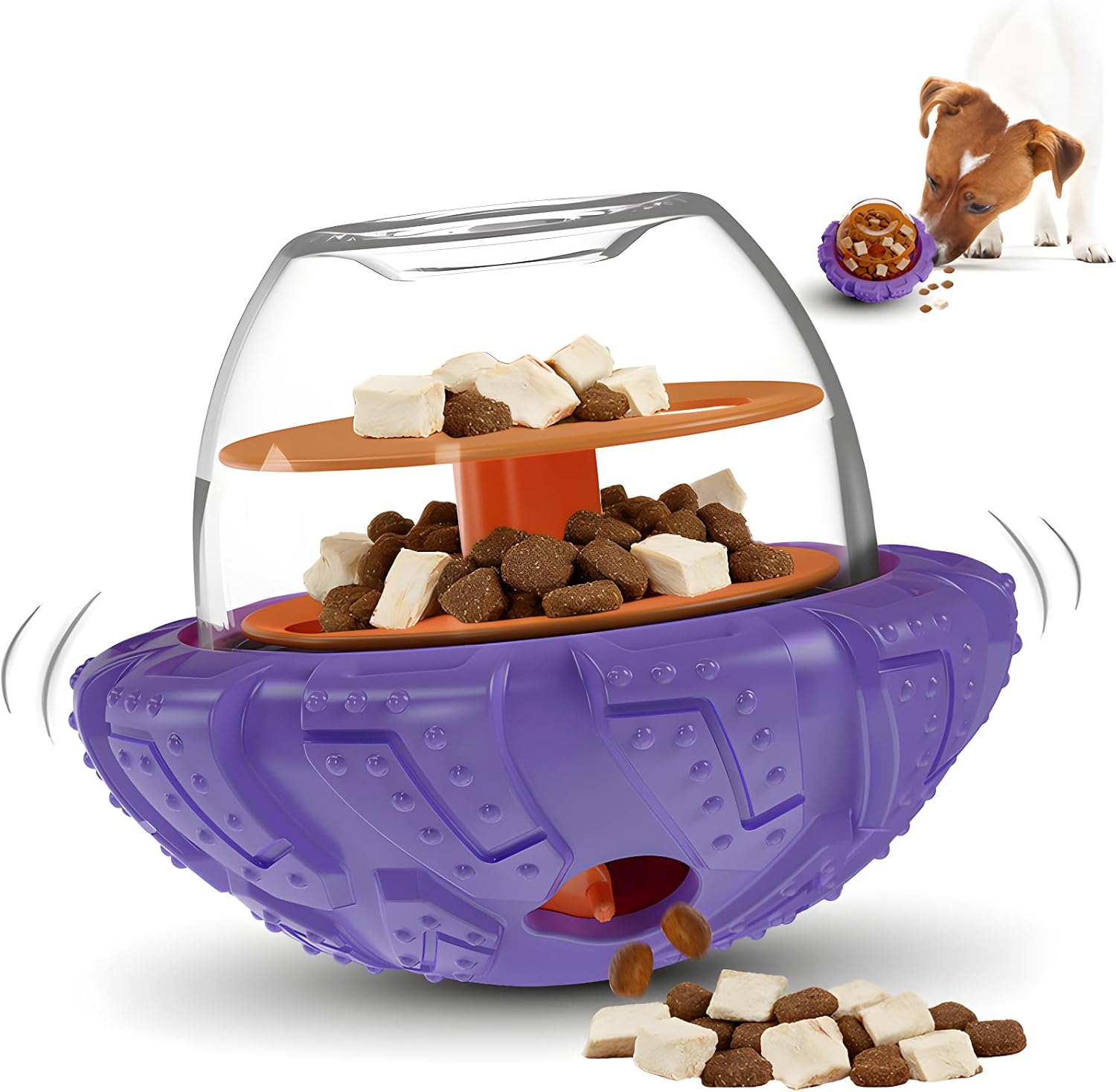
This BoYoYo Tire2 Puzzle Toy combines a multi-piece tumble-and-roll feeding mechanism with a transparent upper cover so pets can see treats and work to release them. It is used by loading kibble or small treats into the internal chamber, adjusting the paddle to change how easily pieces fall out, and letting the dog roll, scoop, or nudge the toy to earn food. The toy's tire-shaped silicone base gives grip and playability while the ABS dome and internal spiral/valve structure control treat flow for longer feeding sessions. It is dishwasher safe and disassembles for cleaning, and the manufacturer explicitly warns it is not meant as a chew toy so supervision is recommended during use. The practical benefits are slower, more engaging meals that help reduce gulping and provide mental stimulation, but heavy chewers should avoid it because the materials are not designed for sustained chewing.
Best for: Owners who want to slow down meals and give their dog a mentally stimulating feeding experience that turns kibble into an active reward game.
Less Ideal for: People with aggressive chewers or dogs that destroy toys quickly should choose a heavy-duty chew-specific feeder instead.
- Adjustable paddle and internal spiral/valve slow the treat release to extend eating time
- Transparent upper cover lets pets see rewards, increasing engagement
- Disassembles for cleaning and is dishwasher safe
- Tire-shaped silicone base adds grip and play value
- Not designed for powerful chewers and can be damaged by sustained chewing
- Not water resistant — not suitable for water play
Verdict: The best slow-feeding puzzle toy slows down eating and turns meals into a controlled, mentally stimulating activity to reduce gulping and boredom.
Choosing the Right Puzzle Toy Dog: Key Factors to Consider
Durability and Chew Resistance
Durability matters because many dogs will mouth, paw, and sometimes chew puzzle toys aggressively. Expect toys to undergo repeated impact, tugging, and scraping. Choose materials rated for heavy use if your dog is a powerful chewer, and prefer simple mechanical parts that resist jamming. Durable construction reduces replacement frequency and keeps broken pieces from becoming choking hazards.
Look for dense rubber, thick food-safe plastic, or reinforced components depending on the toy type. For sliding or rotating puzzles, ensure moving parts are robust and have limited small gaps where teeth could get pinched. Durability directly affects long-term value and safety for active dogs.
Puzzle Complexity and Replay Value
Complexity determines whether a toy entertains once or becomes a long-term enrichment tool. Puppies and beginners may benefit from simple hide-and-seek cavities or nonrestrictive food puzzles, while experienced dogs often need multi-step challenges to stay interested. Toys with adjustable difficulty or modular setups extend replay value as dogs learn strategies.
Replay value also ties to variability: interchangeable pieces, different reward types, or multiple solution paths keep problem-solving fresh. Choose a level that challenges your dog without causing frustration; a toy that is too hard may be ignored, while one that is too easy loses usefulness quickly.
Safety and Materials
Safety is critical because dogs put toys in their mouths and expose themselves to wear. Verify that materials are non-toxic and free from brittle components that can shatter into sharp fragments. Avoid small detachable parts for strong chewers or unsupervised play with food puzzles that have removable inserts.
Look for smooth finishes to prevent gum abrasion and secure fastenings on lids or sliding pieces. For toys used with wet food, choose materials that resist bacterial growth and can be cleaned thoroughly. Prioritizing safety reduces health risks and prevents accidental ingestion.
Size and Feeding Compatibility
The toy's size relative to your dog affects both challenge and safety. A toy that is too small can be a choking risk, while one too large may be frustrating and unusable. Consider the intended food or treat: kibble-dispensing puzzles need appropriately sized compartments and openings to control flow, while wet-food puzzles require materials and seals that tolerate moisture.
If the toy is meant to slow feeding, assess how much food it can hold and whether the dispensing rate matches your dog's hunger level. Match toy dimensions and reward capacity to your dog's mouth size and feeding goals for the best outcomes.
Cleaning and Maintenance
Hygiene affects both durability and pet health. Many puzzle toys trap food and moisture in crevices where bacteria can grow, so evaluate how easy a toy is to disassemble, clean, and dry. Dishwasher-safe parts are convenient but not universally available; toys that split into large, accessible pieces are preferable for hand washing.
Consider the maintenance frequency your lifestyle allows. High-effort cleaning routines often lead to less frequent cleaning, increasing contamination risk. Choose designs with smooth surfaces and removable trays to simplify upkeep.
Noise and Household Tolerance
Some puzzle toys include moving parts, squeakers, or internal rattles that can be noisy during use. Think about when and where your dog will play: a noisy toy may be fine outdoors but disruptive in small living spaces or during quiet hours. Materials such as hard plastic can create louder impacts than rubber, and sliding components can squeak over time.
If multiple pets or neighbors are in close proximity, prioritize quieter designs or toys used under supervision. Household tolerance influences how often a toy is used and whether it becomes a practical enrichment tool.
How Do I Pick the Right Difficulty Level for My Dog?
Start by observing how your dog approaches food puzzles and toys. If your dog solves simple food-dispensing toys in seconds, choose a multi-step puzzle or a toy with adjustable settings to increase the mental challenge. For puppies, senior dogs, or pets new to puzzles, select lower-difficulty options that reward quick success and build confidence.
- Begin with an easy setting and raise difficulty gradually.
- Monitor for signs of frustration like walking away or vocalizing; reduce difficulty if needed.
- Rotate puzzles weekly to maintain novelty and interest.
Can Puzzle Toys Help with Separation Anxiety or Boredom?
Puzzle toys can reduce boredom-driven behaviors by redirecting energy into focused problem-solving. While they are not a cure for separation anxiety, providing enrichment before leaving and pairing puzzles with calm departures can lessen anxious behaviors for some dogs. Use puzzles as part of a broader behavioral plan that may include exercise, training, and environmental management.
- Offer a puzzle toy during times your dog is often alone to increase engagement.
- Combine with a short walk or play session so the dog is not overstimulated on an empty stomach.
- Avoid using high-value food puzzles as the only coping mechanism for severe anxiety; seek professional behavioral guidance when needed.
What Feeding Strategies Work Best with Puzzle Toys?
Puzzle toys can replace or supplement meals by turning kibble into a foraging activity. For dogs that gulp food, divide daily portions among multiple brief puzzle sessions or fill a single toy with a portion to slow consumption. For picky eaters, start with some high-value treats mixed into the regular food to encourage interaction with the toy.
- Use weighed meal portions to maintain caloric balance when using puzzles for feeding.
- Introduce puzzles gradually so the dog associates the toy with positive outcomes.
- For wet food, choose toys designed to handle moisture and clean them after each use.
How to Introduce a Puzzle Toy to a Reluctant Dog
Make the first interactions easy and rewarding. Show the dog the treat by placing a few treats visibly on the toy, then encourage exploration with praise and short guided sessions. If the dog ignores the toy, try holding it so they can observe the movement and sound, or partially open the toy so rewards are easier to find initially.
- Keep sessions short and upbeat to build positive associations.
- Reward incremental progress even if the dog only noses or paws at the toy.
- Gradually increase difficulty as the dog gains confidence and skill.
Maintaining Hygiene for Food-based Puzzles
Clean puzzle toys thoroughly after each use when they contact wet food, and at least daily for heavy kibble use. Disassemble removable parts and wash with warm, soapy water; air dry completely before reassembly to prevent mold. For toys labeled dishwasher-safe, place parts on the top rack and ensure small pieces are secured during the cycle.
- Inspect crevices and seals for food buildup and clean with a small brush.
- Rotate toys to allow full drying time between uses.
- Replace toys that develop cracks or persistent odors despite cleaning.
How We Chose the Best Puzzle Toy Dog
We focused on characteristics that matter most for dog puzzle toys and applied consistent editorial filters to build this shortlist. Primary evaluation criteria included durable construction and chew resistance to withstand real use, and puzzle complexity and replay value to keep dogs engaged over time. We also weighed safety features such as non-toxic materials and secure closures, and considered cleaning ease because hygiene affects long-term use. Feeding compatibility was assessed for toys intended for kibble or wet food, ensuring the mechanisms allow controlled dispensing. Finally, we looked at age and size suitability so toys work for puppies through adult dogs. We excluded items that were primarily plush without internal challenge, single-use treat dispensers, or toys with known safety recalls. Products had to demonstrate sustained engagement potential rather than one-off novelty. The result is a curated collection that balances toughness, mental stimulation, and practical maintenance needs to suit a range of dogs and owners.
Our full evaluation process is outlined in our review methodology.
FAQ
Are puzzle toys safe for heavy chewers?
It depends on the toy construction. Some puzzle toys are built from durable rubber or reinforced plastic for strong chewers, while others use thinner materials meant for gentle mouthing. Always supervise initial play and remove any toy that shows signs of structural failure.
How often should I use a puzzle toy for feeding?
You can use puzzle toys daily as part of regular feeding, or intermittently as enrichment. For weight management, split meals into multiple puzzle sessions to slow intake. Frequency should match your dog's energy level and digestion; monitor weight and adjust portions accordingly.
Can puppies use the same puzzle toys as adult dogs?
Puppies can use puzzle toys but often need lower difficulty and softer materials for developing teeth. Choose age-appropriate designs without small detachable parts and monitor for teething-related chewing that could damage the toy.
Will puzzle toys replace exercise?
No. Puzzle toys provide mental enrichment and can reduce boredom, but they are not a substitute for physical exercise. Combine mental challenges with regular walks and play sessions to meet your dog's full activity needs.
What if my dog loses interest after a few days?
Rotate different puzzles and vary rewards to restore interest. Increasing difficulty or hiding higher-value treats intermittently can renew engagement. If boredom persists, reassess whether the toy's challenge level matches your dog's intelligence and activity level.
Final Verdict
Choose a puzzle toy by balancing durability, challenge level, and ease of cleaning against your dog's size, chewing strength, and temperament. Prioritize safe materials and appropriately sized openings for feeding puzzles, and opt for adjustable or modular designs if you want long-term replay value. Remember that mental enrichment works best alongside regular exercise and social interaction. With the right match, a puzzle toy can reduce unwanted behaviors, slow mealtime, and provide satisfying mental stimulation for your dog.