

If your dog seems to stoop or cough while eating, a raised dog feeder can make meals more comfortable and reduce strain on the neck and shoulders. A properly sized elevated feeder helps older dogs, large breeds, and pets with joint issues eat with better posture and less effort. This guide shortlists the top elevated feeders across common materials and styles so you can match stability, height, and bowl type to your dog's needs. Below we explain the key features we evaluated and how each pick fits different feeding situations.
Top Picks at a Glance
| Best Overall Raised Feeder The best all-around raised feeder for most pet households | Amazon Basics Elevated Dog Bowls Stand |  |
| Best Budget Raised Feeder A low-cost raised feeder that covers basic feeding needs reliably | PAKEWAY Elevated Tiltable Dog Bowls |  |
| Best Premium Raised Feeder Higher-end materials and finish for owners wanting long-term quality | Neater Feeder Deluxe Large |  |
| Best Compact Raised Feeder A smaller elevated feeder designed for tight spaces and small pets | COMESOON Elevated Dog Bowls Small |  |
| Best Heavy-Duty Raised Feeder Built for durability and rough use with robust construction details | ADENGL Metal Raised Dog Bowl Stand |  |
Amazon Basics Elevated Dog Bowls Stand
Best Overall Raised Feeder

| Included bowls | 2 stainless steel bowls |
|---|---|
| Adjustable heights | 5 positions (8.4 to 33 cm) |
| Foldable | Yes |
| Material type | Stainless Steel |
| Recommended uses | Travel and Portability, Outdoor, Multiple Pets |
This adjustable elevated feeder raises two stainless steel bowls to five different heights so the same stand can serve puppies as they grow or different-size dogs in one household. The frame folds for travel or storage and requires no tools to assemble, making setup quick and convenient. Included bowls are dishwasher-safe stainless steel, which makes cleaning easy and reduces odor and staining compared with plastic. A rubberized non-slip base and spill-resistant rim keep the stand stable and protect floors while quieting movement during feeding. Materials are sourced from GRS-certified recycled content for buyers who prioritize sustainability. The main compromises are that the product is listed for small dog breeds and its compact footprint may not suit very large dogs or heavy chewers, and the adjustment steps may not match every pet's ideal height precisely. For most multi-pet homes or owners who want a single feeder that adapts over time, this is a practical, low-maintenance choice.
Best for: Owners who want a single feeder that grows with puppies or accommodates multiple small dogs and value easy cleaning and portability.
Less Ideal for: People with very large or giant-breed dogs or those needing a heavy-duty, custom-height feeding solution should consider larger, sturdier alternatives.
- Five height settings adapt as pets grow or for multiple pet sizes
- Two dishwasher-safe stainless steel bowls for easy cleaning and durability
- Foldable, tool-free assembly for portability and quick setup
- Non-slip rubber base and spill-resistant design reduce tipping and protect floors
- Constructed with GRS-certified recycled materials
- Designed and marketed for small breeds so not ideal for very large dogs
- Fixed adjustment increments may not provide a perfectly custom height for every pet
Verdict: The best overall raised feeder balances stability, bowl quality, cleanup ease, and ergonomics for the widest range of pets and owners.
PAKEWAY Elevated Tiltable Dog Bowls
Best Budget Raised Feeder

| Bowl capacity | 4.6 cups |
|---|---|
| Height settings | 3.1, 8.7, 9.4, 10.2, 11, 11.8 inches |
| Tilt adjustment | 5° per gear |
| Materials | Plastic, Stainless Steel |
| Included bowls | Slow-feeder bowl and 7.8-inch stainless bowl |
This PAKEWAY elevated set combines a folding, height-adjustable stand with an extra-wide slow-feeder bowl and a 7.8-inch stainless steel water bowl to reduce gulping and keep mealtime cleaner. The stand offers six height positions including a low-profile setting and a per-gear 5° tilt adjustment so you can set a slight forward or rear tilt to ease neck and joint strain for larger dogs. The slow-feeder insert has deep ridges to slow intake while the raised 1.77-inch rear baffle helps contain splashes and messes. Setup requires no tools—unfold the legs and lock the height—and four non-slip pads keep the unit stable during eager feeding. Bowls are removable for straightforward washing, and the plastic plus stainless construction keeps weight low for storage and portability. Expect this to work well for medium and large dogs but note the big bowl size and elevated heights may be excessive for small breeds, puppies, or brachycephalic dogs; the plastic frame is lightweight rather than heavy-duty metal, so very large or destructive chewers might prefer a sturdier option.
Best for: Owners seeking an affordable elevated slow-feeding solution for medium to large dogs who prioritize reducing gulping and easy cleaning over heavy-duty construction.
Less Ideal for: People with small-breed, puppy, or brachycephalic dogs that need lower, smaller bowls, or owners who want a heavy metal stand for long-term near-commercial durability.
- Multiple height settings including low profile and five raised positions for customizable feeding posture
- Tiltable adjustment (5° per gear) to reduce neck strain and aid digestion
- Includes an extra-wide slow-feeder bowl plus a 7.8-inch stainless steel bowl that are removable for easy cleaning
- Raised 1.77-inch rear baffle and non-slip pads help contain messes and keep the stand stable
- Tool-free 10-second setup and foldable design for simple storage and portability
- Plastic frame is lightweight and not as rugged as metal stands for very large or destructive dogs
- Large bowl size and elevated heights may be unsuitable for small breeds, puppies, or flat-faced dogs
Verdict: The best budget raised feeder gives budget-conscious owners a stable, functional elevated feeding solution without premium materials or extra features.
Neater Feeder Deluxe Large
Best Premium Raised Feeder

| Capacity | 7 cups (food), 9 cups (water) |
|---|---|
| Recommended for | Large dogs over 40 lbs |
| Material Type | Plastic, Stainless Steel |
| Dishwasher Safe | Top-rack dishwasher safe |
The Neater Feeder Deluxe Large is a raised feeding station designed to keep floors clean while giving large dogs a higher, more comfortable eating position. It includes one stainless steel food bowl and one larger stainless steel water bowl set into a heavy‑gauge plastic outer holder with splash guards and a drainage basin that contains spilled food and channels water away. Typical use is simple: assemble the stand, set the bowls, and refill food and water; non‑skid feet help keep the unit stable during mealtime. Practical benefits include easier feeding posture for bigger breeds, fewer messes thanks to the splash guard and drain design, and dishwasher-safe components for easy cleanup. The construction favors longevity with thicker plastic on the Deluxe version, and the bowls are lead-free and top-rack dishwasher safe. Limitations are that the unit is sized specifically for large dogs so it is bulky for small spaces and the plastic exterior, while durable, may show wear over many years compared with all-metal alternatives. Leg extensions are sold separately if you need a higher feed height.
Best for: Owners of large-breed dogs who prioritize a durable, well-designed feeding station that minimizes mess and offers a more comfortable eating height and easy cleanup.
Less Ideal for: People with very limited floor space or buyers seeking a compact or all-metal decorative stand should consider different options.
- Mess-proof outer basin with splash guards and drainage that contains spilled food and water
- Includes stainless steel food and extra-capacity water bowls that are dishwasher-safe and lead-free
- Elevated feeding height designed for large dogs to improve posture and reduce neck strain
- Non-skid rubber feet and heavier gauge plastic on the Deluxe model for added stability and durability
- Bulky footprint intended for large breeds may not fit small living spaces
- Plastic outer frame can show long-term wear compared with metal stands
Verdict: The best premium raised feeder delivers superior materials, craftsmanship, and refined details for owners willing to pay more for durability and aesthetics.
COMESOON Elevated Dog Bowls Small
Best Compact Raised Feeder
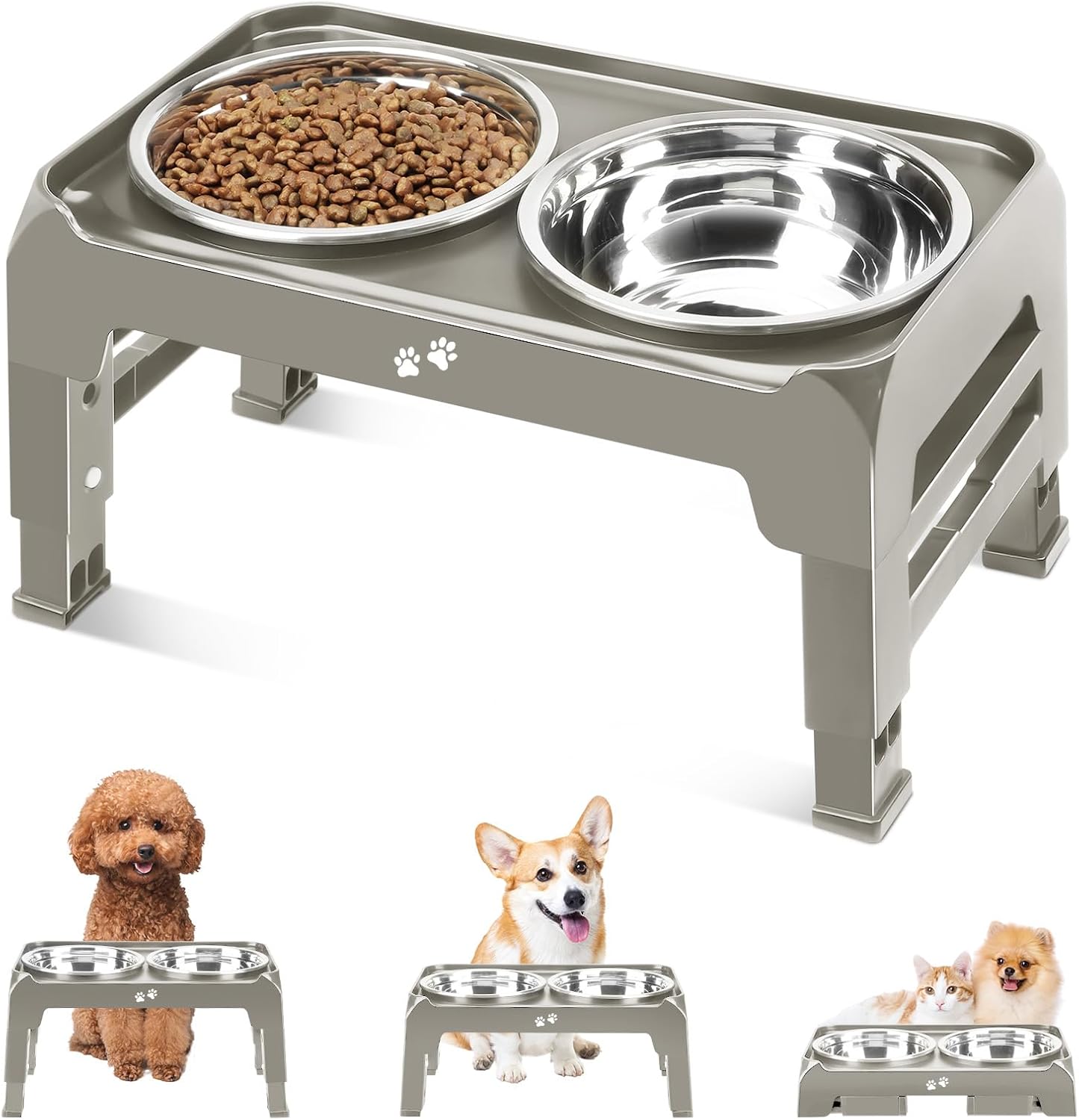
| Included Components | 2 Stainless steel bowls, Stand |
|---|---|
| Capacity | 25 Ounce per bowl |
| Material Type | Stainless Steel |
| Product Care Instructions | Dishwasher Safe |
| Features | Adjustable, Foldable, Anti Vomiting |
The COMESOON compact raised feeder is a foldable ABS stand that holds two thick 25 oz stainless steel bowls and offers three height settings for small to medium dogs. It is used by unfolding the legs, pressing the adjustment button and selecting one of the three heights to suit puppies through adult small-breed dogs, which helps reduce neck strain and encourages steadier digestion. The stainless bowls are removable and dishwasher safe, so cleaning is straightforward, and the stand's raised edges and rounded corners keep spills and floor debris contained. Non-slip feet improve stability on hard floors and help protect surfaces. Because the stand is lightweight and collapsible it is easy to store or take on trips, and no assembly is required. Limitations include the smaller 6-inch bowl size and modest capacity, which make this set unsuitable for larger dogs or households that need very high-capacity feeding, and the ABS stand, while durable, is not as heavy as metal stands so very boisterous chewers may dislodge it.
Best for: Buyers who need a space-saving, travel-friendly raised feeder for small breeds and want easy cleaning and adjustable ergonomics as dogs grow.
Less Ideal for: Households with larger breeds, heavy chewers, or owners who need high-capacity bowls for multiple daily feedings should consider a larger, heavier-duty feeder.
- Three adjustable heights to grow with puppies and fit different small-breed shoulder heights
- Two thick 25 oz stainless steel bowls that are removable and dishwasher safe
- Foldable one-piece ABS stand for easy storage and travel
- Non-slip feet and raised edges improve stability and help contain messes
- Smaller 6-inch bowls limit capacity for larger meals or multiple pets
- ABS stand is lightweight compared with metal options and may shift with very active pets
Verdict: The best compact raised feeder fits smaller homes and small-breed dogs or cats while maintaining stability and easy cleaning.
ADENGL Metal Raised Dog Bowl Stand
Best Heavy-Duty Raised Feeder

| Bowl capacity | 1700ml/58oz |
|---|---|
| Material | Metal stand with stainless steel bowls |
| Included mat size | 15.8 x 23.6 inches |
| Recommended breed size | Medium, Large |
| Operation Mode | Manual |
This ADENGL raised dog bowl stand lifts two stainless steel bowls to a comfortable height for medium and large dogs and includes a splash-proof mat to contain spills. The stand is metal with a powder-coated finish and non-slip feet, so it feels sturdy and resists tipovers during mealtime; the bowls are removable stainless steel and are advertised as dishwasher safe, which simplifies cleanup after wet or messy feeders. Assembly is tool-free and quick, and the design folds down for travel or storage. The included mat is waterproof and helps keep floors dry, though the mat size may be small for very splashy dogs. The metal finish wipes clean easily but the stand has a few tubes and joints where trapped food or grime could require a brush to reach. If your priority is fast, low-effort cleanup, the combination of dishwasher-safe bowls and a wipeable metal frame makes this stand a practical choice, with the caveat that small crevices need occasional attention.
Best for: Owners who want a raised feeder that minimizes scrubbing and supports quick cleanup routines using dishwasher-safe bowls and simple wipe-down maintenance.
Less Ideal for: People seeking a completely seamless, one-piece wash solution or those who need very large-capacity bowls for extra-large breeds.
- Two removable stainless steel bowls that are dishwasher safe for easy sanitizing
- Powder-coated metal stand wipes clean and feels more durable than plastic
- Non-slip feet and tapered tubes add stability during feeding
- Includes a waterproof splash-proof mat to catch spills and keep floors tidy
- Tool-free assembly and foldable design make setup and travel storage simple
- Mat and frame have seams and joints that may trap debris and need brushing to fully clean
- Stand finish could show scratches over time with rough handling
Verdict: The best heavy-duty raised feeder is designed for strong chewers, active homes, or frequent use with reinforced materials and a stable build.
Choosing the Right Raised Dog Feeder: Key Factors to Consider
Correct Height and Posture
Height determines how comfortably a dog reaches its food. A feeder that is too low forces the dog to bend, which can increase pressure on the neck and shoulders over time. Too high a feeder can force the dog to lift the head awkwardly and may strain the back.
Measure your dog from the floor to the shoulder and aim for a bowl rim that sits roughly level with or slightly below that point for most breeds. Puppies and growing dogs may need adjustable options, while adult dogs often do well with a fixed-height stand matched to their shoulder height. Choosing the right height improves swallowing mechanics and reduces the likelihood of musculoskeletal discomfort.
Stability and Anti-tip Features
An elevated feeder must resist tipping when a dog nudges or leans on it. Instability interrupts meals, creates mess, and can frighten animals. Heavier bases, wider footprints, non-slip feet, and low centers of gravity all contribute to steady feeding.
Look for stands with solid joinery, rubberized feet, or wide bases that distribute weight. For very enthusiastic eaters, integrated anti-slip pads or the ability to anchor the stand under furniture can be helpful. Stable feeders also reduce spillage and keep food and water where they belong, simplifying cleanup.
Bowl Design and Maintenance
Bowl shape, material, and mounting affect hygiene and convenience. Stainless steel bowls are resistant to odors and easy to sanitize, while ceramic or melamine bowls may chip or retain stains over time. Removable bowls that sit securely in a ring or slot simplify washing and reduce the risk of tipping.
Consider the bowl depth and rim width for your dog's muzzle shape: wide-muzzled breeds often prefer shallow, wide bowls while deep narrow bowls suit long-nosed dogs. Dishwasher-safe bowls save time, and bowls with secure mounts prevent dogs from dragging the bowl away during feeding.
Material, Finish, and Longevity
The feeder's material affects durability, appearance, and ease of cleaning. Solid woods with water-resistant finishes, powder-coated metal, and high-density plastics each have tradeoffs in weight and resistance to moisture or chewing. Poor finishes can swell, peel, or corrode with repeated exposure to water and saliva.
Choose a material that fits your household: durable finishes for homes with heavy use, stain-resistant surfaces for messy eaters, and chew-resistant construction for persistent chewers. Also consider whether replacement parts or spare bowls are readily available for long-term ownership.
Adjustability and Versatility
Adjustable-height feeders cover growth stages and accommodate multiple dogs of different sizes. Simple screw-adjust or multi-notch systems let you raise or lower bowls as needs change. Some stands also accept different bowl sizes or include separate tiers for food and water.
Versatile feeders reduce the need to buy multiple stands and let you fine-tune feeding ergonomics. However, adjustable mechanisms must be robust; flimsy adjustment hardware can loosen over time and compromise stability. Look for clear height markings and secure locking mechanisms when adjustability is important.
Cleaning and Hygiene Features
Feeding areas collect food debris and moisture, so easy cleaning is critical to prevent bacteria and odors. Removable bowls, smooth wipeable surfaces, and designs with minimal crevices all reduce dirt buildup. Stands that allow bowls to lift straight out simplify daily rinsing and deep cleaning.
Consider whether the stand tolerates frequent washing, and whether finishes are safe for use with common household cleaners. Some materials resist mold and odor better than others. Prioritizing hygienic design keeps mealtimes cleaner and reduces maintenance time.
How Tall Should a Raised Dog Feeder Be for My Dog?
Measure your dog from the floor to the top of the shoulder (the withers) to estimate an appropriate bowl rim height. For most dogs, the bowl rim should sit level with or slightly below the shoulder to allow a natural head position while eating. Small breed and toy dogs need much lower stands than large or giant breeds.
If you cannot measure precisely, choose a feeder with multiple height settings so you can test and adjust. Observe your dog during the first few meals to confirm the posture looks relaxed rather than strained.
- Small dogs: aim for bowls 4 to 8 inches off the floor
- Medium dogs: 8 to 14 inches is common
- Large dogs: 14 inches and up may be appropriate
- Adjustable models help accommodate growth or multiple dogs
Can a Raised Feeder Help Dogs with Joint or Swallowing Issues?
Raised feeders can reduce the need to bend the neck and shoulders, which may ease feeding for dogs with arthritis or cervical issues. Improved posture during meals can decrease strain and make eating less painful for some dogs. For animals with swallowing difficulties, a slightly elevated position can help gravity assist the process, but individual needs vary.
- Consult your veterinarian if your dog has a medical condition before changing feeding posture
- Small incremental height changes are safer than large jumps
- Combine elevation with appropriate bowl shape to support comfortable eating
Which Bowl Material Is Best for My Dog?
Stainless steel is often the most practical choice due to its durability, resistance to odors, and ease of cleaning. Ceramic bowls are stable and attractive but can chip and may harbor bacteria in cracks. High-quality plastics are lightweight and inexpensive but can scratch and retain odors over time.
If your dog has a tendency to scoop or flip bowls, choose a stand with a secure bowl mount or a heavy, non-tip bowl to avoid mess and reduce the risk of ingestion of bowl fragments.
- Stainless steel: best for hygiene and durability
- Ceramic: heavier and attractive but prone to chipping
- Plastic: lightweight but can scratch and retain odors
How to Maintain and Clean an Elevated Feeder
Remove and wash bowls after each meal if possible, and wipe the stand surface to remove spills. Deep-clean bowls regularly with hot water and a pet-safe detergent, and inspect the stand for moisture damage or trapped food.
If the feeder has adjustable hardware, check fasteners periodically and tighten as needed. Replace any worn non-slip feet to maintain stability. Regular maintenance extends the life of the feeder and helps prevent odors or mold buildup.
- Wash bowls in hot, soapy water or dishwasher if rated safe
- Wipe down stand with a mild cleaner and soft cloth
- Inspect seams and mounts for rust or looseness every few months
Do Raised Feeders Work for Multi-dog Households?
Raised feeders can be effective when you match each dog's feeder to its size or provide adjustable stands that cater to multiple heights. Some households use separate stands to prevent resource guarding and to keep feeding areas orderly. For dogs that feed together, choose stands with wide, separate bowls to minimize competition.
If you have dogs that eat at very different heights, individual feeders usually offer the best ergonomics and reduce the need for frequent height adjustments.
- Provide a stand per dog when possible for comfort and safety
- Use separate feeding stations to reduce guarding and stress
- Adjustable stands can be shared but may require frequent changes
How We Chose the Best Raised Dog Feeder
We focused on practical, measurable criteria that affect daily feeding and long-term pet comfort. Our selection prioritized sturdy construction and stability to prevent tipping, height adjustability or correct fixed heights to suit different dog sizes, and bowl compatibility that supports easy cleaning and secure seating. We also considered materials and finish for hygiene and wear resistance, plus design details that reduce neck strain such as angled tops or bowl rim height. Durability assessments emphasized joint and fastener quality rather than decorative elements. We excluded lightweight, unstable stands and products that lacked clear height guidance or used materials prone to moisture damage. Final choices reflect a balance of ergonomics, maintenance, and build quality appropriate for typical home use.
Our full evaluation process is outlined in our review methodology.
FAQ
Are elevated feeders safe for puppies?
Puppies can use raised feeders if the height matches their current shoulder height. Because puppies grow quickly, adjustable feeders are usually a better choice. Check posture while the puppy eats and lower the feeder if the dog appears to reach upward or strain.
Will a raised feeder reduce mess in the feeding area?
Raised feeders can help contain spills by keeping bowls in a fixed place and reducing scooping at floor level. Stability and bowl fit are important; a secure bowl mount and non-slip feet further reduce mess.
How do I measure my dog for the right feeder height?
Measure from the floor to the top of the shoulder blade while your dog stands naturally. Aim for a bowl rim at or just below that level. If unsure, choose an adjustable feeder and start lower, raising gradually until the dog eats comfortably.
Can elevation worsen existing medical problems?
In some cases, changing feeding posture can affect swallowing or balance. For dogs with complex medical histories, such as severe vestibular disease or certain cervical conditions, consult your veterinarian before switching to an elevated feeder.
How often should I replace bowls or stand components?
Replace bowls when they show deep scratches, chips, or persistent odors that do not wash away. Stand components that wobble, corrode, or have damaged fasteners should be repaired or replaced promptly to maintain stability and hygiene.
Final Verdict
When choosing a raised dog feeder, prioritize proper height and stability over style. Correct bowl height supports natural posture and can reduce strain, while a stable, easy-to-clean design minimizes mess and maintenance. Adjustable stands are valuable for growing dogs or households with multiple sizes, but make sure adjustment hardware is sturdy. Balance ergonomics, material durability, and cleaning convenience to select a feeder that keeps mealtimes comfortable and reliable for your dog.

