

If your dog gulps food or struggles with uncomfortable feeding posture, a raised slow feeder can make mealtimes safer and cleaner. Choosing the right raised slow feeder dog matters because elevation, bowl shape, and stability directly affect how quickly your pet eats and how comfortably they stand or sit while eating. This guide covers the top shortlisted raised slow feeder slow feeders for different sizes and feeding styles, and explains the evaluation criteria we used. Read on to find options that reduce gulping, support better digestion, and fit your household layout.
Top Picks at a Glance
| Best Overall Raised Slow Feeder The best all-around raised slow feeder for most households | URPOWER Elevated Dog Bowls 3-in-1 |  |
| Best Budget Raised Slow Feeder A low-cost raised slow feeder that still performs reliably | Vivifying Elevated Dog Bowl |  |
| Best Premium Raised Slow Feeder A higher-end raised feeder with superior materials and features | Feedoo Elevated Dog Bowl Stand 7" Large |  |
| Best Compact Raised Slow Feeder A smaller footprint raised slow feeder for tight spaces | URPOWER Elevated Dog Bowls Small |  |
| Best Large-Capacity Raised Slow Feeder A bigger elevated feeder sized for large dogs or multiple bowls | SHAINFUN Elevated Dog Bowls |  |
| Best Heavy-Duty Raised Slow Feeder Built for durability and tough everyday use by active dogs | ADENGL 10" Elevated Dog Bowl Stand |  |
| Best Easy-Clean Raised Slow Feeder Designed for quick cleanup with removable bowls and washable parts | Keegud Slow Feeder Insert Spiral |  |
URPOWER Elevated Dog Bowls 3-in-1
Best Overall Raised Slow Feeder
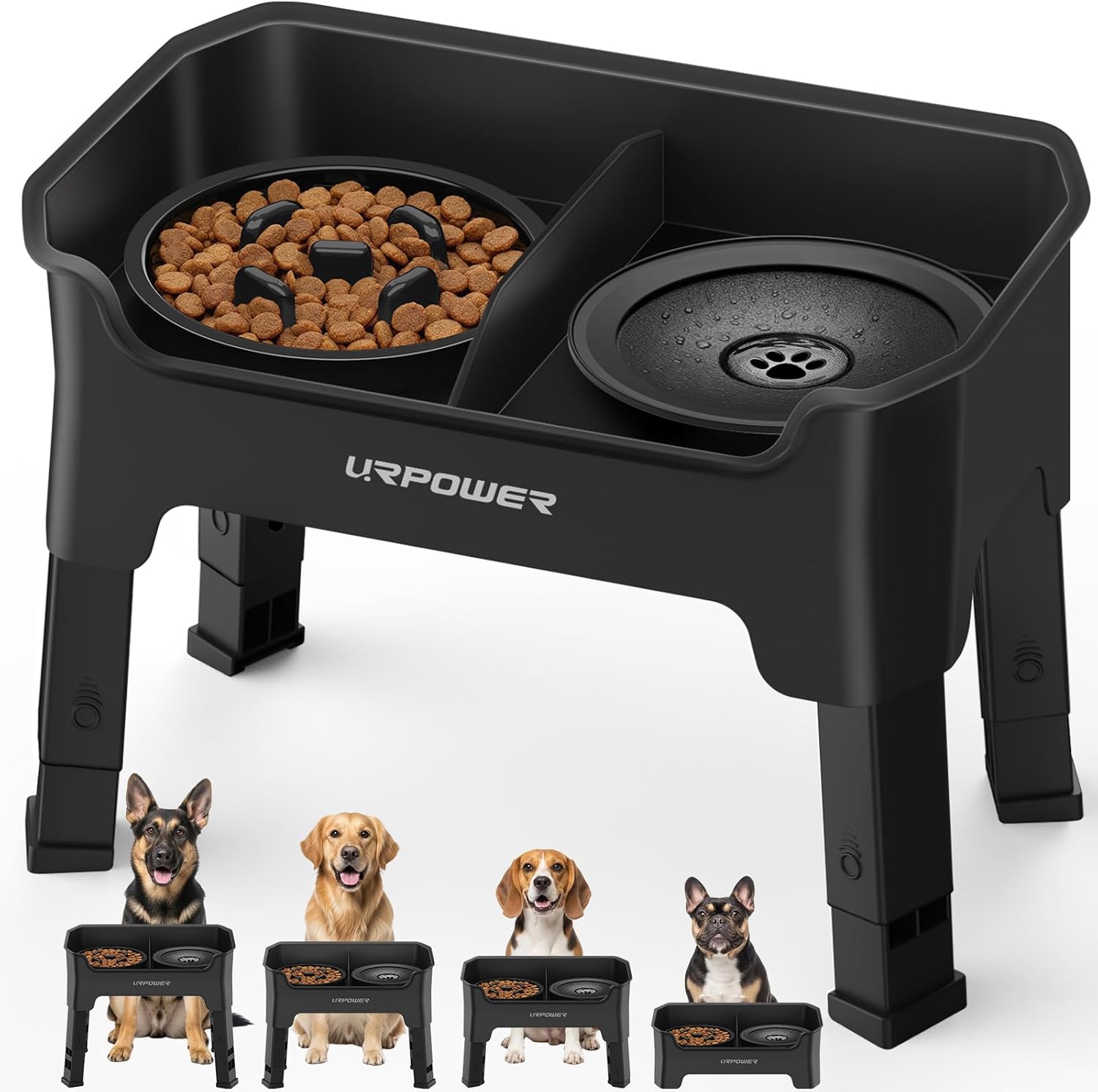
| Capacity | 4 pounds |
|---|---|
| Included Components | ABS Plastic Bowl Stand, Slow Feeder Food Bowl, Spill Proof Water Bowl |
| Additional Features | Adjustable Height, Foldable, High Splash Guard, Elevated, Spill Proof |
| Dog Breed Size | Large |
This URPOWER 3-in-1 elevated dog bowl stand combines a slow-feeder food bowl, a no-spill water bowl with a floating disk, and a four-level adjustable stand to suit growing dogs or different breeds. It is typically used indoors to keep food and water separated and to raise bowls to a comfortable feeding height, which can reduce neck strain for large or senior dogs. The slow feeder pattern helps slow rapid eaters, extending mealtime and aiding digestion, while the 360 degree splash guard and anti-skid rubber feet minimize splashes and sliding on hard floors. The water bowl's floating disk further cuts down on spills and helps moderate drinking speed. The set is foldable for storage and made from ABS plastic components that are dishwasher-safe (except the floating disk), making cleanup straightforward. Limitations include plastic construction rather than stainless steel and a relatively large capacity that may be more than needed for small dogs, and some buyers may prefer bowls with heavier weighted bases for extreme tippers. For households where stability and reduced splash are the priority, this set offers a practical, mess-focused solution.
Best for: Buyers who need a stable, mess-reducing elevated feeder for dogs that push or splash their bowls and who prioritize calmer, cleaner indoor mealtimes.
Less Ideal for: Those wanting metal bowls for long-term durability or owners of very small dogs who need a compact, lightweight feeding solution.
- Adjustable four-level height supports better feeding posture as dogs grow or for different breeds
- 360 degree splash guard and center divider keep water and kibble separate to reduce soggy food and floor mess
- Non-slip rubber feet and anti-skid base reduce movement and tipping on hard surfaces
- Includes a slow-feeder bowl and a no-spill water bowl with a floating disk to slow eating and drinking
- Foldable design and mostly dishwasher-safe parts make cleaning and storage easier
- Main bowl components are plastic rather than stainless steel, which some buyers prefer for durability
- Floating disk is not dishwasher-safe and needs separate hand cleaning
Verdict: The best overall raised slow feeder balances feeding-slowing effectiveness, stable elevated design, easy cleaning, and durable materials for typical dog owners.
Vivifying Elevated Dog Bowl
Best Budget Raised Slow Feeder
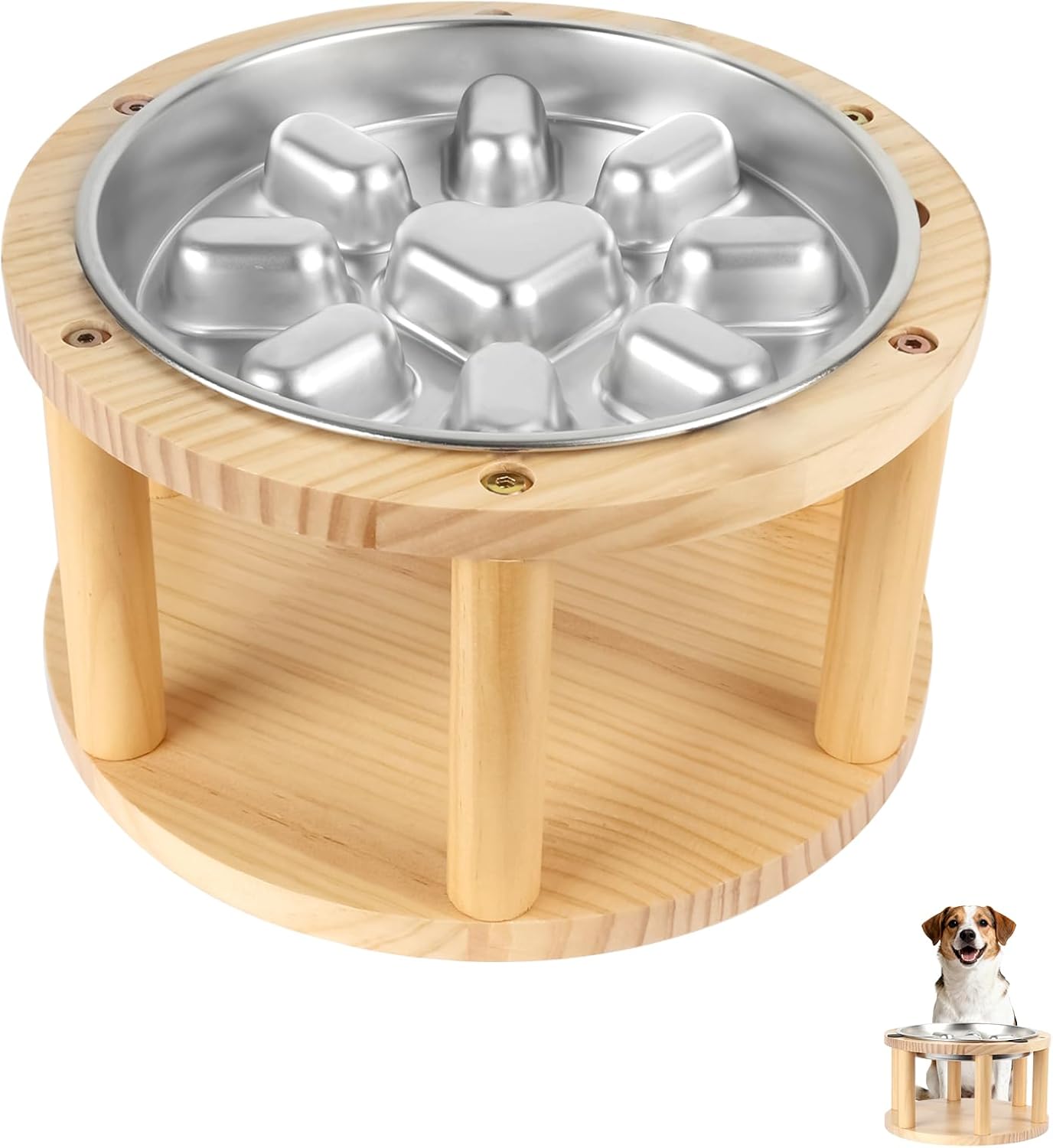
| Capacity | 2 cups |
|---|---|
| Included Components | Pine Wood Stand and Stainless Steel Slow Feeder Bowl |
| Operation Mode | Manual |
| Additional Features | Elevated |
This Vivifying set combines a 5.9-inch pine stand with a removable stainless steel slow feeder bowl to lift feeding height and slow down fast eaters. It is typically used indoors for small and medium dogs; the elevated stand reduces neck strain while the patterned slow-feed insert forces pets to eat more slowly. The bowl is dishwasher-safe stainless steel, so cleaning is straightforward, and the pine base includes non-slip pads to keep the feeder from sliding or clattering during meals. Assembly requires a few screws and the supplied tool and takes only minutes. On the practical side the unit is simple and budget-friendly, but the pine stand is basic compared with more durable engineered materials and the 2-cup capacity limits use to smaller breeds or single-meal portions. If you want a no-frills, easy-to-clean elevated slow feeder that keeps mealtimes calmer, this model delivers that at an affordable level; buyers seeking heavier-duty commercial materials or larger capacities should consider other options.
Best for: Owners seeking an affordable, straightforward elevated slow-feeding solution for small to medium dogs who prioritize easy cleaning and simpler construction.
Less Ideal for: People who need a heavy-duty, long-lasting stand for large breeds or larger-capacity bowls should look at sturdier, higher-capacity options.
- Elevated 5.9" height supports a more natural eating posture for small and medium dogs
- Removable stainless steel slow-feed bowl is easy to clean and dishwasher-safe
- Non-slip pads on the pine base reduce sliding and noise during meals
- Quick, tool-included assembly that can be completed in minutes
- Pine wood stand is less durable than metal or high-density plastic alternatives
- 2-cup capacity is small for larger dogs or multiple-pet feeding
Verdict: The best budget raised slow feeder offers effective meal-slowing and a stable elevated platform while keeping materials and features simple to hit a lower price.
Feedoo Elevated Dog Bowl Stand 7" Large
Best Premium Raised Slow Feeder

| Capacity | 3 cups |
|---|---|
| Material Type | 304(18/8) Stainless Steel, Solid Hard Wood |
| Height | 7" |
| Dishwasher Safe | Yes |
This Feedoo set pairs a solid hardwood 7-inch elevated stand with a 3-cup double-wall stainless steel slow feeder bowl to slow gulpers and make mealtime more comfortable for large dogs. The raised center in the bowl creates slow-feed channels while the double-wall steel adds sturdiness and makes the bowl dishwasher-safe. The stand uses three screwed legs and built-in nuts for a simple, stable assembly and silicone feet to prevent slipping and floor scratches. In practice the fixed 7-inch height positions the bowl at a more natural level for larger breeds, which can reduce neck strain and discourage gulping when combined with the slow-feeder insert. The finish and solid-wood construction give the unit a premium look that fits home decor better than plastic options, but the height is not adjustable and the 3-cup capacity limits it to single large-dog meals rather than multi-dog feeding or very large appetites. The stand is easy to disassemble for storage and can double as a decorative holder for pots when not in use.
Best for: Buyers who want an upgraded, long-lasting raised slow feeder with attractive wood styling and a durable stainless steel bowl for large dogs and value build quality over low cost.
Less Ideal for: Owners who need an adjustable-height solution, very high-capacity bowls for multiple dogs, or a lightweight travel option should consider other designs.
- Solid hardwood construction offers a refined, durable finish that fits home decor
- Double-wall 304 stainless steel slow-feeder bowl is thick, dishwasher-safe, and resists warping
- Silicone non-slip feet keep the stand stable and protect floors
- Simple screw assembly with built-in nuts yields a sturdy, long-lasting connection
- Raised 7-inch height positions bowl to reduce neck strain for large breeds
- Height is fixed at 7 inches so it cannot be adjusted for different dogs or changing needs
- 3-cup capacity may be small for multi-dog households or very large appetites
Verdict: The best premium raised slow feeder is for owners willing to pay more for upgraded build quality, refined slow-feed patterns, and premium finishes that last.
URPOWER Elevated Dog Bowls Small
Best Compact Raised Slow Feeder

| Material Type | ABS Plastic, Stainless Steel |
|---|---|
| Included Components | Elevated Bowl Stand, Stainless Steel Dog Bowl, Slow Feeder Non-Slip Food and Water Bowl |
| Additional Features | Adjustable |
| Recommended Uses For Product | Indoor, Slow Feeding, Travel and Portability |
This URPOWER set combines a low-profile, foldable raised stand with two 20 oz stainless steel bowls and a slow-feeder insert to keep small-dog feeding tidy and controlled. The stand adjusts to four heights so it can serve puppies through adult small breeds and the raised edges help contain spills and keep food separate from water. The slow-feeder bowl has ridges to slow gulps and encourage longer meals, while the stainless bowls are dishwasher-safe and corrosion-resistant for easy cleaning. Non-slip silicone pads on the legs hold the unit steady on tile or wood and the one-piece design folds flat for storage or travel in a small apartment. Expect the ABS plastic frame to be lightweight rather than heavy-duty, so very boisterous chewers or dogs that paw at their bowls may tip or damage it over time. The compact footprint and integrated slow-feeder make this a practical, space-saving upgrade for small dogs and owners who prioritize neatness and portability.
Best for: Owners in apartments or small homes with small to medium dogs who need a tidy, space-saving elevated bowl that also slows fast eaters.
Less Ideal for: People with large or very strong dogs, heavy chewers, or households that need an ultra-heavy-duty, permanent feeding station.
- Compact, foldable stand saves floor space and is easy to store or take on trips
- Includes two 20 oz stainless steel bowls that are dishwasher-safe and rust-resistant
- Slow-feeder insert slows eating to help digestion and reduce gulping
- Four adjustable heights let the bowl grow with a small dog from puppy to adult
- Rubber anti-slip pads keep the stand stable during feeding
- ABS plastic frame is lightweight and may not withstand heavy chewing or rough use
- Bowls are modest capacity and suited to small or medium dogs only
Verdict: The best compact raised slow feeder fits in smaller kitchens or apartments while still slowing meals and providing stable elevated feeding for small to medium dogs.
SHAINFUN Elevated Dog Bowls
Best Large-Capacity Raised Slow Feeder

| Bowl capacity | 58 fluid ounces |
|---|---|
| Number of bowls | 2 |
| Height settings | 3 adjustable heights |
| Included components | Placemat |
The SHAINFUN Elevated Dog Bowls combine a heavy metal stand, two large 58 oz stainless steel bowls and a textured slow-feeder insert to handle bigger portions or feed two dogs at once. The stand offers three height settings so you can set a more ergonomic eating posture for medium and large breeds, and the included spill-proof placemat helps contain splashes and kibble for easier cleanup. The steel bowls are dishwasher safe and the slow-feeder pattern spaces out bites to slow consumption and aid digestion. Assembly is tool-free using supplied hardware and the metal frame feels more stable than typical plastic risers, which matters if you have an enthusiastic eater. Expect the slow-feed insert to require supervision with very aggressive chewers, and the larger footprint means it takes more floor space than a single bowl. The set is strong and practical for heavy daily use, especially in multi-dog households, but it is not a compact travel solution.
Best for: Buyers who need a durable raised feeder that holds large portions or serves two dogs and prioritize stability and slower eating to support digestion and posture.
Less Ideal for: If you want a compact, travel-friendly bowl or have a very aggressive chewer who will destroy slow-feed inserts, consider other options tailored to those needs.
- Two large 58 oz stainless steel bowls suitable for big portions or two pets
- Adjustable three-height stand to improve posture for medium and large dogs
- Heavy metal construction provides better stability than plastic risers
- Dishwasher-safe bowls and a spill-proof mat simplify cleaning
- Includes a slow-feeder bowl insert to reduce eating speed and aid digestion
- Slow-feeder insert may not withstand very aggressive chewers without supervision
- Larger footprint requires more floor space than single or compact feeders
- Mat and stand add bulk making it less suitable for travel or small homes
Verdict: The best large-capacity raised slow feeder accommodates bigger portions or multiple dogs, offering larger bowls and a sturdy elevated frame for heavy use.
ADENGL 10" Elevated Dog Bowl Stand
Best Heavy-Duty Raised Slow Feeder

| Bowl capacity | 1700 microliters |
|---|---|
| Number of bowls | 3 (2 regular + 1 slow-feeder) |
| Height | 10 inches |
| Material | Stainless steel bowls; metal stand |
This ADENGL elevated stand is a heavy-duty metal raised feeder that combines stability with daily feeding features. The all-metal frame and non-slip feet make it resistant to tipping and wobble during enthusiastic eating, and the kit includes two 1700 ml stainless bowls plus a slow-feeder bowl so you can alternate between regular meals and slower eating sessions. The 10-inch height improves eating posture for large dogs and may reduce neck and spine strain compared with floor bowls. Practical touches include dishwasher-safe stainless bowls, an absorbent anti-spill mat to catch messes, and a removable slow-feeder insert to slow intake and help prevent choking. It is manual and fairly straightforward to clean, but the metal frame adds weight and the unit is sized for larger breeds so it may be bulkier than simple plastic options. If you need a robust, tip-resistant raised slow-feeding solution built for active or large dogs, this model covers the essentials well.
Best for: Buyers wanting a rugged, chew- and tip-resistant raised slow feeder for large or active dogs who prioritize durability and stable, elevated feeding.
Less Ideal for: Those seeking a compact, lightweight feeder for small breeds or occasional travel should consider smaller plastic or collapsible options instead.
- All-metal frame provides strong, tip-resistant stability for active eaters
- Includes two 1700 ml stainless bowls plus a separate slow-feeder bowl for portion control
- Non-slip feet and spill-proof mat reduce movement and protect floors
- Stainless bowls are dishwasher safe for easy cleaning
- 10-inch elevation promotes healthier eating posture for large dogs
- Heavier and bulkier than lightweight plastic stands, which may affect placement or portability
- Designed for large-breed feeding height so it may be over-sized for small dogs
Verdict: The best heavy-duty raised slow feeder is designed with robust materials, reinforced stands, and chew- and tip-resistant features for strong, active dogs or frequent use.
Keegud Slow Feeder Insert Spiral
Best Easy-Clean Raised Slow Feeder
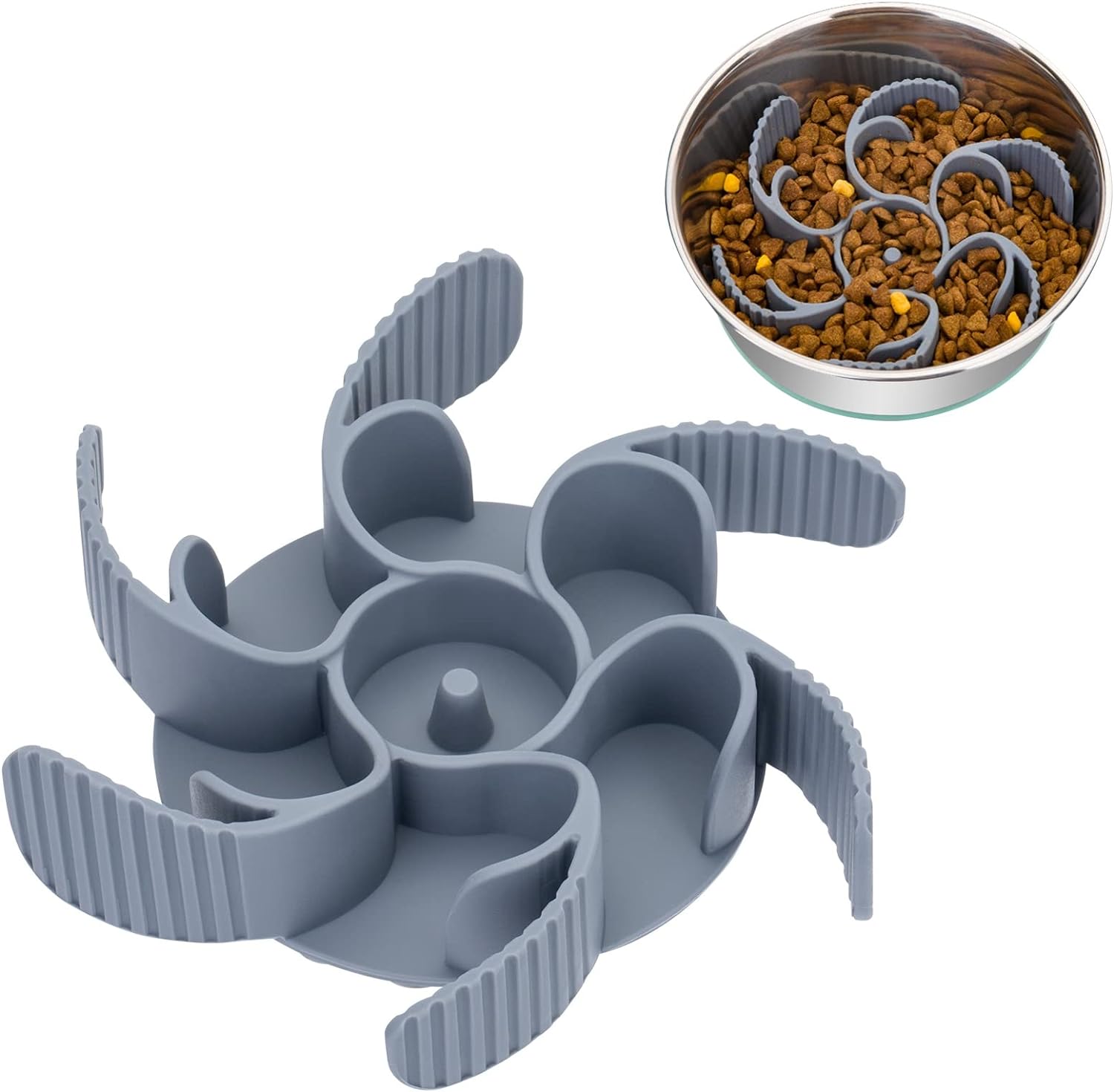
| Material Type | Silicone |
|---|---|
| Capacity | 2.3 pounds |
| Recommended Uses For Product | Dry Food, Wet Food |
| Dog Breed Size | Medium |
The Keegud Slow Feeder Insert is a silicone mat designed to convert a standard or raised dog bowl into a slow feeder by adhering to the bowl base with 36 suction cups and adding spiral obstacles that force dogs to eat more deliberately. You press the insert into a compatible bowl, add wet or dry food, and the raised spiral pattern spaces out bites so fast eaters cannot gulp large mouthfuls. The soft food-grade silicone is gentler on noses than hard plastic and the design is cuttable to fit smaller bowls; seller notes the spiral is aimed at most dogs while more complex patterns suit clever eaters. The suction array is marketed as very strong so the insert stays in place during meals, and the simple single-piece shape rinses clean quickly and is machine washable according to the brand. Limitations: it is not a chew toy and repeated chewing can damage it, and the insert requires a bowl with a sufficiently wide flat bottom for reliable suction which narrows compatibility with some elevated stands.
Best for: Buyers who want a low-effort way to make existing bowls into slow feeders and prioritize quick, hands-off cleaning and occasional machine washing.
Less Ideal for: Owners whose dogs habitually chew or destroy soft accessories, or people who need a slow feeder specifically designed to mount to proprietary elevated frames.
- Attaches firmly with 36 suction cups to reduce slipping and displacement
- Food-grade silicone is soft on a dog’s nose and resists tearing better than thin silicone
- Cuttable design lets you trim the insert to fit smaller bowls
- Simple one-piece shape rinses clean quickly and is listed as machine washable
- Works with wet or dry food and converts existing bowls into slow feeders without buying a new bowl
- Not intended for heavy chewers and can be damaged if the dog chews it
- Requires a bowl with a sufficiently flat and wide base for suction to hold reliably
Verdict: The best easy-clean raised slow feeder prioritizes removable, dishwasher-safe bowls and wipeable elevated frames to simplify daily cleanup and maintenance for pet owners.
Choosing the Right Raised Slow Feeder Dog: Key Factors to Consider
Height and Ergonomic Fit
Height determines whether a raised slow feeder reduces neck and shoulder strain or causes an awkward feeding posture. The correct elevation varies with dog size and shoulder height, so look for bowls that position the lip at a natural angle for the dog to reach without bending the neck excessively.
An improperly matched height can lead to compensating movements, making the feeder ineffective or even uncomfortable. Adjustable-height stands provide flexibility as puppies grow or as you change feeding routines, and fixed-height products often list the suitable dog sizes or recommended shoulder measurements.
Bowl Design and Slow-feeding Features
Bowl shape and internal patterning control how quickly a dog can access food. Wide, shallow bowls encourage spreading and slower access for short-muzzled breeds, while deeper bowls with maze-like inserts are better for persistent gulpers.
Consider whether the slow-feeding elements are removable for cleaning and whether they are appropriate for the kibble size you use. The goal is to create small obstacles that lengthen mealtime without causing frustration or forcing unnatural head positions.
Stability and Anti-slip Safety
A raised slow feeder must remain steady during use to prevent spills and reduce the risk of tipping, which can startle a dog and create dangerous situations, especially for larger breeds. Wide bases, weighted stands, and rubber feet all contribute to steadiness on hard floors and low-pile carpet.
Tested stability also matters for single-handed refills and for homes where multiple pets feed in close proximity. Anti-slip features that maintain position during enthusiastic eating reduce mess and protect flooring from scratches and spills.
Material Safety and Cleaning
Materials affect health, longevity, and day-to-day upkeep. Food-safe plastics, stainless steel, and glazed ceramics are common; each has tradeoffs for weight, breakability, and ease of cleaning. Stainless steel inserts resist odors and bacteria and are usually dishwasher-safe, while some plastics may stain or retain odors over time.
Consider whether parts are dishwasher-safe and how easily nooks and slow-feeding crevices can be cleaned. Nonporous, sturdy finishes help maintain hygiene and reduce long-term maintenance.
Portability and Storage
If you travel with your dog or need to move feeding stations between rooms, weight and disassembly matter. Lightweight stands and removable bowls make transportation easier, while foldable or stackable designs aid storage in small homes.
Portability also factors into multi-pet households where occasional relocation of feeding setups can reduce conflicts. Balance convenience against a need for stability; highly portable designs should not sacrifice steadiness during use.
Suitability for Multi-dog Households
Homes with more than one dog often require considerations for differing sizes and eating styles. You may need multiple heights or modular solutions that let you mix and match stands and bowls so each dog feeds at a comfortable level.
Also think about spill containment and spacing so that one pet's enthusiastic eating does not disturb another. Durable, easy-to-clean surfaces and designs that minimize cross-contamination are particularly valuable in multi-dog setups.
How High Should a Raised Slow Feeder Be for My Dog?
Measure your dog's shoulder height while they stand naturally, then choose a feeder that places the bowl rim roughly level with the lower part of the neck so the dog can eat without bending deeply. For puppies, consider adjustable stands so the same feeder works as they grow.
Short-nosed breeds and very small dogs often do better with lower elevations and shallower bowls, while tall breeds may need higher stands to keep their spine aligned during meals. Err on the side of modest elevation; excessive height can introduce strain or awkward reaching.
- Measure shoulder height with dog standing on a flat surface
- Aim for bowl rim at lower neck height, not top of shoulders
- Consider adjustable stands for growing dogs
Will a Raised Slow Feeder Help with Digestion and Vomiting?
Raising the feeding surface can reduce neck compression and help food move more smoothly from mouth to esophagus for many dogs. For some animals, a modest elevation reduces gulping and the chance of regurgitation, but results vary by individual and underlying health issues.
If a dog has a history of severe regurgitation, bloat, or respiratory problems, consult a veterinarian before changing feeding posture. For routine gulping and mild digestive upset, pairing a raised feeder with slow-feeding bowl elements often reduces eating speed and promotes calmer mealtimes.
- Raised position can reduce neck strain and promote smoother swallowing
- Not a guaranteed fix for all digestive conditions
- Consult a veterinarian for histories of severe regurgitation or bloat
Can Slow-feeding Inserts Cause Frustration or Anxiety?
Some dogs adapt quickly to mild obstacles; others grow frustrated if a feeder makes it too difficult to access food. Choose a design that incrementally limits access rather than blocking it entirely. Observe your dog over several meals and switch to a simpler pattern if they show signs of stress.
Look for removable or adjustable inserts so you can vary the challenge during training. Positive reinforcement and gradual introduction help dogs accept new feeding mechanics without anxiety.
- Introduce challenging feeders gradually
- Prefer removable inserts to adjust difficulty
- Watch for signs of stress such as pacing, whining, or refusal to eat
How to Clean and Maintain a Raised Slow Feeder
Daily rinsing of bowls and a weekly deep clean prevent residue buildup in slow-feeding crevices. Removable inserts and dishwasher-safe bowls simplify maintenance and reduce lingering odors or bacterial growth.
Inspect seals, rubber feet, and joints periodically. Replace or repair worn anti-slip pads and cracked bowls to maintain stability and food safety.
- Rinse after each meal and deep clean weekly
- Use dishwasher-safe parts when available
- Check anti-slip feet and seals regularly
Is an Adjustable-height Stand Worth It?
Adjustable-height stands add flexibility for growing dogs, multi-dog households, or changing feeding routines. They can be especially useful if you plan to use the same feeder for pets of different sizes or for a dog that will change in weight or posture over time.
The tradeoff is that adjustable hardware can add complexity and potential wobble. If you opt for adjustability, choose a model with secure locking mechanisms and a sturdy base to preserve stability.
- Good for growing dogs and mixed-size households
- Ensure locking mechanisms are secure
- Watch for added wobble from poorly designed adjustments
How to Introduce a Raised Slow Feeder to a Picky Eater
Start by mixing kibble in the new feeder with familiar dishes so the dog associates the feeder with positive mealtimes. Offer small, high-value treats in the new feeder to encourage exploration without pressure.
Keep the first few sessions short and relaxed, and remove time pressure by allowing extra time for the dog to finish. Gradually increase the complexity of the slow-feeding features only after the dog eats comfortably from the raised bowl.
- Mix familiar food and use treats to encourage acceptance
- Keep early sessions relaxed and unhurried
- Increase slow-feeding challenge gradually
How We Chose the Best Raised Slow Feeder Dog
We selected products based on measurable factors that matter when a raised slow feeder is intended to change how a dog eats and stands. Primary considerations were stability and anti-slip design to prevent tipping during excited feeding, and bowl geometry that promotes slower intake without forcing an awkward head angle. We examined elevation height and ergonomic fit to ensure dishes reduce neck strain for small, medium, or large dogs. Materials and durability were evaluated for food-safe finishes, ease of cleaning, and resistance to wear from repeated use. We also assessed assembly or setup complexity, and whether the design integrates easily into a multi-dog household. Products were excluded if they lacked clear information on food-safe materials, if they offered no means of slowing intake, or if the elevation created an unnatural posture for the intended dog size. In short, the list favors stable, well-shaped, easy-to-clean raised slow feeders that genuinely slow eating while supporting comfortable feeding posture.
Our full evaluation process is outlined in our review methodology.
FAQ
Will a raised slow feeder work for small and toy breeds?
Often yes. Small breeds benefit from a lower elevation and shallower bowl patterning so they do not have to crane their necks. Choose a model that matches their shoulder height and offers appropriately sized slow-feeding features.
How do I choose the right slow-feeding pattern for my dog?
Start with a mild pattern that spreads food into separate pockets and observe meal duration and behavior. If your dog still gulps, move to a more complex insert. Ensure the pattern is removable for cleaning and matches your kibble size.
Are stainless steel bowls better than plastic for raised feeders?
Stainless steel is more resistant to odors, staining, and bacteria buildup, and many are dishwasher-safe, making them a hygienic choice. However, ceramic and food-grade plastics can also be fine if they are nonporous and easy to clean.
Can raised feeders prevent bloat in large dogs?
Evidence is mixed and outcomes depend on individual risk factors. A raised feeder may reduce gulping for some dogs, but it is not a guaranteed prevention for bloat. Consult a veterinarian for dogs at high risk or with a history of digestive emergencies.
How often should I replace parts like rubber feet or inserts?
Inspect them monthly for wear, cracking, or loss of grip. Replace rubber feet or brittle inserts as soon as they show signs of deterioration to maintain stability and hygiene.
Final Verdict
Choosing the right raised slow feeder dog means balancing elevation, bowl design, and stability to slow intake without creating discomfort. Prioritize a height that keeps your dog's neck in a natural position, a bowl shape that lengthens mealtime without blocking access, and materials that are easy to clean and durable. Adjustable stands help households with growing or multiple dogs, while sturdy bases and anti-slip features are essential for safe daily use. Focus on gradual introduction and observation: pick the option that your dog accepts and uses consistently, and you are likely to see calmer, safer mealtimes and improved feeding behavior.

