

If you live with shedding pets and hardwood floors, the right robot vacuum can save you time and reduce allergens without damaging your floors. You want strong hair pickup, cleaning paths that avoid scuffing, and reliable navigation across smooth surfaces. This guide shortlists the top robot vacuums optimized for pet hair on hardwood and explains the tradeoffs that matter most for daily care. Below you will find our top picks for pet hair and hardwood, plus clear buying factors and practical advice to help you choose the right robot vacuum for your home.
Top Picks at a Glance
| Best Overall Robot Vacuum for Pet Hair Hardwood Top all-around pick for removing pet hair from hardwood floors | roborock Q7 M5+ Robot Vacuum |  |
| Best Budget Robot Vacuum for Pet Hair Hardwood Low-cost option that still handles regular pet hair on floors | ILIFE V2 Robot Vacuum |  |
| Best Premium Robot Vacuum Higher-end model with advanced cleaning and convenience features | roborock Saros 20 Robot Vacuum |  |
| Best Compact Robot Vacuum Smaller chassis that fits under low furniture and tight spots | Lefant M210 Robot Vacuum |  |
| Best High-Suction Robot Vacuum Maximum suction power for stubborn pet hair and ground-in debris | ECOVACS DEEBOT T90 PRO OMNI |  |
| Best Self-Emptying Robot Vacuum Automated dustbin emptying reduces maintenance after each cleaning cycle | Shark AI Ultra Robot Vacuum AV2501S |  |
| Best Long-Run Robot Vacuum Extended battery life for larger homes and longer cleaning sessions | Tikom G8000 Max Robot Vacuum |  |
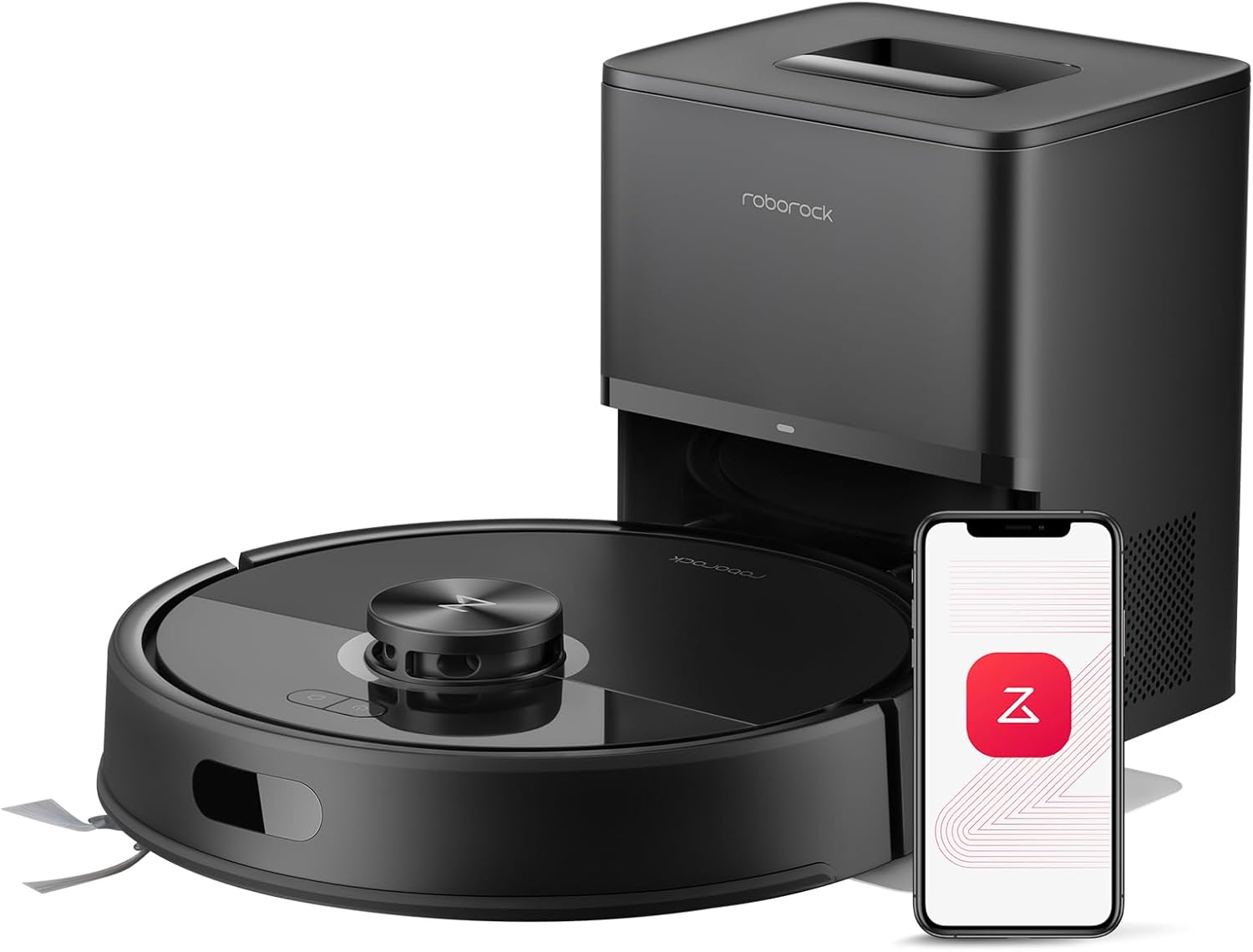
roborock Q7 M5+ Robot Vacuum
Best Overall Robot Vacuum for Pet Hair Hardwood
| Maximum Suction | 10000Pa |
|---|---|
| Capacity | 2.7 liters |
| Battery Life | 150 minutes |
| Filter Type | Cartridge |
| Noise Level | 65 db |
The roborock Q7 M5+ is a robot vacuum-and-mop combination built to handle pet hair and deep dirt on mixed floors. It uses PreciSense LiDAR for reliable mapping and multi-level maps, and the app plus voice control let you schedule cleanings and set no-go zones. The key hardware strengths are a 10000 Pa HyperForce motor for strong extraction and a Dual Anti-Tangle system that reduces brush hair wrap for long-haired pets. Paired with the RockDock Plus self-emptying base and a 2.7 L sealed dust bag, it can go many weeks between manual emptying, which is helpful in heavy-shedding homes. The VibraRise 2.0 electronic mop and adjustable water flow provide basic mopping between vacuum passes but will not replace manual deep scrubbing on textured grout or stubborn stains. Expect typical robot limitations such as navigation around very cluttered rooms, occasional edge residue on high-pile rugs, and app dependency for advanced settings. For households prioritizing suction and low-maintenance pet hair pickup, the Q7 M5+ is a strong choice.
Best for: Buyers with heavy-shedding dogs or homes with textured floors who want the strongest possible suction in a low-maintenance robot and value scheduled, automated cleaning.
Less Ideal for: People who need a robot that replaces deep manual mopping or who prefer a fully manual upright for spot deep-cleaning and stairs.
- Very high suction power rated at 10000 Pa for deep carpet and rug extraction
- Dual Anti-Tangle brush system reduces hair wrap and maintenance
- 2.7 L sealed dust bag in the RockDock Plus supports weeks of hands-free emptying
- PreciSense LiDAR navigation with multi-level mapping for efficient room coverage
- App and voice control with scheduling and no-go zones for convenient automation
- Mopping function is basic and not a substitute for aggressive manual scrubbing on textured floors
- May struggle with very cluttered spaces or extremely high-pile carpets
Verdict: The best overall robot vacuum for pet hair on hardwood, balancing powerful hair pickup, gentle floor care, navigation reliability, and convenient maintenance for most pet owners.
ILIFE V2 Robot Vacuum
Best Budget Robot Vacuum for Pet Hair Hardwood

| Battery Life | 120 minutes |
|---|---|
| Capacity | 300 ml |
| Filter Type | Sponge |
| Noise Level | 69 db |
| Control Method | Remote |
The ILIFE V2 is a budget-focused robot vacuum that targets homes with hard floors and pet hair by using a tangle-free suction port instead of a roller brush. You operate it with the included physical remote or the onboard button, and it offers multiple modes—auto, edge, and spot—to cover routine runs, wall-to-wall edges, and concentrated messes. The 300 ml dustbin and sponge filter handle everyday debris and hair, and the ultra-slim 2.99 inch profile helps it reach under low furniture. Runtime is strong for the price at up to 120 minutes, and the unit automatically returns to its charger when battery is low. Expect simple, random navigation rather than mapping, and there is no Wi-Fi app or smart home integration, so scheduling and control are limited to the remote. Noise sits around 69 dB, which is noticeable but typical for this class. For buyers who want straightforward, effective hair pickup on floors without paying for advanced sensors or app features, the V2 delivers solid value with practical everyday performance.
Best for: Owners prioritizing effective hair pickup on floors and a low-cost, easy-to-use robot without needing mapping or app controls.
Less Ideal for: Buyers who want precise mapping, room-by-room scheduling, or smartphone and smart home integration should consider higher-end models.
- Tangle-free suction design avoids hair wrap without a roller brush
- Up to 120 minutes runtime for extended cleaning sessions
- Ultra-slim 2.99 inch profile reaches under low furniture
- Multiple cleaning modes including auto, edge, and spot for flexible coverage
- Simple remote control operation with no Wi-Fi required
- Navigation is random rather than mapped so coverage can be less efficient
- No smartphone app or smart home integration for remote scheduling
Verdict: The best budget robot vacuum for pet hair on hardwood that delivers reliable hair pickup and basic navigation without premium bells, ideal for cost-conscious pet households.
roborock Saros 20 Robot Vacuum
Best Premium Robot Vacuum

| Suction | 36,000 Pa |
|---|---|
| Battery life | 180 minutes |
| Filter type | Washable Filter |
| Noise level | 55 db |
| Control | App, Remote, Voice |
The roborock Saros 20 is a premium robot vacuum and mop designed for heavy-duty daily cleaning, especially in homes with pets. It pairs a 36,000 Pa digital motor with an anti-tangle brush system and a low 3.13-inch profile so it can pull deep-set pet hair from hardwood and reach under sofas and beds. Navigation is handled by StarSight Autonomous System 2.0 with 3D ToF sensors and an RGB camera that identify and avoid 300+ obstacles while building accurate maps for room-based scheduling in the Roborock app. The multifunctional RockDock automates mop washing with very hot water, hot air drying, and long auto-empty intervals to minimize manual maintenance. Practical benefits include strong edge and corner cleaning via an extendable side brush, app and voice controls, and up to three hours of runtime for large coverage. Trade-offs are that this is a feature-rich, heavy unit with a substantial dock footprint and higher complexity that may require occasional app updates and familiarity to get the most from SmartPlan mapping features.
Best for: Buyers who prioritize maximum suction, intelligent mapping, and hands-off maintenance to manage heavy dog hair and frequent whole-home cleaning on hardwood floors.
Less Ideal for: People who need a simple, compact robot with minimal setup or have very small homes where dock footprint and advanced features are unnecessary.
- Very high suction power (36,000 Pa) that tackles embedded pet hair on hardwood
- Advanced 3D ToF plus RGB camera navigation that avoids 300+ obstacles and builds accurate maps
- Ultra-slim 3.13-inch profile for cleaning under low furniture
- Multifunctional dock with hot-water mop washing, hot-air drying, and extended auto-emptying for low maintenance
- Long battery life up to 180 minutes suitable for large homes
- Large, complex dock requires significant floor space and setup
- Feature set and app require learning and occasional updates to run optimally
Verdict: The best premium robot vacuum for owners who want top-tier suction, smart navigation, and extra conveniences like app controls and thorough edge cleaning.
Lefant M210 Robot Vacuum
Best Compact Robot Vacuum

| Battery Life | 120 minutes |
|---|---|
| Dustbin Capacity | 500 ml |
| Filter Type | Cartridge |
| Noise Level | 52 db |
| Compatible Devices | Amazon Echo, Google Home, Smartphones |
The Lefant M210 is a slim, app-controlled robot vacuum aimed at everyday pickup of pet hair and dust in smaller homes. Its low-profile 2.99-inch height lets it reach under beds and sofas while the brushless suction port reduces hair tangles compared with roller brushes, making maintenance easier for pet owners. The unit offers six cleaning modes including zigzag, edge, spot, and scheduled runs via the Lefant app, plus voice control through Alexa or Google Assistant for hands-free starts. A 500 ml dustbin holds a fair amount of debris between emptying and the 120-minute runtime (measured at low suction) covers most single-room or small-apartment sessions. Navigation relies on infrared anti-collision and anti-drop sensors rather than lidar, so pathing is practical but can be more randomized on complex layouts. Suction and noise are reasonable for daily use, but you will miss higher suction and advanced mapping found on pricier models. For a compact, budget-friendly pet-focused vacuum that slips under furniture and resists hair wrap, the M210 performs solidly with predictable limitations in navigation and peak suction power.
Best for: Pet owners in small homes or apartments who need a compact robot that reaches under low furniture and reliably collects hair without frequent brush tangles.
Less Ideal for: Large homes with complex floorplans or buyers who want top-tier suction and lidar mapping should consider fuller-featured, higher-power alternatives.
- Very low profile design fits under low furniture for hidden dirt pickup
- Brushless suction port that reduces hair tangles compared with roller brushes
- App scheduling and Alexa/Google voice control for convenient hands-off cleaning
- 500 ml dustbin suitable for multiple runs between emptying
- Up to 120 minutes runtime sufficient for small homes or apartment cleaning sessions
- Navigation uses infrared sensors rather than lidar so mapping and path efficiency are limited
- Peak suction and advanced cleaning features are lower than higher-end models
Verdict: The best compact robot vacuum for pet owners who need strong hair pickup in tight areas and under low-clearance furniture without sacrificing cleaning performance.
ECOVACS DEEBOT T90 PRO OMNI
Best High-Suction Robot Vacuum

| Suction | 30,000Pa |
|---|---|
| Battery Life | 200 minutes |
| Capacity | 3.2 liters |
| Filter Type | WASHABLE |
| Noise Level | 60 db |
The DEEBOT T90 PRO OMNI combines very strong BLAST suction with a self-washing roller mop and an OMNI station that handles washing, drying, and waste management so the robot can run with minimal hands-on upkeep. In everyday use it vacuums first and then mops, using a 0.6-inch lift and Carpets First mode to keep carpets dry while aggressively scrubbing hard floors with the OZMO Roller 3.0. AI obstacle avoidance and ZeroTangle 4.0 reduce hair wrapping while PowerBoost charging and a long 200-minute battery support larger homes. The OMNI base adds hot-water wash, hot-air drying, and self-emptying and self-refilling functions that cut down maintenance and odor. Trade-offs are the size and complexity of the OMNI station which need floor space and periodic consumable replacement, and the robot's noise level around 60 dB under load. For dog owners focused on lifting embedded fur and avoiding re-soiling floors, the T90 PRO OMNI pairs powerful suction with a mop system that avoids spreading dirty water.
Best for: Pet owners who prioritize strong suction and a low-maintenance system to remove embedded dog hair and keep hard floors hygienic without frequent manual intervention.
Less Ideal for: People with very small homes or limited utility space where the large OMNI station would be impractical, or buyers seeking the quietest possible vacuum for overnight operation.
- Very high 30,000Pa BLAST suction for deep extraction of pet hair and dander
- OZMO Roller 3.0 self-washing mop with pressurized scrubbing prevents pad smearing and removes stubborn stains
- ZeroTangle 4.0 and BLAST airflow reduce hair wrapping and maintenance for pet households
- OMNI station provides self-emptying, hot-water wash, hot-air drying and auto-refill to minimize manual cleaning
- Carpets First mode and 15mm mop lift keep carpets dry and prevent cross-contamination between floors
- OMNI station requires significant floor space and regular maintenance of consumables
- Around 60 dB noise level under load may be noticeable during high-suction runs
Verdict: The best high-suction robot vacuum for homes with heavy shedders or textured hardwood where extra extraction force makes a noticeable difference in hair removal.
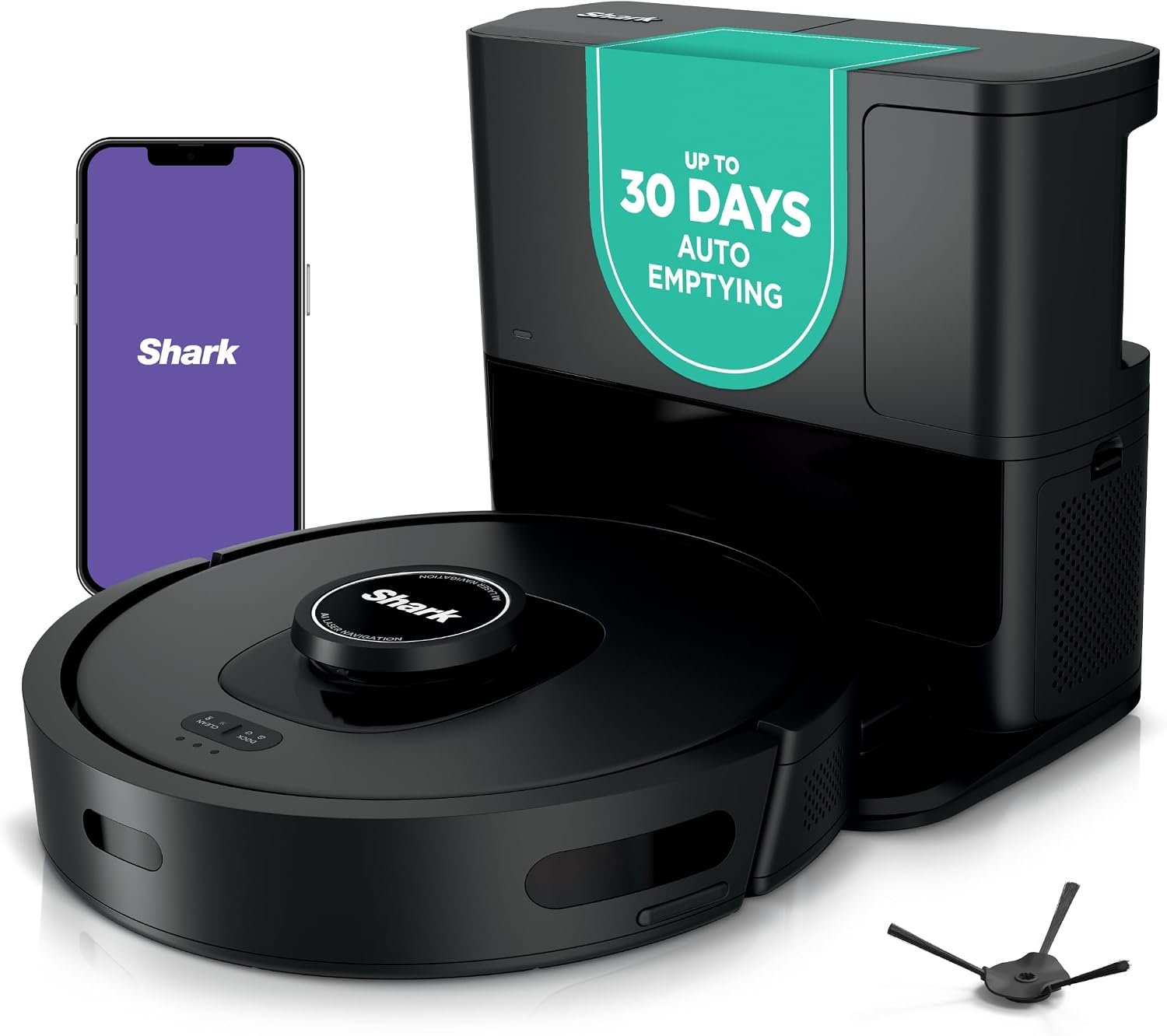
Shark AI Ultra Robot Vacuum AV2501S
Best Self-Emptying Robot Vacuum
| Battery Life | 120 minutes |
|---|---|
| Filter Type | Foam |
| Capacity | 0.09 liters |
| Compatible Devices | Amazon Alexa, Google Home |
| Form Factor | Robotic |
The Shark AI Ultra AV2501S is a self-emptying robot vacuum built to keep mixed-floor homes tidy with minimal effort. It uses 360° LiDAR mapping and Matrix Clean navigation to methodically sweep rooms in a grid and take extra passes over soiled areas, which helps on both hardwood and carpet. The self-cleaning brushroll resists hair wrap and the 30-day capacity bagless base reduces how often you need to touch dust and pet hair, while HEPA filtration captures fine dust and dander. With app and voice control you can schedule recurring cleans, set boundaries, and resume cleaning after recharging thanks to Recharge and Resume. Runtime is up to 120 minutes, enough for many single-level homes, though very large houses may require multiple cycles. The unit performs best on everyday debris and pet hair but, like many robots, can struggle with very high-pile rugs, tight corners, and rooms crowded with low obstacles. Replacement parts and periodic brush and filter maintenance are needed to keep peak performance.
Best for: Buyers who want a mostly hands-off solution to reduce daily pet hair buildup across hardwood and carpet and prefer scheduled, automated cleaning.
Less Ideal for: Homes with very deep-pile rugs, cluttered rooms with many low obstacles, or buyers who need aggressive spot-deep cleaning for heavy dirt.
- 360° LiDAR mapping with Matrix Clean for thorough, systematic coverage
- Self-cleaning brushroll designed to reduce hair wrap and maintain suction on pet hair
- Self-emptying base holds up to 30 days of debris to minimize manual emptying
- HEPA filtration captures fine dust, dander, and allergens
- App and voice control for scheduled, targeted, and hands-free operation
- May be less effective on very high-pile rugs and tight corners
- Performance depends on periodic replacement/cleaning of brushes and filters
Verdict: The best self-emptying robot vacuum for pet owners who prefer minimal upkeep, with a base that holds debris for many cycles before manual emptying is needed.
Tikom G8000 Max Robot Vacuum
Best Long-Run Robot Vacuum

| Suction | 5000Pa |
|---|---|
| Battery Life | 150 minutes |
| Dustbin Capacity | 450 ml |
| Water Tank Capacity | 300 ml |
| Filter Type | Hepa Filter |
The Tikom G8000 Max is a compact robot vacuum that combines 5000Pa suction with a simultaneous vacuum-and-mop system, making it useful for daily cleaning of hardwood and short- to medium-pile carpet. In practice it runs up to 150 minutes on a charge and will auto-recharge between jobs, which helps for larger homes or extended cleaning sessions. The 450 ml dustbin plus a 300 ml water tank let it pick up pet hair and then mop without swapping accessories, and its slim 3-inch profile reaches under low furniture. Navigation relies on anti-collision and anti-fall sensors rather than high-end lidar, so it avoids drops and most obstacles but may not map multi-room layouts as precisely as premium models. You can control it via app, remote, voice, or onboard button and pick spot, edge, zig-zag, or manual modes to focus cleaning where needed. Noise is reasonable for the power level and the HEPA filter helps contain allergens. If you want long unattended runtime and strong suction for dog hair on hardwood, this model delivers practical cleaning power with a modest navigation trade-off.
Best for: Households that need long unattended cleaning sessions across multiple rooms and want strong suction to collect dog hair on hardwood while also mopping, with priority on runtime over premium mapping features.
Less Ideal for: Buyers who require precise multi-room mapping, advanced obstacle avoidance, or the most efficient room-by-room scheduling should consider models with lidar-based mapping instead.
- High 5000Pa suction effective at lifting pet hair and debris from hard floors
- Long runtime up to 150 minutes with automatic recharge for extended coverage
- Simultaneous vacuuming and mopping with separate dustbin and water tank reduces manual intervention
- Multiple control options (app, remote, voice, button) and four cleaning modes for flexible scheduling
- Slim 3-inch profile and anti-fall/anti-collision sensors let it clean under low furniture and avoid stairs
- Navigation uses basic sensors rather than mapping, so room-to-room mapping and route efficiency may lag behind higher-end models
- Dustbin and water capacities are moderate and may need emptying/refilling on very large homes
Verdict: The best long-run robot vacuum for households with multiple rooms or high shedding where longer runtime and reliable return-to-base behavior prevent incomplete cleanups.
Choosing the Right Robot Vacuum Pet Hair Hardwood: Key Factors to Consider
Suction Power and Airflow
Strong suction and efficient airflow determine how much pet hair is pulled out of floor crevices and swept into the dustbin. Higher suction helps with embedded fur around baseboards and in tiny gaps between boards, but suction is effective only when combined with appropriate brush geometry and a well-sealed dustpath.
For hardwood floors you do not need the same suction extremes used on deep carpet, but you do want enough force to lift hair without scattering it. Look for models that allow adjustable suction settings so you can run a lower, quieter mode for daily pickups and a higher mode for heavier shedding periods. Proper airflow and sealed housings also help keep dander and fine hair inside the machine rather than blowing it back into the room.
Brush Type and Floor-safe Rollers
Brushes are the part of a robot vacuum that most directly interacts with your hardwood surface and with pet hair. Brushrolls that combine soft bristles with rubberized fins tend to sweep fur effectively while reducing the chance of surface scratches. A designated soft or rubber main brush is preferable for hardwoods because stiff bristles or aggressive beater bars can leave micro-marks over time.
Consider how the brush handles long hair. Some systems include tangle-resistant designs or brushless suction paths which simplify maintenance. Also check that the brush assembly sits flush with the floor to pick up hair at board edges without letting the roller catch on seams or transitions.
Navigation and Edge Cleaning
How a robot navigates determines how consistently it will remove pet hair across your hardwood. Intelligent mapping and systematic cleaning paths usually outperform random bounce patterns, especially in rooms with furniture and pet zones. Reliable edge-following and corner-sweeping routines are important because pets often deposit hair along baseboards.
Look for robots that can build a map, remember no-go zones, and execute methodical passes. These capabilities reduce repeated cleaning or missed patches and help the robot avoid dragging brushes or wheels that could mark the floor during correction maneuvers.
Filtration and Dustbin Capacity
A sealed filtration system reduces the amount of pet dander and fine particles returned to the air while the robot cleans. Higher-efficiency filters trap more allergens but can require more frequent replacement. Dustbin capacity matters for homes with multiple pets or heavy shedding; a small bin will demand more frequent emptying and can decrease effective runtime if it clogs.
Consider whether the model supports an automated emptying base, how easy it is to remove and clean the dustbin, and the availability of replacement filters. A clear, tool-free access design makes maintenance faster and helps ensure suction remains strong over time.
Hardwood Protection and Wheel Design
Protecting your floor finish is as important as hair removal. Look for wheels with soft treads and a low center of gravity so the robot moves smoothly without concentrating pressure that could leave marks. Bumpers and housing should be designed to absorb light contact without transferring abrasive particles to the wood surface.
Also consider how the unit behaves at thresholds and transitions. A robot that drags or scrapes while climbing small rugs or thresholds can damage delicate edges. Models that lift slightly or use guided ramps for transitions are kinder to hardwood profiles.
Maintenance and Hair Removal
Pet hair can accumulate quickly on brush bearings, in filter media, and around wheels. Choose a design with easy brush removal, washable filters, and accessible wheel housings to keep performance consistent. Tools or quick-release latches that expose tangle-prone areas shorten upkeep time and reduce frustration.
Regular maintenance intervals will vary with shedding levels, but simpler access and clear service instructions make it more likely you will keep the robot operating at peak cleaning power. Consider how often consumable parts need replacing and whether the replacement process is straightforward.
How Often Should I Run a Robot Vacuum with Shedding Pets?
Daily or every-other-day schedules work well in high-shedding households to prevent hair buildup. Short, frequent runs prevent hair from matting in corners and reduce allergen levels between deeper cleanings.
If your dog or cat sheds heavily only seasonally, increase runtime during peak shed and revert to a maintenance schedule afterward. Use a lower-power daily setting to conserve battery while keeping visible hair at bay, and run a higher-suction session once or twice a week for a more thorough pickup.
- Daily low-power runs for visible hair control
- Weekly high-suction cycle for embedded fur
- Spot clean after grooming sessions or high-traffic periods
What Settings Help Protect Hardwood While Removing Hair?
Use soft-brush or rubber-roller modes where available and avoid aggressive beater-bar settings. Lower suction levels combined with efficient brush motion can pick up hair without increasing friction that might dull finishes.
Enable edge-cleaning only when the robot follows a gentle perimeter routine. If your robot has a selectable bumper sensitivity or floor-type mode, choose the hardwood setting to minimize forceful contacts with baseboards and thresholds.
- Choose soft-brush or floor-specific modes
- Lower suction for routine passes, higher for deep cleaning
- Use scheduled runs to avoid repeated bumping in the same spots
Tips to Prevent Hair Tangles and Clogging
Brush long-haired pets regularly to reduce the volume of loose fur the robot must manage. Placing a quick grooming brush station near a common shedding spot significantly reduces the load the robot faces.
Clean the main brush and hair traps frequently, and keep one or two spare filters on hand. Check wheel wells and side brushes where hair can wrap and impede movement. Emptying the dustbin before it is full maintains suction and avoids blockages.
- Brush pets near doorways to contain loose hair
- Inspect brush bearings weekly in heavy-shed homes
- Keep maintenance tools accessible and follow the manufacturer care steps
Should I Use an Automatic Emptying Base with Pet Hair?
An automatic emptying base reduces how often you touch collected hair and extends unattended cleaning stretches, particularly helpful for multi-pet homes. These bases typically allow more continuous cleaning cycles before manual intervention is required.
If you have heavy seasonal shedding, an emptying base can prevent mid-week interruptions, but you should still check for hair jams at the brush and inlet. Consider the bin capacity and how convenient it will be to empty and maintain the base for your household.
- Good for reducing manual bin emptying frequency
- Does not eliminate brush maintenance; check for jams
- Weigh convenience against space and noise considerations
Managing Pet Dander and Allergies with Robot Vacuums
High-efficiency filtration and sealed dustpaths help trap fine dander that contributes to allergies. Robots with HEPA-like or multi-stage filters reduce airborne particles but require periodic filter replacement to stay effective.
Complement robotic cleaning with periodic manual wiping of baseboards and under furniture where dander settles. Combined cleaning strategies reduce overall allergen load better than vacuuming alone.
- Use high-efficiency filters and replace them on the recommended schedule
- Pair robot runs with targeted manual cleaning in hard-to-reach areas
- Keep pet bedding and grooming areas cleaned to reduce airborne dander
How We Chose the Best Robot Vacuum Pet Hair Hardwood
We focused on performance and hardwood safety to assemble this list of robot vacuums suitable for pet hair on hardwood floors. Primary evaluation criteria included suction power and brush design to ensure effective hair pickup, base navigation and mapping intelligence to avoid repeated passes or sticky spots, and wheel and bumper construction to prevent scuffs on finished wood. We also assessed dustbin capacity and filtration to reduce allergen recirculation, battery runtime and recharge behavior for whole-room coverage, and maintenance simplicity for hair removal from brushes and access to filters. Excluded items included robots designed only for low-power spot cleaning, units that rely solely on mopping without robust vacuuming, and models lacking features to manage pet hair buildup. Our process prioritized units with real-world durability, user-friendly maintenance, and features that protect hardwood surfaces while maximizing pet hair removal efficiency. We also favored consistent cleaning patterns and settings that let you tune suction and brush action for delicate flooring.
Our full evaluation process is outlined in our review methodology.
FAQ
Will a robot vacuum scratch my hardwood floors?
Most robot vacuums designed for hard floors use soft wheels and low-profile brushes to avoid scratching. Choose units with soft-tread wheels, rubberized brushrolls, and cautious bumper design to minimize the risk of marks.
How do robots handle long pet hair without getting tangled?
Some robots use tangle-resistant brush designs or brushless suction channels to reduce hair wrap. Even with those designs, routine brush cleaning remains necessary, and models that offer easy brush removal make maintenance faster.
Can I run a robot vacuum while my pet is home?
Many pets tolerate the presence of a robot, but reactions vary. If your pet is anxious or curious, try short supervised runs to acclimate them. Use quieter cleaning modes to reduce noise-related stress.
How often should I replace filters and brush components?
Replacement frequency depends on shedding levels and usage, but filters typically need attention every few months and brush components often every 6 to 12 months. Inspect parts regularly and follow the recommended schedule to maintain suction and filtration.
Are side brushes important for edge hair pickup?
Side brushes help sweep hair from baseboards and corners into the vacuum path. Look for designs that are gentle on baseboards and that are easy to remove for cleaning, since side brushes can collect hair quickly in pet homes.
Final Verdict
For hardwood floors in homes with pets, prioritize a robot vacuum that balances effective suction with a floor-safe brush and gentle wheel design. Navigation that covers edges and avoids repeated bumping will keep hair pickup consistent while protecting your finish. Maintenance accessibility and good filtration are essential for long-term performance and allergy control. Weigh the tradeoffs between raw suction and brush softness, and choose a model whose maintenance routine fits your schedule. With the right balance of features you can keep hardwood looking its best while staying on top of pet hair.

